

MRI cardiovascular vs FFR rules? Learn the best diagnostic thresholds. Know when blockage treatment is vital to prevent dangerous heart failure.
Cardiovascular diseases are a big cause of death around the world. Coronary artery stenosis is a major part of this problem. The Fractional Flow Reserve (FFR) rule is key to figuring out how bad this condition is. It helps doctors decide if they need to do more to help the heart.
We use cardiovascular MRI to see the heart and blood vessels clearly. This test is safe and shows how stenosis affects the heart. Learning about the FFR rule shows how important cardiovascular MRI assessment is in making treatment plans.
Key Takeaways
- The FFR rule is essential for evaluating coronary artery stenosis severity.
- Cardiovascular MRI provides detailed images for non-invasive assessment.
- Understanding the FFR rule aids in determining the need for revascularization.
- Cardiovascular MRI assessment guides treatment decisions for cardiac conditions.
- Advanced imaging techniques improve diagnostic accuracy.
The Fundamentals of Fractional Flow Reserve (FFR)
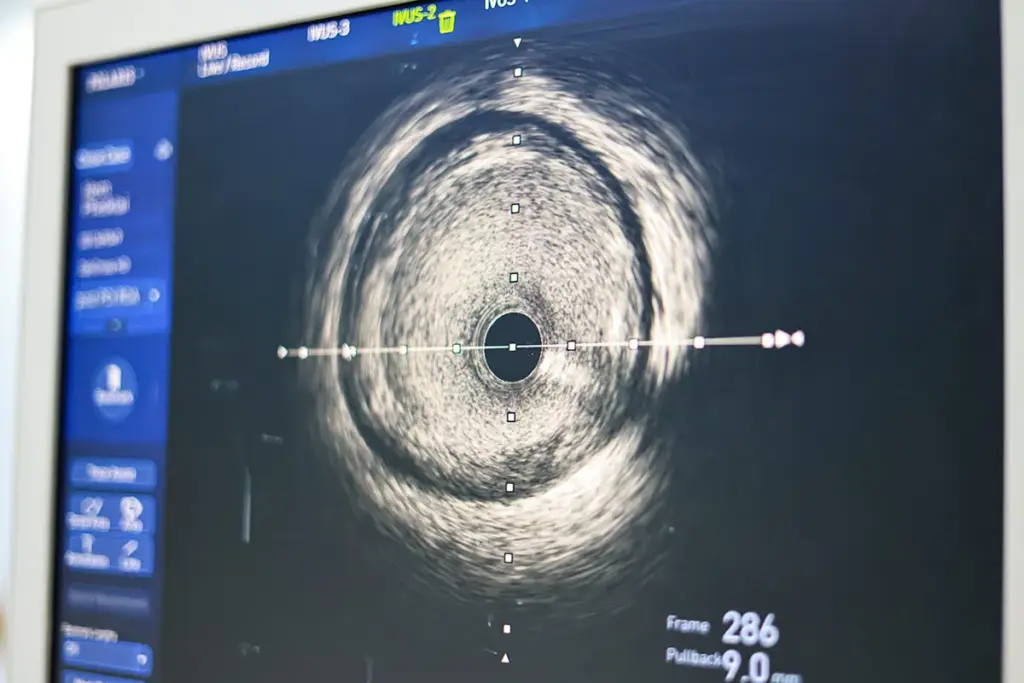
At the heart of modern heart disease diagnosis is the Fractional Flow Reserve (FFR). It’s a tool that has greatly improved how we diagnose coronary artery disease. FFR measures the pressure difference across a narrowed artery. It helps doctors predict if a narrowing will cause heart problems.
Definition and Core Principles
FFR is the ratio of blood flow in a narrowed artery to its maximum flow if it were normal. It’s calculated by comparing pressures before and after the narrowing during maximum blood flow. This method assesses the artery’s function, not just its shape.
FFR has become key in diagnosing heart disease. It helps doctors decide if a narrowing needs treatment. This makes treatments more personalized and effective.
Evolution of FFR in Cardiovascular Assessment
The idea of FFR started in the 1990s, changing cardiology forever. At first, it was mainly used in labs to check artery severity. Now, it’s a vital tool for guiding treatments in heart disease patients.
FFR has grown thanks to new technology. Better pressure wires and models have made it more accurate. These advancements have made FFR even more important in heart care.
How FFR Measurements Work

Measuring Fractional Flow Reserve (FFR) uses advanced technology. It helps doctors check how blocked a coronary artery is. FFR measures the pressure difference across a blocked area.
Pressure Wire Technology
Pressure wire technology is key in FFR measurement. These wires go into coronary arteries to measure pressure accurately. They have tiny sensors that show the pressure difference in real-time.
This technology has changed cardiology a lot. It lets doctors know if a blockage needs treatment.
Calculating Pressure Gradients
Getting the pressure gradient is a big part of FFR. Doctors compare the pressure before and after a blockage during maximum blood flow. This is done with a vasodilator like adenosine.
An FFR close to 1 means the blockage isn’t serious. But a lower FFR means it is and might need treatment. So, getting the pressure gradient right is very important.
Clinical Importance of the FFR rule
The FFR rule has changed how we check for heart disease. It gives a clearer picture of how serious a blockage is. This has made treatments more effective and safer for patients.
Enhanced Diagnostic Precision
The FFR rule helps doctors see how bad a blockage is. This is key because just looking at the blockage on an X-ray isn’t always enough. It shows how well the heart is working.
Research shows that using the FFR rule leads to better results. It means only treating blockages that really need it. This cuts down on risks and side effects.
Impact on Treatment Decisions
The FFR rule changes how doctors decide on treatments. It helps them focus on the blockages that matter most. This makes treatments more precise and effective.
|
Treatment Approach |
FFR-Guided |
Angiography-Guided |
|---|---|---|
|
Revascularization Rate |
Lower |
Higher |
|
Patient Outcomes |
Improved |
Variable |
|
Complication Rate |
Lower |
Higher |
Using the FFR rule helps doctors make better choices. This leads to better health for patients and saves money. As more research supports it, the FFR rule will play an even bigger role in heart care.
MRI Cardiovascular Imaging: The Foundation of Non-invasive FFR
MRI cardiovascular imaging has greatly improved how we diagnose and manage heart diseases. It’s a non-invasive way to see the heart’s details. This helps doctors understand how well the heart works and its structure.
Basic Principles of Cardiac MRI
Cardiac MRI uses magnetic fields and radio waves to create detailed heart images. It lets us see the heart’s parts without harmful radiation or invasive tests. The process aligns hydrogen nuclei in the body with a strong magnetic field and then disturbs them with radio waves.
As the nuclei return to their aligned state, they send out signals. These signals are used to make detailed images of the heart.
Specialized Cardiac MRI Sequences
Specialized MRI sequences are key for checking coronary artery disease and heart function. Cine MRI shows the heart’s movement, while late gadolinium enhancement (LGE) spots scarring. Myocardial perfusion imaging also checks blood flow to the heart muscle, spotting ischemia.
These advanced sequences, along with non-invasive FFR values, make cardiac MRI a powerful tool. It gives a full view of the heart’s anatomy and function. This helps doctors make better care decisions for their patients.
FFR-CT: Revolutionizing Non-invasive Coronary Assessment
FFR-CT has changed how we check for coronary artery disease. It mixes images with computer models to guess FFR values. This means we don’t need to use invasive methods anymore.
This technology uses special computer models to look at CT scans. Doctors can then see how serious blockages are without the dangers of old tests.
Computational Fluid Dynamics Models
At the core of FFR-CT are special computer models. These models mimic blood flow in the heart’s arteries. They consider many factors to guess FFR values from CT scans.
Using these models in FFR-CT is a big step forward. It helps doctors understand the heart better. This leads to smarter treatment choices.
Integration with Anatomical Imaging
FFR-CT combines with heart CT scans. This mix lets doctors build detailed 3D models of the heart’s arteries. They then use these models to guess FFR values.
This mix of details helps doctors make better plans for treatment. FFR-CT gives a full picture of heart disease. This helps doctors pick the best treatments.
|
Feature |
FFR-CT |
Invasive FFR |
|---|---|---|
|
Method |
Non-invasive, based on CT angiography |
Invasive, using pressure wire |
|
Diagnostic Accuracy |
High, comparable to invasive FFR |
High, considered gold standard |
|
Risk |
Low, no risk of procedural complications |
Moderate, risk of complications (e.g., bleeding, vascular injury) |
The table shows FFR-CT is a safer, just as accurate way to check the heart. It’s a big step away from old, riskier methods.
The Role of MRI in FFR Measurement
MRI-derived FFR techniques are becoming key in checking for coronary artery disease without invasive tests. They use advanced MRI sequences to see the coronary arteries clearly. This lets doctors calculate FFR values.
MRI-derived FFR Techniques
Creating MRI-derived FFR methods involves complex models that mimic blood flow in the coronary arteries. These models use MRI data to guess pressure differences across narrowed areas. This way, they give an FFR value without needing direct pressure checks.
One big plus of MRI-derived FFR is it’s non-invasive. This lowers the risk of problems seen with traditional FFR methods that use a pressure wire. This makes MRI-derived FFR great for high-risk patients or those with complex heart anatomy.
Validation Studies and Accuracy
Many studies have looked into how accurate MRI-derived FFR is compared to traditional FFR.
“Research shows MRI-derived FFR closely matches invasive FFR measurements. This suggests it could be a trustworthy way to find ischemia-causing heart blockages.”
These studies found MRI-derived FFR is pretty accurate. But, results can vary based on the method used and the patients. More research aims to make these methods even better. The goal is to make MRI-derived FFR a common tool in healthcare.
As the field grows, we’ll see more improvements in MRI-derived FFR. This could lead to more use in hospitals and better care for patients.
Diagnostic Comparison: FFR vs. Traditional Methods
Traditional methods have their limits, making FFR a key comparison. When we look at coronary artery disease, the tool’s accuracy is key. It affects treatment choices and patient results.
Limitations of Coronary Angiography
Coronary angiography is a mainstay in diagnosing coronary artery disease. Yet, it has its downsides. It mainly shows the artery’s shape, not its function. This can cause over- or under-treatment.
There are times when angiography shows big blockages, but FFR shows they’re not a big deal. This shows why we need to look at how well the artery works, not just its shape.
|
Diagnostic Method |
Anatomical Assessment |
Functional Assessment |
|---|---|---|
|
Coronary Angiography |
Yes |
No |
|
FFR |
No |
Yes |
|
Intravascular Ultrasound |
Yes |
Limited |
Differences with Intravascular Ultrasound
Intravascular ultrasound (IVUS) gives detailed views of the arteries. It helps see plaque and stent placement. But, it doesn’t tell us how well the artery works.
Key differences between FFR and IVUS include:
- FFR measures pressure gradients across a lesion, indicating its functional significance.
- IVUS provides high-resolution images of the coronary artery lumen and wall.
In conclusion, while angiography and IVUS give us important details, FFR directly checks how well a stenosis works. This shows why FFR is important in making better treatment choices.
The Critical 0.80 Threshold: Understanding FFR Values
In the world of heart health, the 0.80 FFR value is key. It helps doctors decide the best treatment. The Fractional Flow Reserve (FFR) is a big help in checking how bad heart blockages are.
Evidence Behind the Cutoff Value
Choosing 0.80 as the FFR cutoff is based on lots of research. Studies show that those with an FFR of 0.80 or less might need surgery. But, those with higher values might just need medicine.
The DEFER study was a big win for FFR in medicine. It found that not doing surgery right away was safe for some patients. This was true for those with an FFR over 0.75.
Later, FAME and FAME 2 studies added more proof. They showed that using FFR to decide on surgery helped patients with heart disease.
Gray Zone Interpretation (0.75-0.85)
Even with the 0.80 rule, there’s a tricky area between 0.75 and 0.85. Here, doctors need to think carefully. They look at symptoms, the blockage, and other tests to decide the best course.
|
FFR Range |
Interpretation |
Typical Management |
|---|---|---|
|
< 0.75 |
Significant stenosis |
Revascularization |
|
0.75 – 0.85 |
Gray zone |
Individualized decision-making |
|
> 0.85 |
Non-significant stenosis |
Medical therapy |
FFR Application in Complex Coronary Disease
FFR is key in understanding complex coronary artery disease. It helps doctors make better treatment plans. This is very important because complex disease is hard to diagnose and manage.
Multivessel Disease Assessment
FFR is vital when dealing with multivessel disease. It shows which blockages are most serious. This helps doctors plan the best treatment.
Using FFR helps us understand the heart’s blood flow better. It tells us which blockages are causing real problems. This guides doctors in making the right choices.
Left Main Coronary Artery Evaluation
Checking the left main coronary artery is tough because it’s so important. FFR is great at figuring out how serious the blockage is. It tells us if we need to do surgery.
FFR is a trusted method to assess the left main coronary artery. It helps us make better choices for our patients. This is very important because the wrong choice could be very bad.
FFR makes diagnosing and treating complex heart disease better. It helps us manage blockages in the heart and left main artery. This makes FFR a very useful tool for us.
Technical and Clinical Limitations of FFR
It’s important to know the technical and clinical limits of FFR for better use in heart care. FFR has helped a lot in checking heart disease. But, there are things that doctors need to think about.
Procedural Challenges
Getting FFR measurements can be tricky. One big worry is pressure wire drift, which can mess up the results. Also, the skill needed for this test is high, and there’s a small chance of problems.
|
Procedural Challenge |
Impact on FFR Measurement |
Mitigation Strategy |
|---|---|---|
|
Pressure Wire Drift |
Inaccurate FFR readings |
Calibration checks pre- and post-procedure |
|
Technical Skill Requirement |
Variability in measurement accuracy |
Comprehensive training for operators |
|
Risk of Complications |
Patient safety concerns |
Careful patient selection and monitoring |
Patient-Specific Considerations
Every patient is different, and that affects how FFR is used. For example, microvascular dysfunction can make FFR readings less reliable. Also, diffuse coronary disease can make it hard to understand FFR values.
To tackle these issues, doctors need to look at each patient’s unique situation. This way, we can make FFR more useful in heart care.
FFR-Guided Treatment Strategies
Healthcare providers use FFR data to tailor treatments for coronary artery disease patients. This approach improves outcomes by matching treatments to each patient’s needs.
Medical Therapy Optimization
FFR data helps doctors decide who needs aggressive treatment and who might benefit from surgery. Medical therapy optimization means adjusting medicines and lifestyle advice based on disease severity shown by FFR values.
Revascularization Decision Framework
The FFR-guided framework helps decide when to use procedures like PCI or CABG. FFR values guide doctors in choosing which blockages to treat first.
Using FFR to guide treatment can cut costs and enhance patient quality of life. It avoids unnecessary procedures and targets specific blockages.
Emerging Technologies in FFR Assessment
New technologies are changing how we check FFR, making heart disease diagnosis better. These new tools help us get more accurate and easy-to-use FFR measurements. This is key for figuring out how bad a heart blockage is.
Wireless Pressure Sensors
Wireless pressure sensors are a big step forward in FFR checks. They get rid of the need for annoying wires, making tests less scary for patients. Wireless pressure sensors let us watch and send data live, helping doctors plan better treatments.
The good things about wireless pressure sensors are:
- They make tests simpler
- Patients feel more at ease
- They give more precise data
|
Feature |
Traditional Pressure Wires |
Wireless Pressure Sensors |
|---|---|---|
|
Connectivity |
Wired connection |
Wireless transmission |
|
Patient Comfort |
Less comfortable due to wire presence |
More comfortable, reduced wire clutter |
|
Data Accuracy |
High accuracy, possible wire issues |
High accuracy, less chance of wire problems |
Artificial Intelligence Applications
Artificial Intelligence (AI) is also making FFR checks better. AI can look at lots of data from heart scans and pressure tests to give more precise and tailored advice.
AI in FFR checks has many benefits:
- It makes diagnoses more accurate by analyzing lots of data
- It helps doctors give treatments that fit each patient’s needs
- It might help make decisions during tests in real time
As these new technologies grow, we’ll see big improvements in heart disease care. The future of FFR checks looks bright, with these innovations leading to better health for patients.
Nutritional Support for Cardiovascular Health
Good nutrition is key for a healthy heart. Eating a balanced diet with the right nutrients is vital. We’ll look at how certain nutrients help the heart.
Magnesium’s Role in Cardiac Function
Magnesium is very important for heart health. It helps control heart rhythm and blood vessel function. It also helps energy production in heart cells. Not having enough magnesium can increase heart disease risk.
Magnesium does several important things for the heart:
- It helps control heart rhythm.
- It supports blood vessel function.
- It helps with energy production in heart cells.
|
Nutrient |
Role in Cardiac Health |
Food Sources |
|---|---|---|
|
Magnesium |
Regulates heart rhythm, supports blood vessel function |
Dark leafy greens, nuts, seeds, whole grains |
|
Vitamin D |
Maintains healthy blood pressure, supports overall heart function |
Fatty fish, fortified dairy products, sunlight exposure |
|
Omega-3 Fatty Acids |
Reduces inflammation, supports heart health |
Fatty fish, flaxseeds, walnuts |
Essential Vitamins for Heart Health
Some vitamins are also very important for heart health. Vitamin D helps keep blood pressure healthy and supports the heart. Omega-3 fatty acids reduce inflammation and help the heart.
To get these nutrients, eat a variety of foods. Include fruits, vegetables, whole grains, and lean proteins. Also, eat foods rich in omega-3s like fatty fish and nuts. Make sure to get enough vitamin D through diet, sunlight, and supplements if needed.
Eating a balanced diet with these nutrients is a great way to support heart health. It’s a good idea to talk to a healthcare professional or registered dietitian for a personalized nutrition plan.
Lifestyle Modifications for Patients with Abnormal FFR
Patients with abnormal Fractional Flow Reserve (FFR) values can greatly improve their heart health. We will look at how changing daily habits can help. These changes can manage risk factors and improve heart health.
Evidence-Based Exercise Protocols
Exercise is key for heart health. For those with abnormal FFR, a good exercise plan can boost heart function. It also helps reduce symptoms.
Key Components of Exercise Protocols:
- Aerobic Exercise: Regular activities like walking, cycling, or swimming boost heart fitness.
- Resistance Training: Strength training improves muscle and physical function.
- Flexibility and Balance: Exercises that improve flexibility and balance lower fall and injury risks.
|
Exercise Type |
Frequency |
Duration |
Intensity |
|---|---|---|---|
|
Aerobic Exercise |
5 times a week |
30 minutes |
Moderate |
|
Resistance Training |
2-3 times a week |
20-30 minutes |
Variable |
|
Flexibility and Balance |
2-3 times a week |
10-15 minutes |
Gentle |
Heart-Healthy Dietary Approaches
Eating a heart-healthy diet is vital for managing abnormal FFR. Focus on foods that are good for your heart.
Dietary Recommendations:
- Increase Consumption of: Fruits, vegetables, whole grains, lean proteins, and healthy fats.
- Limit Intake of: Saturated fats, trans fats, sodium, and added sugars.
By making these lifestyle changes, patients with abnormal FFR can improve their heart health. It’s a proactive step towards better cardiovascular health.
Conclusion: The Future of FFR in Cardiovascular Care
As we learn more about Fractional Flow Reserve (FFR), its importance in heart care is growing. The future of FFR is bright, thanks to new tech and techniques. These advancements will make FFR even better at helping doctors make decisions.
New technologies like computational fluid dynamics and artificial intelligence will improve FFR. This means FFR will be more useful in heart care. Doctors will be able to treat patients better because of it.
FAQ
What is the FFR rule and its significance in cardiovascular MRI assessment?
The FFR rule is a key measure for checking how severe coronary artery stenosis is. It looks at the pressure difference across a stenosis. This helps doctors figure out if a stenosis might cause ischemia.
How does FFR measurement work?
FFR measurements use pressure wire technology. This involves advanced catheters that measure intracoronary pressure. These wires help calculate FFR values and pressure gradients.
What is the clinical importance of the FFR rule?
The FFR rule helps improve patient outcomes. It guides the right revascularization strategies. This makes diagnosis more precise and affects treatment choices.
How does cardiac MRI play a role in non-invasive FFR assessment?
Cardiac MRI gives detailed images of the heart and its blood vessels. It allows for non-invasive FFR assessment. Special sequences show the heart’s anatomy and function clearly.
What is FFR-CT and how does it work?
FFR-CT is a new technology that combines computational fluid dynamics with anatomical imaging. It gives non-invasive FFR assessment. It uses coronary CT angiography data to simulate FFR values.
Can magnesium help with heart palpitations?
Yes, magnesium is vital for heart function and can help with heart palpitations. It’s a key nutrient for heart health.
What is the critical threshold used in FFR assessment?
The critical threshold in FFR assessment is 0.80. Values under this show significant stenosis. Values above show non-significant stenosis.
How does FFR guide treatment strategies?
FFR gives important info for managing coronary artery disease. It helps doctors decide on medical therapy and revascularization.
What are the technical and clinical limitations of FFR?
FFR faces procedural challenges and patient-specific issues. Knowing these limits is key for using FFR correctly in practice.
What lifestyle modifications can patients with abnormal FFR make?
Patients with abnormal FFR can benefit from certain exercises and heart-healthy diets. These changes can manage cardiovascular risk and improve heart health.
Can dehydration cause heart palpitations?
Yes, dehydration can lead to heart palpitations. Keeping well-hydrated is important for heart health.
What vitamins are good for heart health?
Vitamins like vitamin D and B12 are good for heart health. A diet rich in these nutrients supports heart health.
Can low iron cause heart palpitations?
Yes, low iron can cause heart palpitations. Iron deficiency can lead to anemia, causing palpitations and other heart symptoms.
What is the role of MRI in FFR measurement?
MRI-derived FFR techniques are being developed. Studies show they work well. MRI can give accurate FFR values without invasive procedures.
Can ashwagandha cause heart palpitations?
Ashwagandha might cause heart palpitations in some. Always talk to a doctor before taking supplements.
What is the future of FFR in cardiovascular care?
The future of FFR in heart care looks bright. New technologies and ongoing research will expand its role in guiding heart care.
Reference
New England Journal of Medicine. Evidence-Based Medical Insight. Retrieved from https://www.nejm.org/doi/full/10.1056/NEJMoa0802971