
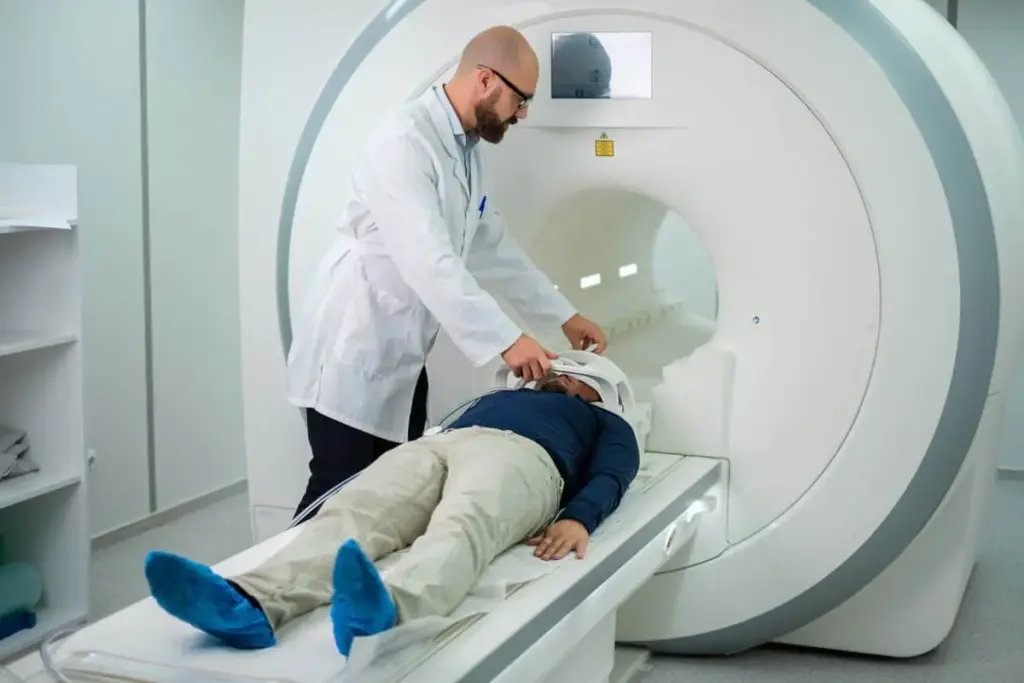
Doctors order an MRI of the head and neck to find and track different health issues in these areas. is a key tool for doctors. It gives them detailed views of the head and neck. This helps them spot problems and plan the best treatments.
MRI scans provide clear, detailed images of the inside of the head and neck. They focus on your brain to find issues that need medical help. This advanced imaging is crucial for spotting problems early. It helps doctors treat you more accurately and ensures you get the best care possible.
Key Takeaways
- MRI scans help diagnose and monitor various head and neck conditions.
- Doctors use MRI to detect abnormalities and develop treatment plans.
- MRI provides detailed insights into the head and neck region.
- Early detection through MRI can lead to more effective treatment.
- MRI is a critical tool for ensuring high-quality patient care.
Understanding MRI Technology
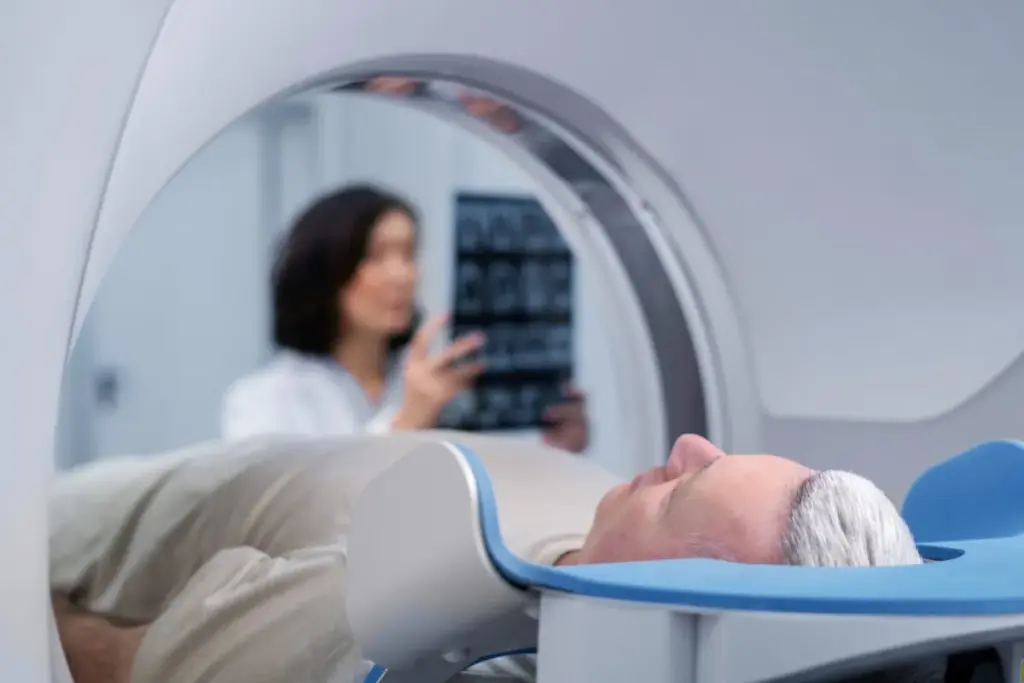
MRI technology is key in medical diagnostics. It’s non-invasive and painless, letting us see inside the body. We use MRI to get detailed images for diagnosing many health issues.
How Magnetic Resonance Imaging Works
MRI uses a big magnet, radio waves, and a computer to show internal body images. It aligns hydrogen atoms with a strong magnetic field. Then, it disturbs these atoms with radio waves to get signals for images.
The tech behind MRI is complex. It uses advanced computer algorithms to make images from the signals. This lets us see soft tissues, organs, and more with great detail.
Advantages Over Other Imaging Methods
MRI stands out because it gives clear images without ionizing radiation. This makes it safer for patients needing many scans or who are sensitive to radiation.
Also, MRI shows soft tissues better than other methods. This is great for checking the brain, spine, and other soft tissues. For more info on MRI guidelines, check out on brain MRI.
In summary, MRI has changed diagnostic medicine. It’s a powerful tool for seeing inside the body without harm. Its non-invasive nature and ability to show detailed images without radiation make it crucial in healthcare today.
The Diagnostic Power of MRI for Head and Neck Conditions
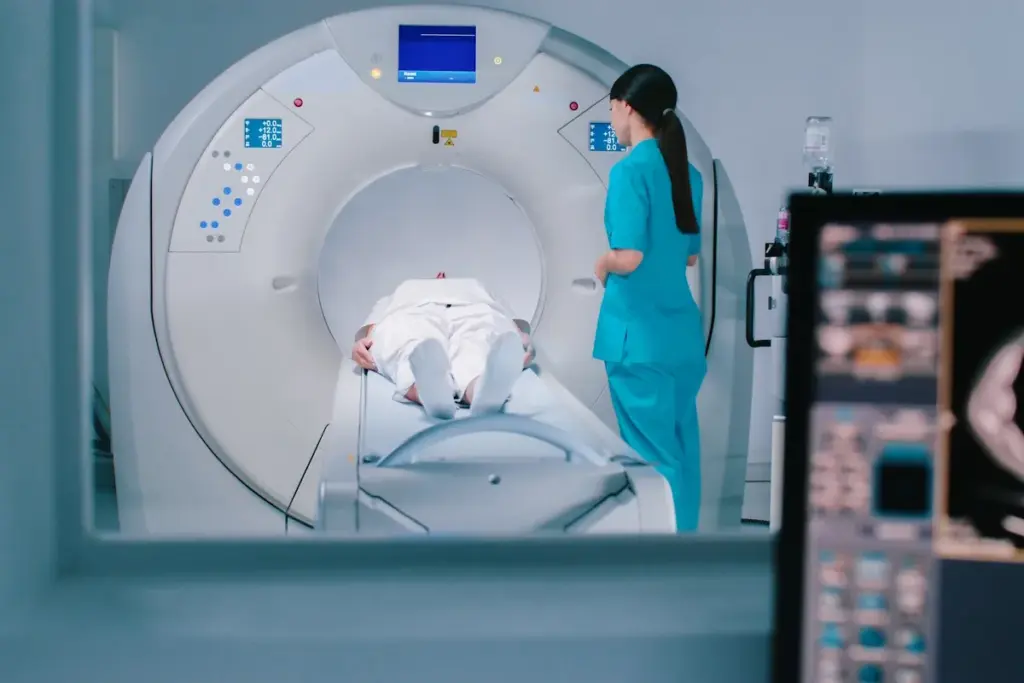
MRI scans are great at showing detailed images of the head and neck. This is key for finding and treating problems in this area.
High-Resolution Imaging Capabilities
MRI technology gives us exceptional detail of soft tissues, blood vessels, and nerves. This is crucial for spotting issues and planning treatments.
We use MRI scans to look at the head and neck’s complex structures. They help us find even small changes that might mean a problem. MRI’s clear images help doctors make better diagnoses.
Multiparametric MRI Protocols
Multiparametric MRI uses different sequences to give a full view of the head and neck. This way, we can see more about tissue and any problems.
With multiparametric MRI, we get lots of info about the condition. We learn about tissue damage and biomarkers. This info is key for making treatment plans that fit each patient’s needs.
MRI’s ability to show detailed images and use different protocols makes it an indispensable tool for diagnosing and treating head and neck issues.
Common Neurological Conditions Requiring Head MRI
A head MRI is a key tool for doctors to find and treat many neurological issues. These conditions can greatly affect a person’s life. Getting the right diagnosis is key for good treatment.
Brain Tumors and Masses
Brain tumors and masses can be harmless or dangerous. MRI scans show the size, type, and where these growths are. This info is vital for choosing the right treatment.
MRI’s high-resolution imaging lets doctors see how the tumor affects the brain. This helps in planning surgery and radiation therapy.
Stroke and Vascular Abnormalities
Stroke and vascular problems are big worries for brain health. MRI spots stroke damage and finds vascular issues like aneurysms. Early detection is key to avoid lasting harm and better outcomes.
MRI’s detailed views of blood vessels and brain tissue are crucial. They help in diagnosing and managing strokes.
Neurodegenerative Disorders
Conditions like Alzheimer’s and Parkinson’s affect many people. MRI isn’t the main way to diagnose these, but it helps rule out other causes. It also tracks how these diseases progress.
MRI’s ability to see brain changes over time is very useful. It helps in managing these complex conditions.
MRI gives detailed brain images, helping doctors diagnose and treat many neurological issues. It’s essential for finding brain tumors, diagnosing strokes, and tracking neurodegenerative diseases. MRI is a vital tool in modern neurology.
Neck Conditions Diagnosed Through MRI
MRI scans are key for finding neck problems. They show soft tissues and the spinal cord clearly. This helps doctors spot issues that other tests can’t see.
Soft Tissue Abnormalities
Neck soft tissue issues include tumors, cysts, and infections. MRI is great for soft tissue checks. It can tell different tissues apart and find problems. For example, explain MRI’s role in finding soft tissue issues.
Spinal Cord Issues
Spinal cord problems like compression or injury can be seen with MRI. It shows the spinal cord and nearby areas well. This helps doctors find and fix issues causing pain, numbness, or weakness.
Vascular Conditions in the Neck
Vascular issues, like stenosis or thrombosis, can be found with MRI. It looks at neck blood vessels. This helps doctors spot problems that could be serious if not treated.
MRI in Cancer Diagnosis and Staging
MRI is a key tool in cancer diagnosis. It gives detailed images of tumors and the tissues around them. This is crucial for making accurate diagnoses and planning treatments.
Detecting Primary Tumors
MRI is great at finding primary tumors in different parts of the body. This includes the head and neck. Its high sensitivity helps spot tumors early, which is key for better patient care.
Key benefits of MRI in detecting primary tumors include:
- High-resolution imaging of soft tissues
- Ability to detect tumors in complex anatomical locations
- Non-invasive nature, reducing the risk of complications
Identifying Brain Metastases
Brain metastases are a serious issue in cancer. MRI is essential for finding them. It gives detailed brain images, helping doctors plan treatments.
Evaluating Treatment Response
MRI is used not just for diagnosis but also to check how treatments work. By comparing scans before, during, and after treatment, doctors can see if the treatment is effective. This helps them make any needed changes.
|
Treatment Stage |
MRI Findings |
Clinical Implication |
|---|---|---|
|
Pre-treatment |
Tumor size and location |
Baseline for treatment planning |
|
During treatment |
Changes in tumor size and characteristics |
Assessment of treatment response |
|
Post-treatment |
Final tumor size and characteristics |
Evaluation of treatment outcome |
Using MRI technology improves cancer diagnosis and staging. This leads to better treatment plans and care for patients.
The Role of MRI in Trauma Assessment
MRI is key in checking for injuries, especially in the head and neck. It helps doctors see how bad the damage is. This lets them plan the best treatment.
Traumatic Brain Injury Evaluation
Traumatic brain injuries (TBI) are a big problem worldwide. MRI is very important for checking TBI. It shows detailed images of the brain.
Key benefits of MRI in TBI evaluation include:
- Detailed visualization of brain anatomy
- Detection of subtle injuries not visible on other imaging modalities
- Guidance for surgical interventions or other treatments
Doctors say MRI is essential for TBI. It gives deep insights into the brain’s structure and function.
“The use of MRI in traumatic brain injury has significantly improved patient outcomes by allowing for more accurate diagnosis and targeted treatment strategies.”
Neck Trauma Imaging
Neck trauma can affect many things, like blood vessels and muscles. MRI is great for seeing how bad the injuries are. It shows soft tissues clearly.
Neck trauma imaging with MRI can help identify:
- Vascular injuries, such as dissections or pseudoaneurysms
- Soft tissue damage, including muscle tears or abscesses
- Spinal cord injuries, such as compression or transection
With MRI, doctors can quickly find and treat neck trauma. This helps avoid long-term problems.
In summary, MRI is a top tool for checking injuries. It gives detailed info that helps doctors make better plans for treatment.
Why Doctors Order MRI for Infectious Diseases
MRI scans are key in finding and treating head and neck infections. These diseases, like brain infections and neck abscesses, need quick and accurate diagnosis. We’ll see how MRI aids in diagnosing these issues.
Brain Infections
Brain infections, such as encephalitis or abscesses, are serious and need fast medical help. MRI is great for spotting these because it shows the brain’s soft tissues clearly. It can identify:
- The extent of the infection
- Any abscess formation
- Involvement of critical brain structures
In cases of suspected encephalitis, MRI spots inflammation areas. This helps doctors make treatment plans. Medical experts say MRI has changed diagnosing neurological infections by showing detailed images.
Neck Infections and Abscesses
Neck infections and abscesses are also where MRI shines. These can come from bacteria or viruses. MRI checks how far the infection has spread and if there are abscesses or other issues.
The benefits of MRI for neck infections are:
- It shows soft tissue structures well
- It finds abscesses or fluid collections
- It helps plan for surgery
MRI for Unexplained Neurological Symptoms
Unexplained neurological symptoms can be hard to diagnose. But MRI technology is a powerful tool for investigation. Doctors use MRI scans to see what’s happening inside the brain and nervous system when symptoms are unclear.
Persistent Headaches
Persistent headaches can really affect a person’s life. An MRI scan can find causes like vascular issues, tumors, or other problems. It gives doctors detailed images of the brain to help find serious conditions and plan treatment.
An MRI can spot issues like cerebral venous sinus thrombosis or vasculitis. These conditions can cause headaches. Early diagnosis through MRI is key to managing these conditions well.
Vision and Hearing Problems
Vision and hearing problems can signal neurological conditions. MRI scans are great for diagnosing issues with the optic nerve, inner ear, and brain structures. They help doctors find problems like optic neuritis, acoustic neuromas, or other vision and hearing issues.
“MRI has revolutionized diagnosing and managing neurological conditions. Its high-resolution images of soft tissues have been a game-changer in understanding complex symptoms.”
Balance and Coordination Issues
Balance and coordination problems can point to neurological issues. MRI scans can spot conditions like multiple sclerosis, cerebellar ataxia, or peripheral neuropathy. They provide detailed images of the affected areas, helping doctors plan targeted treatments.
|
Condition |
Symptoms |
How MRI Helps |
|---|---|---|
|
Multiple Sclerosis |
Balance issues, vision problems |
Identifies demyelinating lesions |
|
Cerebellar Ataxia |
Coordination problems, balance issues |
Reveals cerebellar damage or degeneration |
|
Peripheral Neuropathy |
Numbness, weakness, balance issues |
Assesses nerve damage |
In conclusion, MRI scans are crucial for diagnosing unexplained neurological symptoms. They provide detailed images of the brain and nervous system. This helps doctors find underlying conditions and plan effective treatments. MRI is a powerful tool for diagnosing headaches, vision and hearing problems, and balance and coordination issues, improving patient outcomes.
The Significance of MRI in Multiple Sclerosis Diagnosis
MRI has changed how we diagnose and track multiple sclerosis. It lets doctors see the brain and spinal cord in detail. This helps find the lesions that are a sign of the disease.
Detecting Demyelinating Lesions
MRI is key in finding demyelinating lesions. These are spots where the nerve covering (myelin) is damaged. This damage stops nerves from working right. MRI scans are great at spotting these lesions in the brain and spinal cord.
Characteristics of Demyelinating Lesions on MRI:
- Look bright on T2-weighted images
- Found in the brain and spinal cord’s white matter
- Can be different sizes and numbers, showing how severe the disease is
Monitoring Disease Progression
MRI is also important for tracking how the disease gets worse. Regular scans show changes in lesions, new ones, and if treatments are working.
|
Aspect |
Baseline MRI |
Follow-Up MRI |
|---|---|---|
|
Lesion Load |
First look at how many and how big lesions are |
Checks for changes compared to the first scan |
|
Gadolinium Enhancement |
Finds active lesions |
Sees if new or old lesions are changing |
|
Treatment Response |
Starts to see how well treatments work |
Checks if treatments are making a difference |
Using MRI for both diagnosing and tracking helps doctors make better treatment plans. This can slow down the disease and make life better for patients.
Rare Diseases and Complex Cases Requiring MRI
MRI technology is key in finding rare diseases and complex medical issues. We use MRI scans to get detailed images. These images help us spot and manage these tough cases.
Congenital Abnormalities
Congenital abnormalities are present at birth and can affect many parts of the head and neck. MRI is great for spotting issues like Chiari malformations and craniosynostosis. It lets us see the exact shape of these problems.
- Detailed imaging helps in planning surgical interventions.
- MRI provides a clear view of soft tissue abnormalities.
- It aids in monitoring the progression of congenital conditions.
Autoimmune Disorders
Autoimmune disorders make the body attack its own tissues. MRI is key in finding issues like Multiple Sclerosis and Sjögren’s syndrome. It helps us see how far the disease has spread and guides treatment.
- MRI shows lesions in the brain and spinal cord.
- It helps in evaluating the salivary glands in Sjögren’s syndrome.
- Contrast-enhanced MRI can highlight areas of active inflammation.
Genetic Conditions
Some genetic conditions affect the head and neck, making diagnosis hard. MRI is crucial in finding and managing issues like Neurofibromatosis and Tuberous Sclerosis Complex. It gives us insights into tumor size and possible problems.
Advanced MRI techniques help us understand rare diseases and complex cases better. This leads to better care for our patients.
How MRI Findings Inform Treatment Pathways
MRI findings are key in planning treatments for head and neck issues. They give doctors detailed images. This helps them create treatment plans that fit each patient’s needs.
Surgical Planning
MRI scans help a lot in surgical planning. They show the anatomy and any problems clearly. This helps surgeons know the best way to operate.
For complex cases, MRI is very helpful. It shows how close tumors are to important parts. This reduces surgery risks.
Radiation Therapy Guidance
MRI scans also guide radiation therapy. They show tumors and tissues around them. This helps doctors target the tumor well and avoid healthy tissues.
Using MRI data, doctors can make treatment plans that fit the tumor perfectly. This means less damage to other parts.
Medical Management Decisions
MRI findings also help with medical management decisions. For conditions not needing surgery or radiation, MRI guides treatment. It helps track disease progress and treatment response.
It gives doctors a clear view of the disease. This helps them decide the best treatment.
In summary, MRI findings are crucial for treating head and neck conditions. They help in planning surgeries, guiding radiation therapy, and making medical decisions. MRI ensures patients get the best care.
MRI Follow-Up for Cysts and Benign Conditions
MRI follow-up is key for managing cysts and benign conditions well. We use MRI to keep a close eye on these conditions. This way, we catch any changes early.
Monitoring Growth Patterns
One big plus of MRI follow-up is watching how cysts and benign conditions grow. We can see if they’re changing over time.
- Regular MRI scans track the size and look of cysts and benign tumors.
- This info is crucial for figuring out the best care for patients.
- If these conditions grow or change, it might mean we need a new treatment plan.
Determining Intervention Necessity
MRI follow-up also helps decide if we need to act. By watching these conditions closely, we can see if we need to do more.
- If a cyst or benign condition grows a lot or changes, we might suggest surgery.
- If it stays the same, we might stick with a more careful approach.
- Every decision to act is based on what’s best for the patient and their condition.
With MRI follow-up, we can tailor care for patients with cysts and benign conditions. This way, we aim for the best results.
Comparing MRI to Other Diagnostic Imaging Methods
MRI is a top choice for detailed images and spotting soft tissue issues. It’s important to compare MRI with other tools like CT scans, ultrasound, and X-rays. This helps us see their strengths and weaknesses.
MRI vs. CT Scans
CT scans and MRI are both key tools, but they’re used for different things. CT scans use X-rays to show bones, lungs, and tumors. MRI, on the other hand, uses magnetic fields and radio waves for better soft tissue images. It’s best for the brain, spinal cord, and soft tissues.
|
Imaging Modality |
Strengths |
Limitations |
|---|---|---|
|
MRI |
High soft tissue contrast, detailed images of brain and spinal cord |
Claustrophobia, longer scan times, not suitable for patients with certain metal implants |
|
CT Scans |
Quick, widely available, good for bone and lung imaging |
Radiation exposure, less detailed soft tissue imaging |
MRI vs. Ultrasound and X-rays
Ultrasound and X-rays are also used for imaging. Ultrasound uses sound waves for organs like the gallbladder and thyroid. X-rays use radiation for bones and some structures. But, MRI beats them in soft tissue detail.
Key differences: MRI is best for soft tissue, ultrasound is portable and cheaper. X-rays are fast for bones but involve radiation and are not as good for soft tissues.
Healthcare providers pick imaging methods based on the patient’s needs and history. Knowing the pros and cons of each helps choose the right imaging for each patient.
The MRI Procedure: What Patients Should Expect
Understanding the MRI procedure is key for a smooth experience. An MRI scan is a non-invasive tool that offers valuable health insights. Knowing what to expect can make you feel more at ease.
Preparation Guidelines
We give you preparation guidelines before your MRI. You’ll need to remove metal objects and wear loose, comfy clothes. Avoid heavy meals and caffeine beforehand. Some conditions need special prep, so follow our instructions closely.
You’ll also fill out a form about metal implants or other conditions. This info is vital for your safety during the scan.
During the Scan
You’ll lie on a table that moves into the MRI machine. It’s important to stay still for clear images. Our MRI technologist will help and support you.
The scan is painless but might make loud noises. We offer earplugs or headphones to reduce any discomfort. You can also talk to the technologist through an intercom.
“The MRI procedure is generally very safe and non-invasive. However, it’s crucial to follow the preparation guidelines and instructions provided by your healthcare team to ensure a successful scan.”
Post-Procedure Information
After the scan, you can go back to your usual activities unless your doctor says otherwise. We’ll give you post-procedure information and what to expect next.
The MRI images will be reviewed by a radiologist. Your doctor will then discuss the results with you. They’ll talk about any next steps you need to take.
We know MRI scans can be anxiety-inducing. Our team aims to make the experience as comfortable and stress-free as possible. If you have concerns or questions, please ask.
Limitations and Contraindications of MRI
MRI technology is powerful but has its limits. It’s safe and non-invasive, but some conditions or situations might not be suitable. This includes when special precautions are needed.
Medical Devices and Implants
One big issue with MRI is medical devices and implants. The strong magnetic field can harm patients or damage devices. This is especially true for ferromagnetic materials.
Here are some examples of risky implants and devices:
- Pacemakers and other implantable cardioverter-defibrillators (ICDs)
- Cochlear implants
- Certain types of aneurysm clips
- Metallic foreign bodies, especially those in the eye
It’s important for patients to tell their doctors about any implants or devices before an MRI.
|
Device/Implant |
MRI Compatibility |
Special Considerations |
|---|---|---|
|
Pacemakers |
Generally not compatible |
May require alternative imaging or reprogramming |
|
Cochlear Implants |
Not compatible |
External components may need to be removed |
|
Aneurysm Clips |
Varies by type |
Detailed history required |
Claustrophobia and Movement Issues
Claustrophobia can be a big problem for some patients. They have to lie in a closed tube for a long time. This can be scary.
To help, some MRI places offer:
- Open MRI machines
- Sedation to help relax the patient
- Mirrored goggles or other visual aids to reduce the feeling of enclosure
Moving during the scan can also ruin the images. Patients are told to stay still as much as possible.
Knowing these limits helps doctors take better care of patients. They can make smarter choices about using MRI for tests.
Conclusion: The Future of Head and Neck MRI in Clinical Practice
Medical technology is advancing fast, making head and neck MRI more important. MRI is key for diagnosing because it shows detailed images of soft tissues. This helps doctors spot problems early.
We see MRI getting even better, leading to more accurate diagnoses and better care for patients. Head and neck MRI will help doctors manage complex conditions better. This means patients will get the care they need sooner.
The future of MRI looks bright, with new imaging methods and protocols on the way. Head and neck MRI will keep being a vital part of healthcare. This will lead to better patient results and improved healthcare overall.
FAQ
What is an MRI scan, and how does it work?
MRI stands for Magnetic Resonance Imaging. It’s a way to see inside your body without surgery or harmful radiation. It uses strong magnetic fields and radio waves to create detailed images.
Why would a doctor order an MRI of the head and neck?
Doctors order MRI scans to find and track many health issues. This includes brain tumors, stroke, and soft tissue problems. MRI helps us plan the best treatment.
What are the advantages of MRI over other imaging methods?
MRI is great because it shows high detail and doesn’t use harmful radiation. It’s especially good for seeing soft tissues and the brain and spinal cord. This makes it a top choice for many diagnoses.
How long does an MRI scan typically take?
MRI scan times vary. They can last from 15 to 90 minutes. We make sure you’re comfortable and know what to expect.
What is the difference between an MRI with and without contrast?
Contrast agents like gadolinium make some things show up better on MRI scans. We use it for tumors and infections. Without contrast, we look at things like stroke or spinal cord injuries.
Can I undergo an MRI if I have a medical implant or device?
It depends on the implant. Some, like pacemakers, can’t be near MRI machines. We check each case to see if MRI is safe. Sometimes, other tests are needed.
How do I prepare for an MRI scan?
Remove metal items and wear loose clothes. You might need to fast or avoid some meds. We give you all the details to get ready.
What should I expect during the MRI procedure?
You’ll lie on a table that goes into the MRI machine. We talk to you through an intercom and give earplugs. The scan is usually painless, but some might feel claustrophobic.
Can I get an MRI if I am claustrophobic?
Yes, we can help. We have open MRI machines or sedation for comfort. You can also ask for a break if needed.
How do MRI findings inform treatment pathways?
MRI results are key for treatment plans. They help us diagnose, track, and plan treatments. MRI findings guide surgery, radiation, and medicine choices.
Reference
National Center for Biotechnology Information. Evidence-Based Medical Insight. Retrieved from https://pubmed.ncbi.nlm.nih.gov/22968892/



 Departments
 Related Videos
 Our Doctors
 News
News