When you have a sports injury or joint pain, understanding the difference between an MRI scan vs X-ray is key to getting the right diagnosis. At Liv Hospital, we focus on world-class imaging services and put patients first. We use MRI, X-ray, and CT scans to find bone fractures, tendon tears, and ligament injuries.
Knowing the benefits of an MRI scan vs X-ray can help patients choose the most effective test. Each imaging method has its own strengths. For example, X-rays are great for seeing bone issues, while MRI scans are best for soft tissue problems. By comparing an MRI scan vs X-ray, our specialists ensure each patient receives accurate results and the personalized care they need.
Key Takeaways
- Different imaging techniques are suited for different types of injuries.
- MRI scans are ideal for soft tissue injuries, while X-rays are better for bone fractures.
- CT scans offer detailed cross-sectional images useful for various diagnoses.
- Liv Hospital is committed to providing world-class imaging services.
- Choosing the right imaging test is key for accurate diagnosis and effective treatment.
Understanding Medical Imaging Technologies
Medical imaging technologies have changed how we diagnose and treat injuries. They are key to modern healthcare, letting us see inside the body in detail.
The Evolution of Diagnostic Imaging
Diagnostic imaging has seen huge changes over the years. It started with X-rays and now includes advanced tools like MRI and CT scans. Each step has helped us better understand the human body.
- X-rays: The first imaging tech, showing bone fractures and some soft tissue issues.
- CT Scans: Give detailed cross-sections, helping us see internal injuries better.
- MRI: Shows soft tissues, tendons, and ligaments in high detail, key for complex injury diagnosis.
Role of Imaging in Injury Diagnosis and Treatment Planning
Medical imaging is vital for injury diagnosis and treatment planning. It gives clear views of internal structures. This helps doctors:
- Correctly find out the extent and type of injuries.
- Make specific treatment plans with precise data.
- Check how treatment is going and make changes if needed.
From checking bone fractures with X-rays to soft tissue damage with MRI, medical imaging is essential in injury care today.
X-Ray Technology: Fundamentals and Applications

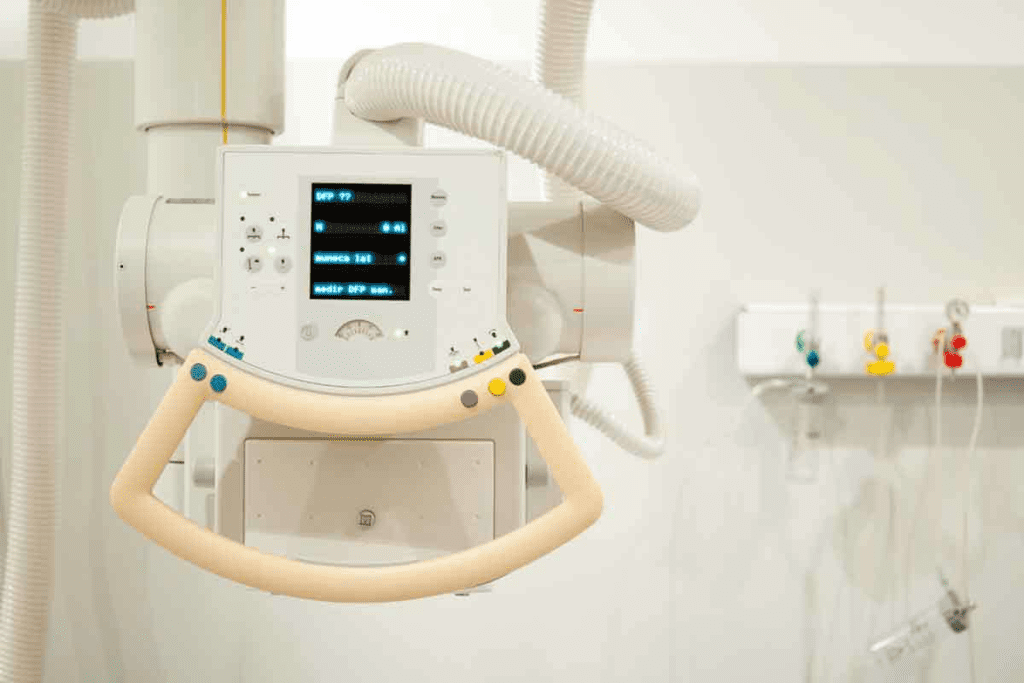
X-ray technology has been key in medical imaging for years. It helps us see inside the body, showing bone and soft tissue injuries. We use X-rays to quickly find many conditions, like fractures and foreign objects.
How X-Ray Imaging Works
X-ray imaging uses beams that go through the body. Tissues absorb these beams at different rates. This makes it possible to see inside the body.
Dense materials like bone absorb more X-rays and show up white. Softer tissues appear in gray shades.
Types of Injuries Best Detected by X-Rays
X-rays are great for finding bone fractures and dislocations. They also show some soft tissue injuries and foreign objects. But, they’re not as good for seeing tendon and ligament damage.
Cost and Accessibility Advantages
X-ray technology is affordable and easy to find. Most medical places have X-ray machines. This is important for emergencies when quick diagnosis is needed.
| Imaging Modality | Cost | Accessibility | Best for Detecting |
| X-Ray | Low | High | Bone fractures, foreign objects |
| CT Scan | Moderate | Moderate | Complex fractures, internal injuries |
| MRI | High | Low | Soft tissue injuries, tendon and ligament damage |
“The simplicity and speed of X-ray imaging make it an indispensable tool in emergency medicine.”
Can X-Rays Show Tendon or Ligament Damage?
It’s important to know what X-rays can and can’t do when it comes to soft tissue injuries. X-rays are great for seeing bones, but they’re not so good at showing soft tissue damage like tendon tears or ligament injuries.
Limitations for Soft Tissue Visualization
X-rays work by showing dense materials like bones, which block X-rays. Soft tissues like tendons and ligaments are less dense and harder to see on X-rays. This makes it tough to spot injuries to these tissues just by looking at X-rays.
The main reasons for these limitations include:
- The low density of soft tissues compared to bone
- The inability of X-rays to provide detailed images of soft tissue structures
- The reliance on indirect signs to infer soft tissue damage
Why Tendons and Ligaments Don’t Appear on X-Rays
Tendons and ligaments are made of dense tissue, but they don’t block X-rays like bones do. So, they don’t show up well on X-ray images. Diagnosing tendon or ligament damage often requires alternative imaging methods that can better visualize soft tissues.
Common Misunderstandings About X-Ray Capabilities
Many people think X-rays can show all kinds of injuries, including soft tissue ones. But X-rays are mainly for checking bone health. For soft tissue injuries, other imaging modalities like MRI or ultrasound are typically more effective.
Some key points to consider:
- X-rays are not the best tool for diagnosing soft tissue injuries.
- Alternative imaging methods may be necessary for accurate diagnosis.
- Understanding the limitations of X-ray technology can help in choosing the right diagnostic pathway.
CT Scan Technology: Advanced X-Ray Imaging
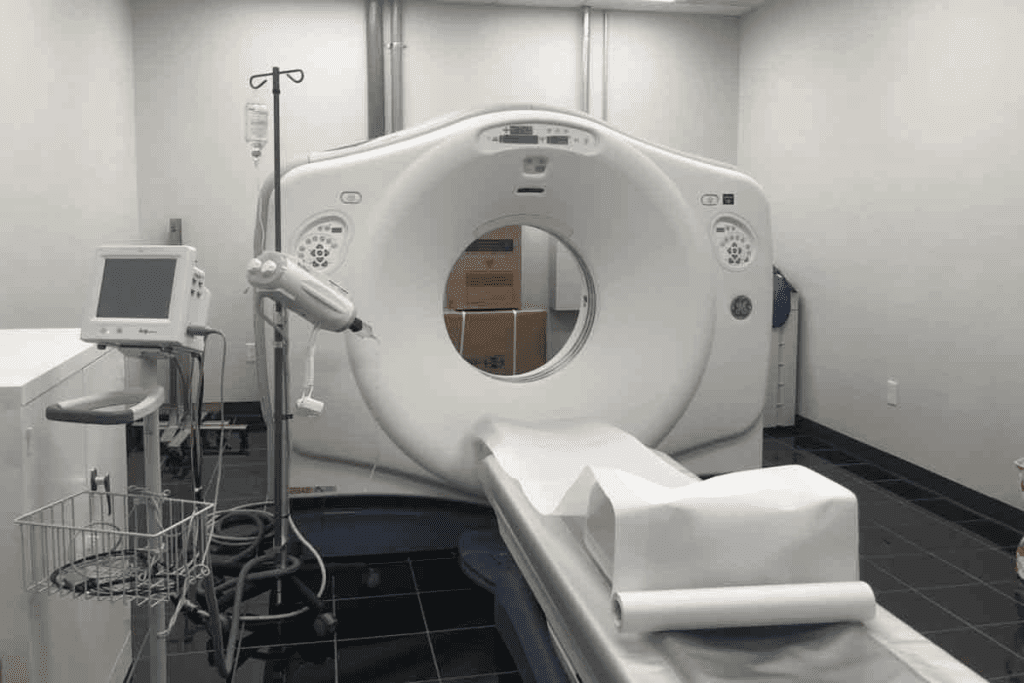
CT scans are a big step forward in medical imaging. They give detailed views of the body’s inside. This tech is key for spotting and treating internal injuries.
How CT Scans Create Cross-Sectional Images
CT scans mix X-rays and computer tech for body images. Unlike regular X-rays, CT scans show many images from different sides. They then make these into detailed views of the body’s inside.
Key Components of CT Scan Technology:
- X-ray tube: Emits X-rays that pass through the body.
- Detectors: Capture the X-rays after they have passed through the body.
- Computer system: Reconstructs the captured images into cross-sectional views.
Enhanced Visualization of Internal Injuries
CT scans are great for seeing internal injuries clearly. They show detailed images of the body’s inside. This helps doctors understand injuries better, which is very important in emergencies.
“CT scans have revolutionized the way we diagnose and treat internal injuries, providing a level of detail that was previously unattainable with traditional imaging techniques.” – by Expert
Looking at different imaging tech shows why CT scans are good for seeing internal injuries:
| Imaging Modality | Internal Injury Visualization | Radiation Exposure |
| X-Ray | Limited to bone structures and some foreign objects | Low |
| CT Scan | Detailed cross-sectional views of internal structures | Moderate to High |
| MRI | Excellent soft tissue visualization | None |
Radiation Considerations in CT Scanning
CT scans are very useful but they use radiation. The amount of radiation depends on the scan and the area being looked at. Doctors try to balance the good of CT scans with the risk of radiation, mainly for patients needing many scans.
Strategies to minimize radiation exposure include:
- Using the lowest effective dose of radiation necessary for diagnostic image quality.
- Implementing advanced CT technologies that reduce radiation exposure.
- Carefully selecting patients for CT scans based on clinical indications.
Understanding CT scans’ benefits and limits helps doctors decide when to use them. This is important for treating internal injuries.
What’s the Difference Between X-Ray and CT Scan?
Understanding the difference between X-ray and CT scan is key for treating injuries well. Each has its own strengths and is used in different situations.
Technological Distinctions
X-ray technology uses one beam of X-rays to show a two-dimensional image. It’s great for seeing bones and dense tissues. CT scan technology, on the other hand, uses many X-ray beams and detectors. It creates detailed cross-sections of the body’s inside.
Diagnostic Capability Comparison
CT scans show more detailed images of internal injuries than X-rays. This is key for complex injuries or soft tissue damage. For example, CT scans can clearly show internal organs, blood vessels, and bones. They’re very useful in emergency medicine.
- CT scans provide detailed cross-sectional images.
- X-rays are better suited for initial assessments of bone fractures.
- CT scans are more effective for visualizing soft tissue injuries.
When Doctors Choose CT Over Traditional X-Ray
Doctors prefer CT scans over X-rays for detailed injury information or unclear diagnoses. This is true for severe trauma, where CT scans quickly show internal injuries.
Knowing the difference between X-ray and CT scan helps patients make better choices for their care. By understanding when each is best, patients can choose their treatment wisely.
MRI Scan vs X-Ray: Key Differences and Applications
Choosing between an MRI scan and an X-ray depends on the injury type. Both are used for different conditions. They have unique benefits.
How MRI Technology Works Without Radiation
MRI scans use strong magnetic fields and radio waves. They create detailed images without radiation. This makes them safer for some patients, like pregnant women.
It works by aligning hydrogen atoms with a magnetic field and then using radio waves. As atoms return to their original state, they send signals. These signals help create detailed images.
Soft Tissue Visualization Capabilities
MRI scans are better at showing soft tissues than X-rays. They clearly image tendons, ligaments, and other soft tissues. This is key for diagnosing soft tissue injuries.
They’re great for checking complex joints like the knee or shoulder. Both bone and soft tissue injuries can be seen.
Clinical Scenarios Where MRI Outperforms X-Ray
MRI scans are better in many situations, like soft tissue injuries. For example, they’re more accurate for ligament tears or tendonitis than X-rays.
They’re also great for spinal cord injuries, cartilage damage, and joint injuries. Their ability to show detailed images without radiation is a big plus.
CT Scan vs X-Ray vs MRI: A Comparative Look
Medical imaging has grown a lot, giving us many ways to check for injuries. We’ll look closely at CT scans, X-rays, and MRI scans.
Diagnostic Strengths of Each Modality
X-rays are great for finding bone breaks and some lung problems. CT scans show detailed pictures of the body, perfect for complex injuries and cancers. MRI scans are best for soft tissues like tendons and organs.
Here’s a table to show what each can do well:
| Imaging Modality | Diagnostic Strengths |
| X-Ray | Bone fractures, lung conditions |
| CT Scan | Complex injuries, internal bleeding, cancers |
| MRI | Soft tissue injuries (tendons, ligaments, organs) |
Time, Cost, and Accessibility Factors
X-rays are fast, taking just a few minutes. CT scans also take a few minutes but need more prep. MRI scans can take 15 to 90 minutes, depending on the scan.
X-rays are the cheapest, MRI scans the most expensive. CT scans are in the middle. Where you can get these tests can also vary.
Patient Experience Differences
X-rays are easy and painless. CT scans use radiation and might need dye, which can cause allergies. MRI scans don’t use radiation but can be scary because of the tight space and might need dye too.
Doctors need to pick the right test for their patients. They must think about what’s needed, what’s safe, and what’s comfortable for the patient.
Detecting Tendon and Ligament Injuries: Imaging Options
Tendon and ligament injuries need precise imaging to treat them right. Choosing the right imaging method is key to accurately diagnose these injuries.
Can You See Tendons on X-Ray?
Tendons and ligaments are soft tissues that can’t be seen on X-rays. X-rays are great for finding bone fractures but not for soft tissue injuries.
X-rays are not the best choice for tendon and ligament injuries. They show bones well but might hint at soft tissue damage through swelling or calcification.
CT Scan Capabilities for Ligament Visualization
CT scans give more detailed images than X-rays and can show soft tissues with contrast agents. But, CT scans are not the top choice for seeing ligaments because they don’t contrast soft tissues as well as other methods.
CT scans are better for bone injuries or big structural damages. For ligament injuries, they’re useful but not as good as MRI scans.
Why MRI Excels at Tendon and Ligament Imaging
MRI is the best for finding tendon and ligament injuries. It shows soft tissues clearly, helping spot tears, strains, and other issues.
MRI stands out because it can tell soft tissues apart. This makes MRI essential for diagnosing tendon and ligament injuries. We count on MRI for its unmatched soft tissue detail.
Muscle, Cartilage, and Other Soft Tissue Injury Assessment
It’s key to know the good and bad of imaging tech for soft tissue injuries. This includes muscles and cartilage. New imaging tools have made checking these injuries more precise.
Limitations of X-Ray and CT for Muscle Injuries
X-rays and CT scans aren’t great for soft tissue injuries. They’re good for seeing bone fractures and some other issues. But they can’t show muscle and cartilage injuries well.
Doctors say X-rays can’t see soft tissues well. This makes them not the best for diagnosing muscle, tendon, and ligament injuries.
“Conventional radiography (X-ray) is not sensitive to the changes in soft tissue that occur with injury or disease.”
| Imaging Modality | Soft Tissue Visualization | Bone Visualization |
| X-Ray | Limited | Excellent |
| CT Scan | Moderate | Excellent |
| MRI | Excellent | Good |
MRI’s Superior Soft Tissue Contrast
MRI scans show soft tissues better than other methods. This helps doctors spot small injuries that others might miss. It’s great for looking at muscle, cartilage, and other soft tissues.
MRI’s advantages in soft tissue imaging let it show tendons, ligaments, and cartilage clearly. This makes it a must-have for diagnosing soft tissue injuries.
Detecting Subtle Soft Tissue Pathology
MRI is very good at finding small soft tissue injuries. It can spot early muscle and tendon issues, and even tiny cartilage problems.
- Early detection of muscle strains
- Detailed visualization of tendon and ligament injuries
- Assessment of cartilage health and early degenerative changes
Using MRI helps doctors make better diagnoses and treatment plans for soft tissue injuries.
Bone Injury Evaluation: Comparing Imaging Technologies
Bone injuries are complex, and picking the right imaging test is key for accurate diagnosis and care. We use different imaging technologies to check bone injuries. Each has its own strengths and weaknesses.
Fracture Detection Capabilities
Finding fractures is a big part of checking bone injuries. X-rays are usually the first choice because they’re easy to get and quick to read. But, they might miss complex fractures.
CT scans give a clearer view of bones, which is great for complex fractures. They’re best for areas like the spine, pelvis, or joints. Their cross-sectional images help see how bad a fracture is and how it’s moved.
Bone Density and Structure Evaluation
Checking bone density and structure is key to understanding bone health and treatment plans. X-rays can show some bone density info, but they’re not the best for small changes or detailed bone structure.
CT scans are better for checking bone density and finding conditions like osteoporosis. They can spot structural problems that X-rays miss.
When Simple X-Rays Are Insufficient for Bone Injuries
Even though X-rays are often the first choice for bone injuries, they’re not always enough. Complex fractures, stress fractures, or injuries to soft tissues around the bone need more advanced imaging.
| Imaging Modality | Fracture Detection | Bone Density Evaluation | Soft Tissue Assessment |
| X-Ray | Good for simple fractures | Limited | Poor |
| CT Scan | Excellent for complex fractures | Good | Fair |
| MRI | Good for occult fractures | Limited | Excellent |
In conclusion, the right imaging tech for bone injury checks depends on the injury type, the need for detailed bone look, and soft tissue involvement. Knowing what each tech can do helps doctors make better choices for patients.
Alternatives to MRI for Soft Tissue Imaging
There are many imaging technologies beyond MRI for soft tissue assessment. MRI is great for soft tissues, but it’s not always the first choice or the only option for diagnosis.
Ultrasound Technology for Superficial Soft Tissues
Ultrasound technology is a valuable alternative for superficial soft tissues. It’s great for checking tendon and ligament injuries and guiding injections or other interventions. “Ultrasound is a highly operator-dependent modality, but in skilled hands, it can provide real-time, high-resolution images of soft tissue pathology,” notes a leading expert in musculoskeletal imaging.
Specialized CT Protocols for Enhanced Soft Tissue Visualization
CT scans are often used for bone imaging, but special protocols can improve soft tissue visualization. These protocols adjust the scanning technique to better see soft tissues. For example, CT arthrography can check intra-articular structures and find soft tissue problems in joints.
Emerging Technologies in Medical Imaging
The field of medical imaging is always changing, with new technologies coming out. One big step is contrast-enhanced imaging techniques, which make soft tissues more visible. Also, new ways to improve image reconstruction and processing are helping existing technologies.
As medical imaging gets better, patients and healthcare providers will have more options for diagnosing soft tissue injuries. Knowing the strengths and weaknesses of each modality helps us choose the best imaging strategy for each case.
Conclusion: Choosing the Right Imaging Test for Your Injury
Getting an accurate diagnosis is key to treating injuries well. We’ve looked at MRI, X-ray, and CT scans in this article. Each has its own strengths and uses.
What imaging test you need depends on your injury. X-rays are great for finding bone fractures. MRI is better for seeing soft tissue injuries, like tendon and ligament damage.
At Liv Hospital, we know how important it is to pick the right test for diagnosing injuries. We offer top-notch healthcare and support for international patients. Using the best imaging tech, we make sure our patients get the right treatment plans.
If you have a bone or soft tissue injury, our team is here to help. We’ll choose the best imaging test together. This way, we can help you recover quickly and get back to good health.
FAQ
Can X-rays show tendon damage?
No, X-rays can’t show tendon damage. They mainly show bones. Tendons, being soft tissues, are not visible on X-rays.
What’s the difference between an X-ray and a CT scan?
X-rays give a two-dimensional view of bones. CT scans, on the other hand, show cross-sections of bones and soft tissues in detail.
Can an MRI show ligament damage?
Yes, MRI is great for showing ligament damage. It gives detailed images of soft tissues like ligaments, tendons, and muscles.
Is there an alternative to an MRI scan?
Yes, alternatives include ultrasound for soft tissues and special CT scans for better soft tissue views. The right choice depends on the injury and patient needs.
Do X-rays show torn ligaments?
No, X-rays can’t show torn ligaments. They can’t see soft tissues like ligaments. MRI or ultrasound are used for diagnosing ligament injuries.
Can X-rays show tendon tears?
No, X-rays can’t show tendon tears. Tendon tears are soft tissue injuries. MRI or ultrasound are needed for accurate diagnosis.
What’s the difference between X-ray, CT scan, and MRI?
X-rays are best for bones. CT scans show bones and soft tissues in detail. MRI is top for soft tissues like tendons, ligaments, and muscles.
Can CT scans show ligament damage?
CT scans can give some info on soft tissues. But they’re not as good as MRI for seeing ligament damage. Special CT scans might help but are not as clear as MRI.
Are there any emerging technologies in medical imaging?
Yes, new technologies in medical imaging are coming. These include better MRI, CT, and ultrasound. They aim to improve image quality and reduce radiation.
How do I choose the right imaging test for my injury?
Choosing the right test depends on your injury and personal factors. Always talk to a healthcare professional to find the best imaging for your diagnosis and treatment.
References
- Tang, L., et al. (2024). Comparison of diagnostic performance of X‘ray, CT and MRI for subtle Lisfranc injuries. Chinese Journal of Traumatology, 27(2), 67-77. https://pmc.ncbi.nlm.nih.gov/articles/PMC10928826/