

Did you know that kidney cancer affects thousands of people worldwide each year? Surgical removal of the kidney, known as kidney removal or kidney surgery, is a common treatment. This approach helps many patients.
Knowing the right size for surgery is key to effective treatment. At our institution, we offer top-notch care. We help decide the ideal size for removal of a kidney with cancer. We believe in making medical decisions that fit each patient’s needs.
Our team of experts works closely with patients. We consider the size and nature of the kidney mass to find the best treatment. This approach ensures each patient gets the care they need.
Key Takeaways
- The size of a kidney mass is a critical factor in determining the need for surgical removal.
- Personalized medical decisions are essential for effective treatment.
- Our institution provides world-class care and guidance on kidney surgery.
- The expertise of our team is vital in determining the best course of action.
- Understanding the nature of the kidney mass is vital for treatment planning.
Understanding Kidney Masses and Their Significance
Renal masses are a wide range of growths, from harmless to dangerous. Knowing what they are is key to helping patients. Kidney masses are abnormal growths in or around the kidney. It’s important to understand them to choose the right treatment.
Types of Kidney Masses
Kidney masses can be divided into several types. Each has its own characteristics and origins. Here are the most common ones:
- Renal Cell Carcinoma (RCC): This is the most common kidney cancer in adults. It starts in the kidney’s lining.
- Cysts: These are fluid-filled sacs. They can be simple (harmless) or complex (possibly dangerous).
- Angiomyolipomas (AMLs): These are benign tumors made of blood vessels, smooth muscle, and fat.
- Oncocytomas: These are benign tumors. They can look like cancerous tumors.
Each type of kidney mass affects health differently and has its own treatment options.
Prevalence and Risk Factors
Kidney masses are quite common. This is because more people are getting imaging tests like CT scans and MRI. Some factors make it more likely to get kidney masses, including:
- Smoking: It’s a big risk factor for renal cell carcinoma.
- Obesity: Being overweight raises the risk of kidney cancer.
- Hypertension: High blood pressure also increases the risk of kidney cancer.
- Family History: Having a family history of kidney cancer or certain genetic syndromes raises the risk.
Knowing these risk factors helps in early detection and prevention.
Anatomy of the Kidney and How Masses Affect Function
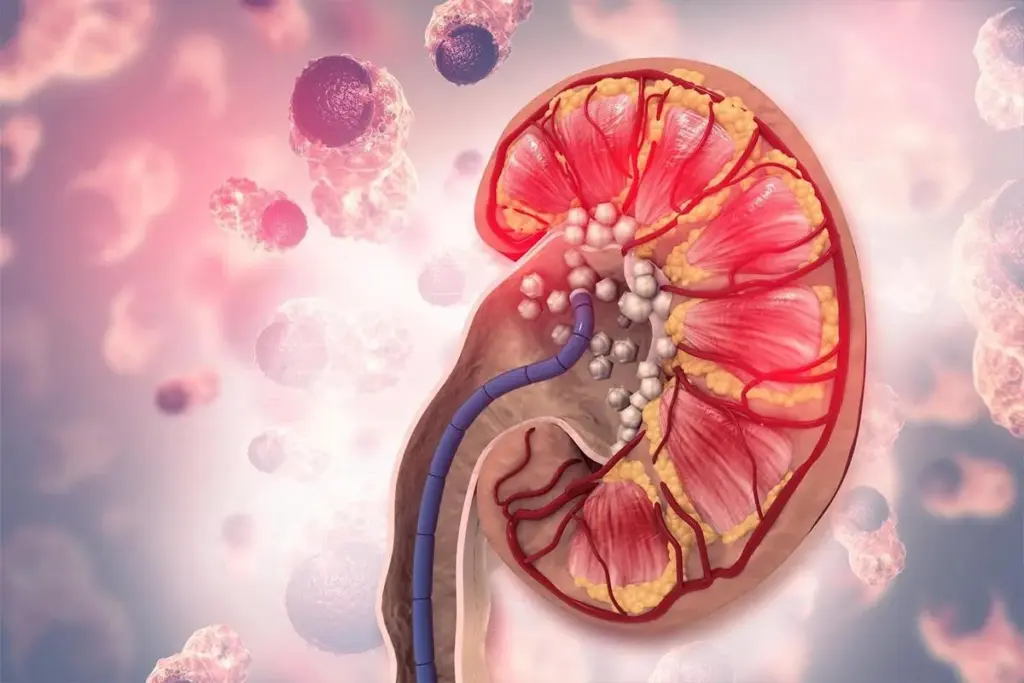
To understand how kidney masses affect function, we must first know the kidney’s anatomy. The kidneys are vital organs in the lower back, one on each side of the spine. They play a key role in filtering waste from the blood.
Parts of the Kidney
The kidney has several key parts, each with its own function. The renal cortex is the outer layer where most filtration happens. Below it, the renal medulla contains the renal pyramids that empty into the renal pelvis.
The nephrons, tiny units in the renal cortex, filter waste and excess substances from the blood. Knowing these parts helps us see how kidney masses can disrupt normal function.
How Kidney Masses Impact Normal Function
Kidney masses, or tumors, can greatly affect the kidney’s function. Their size and location can compress or invade surrounding tissue. This can impair the kidney’s filtering ability.
A mass near the renal pelvis might block urine flow, causing waste buildup. A mass in the renal cortex can damage nephrons, reducing filtering efficiency.
|
Location of Mass |
Potential Impact on Kidney Function |
|---|---|
|
Renal Cortex |
Damage to nephrons, reducing filtering efficiency |
|
Renal Pelvis |
Obstruction of urine flow, leading to waste buildup |
|
Renal Medulla |
Potential disruption of urine concentration mechanisms |
Knowing the kidney’s anatomy and how masses affect it is key to finding the best treatment. Sometimes, removing the mass or the entire kidney (nephrectomy) is needed to prevent further issues.
A nephrectomy, or surgical removal of a kidney, is considered for large or potentially cancerous masses. The decision to do a nephrectomy depends on the mass’s size, location, and the patient’s health.
Diagnosing Kidney Masses
Getting a correct diagnosis for kidney masses is key to choosing the right treatment. We use Advanced imaging techniques, such as CT scans and MRIs, combined with precise diagnostic tests, are essential for accurately identifying kidney masses.
Imaging Techniques
Imaging is very important in finding out about kidney masses. We use different imaging tools to see the kidneys and learn about the masses.
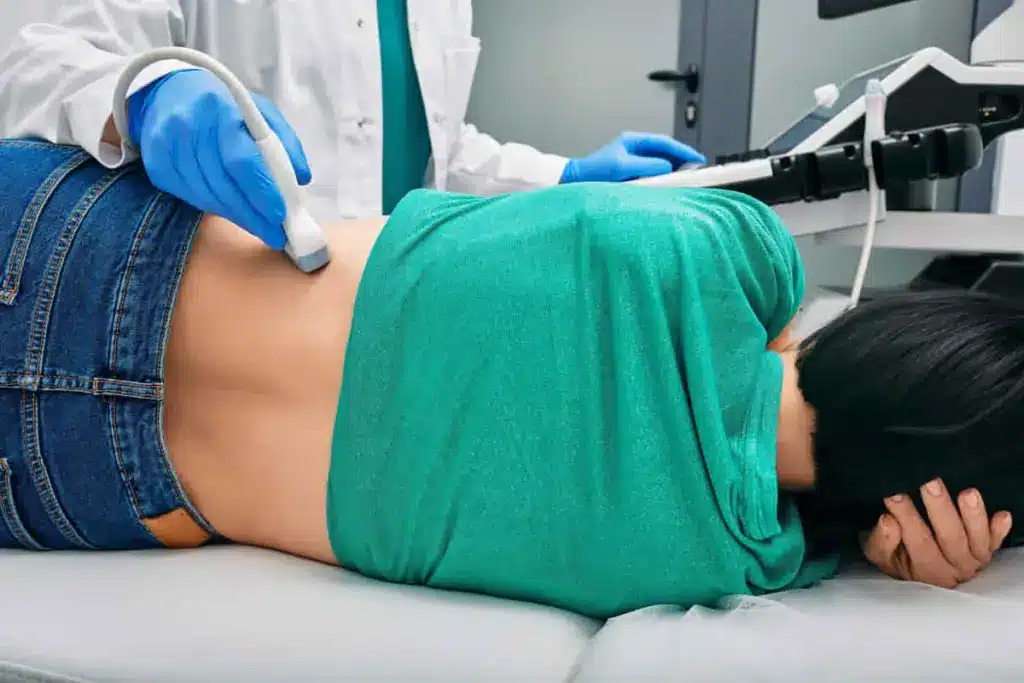
- Ultrasound: Often the first choice because it’s non-invasive and can tell if a mass is cystic or solid.
- Computed Tomography (CT) Scan: Gives detailed images, showing the mass’s size, location, and if it might be cancerous.
- Magnetic Resonance Imaging (MRI): Helps with complex masses and how they relate to nearby tissues.
Biopsy and Other Diagnostic Methods
Even though imaging gives us a lot of info, biopsy is the best way to know for sure what a kidney mass is. We also use other tests to get a full picture of the mass.
|
Diagnostic Method |
Description |
Usefulness |
|---|---|---|
|
Biopsy |
Takes a sample of tissue from the mass for lab tests. |
Confirms if it’s cancer and what type it is. |
|
Blood Tests |
Check how well the kidneys are working and for tumor markers. |
Supports the diagnosis and checks kidney health. |
|
Urine Tests |
Looks for abnormal cells or proteins that might show kidney disease. |
Helps find cancer and checks kidney function. |
By using these methods together, we can accurately diagnose kidney masses. Then, we can create a treatment plan that fits the patient’s needs.
The Critical Factor: Size Thresholds for Kidney Mass Removal
Size matters when deciding if a kidney mass needs to be removed. Doctors look at the mass’s size to choose the best treatment. This choice affects how well the patient will do.
Small Masses (Under 4 cm)
Small kidney masses, under 4 cm, are tricky to handle. Active surveillance is often suggested. This means watching the mass closely, as many are not cancerous. But, there’s always a chance it could be cancer, so regular checks are key.
- Regular imaging studies to monitor size and characteristics
- Consideration of biopsy for uncertain masses
- Patient-specific factors influencing the decision for or against immediate surgery
Medium Masses (4-7 cm)
Masses between 4 and 7 cm might need surgery. Partial nephrectomy is often chosen. This surgery aims to remove the tumor while keeping as much kidney function as possible.
The choice between partial and radical nephrectomy depends on several factors. These include the mass’s location, the patient’s health, and the surgeon’s skills.
Large Masses (Over 7 cm)
Large kidney masses, over 7 cm, usually need more aggressive treatment. Radical nephrectomy is often the choice. The bigger the mass, the higher the cancer risk, making surgery a key part of treatment.
- Pre-surgical evaluation to assess the mass’s extent and any spread
- Surgical planning, considering the patient’s health and kidney function
- Post-operative care and follow-up to monitor recovery and detect any recurrence early
In conclusion, the size of a kidney mass is key in deciding treatment. Knowing the size helps doctors make better choices. They aim to treat the mass effectively while keeping the kidney working well.
Beyond Size: Other Factors That Determine When a Kidney Mass Should Be Removed
When deciding to remove a kidney mass, size is just one factor. Other important elements also play a big role. These factors help determine the best treatment option.
Location Within the Kidney
The location of a kidney mass is key in deciding if it should be removed. Masses in the center or near important structures might need special surgery. Or, they might be treated differently.
A mass near the renal hilum, where blood vessels and the ureter enter the kidney, is harder to operate on. This location can affect whether to do a partial or total kidney removal.
Growth Rate and Pattern
The growth rate and pattern of a kidney mass are also important. Masses growing fast or with a complex pattern might be cancerous. They might need to be removed, even if they’re small.
Watching how fast a mass grows helps doctors understand its danger. A mass growing quickly might need surgery to prevent cancer.
Patient’s Overall Health and Age
A patient’s health and age are also important. Older patients or those with health problems might face more risks during surgery. This could lead to choosing a less invasive option or watching the mass closely.
Younger patients with fewer health issues might be better candidates for surgery. Even small masses might be removed to avoid future problems.
|
Factor |
Considerations |
Impact on Decision |
|---|---|---|
|
Location |
Central vs. peripheral, proximity to vital structures |
Influences surgical complexity and approach |
|
Growth Rate |
Rapid growth, complex cystic pattern |
Indicates potential malignancy, necessitates removal |
|
Patient’s Health and Age |
Comorbidities, age-related risks |
Affects suitability for surgery, alternative treatments |
When Active Surveillance May Be Appropriate
Active surveillance is a strategy for managing kidney masses in some patients. It involves watching the mass closely for any changes. This is done instead of going straight to surgery.
Criteria for Watchful Waiting
Choosing active surveillance depends on several factors. The size of the kidney mass is very important. Masses under 2 cm are often watched closely.
Also, the mass’s characteristics from imaging studies matter a lot. Masses that look like they might be cancerous or are growing fast are not good for active surveillance.
Another key factor is the patient’s health and how long they might live. People with serious health issues or a short life expectancy might be better off with active surveillance. This is because surgery’s risks might be too high.
Monitoring Protocols and Follow-up Schedule
For active surveillance, a clear monitoring plan is needed. This includes regular imaging like CT or MRI scans. These scans are usually done every 6-12 months at first. The schedule might change if the mass shows signs of growth or other issues.
The aim of active surveillance is to act quickly if the mass starts to grow aggressively. This way, surgery is avoided for masses that are likely to stay small. By picking the right patients and following a strict monitoring plan, active surveillance can be a good choice for some with kidney masses.
Understanding Nephrectomy: Surgical Options for Kidney Mass Removal
Understanding nephrectomy is key for patients facing kidney mass removal. It affects their treatment and recovery. Nephrectomy removes part or all of a kidney, often for cancer or serious health issues.
Definition and Purpose
Nephrectomy means removing a kidney or part of it. Its main goal is to get rid of diseased kidney parts. This can treat or cure conditions like kidney cancer.
There are two types: partial nephrectomy removes just the diseased part, and radical nephrectomy removes the whole kidney. The choice depends on the mass’s size, location, and the patient’s health.
When Nephrectomy Is Necessary vs. Optional
Nephrectomy is needed for malignant kidney masses or those likely to become malignant. It’s also needed for masses causing pain, bleeding, or other serious issues.
In some cases, nephrectomy might not be necessary. This is when the mass is small and possibly harmless. The decision depends on the mass’s nature, the patient’s health, and the doctor’s advice.
Risk-Benefit Analysis
When thinking about nephrectomy, weigh the benefits against the risks. Benefits include removing a possibly cancerous mass and easing symptoms. This can prevent future problems.
But, like any big surgery, nephrectomy has risks. These include bleeding, infection, and long-term kidney issues. Patients with kidney disease or those left with one kidney need extra care.
|
Benefits |
Risks |
|---|---|
|
Removal of potentially malignant mass |
Bleeding and hemorrhage |
|
Alleviation of symptoms |
Infection |
|
Prevention of future complications |
Long-term effects on kidney function |
The choice to have nephrectomy should be made after talking it over with your healthcare team. Consider your unique situation and the latest medical advice.
Types of Nephrectomy Procedures
Nephrectomy procedures vary, and understanding the differences is key to making informed decisions. When faced with the need to remove a kidney mass, patients must consider the most appropriate surgical approach for their specific condition.
There are mainly two types of nephrectomy procedures: partial nephrectomy and radical nephrectomy. Each has its own indications, benefits, and drawbacks.
Partial Nephrectomy (Nephron-Sparing Surgery)
Partial nephrectomy, also known as nephron-sparing surgery, removes only the diseased part of the kidney. This leaves the rest of the kidney intact. It’s best for patients with smaller tumors or those with only one kidney.
This approach helps keep kidney function and lowers the risk of chronic kidney disease. But, it depends on the tumor’s size, location, and characteristics.
Radical Nephrectomy (Complete Kidney Removal)
Radical nephrectomy removes the whole kidney and surrounding tissues. This includes the adrenal gland and sometimes nearby lymph nodes. It’s often chosen for larger tumors or when cancer has spread.
This procedure is effective against cancer but means losing a kidney. Patients with a healthy other kidney can live normally. Yet, losing kidney function can affect health long-term.
Choosing between these procedures is tough. The patient’s health, kidney disease stage, and the chance to keep kidney function are key factors.
The decision between partial and radical nephrectomy should be made with a healthcare provider. They consider the individual’s specific needs and circumstances.
Surgical Approaches for Kidney Mass Removal
There are several ways to remove kidney masses, each with its own benefits and challenges. The right method depends on the mass’s size and location, the patient’s health, and the surgeon’s skills.
Open Nephrectomy
Open nephrectomy uses a big incision in the abdomen or side to reach the kidney. It gives a clear view and access to remove the mass or the whole kidney if needed.
Advantages: This method is straightforward and good for complex cases needing a big incision.
Disadvantages: It causes more pain and a longer recovery than less invasive methods.
Laparoscopic Nephrectomy
Laparoscopic nephrectomy, or minimally invasive surgery, uses small incisions for a laparoscope and tools. It causes less damage to the tissue.
Advantages: It leads to less pain, smaller scars, and a quicker recovery than open nephrectomy.
Disadvantages: It needs special training, takes longer, and has risks from the procedure.
Robotic-Assisted Minimally Invasive Nephrectomy
Robotic-assisted nephrectomy is a laparoscopic surgery enhanced by a robotic system. It offers better control and vision, making complex surgeries easier.
Advantages: It provides more precision, less blood loss, and is great for complex cases or when keeping the kidney working is key.
Disadvantages: Robotic systems are not always available, require extra training, and are more expensive.
The table below shows the main differences between these surgical methods:
|
Surgical Approach |
Incision Size |
Recovery Time |
Surgeon Expertise |
|---|---|---|---|
|
Open Nephrectomy |
Large |
Longer |
General surgical skills |
|
Laparoscopic Nephrectomy |
Small |
Shorter |
Specialized training |
|
Robotic-Assisted Nephrectomy |
Small |
Shorter |
Advanced training on robotic systems |
In conclusion, choosing the right surgery for kidney mass removal depends on many factors. It’s important to know the pros and cons of each method to make the best choice.
Preparing for Kidney Surgery
Getting ready for kidney surgery is a big step. It’s important to know what to do to get the best results. We’ll walk you through the steps to prepare for your surgery.
Pre-Surgical Testing and Evaluation
Before your surgery, we do a lot of testing. This helps us check your health and understand your kidney issue.
- Imaging Tests: We use CT scans or MRI to see your kidney clearly.
- Blood Tests: These tests check how well your kidneys are working and your overall health.
- Cardiac Evaluation: If needed, we check your heart to make sure it’s ready for surgery.
|
Test Type |
Purpose |
Preparation |
|---|---|---|
|
Imaging Tests (CT, MRI) |
To see the kidney mass and its effect on nearby tissue. |
May need contrast dye; fasting might be required. |
|
Blood Tests |
To check your kidney function and health. |
Usually you need to fast; you’ll get specific instructions. |
|
Cardiac Evaluation |
To make sure your heart is strong enough for surgery. |
May include stress tests or echocardiograms; we’ll discuss the details. |
What to Expect Before Surgery
As your surgery gets closer, we want you to know what to expect. This includes the details of your surgery day and what happens right before surgery.
Surgery Day: On surgery day, arrive at the hospital a few hours early. You’ll get clear instructions on when to stop eating and drinking.
It’s normal to feel nervous, but knowing what’s coming can help. Our team is here to support you every step of the way.
Recovery After Kidney Mass Removal
The journey to recovery after kidney mass removal is complex. It involves rest, medication, and follow-up care. Understanding the different stages and what to expect is key.
Hospital Stay Duration
The length of your hospital stay depends on the surgery type and your health. Those with minimally invasive surgery usually stay less than those with open surgery.
Stays can last from 1 to 4 days. Medical staff watch over you, manage pain, and look for complications.
Post-Operative Care and Pain Management
Good post-operative care is vital for a smooth recovery. We manage pain with medications and other methods. Pain management is customized for each patient.
- Medications: We give pain relief meds as needed.
- Rest: Resting helps with healing.
- Follow-up appointments: We check on your progress regularly.
Timeline for Recovery and Return to Normal Activities
The recovery time varies, but there’s a general outline. You should avoid hard work and heavy lifting at first.
You can start with light activities a few weeks later. Gradually, you’ll get back to your usual life over months. Recovery can take 6 to 12 weeks, based on your health and surgery complexity.
Living with One Kidney After Nephrectomy
Adjusting to life with one kidney requires careful thought for long-term health. After a nephrectomy, many worry about how one kidney affects their overall health.
Long-Term Health Considerations
Generally, having one kidney doesn’t greatly change daily life, as one healthy kidney can handle all functions. Yet, some long-term health points need attention.
- Kidney Function: The remaining kidney can take over, but it’s key to keep an eye on its health through regular check-ups.
- Diet and Exercise: Eating well and staying active help keep the remaining kidney healthy.
Lifestyle Adjustments and Monitoring
To keep the remaining kidney healthy, making some lifestyle changes is advised.
- Avoiding Injury: It’s important to protect the remaining kidney from harm. This means avoiding sports or activities that could hurt the kidney area.
- Managing Health Conditions: Conditions like diabetes and high blood pressure can affect kidney health. It’s vital to manage these conditions well for those with one kidney.
- Regular Monitoring: Regular visits to healthcare providers are key to tracking kidney function and overall health.
By understanding the effects of living with one kidney and making the right changes, people can live healthy, active lives.
Alternative Treatments for Kidney Masses
There are new ways to treat kidney masses beyond surgery. Medical technology has improved, giving patients more choices. We’ll look at these options, their benefits, and how they can help.
Ablation Techniques
Ablation techniques are new ways to treat kidney masses. They destroy cancer cells without taking out the kidney.
Cryotherapy uses colds to kill cancer cells. It freezes the tumor, saving healthy tissue. It works well for small tumors.
Radiofrequency Ablation (RFA) uses heat to kill cancer cells. It’s less invasive and good for those who can’t have surgery.
|
Treatment |
Description |
Benefits |
|---|---|---|
|
Cryotherapy |
Uses extreme cold to destroy cancer cells |
Preserves healthy tissue, minimally invasive |
|
Radiofrequency Ablation |
Uses heat to destroy cancer cells |
Effective for inoperable patients, minimally invasive |
Emerging Therapies and Clinical Trials
New treatments for kidney masses are being developed. These include targeted therapies and immunotherapies. They’re being tested in clinical trials.
Clinical trials are key in finding new treatments. They offer patients access to new therapies. We suggest talking to doctors about these options.
Conclusion
Managing kidney masses needs a careful and tailored approach. The size of the mass is key in deciding what to do next. Different sizes lead to different actions, like surgery.
Other things matter too, like where the mass is and how fast it grows. The patient’s health and age also play a big role. This helps decide if removing the mass is needed.
Treatment choices vary. They can range from watching the mass closely to surgery. Even other methods like ablation are options.
In the end, deciding on kidney mass removal is a big choice. It should be made after thinking it through and talking to doctors. Knowing how to handle kidney masses helps patients make better choices for their health.
FAQ
What is a kidney mass, and how is it diagnosed?
A kidney mass is an abnormal growth on the kidney. It can be benign or cancerous. Doctors use CT scans, MRI, or ultrasound to find it. A biopsy is then done to know if it’s cancer.
At what size should a kidney mass be removed?
Deciding to remove a kidney mass depends on its size, location, and growth rate. It also depends on the patient’s health. Masses over 4 cm are often removed, but it varies by case.
What is the difference between partial nephrectomy and radical nephrectomy?
Partial nephrectomy removes the tumor but keeps most of the kidney. Radical nephrectomy removes the whole kidney. The choice depends on the tumor’s size, location, and the kidney’s function.
What are the benefits and risks of nephrectomy?
Nephrectomy can cure kidney cancer. But, it has risks like surgery complications and impacts on kidney function. If only one kidney is left, ongoing monitoring is needed.
How long does it take to recover from kidney surgery?
Recovery time varies by surgery type and health. Patients usually spend a few days in the hospital. They need weeks at home to fully recover, taking months overall.
Can I live a normal life with one kidney?
Yes, many people live well with one kidney. It’s important to stay healthy, check kidney function, and manage any conditions that affect the kidney.
What are the alternatives to surgical removal of a kidney mass?
Alternatives include cryotherapy and radiofrequency ablation, which destroy the tumor. New therapies and clinical trials are also options for some patients.
How is active surveillance used in managing kidney masses?
Active surveillance means watching small kidney masses with regular tests. Surgery is done if the mass grows or causes symptoms. It’s for small masses or when surgery is not immediate.
What are the different surgical approaches for kidney mass removal?
Surgical methods include open, laparoscopic, and robotic-assisted nephrectomy. The choice depends on the tumor, patient’s health, and surgeon’s skill.
What should I expect before undergoing kidney surgery?
Before surgery, you’ll have tests and evaluations. This includes blood tests, imaging, and medical history review. Your team will discuss surgery risks and benefits with you.
National Center for Biotechnology Information. Evidence-Based Medical Insight. Retrieved from https://pubmed.ncbi.nlm.nih.gov/28625591/