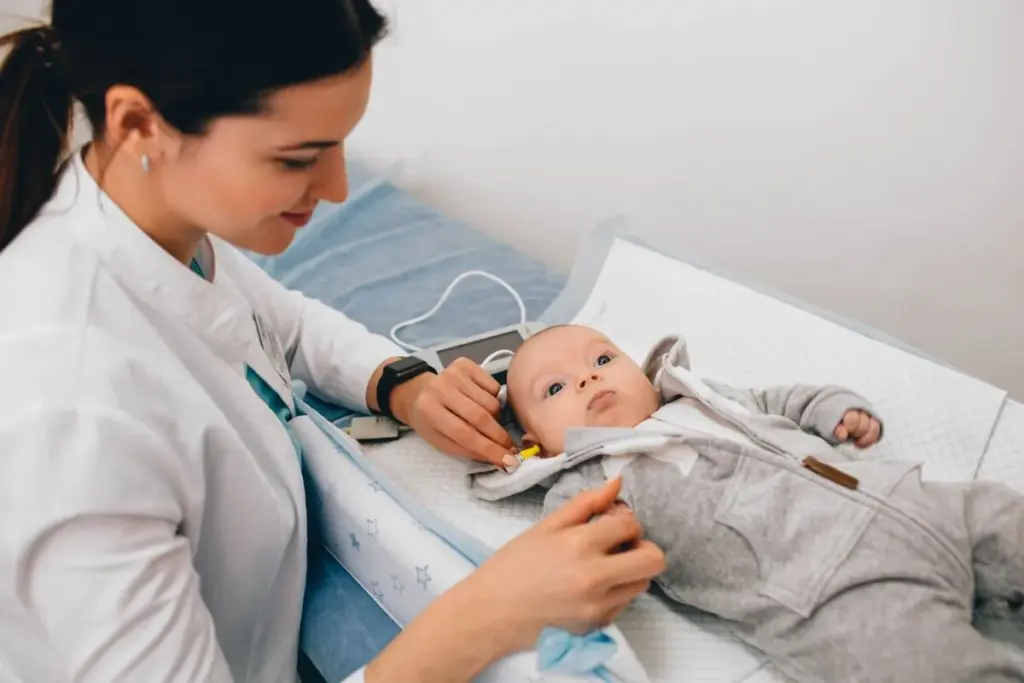
As a new parent, you know how important your baby’s first health checks are. The newborn hearing screening is a key test. It checks if your baby can hear well, which is vital for their speech and learning.
Spotting hearing problems early means your child can get help right away. This ensures they get the support they need from the start.
Knowing what to expect during the test can make you feel better. The process is easy, and being ready can help a lot. For more info on what happens after the test, check out the National Institute on Deafness and Other Communication website.
Key Takeaways
- Newborn hearing screening is a critical early assessment for detecting possible hearing problems.
- Early detection means your child can get help quickly, helping with speech and language.
- The screening is simple and easy to understand.
- Knowing what to expect can reduce worry for parents.
- Getting follow-up care is key if the first test shows hearing loss.
Understanding the Importance of Newborn Hearing Screening
Newborn hearing screening is more than just a test. It’s a key tool for your child’s best start in life. Hearing is vital for learning language, communicating, and interacting with the world.
Why Early Detection Is Critical
Early detection of hearing loss is key. It allows for timely intervention, which greatly impacts a child’s development. Studies show that early support leads to better language skills and education.
Early intervention can make a big difference. It helps children develop language skills early, with targeted support and therapy.
Current Statistics and Prevalence Rates
Hearing loss in newborns is more common than many think. A lot of babies are born with hearing impairments. This makes universal newborn hearing screening programs very important.
We know that “Hearing Helps Little Brains Grow”. Every interaction with your child builds new brain connections. This shows why it’s key to find and fix hearing issues early.
AAP Guidelines and Recommendations
The American Academy of Pediatrics (AAP) sets guidelines for newborn hearing screening. They say all newborns should be screened before leaving the hospital, with follow-ups as needed.
- Screening should be done before the baby is 1 month old.
- Diagnostic tests should be done by 3 months if the first screening shows hearing loss.
- Intervention should start by 6 months for those with hearing loss.
By following these guidelines, we can make sure newborns get the screening they need. This helps find hearing issues early, allowing for timely support and intervention.
What to Expect During Your Newborn Hearing Screening Process
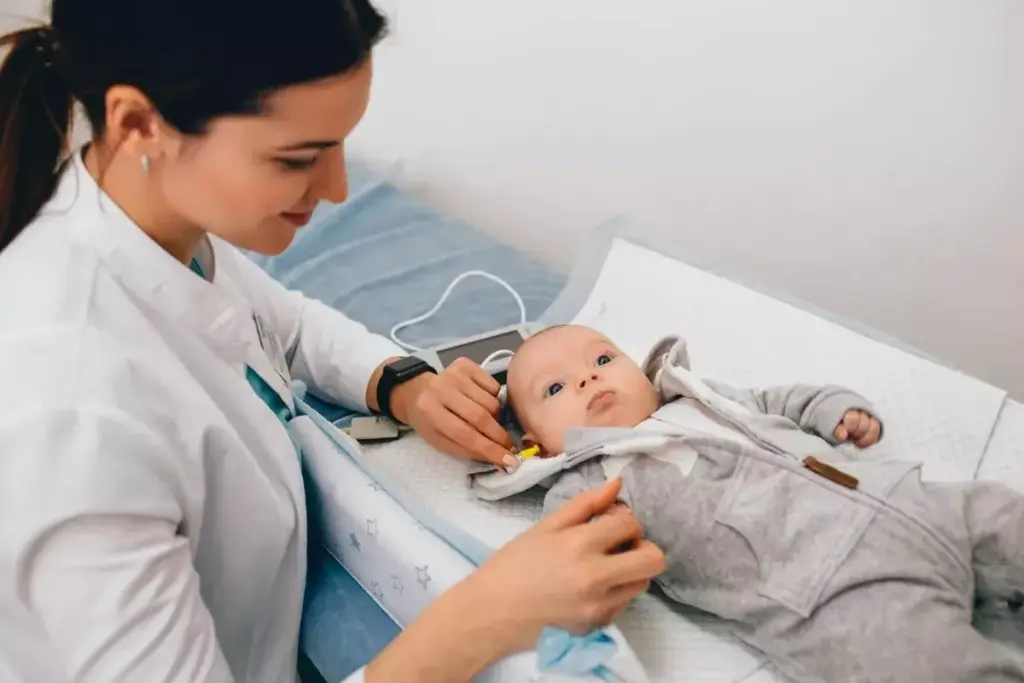
Newborn hearing screening is quick and painless. It checks your baby’s hearing health early. This helps find hearing problems early, so they can be treated quickly.
Initial Hospital Screening (Days 2-3)
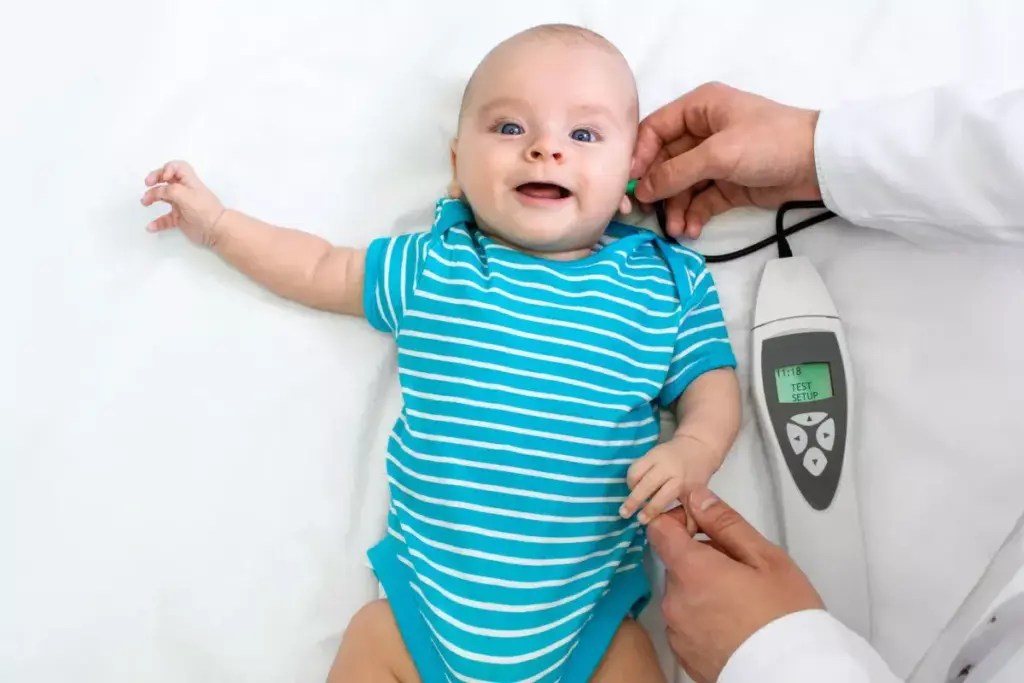
The first hearing screening happens in the hospital, usually between days 2 and 3. It’s fast and doesn’t hurt. The tests used are:
- Otoacoustic Emissions (OAE) testing, where a tiny, rubber probe is placed in your baby’s ear to send sounds and measure the echoes produced by the ear.
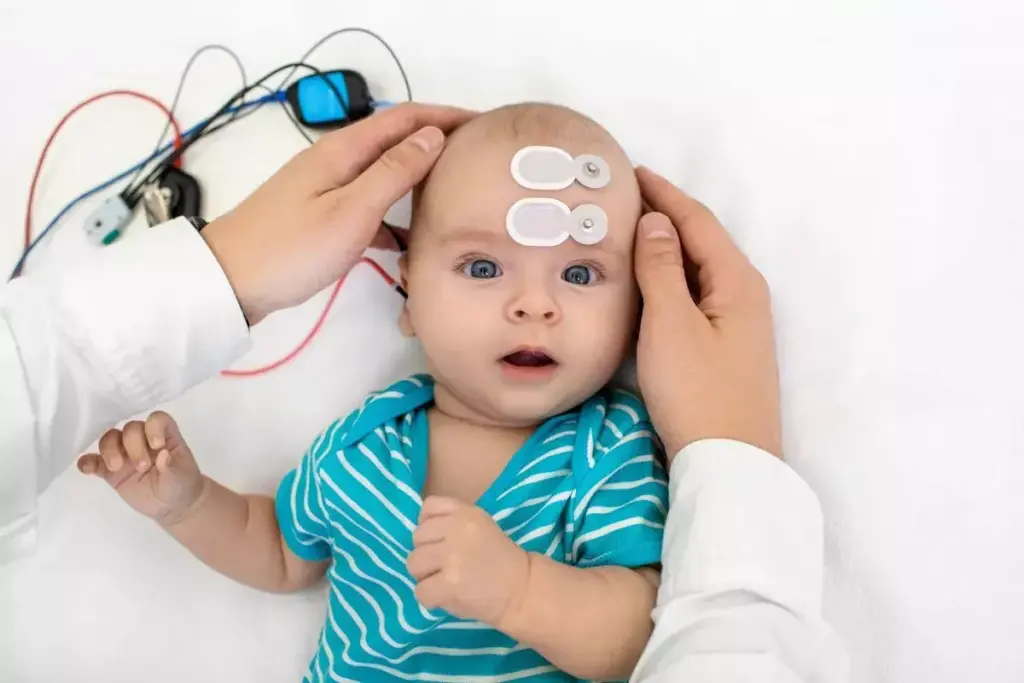
- Auditory Brainstem Response (ABR) testing, which involves placing electrodes on your baby’s head to measure the brain’s response to sound.
These tests are gentle and won’t hurt your baby. The Infant Hearing Program says finding hearing loss early helps a lot.
Follow-up Rescreening (Weeks 3-6)
If your baby doesn’t pass the first test, a follow-up is set for weeks 3 to 6. This check is to see if there were any problems with the first test.
Going to this follow-up is very important. It helps understand your baby’s hearing better. The same tests might be done again, or more tests might be added.
Comprehensive Assessment (Months 3-6)
If the follow-up shows possible hearing loss, a detailed test is needed by 6 months. An audiologist will do this test. It checks how well your baby hears, their middle ear, and how they process sound.
This test can give a clear diagnosis. It helps plan how to support your baby’s hearing and development. Early programs are key for your child’s communication skills and growth.
Knowing what to expect in the newborn hearing screening helps you prepare. It ensures your baby gets the best care for their hearing.
Conclusion: Ensuring the Best Outcomes for Your Baby’s Hearing Health
Newborn hearing screening is very important. It helps find hearing problems early. This way, your baby can get help right away.
The hearing screening test newborns get in the hospital is just the start. If problems are found, more tests like the newborn ear test or hearing test on infants might be needed.
Getting help by 6 months is very important. It helps your child learn and grow. As a parent, taking care of your baby’s hearing is very important. Follow the American Academy of Pediatrics’ advice for pediatric hearing screenings.
By focusing on your baby’s hearing, you help them do well. If you have questions about the hearing test for newborns in hospital or more tests, talk to your doctor.
FAQ:
What is a newborn hearing screening, and why is it necessary?
A newborn hearing screening checks a baby’s hearing early to detect hearing loss and enable timely intervention for speech and language development.
How is a newborn hearing screening performed?
It is done using non-invasive tests like OAE (Otoacoustic Emissions) or AABR (Automated Auditory Brainstem Response) while the baby is calm or sleeping.
What happens if my baby does not pass the initial newborn hearing screening?
If a baby does not pass, a follow-up diagnostic hearing test is scheduled to confirm or rule out hearing loss.
What is the difference between OAE and AABR tests?
OAE measures sound waves produced by the inner ear, while AABR measures the brain’s response to sound through electrodes.
Are newborn hearing screenings painful or uncomfortable for my baby?
No, the screening is painless and non-invasive, causing minimal or no discomfort.
Can I request a newborn hearing screening if it was not performed in the hospital?
Yes, you can request a hearing screening through your pediatrician or an audiology clinic.
What are the benefits of early detection and intervention for hearing loss in newborns?
Early detection allows timely hearing aids, therapy, and support, improving speech, language, and social development outcomes.
How often should my baby’s hearing be tested after the initial newborn hearing screening?
Follow-up depends on risk factors and initial results, typically as recommended by an audiologist or pediatrician.
Can I be present during the newborn hearing screening?
Yes, parents are usually allowed to be present and comfort the baby during the screening.
Are there any risks associated with newborn hearing screenings?
No, newborn hearing screenings are safe, non-invasive, and carry virtually no risks.
References:
National Center for Biotechnology Information. Evidence-Based Medical Insight. Retrieved from https://pubmed.ncbi.nlm.nih.gov/17908777/