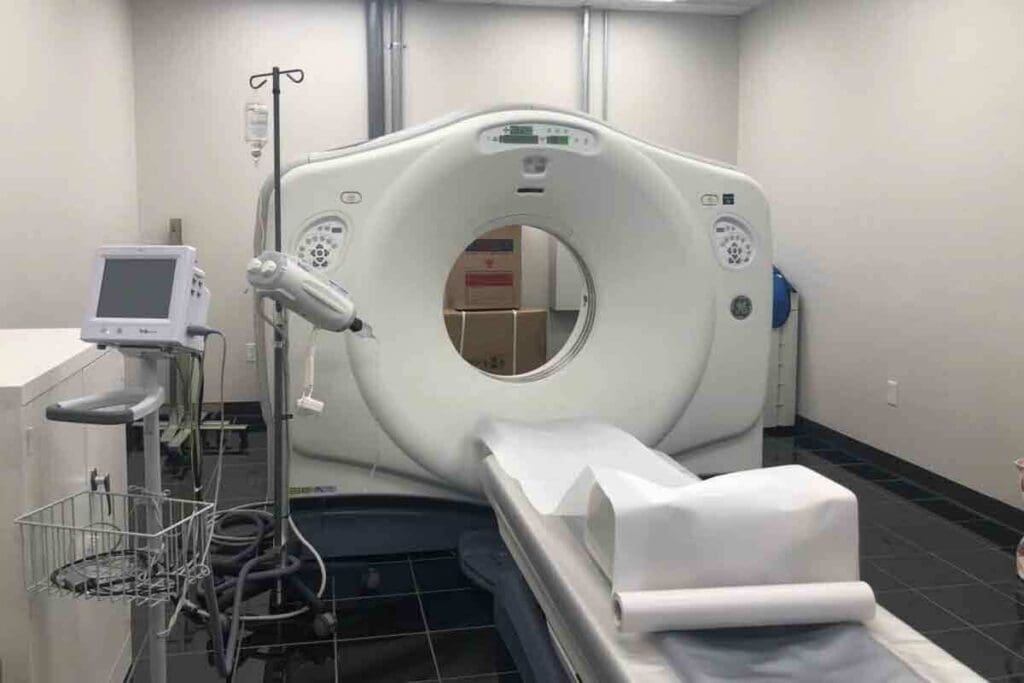
When deciding on a medical imaging test, many people wonder whether a CT scan with or without contrast is better. Understanding the difference between a non contrast CT scan and a contrast-enhanced scan helps doctors make more accurate diagnoses and ensures patient safety.
At Liv Hospital, we always put patients first and use the latest imaging technology. CT scans use X-rays to create clear, detailed images of the body’s internal structures.
Choosing between a contrast and a non contrast CT scan depends on the medical condition. For example, a non contrast CT scan is often preferred for detecting acute stroke, trauma, or kidney stones, as it provides fast and effective imaging without using contrast dye.
Key Takeaways
- Understand the differences between CT scans with and without contrast.
- Learn about the specific medical conditions that require contrast.
- Discover how Liv Hospital approaches medical imaging decisions.
- Find out how CT scans improve diagnostic accuracy.
- Explore the benefits of patient-centered care in medical imaging.
What Is a CT Scan?
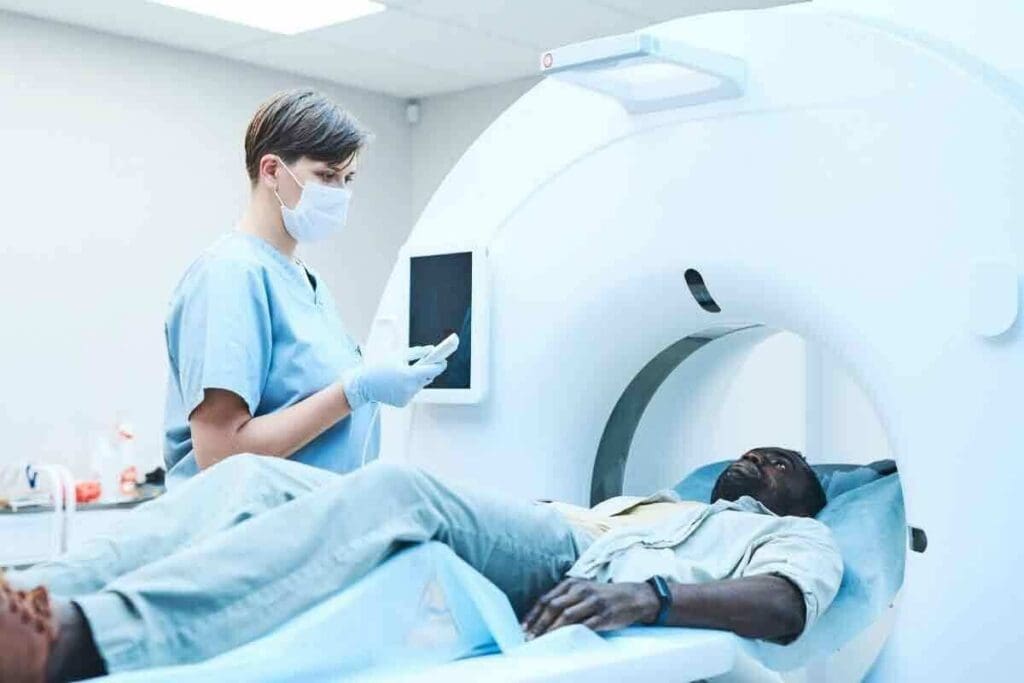
Computed Tomography (CT) scans have changed medical imaging a lot. They give detailed pictures of what’s inside our bodies. This tech is key to finding and treating many health issues.
Basic Principles of Computed Tomography
CT scans use X-rays to see inside our bodies. They measure how much X-rays are absorbed and passed through. Then, computers turn this info into detailed pictures.
How CT Imaging Works
CT imaging uses a moving X-ray tube and detectors around the patient. X-rays go through the body at different rates, based on what they hit. Detectors catch this and send it to a computer.
CT scans show organs, bones, soft tissue, and blood vessels clearly. They’re great for spotting injuries, cancers, and blood vessel problems.
Types of Contrast Media
Contrast media help make things clearer on a CT scan. The right one is key to better results.
Iodine-Based Contrast Agents
Iodine-based contrast agents are often used in CT scans. They absorb X-rays, making certain parts stand out. This makes blood vessels, organs, and some lesions easier to see.
Using iodine-based agents has made CT scans even better. It helps doctors see more clearly what’s going on inside us.
Non-Contrast T T Scan: Overview and Applications
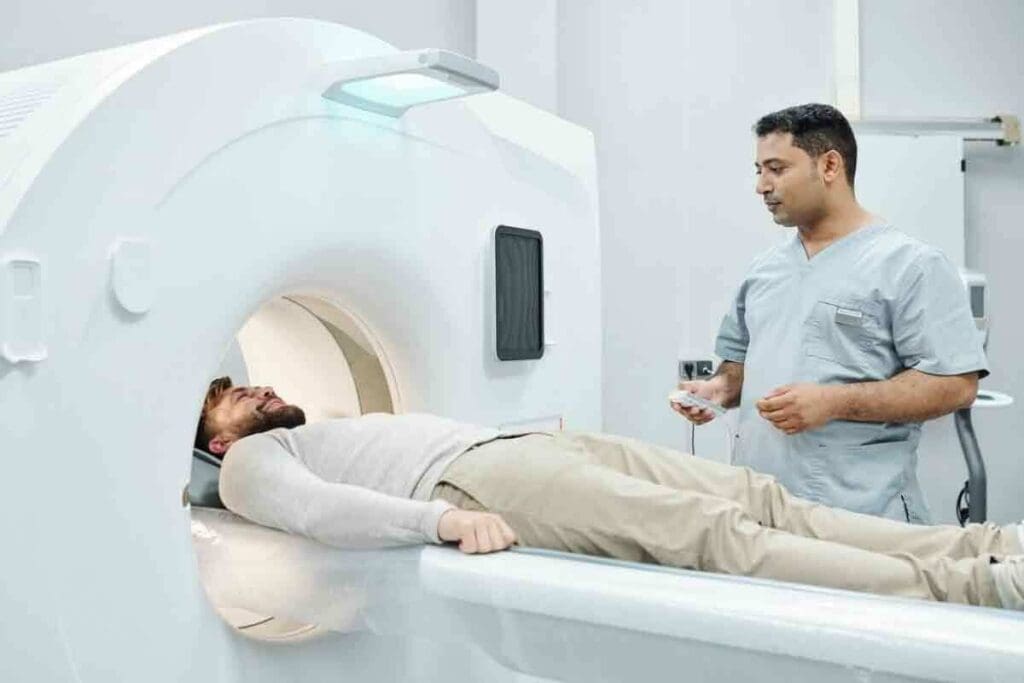
Non-contrast CT scans are key in medical diagnostics. They don’t use contrast dye, making them safer for patients with kidney disease or contrast allergies.
Definition and Procedure
A non-contrast CT scan is a special kind of CT scan. It doesn’t use contrast dye to show body structures or fluids. The scan involves the patient lying on a table that slides into a CT scanner.
The CT scanner rotates around the body, taking X-ray images from different angles. These images are then turned into detailed pictures of the body’s inside.
Key aspects of the procedure include:
- Patient preparation is minimal, typically involving the removal of jewelry and other metal objects.
- The scan is relatively quick, usually taking only a few minutes.
- Patients are required to remain very quiet during the scan to ensure image clarity.
Common Clinical Applications
Non-contrast CT scans are used for many things, like checking for acute stroke, trauma, and kidney stones. They’re very useful in emergencies where a quick diagnosis is needed.
Some of the common applications include:
| Condition | Description | Benefits of Non-Contrast CT |
| Acute Stroke | Rapid assessment of brain injury | Quick identification of hemorrhage |
| Trauma | Evaluation of injuries to internal organs and bones | Immediate assessment without contrast |
| Kidney Stones | Detection of stones and associated complications | Avoidance of contrast in patients with kidney issues |
Non-contrast CT scans are a great option for patients where contrast agents are not needed. They’re very important in emergency care today.
Contrast-Enhanced CT Scans Explained
Contrast agents make blood vessels and some lesions more visible in CT scans. These scans give detailed images. They are key to diagnosing and tracking many health issues.
Types of Contrast Media
There are many contrast media for CT scans, each with its own use. The most common ones include:
- Iodinated Contrast Media: These are the most commonly used for CT scans. They have iodine, which shows up bright on CT images.
- Barium-Based Contrast Media: Though less common, barium-based agents are used for certain procedures.
An expert, a radiologist, says, “The choice of contrast media depends on the clinical question, patient factors, and anatomy being studied.”
“The development of contrast agents has been a game-changer in diagnostic imaging, enabling us to visualize structures that were previously difficult to see.”
Administration Methods and Protocols
Contrast agents are given through an IV for quick body-wide distribution. The way they are given can change based on the CT scan type and patient health.
Important things to consider for giving contrast include:
- Dosing: The contrast amount is carefully figured out based on the patient’s weight and scan needs.
- Injection Rate: How fast the contrast is given affects image quality. It’s adjusted for the scan protocol.
- Timing: When the scan happens after contrast is given is very important for the best images.
By following these steps, healthcare teams can make sure CT scans with contrast are done safely and well. This gives important information for diagnosis.
Difference #1: Visualization Capabilities
Non-contrast and contrast-enhanced CT scans have different visualization capabilities. This is mainly because of contrast agents. These agents make certain structures or lesions more visible.
What Non-Contrast CT Scans Can Detect
Non-contrast CT scans are great at spotting acute hemorrhage and fractures. They are also good for other conditions where tissue contrast is high. These scans are fast and often used in emergencies.
Key applications of non-contrast CT scans include:
- Detecting acute hemorrhage
- Identifying fractures
- Visualizing certain types of kidney stones
- Assessing lung conditions
Enhanced Visibility with Contrast Agents
Contrast-enhanced CT scans show more of the blood vessels, tumors, and other structures. Without contrast, these might be hard to see. Contrast agents make these differences clearer, helping doctors diagnose more accurately.
The use of contrast agents boosts CT scan accuracy. It makes it easier to see between different tissues and structures. This is key for:
- Evaluating vascular diseases
- Detecting and characterizing tumors
- Assessing inflammatory and infectious processes
| Feature | Non-Contrast CT | Contrast-Enhanced CT |
| Primary Use | Acute hemorrhage, fractures | Vascular diseases, tumors |
| Visibility of Blood Vessels | Limited | Enhanced |
| Tumor Detection | Limited in certain cases | Improved with contrast |
Difference #2: Medical Conditions and Diagnostic Applications
Different medical conditions need different CT imaging methods. Some need contrast agents, while others can be diagnosed without them. The difference between non-contrast and contrast-enhanced CT scans is key to diagnosing various conditions.
Conditions Best Evaluated Without Contrast
Some acute conditions are best checked with non-contrast CT scans. For example, acute stroke and trauma are usually scanned without contrast. This is because these conditions need quick checks for bleeding or damage.
Acute stroke diagnosis often uses non-contrast CT to check for bleeding before starting treatment. Also, in trauma, non-contrast CT scans help spot injuries that need quick action.
Conditions Requiring Contrast Enhancement
On the other hand, some conditions need contrast agents for better diagnosis. For instance, tumors and vascular diseases often require contrast-enhanced CT scans. Contrast agents help show the size and blood flow of tumors, which is vital for treatment planning.
Vascular diseases, like aneurysms and stenosis, also benefit from contrast-enhanced CT scans. The contrast makes blood vessels more visible, allowing for a detailed look at vascular problems.
In short, the choice between non-contrast and contrast-enhanced CT scans depends on the condition being diagnosed. Knowing when to use contrast agents is key to accurate diagnosis and better patient care.
Difference #3: Safety Profile and Risk Factors
It’s important to know about the safety of CT scans, including those with contrast. Contrast agents are used in many tests, but they come with risks.
Risks Associated with Contrast Agents
Contrast agents are usually safe but can cause problems in some people. These issues can be mild or serious. Common side effects include nausea, headache, and dizziness. Severe reactions, like anaphylaxis, can be life-threatening.
- Nausea and vomiting
- Headache
- Dizziness
- Allergic reactions
People with allergies or past reactions to contrast media are at higher risk. A detailed medical history is key before using these agents.
Contraindications for Contrast Use
There are times when contrast agents should not be used or need extra care. Those with severe kidney disease face a risk of kidney damage. Also, people with thyroid disorders should be monitored after getting iodine-based contrast.
- Severe kidney disease
- Thyroid disorders
- Previous allergic reactions to contrast media
Healthcare providers must think about the benefits and risks of contrast agents for each patient. They need to consider the patient’s medical history and current health.
Difference #4: Patient Preparation Requirements
CT scanning needs different preparations for non-contrast and contrast studies. Knowing these differences helps prepare patients better. This affects the scan’s quality.
Preparing for a Non-Contrast CT Scan
Non-contrast CT scans require little preparation. Patients should remove metal objects or jewelry that could get in the way. They might wear a hospital gown. Sometimes, fasting for a few hours is asked, but it’s not always needed.
Additional Preparations for Contrast Studies
Contrast-enhanced CT scans need more specific prep. Patients often fast for hours before and avoid certain meds. They must also tell about allergies or kidney issues.
Using contrast media is done carefully. Doctors check the patient’s history and health to pick the right contrast.
| Preparation Requirement | Non-Contrast CT Scan | Contrast-Enhanced CT Scan |
| Fasting | Not typically required | Often required for several hours |
| Medication Disclosure | Not necessary | Required to assess possible interactions |
| Allergy Disclosure | Not necessary | Very important to avoid bad reactions |
Following these prep steps helps make CT scans safe and effective. This ensures doctors get the right info to help patients.
Difference #5: Procedure Duration and Patient Experience
CT scans can take different amounts of time and feel different for patients, depending on whether contrast is used. Non-contrast scans are usually faster. But scans with contrast need extra time for the contrast agent.
The NNon-ContrastCT Experience
A non-contrast CT scan is quick and simple. Patients lie on a table that moves into a big, ring-shaped machine. The scan takes just a few minutes, and the whole process is done in 15-30 minutes.
What to Expect When Receiving Contrast
On the other hand, a contrast-enhanced CT scan has more steps. First, a contrast agent is given through an IV line. This helps the scan show certain areas more clearly.
Getting the contrast adds 10-15 minutes to the scan time. Patients might feel a slight pinch when the contrast goes in, but it’s usually mild and short-lived.
Key differences in patient experience include:
- The need for an IV line for contrast administration
- A slightly longer overall procedure time
- Possible mild sensations during contrast injection
Even with these differences, both types of CT scans are usually easy for patients to handle. Knowing what to expect can help make the experience less stressful.
Difference #6: Radiation Exposure and Safety Considerations
CT scans use radiation, and the amount can change a lot. It’s important for patients and doctors to know about this.
Radiation Levels in Different CT Protocols
The dose of radiation from a CT scan can change. It depends on the body part, the type of scan, and the scanner’s settings. For example, scans of the abdomen and pelvis use more radiation than scans of the head or arms.
Key factors influencing radiation exposure include:
- The number of phases or sequences in a scan
- The tube voltage and current used
- The scan length and the pitch of the scanner
- The patient’s size and body composition
A study in the Journal of the American College of Radiology found that CT scan doses can be from 1 to 10 millisieverts (mSv) or more. This depends on the scan type and the scanner.
“The goal is to achieve diagnostic image quality at the lowest possible radiation dose.”
Strategies to Minimize Cumulative Exposure
To lower radiation exposure, several steps are taken:
Adjusting the dose based on patient size is key. It makes sure the dose fits the patient’s body. Also, automatic exposure control systems adjust the tube current as needed.
- Using the lowest necessary dose to achieve diagnostic image quality
- Limiting the scan range to the area of interest
- Avoiding unnecessary repeat scans or phases
- Employing advanced reconstruction algorithms that allow for dose reduction
By using these methods, doctors can lower the risks of radiation. They can keep the benefits of CT scans while doing it.
Difference #7: Cost Implications and Insurance Coverage
The cost difference between non-contrast and contrast-enhanced CT scans is key in medical choices. Knowing the financial impact of these scans is vital for patients and healthcare teams.
Cost Comparison Between Scan Types
Non-contrast CT scans and contrast-enhanced CT scans cost differently. The main cost factor is the contrast agents used. These agents can greatly increase the scan’s price.
- Non-contrast CT scans are cheaper because they don’t need contrast agents.
- Contrast-enhanced CT scans use contrast media, raising the total cost. This includes the agent, its administration, and monitoring.
The price gap between these scans is big. Knowing this helps patients and providers make better choices.
Insurance Considerations and Coverage Policies
Insurance for CT scans changes based on the scan type and provider. Most plans cover both non-contrast and contrast-enhanced CT scans when they’re needed.
| Scan Type | Typical Insurance Coverage |
| Non-contrast CT | Usually covered with minimal out-of-pocket costs |
| Contrast-enhanced CT | Covered, but may require higher copays or pre-approval |
Patients should check their insurance before getting a CT scan. Costs can differ a lot based on the scan type and insurance policy.
Evidence-Based Protocols for CT Imaging
CT imaging protocols are made to keep patients safe and improve diagnosis. They guide how CT scans are done. This means scans use the least amount of radiation and contrast, reducing risks.
Follow-Up Imaging Guidelines
Follow-up imaging guidelines are key in CT imaging protocols. They suggest when and how often to do follow-up CT scans. This helps monitor patients without exposing them to too much radiation.
The American College of Radiology (ACR) sets guidelines for follow-up scans. Following these guidelines helps catch problems early and keeps radiation use low.
| Condition | Recommended Follow-Up | Guideline Source |
| Lung Nodules | 12 months | ACR |
| Liver Lesions | 6-12 months | ACR |
| Kidney Stones | As clinically indicated | ACR |
Balancing Diagnostic Accuracy and Patient Safety
It’s important to balance making accurate diagnoses with keeping patients safe in CT imaging. Evidence-based protocols help by making sure CT scans are used wisely. They consider the patient’s risk factors.
“The key to optimizing CT imaging is to ensure that the benefits of the scan outweigh the risks, particularily in terms of radiation exposure and contrast agent administration.”
— Expert in Radiology
Strategies for balancing diagnostic accuracy and patient safety include:
- Using the lowest effective dose of radiation
- Selecting appropriate contrast agents based on the patient’s condition
- Implementing protocols for follow-up imaging
By sticking to evidence-based protocols, healthcare providers can make sure CT imaging is done safely and effectively. This improves patient outcomes and reduces risks.
Conclusion
It’s important to know the difference between non-contrast and contrast-enhanced CT scans. This knowledge helps doctors make the right choices for patients. The right choice depends on what the doctor needs to see and the patient’s health.
Non-contrast CT scans are good for spotting things like bleeding or calcium buildup. Contrast-enhanced CT scans, on the other hand, show soft tissues and blood vessels better. Whether or not to use contrast agents depends on the patient’s health and what the doctor is looking for.
In short, both types of CT scans have their own uses and benefits. Knowing how they differ helps doctors choose the best imaging for their patients. This leads to better diagnosis and care for patients.
FAQ
What is the difference between a CT scan with contrast and without contrast?
A CT scan without contrast uses only X-rays to show the body’s inside. A CT scan with contrast adds a special dye to make some areas, like blood vessels, stand out more.
What is a non-contrast CT scan used for?
Non-contrast CT scans help find kidney stones, some injuries, and cancers. They’re also for people who can’t take the dye because of allergies or kidney issues.
What are the risks associated with contrast agents in CT scans?
Contrast agents can cause allergic reactions, kidney damage, and interact with medicines. If you have kidney disease or allergies, tell your doctor before a scan with contrast.
How do I prepare for a CT scan with contrast?
To prepare for a CT scan with contrast, you might need to fast for a few hours. Avoid certain medicines and tell your doctor about any allergies or health issues. You’ll also need to arrive early to get the contrast and do paperwork.
What is the difference in procedure duration between a non-contrast and contrast-enhanced CT scan?
A non-contrast CT scan is quicker because it just involves lying on a table and moving through the scanner. A scan with contrast takes longer because of the dye and might need more scans.
How much radiation is involved in a CT scan, and are there ways to minimize exposure?
CT scans use X-rays, which are a form of radiation. The dose varies by scan type and protocol. To reduce exposure, use the lowest dose needed, limit the scan area, and choose other imaging options when possible.
Are CT scans with contrast more expensive than those without contrast?
Yes, scans with contrast cost more because of the dye and extra steps. Costs vary by provider and insurance policy.
What does “w/o contrast” mean in the context of CT scans?
“W/o contrast” means “without contrast,” meaning the scan won’t use a dye.
Can I undergo a CT scan with contrast if I have kidney problems?
If you have kidney issues, you might face risks from the dye. Your doctor will check your kidneys and decide if a scan with contrast is safe for you.
How do contrast agents enhance the visibility of internal structures during a CT scan?
Contrast agents, like iodine, absorb X-rays and show up bright on scans. This makes it easier to see blood vessels, organs, and some lesions, helping doctors make more accurate diagnoses.
References
- Mecoli, C. A., et al. (2023). Diagnostic Yield of Computed Tomography for Cancer Surveillance in Idiopathic Inflammatory Myopathy Patients. Arthritis Care & Research.https://www.ncbi.nlm.nih.gov/pmc/articles/PMC10497706/



 Departments
 Related Videos
 Our Doctors
 News
News