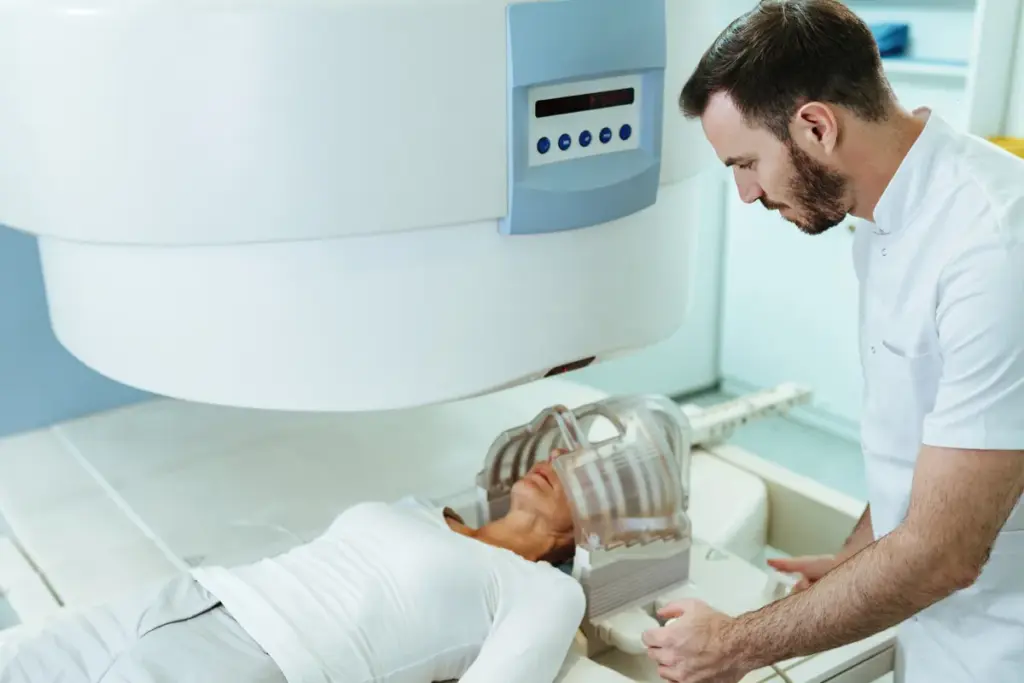
Getting patients ready for nuclear medicine procedures is key for their safety and the best results. Every year, about 40 million tests are done. This shows how important it is to prepare carefully.
Before a nuclear medicine exam, patients get checked thoroughly and learn about the test. They need to know the risks and benefits. They also get instructions on what to do before the test.
Key Takeaways
- Detailed medical evaluations are essential for patient preparation.
- Patient education is key for a successful nuclear medicine procedure.
- Every year, about 40 million diagnostic nuclear medicine procedures are done.
- Good preparation is vital for safety and the best results.
- Patients must follow pre-procedure instructions.
Understanding Nuclear Medicine: An Overview
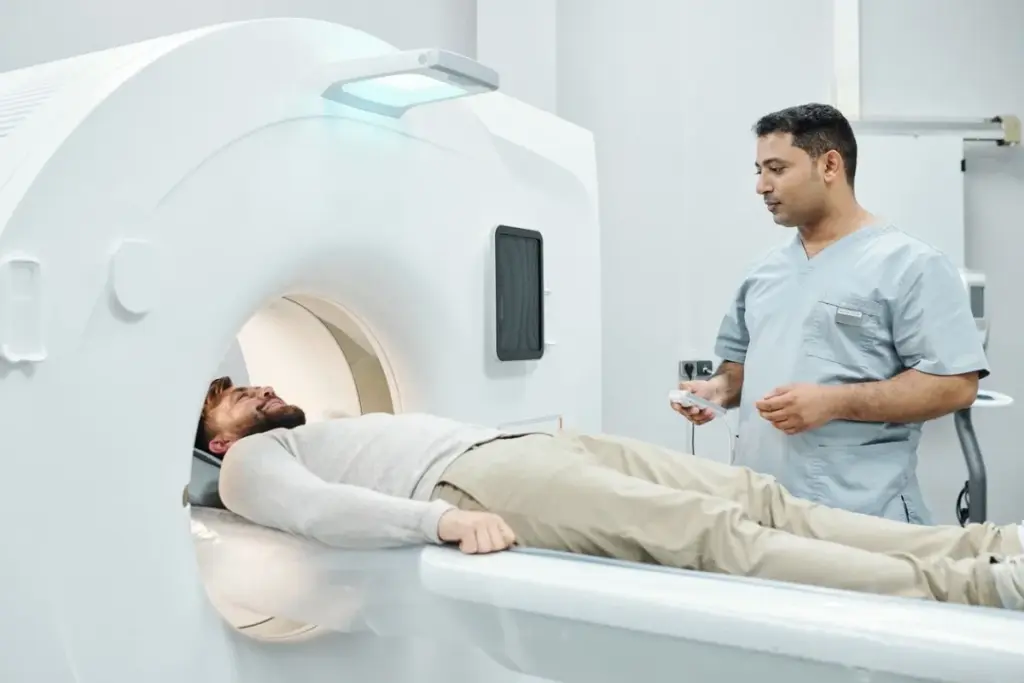
Nuclear medicine is a special part of modern medicine. It uses small amounts of radioactive materials for tests and treatments. This field has grown a lot, giving us new ways to see how our bodies work.
Definition and Basic Principles
Nuclear medicine uses radiopharmaceuticals, which are special compounds with tiny amounts of radioactive isotopes. These substances go to specific parts of the body. This lets doctors do precise tests and treatments.
The idea is that these radiopharmaceuticals light up areas of the body with disease or injury. This makes them easy to see during tests.
Types of Nuclear Medicine Procedures
Nuclear medicine includes many tests and treatments. Here are some common ones:
- Bone scans: Find bone diseases, like cancer.
- Cardiac stress tests: Check the heart’s function and find heart disease.
- Thyroid studies: Look at thyroid function and find problems.
- PET/CT scans: Mix PET and CT scans to see details about cancer, brain issues, and heart disease.
|
Procedure Type |
Diagnostic Use |
Therapeutic Use |
|---|---|---|
|
Bone Scan |
Detecting bone metastasis, infection, or fracture |
Relieving bone pain in cancer patients |
|
Cardiac Stress Test |
Evaluating coronary artery disease, heart function |
Not applicable |
|
Thyroid Study |
Assessing thyroid function, detecting nodules or cancer |
Treating hyperthyroidism or thyroid cancer with radioactive iodine |
|
PET/CT Scan |
Staging cancer, assessing treatment response, detecting neurological disorders |
Guiding radiation therapy for cancer treatment |
Nuclear medicine offers many tests and treatments. Knowing about these helps patients get ready and doctors give better care.
The Importance of Proper Patient Preparation
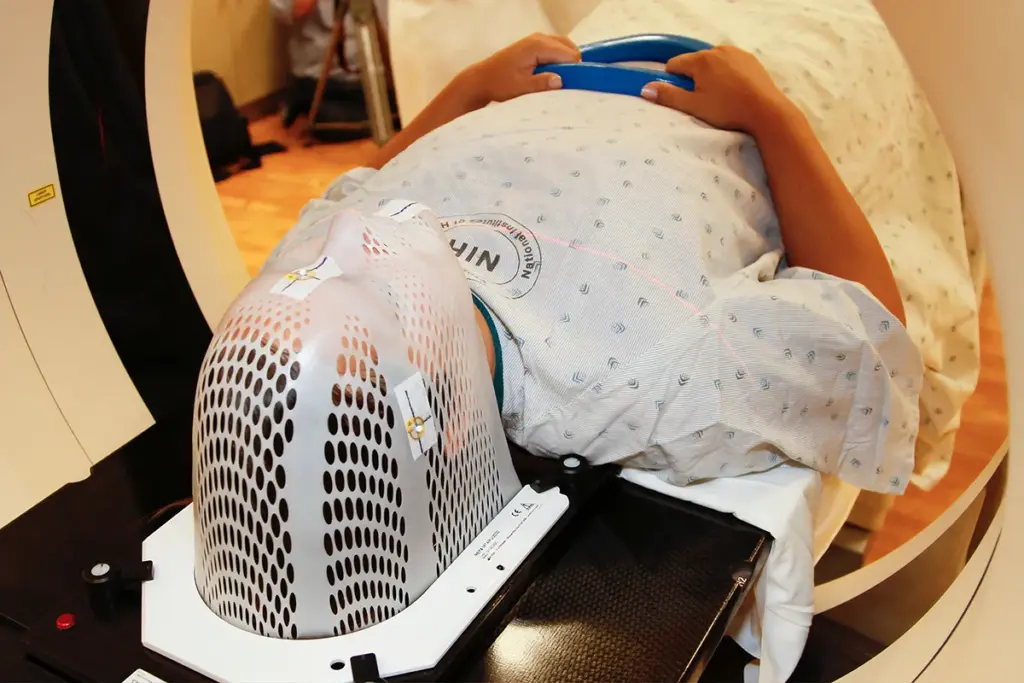
Getting ready for nuclear medicine exams is key for accurate and safe results. Good preparation is vital for the success of these tests. It affects the quality of the images and keeps the patient safe.
Impact on Diagnostic Accuracy
How well a patient prepares can greatly affect the test’s accuracy. For example, proper preparation reduces things that might mess up the images. This includes making sure the patient has not eaten or taken certain medicines.
This focus on details makes the results clearer and more reliable. Doctors can then make better diagnoses and treatment plans.
Patient Safety Considerations
Safety is a big deal in nuclear medicine exams. Good preparation helps avoid risks during the test. It’s important to tell patients about precautions after a nuclear scan to lower radiation risks for others.
It’s also key to check if a patient is pregnant or breastfeeding before the test. This helps decide if the test is safe for them.
Figuring out if nuclear medicine is safe for a patient means looking at their health history and current status. Healthcare providers use this info to make sure the test’s benefits are worth the risks.
What to Expect During a Nuclear Medicine Exam
Understanding what happens during a nuclear medicine exam can make you feel more at ease. These exams, like PET scans or SPECT scans, help doctors see inside your body. They use special tools to look at how your body works.
Duration and Procedure Environment
The time you spend in a nuclear medicine exam can vary. It depends on the type of scan and what’s needed. You might be there for 30 minutes or a few hours.
The place where you’ll be is usually a special room for nuclear medicine. It’s set up with all the right equipment. The room is made to be quiet and comfy for you.
Equipment and Technology Used
Nuclear medicine exams use high-tech tools like PET and SPECT scanners. These machines track the tiny amounts of radiation from the medicine you get. They make detailed pictures of your body’s inside parts.
The PET scan shows how active your body’s cells are. The SPECT scan helps see where the medicine goes in your body. This helps doctors find and treat problems.
Staff Interactions During the Procedure
You’ll meet a team of healthcare pros during the exam. They include nuclear medicine techs and doctors. The techs give you the medicine, run the machines, and keep you safe and comfy.
It’s okay to ask questions or share worries. The staff is ready to help and explain things clearly. They want to make your experience as easy as possible.
Initial Medical Evaluation Process
The first step in getting ready for nuclear medicine exams is the initial medical evaluation. It includes several important parts. These parts make sure the exams are safe and work well.
Medical History Assessment
Before starting a nuclear medicine test, a detailed medical history is taken. This includes past health issues, allergies, and surgeries. Knowing this helps doctors spot risks and prepare for the test.
Current Medication Review
Looking at what medications a patient is taking is also key. Some drugs can mess with the test results or the test itself. Doctors need to know about all medicines, including ones bought without a prescription, to get accurate results.
Previous Imaging Studies Evaluation
Checking out past imaging tests is also important. It helps doctors understand the patient’s health history. By comparing old and new images, doctors can see how conditions have changed.
The table below shows the main parts of the initial medical evaluation:
|
Evaluation Component |
Description |
Importance |
|---|---|---|
|
Medical History Assessment |
Gathering information about past medical conditions, allergies, and surgeries |
Helps identify possible risks and take the right steps |
|
Current Medication Review |
Looking at all current medicines, including over-the-counter ones |
Prevents problems with the test and ensures accurate results |
|
Previous Imaging Studies Evaluation |
Comparing old images with new ones to see changes and how conditions have progressed |
Helps doctors make better decisions for the nuclear medicine test |
By doing a thorough initial medical evaluation, doctors can make sure patients are ready for their nuclear medicine test. This makes the test safer and more accurate.
Screening for Contraindications and Special Considerations
Screening for contraindications is key before nuclear medicine exams. It makes sure patients are safe and the results are accurate. This step checks for any factors that might make the exam risky or affect its results.
Pregnancy and Breastfeeding Concerns
Pregnancy or breastfeeding is a big concern during screening. Nuclear medicine uses small amounts of radioactive materials. These could harm a fetus or pass to a baby through breast milk. Patients must tell their healthcare provider if they are pregnant, planning to get pregnant, or breastfeeding to discuss the risks and benefits.
Allergies and Sensitivities
Identifying allergies or sensitivities is also important. Some nuclear medicine tests use substances that could cause allergic reactions. Patients should tell their healthcare provider about any allergies or sensitivities to take the right precautions.
Recent Medical Procedures
Recent surgeries or tests can affect nuclear medicine exams. Patients should tell their healthcare provider about any recent medical procedures to assess their health and the risks of the exam.
|
Contraindication/Special Consideration |
Precautionary Measure |
Impact on Procedure |
|---|---|---|
|
Pregnancy |
Risk-benefit analysis, alternative procedures considered |
Potential delay or modification of procedure |
|
Breastfeeding |
Temporary cessation of breastfeeding, monitoring |
Potential adjustment in radiopharmaceutical dosage |
|
Allergies/Sensitivities |
Premedication, alternative contrast agents |
Selection of different diagnostic procedure if necessary |
|
Recent Medical Procedures |
Assessment of current health status, timing adjustments |
Potential delay or modification of nuclear medicine procedure |
By screening for contraindications and special considerations, healthcare providers can make nuclear medicine procedures safe and effective. This approach reduces risks to patients and improves the exam’s diagnostic value.
Patient Education: Key Information Provided Before Procedures
Patient education is key to making patients feel comfortable and ready for nuclear medicine exams. Good education lowers anxiety and makes sure patients follow instructions before the exam. This leads to a better exam outcome.
Explaining the Procedure Process
Telling patients about the nuclear medicine procedure is very important. Nuclear medicine technologists explain each step, from giving the radiopharmaceutical to the imaging. They talk about the equipment and how long it will take.
Patients learn they’ll lie on a table during the imaging. They’re also told about the uptake period, when the radiopharmaceutical builds up in the area of interest.
Addressing Common Patient Concerns
Dealing with patient worries is a big part of education. Worries include anxiety, radiation fears, and side effect questions. Nuclear medicine technologists are trained to listen and give clear, comforting answers.
- They are reassured about the safety of the radiopharmaceuticals used.
- They tell how to lower radiation exposure for family members, if needed.
- They guide on managing any side effects or reactions to the radiopharmaceutical.
What to Expect During and After
Telling patients what to expect helps lower anxiety and improves following instructions. They learn about the waiting time after the radiopharmaceutical is given. They also get post-procedure advice, like drinking water to help get rid of the radiopharmaceutical.
By giving detailed education, nuclear medicine technologists help patients take part in their care. This makes the nuclear medicine exam more effective.
Procedure-Specific Preparation Instructions
The success of a nuclear medicine exam depends on proper patient preparation. This preparation varies by procedure. Different diagnostic radiopharmaceuticals and imaging techniques need specific preparations for accurate results.
Fasting Requirements
Fasting is needed for some nuclear medicine procedures. Patients may be asked to fast for a specific period before the procedure. This can be from a few hours to overnight. It’s important to follow these instructions for quality diagnostic images.
Hydration Guidelines
Drinking enough water is key for some nuclear medicine procedures. Drinking plenty of water helps in the distribution and elimination of the radiopharmaceutical. This can reduce the radiation dose to the patient. But, hydration guidelines vary by procedure and radiopharmaceutical.
Medication Adjustments
Certain medications can affect nuclear medicine procedures. Patients are advised to inform their healthcare provider about all medications they are taking. Adjustments may be needed before the procedure.
Activity Modifications
Some procedures require patients to modify their physical activity. For example, strenuous exercise may be discouraged before certain scans. This is to avoid altering the normal distribution of the radiopharmaceutical. Specific activity instructions will be given by the healthcare team.
As nuclear medicine professionals say, “Following specific preparation instructions is key for accurate diagnostic results and safety during the exam.”
“Proper preparation is key to the success of nuclear medicine exams, enabling healthcare providers to make informed decisions about patient care.”
The Day Before Your Nuclear Medicine Exam
Getting ready for your nuclear medicine exam is important. You need to follow certain steps the day before. This ensures your results are accurate.
Dietary Restrictions
The day before, you might need to stick to a special diet. Always listen to what your healthcare provider or nuclear medicine technologist says. They might tell you to fast or avoid certain foods and drinks.
Activity Limitations
You might also need to limit your activities the day before. This could mean no heavy exercise or taking certain medicines. Your healthcare provider will tell you what you can and can’t do.
Final Preparation Steps
On the day before, make sure to:
- Confirm your appointment time and location.
- Check any last-minute instructions from your healthcare provider.
- Get ready any documents or forms you need.
- Plan how you’ll get to and from the exam.
Also, get a good night’s sleep and wear comfy clothes for the exam. If you have questions, ask your nuclear medicine technologist or healthcare provider.
Radiopharmaceutical Administration and Uptake Period
It’s important for patients to know how radiopharmaceuticals are given during nuclear medicine exams. These substances have small amounts of radioactive material. They help doctors diagnose and treat diseases.
The Tracer Injection Process
The process starts with an injection into a vein, usually in the arm. A trained professional does this quickly. The radiopharmaceutical then moves through the blood to the area being studied.
Key aspects of the tracer injection include:
- The use of a small needle to minimize discomfort
- Selection of an appropriate vein for injection
- Monitoring for any immediate reactions
Managing the Waiting Period
After the injection, there’s a waiting period. This is when the substance builds up in the target area. The time needed varies by procedure and radiopharmaceutical.
Patients wait in a special area during this time. It’s important to follow any instructions from the medical staff. This includes staying hydrated and avoiding hard activities.
Potential Side Effects
Even though radiopharmaceuticals are safe, some people might feel side effects. These are usually mild and short-lived.
Common side effects may include:
- Mild discomfort at the injection site
- Nausea or dizziness
- Allergic reactions, though rare
It’s key for patients to tell their healthcare providers about any worries or health issues before a nuclear medicine test.
Special Preparations for Common Nuclear Medicine Studies
Different nuclear medicine studies, like cardiac tests and PET/CT scans, need special preparations. Knowing these steps is key for patients to get ready for their exams.
Cardiac Nuclear Medicine Tests
Cardiac tests, including myocardial perfusion imaging, have specific needs. Patients might need to stop taking certain meds like beta-blockers and nitrates. They also might have to skip food or caffeine for a while.
Bone Scans
For bone scans, patients usually get an injection early. They don’t need to do much else but remove jewelry and wear comfy clothes. Drinking water is good to help the tracer spread.
Thyroid Studies
Thyroid studies check how radioactive iodine is taken up. Patients might be told to avoid iodine in foods or meds before the test. This helps get accurate results.
PET/CT Scans
PET/CT scans need more prep. Patients often have to fast for hours beforehand. Diabetics might need to manage their blood sugar. Eating sugary foods or drinks is a no-go before the scan.
|
Nuclear Medicine Study |
Preparation Requirement |
|---|---|
|
Cardiac Nuclear Medicine Tests |
Avoid certain medications, fasting, or avoiding caffeine |
|
Bone Scans |
Arrive early for radiopharmaceutical injection, remove jewelry |
|
Thyroid Studies |
Avoid iodine-rich foods or medications |
|
PET/CT Scans |
Fasting, control blood sugar levels |
By following these prep steps, patients can make sure their nuclear medicine studies go smoothly. This leads to better and more accurate results.
The Multidisciplinary Approach to Patient Preparation
A team of experts is key to getting patients ready for nuclear medicine exams. This team effort is vital for the success of these procedures.
Role of Nuclear Medicine Physicians
Nuclear medicine physicians lead the way in preparing patients. They look at the patient’s medical history and current health. They also check what the nuclear medicine test needs. Nuclear medicine physicians work with others to make sure patient care is complete.
Nuclear Medicine Technologists’ Responsibilities
Nuclear medicine technologists handle giving out special medicines and using imaging tools. They make sure patients are in the right spot for the test. Nuclear medicine technologists also help calm patients during the test.
Coordination with Other Medical Specialists
Working with other doctors is important for patient care. This includes talking with doctors who sent the patient and other specialists. This ensures all important information is used in preparing the patient.
|
Team Member |
Role in Patient Preparation |
|---|---|
|
Nuclear Medicine Physician |
Oversees patient preparation, assesses medical history, and ensures procedure requirements are met. |
|
Nuclear Medicine Technologist |
Administers radiopharmaceuticals, operates imaging equipment, and supports patients during procedures. |
|
Other Medical Specialists |
Provides relevant patient information, collaborates on care plans, and ensures complete patient care. |
Radiation Safety and Exposure Considerations
Radiation safety is key in nuclear medicine. It makes sure patients get the benefits of imaging without too much risk. Using radioactive materials needs a balance between getting good images and keeping exposure low.
Understanding Radiation Dose
The dose of radiation in nuclear medicine is measured by how much radioactive material is given to the patient. The dose is figured out based on the exam type, patient size, and what the doctor wants to see. Knowing the radiation dose helps both patients and doctors understand the risks and benefits.
- The effective dose is a measure used to estimate the risk of radiation-induced health effects.
- Different nuclear medicine procedures have varying radiation doses.
- Patient-specific factors, such as age and health status, influence the radiation dose.
Risk-Benefit Analysis
Doing a risk-benefit analysis is important for every nuclear medicine test. It compares the benefits of the test to the risks of radiation. The benefits of nuclear medicine examinations include finding diseases early and tracking them, which helps in making better treatment plans.
- Checking if the test is really needed based on the patient’s health history.
- Looking at other ways to diagnose without using radiation.
- Thinking about how the test might change patient care and outcomes.
Protective Measures
It’s important to take steps to lower radiation exposure for patients, staff, and the public. This includes using the least amount of radioactive material needed, using shields, and following strict rules for handling and getting rid of radioactive stuff.
Key protective measures include:
- Adjusting the dose based on the patient’s needs.
- Using lead shields to protect sensitive areas and cut down scatter radiation.
- Following strict hygiene and safety rules when working with radioactive materials.
By understanding radiation dose, doing thorough risk-benefit checks, and taking protective steps, nuclear medicine can be safe and helpful. It gives important information while keeping radiation exposure low.
Current Trends and Statistics in Nuclear Medicine
Recent data shows interesting trends in nuclear medicine. The field is changing with new technologies, shifting patient needs, and global healthcare changes.
Global and U.S. Procedure Volumes
Nuclear medicine is a key diagnostic tool worldwide. About 40 million procedures are done globally each year. In the U.S., it plays a big role in patient care, with many procedures done annually.
|
Region |
Annual Procedures (in millions) |
Percentage of Global Total |
|---|---|---|
|
Global |
40 |
100% |
|
United States |
4.5 |
11.25% |
|
Europe |
8 |
20% |
The table shows how procedures are spread across regions. It highlights the U.S. and Europe’s big role in the global total.
Declining Trends and Contributing Factors
From 2021 to 2023, nuclear medicine procedures went down. Several factors led to this drop:
- Economic factors: Changes in healthcare payments and economic worries cut down on procedures.
- Technological advancements: New imaging tech made some procedures less needed.
- Regulatory changes: Tighter rules and safety steps might have cut down on procedures too.
The Rise of Theranostics in Patient Care
Theranostics, combining diagnosis and treatment, is a big trend in nuclear medicine. It leads to better treatment plans for patients. Theranostics is growing because of:
- Advancements in radiopharmaceuticals: New therapies that can both diagnose and treat diseases.
- Increased precision: Theranostics lets doctors tailor treatments to each patient, making care more effective.
- Growing demand for personalized medicine: Patients and doctors want treatments that fit each person’s needs better.
Theranostics in nuclear medicine is expected to keep growing. This is thanks to ongoing research and new tech.
Challenges in Nuclear Medicine Patient Care
The field of nuclear medicine faces many hurdles in patient care. These include a shortage of trained professionals and unequal access to services. These issues affect the quality and availability of nuclear medicine worldwide.
Shortage of Trained Professionals
One big challenge is the lack of skilled workers. Nuclear medicine needs special training, and not enough people have it. This can cause delays in getting diagnoses and treatments.
Recent data shows more people need nuclear medicine jobs than there are. This shortage is worse in rural and underserved areas.
Access Disparities Across Different Regions
Access to nuclear medicine varies by region. Cities usually have more access than rural areas. Rural areas often lack facilities and skilled staff.
|
Region |
Number of Nuclear Medicine Facilities per Million People |
|---|---|
|
Urban Areas |
5.2 |
|
Rural Areas |
1.1 |
|
National Average |
3.4 |
Challenges in Middle and Low-Income Countries
Middle and low-income countries have their own challenges. They often lack money, infrastructure, and trained staff. This makes it hard to provide nuclear medicine services.
Help from international collaborations and aid programs is key. They help these countries build their nuclear medicine capabilities.
Complex Patient Populations
Nuclear medicine deals with complex patient cases. These include patients with many health issues or special needs. It’s hard to tailor procedures for these patients.
To tackle these challenges, we need a broad approach. This includes training programs, investing in infrastructure, and improving access for those who need it most.
Conclusion: The Future of Patient Preparation in Nuclear Medicine
The future of nuclear medicine is changing fast, with a big role for patient preparation. New technologies and methods, like theranostics, are making a big difference. Theranostics combines diagnosis and treatment, which will greatly improve patient care.
As nuclear medicine grows, so will the need for good patient preparation. This ensures accurate diagnoses, keeps patients safe, and leads to better treatment results. Healthcare workers will need to learn more about theranostics to use it well.
The future of nuclear medicine looks bright, with a focus on patient preparation. By using new tools like theranostics, doctors can do better for their patients. It’s key to keep focusing on patient preparation to get the most out of nuclear medicine.
FAQ
What is nuclear medicine, and how does it work?
Nuclear medicine uses tiny amounts of radioactive materials to help diagnose and treat diseases. These materials, called radiopharmaceuticals, are given to the body. They go to specific areas, helping doctors see and diagnose problems.
What are the different types of nuclear medicine procedures?
There are many types of nuclear medicine tests. These include bone scans, cardiac stress tests, and PET/CT scans. Each test looks at different parts or functions of the body.
How are patients prepared for nuclear medicine procedures?
Preparing for a test involves several steps. First, a doctor checks if you can have the test. Then, you learn about the test and what to do before it. This might mean fasting or taking certain medications.
What should I expect during a nuclear medicine exam?
You’ll get an injection of a special tracer during the exam. After that, you wait for it to work. Then, you’ll be scanned using a special camera or scanner.
Are nuclear medicine procedures safe?
Yes, nuclear medicine tests are safe when done right. But, there are risks like radiation exposure and allergic reactions. Always follow your doctor’s instructions.
How can I minimize radiation exposure during a nuclear medicine procedure?
To reduce radiation, follow your preparation instructions closely. Also, the medical team will use the least amount of radioactive material needed.
What are the benefits of theranostics in nuclear medicine?
Theranostics combines diagnosis and treatment in one. It helps tailor treatments to each patient, leading to better results.
What are the challenges in nuclear medicine patient care?
Challenges include a shortage of workers and unequal access to care. It’s also hard to manage the needs of diverse patients, mainly in poorer countries.
How do nuclear medicine technologists contribute to patient preparation?
Technologists help by explaining the test and answering questions. They also make sure patients are in the right position for the scan.
What is the role of radiation safety in nuclear medicine?
Radiation safety is key. It involves understanding doses and risks. It also means taking steps to protect everyone from too much radiation.
Are there any dietary restrictions before a nuclear medicine exam?
Yes, some tests require fasting or avoiding certain foods. Always follow what your doctor tells you to do.
Can I breastfeed after a nuclear medicine procedure?
It depends on the test and the tracer used. Always check with your doctor before breastfeeding after a test.
How long does a typical nuclear medicine exam take?
Exam times vary. They can be a few hours or even a whole day. This includes getting ready and the actual scan.
References
- AuntMinnie. IMV: Nuclear Medicine Procedure Volumes Decrease. Retrieved from https://www.auntminnie.com/clinical-news/molecular-imaging/nuclear-medicine/article/15668521/imv-nuclear-medicine-procedure-volumes-decrease
- PMC (NCBI). [Article in PMC]. Retrieved from https://pmc.ncbi.nlm.nih.gov/articles/PMC11345887/
- IAEA News Center. Advances in Nuclear Medicine Mean Patient Protection Needs Strengthening. Retrieved from https://www.iaea.org/newscenter/news/advances-in-nuclear-medicine-mean-patient-protection-needs-strengthening
- PMC (NCBI). [Article in PMC]. Retrieved from https://www.ncbi.nlm.nih.gov/pmc/articles/PMC6299960/
- Royal College of Radiologists (RCR). Nuclear Medicine Patient Information. Retrieved from https://www.rcr.ac.uk/clinical-radiology/nuclear-medicine-patient-information
- LIV Hospital. Misyon, Vizyon & Değerler [Mission, Vision & Values]. Retrieved from https://www.livhospital.com/en/corporate/misyon-vizyon-degerler