
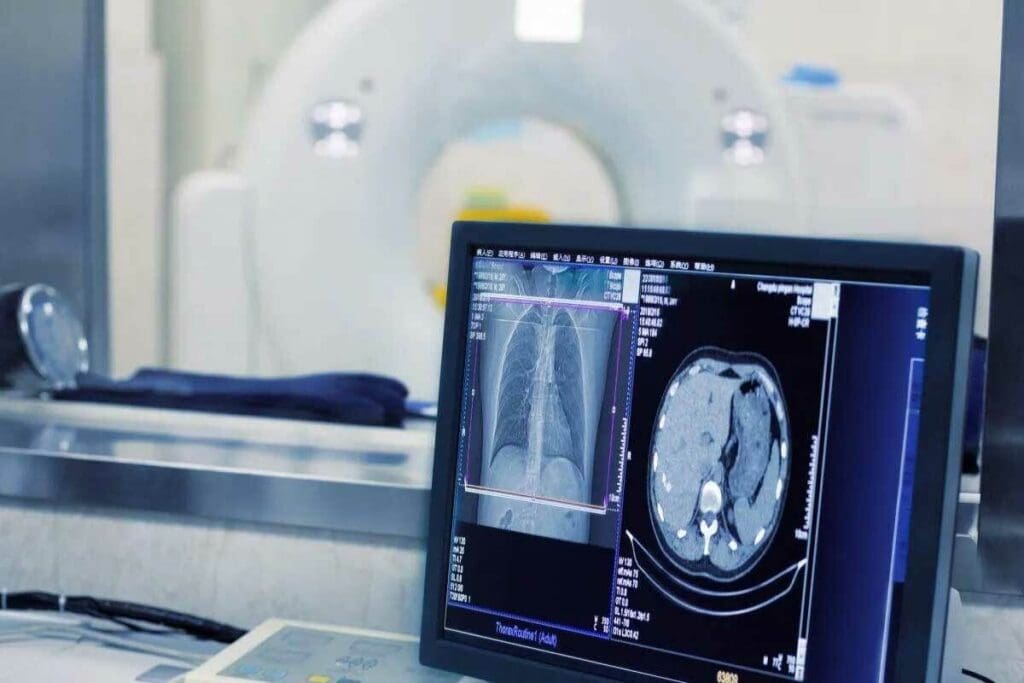
At Liv Hospital, we use renal scintigraphy to get deep insights into kidney health. A nuclear medicine renal scan is a tool that shows how well kidneys work and how urine moves through them.
We use special radiotracers to better diagnose and manage kidney problems. This tool is key for spotting issues with kidney function and urine flow. It helps us act quickly and correctly to help our patients.
Key Takeaways
- Understanding kidney function is key to spotting kidney disorders.
- Renal scintigraphy gives us important info on kidney structure and function.
- Special radiotracers in nuclear medicine renal scans help check urine flow.
- Getting the right diagnosis is essential for managing kidney issues well.
- Liv Hospital is dedicated to giving accurate and focused care to our patients.
What Is a Nuclear Medicine Renal Scan: Basic Principles
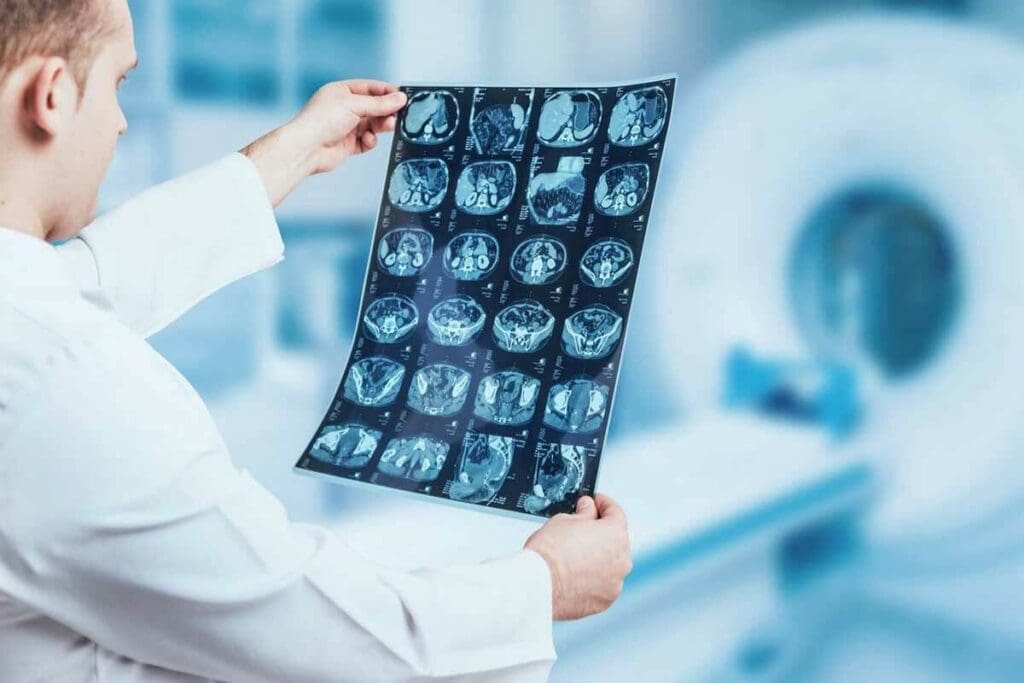
A nuclear medicine renal scan is a detailed imaging method. It shows how well the kidneys work and how they drain. This tool is key in kidney care, helping doctors check kidney health and spot problems.
This scan uses tiny amounts of radioactive materials, called radiotracers. These are injected into the blood. Then, a gamma camera tracks where and how much the kidneys absorb them.
The Science Behind Radiotracers in Kidney Imaging
Radiotracers are essential in these scans. They help check different kidney functions. For example, DTPA (Diethylene Triamine Penta-Acetic Acid) helps measure the glomerular filtration rate (GFR). This rate shows how well the kidneys are working.
“The choice of radiotracer is critical in determining the diagnostic accuracy of the renal scan.”
Key Components of Renal Scintigraphy
Renal scintigraphy uses nuclear medicine to image the kidneys. It includes radiotracers, a gamma camera, and computer software. These work together to show kidney function and structure clearly.
The data from these scans is very helpful for diagnosing and treating kidney issues. Knowing how these scans work helps doctors understand the results better. This leads to better care for patients.
Types of Renal Scans and Their Specific Applications

Nuclear medicine renal scans come in many types, each for different kidney disease needs. We use special tracers and methods to check how well kidneys work. This helps us find and treat kidney problems.
DTPA Scanning for Measuring Glomerular Filtration Rate
DTPA scanning is key for checking the Glomerular Filtration Rate (GFR). It shows how well kidneys filter waste. This scan is important for kidney health checks.
We inject a DTPA compound with Technetium-99m into the blood. A gamma camera tracks it through the kidneys. This gives us images of kidney function and blood flow.
MAG3 Renography for Tubular Function Assessment
MAG3 renography helps us see how well kidneys handle waste. It’s great for those with kidney problems or when DTPA scans can’t be used.
MAG3 is also labeled with Technetium-99m. We inject it into the blood. Then, we watch how it’s cleared to see how well kidneys work.
DTPA and MAG3 scans are both important for kidney checks. The right scan depends on the patient’s needs and the doctor’s questions.
| Characteristics | DTPA Scan | MAG3 Renography |
| Primary Use | Measuring GFR | Assessing Tubular Function |
| Radiotracer | Technetium-99m DTPA | Technetium-99m MAG3 |
| Clinical Utility | Evaluating overall renal function | Assessing renal excretion and tubular function |
In summary, DTPA and MAG3 scans are key in nuclear medicine for kidney checks. Knowing their uses helps us diagnose and treat kidney diseases better.
The Lasix Renal Scan: A Critical Diagnostic Tool
The Lasix renal scan is a key tool in nephrology. It helps us check how well the kidneys work and spot different kidney problems.
How Diuretics Enhance Diagnostic Accuracy
Diuretics like Lasix (furosemide) are very important for making renal scans more accurate. When we give Lasix during the scan, we can see how the kidneys react. This helps us understand kidney function and find any blockages.
According to renal scintigraphy guidelines, using diuretics like Lasix is a common practice in kidney imaging.
Distinguishing Between Obstructive and Non-Obstructive Dilatation
The Lasix renal scan is mainly used to tell the difference between blockages and other causes of urinary tract dilatation. Blockages in the urinary tract cause obstructive dilatation. On the other hand, non-obstructive dilatation might be due to other issues like vesicoureteral reflux.
The scan shows how fast the kidneys drain after Lasix is given. This info is vital for figuring out and treating kidney issues.
Normal Results on a Renal Scan with Lasix
Normal results on a Lasix renogram show several key factors. Healthcare professionals look at specific parameters to check kidney health. This helps them understand how well the kidneys are working.
Symmetric Renal Perfusion Patterns
A normal renal scan shows symmetric renal perfusion. This means both kidneys get blood at the same rate. This symmetry is important for diagnosing kidney problems.
Expected Uptake and Clearance Timeframes
The uptake and clearance of the radiotracer are key parts of a renal scan. The radiotracer is taken up by the kidneys quickly. It should clear out within 10-15 minutes after Lasix is given.
| Timeframe | Expected Activity |
| 0-3 minutes | Rapid uptake of radiotracer |
| 3-10 minutes | Peak activity in the kidneys |
| 10-15 minutes | Clearance of radiotracer after Lasix |
Optimal Split Renal Function Values
Split renal function shows how much each kidney contributes to total function. Normally, each kidney should contribute 45-55%. Big differences might mean there’s a problem.
Normal Drainage Half-Times Under 10 Minutes
The drainage half-time shows how fast the radiotracer leaves the kidneys. A normal half-time is under 10 minutes after Lasix. This means the kidneys are working right.
Knowing these normal values helps doctors understand renal scans with Lasix. They can then make better decisions for patient care.
Interpreting Abnormal Nuclear Medicine Renal Scan Findings
Understanding abnormal results from a nuclear medicine renal scan is complex. It requires knowledge of how kidneys work and what can go wrong. We’ll explain how to interpret these scans, focusing on spotting delayed drainage, uneven kidney function, and key signs in abnormal Lasix renograms.
Recognizing Delayed Drainage Patterns
Scans showing delayed drainage might mean there’s an obstruction or kidney problem. Abnormal drainage is when it takes too long for the kidney to clear out the dye. This is seen as a prolonged time-activity curve or not reaching baseline activity on time.
We look at the scan’s time-activity curves to spot any odd drainage patterns. For example, a delayed peak or a prolonged half-time might point to an obstruction or other kidney issues.
| Drainage Parameter | Normal Value | Abnormal Value |
| Half-time (T1/2) | <10 minutes | >20 minutes |
| Peak Time | 3-5 minutes | >5 minutes |
Evaluating Asymmetric Renal Function
Uneven kidney function can hint at problems like one-sided blockage or disease affecting blood flow. We compare how each kidney takes up and clears the dye to assess this.
A big difference in split renal function (more than 10% difference) often means there’s a serious issue. This is key for diagnosing and treating conditions like high blood pressure caused by kidney disease.
Critical Indicators in Abnormal Lasix Renograms
The Lasix renogram is great for checking if there’s a blockage in the kidney. We look for signs like a prolonged washout phase or an abnormal response to diuretic administration.
An abnormal Lasix renogram can help tell if the problem is a blockage or something else. This helps doctors decide the best course of action.
Clinical Applications of Kidney Scintigraphy
We use kidney scintigraphy to find and treat kidney problems. This includes renovascular hypertension and issues with kidney transplants. It’s key in nephrology, giving insights into kidney function. This helps doctors make better choices for their patients.
Diagnosing Urinary Tract Obstruction
Kidney scintigraphy is great for spotting urinary tract blockages. These blockages can cause serious problems if not treated. It checks how well the kidneys work and how they drain, helping find and fix blockages.
The Lasix renogram, a special nuclear renal scan, helps tell if a blockage is there. Knowing this is key to figuring out what to do next.
Assessing Renovascular Hypertension
Renovascular hypertension is hard to diagnose. Kidney scintigraphy gives important info on kidney function and blood flow. It helps doctors find the cause of high blood pressure.
Evaluating Renal Transplant Complications
In kidney transplant patients, kidney scintigraphy checks how the transplant is doing. It looks for problems like acute tubular necrosis or rejection. The renogram shows how well the transplant is working, helping doctors take care of it.
Monitoring Progressive Kidney Disease
For those with kidney disease getting worse, regular checks are important. Renal scintigraphy lets doctors see how kidney function changes. It helps them see if treatments are working and adjust plans as needed. This way, doctors can give better care and help patients more.
The Renalgram and Renogram: Advanced Interpretation Techniques
The renalgram and renogram are key tools in nuclear medicine. They give insights into kidney function through advanced techniques. These tools are vital for managing kidney diseases by showing how well kidneys work and drain.
Quantitative Analysis Methods in Renal Imaging
Quantitative analysis in renal imaging measures various parameters to assess kidney function. Time-activity curves show how radiotracers are taken up and cleared over time. Clinicians use these curves to find the glomerular filtration rate (GFR) and check each kidney’s function.
Calculating split renal function is also important. It compares one kidney’s function to the other. This info is key for surgery planning and understanding kidney disease’s impact.
Computer-Assisted Interpretation of Time-Activity Curves
Computer-assisted interpretation has changed how we analyze time-activity curves in renal imaging. Advanced software can automatically generate these curves and provide detailed data. This makes renal scan interpretations more accurate.
These computer techniques allow for precise measurements of renal function and drainage. For example, they can spot obstructive patterns in the urinary tract by looking at radiotracers’ washout curves. This is essential for diagnosing issues like ureteropelvic junction obstruction.
By using both quantitative analysis and computer-assisted interpretation, doctors can make better decisions for patient care. This approach improves the accuracy of renal scans. It leads to better outcomes for patients with kidney disease.
Patient Experience: What to Expect During a Nuclear Medicine Renal Scan
Knowing what happens during a nuclear medicine renal scan can make you feel more at ease. We’ll walk you through each step, from getting ready to after the scan. Our goal is to make your experience as comfortable as possible.
Preparation Guidelines for Optimal Results
To get the best results, following certain steps is key. Drinking lots of water before the scan is very important. Proper hydration helps get clear images of your kidneys.
- Arrive at least 30 minutes before your scheduled appointment time.
- Drink plenty of water before the scan to ensure you’re well-hydrated.
- Inform your doctor about any medications you’re currently taking.
- Remove any jewelry or metal objects that could interfere with the scan.
The Procedure Step-by-Step
The scan involves several steps to ensure accurate results. Here’s what you can expect:
- A small amount of radioactive material (radiotracer) is injected into a vein in your arm.
- You will be asked to lie on a scanning table, and a gamma camera will be positioned over your kidneys.
- The camera captures images of the radiotracer as it moves through your kidneys, providing valuable information about their function.
- You may be given a diuretic (Lasix) to help assess how well your kidneys are working.
- The scan typically takes about 30 to 60 minutes to complete.
Post-Scan Care and Follow-Up
After the scan, you can usually go back to your normal activities. It’s important to follow any post-scan instructions from your healthcare team. This ensures your safety and the accuracy of the results.
| Post-Scan Instructions | Purpose |
| Drink plenty of fluids to help flush out the radiotracer. | To eliminate the radioactive material from your body. |
| Follow any specific dietary instructions provided by your doctor. | To ensure the best possible outcomes and minimize possible side effects. |
| Attend any scheduled follow-up appointments. | To review your scan results and discuss further treatment or testing if necessary. |
Understanding what to expect during a nuclear medicine renal scan helps prepare you. Our team is here to support and guide you through your diagnostic journey.
Conclusion: Advancing Kidney Care Through Nuclear Medicine
Nuclear medicine is key in diagnosing and managing kidney issues. It helps doctors understand how kidneys work and spot problems early. This is thanks to renal scintigraphy.
With radiotracers and advanced imaging, nuclear medicine gives detailed looks at kidney function. It can find issues like blockages and high blood pressure in kidneys. This helps doctors create treatment plans that really work for each patient.
As we keep making nuclear medicine better, we’ll see even more accurate diagnoses. This means better care for patients with kidney problems. Nuclear medicine has changed how we treat kidney disorders, giving doctors the tools they need to help patients.
FAQ
What is a nuclear medicine renal scan?
A nuclear medicine renal scan is a test that uses tiny amounts of radioactive materials. It checks how well the kidneys work and their structure.
How does a Lasix renal scan work?
In a Lasix renal scan, a radiotracer is injected into the blood. Then, Lasix, a diuretic, is given to make the kidneys produce urine. The scan measures how well the kidneys respond to the diuretic.
What is DTPA scanning, and how is it used?
DTPA scanning measures the kidneys’ filtration rate. It’s used to check kidney function, mainly in those with kidney disease or damage.
What are normal results on a renal scan with Lasix?
Normal results show even kidney function and quick radiotracer clearance. The kidneys should drain well within 10 minutes.
How is a renal scan used to diagnose urinary tract obstruction?
A renal scan can spot urinary tract blockages by showing slow kidney drainage. The Lasix renogram helps tell if the blockage is due to obstruction or not.
What is the role of kidney scintigraphy in assessing renovascular hypertension?
Kidney scintigraphy helps diagnose renovascular hypertension. It checks each kidney’s function and blood flow, spotting any differences.
How do I prepare for a nuclear medicine renal scan?
To prepare, drink lots of water and avoid certain meds. Arrive on time. Specific prep may vary based on the scan type and facility.
What is the difference between a renogram and a renalgram?
Renogram and renalgram mean the same thing. They describe the kidney’s function over time, as shown by a renal scan.
How is a nuclear medicine renal scan used in evaluating renal transplant complications?
It helps check for transplant issues like blockages, rejection, or blood flow problems. It looks at the transplanted kidney’s function and blood flow.
What are the benefits of using quantitative analysis methods in renal imaging?
These methods give more precise and fair kidney function measurements. They help better diagnose and track kidney diseases.
References
- Taylor, A. T., Nally, J., Aurell, M., et al. (2018). SNMMI Procedure Standard / EANM Practice Guideline for Diuretic Renal Scintigraphy in Adults With Suspected Upper Urinary Tract Obstruction. Seminars in Nuclear Medicine, 48(4), S1–S35. https://pmc.ncbi.nlm.nih.gov/articles/PMC6020824/
- Piepsz, A., & Gordon, I. (1998). Clinical Applications of Renal Scintigraphy. American Journal of Roentgenology, 164(1), 3–12. https://www.ajronline.org/doi/pdfplus/10.2214/ajr.164.1.7998566
- Altarelli, M., Jreige, M., Prior, J. O., et al. (2023). Renal scintigraphy to predict persistent renal failure after acute kidney injury: an observational study. Journal of Nephrology. https://pmc.ncbi.nlm.nih.gov/articles/PMC10226915/