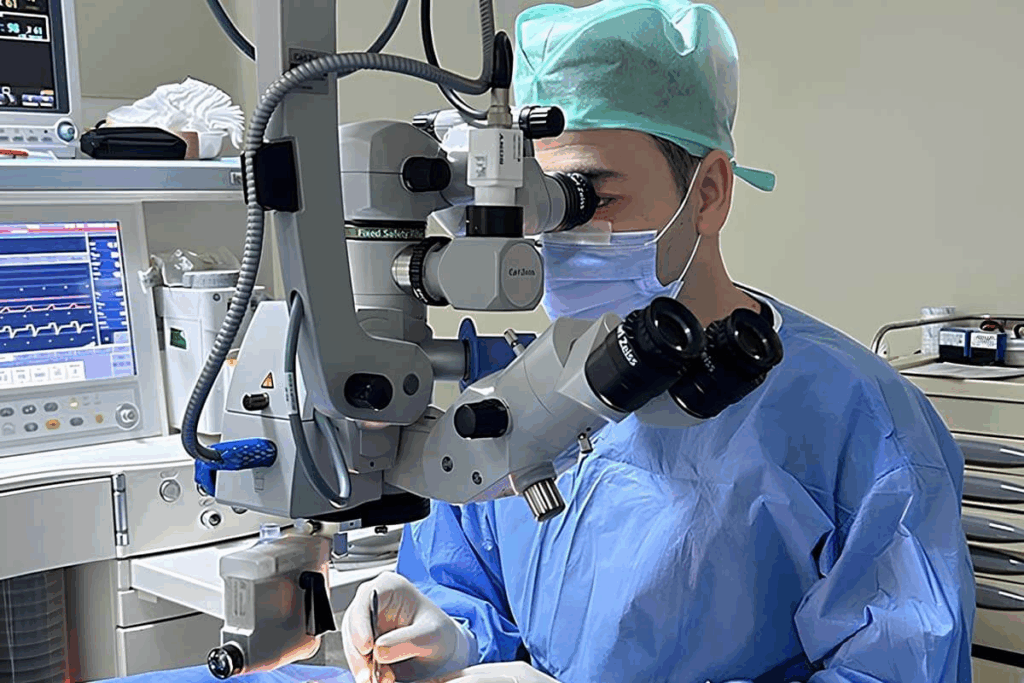
Retinal artery occlusion is a serious eye condition that needs quick medical help. It happens when a small artery to the retina gets blocked. This leads to sudden vision loss.Know these 5 alarming ocular artery occlusion symptoms. This critical eye emergency requires immediate medical attention to save sight.
Experiencing sudden vision loss can be scary. AtLiv Hospital, we’re here to help. Our team works fast to diagnose and protect your vision and health.
It’s important to know the signs of retinal artery occlusion. This condition has types like CRAO, BRAO, and cilioretinal artery occlusion. Knowing these can help you get medical help quickly.
Key Takeaways
- Retinal artery occlusion is a medical emergency requiring immediate attention.
- Sudden vision loss is a primary symptom of the condition.
- There are different types of retinal artery occlusion, including CRAO, BRAO, and cilioretinal artery occlusion.
- Liv Hospital provides expert care and thorough evaluation for retinal artery occlusion.
- Timely recognition of symptoms is key for effective treatment.
Understanding Retinal Artery Occlusion

It’s important to know about retinal artery occlusion to get treatment quickly. This condition happens when an artery to the retina gets blocked. It can cause sudden and permanent vision loss.
Definition and Pathophysiology
Retinal artery occlusion is when something blocks the artery to the retina. This can be a blood clot or other blockages. It leads to damage in the retina and vision problems.
The pathophysiology is complex. It involves blood flow issues, blood clots, and problems with the retina itself.
The artery to the retina supplies the inner layers. When it gets blocked, vision can be severely affected. It’s a medical emergency that needs quick action to save vision.
Prevalence and Incidence Rates
The number of people affected by retinal artery occlusion varies worldwide. It’s estimated to be between 0.85 and 7.38 per 100,000 people each year. It’s a rare condition but serious for eye health.
Important facts about RAO include:
- It mostly affects older adults, with more cases as people get older.
- Some studies show a slight increase in cases among men.
- Risk factors include high blood pressure, diabetes, and heart disease.
Knowing these facts helps us find who’s at risk. It also helps us take steps to prevent it.
Types of Ocular Artery Occlusion

Ocular artery occlusion is a serious condition that affects the blood supply to the retina. This leads to various vision problems. The classification of ocular artery occlusion is based on the specific artery involved and the extent of the occlusion. This determines the severity of the condition.
Central Retinal Artery Occlusion (CRAO)
Central Retinal Artery Occlusion (CRAO) is a medical emergency. It happens when the central retinal artery, which supplies blood to the entire retina, becomes blocked. CRAO affects about 1.9 to 2.58 per 100,000 people in developed nations each year.
This condition results in sudden, painless vision loss in one eye. People often describe it as a curtain or shade descending over the eye.
The symptoms of CRAO can be dramatic and require immediate medical attention. We will discuss the common symptoms and characteristics of CRAO in detail. This includes sudden vision loss and visual field defects.
Branch Retinal Artery Occlusion (BRAO)
Branch Retinal Artery Occlusion (BRAO) occurs when one of the branches of the central retinal artery becomes occluded. This condition leads to segmental vision loss. The symptoms of BRAO can vary, but they often include sudden loss of vision in a specific part of the visual field.
Understanding the differences between BRAO and CRAO is key for diagnosis and treatment. We will explore the distinguishing features of BRAO symptoms. We will also see how they differ from those of CRAO.
Cilioretinal Artery Occlusion
Cilioretinal Artery Occlusion is a less common condition. It occurs when the cilioretinal artery, present in some individuals, becomes occluded. The cilioretinal artery supplies a portion of the retina, and its occlusion can result in localized vision loss.
The presence and location of a cilioretinal artery can vary among individuals. This makes the diagnosis of this condition challenging.
Cilioretinal artery occlusion can occur in isolation or in conjunction with other retinal vascular occlusions. Recognizing this condition requires a thorough understanding of retinal anatomy and the variations that can occur.
Common Symptoms of Central Retinal Artery Occlusion
People with CRAO often see sudden and painless vision loss in one eye. This is a serious medical issue that needs quick help. Knowing the symptoms is key for fast diagnosis and treatment.
Sudden Vision Loss Characteristics
The vision loss from CRAO happens quickly, in seconds or minutes. It is painless, unlike other eye problems that hurt. The loss can be severe, greatly affecting vision.
Visual Field Defects
CRAO might not always cause total blindness. Instead, it can lead to big visual field problems. People might see blurry or lose all vision in the affected eye.
Visual Field Defect | Description |
Central Scotoma | A blind spot in the center of the visual field |
Peripheral Vision Loss | Loss of side vision, with possible preservation of central vision |
Altitudinal Defect | Loss of vision in the upper or lower half of the visual field |
Associated Symptoms
While CRAO is known for painless vision loss, some might also have other signs. These include flashes of light or increased sensitivity to light. But, the main worry is the sudden vision loss.
Recognizing Branch Retinal Artery Occlusion Symptoms
It’s important to know the symptoms of branch retinal artery occlusion (BRAO) to get help quickly. BRAO causes sudden, painless vision loss in one eye. This loss affects a specific part of the visual field. We’ll look at the main symptoms and how they’re different from other retinal artery occlusions.
Segmental Vision Loss
Segmental vision loss is a key sign of BRAO. This means vision loss happens in a specific area of the visual field. People might see:
- Blind spots or scotomas
- Loss of peripheral vision
- Difficulty with tasks needing detailed vision
The amount of vision loss depends on where and how bad the occlusion is.
Differentiating BRAO from CRAO Symptoms
It’s key to tell BRAO apart from central retinal artery occlusion (CRAO) symptoms. Both are caused by retinal artery blockage, but vision loss is different:
- CRAO usually causes total vision loss in one eye.
- BRAO leads to vision loss in a specific area.
Knowing these differences helps doctors diagnose and treat better.
Progression of Symptoms
The way BRAO symptoms get worse can vary. Sometimes, vision loss happens suddenly and stays the same. Other times, it might get worse slowly or change a lot. If vision changes suddenly, it’s important to see a doctor right away.
Watching how symptoms change helps doctors figure out the best treatment.
When to Seek Emergency Medical Attention
Retinal artery occlusion is a serious medical issue that needs quick action. Sudden vision loss can be scary. It’s important to know when to get help right away.
Warning Signs Requiring Immediate Care
Some symptoms mean you should get emergency care fast. These include:
- Sudden, painless loss of vision in one eye
- Blurred vision or a curtain descending over your field of vision
- Significant visual disturbances, such as seeing flashes of light or experiencing double vision
If you or someone you know has these symptoms, act fast. The American Academy of Ophthalmology says, ‘Prompt treatment is essential to restore vision and prevent permanent damage.‘
Time-Critical Nature of Treatment
Treating retinal artery occlusion quickly is very important. Treatment works best when started within a few hours of symptoms. Waiting too long can cause permanent vision loss. If you have sudden vision problems, go to the nearest stroke center right away.
‘Time is retina’ is a mantra used by ophthalmologists to emphasize the urgency of treating retinal artery occlusion.
Distinguishing Ocular Artery Occlusion from Other Eye Conditions
It’s important to tell ocular artery occlusion apart from other eye problems. This is key for the right treatment. Ocular artery occlusion, like CRAO and BRAO, causes sudden vision loss. This can look like other serious eye issues.
Retinal Vein Occlusion vs. Artery Occlusion
Retinal vein occlusion (RVO) and artery occlusion (RAO) are both serious eye problems. But they happen for different reasons and look different on the eye. Both can cause sudden vision loss, but they have different signs.
RVO shows up with bleeding in the retina, swollen veins, and swelling in the macula. RAO, on the other hand, has a pale retina, a cherry-red spot, and thin arteries. Knowing these differences helps doctors make the right diagnosis.
Characteristics | Retinal Vein Occlusion (RVO) | Retinal Artery Occlusion (RAO) |
Primary Cause | Thrombosis in retinal veins | Embolism or thrombosis in retinal arteries |
Fundoscopic Findings | Retinal hemorrhages, dilated tortuous veins, macular edema | Pale retina, cherry-red spot, attenuated arterioles |
Visual Prognosis | Variable, depending on severity and treatment response | Generally poor, specially if treatment is delayed |
Retinal Detachment vs. Artery Occlusion
Retinal detachment can also cause sudden vision loss. It often comes with flashes and floaters. Unlike RAO, it doesn’t start with a cherry-red spot or a very pale retina.
To tell retinal detachment from RAO, look for a detached retina and flashes and floaters. RAO has sudden vision loss without these symptoms.
Migraine Aura vs. Artery Occlusion
Migraine aura can look like RAO because of the sudden visual changes. But migraine aura changes over minutes and includes zigzag patterns or scintillations, followed by a headache.
RAO’s vision loss is sudden and doesn’t have these visual changes or headache. Knowing these differences helps doctors correctly diagnose and treat sudden vision loss.
Risk Factors and Prevention Strategies
It’s important to know the risk factors for retinal artery occlusion. This knowledge helps in prevention and quick action. Certain medical conditions and lifestyle choices can raise the risk of this condition.
Medical Conditions That Increase Risk
Some medical conditions increase the risk of retinal artery occlusion. These include hypertension, diabetes mellitus, and hyperlipidemia. Also, conditions that cause inflammation or blood clots, like giant cell arteritis, are significant.
Managing these conditions well is key to lowering the risk. Regular checks and treatments are essential.
Lifestyle Modifications for Prevention
Changing your lifestyle can help prevent retinal artery occlusion. Quitting smoking is a big step. Eating well and staying active can also help manage risks like high blood pressure and high cholesterol.
Also, drinking less alcohol and avoiding illicit drugs can help. A holistic approach to lifestyle changes is best for keeping your blood vessels healthy.
Monitoring for High-Risk Individuals
People with risk factors need regular checks. We suggest that high-risk patients get regular eye exams to catch any issues early. Keeping medical conditions under control is also important.
By tackling the risk factors for retinal artery occlusion, we can prevent it and keep eyes healthy. Early detection and action are critical for managing this condition.
Diagnostic and Treatment Approaches for Retinal Artery Occlusion
Managing retinal artery occlusion starts with quick diagnosis and the right emergency care. It also includes long-term management. To diagnose, doctors use tests to see how the occlusion affects vision.
Initial Examination and Imaging
The first step is a detailed look at the retina. This includes:
- Funduscopy to see the retina and find signs of occlusion
- Fluorescein angiography to check blood flow and find non-performing areas
- Optical Coherence Tomography (OCT) to measure retinal thickness and find edema or ischemia
Emergency Interventions
Quick action is key in treating retinal artery occlusion. Emergency steps might be:
- Ocular massage to move the blockage
- Anterior chamber paracentesis to lower eye pressure
- Thrombolytic agents in some cases
These steps try to get blood flowing again and save vision.
Long-term Management and Visual Prognosis
After the first treatment, long-term care focuses on avoiding more blockages. It includes:
- Managing high blood pressure and diabetes
- Antiplatelet or anticoagulant therapy
- Changes in lifestyle like quitting smoking and eating better
Treatment Approach | Objective | Key Components |
Initial Examination | Diagnose and assess occlusion | Funduscopy, Fluorescein Angiography, OCT |
Emergency Interventions | Restore retinal blood flow | Ocular massage, Anterior chamber paracentesis, Thrombolytic agents |
Long-term Management | Prevent further occlusions | Risk factor control, Antiplatelet therapy, Lifestyle modifications |
The chance of good vision depends on how fast and well treatment is done. It also depends on the cause of the blockage. Seeing a specialist quickly is very important.
Conclusion
Retinal artery occlusion is a serious condition that needs quick medical help. We talked about different types of ocular artery occlusion. These include central retinal artery occlusion, branch retinal artery occlusion, and cilioretinal artery occlusion. Each has its own symptoms and characteristics.
It’s important to know the symptoms of retinal artery occlusion to get help fast. We pointed out the need for immediate care when vision loss happens suddenly. We also talked about how to prevent this condition.
In short, knowing about retinal artery occlusion is key. It helps people get medical help quickly, which can save their vision. We urge everyone to stay informed and seek medical help if they notice any symptoms. This way, they can get the care they need.
FAQ
What is retinal artery occlusion?
Retinal artery occlusion is a serious eye condition. It happens when the retinal artery gets blocked. This leads to sudden vision loss. It’s very important to get medical help right away to try to save your vision.
What are the different types of retinal artery occlusion?
There are a few main types. Central retinal artery occlusion (CRAO) is one. It affects the whole retina. Branch retinal artery occlusion (BRAO) affects parts of the retina. Cilioretinal artery occlusion is another type. Each has its own symptoms and how it affects vision.
What are the symptoms of central retinal artery occlusion (CRAO)?
CRAO symptoms include sudden vision loss. You might also see visual field defects. Sometimes, people feel pain or headache. These symptoms mean you need to see a doctor right away.
How does branch retinal artery occlusion (BRAO) differ from CRAO?
BRAO causes segmental vision loss. It doesn’t affect the whole retina like CRAO. The symptoms can vary based on where the blockage is.
Why is timely medical care critical for retinal artery occlusion?
Getting medical help quickly is key. The retina is very sensitive to lack of blood flow. Quick treatment can help a lot in saving your vision.
How can ocular artery occlusion be distinguished from other eye conditions?
Doctors use eye exams and imaging to tell it apart from other conditions. This includes retinal vein occlusion, retinal detachment, and migraine aura. A thorough check can help figure out the right diagnosis.
What are the risk factors for retinal artery occlusion?
High blood pressure, diabetes, and heart disease are risks. These conditions can harm blood vessels. Managing these can help prevent RAO.
How is retinal artery occlusion diagnosed?
Doctors start with an eye exam. They use imaging like fundus fluorescein angiography. Other tests help see how bad the blockage is and any damage to the retina.
What are the treatment options for retinal artery occlusion?
Treatment starts with emergency steps to get blood flowing again. Then, there are long-term plans to manage risks and prevent future problems.
Can retinal artery occlusion be prevented?
Some risks can’t be changed. But, making lifestyle changes and watching for high-risk signs can help prevent it. It’s all about being proactive.
What is the visual prognosis after retinal artery occlusion?
The outlook for vision depends on the type and how bad the blockage is. Also, how fast and well treatment works plays a big role.
What is the incidence rate of retinal artery occlusion?
It’s a rare condition, but it’s serious. It needs quick medical help to avoid losing a lot of vision.
How does cilioretinal artery occlusion differ from CRAO and BRAO?
Cilioretinal artery occlusion affects a specific area of the retina. Its symptoms and effects can be different from CRAO and BRAO.
References
https://www.ncbi.nlm.nih.gov/books/NBK470354