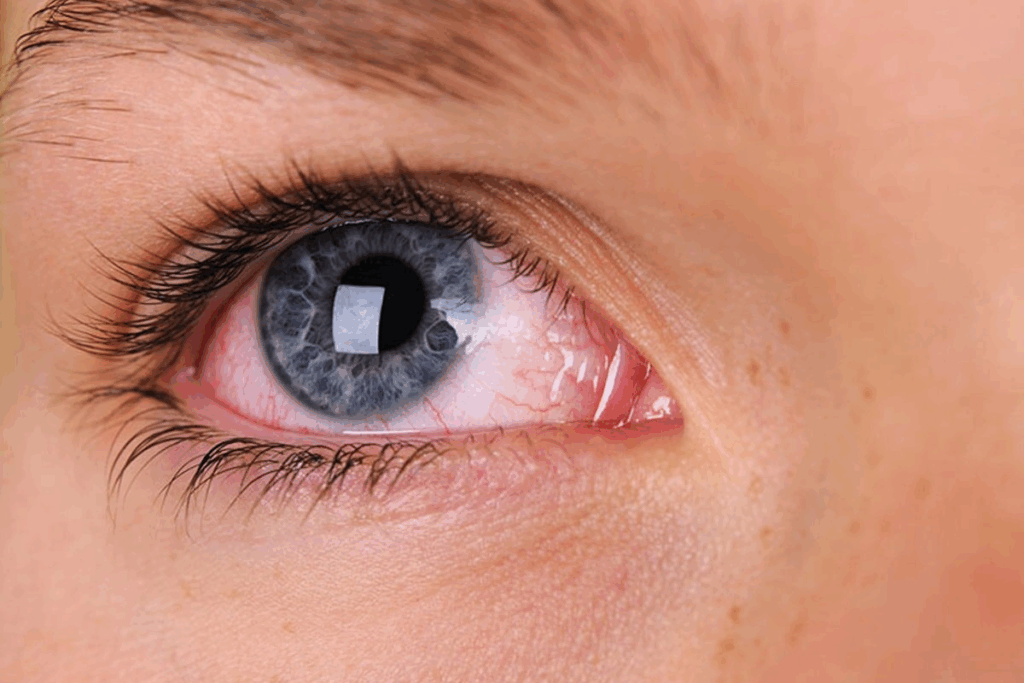
The oculomotor nerve, also known as cranial nerve III or CN III, is key to our vision. It helps control how our eyes move and see. Theoculomotor nerve number is CN III. Our ultimate guide explains its 2 amazing, critical functions for eye movement and pupil control.
This nerve is vital for many important tasks. It helps our eyes move and keeps our vision sharp. Without it, daily activities would be much harder.
Knowing how the oculomotor nerve works is important. It shows us how it affects our vision and health. Let’s look closer at what CN III does for our eyes.
Key Takeaways
- The oculomotor nerve is also known as cranial nerve III or CN III.
- It provides motor and parasympathetic innervation to structures within the bony orbit.
- CN III plays a critical role in controlling eye movements and vision.
- The oculomotor nerve is essential for daily activities and overall well-being.
- Understanding CN III’s functions is vital for appreciating its impact on our vision.
The Oculomotor Nerve: Overview and Significance

Understanding the oculomotor nerve is key to knowing how our eyes move and work. The oculomotor nerve, known as CN III or the third cranial nerve, is vital for eye movements and other important functions.
Definition and Basic Function
The oculomotor nerve comes from the midbrain. It has both motor and parasympathetic fibers. This nerve controls many eye muscles, like the superior and medial rectus, and the inferior rectus and oblique.
It helps these muscles move the eyes in different ways. This includes rotating and elevating the eyes. The oculomotor nerve also controls the pupil’s constriction and the accommodation reflex.
Importance in Visual System
The oculomotor nerve is essential for the visual system to work right. It makes sure our eyes move in a coordinated way. This is important for reading, driving, and moving around safely.
“The oculomotor nerve is key for eye movements and pupil constriction. It’s a vital part of the visual system.”
Medical Expert
To understand the oculomotor nerve’s role, let’s look at the muscles it controls and their functions. Here’s a table showing the main muscles and their roles:
Muscle | Function |
Superior Rectus | Elevation |
Medial Rectus | Adduction |
Inferior Rectus | Depression |
Inferior Oblique | Extorsion, Elevation |
In summary, the oculomotor nerve is vital for the visual system. It helps with precise eye movements and controls eye functions. Problems with this nerve can cause serious vision issues. This shows how important it is for normal vision and eye movement.
Anatomy of the Oculomotor Nerve
Understanding the oculomotor nerve’s anatomy is key to knowing its role and possible health issues. This nerve, the third cranial nerve, controls eye movements. It has a complex structure that’s vital for our vision.
Origin in the Midbrain
The oculomotor nerve starts in the midbrain of the brainstem. It’s located near the cerebral aqueduct. This area is where the nerve’s motor functions begin, controlling extraocular muscles.
Course and Pathway
The nerve exits the brainstem at the midline. It goes between the superior cerebellar artery and the posterior cerebral artery. Then, it moves forward.
It passes through the cavernous sinus, surrounded by other important structures. Next, it enters the orbit through the superior orbital fissure. This is a key passage for nerves and vessels.
Superior and Inferior Branches
Once in the orbit, the nerve splits into two branches. The superior branch goes to the superior rectus and levator palpebrae superioris muscles.
The inferior branch is larger and more complex. It supplies the medial rectus, inferior rectus, and inferior oblique muscles. It also carries fibers for pupil constriction and lens accommodation.
Branch | Muscles Innervated | Function |
Superior Branch | Superior Rectus, Levator Palpebrae Superioris | Elevation, Eyelid Opening |
Inferior Branch | Medial Rectus, Inferior Rectus, Inferior Oblique | Adduction, Depression, Rotation |
The Oculomotor Nerve Number and Classification
The oculomotor nerve, or CN III, plays a key role in eye movement and vision. It is the third cranial nerve and a mixed nerve. This means it has different roles in the visual system.
Designation as Cranial Nerve III
The oculomotor nerve is known as the third cranial nerve, or CN III. This shows its importance in controlling eye movements.
Classification as a Mixed Nerve
The oculomotor nerve is a mixed nerve. It has both somatic motor fibers and parasympathetic fibers. This mix allows it to control eye muscles and regulate pupil size.
This mixed nature helps the nerve manage complex eye movements and functions. The somatic motor part controls eye muscles. The parasympathetic part helps with pupil size and lens focus.
Component | Function | Target |
Somatic Motor | Controls extraocular muscles | Superior Rectus, Medial Rectus, Inferior Rectus, Inferior Oblique |
Parasympathetic | Pupillary constriction and lens accommodation | Sphincter Pupillae, Ciliary Muscle |
Nuclei of the Oculomotor Nerve
Understanding the oculomotor nerve’s nuclei is key to knowing its role. The oculomotor nerve, or CN III, comes from two important nuclei in the midbrain. These are the oculomotor nucleus and the Edinger-Westphal nucleus.
Oculomotor Nucleus (Somatic Motor Component)
The oculomotor nucleus handles the nerve’s somatic motor part. It sends fibers to the extraocular muscles. These muscles are vital for eye movement.
The oculomotor nucleus is found in the midbrain, near the superior colliculus.
The fibers from the oculomotor nucleus control the following muscles:
- Superior rectus
- Medial rectus
- Inferior rectus
- Inferior oblique
- Levator palpebrae superioris
These muscles help with eye movements like elevation, depression, adduction, and rotation. So, the oculomotor nerve is key for eye movement.
Edinger-Westphal Nucleus (Parasympathetic Component)
The Edinger-Westphal nucleus is the parasympathetic part of the oculomotor nerve. It controls pupillary constriction and accommodation. It’s also in the midbrain, close to the oculomotor nucleus.
The parasympathetic fibers from the Edinger-Westphal nucleus go to the ciliary ganglion. Then, the postganglionic fibers reach the:
- Sphincter pupillae muscle, which controls pupillary constriction
- Ciliary muscle, which controls accommodation
The Edinger-Westphal nucleus is vital for the pupillary light reflex. This reflex helps adjust light entering the eye.
In summary, the oculomotor nerve’s nuclei are essential for its functions. The oculomotor nucleus controls the extraocular muscles. The Edinger-Westphal nucleus manages pupillary constriction and accommodation.
Muscles Innervated by the Oculomotor Nerve
The oculomotor nerve controls four of the six extraocular muscles. These muscles are key for the eye’s precise movements. Knowing which muscles the oculomotor nerve innervates helps us understand its role in vision.
Superior Rectus Muscle
The superior rectus muscle is innervated by the oculomotor nerve. It elevates the eyeball, enabling us to look up. This muscle works with others for smooth eye movements.
Medial Rectus Muscle
The medial rectus muscle is also innervated by the oculomotor nerve. It moves the eyeball inward, towards the body’s midline. This is important for focusing on close objects.
Inferior Rectus Muscle
The inferior rectus muscle is another muscle innervated by the oculomotor nerve. It depresses the eyeball, allowing us to look down. It works with other muscles for various eye movements.
Inferior Oblique Muscle
The inferior oblique muscle is also innervated by the oculomotor nerve. It rotates the eyeball outward and helps in elevation. This muscle is vital for looking up and out.
The oculomotor nerve’s role in innervating these muscles is key. It controls a wide range of eye movements. The coordination of these muscles is essential for normal vision and eye function.
Muscle | Primary Function |
Superior Rectus | Elevation |
Medial Rectus | Adduction |
Inferior Rectus | Depression |
Inferior Oblique | Extorsion and Elevation Assistance |
Levator Palpebrae Superioris and Eyelid Function
The oculomotor nerve, or CN III, is key for eye movement and eyelid function. It controls the levator palpebrae superioris muscle. This muscle is vital for the upper eyelid’s movement.
Anatomy of the Levator Palpebrae
The levator palpebrae superioris is a thin, flat muscle in the orbit. It starts from the back of the orbit and attaches to the eyelid. The oculomotor nerve (cn iii oculomotor) innervates it, making it work right.
The levator palpebrae superioris’s anatomy helps it lift the upper eyelid well. Its connection to the oculomotor nerve makes sure it moves with other eye muscles.
Role in Eyelid Elevation
The main job of the levator palpebrae superioris is to lift the upper eyelid. This is key for keeping the eye open and clear vision. The oculomotor nerve’s role ensures smooth eye movements.
- The levator palpebrae superioris works with other muscles for eyelid control.
- Its problems can cause ptosis, where the eyelid droops.
- The oculomotor nerve’s connection to the levator palpebrae superioris is essential for eyelid function.
Knowing about the levator palpebrae superioris and its connection to the oculomotor iii is key for diagnosing and treating eyelid issues.
Eye Movement Control by CN III
The oculomotor nerve, or CN III, is key in controlling our eye movements. It lets us move our eyes easily around. This nerve helps several muscles that are vital for eye movement.
Vertical Gaze Mechanisms
Vertical gaze is managed by the superior and inferior rectus muscles. These muscles are controlled by CN III. The superior rectus lifts the eye, while the inferior rectus lowers it.
Horizontal Gaze Mechanisms
CN III also helps with horizontal gaze. It does this through the medial rectus muscle. This muscle moves the eye towards the body’s midline.
Coordination with CN IV and CN VI
CN III works with CN IV and CN VI for full eye movement control. CN IV controls the superior oblique muscle, which rotates the eye. CN VI controls the lateral rectus muscle, which moves the eye away from the midline.
Cranial Nerve | Muscle Innervated | Function |
CN III | Superior Rectus | Elevation |
CN III | Medial Rectus | Adduction |
CN III | Inferior Rectus | Depression |
CN IV | Superior Oblique | Rotation |
CN VI | Lateral Rectus | Abduction |
Knowing how CN III controls eye movements shows its importance. It helps us see and interact with our surroundings.
Parasympathetic Functions of the Oculomotor Nerve
The oculomotor nerve controls how our pupils adjust to light and how we focus on close objects. These actions are key for seeing clearly in different lighting conditions.
Pupillary Constriction via Sphincter Pupillae
The oculomotor nerve’s parasympathetic fibers work with the sphincter pupillae muscle. This muscle is in charge of making our pupils smaller. It’s important for controlling how much light gets into our eyes.
Accommodation via Ciliary Muscle
The parasympathetic fibers also control the ciliary muscle. This muscle helps our eyes focus on close objects. It changes the shape of the lens to do this.
The pre-ganglionic parasympathetic fibers go through the inferior branch of the oculomotor nerve. Knowing how these fibers work helps us understand the nerve’s role in our vision.
To wrap up, the oculomotor nerve’s main parasympathetic jobs are:
- Managing pupillary constriction with the sphincter pupillae muscle.
- Helping with accommodation through the ciliary muscle.
These roles show how complex and important the nerve is for our vision and how we adjust to different lighting.
Oculomotor Nerve Location and Anatomical Relationships
The oculomotor nerve’s location is vital for understanding its role in vision. Knowing where it is helps us see how it works in the brain and eye area.
Path Through the Cavernous Sinus
The oculomotor nerve goes into the lateral part of the cavernous sinus. This area is important because it has many nerves and the internal carotid artery. Here, it’s near other nerves like the trochlear nerve, the trigeminal nerve, and the abducens nerve.
Key relationships within the cavernous sinus include:
- Proximity to the internal carotid artery
- Association with other cranial nerves (CN IV, CN V, CN VI)
- Potential for compression or damage due to sinus pathology
Entry via Superior Orbital Fissure
After going through the cavernous sinus, the oculomotor nerve enters the orbit. It does this through the superior orbital fissure. This fissure is between the greater and lesser wings of the sphenoid bone.
The oculomotor nerve’s entry into the orbit is a critical step in its anatomical pathway, enabling it to control the movements of the eye.
Once inside, the nerve splits into two branches. These branches go to the muscles that move the eye and the muscle that lifts the eyelid.
Knowing where the oculomotor nerve is and how it connects is key for treating nerve problems. By understanding its path, doctors can find and treat nerve issues more effectively.
Clinical Assessment of the Oculomotor Nerve
Doctors use tests to check the oculomotor nerve’s health. This nerve controls eye movements, pupil size, and eyelid opening. A detailed check is key to spot nerve problems and related issues.
Testing Extraocular Movements
Testing eye movements is a main way to check the oculomotor nerve. Doctors ask patients to follow a moving target with their eyes. This helps see if the eyes can move freely and if there are any issues.
Eye movements are controlled by six muscles. Three of these are controlled by the oculomotor nerve. Weakness in these muscles can lead to eye movement problems, showing nerve issues.
Extraocular Muscle | Primary Action | Nerve Innervation |
Superior Rectus | Elevation | Oculomotor Nerve (CN III) |
Medial Rectus | Adduction | Oculomotor Nerve (CN III) |
Inferior Rectus | Depression | Oculomotor Nerve (CN III) |
Inferior Oblique | Extorsion, Elevation | Oculomotor Nerve (CN III) |
Pupillary Light Reflex Examination
The pupillary light reflex test is also important. It checks if the nerve works right when light hits the eye. A normal response is when the pupil gets smaller, showing the nerve is working well.
“The pupillary light reflex is a critical component of the neurological examination, providing valuable information about the integrity of the oculomotor nerve and its connections.” –
A neurological examination textbook
Accommodation Testing
Accommodation testing is another key part. It checks if the nerve can control the lens for near vision. The doctor asks the patient to focus on a near object and watches the pupils and focus.
In summary, checking the oculomotor nerve involves many tests. These include eye movements, light reflex, and accommodation. These tests help doctors find nerve problems and treat them properly.
Oculomotor Nerve Dysfunction and Disorders
Oculomotor nerve disorders can affect eye movement and other functions. The oculomotor nerve, or CN III, controls eye movements and functions like eyelid opening and pupil constriction. Problems with this nerve can cause symptoms that greatly affect a person’s life.
Complete vs. Partial Oculomotor Nerve Palsy
Oculomotor nerve palsy is a condition where the muscles controlled by CN III are weak or paralyzed. It can be either complete or partial, based on the damage. Complete oculomotor nerve palsy means total paralysis, leading to limited eye movement and possibly a drooping eyelid. Partial oculomotor nerve palsy affects fewer muscles, causing milder symptoms.
Pupil-Sparing vs. Pupil-Involving Palsy
Oculomotor nerve palsy can also be divided by whether the pupil is affected. Pupil-sparing oculomotor nerve palsy means the nerves for pupil constriction are not damaged. This is often seen in diabetic patients due to microvascular ischemia. On the other hand, pupil-involving oculomotor nerve palsy means these nerves are damaged, usually by an aneurysm or tumor. This type needs quick medical attention to check for serious problems.
Common Causes of CN III Damage
There are several reasons for oculomotor nerve damage. Common causes include:
- Aneurysms: Aneurysms, like those from the posterior communicating artery, can press on CN III.
- Trauma: Head injuries can directly harm the oculomotor nerve.
- Diabetes: Diabetes-related microvascular ischemia can cause nerve palsy.
- Tumors: Both benign and malignant tumors can press or invade CN III.
Knowing these causes is key to managing and treating oculomotor nerve problems. We will look at how to assess and manage these issues in the next sections.
Conclusion
We’ve looked into the oculomotor nerve, also known as cranial nerve 3. It plays a key role in eye movements and vision. The number CN III shows its importance as the third cranial nerve.
Knowing how cranial nerve 3 works helps us understand its role in our vision. It controls eye movements and the size of our pupils. The oculomotor nerve’s structure and functions are quite complex.
When diagnosing eye problems, checking the oculomotor nerve is important. Damage to it can cause serious vision issues. By understanding its role, we can better care for patients with these problems.
FAQ
What is the oculomotor nerve?
The oculomotor nerve, also known as cranial nerve III or CN III, is a mixed nerve. It controls eye movements and functions. This includes both somatic motor and parasympathetic innervation.
What is the function of the oculomotor nerve?
The oculomotor nerve controls eye movements. It helps with vertical and horizontal gaze. It also controls pupillary constriction and accommodation.
Which muscles are innervated by the oculomotor nerve?
The oculomotor nerve innervates several extraocular muscles. These include the superior rectus, medial rectus, inferior rectus, and inferior oblique muscles. It also innervates the levator palpebrae superioris.
What is the role of the oculomotor nerve in controlling the levator palpebrae superioris?
The oculomotor nerve controls the levator palpebrae superioris. This muscle is key in controlling the upper eyelid and eyelid elevation.
How does the oculomotor nerve control eye movements?
The oculomotor nerve controls eye movements by innervating extraocular muscles. These muscles work together for vertical and horizontal gaze mechanisms.
What are the parasympathetic functions of the oculomotor nerve?
The oculomotor nerve’s parasympathetic functions include pupillary constriction. This is done through the sphincter pupillae. It also controls accommodation through the ciliary muscle.
Where is the oculomotor nerve located?
The oculomotor nerve originates in the midbrain. It passes through the cavernous sinus. Then, it enters the orbit via the superior orbital fissure.
How is the oculomotor nerve assessed clinically?
The oculomotor nerve is assessed clinically in several ways. This includes testing extraocular movements and pupillary light reflex examination. Accommodation testing is also done.
What are the common causes of oculomotor nerve damage?
Common causes of oculomotor nerve damage include trauma and aneurysms. Vascular disorders can also cause damage. This can lead to complete or partial oculomotor nerve palsy.
What is the difference between pupil-sparing and pupil-involving oculomotor nerve palsy?
Pupil-sparing oculomotor nerve palsy means the pupil is not affected. Pupil-involving palsy, on the other hand, affects the pupil. This indicates a more severe injury.
References
National Center for Biotechnology Information. Evidence-Based Medical Guidance. Retrieved from https://www.ncbi.nlm.nih.gov/pmc/articles/PMC1279674/



 Departments
 Related Videos
 Our Doctors
 News
News