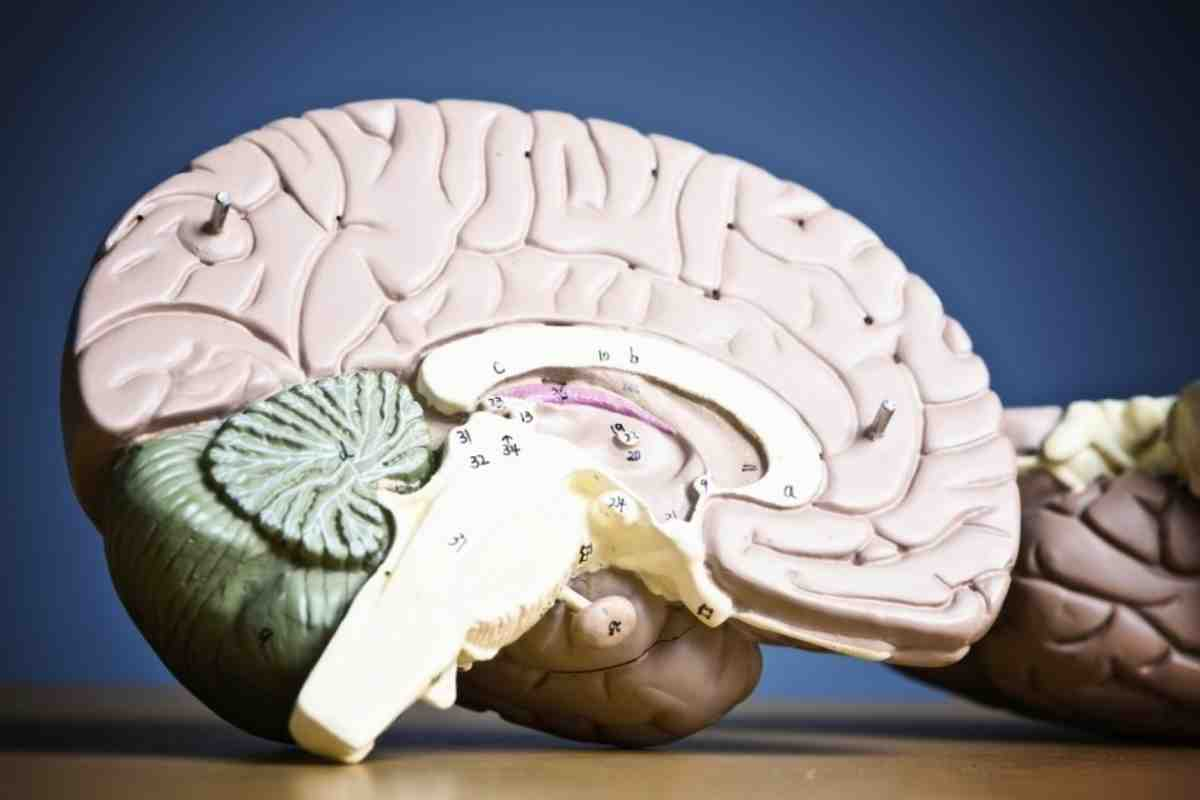
The human sense of smell is thanks to the olfactory nerve. It’s a key cranial nerve that links the nasal cavity to the brain. This nerve sends signals about smells, letting us enjoy everything from coffee’s aroma to the ocean’s salty scent. An amazing visual guide to the olfactory nerve location. See the unique path of CN I from your nose to your brain.
The olfactory nerve starts in the nasal cavity’s olfactory epithelium and ends at the olfactory bulb. It’s the shortest cranial nerve, just a few millimeters long. Knowing its function helps us understand how we sense our surroundings.
Key Takeaways
- The olfactory nerve is the first cranial nerve and is key for our sense of smell.
- It’s found in the nasal cavity and is quite short, measuring a few millimeters.
- The nerve sends sensory info from the olfactory epithelium to the olfactory bulb.
- It’s essential for recognizing different smells.
- Learning about the olfactory nerve’s role can deepen our understanding of our senses.
Overview of the Olfactory Nerve
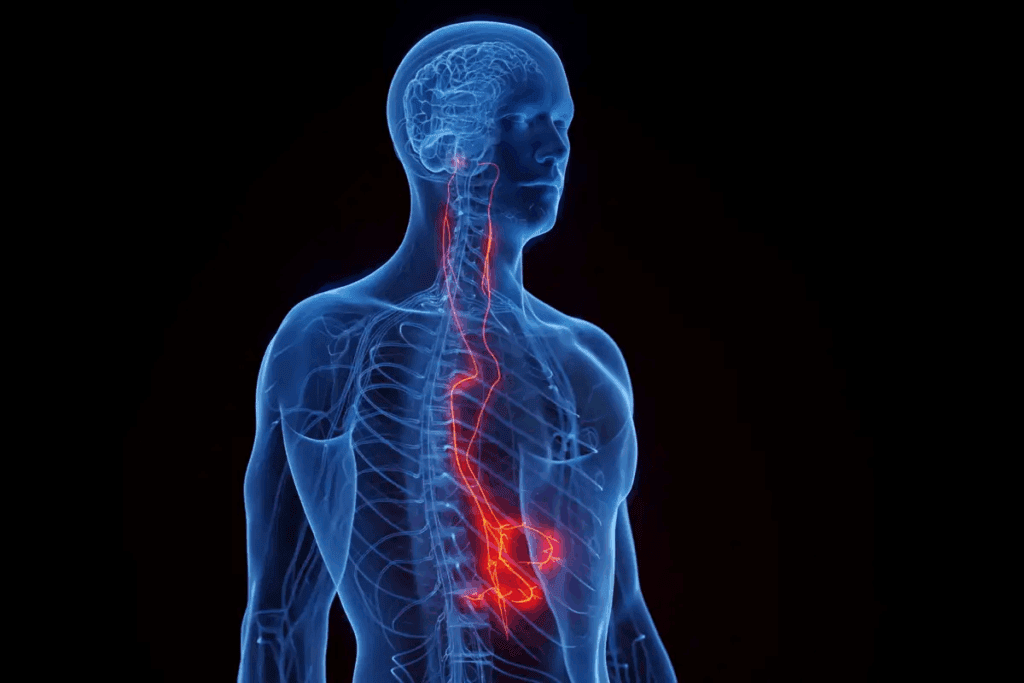
The olfactory nerve is key to our sense of smell. It lets us detect many different odors. This nerve, also known as Cranial Nerve I, is special. It carries smell information from the nose to the brain.
Definition and Classification as Cranial Nerve I
The olfactory nerve is a vital nerve for smell. It’s the first cranial nerve and is unique. It connects directly to the cerebrum, skipping the thalamus. It forms from the olfactory placode in the womb.
Basic Characteristics and Unique Features
The olfactory nerve is special. It’s a purely sensory nerve focused on smell. It can also grow back throughout life, unlike many other nerves.
This nerve has a direct path to the brain. It sends smell information straight to the olfactory bulb and brain areas like the limbic system. The limbic system is linked to memory and feelings.
Historical Understanding and Discovery
Our understanding of the olfactory nerve has grown over time. It was known for its role in sensing, but its details were unclear until recently.
Scientists have long been fascinated by the olfactory nerve. New imaging and neurophysiology tools have helped us learn how it works.
Characteristics | Description |
Classification | Cranial Nerve I |
Function | Purely sensory, related to smell |
Unique Feature | Direct connection to the cerebrum |
Regenerative Ability | Able to regenerate throughout life |
Anatomy of the Olfactory System
To understand how we smell different things, we need to know about the olfactory system’s anatomy. The olfactory nerve comes from 6 to 30 million sensory neurons in the nasal mucosa. This shows how complex our sense of smell is.
Components of the Olfactory Pathway
The olfactory pathway has key parts that help us smell. These include the olfactory epithelium, where smells are detected, and the olfactory bulb, where these signals are processed.
The olfactory nerve fibers form small bundles. They go through the cribriform plate of the ethmoid bone and into the cranial cavity. This detailed process is key for sending smell information to the brain.
Relationship to Other Cranial Structures
The olfactory system is linked to other cranial structures like the nasal cavity and the brain. Knowing these connections helps us understand how the olfactory system works.
The olfactory bulb is in the forebrain. It’s connected to the olfactory cortex, where smells are processed.
Vascular Supply and Lymphatic Drainage
The olfactory system gets its blood supply from the ophthalmic artery. This artery provides oxygen and nutrients to the olfactory epithelium and other parts.
Structure | Vascular Supply | Lymphatic Drainage |
Olfactory Epithelium | Branches of Ophthalmic Artery | Lymphatic vessels accompanying the nasal cavity drainage |
Olfactory Bulb | Anterior Cerebral Artery | Cerebrospinal fluid pathway |
The lymphatic drainage of the olfactory system is unique. It involves the drainage of cerebrospinal fluid and lymphatic vessels with the nasal cavity.
Knowing about vascular supply and lymphatic drainage helps us understand the olfactory system’s anatomy and function.
Olfactory Nerve Location: Detailed Mapping
To understand the olfactory nerve’s role, we need to look at its location and path. It’s found in the back and top part of each nasal passage. This area is key for our sense of smell.
Position Within the Nasal Cavity
The olfactory nerve fibers are in the nasal cavity. They are in the olfactory epithelium, which is in the upper nasal septum and the superior turbinate. This spot is perfect for catching smell molecules.
Path Through the Cribriform Plate
The nerve fibers go through the cribriform plate. This thin, sieve-like part of the ethmoid bone is important. It lets the fibers move from the nasal cavity to the brain.
Termination at the Olfactory Bulb
The fibers end at the olfactory bulb. It’s in the olfactory groove of the anterior cranial fossa. The olfactory bulb is key for processing smell information and sending it to the brain.
Anatomical Variations and Clinical Significance
There can be variations in the olfactory nerve’s location and path. These can have big effects on health. For example, changes in the cribriform plate can make the nerve more likely to get hurt. Knowing about these variations helps doctors diagnose and treat smell problems.
Microscopic Structure of the Olfactory Nerve
Understanding the olfactory nerve’s microscopic anatomy is key to grasping its role in smell. It’s made of bipolar neurons that connect the nasal mucosa to the olfactory bulb. These neurons are vital for detecting odors.
Olfactory Sensory Neurons
Olfactory sensory neurons are the heart of the olfactory nerve. They have dendritic and central processes for transmitting smell signals. Their dendrites in the nasal cavity catch odorant molecules.
The olfactory epithelium, where these neurons live, includes basal cells, sustentacular cells, and olfactory receptor cells. Basal cells help replace olfactory sensory neurons, keeping the system healthy.
Axonal Projections and Fascicles
The axons of olfactory sensory neurons go through the cribriform plate to the olfactory bulb. They form fascicles, bundles of nerve fibers that carry smell information.
Characteristics | Description |
Axonal Projections | Project through the cribriform plate to the olfactory bulb |
Fascicles Formation | Bundles of nerve fibers transmitting olfactory information |
Supporting Cells and Their Functions
Supporting cells, like sustentacular cells, are vital for the olfactory sensory neurons. They offer structural support and help clean the nasal cavity of harmful substances.
Unique Regenerative Properties
The olfactory nerve can regenerate throughout life. Basal cells in the olfactory epithelium can turn into new olfactory sensory neurons. This ability is key for keeping smell function and recovering from damage.
Embryological Development of the Olfactory Nerve
The olfactory nerve starts in the nasal cavity’s olfactory placode during fetal development. This is key for our sense of smell.
Formation During Fetal Development
The olfactory placode creates olfactory sensory neurons. These neurons are vital for smelling. As the fetus grows, these neurons send their axons through the cribriform plate to the olfactory bulb.
The olfactory nerves come from the olfactory placode. This placode also makes the nerve’s supporting glial cells. Knowing this helps us understand the nerve’s role.
Maturation and Growth
As the fetus grows, the olfactory nerve gets better. The axons of the sensory neurons come together to form the nerve. This nerve then sends signals to the brain.
The nerve’s growth includes myelination. This makes the nerve signals faster. This process is key for the olfactory system to work right.
Developmental Abnormalities
Abnormalities can happen during the olfactory nerve’s development. These can cause anosmia or hyposmia. Knowing about these issues helps us diagnose and treat problems.
Developmental Stage | Key Events | Potential Abnormalities |
Fetal Development | Formation of olfactory placode, development of olfactory sensory neurons | Agenesis of olfactory bulbs |
Maturation | Myelination of nerve fibers, fasciculation of axons | Dysfunction in signal transmission |
Growth | Continued development and refinement of olfactory pathways | Hyposmia or anosmia |
Understanding the olfactory nerve’s development helps us grasp the human sense of smell. It also helps us tackle related issues better.
Functional Mechanism of the Olfactory Nerve
The olfactory nerve works through a series of steps. It starts with odorant molecules binding to specific receptors. This complex process helps us detect and tell apart different smells.
Transduction of Odorant Molecules
The first step is transduction of odorant molecules. When we breathe in, these molecules reach our nose. They then bind to specific olfactory receptors on olfactory sensory neurons. This binding sets off a chain of events inside the cell, leading to electrical signals.
- Odorant molecules bind to specific receptors.
- This binding triggers intracellular signaling.
- Electrical signals are generated.
Signal Processing and Transmission
After the molecules are turned into electrical signals, these signals are processed and sent to the brain. The signal processing combines information from many olfactory sensory neurons. This makes our sense of smell more sensitive and specific. The signals then go to the olfactory bulb and higher brain centers for understanding.
- Signals are integrated from multiple neurons.
- Information is transmitted to the olfactory bulb.
- Signals are further processed in higher brain centers.
Integration with Other Sensory Systems
The olfactory system works together with other senses, like taste. This sensory integration is why smells can change how we taste things. Together, they help us enjoy the full flavors of food and drinks.
Adaptation and Sensitivity Mechanisms
The olfactory system has adaptation mechanisms to handle constant smells. These mechanisms prevent us from getting overwhelmed by smells. They keep us sensitive to new or changing smells around us.
In conclusion, the olfactory nerve’s function is complex and vital. It lets us sense and distinguish a wide range of smells. Understanding how it works shows us the amazing abilities of our sense of smell.
Neural Connections of the Olfactory Pathway
The olfactory pathway is special because it connects directly to the cerebrum. This unique link helps us understand smells in a complex way. It’s key to how we see the world.
Direct Connection to the Cerebrum
The olfactory nerve connects directly to the cerebrum, unlike other senses. This means smells are processed right away in the brain. It’s important for survival and remembering things.
This direct link to the cerebrum makes smells very emotional and memorable. The olfactory tract goes to different parts of the brain. This helps us feel and remember smells deeply.
Bypassing the Thalamus: A Unique Feature
The olfactory pathway skips the thalamus, which is special. This lets smells be processed quickly and emotionally. It’s a trait from early vertebrates.
Research shows this direct path makes smells more intense and emotional. It shows how closely smell is tied to our emotions.
Connections to Limbic System and Memory Centers
The olfactory pathway links to the limbic system and memory areas. These parts of the brain deal with emotions and memories. That’s why smells can trigger strong feelings and memories.
- The olfactory bulb connects to the piriform cortex for complex odor processing.
- It also links to the amygdala for emotional smell processing.
- The hippocampus helps form memories linked to smells.
Experts say, “The connection between the olfactory system and the limbic system shows how smell, emotion, and memory are linked.”
Evolutionary Significance of These Connections
The connections of the olfactory pathway are very important. They helped early vertebrates survive by detecting food, predators, and mates. This ability is a key reason why smells are so important to us.
This special circuitry has stayed the same over time. It shows how vital smells are to our feelings and memories. The olfactory system’s role in our brain is essential for our sensory experience.
Comparison with Other Cranial Nerves
The olfactory nerve is unique among the twelve cranial nerves. It has special characteristics and functions. This makes it stand out and helps us understand its role in our senses.
Structural Differences from Other Cranial Nerves
The olfactory nerve is different from other cranial nerves in many ways. It’s one of only two that don’t connect with the brainstem. Instead, it goes straight to the olfactory bulb. This special path is key for its job in smell.
It’s also made of unmyelinated axons of olfactory sensory neurons. These can grow back throughout life. This is rare among cranial nerves, making the olfactory nerve very resilient.
Functional Classification: Pure Sensory Nature
The olfactory nerve is a pure sensory nerve. It only sends sensory information. It carries smells from the nose to the brain. This is different from some nerves that do both sensory and motor tasks.
Its direct link to the cerebrum is unique. It skips the thalamus. This shows how important smell is for our thoughts and feelings.
Evolutionary and Developmental Distinctions
The olfactory nerve is very old in terms of evolution. It’s been important for survival, helping with food, danger, and social stuff.
It starts from the olfactory placode in the womb. This is different from other nerves. It shows how vital smell is in our biology.
Characteristics | Olfactory Nerve | Other Cranial Nerves |
Connection to Brainstem | No | Yes |
Pure Sensory Function | Yes | Varies |
Axon Myelination | Unmyelinated | Varies |
Regenerative Ability | High | Limited |
Olfactory Nerve Disorders and Damage
The olfactory nerve can get damaged, leading to anosmia (no smell) and hyposmia (less smell). This can really change someone’s life. It affects how they enjoy food, spot dangers, and feel emotions through smells.
Causes of Olfactory Dysfunction
Many things can cause problems with smell, like head injuries or nasal diseases. Head injuries can hurt the nerve as it goes through the cribriform plate. Diseases like chronic rhinosinusitis can block smells from reaching the nose.
Neurodegenerative diseases like Alzheimer’s and Parkinson’s can also mess with smell. Viral infections can harm the smell area in the nose, causing smell loss.
Symptoms and Clinical Presentation
People with smell problems might not smell things well or at all. They might also smell things that aren’t there or smell things differently. This can vary based on why they have the problem.
For example, someone with nasal polyps might smell better after treatment. But, those with diseases like Alzheimer’s might not smell better.
Long-term Consequences of Damage
Damage to the olfactory nerve can have big effects. It can change how much someone eats, their weight, and their happiness. It can also make it harder to find dangers like gas leaks.
It can also mess with their mood. Smell is tied to memory and feelings. Losing smell can lead to depression or anxiety.
Treatment Approaches and Rehabilitation
Treatment depends on why the problem is happening. For some, fixing the nasal or sinus issue can help smell come back. Medicines like corticosteroids can also help by reducing swelling.
For problems that can’t be fixed, like some diseases or serious head injuries, the focus is on helping them adapt. Olfactory training, where they smell different things, can help some people.
We need to treat smell problems in a way that helps with all the effects it has. Understanding why and how smell problems happen helps us support those affected.
Conclusion
We’ve looked into the olfactory nerve, also known as cranial nerve I. It’s key to how we sense the world around us. Located in the nasal cavity, it lets us smell a variety of scents.
This nerve’s role goes beyond just smell. It’s linked to our memory and emotions too. Knowing how it works helps us understand its importance in our everyday lives.
The olfactory nerve is a complex part of our body. As cranial nerve I, it greatly affects our quality of life. Its detailed connections to the brain show how vital it is to keep it working well.
FAQ
Where is the olfactory nerve located?
The olfactory nerve is in the nasal cavity. It’s key for sending smell information to the brain.
Is the olfactory nerve sensory or motor?
It’s a pure sensory nerve. It sends smell info from the nose to the brain.
What is the function of the olfactory nerve?
It helps us smell by sending info from the nose to the brain.
What happens when the olfactory nerve is damaged?
Damage can lead to trouble smelling. This might mean smelling less or not at all, known as anosmia.
Can the olfactory nerve regenerate?
Yes, it can grow back. This is because it has special regrowth abilities.
How does the olfactory nerve transmit signals?
It sends signals by changing odor molecules. These are then sent to the brain, letting us smell different things.
What is the relationship between the olfactory nerve and the brain?
It connects directly to the cerebrum, skipping the thalamus. It’s linked to the limbic system and memory areas, showing its role in emotions and memory.
Are there any disorders associated with the olfactory nerve?
Yes, many issues can harm it. These include infections, head injuries, and diseases like Alzheimer’s. They can cause smell problems and other symptoms.
How is olfactory nerve damage treated?
Treatment depends on the cause. It might include therapy, medicine, or other methods to help smell again.
What is the significance of the olfactory nerve in the human sensory system?
It’s very important for our senses. It lets us smell and remember smells, which connects to emotions and our overall well-being.
References
National Center for Biotechnology Information. Evidence-Based Medical Guidance. Retrieved from https://www.ncbi.nlm.nih.gov/books/NBK549919/