
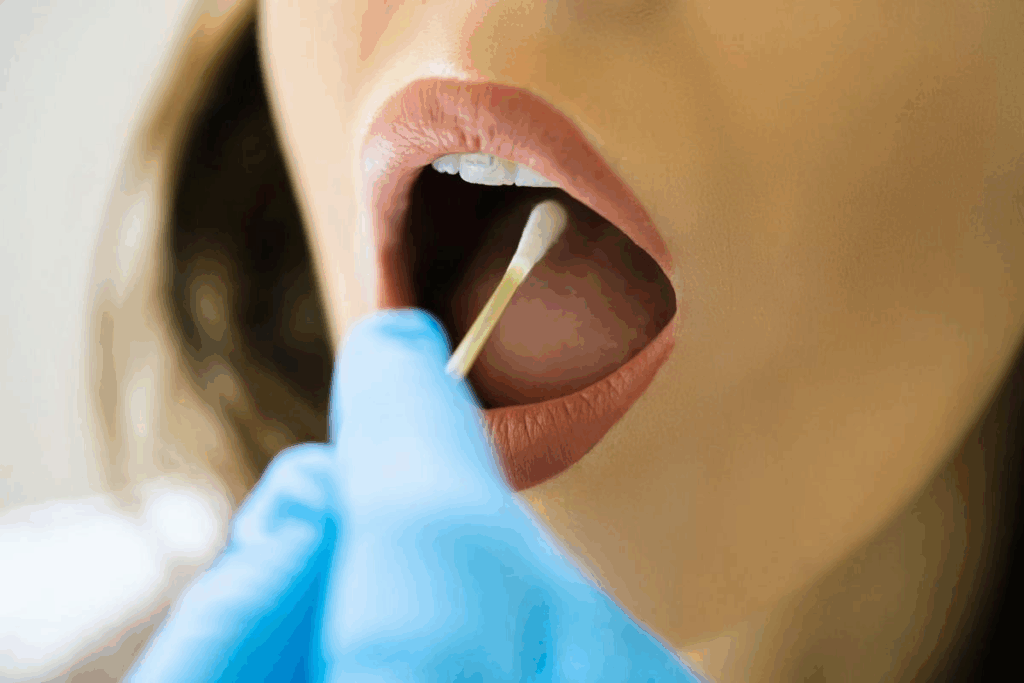
It’s important to know the signs of oral cancer inside the lip early. Medical Expert, an oncologist at Medical organization, says, “Oral cancer forms in the oral cavity, which includes all parts of your mouth that you can see if you open wide and look in the mirror.”
Look out for non-healing sores on the lip or inside the mouth that last more than two weeks. Also, be cautious of unusual lumps or persistent white or red patches.
If you see any of these mouth ulcer cancer symptoms, get medical help right away.
Key warning signs and visual cues for detecting Oral cancer inside lip (inner mucosal lining).
Key Takeaways
- Be aware of non-healing sores on the lip or inside the mouth.
- Watch for unusual lumps or persistent white or red patches.
- Seek medical attention if symptoms persist for more than two weeks.
- Early detection is key for effective treatment.
- Consult a medical professional for proper evaluation.
Understanding Oral Cancer Inside Your Lip

It’s key to understand oral cancer for early detection and treatment. Oral cancer includes cancers in the mouth, like the lips, tongue, and gums.
What Is Oral Cancer?
Oral cancer, or mouth cancer, happens in the mouth. It shows up as lesions or tumors. The most common type is squamous cell carcinoma, starting in the squamous cells.
How Common Is Lip and Mouth Cancer?
Lip and mouth cancer are common types of oral cancer. The Medical organization says, “The average age of those diagnosed with oral cancer is 63. Just over 20% of cases occur in patients younger than 55.” This shows oral cancer can hit anyone, not just the elderly.
| Age Group | Percentage of Oral Cancer Cases |
|---|---|
| Under 55 | 20% |
| 55 and above | 80% |
The Importance of Early Detection
Finding oral cancer early is vital for better treatment. It’s important to know the signs and symptoms of oral cancer inside your lip. Regular self-examinations and professional check-ups are key for catching issues early.
Spotting oral cancer early boosts treatment success. Keep an eye out for any mouth changes, like sores or lumps that won’t heal.
Persistent Sores and Ulcers

One of the most telling signs of oral cancer is the presence of persistent sores and ulcers that refuse to heal. These sores can appear anywhere inside the mouth, including the lips, tongue, and cheeks. Understanding the significance of these sores is key for early detection and treatment.
Non-Healing Sores That Last More Than Two Weeks
Sores or ulcers that last more than two weeks are a cause for concern. Normally, mouth sores heal within a couple of weeks. If a sore doesn’t heal, it could be a sign of oral cancer. According to the Medical organization, “a lip or mouth sore that doesn’t heal” is a symptom that warrants medical attention.
The Mouth Ulcer-Cancer Connection
The connection between mouth ulcers and cancer is significant. While most mouth ulcers are benign, persistent or recurring ulcers can be a sign of oral cancer. It’s essential to monitor these ulcers and seek medical advice if they persist.
As noted by health experts, persistent sores are among the key symptoms of oral cancer. We should be vigilant about any sores that don’t heal within the expected timeframe.
| Symptom | Description | Concern Level |
|---|---|---|
| Non-healing sores | Sores that last more than two weeks | High |
| Mouth ulcers | Ulcers that recur or persist | High |
| Persistent pain | Pain associated with sores or ulcers | Moderate to High |
When to Be Concerned About a Mouth Ulcer
You should be concerned about a mouth ulcer if it persists for more than two weeks, is unusually painful, or is accompanied by other symptoms like bleeding or difficulty swallowing. If you notice any of these signs, it’s vital to consult a healthcare professional.
Lumps and Thickening in the Mouth
Lumps and thickening in the mouth are warning signs that should not be ignored. They can appear on the lips, gums, or inside the mouth. It’s important to notice them early for oral health.
Identifying Abnormal Lumps on the Lips
Abnormal lumps on the lips might be a sign of oral cancer. Daniel Landau, MD, says, “Lip cancer can look like a bump, freckle, or irritation.” These lumps might not hurt at first but can become painful. Watch for any new or changing lumps on your lips.
Thickening of Oral Tissues
Thickening of oral tissues is a symptom to pay attention to. This can happen in the cheeks, gums, or tongue. It might feel like a hard area or a change in texture. Such thickening could be a sign of something serious, like oral cancer.
Small Lumps Inside the Cheek
Small lumps inside the cheek are concerning. They can be due to trauma, infection, or growth. If a lump inside your cheek doesn’t go away or grows, see a doctor for a check-up.
| Symptom | Description | Potential Concern |
|---|---|---|
| Abnormal Lumps on Lips | Painless or painful bumps on the lip | Oral Cancer |
| Thickening of Oral Tissues | Hardened areas or texture changes in the mouth | Precursor to Oral Cancer |
| Small Lumps Inside Cheek | Persistent or growing lumps inside the cheek | Trauma, Infection, or Neoplastic Growth |
Being alert to these symptoms and getting medical help when needed can help a lot. It can make a big difference in dealing with oral health problems.
White and Red Patches
White or red patches on the gums, tongue, or mouth lining are warning signs of oral cancer. These patches can signal serious health issues and should not be ignored.
Leukoplakia (White Patches)
Leukoplakia is when white patches or plaques in the mouth can’t be rubbed off. These patches often come from chronic irritation and might lead to cancer. According to the Medical organization, a white or reddish patch on the inside of your mouth could be a sign of oral cancer. It’s important to get any lasting white patches checked by a doctor.
Erythroplakia (Red Patches)
Erythroplakia shows up as red patches in the mouth that can’t be identified as any other lesion. These red patches are less common but more likely to be precancerous or cancerous. Early detection and diagnosis are critical for effective treatment.
Mixed Red and White Lesions
Some lesions are a mix of red and white patches. These mixed patches can also be precancerous and need further study. It’s key to watch for any changes in your mouth and see a doctor if you notice anything odd.
Stay alert to any changes in your oral health, like white or red patches. If you see anything unusual, talk to a healthcare professional for a check-up and advice.
Early Stage Tongue Cancer Ulcers
Spotting tongue cancer ulcers early is key for better treatment and results. We’ll look at the main symptoms to help you know when to see a doctor.
Discolored Areas That Don’t Heal
Early signs include discolored spots that won’t heal. These spots can be white, red, or mixed and might not hurt at first. Experts say, “If spots on your tongue don’t heal in two weeks, see a doctor.”
“Persistent discoloration on the tongue that doesn’t heal within two weeks should be evaluated by a healthcare professional.”
These spots could mean abnormal cells growing, which might turn into cancer if not treated. Watch for any changes in your tongue’s look and see a doctor if you notice anything odd.
Pain and Discomfort When Eating
As ulcers grow, they can hurt and make eating or talking hard. This pain can be mild or very bad, affecting your daily life. Keep an eye out for any new or getting worse pain in your tongue.
Pain when eating is a big sign, as it means the ulcer might be getting bigger or more irritated. If you have ongoing pain or discomfort, seeing a healthcare professional is important.
Changes in Tongue Mobility
Another important sign is changes in how your tongue moves. As the ulcer grows, it can make it hard to speak, eat, or swallow. It’s important to watch for any changes in how your tongue moves or works.
If you see these symptoms, get medical help right away. Catching tongue cancer early can greatly improve your health and life. Stay informed and proactive about your oral health for the best results.
Cancerous Mouth Ulcer Symptoms
Mouth ulcers that are cancerous have clear signs that set them apart from harmless ones. We will look at these differences and other symptoms of cancerous mouth ulcers.
Bleeding Sores
Bleeding sores are a scary sign of cancerous mouth ulcers. These sores can bleed easily and may not heal in two weeks. The Mesothelioma Center says, “A persistent sore, lesion, or blister on the lip that bleeds easily and doesn’t heal within two weeks” could be lip cancer. Bleeding is a key symptom that shows ulcers are cancerous.
Persistent Pain and Discomfort
Cancerous mouth ulcers often cause ongoing pain and discomfort. This pain can be constant or get worse over time. It’s important to remember that while benign ulcers can hurt, persistent pain is a warning sign for cancerous ulcers.
Differences Between Benign and Cancerous Ulcers
It’s vital to tell benign from cancerous ulcers to get the right treatment. Here are the main differences:
| Characteristics | Benign Ulcers | Cancerous Ulcers |
|---|---|---|
| Healing Time | Typically heal within 1-2 weeks | May not heal or take much longer to heal |
| Bleeding | Rarely bleed | May bleed easily |
| Pain | Can be painful but often resolves | Often associated with persistent pain |
Knowing these differences helps people get medical help quickly if they see any suspicious signs.
Signs of Oral Cancer Inside Your Lip
It’s important to know the signs of oral cancer on the inner lip for early treatment. Oral cancer shows up in different ways. Knowing these signs helps people get medical help fast.
Specific Symptoms on the Inner Lip
The inner lip is a common place for oral cancer. Look out for sores or ulcers that don’t heal, lumps, and changes in lip color or texture.
The Mesothelioma Center says, “Lip cancer symptoms can look like cold sores or mouth ulcers at first. This makes them easy to miss.” So, watch any unusual changes closely.
Changes in Lip Sensation
Changes in lip sensation can also mean oral cancer. You might feel numbness, tingling, or pain in your lip. These feelings can stay or get worse over time.
Remember, these symptoms can also mean other things. But if you notice anything odd in your lip, see a doctor right away.
Visual Changes to Watch For
Visual changes are often the first signs of oral cancer inside the lip. Look for white or red patches, swelling, or thickening. You might also see lesions or sores that don’t heal.
Being alert to these visual changes and getting medical help if you notice anything odd can greatly improve treatment results.
Early detection is key to managing oral cancer well. By knowing the signs and symptoms, people can take steps to protect their health.
Mouth Cancer Affecting the Gums
Mouth cancer can show up in different ways, including in the gums. This is a key area to watch for signs of the disease. The gums play a big role in our oral health. Any changes in them can mean there’s a problem.
Swelling and Visible Lesions
Swelling or visible lesions on the gums are common signs of mouth cancer. These changes might not hurt at first. So, it’s important to notice any changes in the gum’s look or feel. Swelling or lesions on the gums should never be ignored, as they can be early signs of cancer.
Loose Teeth Without Explanation
Loose teeth without a clear reason can also be a sign of mouth cancer. This happens because the tumor affects the teeth’s support. The Medical organization says “loose teeth” is a symptom of oral cancer. This shows how important dental check-ups are.
Changes in How Dentures Fit
Changes in how dentures fit can also point to mouth cancer. As a tumor grows, it can change the jaw or gum shape. This makes dentures uncomfortable or not fit right. This symptom is a big worry for denture users, as it might mean there’s a serious issue.
| Symptom | Description | Possible Implication |
|---|---|---|
| Swelling or Lesions | Visible changes on the gums | Potential sign of mouth cancer |
| Loose Teeth | Teeth become loose without explanation | Possible tumor affecting tooth support |
| Denture Fit Changes | Dentures no longer fit properly | Possible growth altering gum or jaw shape |
Red Lumps in the Cheek of the Mouth
Red lumps in the cheek can mean different things, from simple to serious like oral cancer. The Medical organization says a growth in your mouth could be oral cancer. It’s important to watch these lumps and know when they’re serious.
Identifying Suspicious Cheek Lumps
To tell if a cheek lump is suspicious, look at its shape and any symptoms. Suspicious lumps don’t go away, grow, or change shape. They might not hurt or could be painful. They might also cause bleeding or make it hard to swallow.
Check the lump’s size, color, and feel. A red lump that’s hard, uneven, or getting bigger needs a doctor’s check. Also, if it hurts, feels numb, or makes it hard to move your mouth, see a doctor.
When to Seek Medical Attention
If a red lump in your cheek lasts more than two weeks, see a doctor. Catching oral cancer early is key to treating it well. A dentist or doctor can check the lump and decide if more tests are needed.
Seeing a doctor fast is even more important if you’re at risk for oral cancer. Risks include smoking, drinking a lot, or having HPV. These increase your risk, so watch closely.
Differentiating from Benign Conditions
Not all red lumps are cancer; many are harmless. Things like oral cysts, abscesses, or benign tumors can also cause lumps. A doctor can do a check-up and might take a biopsy to figure out what it is.
It’s key to know the difference between harmless and possibly cancerous lumps. Harmless lumps are not usually dangerous but need care to avoid problems. But finding and treating cancer lumps early can greatly improve your chances.
Risk Factors for Oral Cancer
Oral cancer risk comes from lifestyle choices, infections, and genetics. Knowing these factors helps prevent and catch cancer early.
Tobacco and Alcohol Use
Tobacco, like smoking or chewing, greatly increases oral cancer risk. Tobacco’s chemicals harm mouth cells, leading to cancer. Drinking alcohol, even more so with tobacco, raises the risk even more. Together, tobacco and alcohol can greatly increase the chance of oral cancer.
HPV Infection
Human Papillomavirus (HPV), mainly HPV-16, raises oral cancer risk. HPV-related oral cancers often affect younger people and those not using tobacco or alcohol. This shows why HPV vaccines are key in preventing some oral cancers.
Age and Gender Considerations
Oral cancer mostly hits people over 55. Men are more likely to get it than women, but the gap is getting smaller. Knowing these demographics helps focus on who needs screening and prevention.
Family History and Genetic Factors
Having a family history of cancer, like oral cancer, ups your risk. Genetics can also play a part, though scientists are studying this. Finding genetic risks can lead to early detection and new treatments.
Understanding oral cancer risks helps people lower their chances. They should also get medical help if they notice any signs or symptoms.
Diagnosis and Screening for Oral Cancer
Diagnosing oral cancer involves several steps. These include initial exams and advanced imaging tests. Early detection is key for effective treatment. We will look at the methods used to diagnose this condition.
Professional Oral Examinations
Your doctor or dentist will start by doing a physical exam. They will check for any irritation areas. This is the first step in finding oral cancer symptoms.
During the exam, they will look for lumps, sores, or color changes in the oral tissues.
Key components of a professional oral examination include:
- Visual inspection of the lips, mouth, and throat
- Palpation (feeling with the fingers) of the lips, mouth, and neck
- Checking for any abnormalities or unusual changes
Biopsy Procedures
If something looks suspicious, a biopsy might be needed. A biopsy removes a small tissue sample for microscope examination. This is key to see if cells are cancerous.
Types of biopsies used for oral cancer diagnosis:
| Biopsy Type | Description |
|---|---|
| Incisional Biopsy | Removing a sample of the suspicious tissue |
| Excisional Biopsy | Removing the entire suspicious area |
Imaging Tests
Imaging tests help find out how far the cancer has spread. Tests like X-rays, CT scans, MRI scans, and PET scans are used. They help plan the best treatment.
Self-Examination Techniques
Knowing the signs of oral cancer can lead to early detection. Self-examination can spot issues early. Look for lumps, sores, or white and red patches in your mouth.
Steps for self-examination:
- Look in the mirror and examine your lips, tongue, and the inside of your mouth.
- Feel your lips, tongue, and the inside of your cheeks with your fingers.
- Check your neck for any swollen lymph nodes.
By using professional exams, biopsies, imaging tests, and self-examination, we can find oral cancer early. Early detection is key to better treatment outcomes. It’s important to be proactive about your oral health.
Conclusion
Recognizing signs of oral cancer inside the lip is key for early detection and treatment. We’ve looked at signs like sores, lumps, and changes in lip feeling. These can include white and red patches.
Knowing these signs is important for your oral health. It helps you catch problems early. This is why it’s so vital to watch for any mouth changes.
Understanding risks like tobacco use and HPV can help lower your risk. Regular dental checks and self-exams are also important. They help find oral cancer early.
In short, knowing the signs of oral cancer and catching it early can save lives. We urge everyone to take care of their mouth health. If you see anything odd, see a doctor right away.
FAQ
What are the common signs of oral cancer inside the lip?
Look out for sores, ulcers, lumps, or thickening in the lip. Also, watch for white or red patches that don’t heal.
How can I identify a cancerous mouth ulcer?
A cancerous mouth ulcer lasts more than two weeks. It bleeds easily and may hurt. It can also feel like a lump or thickening.
Are red lumps in the cheek a sign of oral cancer?
Red lumps in the cheek might mean oral cancer, but not all are cancerous. Always check with a healthcare professional.
What is the difference between a benign and a cancerous ulcer?
Benign ulcers heal in a couple of weeks. Cancerous ulcers last longer, bleed, or hurt. If an ulcer doesn’t heal, see a doctor.
Can mouth cancer affect the gums, and what are the symptoms?
Yes, mouth cancer can hit the gums. Look for swelling, loose teeth, or changes in denture fit. These signs need a dental or medical check-up.
What are the risk factors for developing oral cancer?
Risks include tobacco and alcohol use, HPV, age, gender, and family history. Knowing these risks helps in early detection and prevention.
How is oral cancer diagnosed?
Oral cancer is diagnosed with oral exams, biopsies, imaging, and self-exams. Early detection is key for effective treatment.
What is leukoplakia, and is it related to oral cancer?
Leukoplakia are white mouth patches that can’t be scraped off. Not all are cancerous, but they can lead to cancer. It’s vital to have them checked by a healthcare professional.
Can a lump inside the cheek be a sign of oral cancer?
Yes, a lump inside the cheek might be oral cancer. Any unusual lumps or mouth changes need a healthcare professional’s check.
How can I check myself for signs of oral cancer?
Look for unusual mouth changes like sores, lumps, or patches. Regularly check your mouth and see a healthcare professional if you notice anything odd.
References
National Center for Biotechnology Information. Oral Cancer Signs Inside Lip: Early Detection Importance. Retrieved from https://www.ncbi.nlm.nih.gov/books/NBK565867/