


The oral mucosa is a special tissue that protects and senses in the mouth. It has three main types: masticatory (keratinized), lining (non-keratinized), and specialized. Knowing these types is key for doctors and patient care. This is your ultimate guide to oral epithelium histology. Learn about the 3 amazing types and their specialized structure and function.
At Liv Hospital, we use top-notch oral histology protocols and focus on the patient. Knowing the oral mucosa’s makeup helps us diagnose and treat better. It also helps spot signs of diseases elsewhere in the body.
Key Takeaways
- The oral mucosa is categorized into three functional types.
- Understanding the types of oral mucosa is vital for oral health.
- Liv Hospital uses advanced oral histology protocols for patient care.
- The classification includes keratinized, non-keratinized, and specialized mucosa.
- Recognizing the histological composition aids in clinical diagnostics.
The Fundamental Role of Oral Mucosa in Oral Health
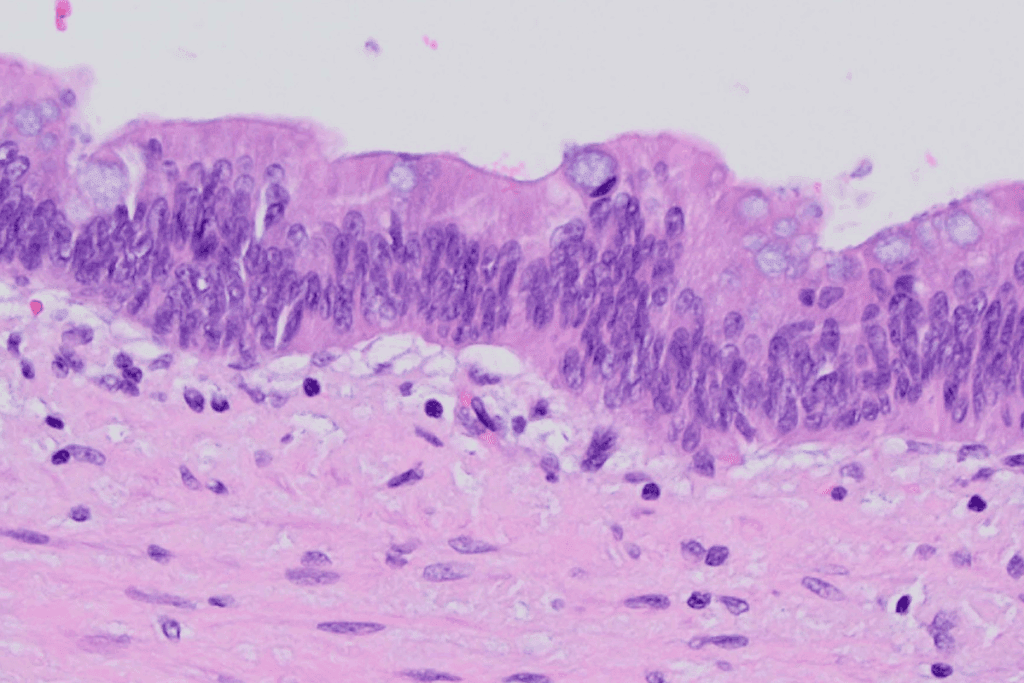
The oral mucosa acts as a shield against harm from outside. It also helps us feel sensations. This is key for keeping our mouth healthy and us feeling good.
Protective and Sensory Functions
The oral mucosa guards us against many dangers. It does this in several ways:
- Mechanical protection against friction and abrasion
- Chemical protection against saliva, food, and other substances
- Microbial protection through the presence of immune cells and antimicrobial peptides
It’s not just about protection. The oral mucosa also lets us taste, feel textures, and sense temperatures. This is important for eating, talking, and swallowing.
Structural Overview of the Oral Cavity
The oral cavity is made up of different parts, each with its own job. The oral mucosa covers the whole area, including the lips, cheeks, tongue, floor of the mouth, and gums.
Region | Type of Mucosa | Function |
Lips and Cheeks | Lining mucosa (non-keratinized) | Facilitates movement and flexibility |
Gingiva and Hard Palate | Masticatory mucosa (keratinized) | Provides resistance to mechanical stress |
Tongue | Specialized mucosa | Contains taste buds and facilitates taste perception |
As shown in the table, different areas have different mucosa types. Each is suited to its role. Knowing this helps us see how important the oral mucosa is for our health.
In summary, the oral mucosa is vital for our oral health. It protects us and helps us feel things. Its ability to adapt makes it a key part of our mouth.
Understanding Oral Epithelium Histology: Basic Structure and Organization

Oral epithelium histology is key to understanding the mouth’s anatomy. The oral epithelium lines the mouth and is vital for health. It has many roles that keep our mouth healthy.
We’ll explore the makeup of the oral epithelium. It’s made of stratified squamous epithelium. This can be keratinized or non-keratinized, depending on its role in the mouth.
Epithelial Layers and Their Composition
The oral epithelium has several layers, each with its own role. These layers include:
- Stratum Basale: The deepest layer, made of cuboidal or columnar cells. These cells help the epithelium grow and repair itself.
- Stratum Spinosum: Several layers of polyhedral cells. They add strength and cohesion to the epithelium.
- Stratum Granulosum: A layer of flattened cells. They prepare cells for the surface layers.
- Stratum Corneum: The outermost layer, made of fully keratinized cells. They protect against damage from the outside.
Together, these layers keep the oral epithelium strong and functional.
The Basement Membrane and Lamina Propria
Underneath the oral epithelium is the basement membrane. It’s a thin, fibrous layer that separates the epithelium from the lamina propria. The lamina propria has collagen and elastin fibers, along with cells like fibroblasts and lymphocytes.
The basement membrane and lamina propria support the oral epithelium. They help with nutrient exchange and support the immune system in the mouth.
Classification of Oral Mucosa: A Detailed Look
Oral mucosa is divided into three main types: lining, masticatory, and specialized mucosa. These categories are based on the mucosa’s function and where it is found in the mouth.
We will look at different ways to classify oral mucosa and why it matters for our oral health.
Functional vs. Anatomical Classification Systems
Oral mucosa can be sorted in two ways: functionally and anatomically. The functional system groups mucosa by its role in the mouth. The anatomical system looks at where and how the mucosa is structured.
Functional Classification:
- Lining Mucosa: This non-keratinized mucosa lines the mouth, making it smooth for movement.
- Masticatory Mucosa: It’s keratinized and can handle the forces of chewing.
- Specialized Mucosa: It has taste buds and is mainly on the tongue.
Anatomical Classification: This system focuses on the mucosa’s location and how it attaches to other structures.
Distribution of Mucosa Types in the Oral Cavity
The three types of oral mucosa are spread out in different parts of the mouth.
The masticatory mucosa is on the gums and hard palate. These areas face a lot of stress when we chew.
The lining mucosa is on the lips, cheeks, and the floor of the mouth. It’s smooth and non-keratinized.
Specialized mucosa is mostly on the tongue’s top. It has taste buds for tasting food.
Knowing about these mucosa types and where they are is key for diagnosing and treating mouth problems.
Keratinized Oral Mucosa (Masticatory Mucosa)
Masticatory mucosa, or keratinized oral mucosa, is found in areas of the oral cavity that are subject to high mechanical stress. This type of mucosa is key for withstanding the forces during mastication (chewing) and other oral functions.
Histological Features and Cellular Composition
The keratinized oral mucosa has a keratinized stratified squamous epithelium. This layer acts as a strong barrier against mechanical, chemical, and thermal stresses. The keratinization process makes the epithelial cells harder, making them more resistant to wear and tear.
The keratinized epithelium is supported by a dense connective tissue layer called the lamina propria. This layer has blood vessels, nerve endings, and immune cells. They all contribute to the mucosa’s health and function.
Locations in the Oral Cavity
Keratinized oral mucosa is mainly found in areas with high mechanical stress during mastication. These areas include:
- The gingiva (gums) surrounding the teeth
- The hard palate
These locations are critical for the oral cavity’s proper functioning. They provide a durable surface that can withstand chewing forces.
Functional Significance and Adaptations
The keratinized oral mucosa is vital for oral health. It acts as a protective barrier against mechanical stress. Its keratinized surface prevents damage to the underlying tissues, reducing injury and infection risks.
Characteristics | Keratinized Oral Mucosa | Non-Keratinized Oral Mucosa |
Epithelial Type | Keratinized Stratified Squamous | Non-Keratinized Stratified Squamous |
Locations | Gingiva, Hard Palate | Lips, Cheeks, Floor of Mouth |
Function | Withstands Mechanical Stress | Provides Flexibility and Mobility |
In contrast to lining mucosa, which makes up about 60 percent of the oral mucosa surface, keratinized oral mucosa is adapted for mastication. It is keratinized or para-keratinized, giving it enhanced resilience against mechanical stress.
Non-Keratinized Oral Mucosa (Lining Mucosa)
The non-keratinized oral mucosa is very flexible. It’s found in areas that don’t face a lot of stress. This mucosa is key for the health and function of our mouths.
Histological Characteristics and Cellular Structure
The non-keratinized oral mucosa, or lining mucosa, doesn’t have a keratin layer. This makes it more flexible and able to move easily in certain areas.
Histological Features: It’s made of a non-keratinized stratified squamous epithelium. This type of epithelium gives the needed flexibility and protection in stress-free areas.
Distribution Throughout the Oral Cavity
The lining mucosa covers the soft palate, cheeks, lips, floor of the mouth, and the tongue’s underside. These areas need to be flexible and aren’t under as much stress as other parts of the mouth.
Location | Type of Mucosa | Function |
Soft Palate | Lining Mucosa | Provides flexibility during swallowing |
Cheeks | Lining Mucosa | Allows for movement and flexibility |
Lips | Lining Mucosa | Facilitates movement and expression |
Functional Properties and Clinical Significance
The non-keratinized oral mucosa is vital for the mouth. It offers flexibility and protection in stress-free areas. Its role is essential for normal mouth function and health.
“The mucous membrane lining the oral cavity is a complex structure that plays a critical role in maintaining oral health.” – Oral Pathology Expert
Knowing about the non-keratinized oral mucosa is key for diagnosing and treating mouth issues. Its unique features make it a focus in dental and oral health studies.
Specialized Oral Mucosa
The tongue’s top side has special mucosa. It has taste buds for tasting food. This mucosa is different from others because of its special features and functions.
Unique Histological Features
Specialized mucosa has taste buds. These are complex organs that help us taste. They are found in the tongue’s top layer and are linked to lingual papillae.
This mucosa has a non-keratinized, layered epithelium. This lets taste buds exist. Below, the lamina propria has nerve fibers. These nerves help send taste signals to our brain.
Location and Distribution on the Tongue
This mucosa is mainly on the tongue’s top. It’s rough because of lingual papillae. These papillae make the tongue feel different and help spread out taste buds.
Taste buds are not spread evenly. They’re more packed around certain papillae. This makes tasting better.
Taste Perception and Other Specialized Functions
The main job of this mucosa is taste perception. Taste buds in it can sense food’s chemicals. This lets us taste sweet, sour, salty, bitter, and umami.
Taste | Description | Examples of Stimuli |
Sweet | Sensation associated with sugars | Sucrose, Fructose |
Sour | Sensation associated with acids | Citric Acid, Acetic Acid |
Salty | Sensation associated with salts | Sodium Chloride |
Bitterness | Sensation associated with certain alkaloids | Quinine, Caffeine |
Umami | Sensation associated with glutamates | Monosodium Glutamate |
Specialized mucosa does more than just taste. It also helps us feel food in our mouth. This makes eating more enjoyable by adding to the mix of flavors and textures.
Comparative Analysis of the Three Mucosa Types
The three types of oral mucosa play key roles in keeping our mouths healthy. Knowing how they work helps doctors and patients. Each type has its own job, based on where it is and what it does.
Structural Differences and Similarities
Keratinized mucosa has a tough layer of keratin. This makes it strong against wear and tear. Non-keratinized mucosa is softer and more flexible, perfect for areas that need to move a lot. The tongue’s mucosa is special because it has taste buds, helping us taste food.
All mucosa types have a similar structure. They have an outer layer and a layer underneath. The outer layer protects us, and the inner layer supports it with blood and nerves.
Type of Mucosa | Keratinization | Location | Function |
Keratinized | Present | Gingiva, hard palate | Resists mechanical stress |
Non-Keratinized | Absent | Lining of cheeks, lips, and floor of mouth | Provides flexibility and mobility |
Specialized | Variable | Tongue | Contains taste buds for taste perception |
Functional Adaptations to Mechanical Stress
Keratinized mucosa is in places that get a lot of wear and tear. It’s strong and protects us from damage. Non-keratinized mucosa is in areas that need to move a lot. It’s soft and flexible.
The tongue’s mucosa is special. It has taste buds that help us taste food. Each type of mucosa is adapted to its place in the mouth.
Knowing how these mucosa types work helps us understand how to keep our mouths healthy. It’s all about how they fit together and protect us.
Clinical Relevance of Oral Mucosa Histology in Dental Practice
Oral mucosa histology is key in modern dentistry. Knowing the makeup of oral epithelium is vital for patient care. It’s important to keep up with the latest in oral epithelium histology.
Diagnostic Applications in Oral Pathology
Oral mucosa histology is vital for diagnosing oral diseases. It helps spot issues like oral lichen planus, pemphigus vulgaris, and oral cancer. Accurate diagnosis is key for good treatment plans.
- Identifying oral pathology features
- Spotting conditions like oral lichen planus and pemphigus vulgaris
- Finding oral cancer through histology
Implications for Dental Procedures and Treatments
Oral mucosa histology affects dental treatments. Knowing about mucosa types helps pick the right treatments. For example, knowing about keratinized mucosa is key for dental implants.
- Picking the right treatments based on mucosa type
- Considering keratinized mucosa for dental implants
- Handling mucosal issues during surgery
Mucosal Response to Dental Materials and Interventions
How oral mucosa reacts to dental materials is important. We need to know how different materials and treatments affect it. This ensures the best outcomes and avoids problems.
Understanding oral mucosa histology improves dental care. Using histology in making treatment decisions is essential for quality care.
Conclusion
Knowing how oral epithelium is structured is key for doctors and patient care. The oral mucosa is vital for keeping our mouths healthy. Its structure is important for good medical treatment.
We looked at the three types of oral mucosa: keratinized, non-keratinized, and specialized. Each has its own features. Knowing this helps doctors diagnose and treat better.
The role of oral mucosa histology in dentistry is huge. It helps in diagnosing, planning dental work, and how our mouths react to dental materials. As dental care gets better, knowing about oral epithelium histology will keep being important.
FAQ
What is the oral mucosa, and what are its primary functions?
The oral mucosa lines the mouth. It keeps the mouth healthy by blocking harmful things. It also helps us feel sensations in the mouth.
What are the three main types of oral mucosa, and how are they classified?
There are three main types of oral mucosa. They are classified based on their function and where they are found in the mouth.
What is keratinized oral mucosa, and where is it typically found?
Keratinized oral mucosa is found in areas that face a lot of pressure. This includes the gums and hard palate. It has a layer of keratin.
What is non-keratinized oral mucosa, and where is it typically found?
Non-keratinized oral mucosa is found in areas with less pressure. This includes the soft palate, cheeks, and lips. It has a different type of epithelial layer.
What is specialized oral mucosa, and what is its unique function?
Specialized oral mucosa is found on the tongue’s top surface. It has taste buds that help us taste food.
How do the different types of oral mucosa contribute to maintaining oral health?
Each type of oral mucosa has its own role. They protect the mouth from harm and help us feel sensations. This keeps the mouth healthy.
What is the clinical significance of understanding oral mucosa histology in dental practice?
Knowing about oral mucosa histology is key in dentistry. It helps in diagnosing diseases, planning treatments, and understanding how the mouth reacts to dental materials.
What is the histological composition of the oral epithelium?
The oral epithelium has several layers. These include the stratum basale, stratum spinosum, stratum granulosum, and stratum corneum. The basement membrane and lamina propria also support it.
How does the oral mucosa respond to mechanical stress?
The oral mucosa adapts to mechanical stress. It becomes keratinized to protect against friction and abrasion. Different types of mucosa are found in areas with varying stress levels.
What is the role of the oral mucosa in sensory perception?
The oral mucosa is important for sensory perception. It helps us feel taste, texture, and temperature through sensory receptors and taste buds.
References
National Center for Biotechnology Information. Oral Mucosa Types: Keratinized, Non-Keratinized, and Specialized. Retrieved from https://pmc.ncbi.nlm.nih.gov/articles/PMC9357199/




