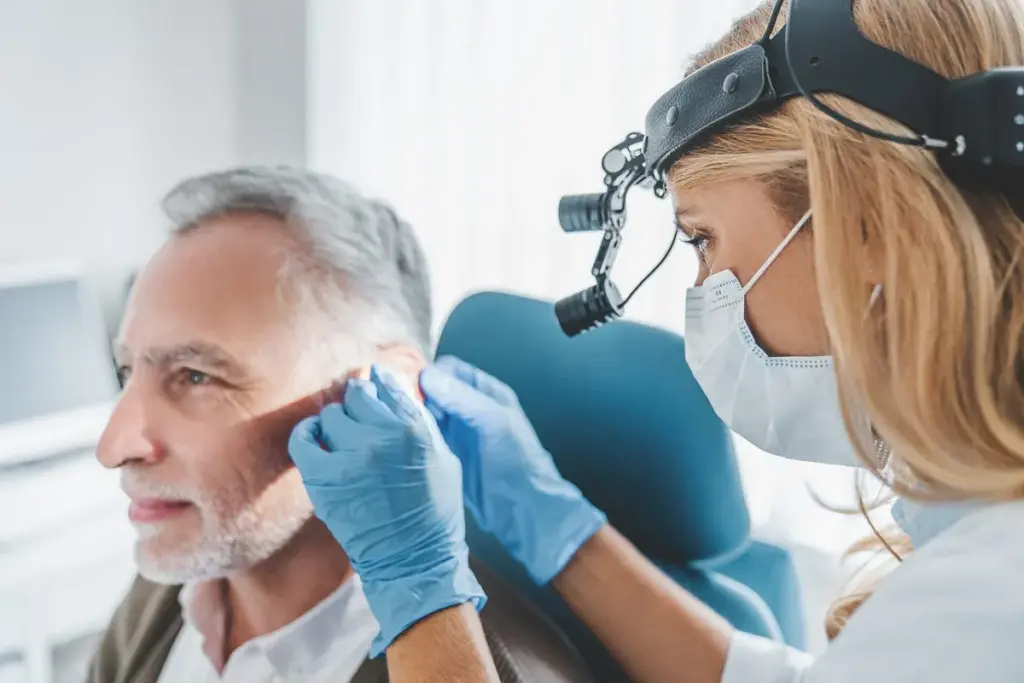
Did you know that balance disorders affect millions of people worldwide? They significantly impact their quality of life. A neurotologist, also known as an ear specialist or otologist, is key in diagnosing and treating these conditions. We specialize in managing disorders related to the ear and balance systems.
Otology experts are neurotologists. Get best facts. They fix ear nerves. This vital skill cures dangerous vertigo and restores amazing life.
As experts in otology, we help patients with various ear-related issues. This includes hearing loss and vertigo. Our expertise ensures patients get complete care. We address both symptoms and the underlying causes of their conditions.
Key Takeaways
A neurotologist is a medical specialist who focuses on ear and balance disorders.
They diagnose and treat conditions such as hearing loss, vertigo, and tinnitus.
Neurotologists provide both medical and surgical treatments.
Expertise in otology is key for managing complex ear conditions.
Patients benefit from complete care that tackles symptoms and underlying causes.
The Field of Neurotology: An Overview
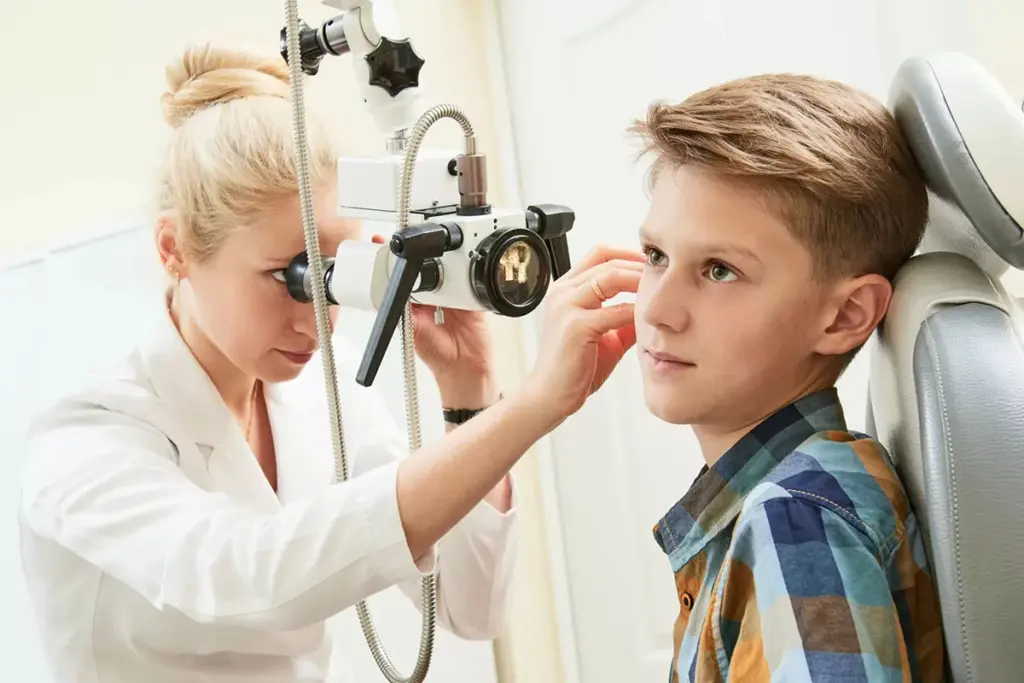
Neurotology started in otolaryngology and now deals with tough hearing and balance problems. It needs a deep understanding of the ear and its brain links.
Neurotology is a special medical field that looks at the ear and brain connection. Neurotologists can find and fix complex ear issues, like hearing and balance problems.
Definition and Scope of Practice
Neurotology focuses on ear and brain disorders. It includes surgery and non-surgery treatments for hearing loss, tinnitus, and balance issues. Neurotologists work with audiologists and neurologists for full patient care.
“The ear’s complex disorders need a team effort,” says neurotology’s role in solving these problems.
History of Neurotology as a Specialty
Neurotology’s history is linked to otolaryngology’s growth. As we learn more about the ear and brain, the need for specialized care grows. Neurotology became its own field with new surgery methods, diagnostic tools, and understanding of hearing and balance issues.
Now, neurotologists can handle many conditions, from sensorineural hearing loss to complex balance problems. They use the latest in medical science.
Understanding Otology and Its Relationship to Neurotology

Otology is a branch of medicine that deals with ear disorders. It has a strong connection to neurotology, which focuses on the neurological side of ear issues. We will look at how these two fields are linked and how they differ.
What Is Otology?
Otology is a medical field that handles ear disorders. It covers both the ear’s structure and its function. This includes hearing and balance problems. Otolaryngologists, or ENT specialists, often start in otology.
Otolaryngologists treat many ear issues. This includes hearing loss, infections, and problems with the outer, middle, and inner ear. They work with audiologists and others to give full care to patients with ear problems.
How Neurotology Evolved from Otology
Neurotology grew from otolaryngology, focusing on the ear’s neurological side. This growth came from better understanding of ear and brain connections, mainly in balance and hearing.
Neurotology is key in managing ear disorders with neurological parts. This includes some hearing loss and balance issues.
Differences Between an Otologist and Neurotologist
Otolaryngologists and neurotologists both work with ear disorders. But, they focus on different areas. Otologists look at the ear’s structure and function. Neurotologists focus on the neurological side of ear disorders.
Specialty | Focus | Common Conditions Treated |
|---|---|---|
Otology | Ear structure and function | Hearing loss, ear infections |
Neurotology | Neurological aspects of ear disorders | Balance disorders, complex hearing loss |
Otology and neurotology are different but closely related. They often work together in treating patients. Knowing the differences helps patients find the right care for their needs.
Ear Anatomy and the Auditory System
The human ear is a fascinating and complex organ. It plays a key role in our ability to hear and balance. It involves many structures working together to process sound.
Structure of the Outer, Middle, and Inner Ear
The ear is divided into three main parts: the outer ear, middle ear, and inner ear. The outer ear collects sound waves and directs them into the ear canal. The middle ear has the eardrum and three small bones (ossicles) that send vibrations to the inner ear. The inner ear has the cochlea for sound processing and the vestibular system for balance.
How Sound Travels Through the Ear
Sound waves enter the outer ear and travel to the eardrum. This causes it to vibrate. These vibrations then go through the ossicles to the cochlea in the inner ear.
The cochlea turns these vibrations into electrical signals. These signals are sent to the brain via the auditory nerve.
Ear Component | Function |
|---|---|
Outer Ear | Collects sound waves |
Middle Ear | Transmits vibrations |
Inner Ear | Processes sound and maintains balance |
The Ear-Brain Connection
The connection between the ear and the brain is vital for sound interpretation. The auditory nerve sends electrical signals from the cochlea to the brain. There, they are understood as sound.
The Vestibular System and Balance Function
Our sense of balance comes from the vestibular system in our inner ear. It’s key for keeping our posture, moving around, and adjusting to changes. It teams up with our visual and proprioceptive systems to give us a full sense of balance and where we are in space.
Anatomy of the Vestibular Apparatus
The vestibular apparatus has the otolith organs (utricle and saccule) and the semicircular canals. These are filled with endolymph and have sensory hair cells. The otolith organs catch linear movements, and the semicircular canals detect rotations.
How Balance is Maintained
Keeping balance involves the vestibular, visual, and proprioceptive systems working together. The vestibular system tells us about head movements and where we are in relation to gravity. The brain then mixes this with what we see and feel from our muscles and joints. This mix helps us feel balanced and aware of our surroundings.
Neural Pathways for Balance
The neural paths for balance start with the vestibulocochlear nerve (cranial nerve VIII). It sends signals from the inner ear to the brainstem. Then, these signals go to the cerebellum and vestibular nuclei for processing. This processing helps control our eye movements, posture, and balance.
System | Function | Key Structures |
|---|---|---|
Vestibular | Detects head movements and position relative to gravity | Otolith organs, semicircular canals |
Visual | Provides information about the environment and movement | Eyes, optic nerve |
Proprioceptive | Senses the position and movement of the body | Muscles, joints, proprioceptive receptors |
Knowing how the vestibular system helps with balance is key for treating balance disorders. By understanding its role with other senses, doctors can create better plans to help people with vestibular issues. This can greatly improve their balance and overall quality of life.
Education and Training of Neurotologists
To become a neurotologist, one must follow a detailed educational path. This includes medical school and specialized training. This training prepares neurotologists to handle complex ear and balance issues.
Medical School and Residency Requirements
The first step is medical school to get an MD or DO degree. Then, a five-year residency in otolaryngology (ENT) follows. This hands-on experience helps in managing ENT conditions.
Specialized Fellowship Training
After residency, neurotologists enter fellowship programs. These last one to two years. They focus on advanced training in ear and balance disorders.
Board Certification and Continuing Education
After fellowship, neurotologists can get board certified by the American Board of Otolaryngology. They must pass a tough exam to show their skills. Also, neurotology keeps evolving, so ongoing education is key to keep up with new methods.
Stage | Description | Duration |
|---|---|---|
Medical School | Earn MD or DO degree | 4 years |
Residency in Otolaryngology | Hands-on experience in ENT | 5 years |
Fellowship in Neurotology | Advanced training in complex ear and balance disorders | 1-2 years |
Common Hearing Disorders Treated
Neurotologists are experts in ear and brain disorders. They handle different types of hearing loss, like sensorineural, conductive, and mixed. They understand hearing disorders well, which helps them treat them effectively.
Sensorineural Hearing Loss
Sensorineural hearing loss is caused by damage to the inner ear or the auditory nerve. It’s often permanent and can be due to aging, loud noises, or certain medicines. Neurotologists work with audiologists to find the right hearing loss treatment, like hearing aids or cochlear implants.
Conductive Hearing Loss
Conductive hearing loss is when sound can’t get through to the inner ear. It might be because of a blockage, a hole in the eardrum, or middle ear problems. Treatment varies based on the cause and can include medicine or surgery. Neurotologists are skilled in surgeries to fix hearing issues.
Mixed Hearing Loss
Mixed hearing loss combines sensorineural and conductive hearing loss. It means there’s damage to both the inner ear and the outer or middle ear. Treating it requires a mix of medical and surgical steps, along with devices to help with the sensorineural part.
Sudden Hearing Loss
Sudden hearing loss, or SSNHL, is when hearing drops quickly, usually in 72 hours. It’s a serious issue that needs quick attention from a neurotologist. Early treatment, like corticosteroids, might help restore hearing. Neurotologists are key in finding the cause and starting treatment to protect hearing health.
In summary, neurotologists are key in treating hearing disorders. They offer full care, from diagnosis to treatment and rehabilitation. Their knowledge in audiology helps patients get the best care for their hearing loss.
Balance and Vestibular Disorders
The vestibular system is key for balance and spatial awareness. Disorders in this system can cause severe problems. Millions worldwide suffer from these issues, leading to symptoms like dizziness and vertigo.
Benign Paroxysmal Positional Vertigo (BPPV)
BPPV is a common vestibular disorder. It causes brief but intense vertigo from certain head movements. This happens when crystals in the inner ear move into the semicircular canals.
Treatment for BPPV usually involves canalith repositioning procedures (CRP). These are simple steps to move the crystals back to their right place.
Ménière’s Disease
Ménière’s disease affects the inner ear, causing balance and hearing issues. Symptoms include vertigo, tinnitus, hearing loss, and ear pressure. The cause is unknown but thought to be linked to inner ear fluid abnormalities.
- Management includes lifestyle changes, medication, and sometimes surgery.
- Early diagnosis is key to managing the condition and preventing hearing loss.
Vestibular Neuritis and Labyrinthitis
Vestibular neuritis and labyrinthitis are inner ear disorders. They cause vertigo, dizziness, and hearing loss. These are usually caused by viral infections.
Treatment aims to reduce symptoms. It may include vestibular rehabilitation therapy to help with balance.
Bilateral Vestibulopathy
Bilateral vestibulopathy is a condition where both sides of the vestibular system are affected. It can be caused by medications, infections, or aging.
Rehabilitation is vital for managing this condition. It helps improve balance by using the remaining vestibular function and other mechanisms.
In conclusion, balance and vestibular disorders affect the inner ear and brain. They cause symptoms like dizziness and vertigo. Accurate diagnosis and proper treatment are essential for managing these conditions and improving life quality.
Tumors and Growths Managed by Neurotologists
Neurotologists lead in treating tumors and growths that affect hearing and balance. They are key in managing complex ear and skull base conditions.
Acoustic Neuromas (Vestibular Schwannomas)
Acoustic neuromas, or vestibular schwannomas, are benign tumors on the vestibular nerve. They can cause hearing loss, tinnitus, and balance issues. Early diagnosis is key for effective treatment, which may include observation, surgery, or radiation therapy.
Cholesteatomas
Cholesteatomas are abnormal skin growths in the middle ear. They can cause serious problems if not treated. Treatment usually involves surgical removal.
Glomus Tumors
Glomus tumors are rare, usually benign growths from ear paraganglionic cells. They can cause pulsatile tinnitus and hearing loss. Surgical excision is often the treatment of choice, though radiation therapy may also be considered.
Other Skull Base Tumors
Neurotologists also handle other skull base tumors, like meningiomas and facial nerve schwannomas. These tumors pose unique challenges due to their location. A multidisciplinary approach is often necessary for the best care.
In conclusion, neurotologists are experts in diagnosing and treating various ear and skull base tumors. Their skill ensures patients get care tailored to their needs.
Diagnostic Procedures and Testing
Getting a correct diagnosis is key to treating ear and balance problems well. We use many tests to check these issues fully.
Comprehensive Audiological Evaluation
Checking hearing loss is a big part of our work. We do tests like pure-tone audiometry and speech audiometry. These help us figure out how bad the hearing loss is and what to do next.
Vestibular Function Tests
Tests for balance problems are very important. We use things like electronystagmography (ENG) and videonystagmography (VNG). These help find out if the inner ear is working right.
Imaging Studies: CT and MRI
CT and MRI scans help us see inside the ear and brain. CT scans show the bones of the ear. MRI scans show soft tissues like tumors or inflammation.
Electrophysiological Testing
Tests like auditory brainstem response (ABR) and electrocochleography (ECog) tell us about the hearing pathway. They help us find problems like acoustic neuromas and check the hearing nerve.
By using all these tests together, we can find and treat many ear and balance problems. This helps our patients get better.
Surgical Interventions in Neurotology
Surgical treatments are key for complex ear and balance issues. As neurotology experts, we use various surgeries to tackle ear and brain-related problems.
Middle Ear Surgery
Middle ear surgery fixes or replaces the ossicles, tiny bones that carry sound to the inner ear. Issues like otosclerosis, where bone growth blocks the stapes bone, are treated with stapedotomy or stapedectomy. This helps sound flow again.
Table: Common Middle Ear Surgeries
Procedure | Purpose | Condition Treated |
|---|---|---|
Stapedotomy/Stapedectomy | Restore sound conduction | Otosclerosis |
Ossiculoplasty | Repair or replace ossicles | Ossicular discontinuity or fixation |
Tympanoplasty | Repair tympanic membrane | Perforated eardrum |
Mastoid Surgery
Mastoid surgery treats infections or diseases in the mastoid part of the temporal bone. Mastoidectomy removes mastoid air cells to drain infections or remove diseased parts.
“The precision of mastoid surgery has significantly improved with advancements in imaging and surgical techniques, allowing for more effective treatment of mastoid-related complications.” – Dr. Expert in Otolaryngology
Skull Base Approaches
Skull base surgery tackles tumors or lesions at the skull’s base. These can affect hearing, balance, and other important functions. The approach depends on the location and type of problem, often needing neurosurgeons and neurotologists to work together.
Facial Nerve Decompression
Facial nerve decompression relieves pressure on the facial nerve. It’s done for Bell’s palsy or injuries. This surgery helps restore facial function and reduces symptoms.
These surgeries show the complexity and detail of neurotology. They highlight the need for specialized training and expertise in this field.
Hearing Restoration Technologies
Hearing restoration technologies have changed how we treat hearing loss. Now, we have many new ways to help with different types and levels of hearing problems.
Cochlear Implants
Cochlear implants are devices that go around damaged parts of the ear. They send signals directly to the auditory nerve. They help those with severe to profound hearing loss who don’t get much help from regular hearing aids.
Bone-Anchored Hearing Systems
Bone-anchored hearing systems send sound through the skull to the inner ear. They’re good for people with conductive or mixed hearing loss, or if they have deafness on one side.
Middle Ear Implants
Middle ear implants are for those with sensorineural, conductive, or mixed hearing loss. They directly stimulate the ossicles or inner ear. This gives a more natural sound than traditional hearing aids.
Auditory Brainstem Implants
Auditory brainstem implants are for when the auditory nerve is damaged. They send signals directly to the brainstem. They’re often used for severe hearing loss, like in people with neurofibromatosis type 2.
These technologies have greatly improved the lives of many people around the world. They offer a chance to regain or enhance hearing. The right technology depends on the type and severity of hearing loss, and the person’s overall health.
Technology | Description | Suitability |
|---|---|---|
Cochlear Implants | Bypass damaged ear parts, stimulate auditory nerve | Severe to profound sensorineural hearing loss |
Bone-Anchored Hearing Systems | Transmit sound vibrations through the skull | Conductive or mixed hearing loss, single-sided deafness |
Middle Ear Implants | Directly stimulate ossicles or inner ear | Sensorineural, conductive, or mixed hearing loss |
Auditory Brainstem Implants | Directly stimulate brainstem | Damaged or non-functional auditory nerve |
Pediatric Neurotology
Exploring pediatric neurotology, we learn about congenital hearing loss and balance disorders in kids. This field needs a deep understanding of the special challenges and ways to diagnose and treat ear and balance issues in children.
Congenital Hearing Loss
Congenital hearing loss is a big issue in pediatric neurotology. It can be caused by genetics, infections during pregnancy, or other prenatal and perinatal factors. Thanks to newborn hearing screenings, we can catch it early.
Early treatment with hearing aids or cochlear implants is key. It helps a lot with a child’s language skills and social life.
Pediatric Balance Disorders
Pediatric balance disorders are another challenge. They can come from inner ear problems, neurological issues, or other reasons. Symptoms include vertigo, dizziness, or delayed development.
A thorough check by a pediatric neurotologist is needed to find and manage these problems well.
Special Considerations in Children
When treating kids, neurotologists must think about their special needs. Kids’ ears are different from adults’, which affects how we diagnose and treat them. Family-centered care is also key. Parents and caregivers are important in a child’s healing and learning process.
When to See a Neurotologist vs. Other Specialists
It’s important to know the difference between various specialists for ear conditions. Patients often wonder who to see: an ENT doctor, audiologist, neurologist, or neurotologist.
Neurotologist vs. General ENT
An ENT doctor can handle common ear issues like infections and hearing loss. But, a neurotologist specializes in complex ear and balance problems. They have the skills for surgery.
If you have vertigo, tinnitus, or hearing loss that won’t go away, see a neurotologist.
Neurotologist vs. Audiologist
An audiologist deals with hearing and balance issues without surgery. A neurotologist can treat these problems with surgery or medicine.
For surgery, see a neurotologist.
For non-surgical treatments, an audiologist is a good choice.
Neurotologist vs. Neurologist
Neurologists focus on brain and nervous system disorders. Neurotologists specialize in ear and brain connections, which is key for balance.
Referral Patterns and When to Seek Care
Usually, a general ENT doctor or primary care physician refers you to a neurotologist. If you have ear or balance issues, a neurotologist is the best choice.
The Multidisciplinary Approach to Patient Care
Neurotologists know the value of teamwork in patient care. They work with many specialists to tackle complex neurotological disorders. This team effort is key to providing the best care.
Collaboration with Audiologists
Audiologists are vital in diagnosing hearing and balance issues. They team up with neurotologists for thorough evaluations. This teamwork helps ensure accurate diagnoses and effective treatments.
Working with Neurologists and Neurosurgeons
Neurologists and neurosurgeons are essential for brain-related conditions. They work with neurotologists to offer complete care. This includes diagnosis, treatment, and follow-up.
Rehabilitation Specialists and Therapists
Rehabilitation specialists and therapists help patients recover. They work with neurotologists to create personalized plans. These plans aim to improve patients’ lives and abilities.
Specialist | Role in Patient Care |
|---|---|
Audiologists | Conduct thorough audiological evaluations |
Neurologists and Neurosurgeons | Diagnose and treat brain and nervous system conditions |
Rehabilitation Specialists and Therapists | Develop and implement rehabilitation plans |
Through teamwork, we aim to give our patients the best care. This approach improves their quality of life and meets their complex needs.
Advancements and Future Directions in Neurotology
Neurotology is growing fast, thanks to new surgical methods and hearing restoration research. This means better treatments for ear and balance problems.
Emerging Surgical Techniques
New surgical techniques are changing neurotology. These include less invasive methods that help patients heal faster. For example, endoscopic ear surgery now allows for more precise operations.
Research in Hearing Restoration
Research on hearing restoration is making big strides. Scientists are working on new technologies like cochlear implants. These could help people with severe hearing loss.
Genetic Therapies and Regenerative Medicine
Neurotology’s future looks bright with genetic therapies and regenerative medicine. Gene therapy might treat hereditary hearing and balance issues. Stem cell therapy could also repair damaged ear tissues.
Area of Advancement | Description | Potential Impact |
|---|---|---|
Emerging Surgical Techniques | Minimally invasive procedures | Reduced recovery time, improved outcomes |
Hearing Restoration Research | Cochlear and auditory brainstem implants | Restored hearing for severe to profound loss |
Genetic Therapies | Gene therapy for hereditary conditions | Treatment of genetic hearing and balance disorders |
Conclusion
Neurotology is key to keeping our ears healthy and treating hearing and balance issues. Neurotologists are experts who can find and fix many ear and balance problems. They help people with complex conditions.
Neurotologists know a lot about how our ears and balance work. They give care that makes people’s lives better. They use surgery and new technologies to help patients.
Going to a neurotologist can really help with balance and hearing problems. If you have ear or balance issues, see a neurotologist. They can give you the care you need.
FAQ
What is a neurotologist, and what do they specialize in?
A neurotologist is a medical expert who deals with ear and balance issues. They treat hearing loss, tinnitus, and balance problems.
What is the difference between an otologist and a neurotologist?
An otologist is an ear doctor who treats common ear issues. A neurotologist, on the other hand, handles complex ear and balance problems. They deal with the inner ear and brain issues.
What kind of training does a neurotologist receive?
A neurotologist goes through medical school and a residency in otolaryngology. They also get specialized training in neurotology.
What are some common conditions treated by neurotologists?
Neurotologists treat many conditions. These include hearing loss, tinnitus, and balance disorders. They also handle Meniere’s disease, acoustic neuromas, and skull base tumors.
What diagnostic tests are used by neurotologists?
Neurotologists use various tests. These include audiological evaluations, vestibular function tests, and imaging studies. They also use electrophysiological testing.
What are some treatment options for hearing loss?
For hearing loss, treatments include hearing aids and cochlear implants. Bone-anchored hearing systems and other technologies are also used.
Can neurotologists perform surgery?
Yes, neurotologists can do surgery. They perform middle ear and mastoid surgery. They also do skull base approaches and facial nerve decompression.
When should I see a neurotologist instead of a general ENT doctor?
See a neurotologist for complex ear or balance issues. Or if you have a condition needing specialized care, like a skull base tumor or severe balance disorder.
What is the role of audiologists in neurotology?
Audiologists are key in diagnosing and treating hearing and balance disorders. They work with neurotologists to provide full care.
Are there any new developments or advancements in the field of neurotology?
Yes, neurotology is always evolving. New technologies and techniques are being developed. These include emerging surgical methods, research in hearing restoration, and genetic therapies.
Would you like me to identify which specific condition in this list matches your current symptoms?
Reference
National Center for Biotechnology Information. Evidence-Based Medical Insight. Retrieved from https://pubmed.ncbi.nlm.nih.gov/7675487/