
It’s important to know how different medical imaging procedures affect radiation exposure. At Liv Hospital, we focus on keeping our patients safe. We offer top-notch imaging services that meet each person’s unique needs.
Each imaging method has its own radiation doses. For example, a Panorex X-ray has a dose of 0.014 to 0.025 mSv. On the other hand, a chest x-ray gives patients about 0.1 mSv. But, a CT abdomen scan has a much higher dose, from 5 to 10 mSv.
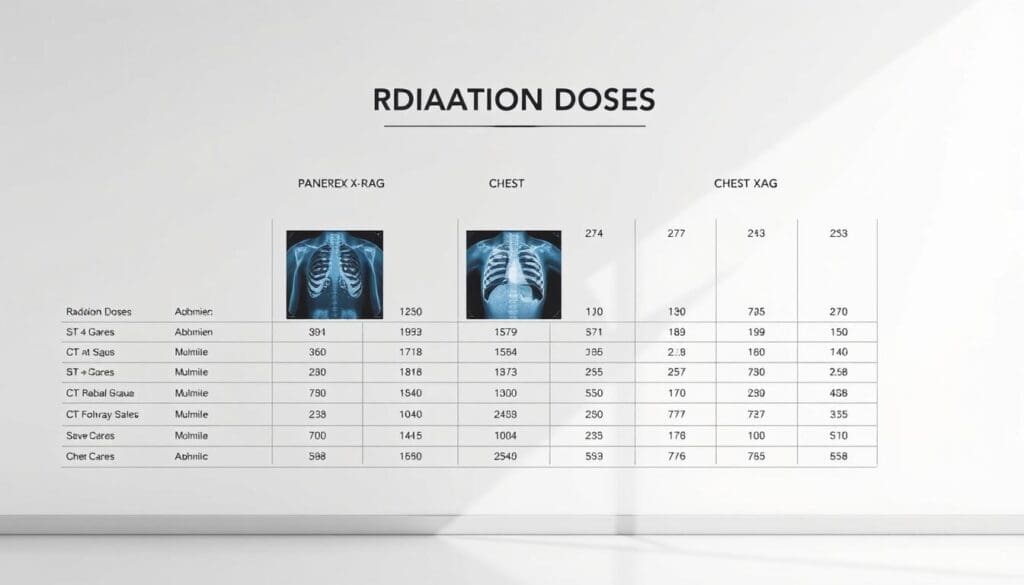
We understand the need to compare these doses. This helps both patients and healthcare providers see the risks and benefits of each imaging test.
Key Takeaways
- Panorex x-ray radiation dose is relatively low, between 0.014 to 0.025 mSv.
- Chest x-ray exposure is about 0.1 mSv, higher than panorex x-ray.
- CT abdomen scan involves a significantly higher radiation dose, 5 to 10 mSv.
- Understanding radiation doses helps patients make informed decisions.
- Liv Hospital prioritizes patient safety and quality imaging services.
Understanding Radiation Measurement in Medical Imaging
Medical imaging uses different types of radiation doses. It’s important to know these measurements to ensure patient safety. We use special units to measure radiation exposure, making it easier to compare different imaging methods.
Units of Radiation Measurement: Millisieverts and Microsieverts
Radiation in medical imaging is measured in millisieverts (mSv) or microsieverts (μSv). One millisievert is 1,000 microsieverts. These units help us understand how much radiation the body absorbs during imaging. For example, a chest X-ray usually exposes a patient to about 0.1 mSv.
Here are some common radiation measurements:
- Millisieverts (mSv): Used for larger doses, such as those from CT scans.
- Microsieverts (μSv): Used for smaller doses, like those from regular X-rays.
Natural Background Radiation as a Comparison Baseline
Comparing medical radiation doses to natural background radiation helps us understand their significance. On average, a person gets about 3 mSv of natural background radiation each year. This comes from cosmic rays and radon in the environment.
For example, a panoramic dental X-ray (Panorex) exposes a patient to 0.014-0.025 mSv. This is like 2-3 days of natural background radiation.
How Radiation Doses Are Calculated and Reported
Radiation doses from medical imaging depend on the procedure, body part, and technology used. CT scans, for example, have higher doses because they provide detailed images. A CT abdomen scan can expose a patient to 5-10 mSv.
Healthcare providers consider several factors when reporting radiation doses. These include:
- The imaging modality used (e.g., X-ray, CT, MRI).
- The body part being examined.
- The patient’s size and age.
- The technical parameters of the imaging equipment.
Understanding how radiation doses are calculated and reported helps us appreciate the efforts to minimize exposure. This ensures we get diagnostic images safely.
Panorex X Ray Radiation Dose and Its Safety Profile
Understanding the radiation dose from Panorex X-rays is key for patient safety in dental imaging. We must weigh the benefits of this tool against the risks of radiation exposure.
Typical Dose Range for Panoramic Dental X-Rays
The dose from a Panorex X-ray is between 0.014 to 0.025 millisieverts (mSv). This is quite low compared to other medical scans. Panoramic dental X-rays give a wide view of the jaw in one image. Their dose is kept low for good-quality images.
Equivalent Background Radiation Exposure
The dose from a Panorex X-ray is like 2 to 3 days of natural background radiation. This shows the X-ray’s radiation is safe, similar to daily environmental exposure.
Frequency Considerations for Dental Imaging
Even though a single Panorex X-ray has a low dose, how often you get them matters. Dental professionals should follow guidelines for X-ray frequency. This ensures patients get needed scans without too much radiation.
Knowing the radiation dose of Panorex X-rays and following safety rules helps keep patients safe. This way, we get the most from dental imaging without risking health.
Chest X-Ray (CXR) Radiation Exposure Levels
Doctors use chest X-rays to find out what’s wrong with patients. It’s important to know how much radiation they get. Chest X-rays help doctors see problems in the chest and lungs.
Standard Dose for a Single Chest X-Ray
A chest X-ray gives about 0.1 millisieverts (mSv) of radiation. This is like the background radiation we all get over a few days.
Comparison to Panorex X-Ray Exposure
A chest X-ray has about 10 times more radiation than a panorex X-ray. A chest X-ray gives 0.1 mSv, while a panorex X-ray gives 0.014-0.025 mSv. This shows how different X-rays have different radiation levels.
Clinical Applications and Necessity Factors
Even with more radiation, chest X-rays are very useful. They help in emergencies, for lung problems, and before surgery. Doctors decide to use them based on the patient’s age, health, and what they need to find out.
CT Abdomen Scan: Understanding Higher Radiation Exposure
CT abdomen scans are key for diagnosing many conditions. They use more radiation than X-rays. These scans give detailed images, helping doctors plan treatments.
Typical Radiation Dose Range
A CT abdomen scan’s radiation dose is 5 to 10 millisieverts (mSv). This is like several years of natural background radiation. We must think about these risks and benefits when using CT scans.
| Imaging Procedure | Typical Radiation Dose (mSv) | Equivalent Background Radiation Exposure |
| CT Abdomen Scan | 5-10 | 2-5 years |
| Chest X-Ray | 0.1 | 10 days |
| Panoramic Dental X-Ray | 0.014-0.025 | 2-3 days |
Why CT Scans Require More Radiation Than Conventional X-Rays
CT scans need more radiation for detailed images. They show cross-sections of the body. The technology used is complex, requiring higher doses for quality images. We choose CT scans when benefits outweigh risks.
Risk-Benefit Considerations for Abdominal Imaging
When deciding on a CT abdomen scan, we balance benefits and risks. For many, the benefits of accurate diagnosis are worth the risks. We try to use the least amount of radiation and explore other options when possible.
In summary, CT abdomen scans have higher radiation doses but are very useful. Understanding their risks and benefits helps us make better choices in medical imaging.
Comprehensive X-Ray Dose Comparison Chart
Medical imaging uses different amounts of radiation. A side-by-side comparison helps us see these differences. It helps patients and doctors make better choices.
Side-by-Side Comparison of Common Imaging Procedures
Let’s look at the radiation doses for common imaging tests. Here’s a list of typical doses for different imaging methods:
- Panoramic Dental X-Ray (Panorex): 0.014-0.025 mSv
- Chest X-Ray (CXR): 0.1 mSv
- CT Abdomen Scan: 5-10 mSv
These doses show big differences. For example, a CT Abdomen Scan gives much more radiation than a Chest X-Ray or Panorex.
Visualizing Cumulative Radiation Exposure
It’s important to think about total radiation exposure, too. This is key for patients getting many tests. We need to make sure the benefits are worth the risks.
Here’s a table showing how radiation adds up from different tests:
| Imaging Procedure | Typical Dose (mSv) | Cumulative Dose (mSv) |
| Panoramic Dental X-Ray | 0.014-0.025 | 0.014-0.025 |
| Chest X-Ray | 0.1 | 0.114-0.125 |
| CT Abdomen Scan | 5-10 | 5.114-10.125 |
By knowing and seeing these doses, doctors can choose the best tests. This helps keep radiation low while keeping tests useful.
Radiation Safety Principles and Protocols in Modern Imaging
Keeping patients and staff safe from radiation is key in today’s medical imaging. As imaging tech gets better, we must follow safety rules to lower radiation exposure. This ensures everyone’s safety.
The ALARA Principle
The ALARA principle means keeping radiation doses as low as we can. It’s about finding a balance between safety and getting the needed results. We use new tech, strict rules, and training to follow ALARA.
Protective Measures and Shielding Techniques
We use protective measures and shielding techniques to cut down on radiation. Shielding, like using lead, helps block radiation. For example, lead aprons protect patients during X-rays.
We also make imaging settings better to use less radiation. This way, we get clear images without harming anyone.
- Lead aprons and thyroid shields for patients
- Lead-lined walls and doors in imaging rooms
- Personal dosimeters for staff
Technological Advances Reducing Radiation Exposure
New tech is a big help in lowering radiation. Modern machines use less radiation but keep images sharp. For example, new X-ray and CT scan tech cuts down on radiation.
We keep working on tech to make imaging safer. This includes:
- Improved detector sensitivity
- Advanced image reconstruction algorithms
- Better collimation and beam filtration
Contextualizing Medical Radiation Exposure in Daily Life
Daily life is filled with many sources of radiation, not just from medical imaging. We are exposed to natural and man-made radiation as we go about our day. Knowing about these sources helps patients understand their exposure when they have imaging tests.
Comparing Medical Imaging to Environmental Radiation Sources
Natural background radiation is a big part of our exposure. It comes from cosmic rays and radon gas in the air. For example, a chest X-ray has a dose of about 0.1 mSv. This is like the background radiation we get in about 10 days.
Here’s a comparison to help you understand:
| Source | Typical Radiation Dose (mSv) | Equivalent Background Radiation Exposure |
| Chest X-ray | 0.1 | 10 days |
| Panoramic Dental X-ray | 0.014-0.025 | 2-3 days |
| CT Abdomen Scan | 5-10 | 1-2 years |
Air Travel, Consumer Products, and Other Radiation Exposures
Air travel is another big source of radiation. At high altitudes, there’s less air to protect us from cosmic rays. A flight from New York to Los Angeles can expose us to about 0.035 mSv of radiation. Some products, like smoke detectors and certain glass, also have small amounts of radioactive materials.
“The average annual dose from cosmic radiation at sea level is about 0.3 mSv, but this can increase significantly at higher altitudes.”
NCRP Report No. 160
Consumer products add a small amount to our total radiation exposure. For example, a smoke detector has a tiny bit of Americium-241, a radioactive isotope. But the radiation from these products is much less than what we get from medical imaging or natural background radiation.
Cumulative Exposure Considerations for Frequent Imaging
For people who have imaging tests often, the total radiation they get is a big concern. While imaging tests are often needed, it’s important to think about how often they’re done. Doctors follow the ALARA principle to keep radiation doses low while getting good images.
When thinking about cumulative exposure, we look at the total dose a patient has gotten over time. We balance this against how much they need more imaging tests. This is very important for people with long-term conditions who need many tests.
Conclusion: Balancing Diagnostic Benefits with Radiation Awareness
We’ve looked into radiation in medical imaging, like Panorex X-rays, chest X-rays, and CT scans of the abdomen. Knowing how much radiation these give off is key to balancing risks and benefits.
Being aware of radiation in medical imaging is vital. It helps doctors get the most from tests while keeping radiation low. Knowing the doses helps us decide when and how to use these tests safely.
It’s important to find a balance between getting clear images and avoiding too much radiation. By knowing the doses, we can use tests wisely. This way, patients get the most from imaging without too much radiation.
Our main aim is to give top-notch care while keeping an eye on radiation. This way, we make sure imaging tests are useful and safe. We aim to keep radiation exposure as low as possible.
FAQ
What is the typical radiation dose from a panorex x-ray?
Panorex x-rays usually give a dose of 0.014-0.025 millisieverts (mSv). This is like 2-3 days of natural background radiation.
How does the radiation dose from a chest x-ray compare to a panorex x-ray?
Chest x-rays have a dose of about 0.1 mSv. This is 10 times more than a panorex x-ray.
What is the radiation dose from a CT abdomen scan?
CT abdomen scans give a dose of 5-10 mSv. This is much higher than regular x-rays because they need detailed images.
How do medical imaging radiation doses compare to natural background radiation?
Medical radiation doses are compared to natural background radiation. For example, a panorex x-ray is like 2-3 days of background radiation. A CT abdomen scan is like several years.
What is the ALARA principle in radiation safety?
The ALARA principle means “As Low As Reasonably Achievable.” It’s about keeping radiation exposure low while getting the needed images.
How can radiation exposure be minimized during medical imaging?
We use shielding and new technologies like dose reduction algorithms to lower radiation exposure.
What are the cumulative exposure considerations for patients undergoing frequent imaging?
Patients getting many imaging tests can get a lot of radiation over time. It’s important to carefully choose and optimize imaging.
How do different medical imaging procedures compare in terms of radiation dose?
A comparison chart can show the radiation doses from different tests. This includes panorex x-rays, chest x-rays, and CT abdomen scans.
What are the units used to measure radiation dose in medical imaging?
We use millisieverts (mSv) and microsieverts (μSv) to measure radiation. These units show the biological effects of radiation.
How is radiation dose calculated and reported in medical imaging?
Doses are calculated based on the imaging type, equipment, and settings. They are usually reported in millisieverts (mSv).
References
Lee, G. S., Kim, K. N., Kim, J. H., & Kim, S. J. (2013). Effective dose from direct and indirect digital panoramic units. Journal of the Korean Association of Oral and Maxillofacial Radiology, 43(3), 135–140. https://www.ncbi.nlm.nih.gov/pmc/articles/PMC3691377/