This is the ultimate guide to PCOS pregnancy symptoms. Discover 7 surprising and critical early signs that are different from your usual PCOS symptoms. Women with polycystic ovary syndrome (PCOS) find it hard to spot the first signs of pregnancy. This is because PCOS messes with their menstrual cycles and hormones. So, figuring out if they’re really pregnant needs a doctor’s help and a close look.
At Liv Hospital, we get how tough it is to deal with PCOS and pregnancy. We offer care that’s all about you, based on the latest research. PCOS affects 6 to 15 percent of women who can get pregnant. Our team is here to support you, no matter where you’re from.
Key Takeaways
- PCOS makes it hard to find early pregnancy signs because of similar symptoms.
- Hormonal issues in PCOS can hide or look like pregnancy indicators.
- Getting a doctor’s opinion is key for the right diagnosis and treatment.
- Liv Hospital focuses on patient care for women with PCOS.
- We offer full support to patients from around the world.
Understanding PCOS and Its Impact on Fertility

For women trying to conceive, knowing about PCOS is key. It affects how often you ovulate and your menstrual cycles. PCOS is a hormonal disorder that impacts women of childbearing age, causing symptoms that can affect fertility.
What is Polycystic Ovary Syndrome?
Polycystic Ovary Syndrome (PCOS) is a complex endocrine disorder. It affects 5-10% of women of childbearing age. Symptoms include hormonal imbalance, ovulation problems, and cysts on the ovaries.
Women with PCOS often have irregular menstrual cycles, elevated levels of androgens, and insulin resistance. These can lead to subfertility.
The exact cause of PCOS is unknown. But, genetic and environmental factors are believed to play a role. Insulin resistance, low-grade inflammation, and genetic predisposition are key factors in PCOS symptoms.
How PCOS Affects Ovulation and Conception
PCOS significantly impacts ovulation, leading to irregular or absent menstrual periods. High levels of androgens and insulin resistance disrupt ovulation. This makes it hard for women to conceive.
The ovaries may develop numerous small cysts in women with PCOS. This can lead to anovulation or irregular ovulation.
Hormonal imbalances in PCOS can affect egg quality and the uterine environment. This complicates conception. Understanding these effects is vital for women with PCOS trying to get pregnant. It helps them seek the right medical guidance and support.
The Challenge of Recognizing Pregnancy When You Have PCOS

Women with PCOS find it hard to tell if they’re pregnant because many PCOS symptoms are similar to early pregnancy signs. This makes it tricky to know for sure if you’re expecting.
Why Pregnancy Signs Can Be Masked by PCOS
PCOS symptoms like irregular periods, weight gain, and mood swings are also seen in early pregnancy. This makes it tough for women with PCOS to spot pregnancy signs. The complexity of PCOS requires a closer look at the subtle differences between PCOS symptoms and pregnancy signs.
For example, tiredness is common in both PCOS and early pregnancy. Mood swings, caused by hormonal changes in PCOS, are also seen in pregnancy. Understanding these nuances is key for early pregnancy detection.
Hormonal Imbalances That Complicate Detection
Hormonal imbalances in PCOS affect ovulation and menstrual cycles. These imbalances can hide or mimic pregnancy’s hormonal changes. So, relying only on symptoms to detect pregnancy can be misleading.
PCOS hormonal changes can cause symptoms like acne and hair growth, similar to pregnancy. Pregnancy hormones also cause skin changes and other symptoms. Distinguishing between these hormonal effects is vital for accurate pregnancy detection.
To better detect pregnancy, women with PCOS should know the differences between their usual symptoms and new ones that might mean pregnancy. Seeing a healthcare provider is key for a correct diagnosis and prenatal care.
Common PCOS Pregnancy Symptoms to Watch For
PCOS can hide early signs of pregnancy, making it key for women to know the subtle changes that might mean they’re pregnant. While PCOS symptoms can look like early pregnancy signs, there are specific signs to watch for to see if you might be pregnant.
Physical Signs That May Indicate Pregnancy
Some physical signs can hint at pregnancy in women with PCOS. These include:
- Fatigue: Feeling extremely tired is a common early sign of pregnancy.
- Bloating and Cramping: While these can be symptoms of PCOS, they can also occur during early pregnancy.
- Frequent Urination: As the uterus expands, it can put pressure on the bladder, leading to more frequent trips to the bathroom.
- Nausea and Vomiting: Morning sickness is a classic symptom of pregnancy, though its severity can vary widely among women.
It’s important to remember that these symptoms can also be present due to PCOS. But if they are new or more pronounced than usual, it might be worth considering a pregnancy test.
Symptom | PCOS | Early Pregnancy |
Fatigue | Common due to hormonal imbalances | Can be more pronounced |
Bloating | Often associated with hormonal fluctuations | Can occur due to hormonal changes |
Nausea | Less common, but can occur | A classic symptom, often referred to as morning sickness |
Emotional and Hormonal Changes
Emotional and hormonal changes are also significant indicators of pregnancy in women with PCOS. Mood swings, irritability, and emotional sensitivity can be more pronounced during early pregnancy. As one woman noted,
“I felt like I was on an emotional rollercoaster, and it wasn’t just my PCOS.”
These changes are largely due to the significant hormonal shifts that occur during pregnancy. Progesterone levels increase, which can affect mood and emotional well-being. It’s important for women to be aware of these changes and to seek support if they feel overwhelmed.
By understanding the common physical, emotional, and hormonal changes associated with pregnancy, women with PCOS can better identify signs of conception. If you’re experiencing several of these symptoms at once, it may be worth taking a pregnancy test to confirm.
Missed Periods: Interpreting This Sign With PCOS
Women with PCOS find it hard to know if they’re pregnant because of their irregular periods. PCOS, or Polycystic Ovary Syndrome, messes with hormones, causing irregular or no periods. This makes it tricky to spot a missed period, a key sign of pregnancy.
Irregular periods are a common symptom of PCOS. This makes it hard for women to keep track of their cycles. A missed period, which usually signals pregnancy, might not be noticed right away. It could be seen as just another sign of PCOS.
Why Irregular Periods Make Detection Difficult
PCOS’s hormonal imbalances cause periods to be infrequent or last too long. This unpredictability makes it hard to know what a normal cycle is. So, spotting pregnancy by missed periods alone is not reliable.
Women with PCOS may experience a range of menstrual irregularities. This includes infrequent or no periods. So, just looking for missed periods to guess pregnancy doesn’t work.
When to Consider a Pregnancy Test Despite PCOS
If you’re feeling other symptoms of pregnancy like morning sickness or tiredness, get a test. Even if you’re not sure about your period.
Pay attention to any unusual changes in your body. Don’t ignore them as just PCOS side effects. If you’re worried about pregnancy, a home test or a doctor’s visit can help.
It’s key to understand how PCOS affects pregnancy detection. Knowing the signs of pregnancy and not just relying on periods helps women with PCOS. This way, they can better figure out if they’re pregnant.
Differentiating Between PCOS and Pregnancy Symptoms
It’s hard to tell if you have PCOS or are pregnant because the symptoms are similar. Women with PCOS might feel bloated, have mood swings, or feel tired. These feelings can also happen when you’re expecting a baby.
Overlapping Symptoms: What They Mean
PCOS and pregnancy both mess with your hormones. This can cause mood swings, bloating, and sore breasts. These symptoms can be confusing, whether you’re trying to get pregnant or think you might be.
Irregular periods are a big overlap. Women with PCOS often have unpredictable cycles. This makes it tricky to know if you’re pregnant just by missing your period. Feeling tired and nauseous can also be from either condition, making it hard to figure out what’s going on.
Key Differences to Help You Distinguish
Even though symptoms can be similar, there are clear differences. For example, women with PCOS might get withdrawal bleeding, but pregnant women usually don’t. This is one way to tell them apart.
Pregnancy brings unique symptoms like strong cravings and a heightened sense of smell. PCOS symptoms stay pretty much the same, but pregnancy symptoms change and get stronger as the pregnancy goes on.
Symptom | PCOS | Pregnancy |
Menstrual Cycle | Irregular or absent periods | Missed periods |
Nausea | Less common or related to hormonal imbalance | Common, often starting around 4-6 weeks |
Breast Tenderness | Can occur due to hormonal fluctuations | Often more pronounced due to pregnancy hormones |
Fatigue | Can be present due to hormonal and metabolic factors | Common, often increases as pregnancy progresses |
A study in a medical journal says it’s key to know the difference between PCOS and pregnancy symptoms. This helps in early pregnancy detection and care for women with PCOS.
“The complexity of diagnosing pregnancy in women with PCOS highlights the need for a detailed approach. This should consider both the similarities and differences between PCOS and pregnancy symptoms.” A leading expert in Obstetrics and Gynecology
Knowing the differences and similarities helps women with PCOS understand their bodies better. It also helps them get the right medical care when they need it.
Pregnancy Testing With PCOS: Special Considerations
PCOS can make pregnancy testing tricky. It’s key to know the special things to consider. Women with PCOS often have hormonal imbalances. These can mess with the accuracy of pregnancy tests.
Impact of PCOS on Pregnancy Test Results
Hormonal changes in PCOS can affect pregnancy test results. High levels of luteinizing hormone (LH) are common in PCOS. They can be mistaken for human chorionic gonadotropin (hCG) by pregnancy tests. This might lead to false positives.
On the other hand, some women with PCOS might have delayed implantation or lower hCG production. This can cause false negatives if the test is taken too early.
Best Testing Practices for Women With PCOS
To get accurate results, women with PCOS should follow certain guidelines:
- Wait until after a missed period to test, if possible, to minimize the chance of a false negative.
- Use a highly sensitive pregnancy test that can detect lower levels of hCG.
- Test in the morning when hCG levels are typically at their highest.
- Consider confirming the result with a blood test, as it is more accurate than a urine test.
By understanding these special considerations and following best practices, women with PCOS can more accurately determine if they are pregnant.
Unique Early Signs of Pregnancy With PCOS
PCOS and pregnancy have their own early signs. These signs are key for women to spot. Sometimes, PCOS symptoms can hide pregnancy signs. But, there are clear signs that show you might be pregnant.
Distinguishing Features of Pregnancy With PCOS
Women with PCOS may notice certain signs that mean they might be pregnant. Some of these signs are:
- Nausea and Vomiting: This is often called morning sickness, but it can happen at any time.
- Breast Tenderness: Hormonal changes can make breasts feel sore, more so in women with PCOS.
- Frequent Urination: As the uterus grows, it can press on the bladder, making you need to pee more often.
- Fatigue: High levels of progesterone can make you very tired.
Unusual Symptoms That May Indicate Conception
Women with PCOS might also notice some unusual signs that could mean they’re pregnant. These include:
- Heightened Sense of Smell: Some women find their sense of smell gets stronger during early pregnancy.
- Mood Swings: Hormonal changes can cause mood swings, which might be more intense in women with PCOS.
- Bloating and Cramping: These symptoms can be like those in a normal menstrual cycle. But, they can also mean you’re pregnant.
It’s vital for women with PCOS to know these unique early signs of pregnancy. This way, they can get the care they need early on. If you think you might be pregnant, take a test and talk to your doctor.
First Trimester Challenges and Increased Risks
PCOS doesn’t just affect fertility; it also introduces additional risks during the first trimester of pregnancy. Women with PCOS are at a higher risk of miscarriage and other pregnancy complications. Understanding these risks and how to manage them is key for a healthy pregnancy.
Higher Miscarriage Risk: What Research Shows
Research shows that women with PCOS face a higher risk of miscarriage. Studies reveal that the miscarriage rate among women with PCOS is significantly higher. The exact reasons are not fully understood, but hormonal imbalances, insulin resistance, and obesity may play a role.
Study | Miscarriage Rate in PCOS | Miscarriage Rate in Non-PCOS |
Study A | 30% | 15% |
Study B | 25% | 10% |
To reduce these risks, women with PCOS should get early prenatal care. They should also work closely with their healthcare provider.
Managing PCOS Symptoms During Early Pregnancy
Managing PCOS symptoms during early pregnancy is vital to minimize risks. This includes eating a healthy diet, exercising regularly, and monitoring blood sugar levels. This is important for those with insulin resistance.
Women with PCOS should also watch for signs of complications. If they experience any unusual symptoms, they should seek medical attention.
When to Consult a Healthcare Provider
Knowing when to see a doctor is key for a healthy pregnancy with PCOS. Women with PCOS face higher risks and need close monitoring to avoid complications.
Signs That Warrant Immediate Medical Attention
If you notice any of these symptoms, call your doctor right away:
- Severe abdominal pain
- Vaginal bleeding
- Severe headache or vision changes
- Symptoms of deep vein thrombosis
- Signs of preeclampsia, such as high blood pressure and protein in the urine
Table: Symptoms Requiring Immediate Medical Attention
“Women with PCOS are at a higher risk for pregnancy complications, making it vital to monitor their condition closely throughout the pregnancy.”- American College of Obstetricians and Gynecologists
Finding PCOS-Knowledgeable Prenatal Care
It’s important to find a doctor who knows about PCOS for effective pregnancy management. Here’s how to find the right care:
- Ask for referrals from your primary care physician or other women with PCOS
- Check if the healthcare provider has experience in managing high-risk pregnancies
- Ensure they are aware of the latest guidelines for PCOS and pregnancy
By knowing when to seek medical help and finding the right prenatal care, women with PCOS can manage their pregnancy better.
Symptom | Possible Complication |
Severe abdominal pain | Ectopic pregnancy or ovarian torsion |
Vaginal bleeding | Miscarriage or placental abruption |
Severe headache or vision changes | Preeclampsia |
Medical Confirmation and Monitoring of PCOS Pregnancies
For women with PCOS, knowing they’re pregnant is more than just a positive home test. Medical confirmation is key to understanding the health of the pregnancy.
Clinical Confirmation Methods
Healthcare professionals use several tests to confirm pregnancy. These include:
- Blood tests to measure hCG levels, useful in early detection.
- Pelvic exams to check the reproductive organs’ health.
- Ultrasound exams, which we’ll discuss later.
These methods offer a clearer picture of the pregnancy than home tests alone.
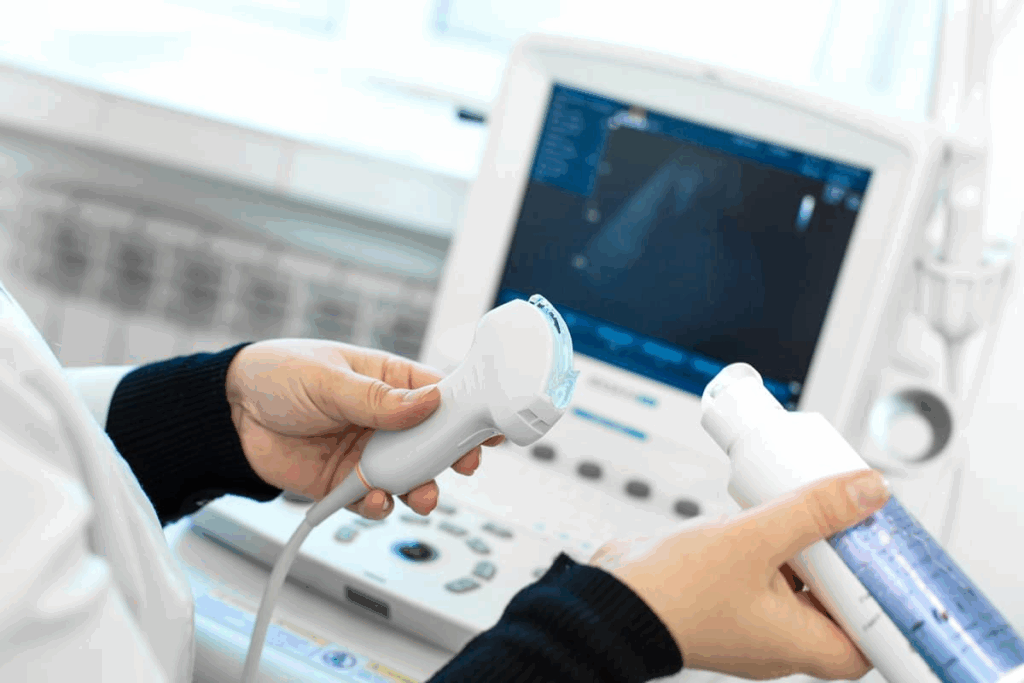
The Role of Early Ultrasounds
Early ultrasounds are vital for PCOS pregnancies. They help:
- Confirm a viable fetus.
- Find the pregnancy’s age.
- Spot early issues, like ectopic pregnancy or twins.
Women with PCOS need early ultrasounds because they face higher risks during pregnancy.
Specialized Care for High-Risk Pregnancies
PCOS pregnancies are considered high-risk. This is because of higher chances of miscarriage, diabetes, and high blood pressure. So, specialized care is essential. This care may include:
Care Aspect | Description |
Frequent Prenatal Visits | More regular check-ups with healthcare providers to monitor the pregnancy closely. |
Monitoring for Gestational Diabetes | Regular screening for gestational diabetes, a common complication in PCOS pregnancies. |
Hypertension Management | Careful monitoring and management of blood pressure to prevent complications. |
Specialized care helps women with PCOS manage risks and improve pregnancy outcomes for both mother and baby.
Conclusion: Navigating Pregnancy With PCOS
Women with PCOS face special challenges during pregnancy. But, with the right care and management, they can have a healthy baby. It’s important to know the early signs of pregnancy with PCOS and the difference between PCOS and pregnancy symptoms.
Managing PCOS during pregnancy needs a full approach. Knowing the symptoms and taking action early can help avoid problems. This way, women can have a smoother pregnancy.
Seeing a healthcare provider who knows about PCOS is vital. They can give the specialized care needed. With the right support, women with PCOS can feel confident and have a positive pregnancy experience.
Helping women with PCOS manage their pregnancy is key. It improves their experience and health outcomes. Effective management is essential for a successful and healthy pregnancy.
FAQ
What are the early signs of pregnancy with PCOS?
Women with PCOS might notice unique early signs of pregnancy. These include physical, emotional, and hormonal changes. Symptoms like unusual fatigue, mood swings, and changes in cervical mucus can indicate pregnancy.
How does PCOS affect ovulation and conception?
PCOS is a hormonal disorder that disrupts ovulation. This leads to irregular menstrual cycles and reduced fertility. Women with PCOS may have trouble conceiving due to anovulatory cycles.
Why is it difficult to detect pregnancy with PCOS?
Hormonal imbalances and irregular cycles in PCOS can hide pregnancy symptoms. Women with PCOS might not miss their period as usual. Other symptoms can be mistaken for their condition.
What are the common symptoms of pregnancy with PCOS?
Symptoms of pregnancy with PCOS include breast tenderness, fatigue, and nausea. Emotional and hormonal changes like mood swings and increased anxiety are also common.
How can I differentiate between PCOS and pregnancy symptoms?
Some symptoms of PCOS and pregnancy overlap. But, pregnancy symptoms are usually more severe and last longer. This can help tell the two apart.
Can PCOS affect pregnancy test results?
Yes, PCOS can affect pregnancy test results. Hormonal imbalances might lead to false negatives or positives. It’s important to use a sensitive test and test in the morning.
What are the unique early signs of pregnancy with PCOS?
Women with PCOS might notice symptoms like heightened senses, food aversions, or dizziness. These can be different from typical PCOS symptoms.
How can I manage PCOS symptoms during early pregnancy?
Managing PCOS symptoms in early pregnancy needs a detailed plan. This includes lifestyle changes, dietary adjustments, and possibly medication tweaks. Working closely with a healthcare provider is key.
When should I consult a healthcare provider during pregnancy with PCOS?
Women with PCOS should see a doctor right away for severe symptoms like abdominal pain, vaginal bleeding, or severe nausea. Regular prenatal care is also vital.
What is the importance of medical confirmation and monitoring during PCOS pregnancies?
Medical confirmation and monitoring are essential for PCOS pregnancies. They ensure a healthy pregnancy outcome. This includes clinical confirmation, early ultrasounds, and specialized care.
Can polycystic ovaries affect pregnancy tests?
Hormonal imbalances in PCOS might affect pregnancy test results. But, most tests look for human chorionic gonadotropin (hCG), which is produced during pregnancy. PCOS doesn’t directly impact these tests.
References
https://www.ncbi.nlm.nih.gov/books/NBK459251



 Departments
 Related Videos
 Our Doctors
 News
News