
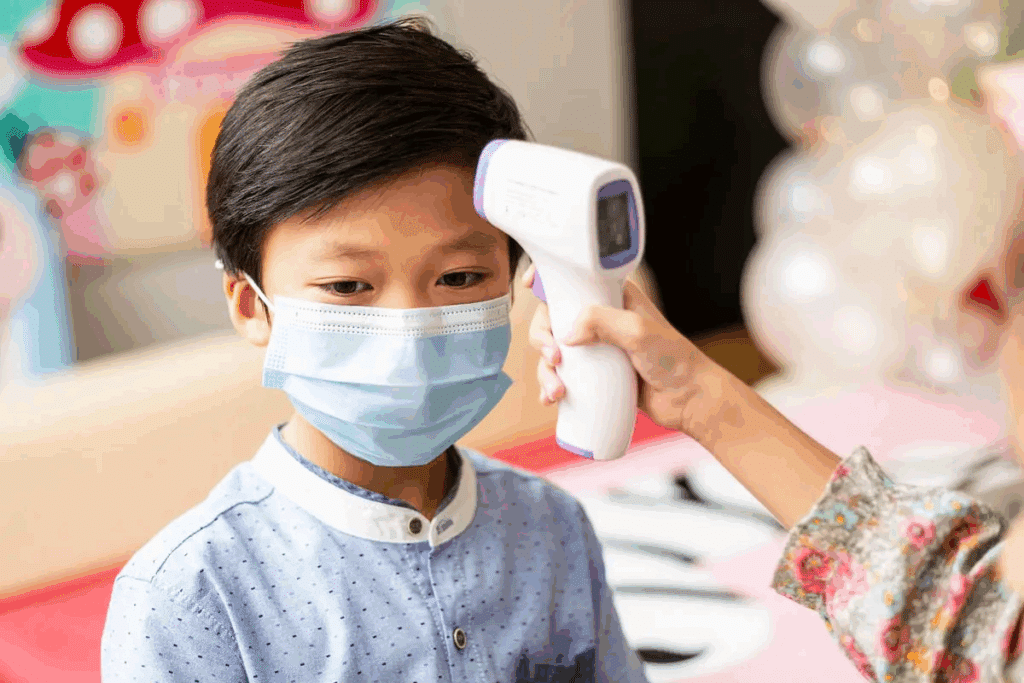
FUO is when a fever lasts a long time and doctors can’t find the reason. In kids, it can be due to infections, autoimmune diseases, or even cancer. Finding out what’s causing it is key to treating it and easing family worries.
Key Takeaways
- Fever of unknown origin is a challenging diagnosis in children, requiring a thorough approach.
- Various factors, including infections and autoimmune disorders, can cause FUO in children.
- Identifying the underlying cause is essential for effective treatment.
- We use a detailed diagnostic process to figure out the cause of FUO.
- Knowing the cause helps in giving targeted treatment and support.
Understanding Pediatric Fever of Unknown Origin
 Understanding FUO in kids is key to managing it well. Fever of Unknown Origin in children is a big deal in pediatric medicine. It’s complex and hard to diagnose and treat.
Definition of FUO in Children
FUO in kids is when fever is over 38.3°C and lasts more than three weeks. After one week of tests, no cause is found. This starts the process of figuring out what’s wrong.
FUO isn’t a diagnosis but a clue that more investigation is needed. The diagnostic process includes a detailed history, physical check-up, and tests. These help find the fever’s cause.
Importance of Identifying the Cause
Finding the cause of FUO is very important. It shapes the treatment plan and affects how well the child does. The cause could be an infection, autoimmune disease, or even cancer, each needing a different approach.
A detailed diagnostic process is essential. It lets doctors tailor treatment to the child’s specific needs. This improves the child’s chances of getting better.
Common Symptoms to Look For
 Kids with FUO often just have fever. But other signs can help figure out what’s going on. These might include weight loss, tiredness, or specific physical signs.
It’s important to watch these symptoms closely. They help guide the diagnosis. Knowing these symptoms helps doctors tackle the complex diagnosis of FUO.
Typical Duration of FUO in Children
Fever of Unknown Origin (FUO) in kids can last different lengths of time. It’s key to know if it’s acute or chronic. This helps figure out the right treatment and tests.
Acute vs. Chronic FUO
Acute FUO usually lasts under a week, but can go up to two weeks. Chronic FUO, on the other hand, lasts more than two weeks. It needs a detailed check to find the cause.
Key differences between acute and chronic FUO include:
- Duration of the fever
- Presence of additional symptoms such as rash, joint pain, or weight loss
- Response to initial treatments or interventions
When to Seek Medical Attention
Parents should know when to get medical help for their child. If the fever doesn’t go away or comes with other worrying signs, see a doctor. Early evaluation is key to finding the cause and starting treatment.
“Fever is a common symptom in children, but when it persists or is accompanied by other symptoms, it necessitates a thorough medical evaluation to rule out serious underlying conditions.”
Some signs that mean you should get medical help right away include:
- Fever lasting more than 3-5 days
- Severe headache or stiff neck
- Difficulty breathing or rapid breathing
- Severe abdominal pain
Knowing how long FUO usually lasts and when to get medical help is important. It helps parents ensure their child gets the right care on time.
Common Infectious Causes of FUO
Infections are a top reason for FUO in kids. They include viruses, bacteria, and fungi. It’s key to look at these different causes when checking for FUO in children.
Viral Infections and FUO
Viral infections are a big reason for FUO in kids. Some common viruses are:
- Epstein-Barr virus (EBV), known for causing infectious mononucleosis
- Cytomegalovirus (CMV), which can cause infections in babies if passed from mom during pregnancy
- Enteroviruses, a group of viruses that can cause mild to serious illnesses like meningitis
These viruses often have symptoms that are not clear. A detailed check is needed to find the virus causing the fever.
Bacterial Infections as a Cause
Bacterial infections are also a big cause of FUO in kids. Some common bacteria are:
- Salmonella species, which can cause typhoid fever
- Bartonella henselae, the cause of cat-scratch disease
- Tuberculosis (TB), a serious infection that can affect many parts of the body
Diagnosing bacterial infections can be hard because they can show up in many ways. Being careful and quick to test is important.
Fungal Infections to Consider
Fungal infections are less common but should be thought of in FUO cases. Important fungi include:
- Candida species, which can cause serious infections in kids who are very sick
- Histoplasma capsulatum, the cause of histoplasmosis, a lung infection that can spread
Fungal infections need special tests and treatment. Starting treatment early is key to avoid serious problems.
In summary, FUO in kids can come from many infections. A full check is needed to find the cause and treat it right.
Non-Infectious Causes of FUO
Many non-infectious conditions can cause FUO in kids. These can be hard to diagnose because they show up in different ways.
Autoimmune Disorders
Autoimmune disorders happen when the body attacks itself. In kids, this can include diseases like juvenile idiopathic arthritis (JIA) and systemic lupus erythematosus (SLE). Fever is often the first sign. It’s very important to catch these early to start treatment and avoid harm.
To find out if an autoimmune disease is causing FUO, doctors use tests like ANA tests and imaging. These tests are key when other causes are ruled out.
Malignancies in Children
Cancers are another reason for FUO in kids. Leukemia and lymphoma can cause fever, along with other signs like weight loss and tiredness.
When cancer is suspected, doctors do a lot of tests, like bone marrow exams and imaging. Quick diagnosis is key for treatment.
Environmental Factors
Environmental factors can also lead to FUO in kids. Exposure to toxins or drugs can cause fever. Hereditary conditions like familial Mediterranean fever (FMF) can also lead to fever.
To find environmental causes, doctors look at the child’s environment and family history. Knowing these factors helps in finding solutions.
Diagnostic Approach to FUO
Identifying the cause of FUO in kids is key. We start with a detailed medical history and physical exam. Then, we use specific tests and imaging as needed.
Initial Evaluation and History Taking
The first step is very important. We gather a full medical history and do a physical exam. This helps us understand the child’s symptoms and find clues.
Key components of the initial evaluation include:
- Detailed medical history
- Physical examination
- Review of systems to identify any specific symptoms
Laboratory Tests for Diagnosis
Laboratory tests are essential in diagnosing FUO. We run various tests to find the cause, such as:
|
Test |
Purpose |
|---|---|
|
Complete Blood Count (CBC) |
To evaluate for signs of infection or inflammation |
|
Blood Cultures |
To identify bacterial infections |
|
Erythrocyte Sedimentation Rate (ESR) or C-Reactive Protein (CRP) |
To assess the level of inflammation |
|
Urinalysis and Urine Culture |
To diagnose urinary tract infections |
Imaging Studies in FUO
Imaging studies help us look deeper into FUO. We use X-rays, ultrasound, CT scans, or MRI based on the case.
The choice of imaging study depends on the specific clinical scenario and may include:
- Chest X-ray to evaluate for pulmonary infections or abnormalities
- Abdominal ultrasound to assess for intra-abdominal infections or masses
- CT or MRI scans for more detailed evaluation of specific areas of concern
By combining a thorough initial evaluation, appropriate laboratory tests, and targeted imaging studies, we can effectively diagnose and manage FUO in children.
Commonly Used Treatments for FUO
Managing FUO needs a detailed approach with different treatments. The choice of treatment depends on the fever’s cause. This could be infections, autoimmune disorders, or cancers.
Antibiotic Therapies
Antibiotics are used when a bacterial infection is found or suspected. The right antibiotics are chosen based on the likely bacteria and the patient’s health. Broad-spectrum antibiotics are often used first until test results confirm the cause.
Some common antibiotics include:
- Ampicillin and Gentamicin for wide coverage
- Ceftriaxone for bacterial infections
- Vancomycin when MRSA is a concern
Other Pharmacological Interventions
Other treatments are needed for different causes of FUO. For viral infections, Oseltamivir is used for flu. Amphotericin B is used for fungal infections.
For non-infectious causes like autoimmune disorders, corticosteroids and immunosuppressive drugs are used. They help reduce inflammation and control the immune system.
Supportive Care and Monitoring
Supportive care is key in managing FUO. It focuses on easing symptoms and keeping an eye on the patient’s health. This includes:
- Keeping the patient hydrated and well-nourished
- Using antipyretics like acetaminophen or ibuprofen to control fever
- Regular checks of vital signs and overall health
The table below shows the main parts of FUO treatment:
|
Treatment Modality |
Examples |
Indications |
|---|---|---|
|
Antibiotic Therapy |
Ampicillin, Gentamicin, Ceftriaxone |
Bacterial infections |
|
Antiviral Therapy |
Oseltamivir |
Viral infections (e.g., influenza) |
|
Antifungal Therapy |
Amphotericin B |
Fungal infections |
|
Immunosuppressive Therapy |
Corticosteroids, Immunosuppressives |
Autoimmune disorders |
|
Supportive Care |
Hydration, Antipyretics |
Symptom relief and overall management |
By using a detailed treatment plan, we can manage FUO in children well. This approach tackles both symptoms and the underlying cause.
Role of Pediatricians in Managing FUO
Pediatricians are key in handling FUO in kids. They help from the start to working with other doctors.
Initial Assessment and Referral
Parents first turn to pediatricians when their child has a fever. The doctor will ask lots of questions and do a check-up. This helps find out why the child has FUO and if they need to see a specialist.
Collaboration with Specialists
When needed, pediatricians send kids to see other doctors. This team effort is vital for finding the real reason behind FUO. Doctors like infectious disease experts, rheumatologists, or oncologists might be involved.
Managing FUO well needs both primary care doctors and specialists. Here’s what pediatricians do:
|
Role |
Description |
|---|---|
|
Initial Assessment |
Conducting a detailed medical history and physical examination to identify possible causes of FUO. |
|
Referral to Specialists |
Referring children to specialists for further evaluation when necessary. |
|
Collaboration |
Working with specialists to diagnose the underlying cause of FUO and develop a treatment plan. |
Together, pediatricians and specialists give kids with FUO the best care. They make sure kids get the right diagnosis and treatment.
Emerging Research on Pediatric FUO
New research is changing how we see pediatric FUO, bringing hope for better diagnosis and treatment. As we learn more about FUO, we’re seeing new ways to diagnose and treat it.
New Trends in Diagnosis
Diagnosing pediatric FUO is getting better with new lab tests and imaging. Next-generation sequencing and other molecular tests help find FUO causes.
Studies show that a detailed fever investigation is key. This includes a full medical history and physical exam. Inflammatory markers and other biomarkers are also being studied for diagnosing FUO.
|
Diagnostic Tool |
Description |
Benefits |
|---|---|---|
|
Next-generation sequencing |
Advanced molecular diagnostic technique |
Improved identification of FUO causes |
|
Inflammatory markers |
Biomarkers indicating inflammation |
Helps in diagnosing and monitoring FUO |
Advances in Treatment Options
Treatment for pediatric FUO is getting better, focusing on specific therapies. Antimicrobial stewardship programs help use antibiotics wisely.
For autoimmune or inflammatory causes, biologic therapies offer new options. Research on immunomodulators is also promising, aiming to improve FUO treatment in children.
Healthcare providers can now offer better care for children with FUO. This is thanks to new trends and treatments, leading to more accurate diagnoses and effective treatments.
Parent Education and Awareness
As a parent, it can be tough to know when your child’s fever is serious. But, with the right info, you can feel more confident. Fever is common in kids and usually goes away on its own. But sometimes, it can mean there’s something more serious going on that needs a doctor’s help.
Signs and Symptoms for Parents to Monitor
It’s key to watch for more than just the fever. Look for other signs that might show how serious the problem is. These include:
- Duration of Fever: If the fever lasts more than 7-10 days, it’s time to see a doctor.
- Associated Symptoms: Things like rash, joint pain, or trouble breathing can give clues about what’s causing the fever.
- General Condition: If your child seems really sick, is very tired, or shows signs of dehydration, get help right away.
Staying alert to these signs helps you make better choices for your child’s health.
When to Consult a Pediatrician
It’s important to know when to talk to a pediatrician. You should call for advice if:
- Your child’s fever comes with other worrying symptoms.
- The fever keeps coming back or lasts a long time.
- You’re worried about your child’s health or if they’re not getting better.
It’s normal to worry about your child’s health. Talking to a pediatrician can help you relax and make sure your child gets the right care. Getting help early can really help, because it can catch problems before they get worse.
Key Takeaways on Pediatric FUO
Diagnosing and managing FUO in kids needs a detailed plan. We’ve talked about how FUO in children can come from many sources. These include infections, autoimmune diseases, and cancers.
Summary of Causes and Management
Pediatric FUO can stem from many sources. Infectious causes include viruses, bacteria, and fungi. Non-infectious causes include autoimmune diseases, cancers, and environmental factors. Knowing these causes is key to managing the condition.
Managing pediatric FUO involves several steps:
- First, we evaluate and take a detailed history.
- Then, we run lab tests for diagnosis.
- Next, imaging studies help find the cause.
- We use antibiotics and other treatments as needed.
- Lastly, we provide supportive care and watch the child closely.
A comprehensive diagnostic approach is vital to find the root cause of FUO. This often requires teamwork between pediatricians and specialists.
|
Cause |
Diagnostic Approach |
Management Strategy |
|---|---|---|
|
Infectious |
Laboratory tests, cultures |
Antibiotic/antiviral therapy |
|
Autoimmune |
Imaging, autoimmune markers |
Immunosuppressive therapy |
|
Malignancy |
Imaging, biopsy |
Chemotherapy, radiation therapy |
Resources for Further Information
For more info on pediatric FUO, there are many resources:
- American Academy of Pediatrics (AAP) guidelines
- Pediatric infectious disease journals
- Reputable health information websites
These resources offer insights into diagnosing, managing, and researching pediatric FUO.
FAQs About Pediatric FUO
Fever of Unknown Origin (FUO) in children needs careful investigation and understanding. Parents and caregivers often have questions about it. We’ll cover common topics like diagnosis, how long it lasts, and what parents should know.
What Should Parents Know?
Parents should know that FUO can be caused by infections, autoimmune disorders, and malignancies. It’s important to watch for symptoms and talk to the pediatrician about any changes. Keeping a fever diary can help during the fever analysis and diagnosis.
How Long Can FUO Last?
The time FUO lasts can vary a lot. Sometimes, the fever goes away in a few days. But other times, it can last weeks or even months. Finding the cause is key to knowing how long it will last and how to treat it.
Conclusion: Importance of Timely Diagnosis
Getting a diagnosis quickly is key in treating fever of unknown origin (FUO) in kids. It makes a big difference in how well they do. Doctors can find the cause of FUO and start the right treatment.
Impact on Outcomes
Acting fast when a child has FUO is very important. It helps avoid serious problems and makes sure kids get better care. With a good plan for managing fever, kids can fully recover.
Advancements in Pediatric Care
We’re making big steps forward in taking care of kids. New ways to diagnose and treat are coming up. These changes help us give kids the best healthcare, focusing on diagnosis and managing fever.
By focusing on quick diagnosis and treatment, we can keep making things better for kids with FUO. This will make childhood care even better.
FAQ
What is Fever of Unknown Origin (FUO) in children?
FUO in children is a fever that lasts a long time without a clear cause. It can be due to infections, autoimmune diseases, or even cancer.
How long can FUO last in children?
FUO in children can last from a few days to weeks or even months. It’s called chronic if it goes on for over two weeks. Doctors split it into acute and chronic cases to figure out what to do next.
What are the common causes of FUO in children?
FUO in children can be caused by viruses, bacteria, or fungi. It can also be due to autoimmune diseases or cancer. Even environmental factors can play a role.
When should parents seek medical attention for their child’s fever?
Parents should get medical help if their child’s fever doesn’t go away or if they show other signs of illness. Quick action is key to finding the cause and treating it.
What is the role of pediatricians in managing FUO?
Pediatricians are vital in managing FUO. They start by assessing the child and referring them to specialists if needed. They help figure out what’s wrong and plan the best treatment.
What diagnostic tests are used to evaluate FUO in children?
To diagnose FUO, doctors do a detailed check-up and take a medical history. They also use lab tests and imaging to help find the cause.
How is FUO treated in children?
Treatment for FUO depends on what’s causing it. It might include antibiotics, other medicines, and supportive care. Keeping a close eye on the child is also important to adjust the treatment as needed.
What should parents know about FUO in children?
Parents should know the signs of FUO and when to see a doctor. Understanding the diagnosis and treatment process helps them handle prolonged or unexplained fevers in their kids.
References
National Center for Biotechnology Information. Evidence-Based Medical Insight. Retrieved from https://www.ncbi.nlm.nih.gov/pmc/articles/PMC10814770/



 Departments
 Related Videos
 Our Doctors
 News
News