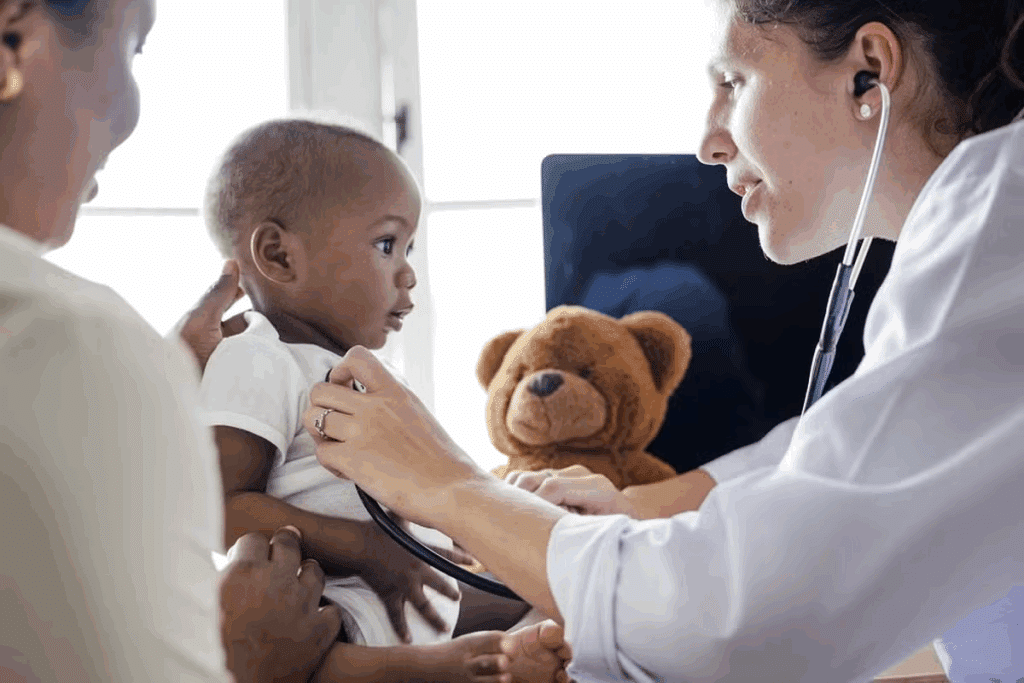
Expectant parents usually start looking for a healthcare provider for their newborn about three months before the due date.
It’s important to choose a conveniently located clinic. This can greatly affect the quality of care and how easy it is to get to, which is key in emergencies or after-hours.
The proximity of the clinic to your home matters a lot. It helps ensure you can get quick medical help for your child when needed.
Key Takeaways
- Start searching for a healthcare provider about three months before the baby is due.
- The location of the clinic can impact the quality of care and accessibility.
- A conveniently located clinic can provide timely medical attention in emergencies.
- Proximity to your home is a key factor in choosing a clinic.
- Accessibility is key for regular check-ups and vaccinations.
Understanding Pediatrician Distance
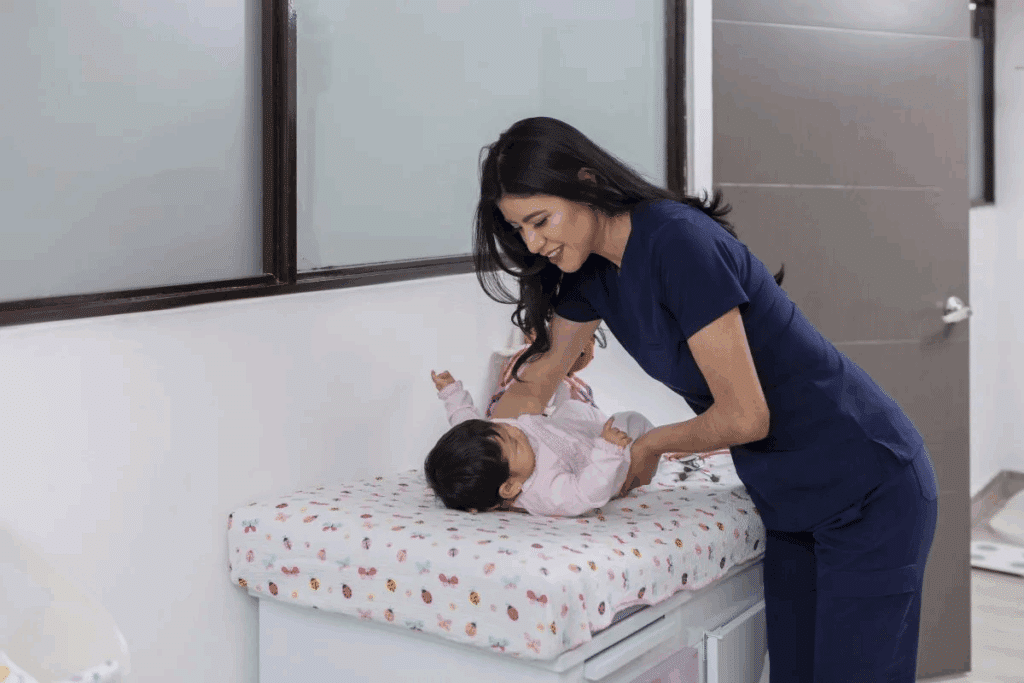
Pediatrician distance is key for families. It affects how quickly they can get medical help for their kids. How close a pediatrician’s office is to home or work plays a big role in their choice.
What is Pediatrician Distance?
Pediatrician distance is how far a family’s home or daily spots (like work or school) are from the pediatrician’s office. This distance is very important for getting convenience and easy access to pediatric care. Families usually want pediatricians close enough so they can get care without messing up their day.
Factors Influencing Distance Preferences
Many things affect what distance families want from their pediatrician. These include:
- Daily commute patterns
- Availability of transportation options
- Work schedule flexibility
- Proximity to other family activities (e.g., schools, childcare)
Busy families or those with limited transport might want pediatricians with quick access. This means less time spent getting to appointments.
Why Distance Matters for Families

The distance to a pediatrician’s office is important for families. It affects how easily they can get care when they need it. Being closer to a pediatrician can mean:
| Benefit | Description |
| Timely Care | Less travel time means quicker help for a child’s health needs. |
| Increased Adherence | Easy-to-find pediatricians help families stick to their appointments. |
| Better Health Outcomes | Easy access to care can improve a child’s health. |
Knowing what affects pediatrician distance and why it’s important helps families choose the best healthcare for their kids.
The Ideal Pediatrician Location
Finding the right pediatrician means looking at how close they are, the quality of care, and emergency access. It’s key to pick a pediatrician that fits your family’s needs. This ensures you can get medical help when you need it most.
Urban vs. Rural Considerations
Urban and rural settings differ in finding a pediatrician. Cities have more pediatricians and specialists. They also have better access to hospitals and emergency services.
In cities like New York City, there are many options for pediatric care. These include specialized clinics and hospitals open 24/7.
Rural areas face challenges like fewer healthcare providers and longer trips to hospitals. Families in rural areas might have to travel far for routine care. In emergencies, this can be tough. But, some rural areas use telemedicine to help.
Access to Emergency Services
It’s important for a pediatrician to have affiliations to a nearby hospital. This lets them admit and treat patients in the hospital. It’s key for emergencies and keeping care going.
Think about how close the pediatrician’s office is to emergency services. Being near a hospital or having a good emergency plan is safer. For example, being near a children’s hospital with a pediatric emergency department is extra secure.
Availability of Pediatric Specialists
Having local options for pediatric specialists is also key. Kids often need special care for things like allergies or surgery. A place with many specialists means your child can get the care they need without traveling far.
Here’s a comparison of urban and rural pediatric care:
| Characteristics | Urban Setting | Rural Setting |
| Pediatrician Availability | High concentration, multiple options | Limited availability, fewer options |
| Access to Emergency Services | Nearby hospitals, 24/7 emergency departments | Distant hospitals, limited emergency services |
| Pediatric Specialists | Wide range of specialists available locally | Fewer specialists, may require travel |
Understanding these factors helps you choose the best pediatrician location. It’s about finding a place that’s convenient, offers quality care, and is easy to get to.
Selecting a Pediatrician: Key Considerations
Choosing a pediatrician is a big decision. It affects your child’s health care a lot. Look at their qualifications, how they talk, and how they work with families.
Credentials and Experience
A pediatrician’s skills and experience are key. Make sure they are board-certified by the American Board of Pediatrics. This shows they meet high standards in pediatric care. Also, check if they know how to handle different kids’ health issues and keep up with new medical advice.
- See if they have any extra training or certifications.
- Look at their years of experience in kids’ health and any special skills they have.
Communication Style and Approachability
A pediatrician’s way of talking is very important. Notice how well they listen to you and explain things clearly. If they are easy to talk to and answer your questions, you’ll feel more comfortable with them.
- See how they handle calls or emails, even when they’re not in the office.
- Think about how easy it is to get appointments and follow-ups. This shows their doctor availability and appointment access.
Reviews and Recommendations
Reading what others say and asking for advice can help a lot. Look for common themes in feedback about their kindness, wait times, and office. Personal stories can give you a real idea of what to expect, helping you choose the right pediatric preference for your family.
- Read reviews on trusted health sites.
- Ask people you know for their opinions.
By looking at these points, you can pick a pediatrician that’s right for your child and your family.
The Impact of Distance on Healthcare Access
For many families, getting to their pediatrician’s office is hard. The distance to healthcare services matters a lot. It affects how easily families can get the medical care they need.
A recent study showed that distance to the pediatrician’s clinic is a big deal. This highlights the need to think about where pediatric care is located. Families far from their pediatrician might find it hard to get regular check-ups and urgent care.
Transportation Challenges for Families
Transportation is a big issue when it comes to distance. Families without cars or reliable public transport struggle to get to appointments. Having a way to get around is key for kids to get medical care on time.
“Transportation barriers can lead to delayed care, which in turn can result in poorer health outcomes for children.”
– A study on healthcare access
Scheduled Appointments vs. Quick Response
Being close to a pediatrician’s office helps with quick care for urgent needs. While planned visits are easier, emergencies need fast action. Families near their pediatrician get care faster in emergencies.
- Being close to the pediatrician’s office means quicker care.
- Distance can cause delays in urgent medical care.
- Families with cars or good public transport face fewer healthcare barriers.
In summary, the distance to a pediatrician’s office greatly affects healthcare access. Understanding these challenges helps families and doctors ensure kids get the care they need.
Building Relationships with Your Pediatrician
Quality pediatric care starts with trust and clear communication between parents and doctors. A strong bond means your child gets the best care, meeting their needs fully.
The Importance of Trust and Communication
Trust is key in the parent-doctor relationship. It lets parents share their worries openly, and doctors can offer better advice. This way, care is more personal and effective.
Effective communication means talking and listening. It helps doctors understand what your child needs. This leads to better care for your child.
Regular Visits and Routine Care
Regular doctor visits are vital for your child’s health. These include newborn visits, check-ups, and sick visits. They help spot health problems early and ensure your child grows well.
Having a plan for these visits helps manage your child’s health. For example, sticking to the vaccination schedule can prevent serious diseases.
| Type of Visit | Purpose | Frequency |
| Newborn Visits | Initial health check, vaccinations | Within the first week, and as advised |
| Scheduled Check-ups | Monitor growth, development, and provide vaccinations | Regular intervals as recommended by the pediatrician |
| Sick Visits | Diagnose and treat illnesses | As needed when the child is unwell |
Developing a Long-term Partnership
Building a long-term relationship with your pediatrician is important. It ensures your child gets consistent care. A doctor familiar with your child’s history can offer better care.
Parents should ask questions and seek advice from their pediatrician. This teamwork makes a supportive environment for your child’s health.
Pediatrician Distance and Health Outcomes
It’s important to understand how close a pediatrician is to a family’s home. This distance affects how easy it is to get good care for kids. Living near a pediatrician means kids can get help when they need it.
Correlation Between Proximity and Care Quality
Studies show that being close to a doctor is good for health. A study in the Journal of Pediatrics found kids near their doctors do better. This is because they get care on time and can follow up easily.
Good care isn’t just about the doctor’s skills. It’s also about getting there on time. Families near their pediatrician are more likely to keep appointments and get help fast.
Case Studies and Statistical Evidence
Many examples show how important it is to be near a pediatrician. In a rural area, kids far from their doctor missed out on important shots and check-ups. Those closer got the care they needed.
Numbers from health departments back this up. Places with more pediatricians have healthier kids. They have fewer babies dying and more kids getting vaccinated.
“Proximity to healthcare services is a critical determinant of health outcomes, particular in pediatric care where timely interventions are critical.”
– American Academy of Pediatrics
The Role of Follow-Up Care
Follow-up care is key in pediatric care. Being close to a pediatrician makes this care better. Regular visits and quick help are important for staying healthy.
Families near their pediatrician keep up with check-ups. This is good for watching how kids grow and fixing health problems fast. It also helps with preventing sicknesses.
- Timely interventions improve health outcomes.
- Proximity enhances the likelihood of attending scheduled appointments.
- Regular follow-up care is critical for preventive care and addressing complications.
When Distance May Not Matter
In some cases, how far a pediatrician is doesn’t matter as much as other things. New medical tech and changing family needs have changed how we pick pediatric care.
Telemedicine as a Game Changer
Telehealth has changed how families get pediatric care. It lets parents talk to doctors online, cutting down on visits for non-urgent stuff. This is great for families who are always on the go or live far away.
Studies show telemedicine is a good choice for families with tight schedules. It lets them get advice and care without having to travel far. This saves time and reduces stress when caring for a child.
Special Needs Considerations
For kids with special needs, how far to a doctor might not matter if the care is top-notch. Families might travel far for the best care, even if it’s far away.
In these cases, the focus is on the quality of care, not how close it is. Doctors who specialize in special needs can offer great support. This makes the extra travel worth it for many families.
Emergency Services vs. Routine Care
It’s key to know the difference between emergency services and regular care when thinking about distance. For emergencies, being close to care is vital. But for routine visits, distance isn’t as big of a deal, thanks to telemedicine.
Families should think about what kind of care they need. While having a nearby pediatrician is good for urgent needs, telemedicine works well for routine care. This makes distance less of an issue.
Tips for Finding a Pediatrician Near You
Finding a pediatrician near you can be easier with online tools and recommendations. Having a nearby pediatrician can make healthcare easier and less stressful for your child.
Utilizing Online Resources and Directories
Online directories are great for finding pediatricians. Sites like Healthgrades, RateMDs, and Zocdoc let you search by location and insurance. They also show patient reviews, helping you narrow down your choices.
Key features to look for in online directories include:
- Patient reviews and ratings
- Detailed profiles of pediatricians, including their education, experience, and specialties
- Insurance information to ensure the pediatrician is within your network
- Office location and contact details
Asking for Recommendations from Peers
Ask friends, family, and coworkers for pediatrician recommendations. Their insights can tell you a lot about a pediatrician’s care and communication style. This can help you find a good match for your family.
When seeking recommendations, consider asking:
- About their overall experience with the pediatrician
- If the pediatrician’s office is conveniently located and easy to access
- How responsive the pediatrician is to questions and concerns
Scheduling Meet-and-Greet Visits
After making a list of pediatricians, schedule meet-and-greet visits. These visits let you see the office, meet the staff, and understand the pediatrician’s approach to care.
During the visit, ask questions like:
| Question | Purpose |
| What are your office hours and how do you handle after-hours emergencies? | Understand their availability and emergency procedures |
| How do you approach routine check-ups and vaccinations? | Learn about their preventive care practices |
| Can you describe your communication style with parents? | Assess their approach to keeping you informed |
Navigating Pediatric Care During Relocation
For families moving, finding a new pediatrician can be tough. It’s not just about a new address. It’s about adjusting to new places, services, and doctors, including pediatricians for your kids.
Changing Pediatricians Smoothly
Finding a new pediatrician quickly is key. Look for doctors in your new area. Think about their skills, how they care for patients, and what others say about them.
- Ask friends, family, or your old pediatrician for tips.
- Use online directories or professional groups to find pediatricians.
- Meet with doctors to see if they’re a good fit.
Keeping Medical Records Organized
It’s important to move your child’s medical records to their new doctor. Make sure you have all important documents. This includes shots, medical history, and any treatments they’re on.
- Get a copy of your child’s medical records from their old doctor.
- Keep the records safe and easy to find.
- Give the new doctor the records and talk about your child’s health.
Minimizing Gaps in Care
See the new pediatrician as soon as you can. Talk about your child’s health, any worries, and plan for future care.
Tips for a Smooth Transition:
- Act fast to find a new pediatrician.
- Keep your child’s medical records current and organized.
- Talk clearly with the new doctor about your child’s needs.
By taking these steps, families can handle moving well. They can make sure their kids keep getting great care from their pediatrician.
Financial Considerations in Pediatrician Choice
Choosing a pediatrician involves more than just quality of care. It also means looking at the costs. Families need to consider these financial aspects when making their decision.
Insurance Coverage
It’s important to know what your insurance covers. Some plans might cover certain services or pediatricians better than others. Families should check their insurance to find in-network pediatricians and know what’s covered.
Travel Expenses and Appointment Costs
The distance to a pediatrician’s office can affect costs. Travel costs, like fuel and parking, add up. Families should also think about lost income from taking time off work for appointments.
Hidden Costs Associated with Distance
Choosing a pediatrician far away can have hidden costs. These include missing work for appointments and emergency visits. The time spent traveling is also valuable.
| Cost Factor | Local Pediatrician | Distant Pediatrician |
| Insurance Coverage | In-network, fully covered | Out-of-network, partially covered |
| Travel Expenses | Minimal | Significant |
| Time Off Work | Less likely | More likely |
| Emergency Visits | Easier to access | More challenging |
In conclusion, picking a pediatrician involves complex financial considerations. Understanding insurance, travel costs, and hidden expenses helps families make better choices. They can balance quality care with financial responsibility.
Assessing Your Personal Needs
Choosing a pediatrician is a big decision. It’s important to think about what you need and want. This helps ensure your child gets the best care.
Identifying Priority Care Needs
First, think about what’s most important to you. Do you want a pediatrician close to home or one with lots of experience? Maybe you value how they communicate with you. Knowing what you need helps you find the right pediatrician.
Balancing Convenience with Quality
Convenience is key, but so is the quality of care. A nearby pediatrician might not always be the best choice. Look into their reputation and expertise to make sure.
Making an Informed Decision
Think carefully about what you need and what the pediatrician offers. Check if they accept your insurance and if they’re available when you need them. A good pediatrician will make you and your child feel confident and cared for.
FAQ
How far is too far to travel to see a pediatrician?
The best distance to a pediatrician depends on your needs. Usually, a clinic within 15-30 minutes is good for regular visits and quick care.
What factors should I consider when choosing a pediatrician based on location?
Think about how close the clinic is to your home or work. Also, consider travel time, hospital access, and safety. This ensures you get care easily and safely.
Can I choose a pediatrician who is not in-network with my insurance?
You can pick an out-of-network pediatrician. But, remember the insurance costs. Out-of-network care might have higher copays and deductibles.
How does distance affect healthcare access for families?
Distance can really affect getting healthcare, mainly for families with no car. It might cause delays or missed care, hurting health and care quality.
What are the benefits of telemedicine in pediatric care?
Telemedicine is great for easy access and quick help for non-urgent issues. It’s perfect for busy families or those in rural areas.
How can I ensure continuity of care when relocating to a new area?
Keep your medical records in order and transfer care to a new pediatrician. Schedule a visit to meet the new doctor and start a relationship.
What should I look for when evaluating a pediatrician’s credentials?
Look at their board certification, experience, and patient feedback. This ensures you choose a qualified doctor for your family.
How can I balance convenience with quality when selecting a pediatrician?
Consider the clinic’s location, how easy it is to get an appointment, and the doctor’s communication style. Also, check their credentials and patient reviews.
Are there any hidden costs associated with choosing a pediatrician who is far away?
Yes, there are hidden costs like travel, lost work time, and emergency expenses. These should be part of your decision.
Can I change pediatricians if I’m not satisfied with my current provider?
Yes, you can switch if you’re unhappy. Research new doctors, meet them, and transfer your records for a smooth change.