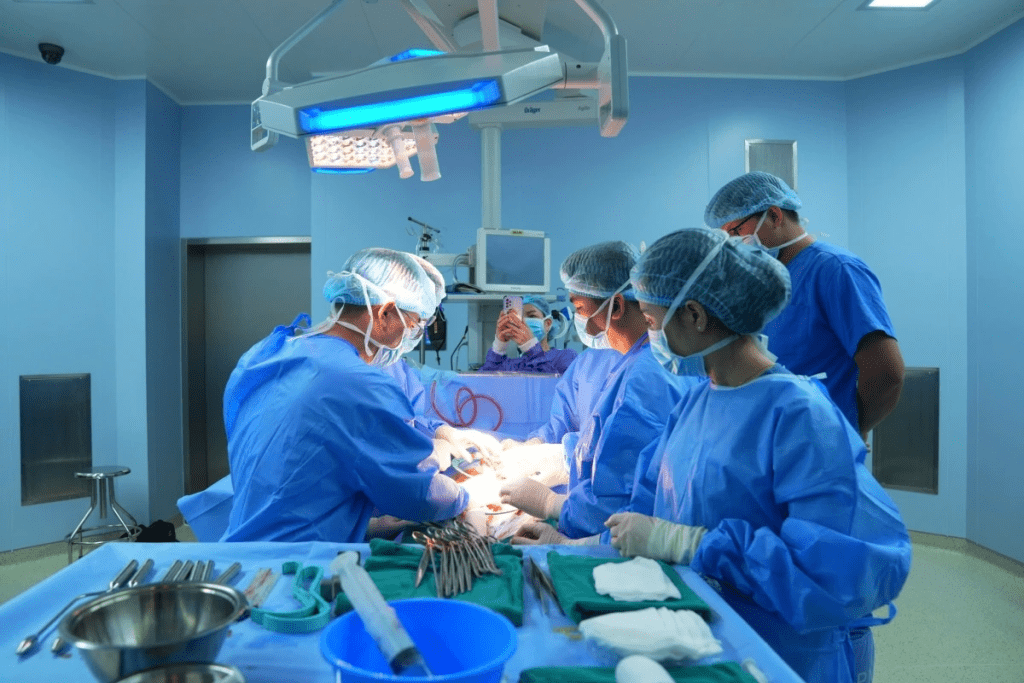
Men who are not circumcised and think about getting a penile implant often wonder if they need to be circumcised first. We get it and want to help clear things up. Usually, you don’t need to be circumcised for an implant surgery. But, some health reasons might make circumcision necessary.
New surgical methods and following global health standards have made things better. A study found that out of 183 men who weren’t circumcised, 22 had tight foreskins. They were offered circumcision, but six of them said no.
We mix medical knowledge with understanding, knowing how important it is to make the right health choices.
Key Takeaways
- Circumcision is not typically required for penile implant surgery.
- Individual clinical factors may necessitate circumcision.
- Advanced surgical techniques minimize risks and improve satisfaction.
- Patients have greater flexibility in their treatment options.
- A personalized approach is taken to address each patient’s needs.
The Basics of Penile Implants and Circumcision
Choosing penile implant surgery often brings up questions about circumcision. We need to know the basics of penile implants and how they relate to circumcision. It’s key to understand what these implants treat and the myths about circumcision.

What Penile Implants Treat
Penile implants help men with erectile dysfunction that other treatments can’t fix. These implants make it easier for men to get and keep an erection. This improves their sex life and overall happiness. Penile implant surgery puts a device in the penis to help with erections.
These implants are mainly for erectile dysfunction. This can be caused by many things like vascular disease, diabetes, or mental health issues. Doctors can pick the best treatment, like penile implants, based on the cause.
Common Misconceptions About Circumcision Requirements
Many think you need to be circumcised for penile implant surgery. But, most men can get implants without circumcision. Modern surgery makes it safer. Studies show circumcision doesn’t affect the success of penile implants.
A study of 400 patients over 5 years found no issues with penile function or erectile dysfunction from the implant. This shows penile implant complications aren’t linked to circumcision.
Knowing the truth about penile implants and circumcision helps men choose the right treatment for erectile dysfunction. It’s important to talk to a doctor to find the best treatment for your situation.
5 Facts About Circumcision and Penile Implant Surgery
It’s important to know how circumcision affects penile implant surgery. Penile implants help with erectile dysfunction. Knowing about circumcision can help men make better choices.
Most Men Don’t Require Circumcision
Studies show that only 19% of men get circumcision with penile implants. This means most men don’t need circumcision for this surgery.
Key statistics to consider:
- 81% of men do not undergo circumcision during penile implant surgery
- Circumcision rates vary based on individual patient needs and surgeon recommendations
- Studies have shown that secondary circumcision was performed in only a small percentage of patients who were not circumcised during penile surgery
Clinical Studies Support Non-Circumcision Approach
Studies show that not circumcising during surgery doesn’t raise the risk of penile implant infection. This supports not doing circumcision during the surgery.

Modern Surgical Techniques Reduce Infection Risk
New surgical methods and care have lowered infection risks. This makes surgery safer without circumcision. Surgeons use many ways to lower infection risks, no matter the circumcision status.
Individual Anatomy Matters More Than Circumcision Status
Decisions about circumcision during surgery depend on each man’s body. Things like phimosis or infections can affect this choice.
Even though most men don’t need circumcision, there are times when it’s advised. Knowing this can help men prepare for their surgery.
Reversibility and Removal Considerations
Men thinking about penile implants should know they can be removed if needed. The question of can a penile implant be removed is yes, but it’s usually a last choice because of the complex removal process.
By understanding these five facts, men can make better choices for their care.
Types of Penile Implant Procedures Available
There are many types of penile implant procedures. Each has its own benefits and features. Men looking for treatment can find a solution that fits their needs.
Inflatable Three-Piece Implants
Inflatable three-piece implants are very common. They have two inflatable cylinders in the penis, a pump in the scrotum, and a reservoir in the abdomen. This setup allows for a natural-looking erection. But, like any implant, there are risks of penile implant complications, such as infection or mechanical failure.
“The inflatable three-piece implant is a popular choice,” says a leading urologist. “It provides a natural-looking and feeling erection. It’s a complex device that requires skilled surgical implantation.”
Two-Piece Inflatable Devices
Two-piece inflatable devices are another option. They have two inflatable cylinders and a pump/reservoir combination. They are simpler than three-piece implants but offer good control over erection. The simplicity of the two-piece design can potentially reduce the risks of penile implant surgery.
Malleable (Semi-Rigid) Implants
Malleable or semi-rigid implants are a simpler choice. They have rods implanted in the penis, making it rigid enough for sex. They don’t offer natural erection like inflatable devices but are less complicated. Sometimes, penile prosthesis removal or revision surgery is needed due to complications or patient dissatisfaction.
When thinking about a penile implant, it’s key to talk about penile implant complications and risks with a healthcare provider. This helps make an informed decision.
In conclusion, the choice of penile implant procedure depends on many factors. These include individual health, preferences, and the surgeon’s advice. Knowing about the different implants can help men make a better choice for their treatment.
When Circumcision Might Be Recommended With Your Penile Implant
Circumcision isn’t always needed for penile implant surgery. But, there are times when it’s suggested. Deciding on circumcision is big, and it’s key to talk about it when thinking about a penile implant.
Circumcision might be suggested for medical reasons or because of how your body is shaped. This could make the surgery or care after it easier. Let’s look at these reasons more closely.
Presence of Phimosis
Phimosis makes it hard to pull back the foreskin. This can make penile implant surgery tricky. Men with phimosis who are not circumcised might find it hard to keep their penis clean after surgery. This could lead to more infections.
History of Recurrent Balanitis or Infections
Having had balanitis or infections before can make doctors think about circumcision. These infections can make recovery harder. Cutting off the foreskin can help keep the area clean and lower the chance of more infections.
- Reducing the risk of post-operative infections
- Simplifying post-surgical care and hygiene
- Minimizing the risk of complications related to the penile implant
Specific Anatomical Considerations
How your body is shaped can also affect the need for circumcision. For example, a tight foreskin might need to be removed for surgery to go smoothly. This ensures the best results.
“The decision to undergo circumcision should be made on a case-by-case basis, taking into account the individual’s overall health, anatomical considerations, and personal preferences.”-Professionals highlight.
In short, circumcision isn’t always needed for penile implants. But, it might be suggested in certain cases to avoid problems and get the best results. We talk with our patients to figure out what’s best for them.
Understanding Complication Rates and Risk Management
It’s important to know the possible complications of penile implant surgery. This knowledge helps manage expectations and ensures a smooth recovery. Penile implants are a top choice for treating erectile dysfunction, but it’s key to understand the risks.
Infection Rates
Infection is a risk with any surgery, including penile implant surgery. The chance of infection with penile implants is about 5%. Proper preoperative and postoperative care can lower this risk a lot. We do everything we can to prevent infection, like using antibiotic prophylaxis and careful surgical techniques.
Reoperation Statistics
Reoperation might be needed due to complications or device issues. Studies show reoperation rates are 7-12%. Advances in surgical techniques and device technology aim to lower these rates. Knowing why reoperation might be needed helps manage expectations.
Preventative Measures
Several steps can be taken to lower the risk of complications, regardless of circumcision status. These include:
- Following a strict hygiene regimen
- Adhering to postoperative instructions
- Attending follow-up appointments
- By following these steps, patients can greatly reduce their risk of complications.
Recovery Considerations for Uncircumcised Men
- Uncircumcised men need to pay extra attention to cleanliness during recovery. Keeping the area clean is key to avoiding infection. We give detailed advice on how to care for the implant and the surrounding area to help with a smooth recovery.
- Choosing penile implant surgery is a big decision. Understanding the possible complications is a key part of that. By being informed and taking the right precautions, patients can minimize risks and have a successful outcome.
Conclusion: Making Your Decision About Penile Implants
Thinking about penile implant surgery? It’s key to look at your own health needs and the choices you have. Knowing about erectile dysfunction surgery and the penile implant types, like reversible penile implant, is important.
Many people feel better and more confident after getting a penile implant. Learning about how circumcision affects this surgery helps you make a smart choice.
Choosing to get a penile implant is a big step. You should talk to a doctor first. They’ll consider your body, health history, and what you want. We aim to offer top-notch care and support every step of the way.
FAQ
Is circumcision necessary for a penile implant?
No, circumcision is not always needed for a penile implant. Some studies say circumcision might lower infection risk. But, many men get implants without being circumcised and do well.
What are the risks associated with penile implant surgery?
Penile implant surgery has risks like infection and mechanical failure. Anesthesia complications can also happen. Yet, with good care and follow-up, many men have good results.
Can a penile implant be removed?
Yes, a penile implant can be removed if needed. Reasons include complications or infection. A skilled urologist performs the removal.
Are there different types of penile implants available?
Yes, there are several types of penile implants. These include inflatable three-piece implants and malleable (semi-rigid) implants. The right choice depends on the patient’s needs and preferences.
How can infection be prevented after penile implant surgery?
To prevent infection, patients get antibiotics before and after surgery. Proper wound care and follow-up with the surgeon are also key.
Is penile implant surgery reversible?
Penile implant surgery is not fully reversible. But, the implant can be removed if needed. This should be discussed with a urologist, as it may involve more surgery and risks.
What is the recovery process like after penile implant surgery for uncircumcised men?
Recovery for uncircumcised men is similar to circumcised men. It focuses on wound care, pain management, and follow-up. The surgeon will give specific instructions for healing.
Can erectile dysfunction be treated with penile implant surgery?
Yes, penile implant surgery is an option for erectile dysfunction. It involves implanting a device to help men get an erection.
What are the complication rates for penile implant surgery?
Penile implant surgery complications include about a 5% infection rate. Reoperation rates range from 7-12%. These rates can change based on individual factors and the surgeon’s experience.
References
Moukhtar Hammad, M. A., Barham, D. W., Sanford, D. I., et al. (2023). Maximizing outcomes in penile prosthetic surgery: exploring strategies to prevent and manage infectious and non-infectious complications. International Journal of Impotence Research, 35, 613-619.
- Reports that infection rates in primary penile implant cases are low (<1-2%), but higher in revision surgeries. Notes various risk-factors (diabetes, prior surgery, surgical techniques) rather than circumcision status per se.Nature
Hebert, K. J., et al. (2019). Penile prosthesis infection: Myths and realities. Journal of Sexual Medicine.
- Discusses the infection risks in penile implants, what myths are common, what evidence supports what. Good to show what factors do affect infection risk.PMC
Nguyen, V., et al. (2025). A nationwide analysis of postpenile prosthesis infection. The Journal of Urology, Article in press.
- Large-scale data showing hospital-/surgeon volume correlates with infection risk; no indication that circumcision status is a major variable in infection for penile prosthesis.ScienceDirect
Talib, R., et al. (2021). HbA1c over 8.5% is not predictive of increased infection and device explantation in diabetic patients undergoing penile prosthesis. Andrology.
- Shows that even among higher risk populations (diabetes), infection risk is not necessarily elevated beyond certain thresholds; again, risk relates more to patient health, surgical technique, etc.Wiley Online Library