
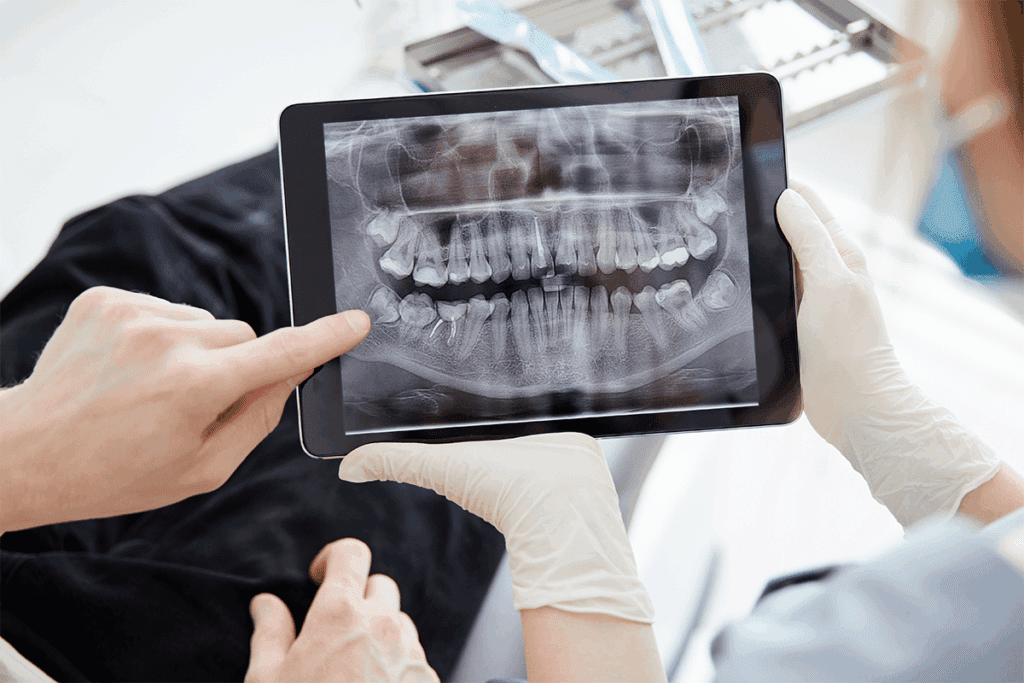
Knowing when to get dental X-rays is key for good oral health and avoiding too much radiation. We look into the role of dental X-rays and the American Dental Association (ADA) guidelines. Want a perfect oral xray? This ultimate guide explains how often you need them based on ADA guidelines for your best health.
The ADA offers evidence-based recommendations for dental X-rays. These help dental experts and patients make smart choices about X-rays. By following these rules, we can get the benefits of X-rays while keeping radiation risks low.
Key Takeaways
- The ADA updates its guidelines to reflect the latest research on dental X-ray safety and efficacy.
- Understanding ADA recommendations helps patients make informed decisions about their oral health.
- Dental X-rays are key for catching oral health issues early, preventing bigger problems.
- The frequency of dental X-rays depends on individual oral health needs and risk factors.
- Patients should talk to their dentist about their X-ray schedule to follow ADA guidelines.
Understanding Dental X-Rays and Their Importance

The American Dental Association stresses how important dental X-rays are. They help find and track oral health issues. Dental X-rays show us the health of our teeth and gums, spotting problems not seen during regular checks.
What Are Dental X-Rays?
Dental X-rays are images made with a small amount of radiation. They are key for checking our teeth, gums, and bone. Dental X-rays help find problems early, avoiding bigger and more expensive treatments later.
Types of Dental X-Rays
There are many types of dental X-rays, each for a different purpose:
- Bitewing X-rays: Show the upper and lower teeth in one area, spotting decay between teeth.
- Periapical X-rays: Capture the whole tooth, from crown to root, checking the bone around it.
- Panoramic X-rays: Give a wide view of the mouth, showing teeth, gums, and jaw.
- Cone Beam CT Scans: These 3D scans give detailed images of teeth, gums, and bone, aiding in complex treatments.
Diagnostic Benefits of Radiographic Examinations
Dental X-rays have many benefits for diagnosis, including:
Diagnostic Benefit | Description |
Detecting Cavities | X-rays spot cavities between teeth and under fillings. |
Evaluating Bone Density | X-rays check the bone’s density supporting the teeth. |
Assessing Fillings | X-rays look at filling condition and any issues. |
Diagnosing Root Problems | X-rays find root problems, like abscesses. |
Knowing about dental X-rays and their benefits helps us see their role in oral health. The ADA’s guidelines for dental X-rays ensure we get the right care while keeping radiation low.
The Role of the American Dental Association in X-Ray Guidelines

The ADA works with other health groups to set guidelines for dental X-rays. These rules help dentists make smart choices about when to use X-rays.
How ADA Guidelines Are Developed
The ADA creates its guidelines through careful research and expert advice. This makes sure the rules are up-to-date and help keep teeth and gums healthy.
Collaboration with FDA and Other Health Organizations
The ADA teams up with the FDA and other health groups. This teamwork makes sure dental care follows the latest health standards. It keeps dental visits safe and effective.
Purpose of Evidence-Based Recommendations
The ADA’s evidence-based recommendations aim to guide dentists on X-ray use. By following these rules, dentists can give top-notch care. They also reduce risks from X-rays.
2024 ADA X-Ray Guidelines: Key Updates
The American Dental Association has updated its dental X-ray guidelines for 2024. These changes reflect the latest research and evidence. Dental professionals need to know these updates to provide the best care for their patients.
Recent Changes in Recommendations
The 2024 ADA guidelines have made some big changes. One key update is the revised frequency for bitewing X-rays. Now, they suggest taking X-rays every 6 to 18 months, depending on the patient’s risk. This change shows the ADA’s focus on evidence-based care, making sure X-rays are right for each patient.
Another big change is the emphasis on patient risk assessment for dental X-rays. The guidelines now have clear criteria for classifying patients as low, medium, or high-risk. This helps dentists decide when to take X-rays based on each patient’s needs.
Evidence-Based Approach to New Guidelines
The ADA updates its guidelines by reviewing the latest research. They analyze studies on the benefits and risks of dental X-rays. This helps them make recommendations that are safe and effective.
These guidelines are based on solid evidence. Dental professionals can trust them to guide their practice. This approach also means that patient care will keep getting better as new research comes in.
Implementation Timeline for Dental Practices
Dental practices should adopt the 2024 ADA X-ray guidelines quickly. The ADA suggests updating within six months. They will provide resources and training to help dental professionals understand and apply the new guidelines.
Guideline Component | Previous Recommendation | 2024 Update |
Bitewing X-Ray Frequency | 12-24 months | 6-18 months (risk-based) |
Patient Risk Assessment | General guidelines | Detailed risk categorization |
Implementation Timeline | N/A | Within 6 months |
General Frequency Recommendations for Dental X-Rays
The American Dental Association (ADA) sets guidelines for dental X-rays. These guidelines depend on the patient’s age and oral health. They aim to find the right balance between getting enough information and keeping radiation low.
Dental X-rays are needed at different times for different people. The ADA’s rules consider age and health conditions. This ensures each patient gets the care they need.
Adult Recommendations
Adults without oral health problems should get X-rays every 2-3 years. This helps keep track of their teeth and spot problems early. But, those with past oral health issues might need X-rays more often.
Table: ADA Recommendations for Adult Dental X-Rays
Patient Profile | Recommended Frequency |
Adults with no oral health issues | Every 2-3 years |
Adults with a history of oral health issues | More frequently, as determined by their dentist |
Children and Adolescent Recommendations
Children and teens are more likely to have oral health problems. Their teeth are growing, and they might not brush as well. So, the ADA says they need more X-rays to watch their teeth closely.
For kids, X-rays might be needed every 6 months to a year. Teens might get them every 1-2 years, depending on their health and teeth.
Special Considerations for Seniors
Seniors have special needs for their teeth and gums. The ADA recommends a custom plan for X-rays, based on their health and teeth. This helps keep their teeth in good shape.
Seniors with past dental problems or higher risks might need X-rays more often. But, those with healthy teeth might not need them as often.
Risk Assessment: How Dentists Determine Your X-Ray Schedule
Dentists use a detailed risk assessment to create X-ray schedules for each patient. This is key to figuring out how often dental X-rays are needed. It helps make sure patients get the right amount of diagnostic information without too much radiation.
We look at several things when assessing a patient’s risk. This includes their oral health, medical history, and risk factors like smoking or a history of cavities. Based on these, we sort patients into low-risk, medium-risk, or high-risk groups. This helps us set up an X-ray schedule that fits their needs.
Low-Risk Patient Profiles
Low-risk patients usually have good oral health and no major dental issues. For them, less frequent X-rays are often suggested. This aligns with the American Dental Association (ADA) guidelines for routine dental visits.
Medium-Risk Patient Profiles
Medium-risk patients might have early signs of cavities or minor gum disease. For these patients, more frequent X-rays are needed. This helps us keep a close eye on their condition and stop disease from getting worse.
High-Risk Patient Profiles
High-risk patients face more serious oral health challenges, like advanced gum disease or a history of cavities. For them, more frequent X-rays are usually advised. This is to closely watch their condition and adjust treatment plans as needed.
By evaluating patient risk and following ADA guidelines, we ensure X-rays are used effectively. This approach helps protect our patients from too much radiation. It’s a vital part of our dental care strategy.
Comprehensive Guide to X-Ray Types and Their Frequency
Knowing about dental X-rays and how often they should be taken is key for good oral health. The American Dental Association (ADA) sets guidelines for X-rays. This helps dentists choose the right X-rays for each patient, based on their health and risk.
Bitewing X-Rays (6-18 Months Based on Risk)
Bitewing X-rays are important for spotting tooth decay and checking bone health. The ADA says these X-rays should be done every 6 to 18 months. If you’re at high risk of tooth decay, you might need them more often.
Periapical X-Rays
Periapical X-rays show the whole tooth, from top to bottom, and the bone around it. They help find problems like cysts and bone loss. How often you get these X-rays depends on your dental needs and your dentist’s advice.
Panoramic X-Rays
Panoramic X-rays give a wide view of your upper and lower jaw. They help spot hidden teeth, check if orthodontics are needed, and look at your jaw and teeth structure. The ADA says use panoramic X-rays when needed, based on your dental situation.
Cone Beam CT Scans
Cone Beam CT (CBCT) scans make 3D images of your teeth, bone, and soft tissues. They’re great for complex checks, like finding hidden teeth, checking bone for implants, and diagnosing jaw joint issues. How often you get a CBCT scan depends on your specific needs and treatment plan.
In short, dental X-rays are chosen based on each patient’s needs. By following ADA guidelines, dentists make sure patients get the right X-rays. This helps keep radiation exposure low while ensuring good dental care.
Achieving the Perfect Oral Xray: Modern Techniques and Technology
The search for the perfect oral X-ray has led to big steps forward in dental imaging. New methods and tools have made dental X-rays better and safer. They help doctors see more clearly and use less radiation.
Digital vs. Traditional X-Ray Technology
The move from old film X-rays to digital ones has changed dental imaging a lot. Digital X-rays have many benefits, like using less radiation, showing images right away, and being clearer. The American Dental Association (ADA) says digital radiography is now the best choice for dentists.
Digital X-rays use electronic sensors to take pictures, which are shown on a computer. This makes it easier to see and fix problems right away. Plus, digital images can be saved, shared, and looked at again, helping doctors work better together.
Radiation Reduction Techniques
Keeping radiation low is very important in dental X-rays. New X-ray machines use special methods to cut down on radiation while keeping images clear. One way is by using beam filtration, which removes extra X-rays that don’t help with the picture but do add to the dose.
Another method is rectangular collimation, which makes the X-ray beam fit the size of the digital sensor. This also cuts down on radiation. These steps help follow the ADA’s rules for safe X-rays.
AI and Computer-Assisted Diagnosis
Artificial Intelligence (AI) and computer help are changing dental X-rays. AI can look at X-rays to find problems like cavities and gum disease very well.
Computer-assisted diagnosis systems help dentists understand hard images better. They make doctors more sure and better plan treatments. AI is a big help but not a replacement for human doctors.
By using these new ways and tools, we’re getting closer to the goal of perfect dental X-rays. These X-rays will give doctors all the info they need while keeping patients safe and comfortable.
Special Considerations for Periodontal Patients
Managing periodontal disease needs a mix of clinical checks and X-rays. Patients with this disease need special care with X-rays. The American Dental Association (ADA) offers guidelines for dental care.
ADA Recommendations for Periodontal Disease Monitoring
The ADA says X-rays are key in checking periodontal disease. How often to take X-rays depends on the patient’s risk and disease progress. Regular X-rays spot bone loss and other periodontal disease issues early.
Frequency Adjustments Based on Disease Progression
Patients with active periodontal disease might need X-rays more often. This helps track the disease and how well it’s being treated. For example, those with aggressive periodontitis might need X-rays more often.
Disease Severity | Recommended X-ray Frequency | Clinical Considerations |
Mild Periodontitis | Every 12-18 months | Regular monitoring, good oral hygiene |
Moderate Periodontitis | Every 6-12 months | Active treatment, frequent follow-up |
Severe Periodontitis | Every 6 months or more frequently | Aggressive treatment, close monitoring |
Combining Clinical Examination with Radiographic Assessment
It’s important to use both clinical checks and X-rays for periodontal disease. Clinical exams show inflammation and pocket depths. X-rays show bone loss and other bony changes. This way, dental professionals can make a treatment plan that fits the patient.
Dental professionals can give the best care by following ADA guidelines. They should monitor patients closely and adjust treatment plans as needed. This is how periodontal disease is managed well.
X-Ray Guidelines for Special Populations
The American Dental Association (ADA) has special guidelines for dental X-rays in certain groups. These guidelines help ensure everyone’s oral health needs are met. They balance the need for X-rays with the risks of radiation.
Pregnant Women
Pregnant women need careful thought when it comes to dental X-rays. The ADA advises against dental X-rays during pregnancy unless absolutely necessary. If X-rays are needed, they should be done with the least amount of exposure.
Key Considerations for Pregnant Women:
- Use of a lead apron to protect the fetus
- Limiting the number of X-rays taken
- Using digital X-ray technology for lower exposure
Children with Developmental Concerns
Children with developmental issues might need more X-rays to track their oral growth. The ADA says the type and frequency of X-rays should match the child’s needs.
For children, it’s essential to:
- Use child-sized X-ray equipment when available
- Minimize exposure with digital X-rays
- Consider the child’s age and development stage
Patients with Head and Neck Cancer History
People with head and neck cancer history might need more X-rays to watch for signs of cancer coming back. The ADA suggests a personalized X-ray plan based on their treatment and risk.
Immunocompromised Individuals
Those with weakened immune systems, like HIV/AIDS patients or those on chemotherapy, face higher risks of oral infections. The ADA recommends more frequent X-rays to keep an eye on their oral health.
Special Population | X-Ray Guideline Considerations |
Pregnant Women | Avoid unless necessary, use lead apron, minimize exposure |
Children with Developmental Concerns | Child-sized equipment, digital X-rays, consider age and development |
Patients with Head and Neck Cancer History | Personalized schedule based on treatment and risk factors |
Immunocompromised Individuals | More frequent X-rays to monitor oral health |
Radiation Safety: Balancing Diagnostic Needs with Exposure Concerns
Dental X-rays need a careful balance between helping diagnose problems and keeping radiation exposure low. As people learn more about their dental care, knowing about X-ray safety is key.
Understanding Radiation Exposure from Dental X-Rays
Dental X-rays give patients a low dose of radiation, much less than other medical scans. The dose is measured in microsieverts (μSv), usually between 1 to 100 μSv. This depends on the type of X-ray used.
For example, a chest X-ray is about 10 μSv, and a dental bitewing X-ray is around 5 μSv. The American Dental Association (ADA) stresses the need to keep doses low while ensuring good quality images.
Protective Measures During X-Ray Procedures
Dental offices take strict steps to keep radiation exposure low. They use:
- Digital X-ray technology, which cuts radiation doses by up to 50% compared to film.
- Thyroid collars and lead aprons to shield sensitive areas from stray radiation.
- Rectangular collimation to focus the X-ray beam only on the needed area.
These steps not only protect patients but also help get clear, useful images.
Comparing Dental X-Ray Radiation to Other Sources
It’s useful to compare dental X-ray radiation to other common sources. The average yearly background radiation in the U.S. is about 3,000 μSv. A dental panoramic X-ray is around 14-24 μSv.
Radiation Source | Effective Dose (μSv) |
Background Radiation (annual) | 3,000 |
Dental Panoramic X-ray | 14-24 |
Chest X-ray | 10 |
Dental Bitewing X-ray | 5 |
Understanding these comparisons helps patients see how low the risk is with dental X-rays. It shows how important these tools are for good oral health.
When Additional X-Rays May Be Necessary
At times, more dental X-rays are needed for a precise diagnosis. The American Dental Association (ADA) sets guidelines. But, each person’s needs can differ.
New Patient Evaluations
When a new patient comes in, a full check-up is key. X-rays are part of this to see the health of the teeth and gums. New patient X-rays help dentists create a tailored treatment plan, addressing specific needs and concerns.
Emergency Dental Situations
In dental emergencies, like a bad toothache or trauma, more X-rays might be needed. These X-rays help dentists identify the root cause of the issue, whether it’s an abscess, crack, or other hidden damage, and provide appropriate treatment.
Before Major Dental Procedures
Before big dental work, like root canals, extractions, or implants, more X-rays are often needed. These images show the tooth’s structure and the bone around it. Enabling dentists to plan the procedure with precision.
Following Up on Treatment
After dental treatments, follow-up X-rays may be necessary to check the outcome. This is important for procedures like root canals or dental implants, where long-term success depends on proper healing and integration.
Understanding when more X-rays are needed helps patients see the value of these tools in keeping their teeth and gums healthy. The ADA guidelines are a starting point. But, each person’s situation might need a different approach to X-ray schedules.
Conclusion: Making Informed Decisions About Dental X-Rays
Knowing the American Dental Association’s X-ray guidelines is key for a perfect oral xray. By following these ADA dental x ray guidelines, patients can make smart choices about their oral health.
The ADA guidelines help dentists decide how often to take X-rays for each patient. This makes sure patients get the right amount of X-rays for their needs. It also helps keep radiation exposure low.
Patients who understand the role of dental X-rays can better work with their dentists. The American Dental Association’s X-ray guidelines are a big help. They explain when and why X-rays are needed.
FAQ
How often should I get dental X-rays according to the American Dental Association guidelines?
The American Dental Association suggests dental X-rays based on your oral health needs. This can be every 6 months to every 3 years or more. It depends on your age, risk of oral disease, and symptoms.
What types of dental X-rays are there, and how often should I get them?
There are several dental X-rays, like bitewing, periapical, panoramic, and cone beam CT scans. How often you need them varies based on your oral health and the type of X-ray. For example, bitewing X-rays are often needed every 6-18 months for those at high risk of cavities.
Are digital X-rays safer than traditional X-rays?
Yes, digital X-rays are safer and more efficient. They use less radiation and show images instantly, reducing the need for retakes.
How do dentists determine the appropriate X-ray schedule for me?
Dentists look at your risk profile, including your oral hygiene, diet, medical history, and signs of oral disease. They use this to decide how often you need X-rays. Patients are placed into low-risk, medium-risk, and high-risk groups to guide X-ray frequency.
Do the ADA guidelines for X-rays apply to children and adolescents differently than adults?
Yes, the ADA has special guidelines for kids and teens. They consider their developing teeth and jaws and risk of oral disease. Kids and teens might need more X-rays to check development and catch issues early.
Are there special considerations for pregnant women regarding dental X-rays?
Yes, pregnant women should tell their dentist about their pregnancy. While X-rays are usually avoided, they can be safe with proper shielding and when the benefits are greater than the risks.
How do ADA guidelines address radiation safety in dental X-rays?
The ADA guidelines focus on reducing radiation exposure. They recommend using digital X-rays, proper collimation, and shielding. Dentists aim to keep radiation as low as possible, following the ALARA principle.
Can I refuse dental X-rays if I’m concerned about radiation?
You can choose not to have dental X-rays, but it’s important to talk to your dentist. They can explain the benefits and risks and help you decide based on your oral health needs.
How often should seniors get dental X-rays?
Seniors might need more X-rays because of a higher risk of oral health issues like gum disease and tooth decay. The frequency depends on your health and any signs or symptoms.
What are the ADA’s recommendations for periodontal disease monitoring using X-rays?
The ADA suggests using X-rays in a full periodontal assessment. The frequency depends on the disease’s severity and progression. Patients with active periodontal disease might need more X-rays.
Are there any advancements in dental X-ray technology that improve safety and diagnosis?
Yes, new technologies like digital X-rays, cone beam CT scans, and AI-assisted diagnosis have made dental X-rays safer and more accurate. These advancements provide detailed images with less radiation.
How do ADA guidelines help dentists make informed decisions about radiographic examinations?
The ADA guidelines offer evidence-based advice for dentists. They help decide on the need, type, and frequency of X-rays based on a patient’s risk factors and oral health. This ensures dentists make informed choices.
References
Government Health Resource. Evidence-Based Medical Guidance. Retrieved from https://www.ada.org/about/press-releases/ada-releases-updated-recommendations-to-enhance-radiography-safety-in-dentistry