A herniated disc can really hurt, affecting millions of people around the world. Every year, about 2% of the global population deals with a herniated disc. This leads to a lot of pain, discomfort, and trouble moving. Explore treatments that offer a Permanent Solution for a Herniated Disk and restore spine function.
Finding a lasting fix is key to feeling better and moving freely again. There are many treatment options out there. They range from simple self-care steps to more serious surgeries.
Understanding these treatments and their effectiveness is crucial for making informed decisions about managing your herniated disc. This helps you make smart choices about managing your herniated disc.
Key Takeaways
- Herniated discs affect a significant portion of the global population annually.
- Various treatment options are available, including self-care and surgery.
- Understanding treatment effectiveness is key to making informed decisions.
- Permanent solutions can help ease symptoms and improve function.
- Both conservative methods and surgical options are available.
Understanding Herniated Discs: Anatomy and Pathophysiology

To understand herniated discs, we must first know about the spine’s anatomy. The spine has vertebrae, discs, and nerves. These work together to support and move our bodies.
Spinal Anatomy and Disc Function
The spine has three main parts: the cervical, thoracic, and lumbar regions. Between vertebrae, intervertebral discs act as shock absorbers. They help us move and absorb shocks from daily life.
Each disc has a tough outer layer called the annulus fibrosus and a soft center, the nucleus pulposus.
Disc Function: The discs’ main job is to spread out the spine’s loads and stresses. This prevents vertebrae from rubbing together. They also help us twist, bend, and move easily.
| Spinal Region | Disc Function | Common Issues |
| Cervical | Supports neck movement | Neck pain, radiating pain to the arms |
| Thoracic | Stabilizes the torso | Mid-back pain, possible nerve compression |
| Lumbar | Bears’ body weight facilitates lower back movement | Lower back pain, sciatica |
How and Why Discs Herniate
A disc herniates when its outer layer tears. This lets the soft center bulge out. This can happen due to aging or injury.
This bulge can irritate nerves, causing pain, numbness, or weakness. Knowing why discs herniate helps find the right treatment.
Types of Herniated Disks and Their Implications
It’s important to know about the different types of herniated discs. This knowledge helps doctors diagnose and treat spinal problems well. Herniated discs can happen in different parts of the spine. Each area has its own symptoms and treatment options.
Cervical Disc Herniation
Cervical disc herniation happens in the neck. It can cause a lot of pain and other symptoms. A bulging disc in the neck might lead to arm and hand pain, numbness, and weakness.
Symptoms of cervical disc herniation include:
- Neck pain
- Radiating pain to the shoulders, arms, or hands
- Numbness or tingling sensations
- Weakness in the arms or hands
Thoracic Disc Herniation
Thoracic disc herniation is less common but can be serious. It happens in the mid-back and can cause pain and other symptoms.
Symptoms of thoracic disc herniation include:
- Mid-back pain
- Pain or numbness radiating around the torso
- In severe cases, neurological deficits
Lumbar Disc Herniation
Lumbar disc herniation is very common and happens in the lower back. It can lead to back pain and symptoms that go down to the legs.
Common symptoms of lumbar disc herniation include:
- Lower back pain
- Sciatica (pain radiating down the leg)
- Numbness or tingling in the legs
- Weakness in the legs
Each type of herniated disc has its own effects on a person’s life. Knowing the exact type and where it is helps find the best treatment.
| Type of Herniated Disc | Common Symptoms | Treatment Considerations |
| Cervical Disc Herniation | Neck pain, radiating pain to arms/hands, numbness/tingling | Conservative management, physical therapy, and possible surgery |
| Thoracic Disc Herniation | Mid-back pain, pain/numbness around the torso, neurological deficits | Conservative management, pain management, and possible surgery |
| Lumbar Disc Herniation | Lower back pain, sciatica, numbness/tingling in legs, weakness | Conservative management, physical therapy, epidural injections, and possible surgery |
Recognizing Herniated Disc Symptoms
Knowing the signs of a herniated disc is key to getting better. These symptoms vary based on where and how bad the herniation is.
Common Physical Symptoms by Location
The symptoms of a herniated disc change based on its location. For example, a herniated disc in the cervical spine can cause neck pain and pain that spreads to the arms. You might also feel numbness or tingling in your hands.
On the other hand, a herniated disc in the lumbar region can lead to lower back pain. It can also cause pain in the legs (sciatica) and numbness or weakness in the legs or feet.
| Location | Common Symptoms |
| Cervical Spine | Neck pain, arm pain, numbness or tingling in hands |
| Lumbar Spine | Lower back pain, leg pain (sciatica), numbness or weakness in legs or feet |
Red Flags: When to Seek Immediate Medical Care
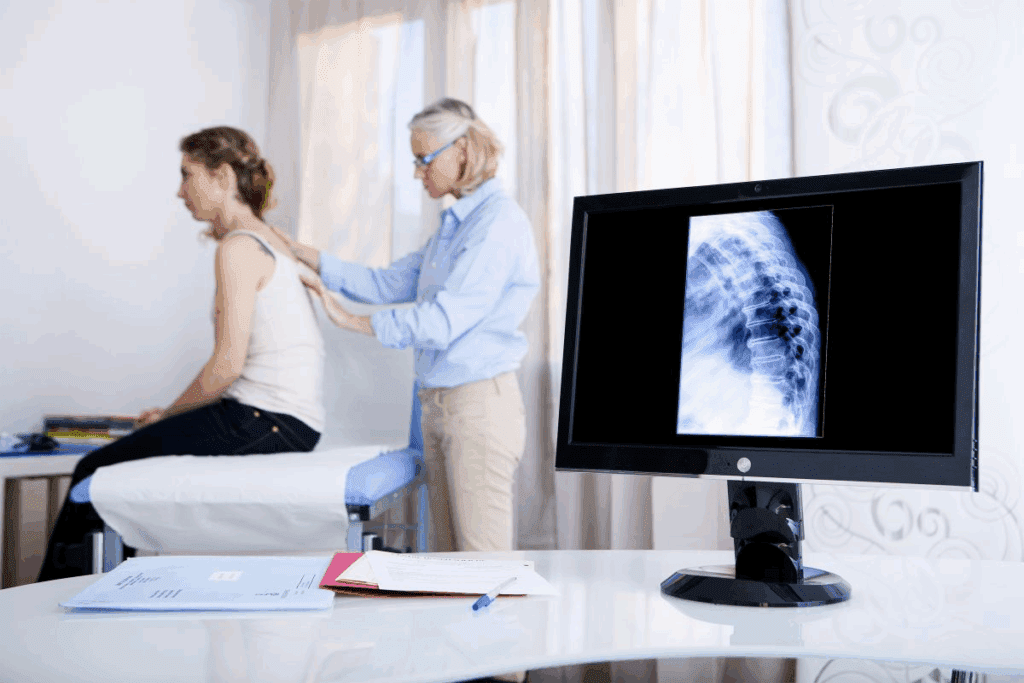
While many herniated discs can be treated without surgery, some signs mean you need to see a doctor right away. These include:
- Progressive weakness or numbness in the legs or arms
- Loss of bladder or bowel control
- Severe pain that gets worse over time
- Fever accompanied by back pain
Spotting herniated disc symptoms early and knowing when to see a doctor can greatly improve treatment outcomes. It can also help avoid more serious problems.
Diagnosing a Herniated Disc: Medical Procedures
To find out if you have a herniated disc, doctors use different tests.
Clinical Evaluation and Physical Examination
First, doctors do a detailed check-up. They ask about your health history and do a physical exam. This examination helps identify any nerve compression due to the herniated disc.
They might check how well you move, your reflexes, and muscle strength. For example, they might do the straight leg raise test to check your lower back.
Imaging Studies for Accurate Diagnosis
Imaging tests are key to confirming a herniated disc. The main ones are:
- X-rays: X-rays can’t show herniated discs, but they help rule out other back problems.
- MRI (Magnetic Resonance Imaging): MRI is the best for seeing herniated discs. It shows soft tissues well.
- CT (Computed Tomography) Scan: CT scans are good for bones and finding disc calcification.
| Imaging Modality | Advantages | Limitations |
| X-ray | Quick, widely available, low cost | Cannot directly show herniated discs |
| MRI | High sensitivity for soft tissue, detailed images | Expensive, may not be suitable for patients with certain metal implants |
| CT Scan | Good for visualizing bony structures, detects calcification | Involves radiation exposure, less sensitive for soft tissue |
Neurological Testing and Differential Diagnosis
Neurological tests are important. They check nerve damage and rule out other conditions. Tests like electromyography (EMG) and nerve conduction studies (NCS) are used.
Doctors also look for other possible causes of symptoms. This helps them create a treatment plan that fits the patient’s needs.
Can a Herniated Disc Heal Naturally?
It’s important to know if a herniated disc can heal on its own. The body can heal itself, and sometimes herniated discs can get better without surgery.
The Body’s Natural Healing Process
The body can absorb a herniated disc over time. This can take months to years, depending on the size and your health. Resorption happens thanks to your immune system breaking down the disc material.
Factors Affecting Natural Recovery
Several things can affect whether a herniated disc heals naturally. These include:
- The size and location of the herniation
- Your age and health
- Any other health issues
- Things like smoking and how active you are
For example, bigger herniations might heal if they’re not pressing on nerves too much. Younger people usually heal faster because their bodies are better able to repair themselves.
“The key to natural recovery lies in the body’s ability to heal itself, given the right conditions and care.”
In summary, not every herniated disc heals naturally. But many people get better with non-surgical treatments. Knowing what affects healing can help you choose the best treatment for you.
Conservative Treatment Approaches
Many people find relief from herniated disc pain through conservative treatments. These methods help ease symptoms, improve function, and enhance life quality.
Rest and Activity Modification
Managing herniated disc symptoms starts with rest and activity modification. Avoid heavy lifting, bending, or twisting to reduce pain and inflammation. This approach helps the spine heal.
It’s important to balance rest with gentle physical activity. Short walks and light exercises can help prevent stiffness and aid in healing.
Physical Therapy Protocols for Herniated Discs
Physical therapy is key in treating herniated discs without surgery. A customized physical therapy program can improve flexibility, strengthen muscles, and correct posture.
Physical therapy may include:
- Stretching to increase flexibility and reduce stiffness
- Strengthening exercises to support the spine
- Manual therapy, like massage or mobilization, to ease pain and improve mobility
- Education on proper body mechanics and posture to prevent future issues
Non-Invasive Pain Management Strategies
Effective pain management is vital in treating herniated discs. Non-invasive pain management strategies offer relief without surgical risks.
Some effective techniques include:
- Heat or cold therapy to reduce pain and inflammation
- Electrical stimulation, such as TENS units, to interrupt pain signals
- Relaxation techniques, like deep breathing or meditation, to reduce stress and promote healing
Medication Options for Herniated Disc Pain
Herniated disc pain can be very uncomfortable. But there are many medicines to help ease the pain. These medicines include over-the-counter, prescription, and injectable treatments. Each type has its own role in managing pain.
Over-the-Counter Pain Relievers
For mild to moderate pain, over-the-counter (OTC) pain relievers are a good start. These include:
- Ibuprofen (e.g., Advil, Motrin): Helps reduce inflammation and relieve pain.
- Naproxen (e.g., Aleve): Another anti-inflammatory medication that can be effective for herniated disc pain.
- Acetaminophen (e.g., Tylenol): Useful for pain relief, though it doesn’t address inflammation.
These medicines can be very effective for managing pain and inflammation associated with herniated discs.
Prescription Medications
If OTC medicines don’t work, prescription medications might be needed. These can include:
- Muscle relaxants: Help alleviate muscle spasms that can accompany herniated disc pain.
- Narcotic pain relievers, Such as codeine or oxycodone, are used for severe pain under strict medical supervision.
- Oral steroids: Can reduce inflammation and swelling, providing relief for herniated disc pain.
It’s important to follow a healthcare provider’s guidance when using prescription medicines. This is because of the risk of side effects and dependency.
Injectable Treatments
For some patients, injectable treatments can provide significant relief. These include:
- Corticosteroid injections: Reduce inflammation around the herniated disc, easing pain and pressure on nerves.
- Epidural steroid injections: Deliver steroids directly into the epidural space surrounding the spinal cord, reducing inflammation and relieving pain.
Injectable treatments can be very helpful for patients who haven’t responded to oral medicines or have severe pain.
People with herniated disc pain need to talk to a healthcare professional. They can help find the best medicine based on the person’s condition and medical history.
Alternative and Complementary Therapies
Alternative and complementary therapies are becoming more popular for herniated disc symptoms. They offer a holistic approach to care, alongside traditional treatments.
Chiropractic Care for Disc Herniation
Chiropractic care is a well-known alternative for herniated discs. It focuses on spinal manipulation to ease disc pressure. Chiropractors use various techniques, like spinal mobilization, to improve flexibility and reduce pain.
Acupuncture and Traditional Medicine Approaches
Acupuncture is a key part of traditional Chinese medicine. It involves inserting thin needles into specific body points to stimulate healing and pain relief. Research shows acupuncture can reduce pain and improve function in herniated disc patients.
A comparison of treatment outcomes is shown in the table below:
| Treatment | Pain Reduction | Functional Improvement |
| Acupuncture | Significant | Moderate |
| Chiropractic Care | Moderate | Significant |
| Physical Therapy | Moderate | Significant |
Mind-Body Techniques and Stress Management
Mind-body techniques like meditation, yoga, and cognitive-behavioral therapy help manage stress and discomfort from herniated discs. Mindfulness practices have been shown to reduce pain perception and improve well-being.
Adding these alternative and complementary therapies to a treatment plan can offer more relief and improve the quality of life for individuals with herniated discs.
Surgical Interventions: Permanent Solutions for Herniated Discs
When other treatments don’t work, surgery is a good option for herniated discs. It’s a lasting solution for many people with disc problems.
Traditional Open Surgical Procedures
Open surgery for herniated discs means cutting to get to the spine. This lets doctors take out the bad part of the disc. Microdiscectomy is a common way to do this by removing a small piece of the disc.
“Surgery can greatly improve life for those with herniated discs,” says a top spine surgeon. “It can help with pain and get function back.”
Artificial Disc Replacement
Artificial disc replacement is a surgery that puts in a fake disc. It’s made to keep the spine moving, which might lower the chance of problems later on.
- Maintains spinal mobility
- May reduce the long-term risk of adjacent segment disease
- Can provide significant pain relief
Weighing Surgical Risks and Benefits
Surgery has big benefits, but it also has risks. These can include infection, nerve damage, and spine instability. Talking to a doctor is key to understanding the risks and benefits for you.
Choosing surgery for a herniated disc is a big decision. It should be made after thinking it over and talking to health experts.
Minimally Invasive Surgical Techniques
Minimally invasive surgery has changed how we treat herniated discs. These new methods can lead to faster recovery times and less damage to tissues. They also have fewer complications than traditional surgery.
Endoscopic Discectomy Procedures
Endoscopic discectomy uses an endoscope to see the herniated disc. It removes the disc material that’s pressing on nerves. This helps relieve pain and discomfort.
- Benefits: Less tissue damage, less pain after surgery, and faster recovery.
- Procedure: Done through small cuts, with an endoscope for viewing.
Laser Disc Decompression and Nucleoplasty
Laser disc decompression and nucleoplasty use laser technology to treat herniated discs. They apply laser energy to vaporize or shrink the disc. This reduces pressure on spinal nerves.
Key advantages include less scarring, lower risk of nerve damage, and possible outpatient treatment.
Percutaneous Techniques and Their Efficacy
Percutaneous techniques, like percutaneous discectomy, use a needle or small tool to access the disc. They aim to remove or reduce the disc material with little disruption to nearby tissues.
- Percutaneous discectomy is often used for contained disc herniations.
- The success of percutaneous techniques depends on the specific condition and location of the herniated disc.
In conclusion, minimally invasive surgery is a big step forward in treating herniated discs. It offers effective relief with fewer complications. This gives patients hope to get back to their normal lives quickly.
Recovery and Rehabilitation After Treatment
Recovery and rehabilitation are key parts of treating herniated discs. How well these phases go can greatly affect treatment success. This is true for both non-surgical and surgical treatments.
Post-Conservative Treatment Recovery Timeline
After non-surgical treatment, patients follow a recovery plan. This plan includes:
- Rest and avoid heavy lifting or bending
- Gradual introduction to physical therapy exercises
- Monitoring symptoms and adjusting activities
Recovery times vary, but most see big improvements in 6-12 weeks.
“The key to successful recovery is not just rest, but a well-planned rehabilitation program that includes physical therapy and lifestyle adjustments.”
Post-Surgical Recovery Protocols
For those who have surgery, recovery is very important. It usually involves:
- Immediate post-operative care, including pain management and monitoring for complications
- A structured physical therapy program to regain strength and mobility
- Gradual return to normal activities, with specific guidance on lifting, bending, and exercise
| Recovery Aspect | Conservative Treatment | Surgical Treatment |
| Recovery Time | 6-12 weeks | Several weeks to months |
| Physical Therapy | Gradual introduction | Structured program |
| Pain Management | Over-the-counter medication | Prescription medication initially |
Knowing about recovery and rehabilitation is key to the best outcomes after herniated disc treatment. By sticking to a good recovery plan, patients can boost their chances of a successful recovery.
Preventing Recurrence: Long-Term Management Strategies
Managing herniated discs long-term means making lifestyle modifications, focusing on ergonomic considerations, and sticking to exercise programs. These steps help lower the chance of the problem coming back. They also keep your spine health in good shape.
Lifestyle Modifications for Spine Health
Changing your lifestyle can help stop herniated discs from coming back. It’s important to keep a healthy weight, stop smoking, and get more active. Eating a diet full of nutrients is also key to your spinal discs.
Doing regular activities like walking or swimming can make your spine muscles stronger. This adds support and lowers the risk of more injuries.
Ergonomic Considerations at Work and Home
It’s important to make your work and home spaces ergonomic to avoid spine strain. Use ergonomic furniture and set up your workspace to keep good posture.
- Make sure your monitor is at eye level to avoid tilting your head.
- Adjust your chair so your feet are flat on the floor or on a footrest, with knees at or below hip level.
- Position your keyboard and mouse so you don’t have to reach forward.
Maintenance Exercise Programs
Regular exercise is key to keeping your spine healthy and preventing herniated discs from coming back. Stretching exercises improve flexibility, while strengthening exercises make your spine more stable.
It’s important to have an exercise plan that fits your needs and abilities. Always do exercises with the help of a healthcare professional or physical therapist.
Emerging Treatments and Future Directions
New medical technologies and regenerative medicine are changing how we treat herniated discs. Research is uncovering more about spinal health. This leads to new ways to tackle herniated discs.
Regenerative Medicine Approaches
Regenerative medicine is leading the way in herniated disc treatments. It uses the body’s healing powers to fix or replace damaged tissues. Some exciting methods include:
- Stem Cell Therapy: Using stem cells to grow new disc tissue, which could lessen pain and boost function.
- Platelet-rich Plasma (PRP) Therapy: Injecting PRP into the disc to help it heal and grow back.
- Biologic Disc Repair: Looking into biologics to fix or grow back disc tissue, a possible surgery alternative.
These methods aim to not just ease symptoms but also fix the herniation’s root cause. This could lead to lasting relief and better quality for patients.
Advancements in Surgical Techniques and Technology
There are also big steps forward in herniated disc surgery. These aim to achieve better outcomes, shorter recovery times, and less invasive surgery.
Some key advancements are:
- Minimally Invasive Surgical Techniques: Methods like endoscopic discectomy remove herniated material with small cuts, less damage, and faster healing.
- Robot-assisted Surgery: Robotic tech in spine surgery boosts precision, cuts down on complications, and improves results.
- Advanced Imaging and Navigation: Better imaging and navigation tools help surgeons see better and do complex surgeries more accurately.
These improvements in surgery make it safer and more effective. They give patients with herniated discs more treatment options that fit their needs.
Conclusion
Managing a herniated disc means knowing what it is, its symptoms, and how to treat it. There are many ways to handle it, from physical therapy to surgery. The aim is to stop the pain and get back to normal.
Every person’s treatment plan is different. It depends on how bad the disc is and the person’s health. There are many options, including new surgical methods and other therapies. This helps people choose the best care for themselves.
Keeping the spine healthy long-term is key. This includes making lifestyle changes and using ergonomic tools. New medical technologies also offer hope for better treatments. They aim to help those suffering from herniated discs find lasting relief.
FAQ
What is a herniated disc, and how does it occur?
A herniated disc happens when the soft center of the disc leaks out. This usually happens because of wear and tear, injury, or age. It’s a common problem.
Can a herniated disc heal on its own?
Yes, some herniated discs can heal with treatment. But it depends on the size and location of the herniation. Your overall health and treatment also play a big role.
What are the common symptoms of a herniated disc?
Common symptoms include pain, numbness, tingling, and weakness. These can be in the back, neck, or limbs. It depends on where the herniated disc is.
How is a herniated disc diagnosed?
To diagnose a herniated disc, doctors use a few methods. They do a physical exam, imaging studies like MRI or CT scans, and neurological tests. These help find and confirm the herniation.
What are the treatment options for a herniated disc?
Treatment options range from rest and physical therapy to surgery. There are different types of surgery, like traditional and minimally invasive. Artificial disc replacement is also an option.
Can exercise help alleviate herniated disc symptoms?
Yes, exercises and physical therapy can help. They improve flexibility and strengthen the muscles around the spine. This can ease symptoms.
What medications are used to manage herniated disc pain?
Doctors might prescribe pain relievers, muscle relaxants, or injectable treatments. These include corticosteroids or epidural injections. They help manage pain.
Are there alternative therapies for managing herniated disc pain?
Yes, there are. Chiropractic care, acupuncture, and mind-body techniques can help. They work alongside traditional treatments to manage pain and improve well-being.
When is surgery considered for a herniated disc?
Surgery is considered when other treatments don’t work. It’s also considered if there’s severe nerve compression, significant weakness, or loss of bladder or bowel control.
What is the recovery process like after herniated disc surgery?
The recovery process varies by surgery type. It usually involves rest, then rehabilitation and physical therapy. These help regain strength and mobility.
How can I prevent a herniated disc from recurring?
To prevent recurrence, maintain a healthy lifestyle. This includes regular exercise, proper lifting, ergonomic adjustments, and a healthy weight. It helps keep the spine healthy.
Can a herniated disc be seen on an X-ray?
Usually, herniated discs can’t be seen on X-rays. For an accurate diagnosis, imaging studies like MRI or CT scans are needed.
What are the emerging treatments for herniated discs?
New treatments include regenerative medicine and advanced surgical techniques. There are also new technologies aimed at improving outcomes and reducing recovery times.
References
- Centers for Disease Control and Prevention. (2023). Lower back pain facts and statistics. U.S. Department of Health & Human Services.https://www.cdc.gov/arthritis/basics/back-pain.html