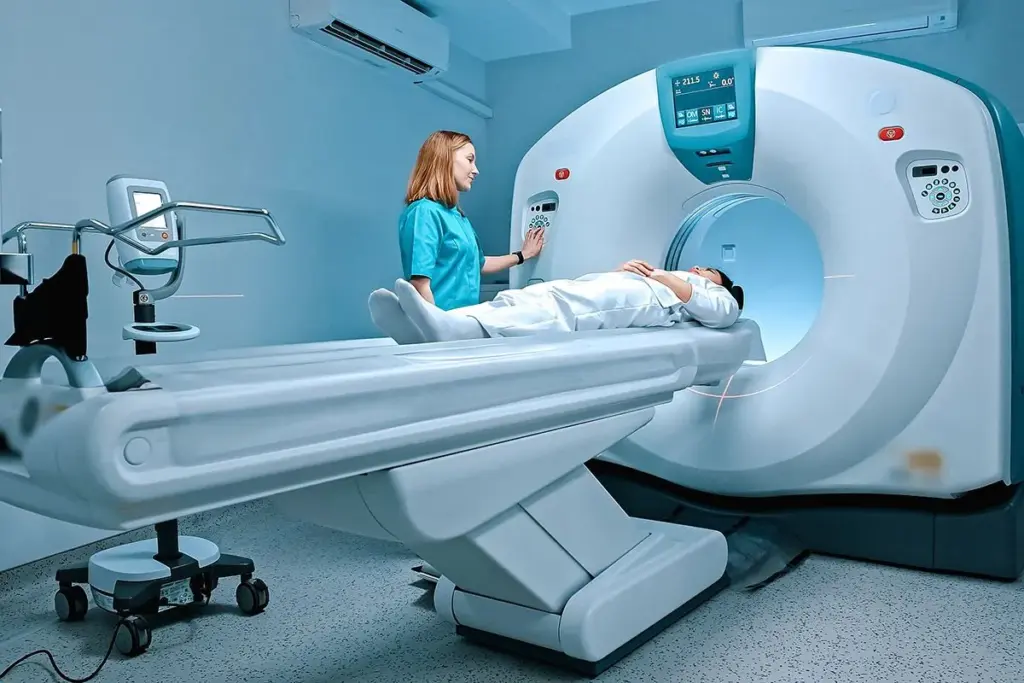
At our institution, we use FDG PET scans to find, stage, and watch many medical conditions. This includes cancer. Studies show that FDG PET scans are very good at spotting cancers like lymphoma, melanoma, and lung cancer.
FDG PET scans measure how active cells are. This helps doctors find the best treatment for patients. This technology has changed how we diagnose diseases, making it easier to find problems early.
Key Takeaways
- FDG PET scans are highly sensitive for detecting various types of cancer, including lymphoma and melanoma.
- They play a critical role in staging and monitoring cancer treatment.
- FDG PET scans can detect abnormal metabolic activity, enabling early diagnosis.
- This technology is vital for charting the best treatment pathways for patients.
- FDG PET scans have revolutionized modern diagnostics, improving disease detection accuracy.
Understanding FDG PET Scan Technology
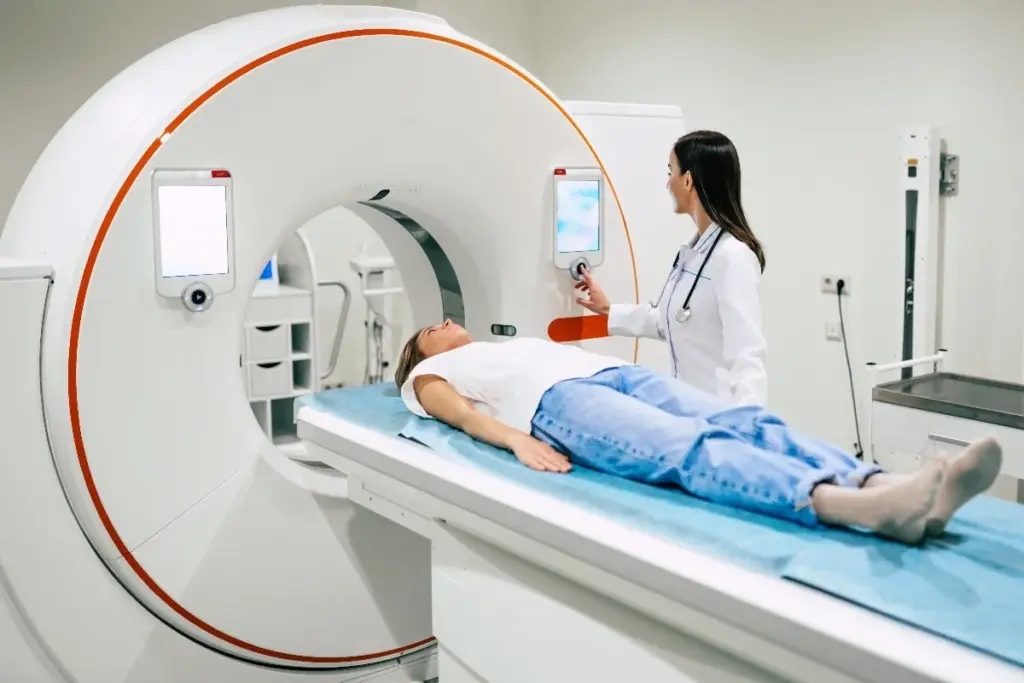
FDG PET scan technology is key in diagnosing and managing health issues. It uses fluorodeoxyglucose (FDG) to show how active cells are in the body.
What is an FDG PET Scan?
An FDG PET scan is a test that uses a special sugar molecule to find diseases, like cancer. It spots cells that are more active than normal, which helps find cancer.
How FDG PET Scans Work
A tiny amount of radioactive FDG is given through an injection. Cells that are very active take up more FDG. The PET scanner then shows these active areas in detail.
For more on how PET scans work, check out studies on PMC.
Difference Between PET, CT, and PET/CT Hybrid Imaging
PET scans show how active cells are, while CT scans show body structures. PET/CT scans combine both, giving a clear picture of where activity is in the body. This helps doctors plan treatments better.
|
Imaging Modality |
Primary Information |
Clinical Use |
|---|---|---|
|
PET |
Metabolic Activity |
Cancer detection, metabolic disorder assessment |
|
CT |
Anatomical Detail |
Structural assessment, injury evaluation |
|
PET/CT |
Combined Metabolic and Anatomical Information |
Enhanced diagnostic accuracy, treatment planning |
A study on PET/CT scans found they offer a better view of diseases than either alone. This shows how valuable hybrid imaging is in medicine.
The Science Behind FDG in Medical Imaging
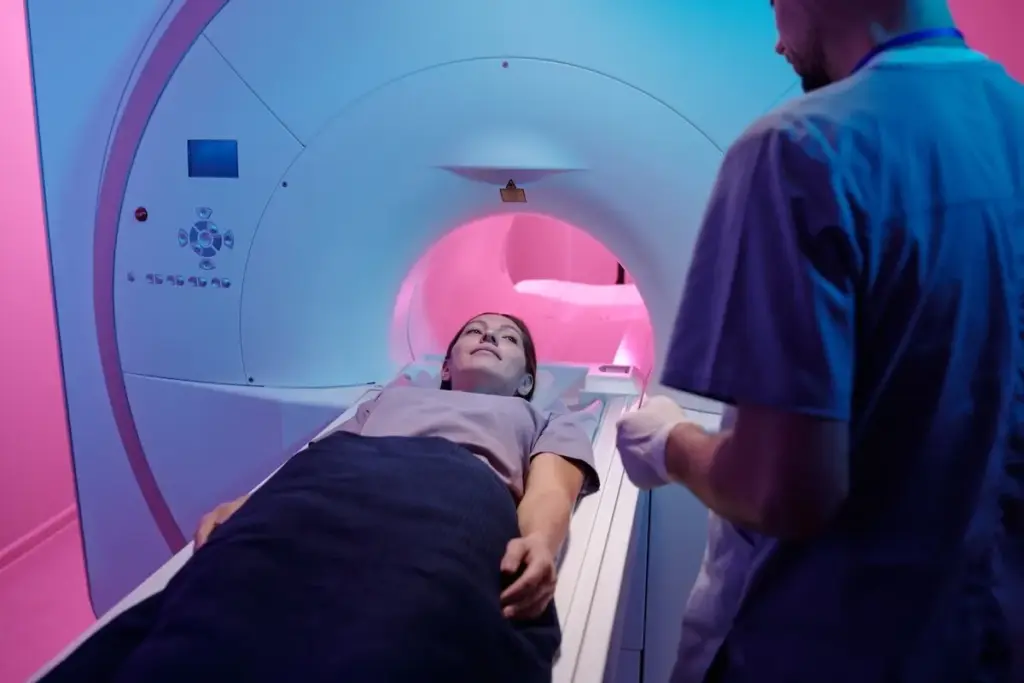
Understanding FDG PET scans is key to seeing their importance in medicine. These scans use Fluorodeoxyglucose (FDG), a radioactive tracer. It shows how active cells are in the body.
Fluorodeoxyglucose (FDG) as a Radiotracer
FDG is a special glucose molecule with a radioactive part. This makes it visible to PET scan technology. It’s taken up by cells based on their glucose use.
This is very useful for finding cells that use a lot of glucose, like cancer cells.
Metabolic Activity and Disease Detection
Cells’ metabolic activity shows their health. Diseases like cancer often use more glucose. This is why FDG PET scans can spot diseased tissues.
They also help see if treatments are working.
Standardized Uptake Value (SUV) Measurement
The Standardized Uptake Value (SUV) measures how much FDG cells take up. It helps doctors understand disease severity and track changes. This is vital for making treatment plans.
In short, FDG PET scans use a radioactive glucose analog to check cell activity. This tech is essential for spotting and managing diseases. It gives doctors the info they need to care for patients.
Preparing for an FDG PET Scan
Knowing what to expect before, during, and after an FDG PET scan is key. We help patients through every step. This way, they feel ready and comfortable.
Pre-Scan Requirements
Patients usually need to fast before the scan. We also tell them to avoid hard exercise and sugary foods. It’s important to tell your doctor about any meds or health issues that might affect the scan.
The Procedure Experience
During the pet screening, you’ll get a small dose of radioactive glucose. This is taken up by your body’s cells. The scan itself takes about 30 minutes to an hour. But, getting ready and the scan can take a few hours.
The actual scanning time is short. You might have to wait a bit before starting.
Post-Scan Care
After the scan, you can go back to your usual activities. Drinking lots of water helps get rid of the radioactive material. If you have questions, our team is here to help. A specialist will look at your pet scan results, and your doctor will talk to you about them.
While waiting, you might wonder how long does a ct scan take or the differences between PET and CT scans. Our team is ready to answer your questions. We want you to know everything about your pet scan and what comes next.
What Conditions Can an FDG PET Scan Detect?
FDG PET scans can find many medical conditions. They are very useful in doctor’s offices. This is because they can spot diseases with high accuracy.
Overview of Detectable Conditions
FDG PET scans are great at finding cancers like lymphoma and melanoma. They do this by showing where cells are very active. Early cancer detection is key to better treatment, and these scans help a lot.
These scans also find infections and inflammation. They do this by spotting where glucose levels are high. This helps doctors diagnose and treat things like abscesses and tuberculosis.
Sensitivity and Specificity in Different Diseases
How well FDG PET scans work can change with each disease. For example, they are very good at finding lymphoma. This helps doctors know how serious the disease is and if treatments are working.
In cases of infection and inflammation, the scans work best when used with other information. This combination leads to more accurate diagnoses.
Clinical Applications Overview
FDG PET scans are used in many areas, like cancer, brain, and heart health. In cancer, they help stage the disease and see how treatments are doing. They are also good at finding cancer that has come back.
In brain health, they help diagnose diseases like Alzheimer’s. They show how the brain is using glucose. For heart health, they check if heart muscle is alive. This helps decide if surgery is needed.
FDG PET scans are very useful in medicine. They help doctors diagnose and treat many complex conditions. This makes them a key tool in modern healthcare.
FDG PET Scan in Cancer Detection and Staging
FDG PET scans play a key role in cancer care. They help find and measure cancer. Cancer cells use more glucose than normal cells, making FDG PET scans great for spotting and sizing cancer.
Cancer Cell Metabolism and FDG Uptake
Cancer cells use more glucose than normal cells. FDG PET scans use fluorodeoxyglucose (FDG), a glucose-like substance. It builds up in cells that are very active, helping to find cancer.
The amount of FDG a cancer cell takes in depends on the tumor’s type and grade. High-grade tumors take in more FDG, making them easier to spot. This info is key for diagnosing and figuring out how far cancer has spread.
Advantages Over Conventional Imaging
FDG PET scans have big advantages over CT scans. They give metabolic info before any physical changes show up. This means cancer can be caught earlier and staged more accurately.
- FDG PET scans can spot cancer in lymph nodes that look normal on CT scans.
- They find distant metastases, helping to see how far cancer has spread.
- FDG PET scans track how well treatment is working by looking at metabolic changes.
Role in Treatment Planning
FDG PET scans give vital info for planning treatment. They show how far cancer has spread, which is key for choosing the right treatment. Whether it’s surgery, chemo, or radiation, FDG PET scan data guides these choices.
“PET/CT has become an essential tool in the management of cancer patients, providing critical information for diagnosis, staging, and treatment planning.” –
A statement from a leading oncology journal
Using FDG PET scan results in treatment planning helps doctors create more personalized plans. This approach can lead to better results and a better quality of life for patients.
Lymphoma Detection and Monitoring
FDG PET scans have changed how we detect and monitor lymphoma. They give us deep insights into how the disease grows and how well it responds to treatment. Lymphoma, which includes Hodgkin’s and non-Hodgkin’s types, needs accurate tools for good management.
Evaluating Hodgkin’s Lymphoma
Hodgkin’s lymphoma is very active in FDG PET scans because it uses a lot of energy. FDG PET scans are great for starting treatment, checking how well it works, and finding when it comes back. They are very good at finding Hodgkin’s lymphoma, which makes them very useful in medicine.
Assessing Non-Hodgkin’s Lymphoma
Non-Hodgkin’s lymphoma, with its many types, also gets a lot from FDG PET scans. These scans help with staging, checking treatment success, and watching for signs of coming back. The metabolic info from FDG PET scans helps make diagnoses more accurate.
Monitoring Treatment Response and Recurrence
FDG PET scans are key in seeing how well lymphoma responds to treatment. They look at metabolic changes to see if treatment is working. They also help find early signs of coming back, so doctors can act fast.
The main advantages of using FDG PET scans for lymphoma include:
- They are very good at spotting changes in lymphoma
- They help accurately stage and restage the disease
- They are great for checking how well treatment is working
- They find early signs of coming back
By using FDG PET scans, doctors can make treatment plans that are more tailored to each patient. This can lead to better results for people with lymphoma.
Lung Cancer and Pulmonary Nodule Assessment
FDG PET scans are key in lung cancer assessment. They show how active tumors are. This helps figure out how aggressive the cancer is and what treatment to use.
Detection of Non-Small Cell Lung Cancer
Non-small cell lung cancer (NSCLC) is the most common lung cancer. FDG PET scans are very good at finding NSCLC. They spot high activity areas, helping tell cancer from non-cancer spots early.
Evaluation of Solitary Pulmonary Nodules
Solitary pulmonary nodules (SPNs) are found by accident. FDG PET scans help figure out if these nodules are cancerous. Knowing this helps decide if more tests are needed or if they can be watched.
Staging and Treatment Planning
Knowing the stage of lung cancer is key for treatment planning. FDG PET scans give a full picture of the disease. This includes if cancer has spread, which helps choose the best treatment.
A study shows FDG PET/CT improves lung cancer staging. It helps avoid unnecessary surgery and guides better treatments. This highlights the importance of FDG PET scans in lung cancer care.
Melanoma and Other Skin Cancers
FDG PET scans are key in managing melanoma. They help see the main tumor and any spread. This is important for planning treatment.
Detection of Primary and Metastatic Melanoma
Melanoma is aggressive and needs early detection. FDG PET scans are great at finding the main tumor and any spread. They show where the cancer is active.
Recurrence Monitoring
Watching for cancer to come back is important after treatment. FDG PET scans can spot this early. This means doctors can act fast and change treatment plans if needed.
Impact on Treatment Decisions
FDG PET scans help doctors decide on treatment. They help see how far the cancer has spread and how well it’s responding to treatment. This helps doctors make the best plan for each patient.
Gastrointestinal and Colorectal Cancer Evaluation
FDG PET scans are key in finding and managing gastrointestinal and colorectal cancers. They give vital info for planning treatments and checking how well treatments work.
Esophageal Cancer Staging
Staging esophageal cancer is complex, but FDG PET scans help a lot. Accurate staging is key to know how far the cancer has spread. This helps doctors plan the best treatment.
Studies show FDG PET scans can find cancer spread better than other methods.
Colorectal Cancer Detection
FDG PET scans are also great for finding colorectal cancer. They spot the main tumor and any signs of cancer coming back. This makes them a valuable tool in treating cancer.
Post-Treatment Surveillance
After treatment, it’s important to watch for cancer coming back. FDG PET scans help check if the treatment worked and if cancer is coming back. This lets doctors make changes to treatment plans if needed.
|
Cancer Type |
FDG PET Scan Application |
Benefits |
|---|---|---|
|
Esophageal Cancer |
Staging, Treatment Planning |
Accurate staging, detection of metastases |
|
Colorectal Cancer |
Detection, Recurrence Monitoring |
Early detection of recurrence, assessment of treatment response |
Gynecological Cancers and FDG PET Efficacy
FDG PET scans have changed how we detect and manage gynecological cancers. They are a very sensitive tool for finding these cancers. This helps improve how well patients do.
Cervical Cancer Detection
Cervical cancer is a type where FDG PET scans are very effective, with a sensitivity of 80-100%. This is key for getting the right treatment plan.
Early detection is key to fighting cervical cancer well. FDG PET scans help see how far the cancer has spread. This helps doctors decide the best treatment.
Ovarian Cancer Evaluation
Ovarian cancer is another area where FDG PET scans are important. They help figure out how far the cancer has spread and if treatment is working.
“FDG PET/CT has emerged as a valuable tool in the management of ovarian cancer, providing critical information for treatment planning and follow-up.”
Impact on Treatment Strategies
FDG PET scans give doctors important info for treating gynecological cancers. They help see how far the cancer has spread and if treatment is working. This lets doctors make plans that fit each patient’s needs.
This way of treating cancer makes patients’ lives better and improves their quality of life.
Head, Neck, and Bone Cancers
FDG PET scans are key in finding and treating head, neck, and bone cancers. They show how active tumors are, helping doctors see how far the disease has spread. This helps in planning the best treatment.
Assessment of Head and Neck Cancer
Head and neck cancers are tricky to diagnose and stage. FDG PET scans help find the main tumors and where they have spread. They show where the cancer is most active, helping doctors tell cancer from non-cancerous growths.
Lymph Node Involvement Detection
Lymph nodes with cancer affect how well a patient will do and what treatment they need. FDG PET scans are great at finding cancer in lymph nodes. This helps doctors make better treatment plans for their patients.
|
Cancer Type |
Role of FDG PET Scan |
Clinical Benefit |
|---|---|---|
|
Head and Neck Cancer |
Assessment of primary tumor and metastases |
Improved staging and treatment planning |
|
Osteosarcoma |
Evaluation of tumor metabolism and extent |
Enhanced diagnosis and monitoring |
Osteosarcoma and Bone Metastases Evaluation
Osteosarcoma, a bone cancer, needs careful checking to manage it well. FDG PET scans help see how active osteosarcoma is. They also find bone metastases from other cancers, helping decide on treatment.
“The use of FDG PET scans has greatly improved treating head, neck, and bone cancers. It offers a more accurate and personalized way to care for cancer patients.”
Using FDG PET scans, doctors can improve how well patients do with head, neck, and bone cancers.
FDG PET in Non-Oncological Conditions
FDG PET scan technology is not just for cancer anymore. It’s also great for diagnosing non-cancerous conditions. It spots areas with high activity, helping find infections, inflammation, and some brain disorders. It also checks how well the heart works.
Infection and Inflammation Detection
FDG PET scans are now key for finding and tracking infections and inflammation. They’re super helpful when other tests don’t give clear answers. Thanks to their high sensitivity, they can catch small changes in activity, helping diagnose things like abscesses and osteomyelitis.
Neurological Applications
In neurology, FDG PET scans are a big deal. They check brain metabolism, helping diagnose Alzheimer’s, epilepsy, and dementia. They give doctors detailed info on brain activity, helping them decide on treatments.
Cardiac Viability Assessment
FDG PET scans are also vital for checking heart health. They look at heart muscle activity, helping figure out which parts can recover. This info guides doctors on the best treatments for heart disease.
FDG PET scans are really versatile, showing their worth in many areas of medicine. They’re not just for cancer anymore. They help with infections, brain disorders, and heart health, making them a key tool in diagnosis.
Accuracy and Limitations of FDG PET Scanning
FDG PET scans are very good at finding different conditions. But, it’s important to know their strengths and weaknesses. This helps doctors use FDG PET scans to their best advantage.
False Positives and Negatives
Like other tests, FDG PET scans can show false positives and negatives. False positives mean the scan says there’s disease when there isn’t. This can happen because of inflammation or infection. On the other hand, false negatives mean the scan misses disease in tissues. This might be because the disease is small or not very active.
Patient-Related Limitations
Things about the patient can also affect how well FDG PET scans work. For example, high blood glucose levels can make tumors harder to see. Also, some medicines and moving during the scan can mess with the scan’s quality.
Technical Challenges
There are technical issues that can affect FDG PET scans too. Things like how well the scanner is set up and the algorithms used to make images are important. New tech, like hybrid PET/CT systems, helps by combining different types of information.
Comparative Effectiveness with Other Imaging Methods
When we compare FDG PET scans to MRI or CT scans, we need to think about the situation. FDG PET scans are great at showing metabolic changes early on. But, they might not give as much detail about the body’s structure as MRI or CT scans do. The right choice depends on what the doctor needs to know and the patient’s situation.
Conclusion
FDG PET scans are key in finding and managing many health issues, like cancer. We’ve looked at how they help spot cancer, figure out how far it has spread, and check if it’s coming back.
At livhospital.com, we use FDG PET scans to help our patients. This way, we can give them top-notch care. We make sure each patient gets a plan that fits their needs.
FDG PET scans are great because they can see changes in the body’s metabolism. This helps us find diseases like lymphoma, lung cancer, and melanoma. As medical tech gets better, FDG PET scans will play an even bigger role in health care.
Knowing what FDG PET scans can find helps both patients and doctors. It helps us make better choices about how to diagnose and treat diseases.
FAQ
What is an FDG PET scan, and how does it work?
An FDG PET scan is a test that uses a special sugar molecule to find active cells in the body. It injects this sugar into your blood. Cells that are very active, like cancer cells, take up more of it. This lets the scan spot and show these cells.
What is the difference between a PET scan, a CT scan, and a PET/CT scan?
A PET scan shows how active cells are. A CT scan gives detailed pictures of your body’s structure. A PET/CT scan combines both, showing where active cells are in your body.
How do I prepare for an FDG PET scan?
You’ll need to fast for a while and avoid hard exercise. If you have diabetes, you’ll get special instructions. Your doctor will tell you all you need to know.
What conditions can an FDG PET scan detect?
It can find many things, like different cancers, infections, inflammation, and problems with the heart and brain.
How accurate are FDG PET scans in detecting cancer?
They’re very good at finding cancer, helping doctors see how far it has spread and if treatment is working. But, how well they work can depend on how well you prepare and some technical issues.
Can FDG PET scans detect lymphoma?
Yes, they’re great at finding and tracking lymphoma. They help doctors see how well treatment is working and if the cancer is coming back.
What is the role of FDG PET in lung cancer assessment?
It helps find and check how far lung cancer has spread. It’s also used to plan treatment and check on nodules in the lungs.
How does FDG PET help in managing melanoma and other skin cancers?
It finds melanoma and its spread, helping doctors decide on treatment. It’s very useful for tracking the disease.
Are FDG PET scans used for gastrointestinal and colorectal cancers?
Yes, they help stage esophageal cancer and find colorectal cancer. They’re also used after treatment to check for any signs of cancer coming back.
Can FDG PET scans detect gynecological cancers?
Yes, they’re good at finding cervical and ovarian cancers. They’re very sensitive for cervical cancer, helping doctors plan treatment.
What are the limitations of FDG PET scans?
They might not always be accurate, and how well they work can depend on the patient and technical issues. It’s important to understand these to make sense of the results.
How long does an FDG PET scan take?
The actual scan is about 30 minutes to an hour. But getting ready and the whole process can take several hours.
Is there any radiation exposure with FDG PET scans?
Yes, they involve a small amount of radiation because of the radioactive sugar. But, the benefits for finding diseases are usually worth the risk.
References
- NCBI – https://www.ncbi.nlm.nih.gov/books/NBK559089/
- Nature – https://www.nature.com/articles/s41597-022-01718-3
- PMC – https://pmc.ncbi.nlm.nih.gov/articles/PMC3003889/
- Image Wisely – https://www.imagewisely.org/Imaging-Modalities/Nuclear-Medicine/Optimizing-Oncologic-FDG-PETCT-Scans
- Cancer.gov – https://www.cancer.gov/about-cancer/diagnosis-staging/diagnostic-tests/fdg-pet-scans