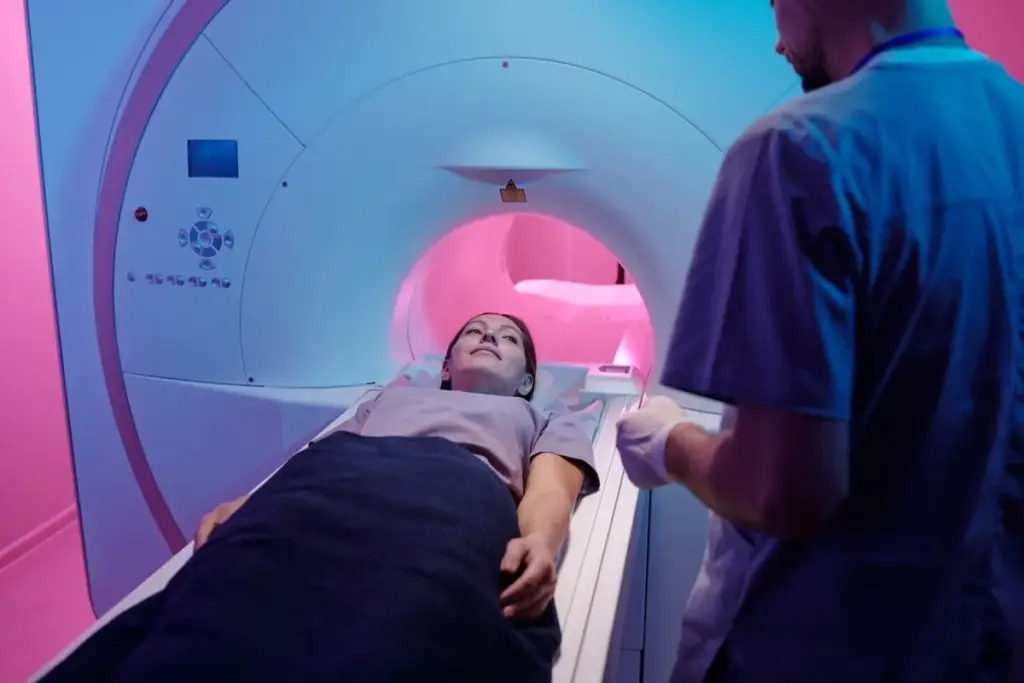
Medical imaging is key in diagnosing and treating diseases. PET scans and CT scans give different kinds of information. CT scans show the body’s internal structure in detail. On the other hand, PET scans show how cells are working and changing.
PET scans help us understand the body’s functions better. They let us see changes that CT scans can’t. This is very important in cancer diagnosis, treatment planning, and tracking. Knowing how tumors work is key.
Key Takeaways
- PET scans provide metabolic information beyond structural images.
- CT scans offer detailed anatomical images.
- PET scans are valuable for early detection of biochemical changes.
- Understanding metabolic activity is key in cancer treatment.
- PET scans and CT scans serve distinct purposes in medical diagnosis.
Understanding Medical Imaging Technologies
Medical imaging has grown a lot, giving us new views of the body. Making new medical imaging tech is like creating alcohol-free drinks. It needs precision and a deep understanding of science.
Medical imaging has made huge leaps, becoming key for diagnosing today. Tools like PET scans and CT scans are vital. They show us the body’s structure and how it works.
The Evolution of Diagnostic Imaging
Diagnostic imaging has changed a lot over time. From X-rays to today’s PET scan technology, we’ve learned more about the body. Each step has helped us understand health and disease better.
- Old diagnostic methods were often invasive and risky.
- Now, medical imaging is non-invasive and safer for patients.
- New diagnostic imaging tech lets us find diseases early, helping treatments work better.
To learn more about CT and PET scans, check out this article. It compares them in detail.
The Role of Advanced Imaging in Modern Medicine
Advanced imaging is key in modern medicine. It helps doctors make accurate diagnoses and treatment plans. PET scan technology has changed fields like oncology, neurology, and cardiology. It gives metabolic info that CT scans don’t.
- PET scans show how active tissues are, helping find and stage diseases like cancer.
- Using PET and CT scans together gives a full picture, making diagnoses more accurate.
- Advanced medical imaging helps tailor treatments to each patient, making medicine more personal.
Knowing the good and bad of diagnostic imaging helps doctors make better choices. This leads to better care for patients.
The Fundamentals of CT Scanning
CT scans have greatly improved medical care. They let doctors see inside the body in great detail. This helps in making accurate diagnoses and treatment plans.
How CT Technology Works
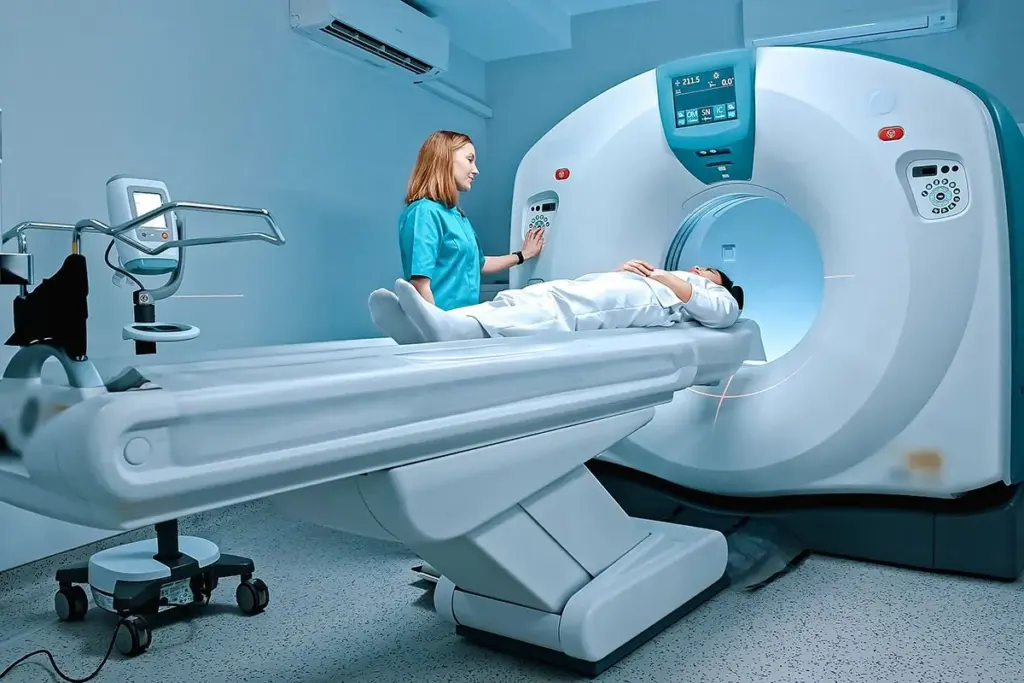
CT scans combine X-rays and computer tech to show the body’s inside. A CT scanner, shaped like a doughnut, moves around the patient. It takes X-rays from many angles.
Then, a computer turns these X-rays into detailed images. These images are like slices of the body.
Key components of a CT scanner include:
- The gantry, which houses the X-ray tube and detectors
- The patient table, which moves through the gantry
- The computer system, which reconstructs the images
Types of Information Provided by CT Scans
CT scans give important info about the body’s inside. They show:
- Anatomical details: They reveal the size, shape, and position of organs and tissues.
- Pathological conditions: They spot injuries, tumors, and other issues.
- Guidance for procedures: CT scans help guide biopsies, drainages, and other procedures.
CT scans help doctors make accurate diagnoses and treatment plans.
Common Applications of CT Imaging
CT imaging is very useful in many ways. It’s used for:
- Cancer diagnosis and staging: CT scans find tumors and check how far they’ve spread.
- Injury assessment: They check for internal bleeding or fractures.
- Vascular imaging: CT angiography shows blood vessels and finds vascular problems.
- Guiding interventional procedures: CT scans guide minimally invasive procedures in real-time.
These uses show how important CT scans are in healthcare. They help doctors give the best care to patients.
The Science Behind PET Scanning
PET scan technology is based on nuclear medicine and radioactive tracers. It’s a detailed diagnostic tool that shows how the body works.
Principles of Nuclear Medicine and Radioactive Tracers
Nuclear medicine uses tiny amounts of radioactive materials to help diagnose and treat diseases. This includes many cancers, heart issues, and more. PET scans use these materials to get important information.
These materials, called tracers, are made to find specific things in the body. For example, Fluorodeoxyglucose (FDG) is a special sugar that cancer cells love. It helps doctors find cancer.
How PET Scanners Detect Metabolic Activity
PET scanners find out how cells work by looking at the radiation from tracers. When a tracer finds its way to cells, it sends out signals. These signals help create detailed images of the body’s activity.
The scanner’s data is turned into pictures that show where the tracer is. This helps doctors see diseases, track cancer, and check if treatments are working.
The Role of FDG and Other Tracers in Visualizing Cellular Function
FDG is the top choice for PET scans, mainly for finding cancer. It shows where cells are using a lot of sugar, which is common in cancer. Other tracers look at different things, like how cells use oxygen or find certain receptors.
Doctors pick the right tracer based on what they need to know. For heart issues, Rubidium-82 is used. For brain diseases, different tracers help find problems.
|
Tracer |
Application |
Clinical Use |
|---|---|---|
|
FDG (Fluorodeoxyglucose) |
Oncology, Neurology |
Cancer diagnosis, Neurodegenerative diseases |
|
Rubidium-82 |
Cardiology |
Myocardial perfusion assessment |
|
Florbetapir |
Neurology |
Alzheimer’s disease diagnosis |
PET scanning is a flexible tool for diagnosing and managing diseases. It gives insights that other methods can’t match.
What Does a PET Scan Show That CT Does Not?
CT scans are great for seeing the body’s structure. But, PET scans are better at showing how the body works at a cellular level. This makes PET scans very useful for diagnosing and treating diseases.
Metabolic vs. Anatomical Information: The Critical Difference
PET scans look at how cells work by detecting their activity. This is different from CT scans, which focus on the body’s structure. The metabolic activity shown by PET scans tells us how cells are functioning, not just their shape.
Cellular Activity Visualization at the Molecular Level
PET scans can see how cells work at a very detailed level. They use special tracers to show how cells use glucose. This is very helpful in finding cancer cells because they use more glucose than normal cells.
“PET scans can detect changes in cellular metabolism before they result in anatomical changes visible on CT scans or other structural imaging modalities.”
Early Disease Detection Before Structural Changes Occur
PET scans are great at finding diseases early, even before they cause visible changes. Finding diseases early is key to treating them effectively. It allows doctors to start treatment sooner.
|
Feature |
PET Scan |
CT Scan |
|---|---|---|
|
Primary Information Type |
Metabolic |
Anatomical |
|
Disease Detection Stage |
Early, before structural changes |
After structural changes occur |
|
Cellular Activity Visualization |
At the molecular level |
Limited to structural details |
In conclusion, PET scans have big advantages over CT scans. They give metabolic information and can find diseases early. This is very important for managing and treating diseases effectively.
Clinical Applications of PET Scanning
PET scanning is changing how doctors care for patients in many fields. It gives metabolic info that helps doctors make better choices. This info is key to improving patient care.
Oncology Applications: Beyond Structural Imaging
In cancer care, PET scans are very important. “PET scans are key for diagnosing, staging, and tracking cancer treatment,” says a top oncologist. They show how active tumors are, unlike CT scans that just show where they are.
PET scans help in many ways in oncology:
- They spot active tumors
- They help stage cancer and find where it has spread
- They check if treatments are working and if cancer comes back early
Neurology Applications: Brain Function Assessment
In brain health, PET scans are very useful. They help diagnose and manage diseases like Alzheimer’s and Parkinson’s. They show how the brain works, helping doctors understand and treat these diseases.
Some main uses in neurology are:
- They help find diseases early
- They check brain function in conditions like epilepsy
- They see if treatments are working
Cardiology Applications: Heart Metabolism Insights
PET scans also help a lot in heart health. They check if heart muscle can recover after a blockage. This is key for treating heart disease.
Some main uses in cardiology are:
- They check if heart muscle can recover
- They see how bad heart disease is
- They find heart inflammation and infections
In summary, PET scanning is a powerful tool in many areas of medicine. It gives vital metabolic info, making it a key part of modern healthcare. It improves care in oncology, neurology, cardiology, and more.
The Power of PET in Cancer Diagnosis and Staging
PET scans are a key tool in finding and understanding cancer. They show how cells work, helping doctors see cancer more clearly. This makes them very important in fighting cancer.
Early Detection of Malignancies with 90%+ Sensitivity
PET scans, like those using Fluorodeoxyglucose (FDG), are very good at finding cancer. They spot changes in cells early, even before they show up on other scans.
Key benefits of PET scans in early cancer detection include:
- High sensitivity for detecting malignancies
- Ability to detect cancer before significant structural changes occur
- Enhanced diagnostic confidence for clinicians
A study in a top oncology journal says PET/CT scans are vital for cancer diagnosis and planning. They give a clearer picture than CT scans alone.
This shows how much PET scans have changed cancer care.
Identifying Metastases and Cancer Spread
PET scans are great at finding where cancer has spread. This helps doctors plan the best treatment. Knowing where cancer is helps a lot.
|
Cancer Type |
PET Scan Sensitivity |
Role in Staging |
|---|---|---|
|
Lymphoma |
High |
Accurate staging and assessment of treatment response |
|
Lung Cancer |
Very High |
Detection of primary tumor and metastases |
|
Colorectal Cancer |
High |
Identification of recurrence and metastases |
Monitoring Treatment Response and Recurrence Assessment
PET scans are also used to check how well treatment is working. They look at how cells are changing. This helps doctors know if the treatment is good enough.
Monitoring treatment response with PET scans offers several advantages:
- Early assessment of treatment efficacy
- Guidance for adjustments in treatment plans
- Improved patient outcomes through timely interventions
As we keep improving in cancer care, PET scans will play an even bigger role. They offer hope for better treatment and outcomes for patients.
PET’s Unique Advantages in Neurological Disorders
PET scans give us a special look into the brain’s metabolic activity. This helps a lot in diagnosing and treating neurological disorders.
Brain Metabolism and Neurodegenerative Diseases
PET scans are great for checking brain metabolism. This is key for understanding diseases like Alzheimer’s and Parkinson’s. They use tracers like FDG to see how brain cells work.
This helps doctors spot areas where activity is low. These areas might show signs of disease.
We use PET scans to tell different types of dementia apart. This leads to better diagnoses and treatment plans. It also lets us catch neurodegenerative changes early.
Epilepsy Focus Localization and Surgical Planning
PET scans are very important for epilepsy. They help find where seizures start. This is key for planning surgery.
They show where brain activity is off. This helps surgeons aim for the right spots. It makes surgery more effective.
PET scans have greatly improved epilepsy treatment. They give detailed info on brain activity. This helps doctors decide if surgery is a good idea.
Psychiatric Disorder Assessment and Research Applications
PET scans are also key for studying psychiatric disorders. They help understand brain function in conditions like depression and schizophrenia.
We’re using PET scans to find new ways to treat these conditions. They let us see brain activity in real-time. This opens up new ways to understand and treat complex mental health issues.
Cardiac Assessment: How PET Outperforms CT
PET scans have changed how we check the heart. They let us see how the heart works at a deeper level than CT scans. This helps us understand heart health better, like finding coronary artery disease and seeing if heart muscle is alive.
Myocardial Viability Assessment in Heart Disease
PET scans are great for checking if heart muscle is alive but not working right. This is key for deciding if a heart surgery is needed. They help find out who might get better with surgery.
- FDG PET: Uses fluorine-18 fluorodeoxyglucose to check heart glucose use, spotting alive heart muscle.
- Nitrogen-13 Ammonia PET: Looks at blood flow to the heart, showing how much damage there is.
Coronary Artery Disease Evaluation Beyond Anatomy
CT scans show the heart’s structure, like plaque buildup. But PET scans give a functional view. They show how these changes affect blood flow and metabolism.
Quantitative PET: Measures blood flow to the heart, spotting disease early, even before it shows up on CT scans.
Cardiac Inflammation and Infection Detection
PET scans are also good at finding heart inflammation and infection. They show where the heart is active, helping spot problems like myocarditis or sarcoidosis.
- Early Detection: Finds heart inflammation early, before other scans can see it.
- Monitoring Response: Helps track how well treatment is working, adjusting care as needed.
PET scans give a full picture of heart health. They help diagnose and manage heart issues better than CT scans. They’re key for checking if heart muscle is alive, finding coronary artery disease, and spotting inflammation or infection.
The Integration of PET/CT: Combining Metabolic and Structural Information
PET/CT hybrid imaging is a big step forward in medical diagnostics. It combines PET scans’ metabolic info with CT scans’ structural details. This gives doctors a better view of a patient’s health.
How Hybrid Imaging Technology Works
PET/CT technology mixes PET’s metabolic info with CT’s anatomical details. It uses one device for both scans, aligning the images precisely.
Key components of PET/CT technology include:
- Advanced PET detectors that capture metabolic activity
- High-resolution CT scanners that provide detailed anatomical images
- Sophisticated software that merges PET and CT data
Diagnostic Accuracy Improvements
PET and CT imaging together boost cancer diagnosis accuracy to 95% or higher. This is because they offer different yet complementary types of information.
|
Diagnostic Modality |
Diagnostic Accuracy |
Primary Information Type |
|---|---|---|
|
PET |
High |
Metabolic |
|
CT |
High |
Structural |
|
PET/CT |
Very High (up to 95%) |
Both Metabolic and Structural |
Clinical Impact on Patient Management
PET/CT scans’ combined info greatly affects patient care. It aids in accurate disease staging, evaluating treatment success, and planning therapy. This leads to more tailored and effective treatments.
Using PET and CT’s strengths, doctors can make better choices. This improves patient results.
The Patient Experience: What to Expect During a PET Scan
Understanding what happens during a PET scan can make you feel more at ease. We know that getting a PET scan can be stressful. So, we’re here to walk you through each step.
Preparation Requirements and Procedures
You’ll likely be asked to not eat or drink for a few hours before the scan. It’s important to follow the specific instructions from your healthcare provider. They might be different based on your condition and the type of scan.
You might need to arrive early to do any paperwork and get ready.
Duration and Process: How Long Does a PET Scan Take?
The actual scan usually takes 30 to 60 minutes. But, the whole visit might take longer because of getting ready and recovering. During the scan, you’ll lie on a table that slides into the PET scanner.
It’s important to stay very quiet and not move. This helps get clear images. The scanner will show how your body is working, helping doctors understand your health better.
Post-Scan Care and Radiation Safety Considerations
After the scan, you can usually go back to your normal activities. Drinking lots of water is a good idea to get rid of the tracer used in the scan. We also want you to know that PET scans use very little radiation.
Talk to your healthcare provider if you have any worries about radiation.
Limitations and Considerations of PET Scanning
PET scans are very useful for diagnosis but have some limits. It’s important to know these to decide when to use them. This helps us make the best choices for medical care.
Radiation Exposure Concerns
PET scans use a small amount of radiation from a tracer. While it’s mostly safe, it’s a worry for those needing many scans. We must think about the good and bad of PET scans carefully.
- The dose from a PET scan is like a few years of natural background radiation.
- Some patients might be more at risk from radiation.
- We try to use the least amount of tracer and optimize scans to lower radiation.
Cost and Accessibility Factors
PET scans are pricey, more than CT or MRI scans. This high cost and limited places make them hard for some to get.
We’re trying to make PET scans more available by:
- Improving scanner tech to cut costs.
- Setting up more PET scan places.
- Getting insurance to cover more PET scans.
Technical Limitations and False Results
PET scans, like other imaging, can have technical issues and wrong results. Things like how the patient prepares and the timing of the scan matter. The tracer used also affects the scan’s accuracy.
To deal with these problems, we:
- Make sure patients are well-prepared for the scan.
- Use the latest scanner tech for better images.
- Keep our scan methods up to date with new research.
Knowing and fixing these issues helps us use PET scans to their fullest for our patients.
Recent Advances in PET Technology
PET scanning is changing how we find and treat diseases. The field is growing fast, with new tech making it better. PET scans give us deep insights into the body.
New tracers are being made to target specific diseases. This means we can learn more about how the body works. For example, new tracers help find cancer and study brain disorders. A study says new tracers could greatly improve our understanding of diseases.
New Tracer Development Beyond FDG
New tracers are like special tools for different tasks. Just like the drink industry, researchers are making tracers for specific uses. For example, Flortaucipir helps see tau protein tangles in Alzheimer’s disease.
Creating these tracers is a detailed process. It needs a deep understanding of the tracer and the body’s functions. As we improve these tracers, we’ll see big changes in disease diagnosis and treatment.
Improved Scanner Resolution and Sensitivity
PET scanner tech has also gotten better. Modern scanners can see more clearly and accurately. This lets doctors spot problems earlier than before. For example, a study found better tumor detection thanks to new scanners.
Software improvements also help. Better algorithms and correction methods make images clearer. This means doctors can make more accurate diagnoses and track treatment better.
Artificial Intelligence Integration in Image Interpretation
AI is changing how we read PET scans. AI finds patterns in data that humans might miss. This leads to more accurate diagnoses and better treatment plans. For instance, AI helps measure tumor activity, helping oncologists.
AI and human doctors will work together more in the future. This partnership will lead to more personalized care.
Conclusion: The Complementary Role of PET and CT in Modern Medicine
We’ve seen how PET and CT scans work together in medicine. They help doctors diagnose and treat many health issues. PET scans show how cells work, while CT scans give detailed pictures of the body.
When used together, PET and CT scans offer a deeper look at what’s happening in the body. This helps doctors make better treatment plans. It leads to better care for patients.
Using both PET and CT scans helps doctors give more focused care. As imaging technology gets better, PET and CT will keep playing key roles. They will help find and treat diseases more effectively.
FAQ
What is the main difference between a PET scan and a CT scan?
PET scans show how cells are working by using a special tracer. CT scans, on the other hand, give detailed pictures of the body’s inside. This makes them good for different things.
How does a PET scan work?
PET scans use a radioactive tracer to see how cells are working. This tracer goes to areas where cells are very active. The scanner then picks up this activity, showing how cells are functioning.
What are the common applications of PET scanning?
PET scans are used in many ways, like in cancer, brain, and heart studies. They help find and track cancer, check brain health, and see how well the heart is working.
How long does a PET scan take?
A PET scan usually takes about 30 minutes to an hour. Getting ready and after-care can add more time to your visit.
What are the limitations of PET scanning?
PET scans have some downsides, like the risk of radiation and high cost. They can also give false results sometimes.
How does PET/CT hybrid imaging work?
PET/CT imaging combines PET’s metabolic info with CT’s structural images. This makes it better for diagnosing and planning treatment.
What are the benefits of using PET scans in cancer diagnosis?
PET scans help find cancer early and track how treatments are working. They give more info than just pictures, helping doctors make better plans.
Are there any recent advances in PET technology?
Yes, new PET tech includes better tracers and scanners. Artificial intelligence is also being used to improve image analysis.
How do PET scans compare to CT scans in terms of radiation exposure?
Both scans use radiation, but PET scans use a tracer and CT scans use X-rays. PET scans are thought to be safer in terms of radiation.
Can PET scans be used for neurological disorders?
Yes, PET scans help with brain studies. They can find where seizures start and study mental health issues. They show how the brain is working.