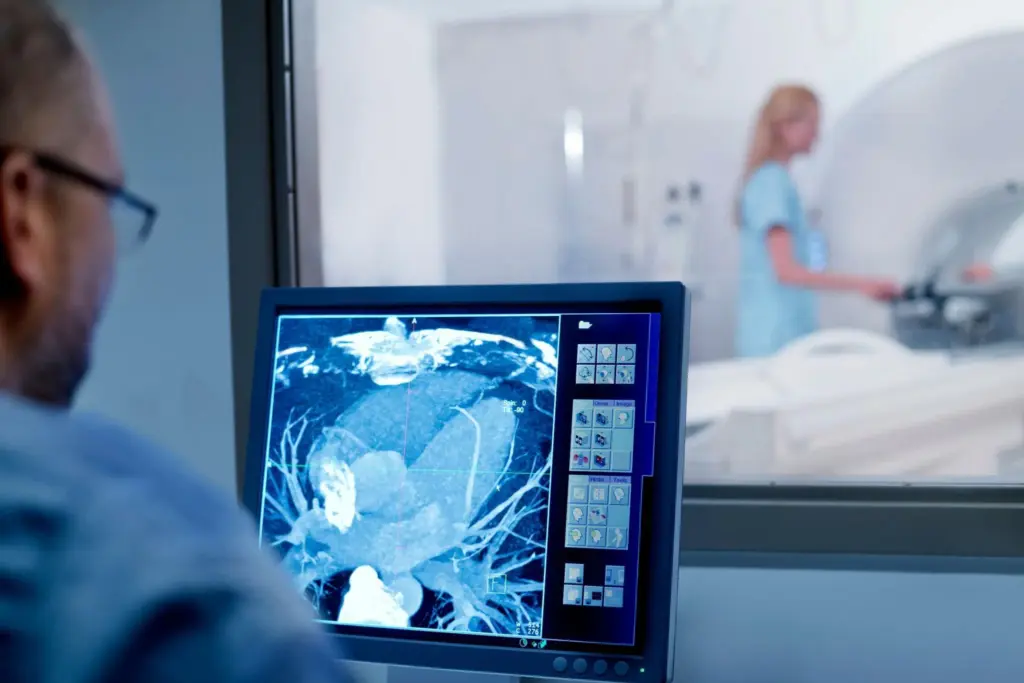
Fluorodeoxyglucose (FDG) is a key part of PET scans. It’s labeled with radioactive fluorine-18. We use FDG to find different health issues, like cancer, infections, and some brain problems.
FDG works like glucose, gathering in cells that need a lot of sugar. This includes tumors and cells fighting off infections. It gets into cells through special transporters and stays there after being changed by an enzyme. This makes FDG great for spotting areas with high activity.
A pet scan for cancer uses FDG for amazing results. Learn how this vital tracer helps doctors find and treat illness fast and safely.
Key Takeaways
- FDG is a glucose analog used in PET scans to detect conditions like cancer and infections.
- It accumulates in cells with high glucose demand, such as tumors.
- FDG-PET scans help in diagnosing and monitoring various medical conditions.
- The mechanism involves FDG being phosphorylated and trapped inside cells.
- FDG is FDA-approved for evaluating and monitoring certain cancers.
The Fundamentals of FDG as a Radiotracer

Understanding FDG is key to seeing its role in PET scans. Fluorodeoxyglucose (FDG) is a glucose-like substance used in PET scans. It helps check how active cells are in the body.
Chemical Structure and Properties of Fluorodeoxyglucose
FDG is a glucose molecule with a twist. It has fluorine-18, a radioactive isotope, instead of a hydroxyl group. This change lets FDG enter cells but not get fully broken down. It’s perfect for studying how cells use glucose.
The Critical Role of Fluorine-18 Labeling
Labeling FDG with fluorine-18 is vital for PET scans. Fluorine-18 emits positrons and has a short half-life. This makes it great for medical imaging.
Half-life and Imaging Window
Fluorine-18’s half-life is about 110 minutes. This short time means we have to act fast for imaging. But it also means we get clear images with less radiation.
|
Property |
Description |
|---|---|
|
Chemical Structure |
Modified glucose molecule with fluorine-18 |
|
Half-life of Fluorine-18 |
Approximately 110 minutes |
|
Imaging Window |
Limited by the half-life of fluorine-18 |
We use FDG PET imaging to see and measure how active cells are. This helps us diagnose and treat many diseases. FDG’s special properties make it a key tool in medical imaging.
How PET Scan Technology Detects Metabolic Activity
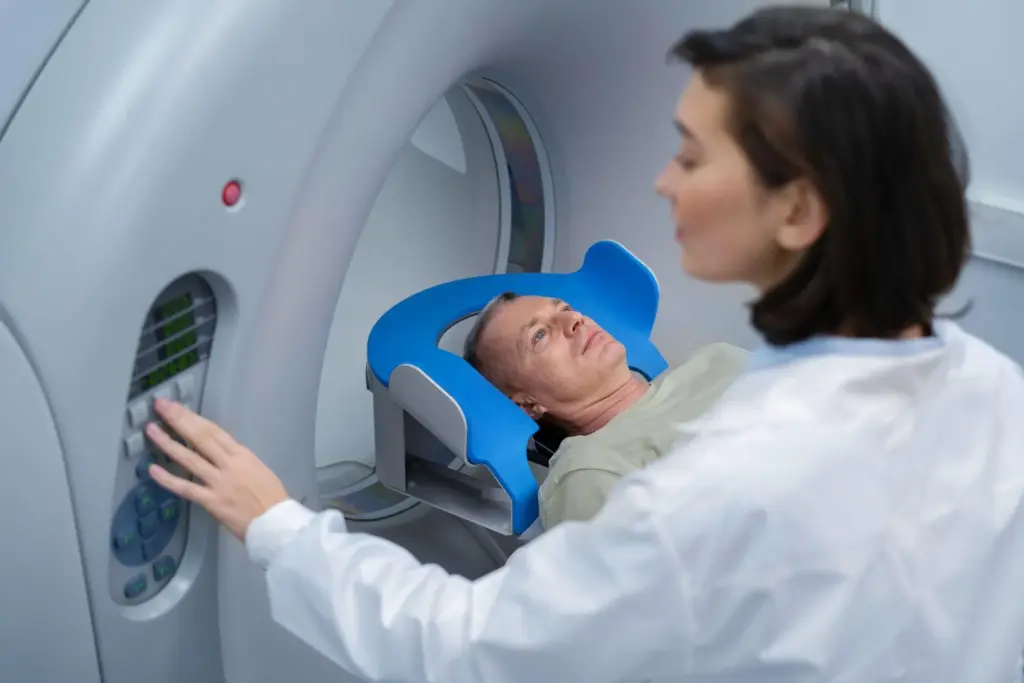
PET scan technology has changed medical imaging a lot. It lets us see how active different parts of the body are. This is thanks to positron emission tomography (PET) principles.
Principles of Positron Emission Tomography
PET scan technology uses a special substance called fluorodeoxyglucose (FDG). This substance goes to areas where the body is very active. When it breaks down, it sends out positrons.
These positrons meet electrons and create annihilation events.
Annihilation Events and Gamma Ray Detection
When a positron meets an electron, they turn into two gamma rays. These rays go in opposite directions. A PET scanner finds these rays using detectors around the patient.
Image Reconstruction Techniques
The scanner’s data is turned into images with special algorithms. These images show where the body is most active. Doctors use them to find and treat diseases like cancer and brain disorders.
Learning about PET scans shows their importance in medicine. The technology keeps getting better, helping doctors more and more.
Cellular Metabolism of FDG: The Trapping Mechanism
FDG acts like glucose and gets into cells. Inside, it gets trapped through a process called phosphorylation. This is key for using FDG in PET scans to see how tissues are working.
Glucose Transporters and Cellular Uptake
Cells take in FDG through glucose transporters. These proteins help bring glucose and its copies into cells. Cancer cells, with their high activity, use more of these transporters. This makes FDG great for finding and tracking cancer.
Phosphorylation by Hexokinase
Inside the cell, FDG gets changed into FDG-6-phosphate by hexokinase. This change is important because it keeps FDG from being broken down further.
Why FDG Cannot Undergo Further Metabolism
Unlike glucose, FDG-6-phosphate can’t be broken down because of its special structure. This is why it stays in cells, giving us a look at their activity.
Intracellular Accumulation Patterns
How much FDG stays in cells can change based on several things. These include the type of cell, how active it is, and which transporters it has. Knowing this helps us understand PET scan results better.
|
Cell Type |
FDG Uptake Mechanism |
Accumulation Pattern |
|---|---|---|
|
Cancer Cells |
Upregulated glucose transporters |
High accumulation due to increased metabolic rate |
|
Normal Cells |
Baseline glucose transporters |
Lower accumulation reflecting normal metabolic activity |
|
Inflammatory Cells |
Increased glucose transporters during activation |
Variable accumulation depending on the stage of inflammation |
The Warburg Effect: Cancer’s Metabolic Signature
Cancer cells have a unique way of making energy, known as the Warburg effect. This was discovered by Otto Warburg in the 1920s. It means they use glycolysis for energy, even when oxygen is available.
Altered Glucose Metabolism in Malignant Cells
Malignant cells change how they use glucose. They prefer glycolysis over using oxygen for energy. This helps them grow and multiply quickly by getting the energy and materials they need.
Upregulation of Glucose Transporters in Tumors
The upregulation of glucose transporters, like GLUT1, in tumors helps them take in more glucose. This is key for the Warburg effect’s high glycolytic rate.
Metabolic Differences Between Cancer and Normal Tissues
Diagnostic imaging, like PET scans, uses these metabolic differences. Cancer cells take up more glucose than normal cells. This makes it possible to spot and track tumors with pet scan cancer methods.
Grasping the Warburg effect and its role in cancer metabolism is vital. It helps us create better ways to find and treat cancer. By focusing on cancer’s metabolic weaknesses, we can use PET scans more effectively. This is important for understanding “what is a pet scan for cancer.”
PET Scan for Cancer: Detection and Diagnostic Applications
FDG-PET scans have greatly helped in finding and diagnosing different cancers. They show where tumors are by highlighting areas that use a lot of sugar. This helps doctors find tumors and learn about their size and activity.
Identifying Primary Tumors and Their Characteristics
FDG-PET scans are great at finding primary tumors because they use a lot of sugar. This makes tumors stand out more than they would on other scans. Doctors can then see how big the tumors are and how active they are, which helps plan treatment.
Sensitivity and Specificity in Oncologic Imaging
Research shows that FDG-PET scans are very good at finding cancer. They are sensitive, meaning they can spot cancer well, and specific, meaning they can tell the difference between cancer and not cancer. Both are key for making the right diagnosis and treatment plan.
- High sensitivity: PET scans can find cancerous tissues accurately.
- High specificity: They can also tell the difference between cancer and non-cancer tissues well.
Standardized Uptake Values (SUV) and Their Interpretation
Standardized Uptake Values (SUV) are important for understanding PET scan results. SUV shows how much sugar a tumor takes up compared to the body’s weight. A higher SUV means the tumor is more active, which often means it’s more aggressive.
Recent Research on Diagnostic Accuracy
New studies have confirmed how accurate FDG-PET scans are in finding cancer. They’ve worked on better ways to analyze images and new uses for PET scans. These improvements help doctors diagnose and plan treatment better.
By looking at how tumors use sugar, doctors can make better choices for patients. This includes diagnosing, checking how well treatment is working, and finding if cancer comes back.
Cancer Staging and Metastasis Detection with FDG-PET
FDG-PET scans have changed how we stage cancer and find metastases. This technology gives a detailed look at how tumors spread and work.
Whole-Body Assessment for Cancer Spread
FDG-PET scans let doctors see cancer spread all over the body. This helps them find metastases in different places. It’s key for planning the right treatment.
Impact on TNM Staging and Treatment Planning
FDG-PET scans greatly affect TNM staging. This is important for knowing how far cancer has spread. Knowing this helps doctors choose the best treatment for each patient.
Detection of Distant Metastases
FDG-PET is great at finding metastases far from the original tumor. This is important for finding patients who need more intense or supportive care.
Comparison with Conventional Imaging Methods
Research shows FDG-PET is better than other imaging at finding cancer spread. Here’s a table comparing its sensitivity and specificity with other methods.
|
Imaging Modality |
Sensitivity (%) |
Specificity (%) |
|---|---|---|
|
FDG-PET |
85-90 |
80-85 |
|
CT Scan |
60-70 |
70-80 |
|
MRI |
70-80 |
80-90 |
In summary, FDG-PET is essential for cancer staging and finding metastases. It helps doctors understand the disease better and plan effective treatments.
Monitoring Treatment Response and Recurrence
PET scans have changed how we watch cancer treatment. They show how active tumors are. This helps doctors see if treatment is working and adjust plans if needed.
Measuring Changes in Tumor Metabolic Activity
FDG-PET scans track tumor activity by seeing how much fluorodeoxyglucose it takes up. If less is taken up, it means treatment is working. But if more or the same is taken up, it might not be working.
Doctors can measure these changes to see if treatment is effective. This helps them decide if to keep or change treatment plans.
Optimal Timing of Scans During Cancer Therapy
When to do PET scans is key for accurate treatment checks. Scans are done before starting treatment, during it, and after it’s done. This helps see how well treatment is working.
When to check treatment response depends on the cancer and treatment type. Sometimes, checking early can tell a lot about how treatment will go.
Predicting Treatment Outcomes Using Metabolic Response
FDG-PET scans can tell us about treatment success. A big drop in tumor activity usually means good news. But if activity stays high, it might mean treatment isn’t working well.
Case Studies in Therapy Monitoring
Many examples show how useful FDG-PET scans are. For example, in lymphoma, a scan after a few chemo cycles can show if treatment is working.
In one case, a lung cancer patient had scans before and after targeted therapy. A big drop in tumor activity meant the treatment was working well. This helped the patient keep on the effective treatment.
Using FDG-PET scans helps doctors tailor treatments for each patient. This can lead to better cancer care outcomes.
Applications Beyond Oncology: Neurology and Inflammation
FDG-PET imaging is not just for cancer anymore. It’s also key in diagnosing and treating neurological disorders. We use it to look at different conditions and help decide on treatments.
FDG-PET in Alzheimer’s Disease and Dementia
FDG-PET is important for diagnosing Alzheimer’s and other dementias. It checks how the brain uses glucose, showing signs of neurodegenerative diseases. This helps us tell Alzheimer’s apart from other dementias, leading to better treatments.
A study in the Journal of Nuclear Medicine showed FDG-PET’s value in spotting Alzheimer’s. It can find specific brain metabolic patterns
“FDG-PET imaging can provide valuable information on the metabolic activity of brain regions, aiding in the diagnosis of neurodegenerative diseases.”
Journal of Nuclear Medicine
Detecting Inflammatory and Infectious Processes
FDG-PET is also great for finding inflammation and infections. It spots areas where glucose uptake is high, showing where the body is fighting off something. This is really helpful for diagnosing things like sarcoidosis or vasculitis.
|
Condition |
FDG-PET Findings |
Clinical Utility |
|---|---|---|
|
Alzheimer’s Disease |
Reduced glucose metabolism in temporal and parietal lobes |
Aids in diagnosis and monitoring disease progression |
|
Sarcoidosis |
Increased FDG uptake in affected organs (e.g., lungs, lymph nodes) |
Assesses disease activity and extent |
|
Vasculitis |
FDG uptake in vessel walls |
Helps in diagnosing and monitoring treatment response |
Cardiac Viability Assessment
FDG-PET helps check if heart muscle can recover in patients with heart disease. It looks at glucose use in the heart, finding areas that might get better with treatment.
FDG-PET imaging has many uses beyond cancer. It helps in neurology, inflammation, and checking heart health. As medical imaging gets better, FDG-PET will likely help us understand more diseases.
Radiation Safety and Patient Preparation
To get the most from FDG-PET scans, we focus on radiation safety and patient prep. We know PET scans can make patients anxious. So, we address their worries about radiation and how to prepare.
Typical Radiation Exposure from FDG-PET/CT
A typical FDG-PET/CT scan exposes you to about 14 mSv of radiation. This is a measure that considers how different parts of your body react to radiation. This amount is similar to what you’d get from other common scans. We make sure to keep radiation low while getting clear images for accurate diagnoses.
Critical Organs: Bladder and Excretion Pathways
The bladder and how you get rid of the scan’s tracer are key during an FDG-PET scan. We tell patients to drink lots of water and go to the bathroom often after the scan. This helps lower radiation to these areas and reduces side effects.
Patient Preparation Guidelines for Optimal Imaging
Getting ready for your FDG-PET scan is important for clear images. This means fasting, avoiding hard exercise, and keeping blood sugar in check. Following these steps helps make sure your scan is accurate and useful.
Managing Blood Glucose Levels Before Scanning
For patients with diabetes, managing blood sugar is key before a FDG-PET scan. High blood sugar can mess up how FDG is taken up, making images less clear. We give patients special diet and medication advice to keep their blood sugar right.
By understanding radiation safety and following prep guidelines, we can get the best results from FDG-PET scans. Our team is dedicated to making your PET scan experience safe and supportive.
Limitations and Challenges in FDG-PET Interpretation
Interpreting FDG-PET scans is complex and can be tricky. This tool is very useful for diagnosis but its accuracy can be affected by many things.
Physiological Uptake Patterns That Mimic Disease
One big challenge is telling the difference between normal and abnormal activity in scans. For example, brown fat can take up a lot of FDG, making it look like cancer.
Normal activity in the brain, muscles, and gut can also make it hard to read scans. Knowing these patterns helps us avoid mistakes.
False Positive and False Negative Results
False positives can happen due to inflammation, infection, or recent surgery. This can cause unnecessary worry and more tests. On the other hand, false negatives can miss small tumors or low activity, leading to missed diagnoses.
|
Cause |
Effect |
|---|---|
|
Inflammatory processes |
False Positive |
|
Small tumor size |
False Negative |
|
Technical factors |
False Negative |
Technical Factors Affecting Image Quality
Things like scanner quality, patient movement, and how the body absorbs the scan can affect how clear the image is. For example, movement can cause blurry images that hide or mimic tumors.
Strategies to Overcome Interpretive Challenges
To deal with these issues, we use several strategies. We prepare patients well, use advanced image techniques, and combine PET with CT or MRI. This gives us better information about where the activity is happening.
“The integration of PET with CT or MRI has significantly improved the diagnostic accuracy by providing both metabolic and anatomical information.”
— Expert in Nuclear Medicine
We also use SUV to measure how active a tumor is. By using all these methods together, we can make FDG-PET scans more reliable.
Conclusion: The Continued Importance of FDG in Medical Imaging
Fluorodeoxyglucose (FDG) has changed the game in medical imaging, mainly in cancer research. It helps find and track cancer, see how treatments work, and spot when cancer comes back. FDG is also key in brain health, helping diagnose and manage Alzheimer’s disease.
The importance of FDG in cancer diagnosis and other medical uses is clear. As technology gets better, FDG will help doctors even more, giving them better tools to diagnose and monitor treatments.
We see FDG PET scans becoming even more important in patient care. They’ve already changed how doctors diagnose diseases, making a big difference in fighting many illnesses.
FAQ
What is fluorodeoxyglucose (FDG) and why is it used in PET scans?
FDG is a glucose-like substance that cells absorb. It’s trapped in cells, making it great for finding active areas in the body.
How does a PET scan work?
PET scans detect gamma rays from a special sugar, like FDG. This sugar is made radioactive. The rays help create detailed images of the body.
What is the role of fluorine-18 labeling in FDG?
Fluorine-18 labeling is key. It makes the sugar radioactive for just the right amount of time. This allows for clear images without too much radiation.
How is FDG taken up by cells?
Cells absorb FDG through special transporters. Then, an enzyme traps it inside. This makes FDG a good marker for cell activity.
What is the Warburg effect and how does it relate to cancer detection?
The Warburg effect is when cancer cells use more sugar. FDG-PET scans can spot this. They help find tumors and where cancer has spread.
How is FDG-PET used in cancer staging and treatment planning?
FDG-PET scans show how far cancer has spread. This helps doctors plan treatments and understand the cancer’s stage.
Can PET scans be used to monitor treatment response?
Yes, PET scans track how tumors react to treatment. They help predict how well treatment will work and if cancer comes back.
What are some applications of FDG-PET beyond oncology?
FDG-PET is used in neurology to diagnose diseases like Alzheimer’s. It also helps detect inflammation and check heart health.
What are the typical radiation exposure levels from FDG-PET/CT scans?
Radiation from FDG-PET/CT scans varies. But, there are guidelines to keep exposure low and images clear.
How can false positives and false negatives be minimized in FDG-PET interpretation?
To avoid mistakes, know how cells naturally take up FDG. Also, pay attention to how the scan is done. Using SUV values helps too.
How should patients prepare for an FDG-PET scan?
Patients should manage their blood sugar and fast before the scan. Following these steps helps get the best images.
References
Nature (Scientific Reports) Sprinz, C., Zanon, M., Altmayer, S., Watte, G., Irion, K., Marchiori, E., & Hochhegger, B. (2018). Effects of blood glucose level on 18F fluorodeoxyglucose (18F-FDG) uptake for PET/CT in normal organs: An analysis on 5623 patients. Scientific Reports, 8(1), Article 2126. https://doi.org/10.1038/s41598-022-13345-4