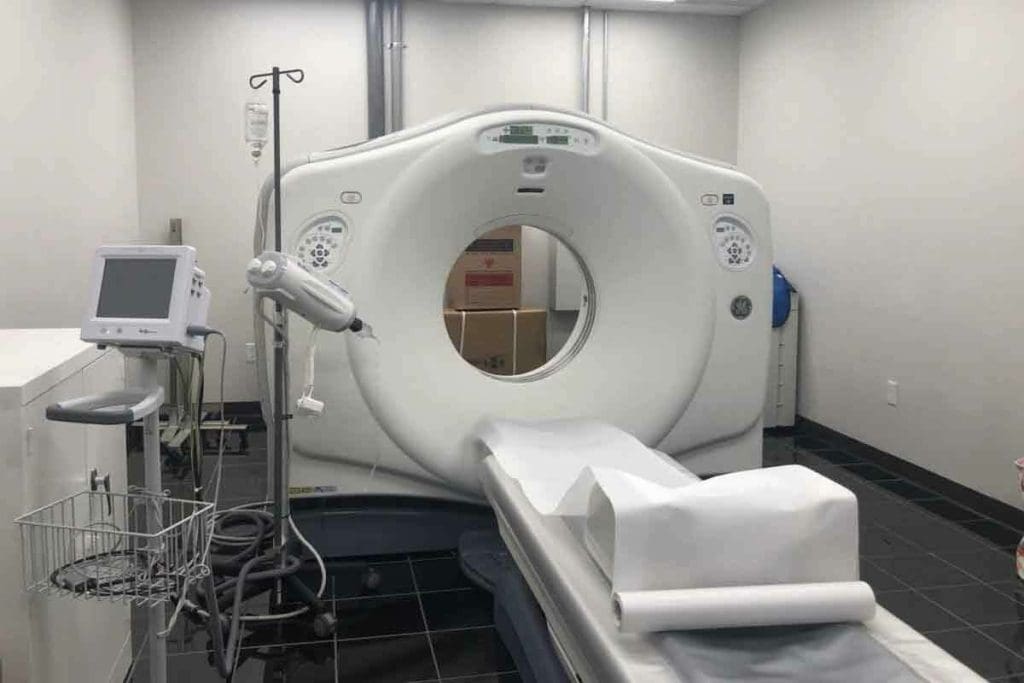
At Liv Hospital, we know how vital accurate diagnosis and treatment are, like for cancer. It’s key to choose between a PET scan machine vs MRI machine. Each gives different views into the body’s inner workings. A PET scan uses a radioactive tracer to show metabolic activity at the cellular level, making it very useful for detecting cancer and monitoring its progress. An MRI machine uses strong magnets and radio waves to create detailed images of organs and soft tissues. Together, these imaging technologies provide comprehensive information for precise diagnosis and treatment planning.
PET scans show how cells work by using a special tracer. MRI scans, on the other hand, create detailed pictures of organs and tissues. They use strong magnets and radio waves, without using radiation. Our advanced methods make sure patients get the best care possible.
We’ll look at seven main differences between these tools. We’ll see how they help in medical imaging and support our care for patients.
Key Takeaways
- Understand the fundamental differences between PET and MRI scans.
- Learn how Liv Hospital’s advanced imaging technologies improve patient outcomes.
- Discover the unique capabilities and applications of PET and MRI scans.
- Find out how our cutting-edge protocols optimize patient experience.
- Explore the role of PET and MRI scans in cancer diagnosis and treatment.
The Critical Role of Advanced Medical Imaging in Diagnosis
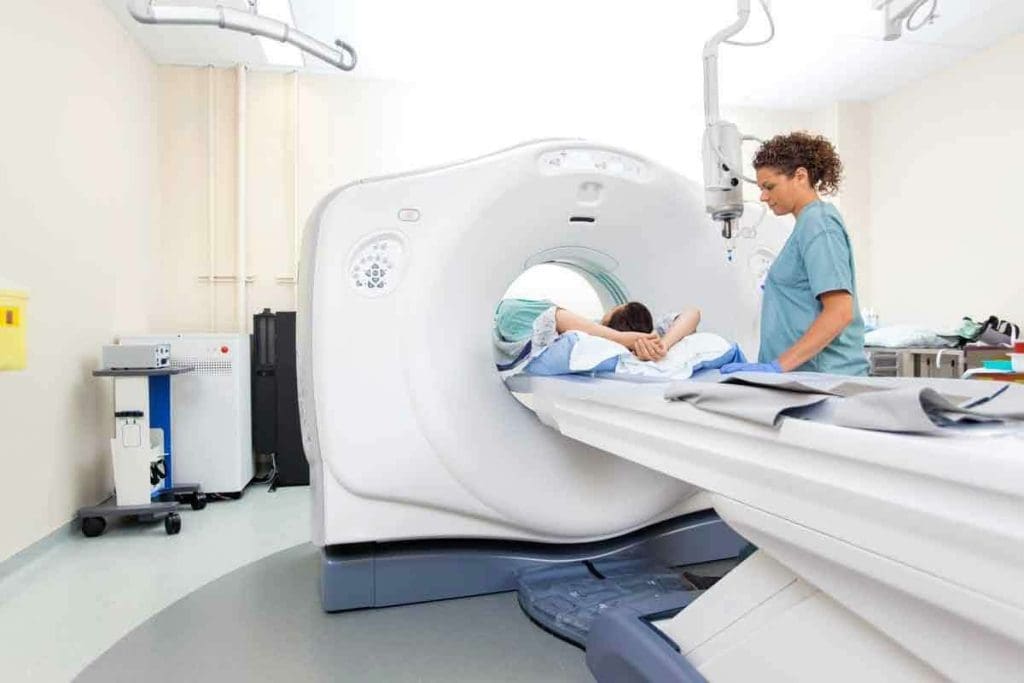
Medical imaging is key in today’s healthcare. It helps doctors make accurate diagnoses and plan treatments. Technologies like PET and MRI give doctors detailed views of the body’s inner workings.
Evolution of Diagnostic Imaging Technologies
Diagnostic imaging has come a long way. From simple X-rays to advanced PET and MRI scans, it’s a big leap. These new tools help doctors spot problems early and accurately.
These technologies have gotten better at showing clear images fast. They provide both functional and anatomical details. This helps doctors make better treatment plans.
Impact on Patient Care and Treatment Planning
Advanced imaging has a huge impact on patient care. It gives doctors detailed information on disease spread and growth. This helps create treatment plans tailored to each patient.
In cancer care, PET scans spot active tumors, while MRI shows the body’s structure. Together, they help stage cancer better and track treatment progress.
These imaging tools also mean fewer invasive tests and quicker treatments. As medical imaging keeps improving, we’ll see even better care and outcomes.
What Is a PET Scan Machine?
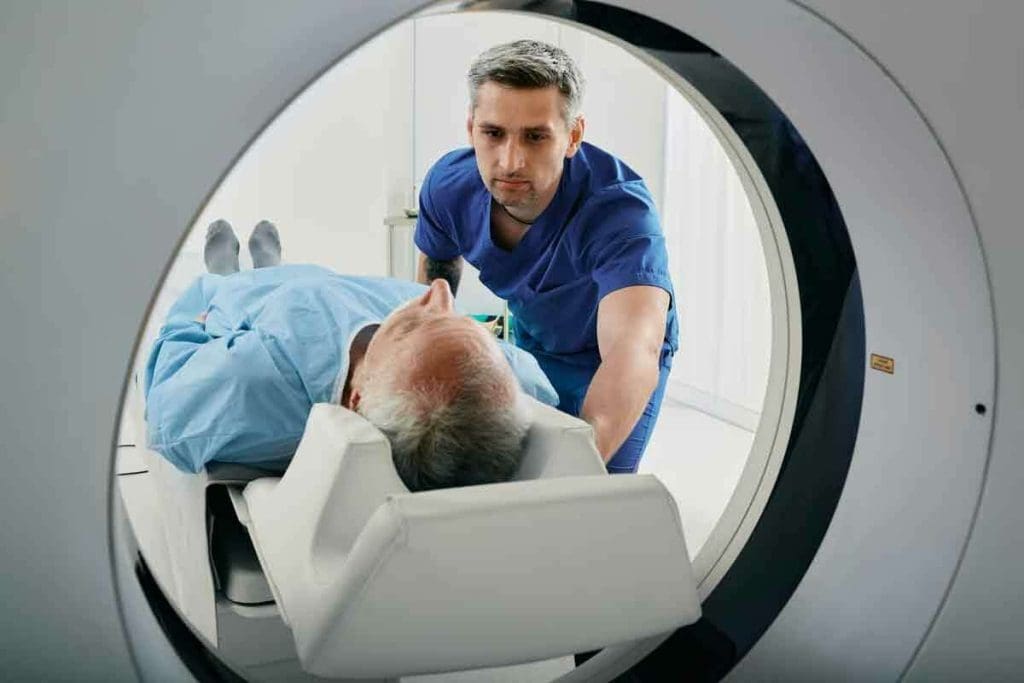
A PET scan machine is a high-tech device that uses special tracers to see how cells work. It’s key in modern medicine, helping find and track diseases like cancer.
Principles of Positron Emission Tomography
Positron Emission Tomography (PET) finds positrons from tracers. These tracers build up where cells are most active. The machine then makes detailed images of how cells work.
First, a tracer like Fluorodeoxyglucose (FDG) is given to the patient. It goes to cells based on how active they are. When it decays, it sends out positrons that the scanner catches.
Key Components and Technology
A PET scan machine has a few main parts:
- A gantry with detectors
- A table for the patient to move on
- Computers are used to make the images
The detectors catch the gamma rays from the tracer. This info helps make clear, 3D pictures of the body’s activity.
How Radioactive Tracers Reveal Cellular Activity
Radioactive tracers are the heart of PET scans. They show where cells are most active. This is very useful in finding tumors and seeing how active they are.
| Tracer | Application | Metabolic Activity Indicated |
| Fluorodeoxyglucose (FDG) | Cancer detection, neurological disorders | Glucose metabolism |
| Rubidium-82 | Myocardial perfusion imaging | Blood flow to the heart muscle |
| Oxygen-15 | Brain function and blood flow | Oxygen metabolism |
Knowing how PET scan machines work helps doctors make better choices. The use of tracers has opened up new ways to see inside the body.
What Is an MRI Machine?
MRI machines use strong magnetic fields and radio waves. They create detailed images of the inside of our bodies. This makes them very important in today’s medicine.
Principles of Magnetic Resonance Imaging
MRI works on the idea of magnetic resonance. It uses the body’s hydrogen nuclei and a strong magnetic field. When a radiofrequency pulse is added, these nuclei send out signals.
These signals help us see inside the body. They show us the body’s soft tissues. This is very helpful for checking the brain, spine, and muscles.
Key Components and Technology
An MRI machine has a few main parts:
- A strong magnetic field generator, which aligns the hydrogen nuclei.
- Radiofrequency coils, which send and receive signals.
- A computer system that makes the images from the signals.
New MRI systems also have things like gradient coils. These improve the image quality and detail. Studies show that MRI technology has gotten better, helping doctors make more accurate diagnoses in many areas.
How Magnetic Fields Generate Detailed Images
The strong magnetic field in an MRI machine lines up the body’s hydrogen nuclei. When a radiofrequency pulse is applied, it knocks them off track. As they get back to their original position, they send out signals.
These signals change based on the tissue type. This lets MRI machines make detailed, clear images.
The process includes:
- Signal acquisition, where the signals are caught by the radiofrequency coils.
- Signal processing, where the signals are worked on to get useful information.
- Image reconstruction, where the signals are turned into the final images.
By controlling the magnetic fields and radiofrequency pulses, MRI machines can make images with great detail. These images help doctors diagnose and treat many health issues.
PET Scan Machine vs MRI Machine: Core Technology Differences
It’s important to know how PET scan machines and MRI machines work. This helps us see what each can do. We’ll look at the main ways they are different.
Fundamental Physics Behind Each Technology
PET scan machines use a special method called Positron Emission Tomography. They use radioactive tracers that send out positrons. When these positrons meet electrons, they create gamma rays that the scanner can detect.
This lets us see how active different parts of the body are. MRI machines, on the other hand, use Nuclear Magnetic Resonance. They use strong magnetic fields and radio waves to make detailed pictures of the inside of the body.
Image Acquisition and Processing Methods
PET scans find metabolic activity by tracking gamma rays from tracers. This shows where in the body things are most active, like tumors.
MRI scans, though, make images by looking at signals from hydrogen nuclei. These signals come from when the nuclei are disturbed by radio waves. Then, the signals are turned into detailed pictures of the body’s structure.
Both methods use advanced algorithms to improve the quality of the images. This helps doctors get the best information for diagnosis.
Radiation Considerations and Safety Profiles
PET scans use radioactive tracers, which means they expose patients to radiation. This is something to think about, mainly for people who might need to have scans often.
MRI scans, on the other hand, don’t use radiation. The magnetic fields and radio waves they use are safe for most people. But there are some exceptions, like people with certain metal implants.
| Technology | Radiation Exposure | Primary Use |
| PET Scan | Yes | Metabolic Activity |
| MRI | No | Anatomical Imaging |
Knowing how PET and MRI machines work helps doctors choose the best imaging for patients. This is key to good care.
Difference #1: Metabolic vs Structural Imaging Capabilities
PET and MRI scans are used for different things in medical tests. PET looks at how cells work, while MRI checks the body’s structure. This helps doctors pick the right test for each patient’s needs.
PET’s Cellular-Level Metabolic Activity Detection
PET scans are great at finding out how cells are working. They use special tracers to spot areas where cells are very active. This is often a sign of cancer or other problems.
They are key to finding cancer early, seeing how treatments are working, and checking how different tissues are doing.
MRI’s Superior Tissue Differentiation Abilities
MRI scans are better at showing the differences between tissues and finding structural issues. They create detailed pictures of organs and tissues. This makes them very useful for diagnosing many conditions.
They help doctors see exactly what’s going on with tissues and how well they are working.
Clinical Impact of These Fundamental Differences
The way PET and MRI scans work has a big effect on how doctors treat patients. For example, PET scans are often used to find and track cancer. MRI scans are used to see structural problems in the body.
Knowing how each scan works helps doctors choose the best one for each patient. This leads to better diagnoses and treatment plans.
| Imaging Modality | Primary Use | Key Benefits |
| PET Scan | Metabolic activity detection | Early cancer detection, treatment monitoring |
| MRI Scan | Structural imaging | Detailed tissue differentiation, structural assessment |
Understanding what each scan can do helps doctors make better choices. This leads to more accurate diagnoses and better treatment plans for patients.
Difference #2: Diagnostic Applications in Various Medical Fields
PET and MRI technologies are used in many medical fields. They help doctors diagnose and plan treatments. Each field uses these imaging tools in its own way.
Oncology: Cancer Detection and Staging
PET scans are great for finding and checking cancer. They show where tumors are active.
Neurology: Brain and Nervous System Assessment
MRI is the top choice for brain and nervous system checks. It gives clear images of the brain. This helps diagnose things like multiple sclerosis and stroke.
Cardiology: Heart Function and Disease Evaluation
PET and MRI help with heart issues. PET scans check how well the heart works. MRI shows the heart’s shape and how it moves, helping spot heart problems.
Musculoskeletal: Joint and Soft Tissue Analysis
MRI is key for muscle and joint checks. It shows detailed images of these areas. It’s great for finding injuries, infections, and inflammation.
The table below shows how PET and MRI are used in different medical areas:
| Medical Specialty | PET Scan Applications | MRI Applications |
| Oncology | Cancer detection, staging, and monitoring treatment response | Tumor localization, assessing tumor size, and extent |
| Neurology | Assessing brain metabolism, detecting neurodegenerative diseases | Diagnosing multiple sclerosis, stroke, and spinal cord injuries |
| Cardiology | Evaluating myocardial viability and perfusion | Assessing heart structure and function, diagnosing cardiac conditions |
| Musculoskeletal | Limited, but can assess metabolic activity in musculoskeletal conditions | Diagnosing joint and soft tissue injuries, infections, and inflammatory conditions |
Difference #3: Cancer Detection and Treatment Monitoring
The fight against cancer needs accurate diagnosis and treatment tracking. PET and MRI scans are key tools for this. They help a lot in patient care.
PET’s Ability to Detect Early Metabolic Changes in Tumors
PET scans are great at spotting early changes in tumors. They show where cancer is, even before it grows much. This is key to catching cancer early.
Early Detection: PET scans find cancer early, when it’s easier to treat.
Metabolic Activity: They show how active tumors are, helping to understand how aggressive the cancer is.
MRI’s Precision in Determining Tumor Size and Location
MRI scans are precise in showing tumor size and location. This info is important for planning treatment. It helps doctors know how far the cancer has spread.
Tumor Localization: MRI gives clear images to find tumors accurately.
Treatment Planning: MRI’s detailed info helps plan surgeries or radiation therapy.
Comparative Effectiveness in Treatment Response Assessment
PET and MRI scans both check how well the treatment is working. PET looks at metabolic changes. MRI watches tumor size and shape.
| Diagnostic Criteria | PET Scan | MRI Scan |
| Early Detection Capability | Detects metabolic changes early | Provides detailed structural images |
| Treatment Monitoring | Monitors metabolic activity changes | Tracks changes in tumor size and structure |
| Clinical Use | Ideal for assessing cancer spread and aggressiveness | Superior for detailed tumor localization and treatment planning |
Using both PET and MRI scans together helps doctors understand cancer better. This leads to better treatment plans.
Difference #4: Patient Preparation and Procedure Experience
PET scans and MRI scans offer different experiences for patients. This is due to their unique technologies and protocols. Knowing these differences helps patients prepare and understand what to expect during and after the scan.
Pre-Scan Requirements and Restrictions
PET scans need specific preparations not needed for MRI scans. For PET scans, patients must fast for 4-6 hours before. This ensures the radioactive tracer is absorbed correctly. They may also need to avoid strenuous exercise and certain medications.
MRI scans have different requirements. Patients must remove metal objects like jewelry and glasses. Some MRI scans use a contrast agent, unlike PET scans, which use a radioactive tracer.
| Pre-Scan Requirement | PET Scan | MRI Scan |
| Fasting | Required (4-6 hours) | Not typically required |
| Removal of Metal Objects | Not required | Required |
| Contrast/Radioactive Tracer | Radioactive tracer injected | Contrast agent used in some cases |
Duration and Physical Experience During Scanning
PET and MRI scans last between 30 to 90 minutes. During a PET scan, patients lie on a table that slides into the scanner. The scan is quiet, and patients can watch movies or listen to music.
MRI scans require patients to lie in the MRI machine, which can be noisy. Earplugs or headphones are provided to reduce the noise. Some may feel claustrophobic due to the machine’s enclosed nature.
Post-Procedure Considerations and Recovery
After a PET scan, patients should drink plenty of fluids. This helps flush out the radioactive tracer. Following the healthcare team’s instructions is important.
For MRI scans, there are no specific post-procedure considerations unless a contrast agent was used. In such cases, patients are monitored for any adverse reactions.
Understanding the differences in preparation and experience between PET and MRI scans can reduce anxiety. It ensures patients are well-prepared for their diagnostic journey.
Difference #5: Contraindications and Safety Considerations
PET and MRI scans have their own safety rules. These rules affect how well patients are cared for and how accurate the results are. It’s key to look at what’s not allowed and the possible dangers of each.
PET Scan Radiation Exposure and Risk Factors
PET scans use a bit of radiation from the tracers. Even though the dose is usually safe, there’s some risk. We need to think about this risk, mainly for some patients.
Key considerations for PET scan radiation exposure include:
- The dose of radiation received by the patient
- The risk of harm from radiation, more for younger patients
- Ensuring the scan is really needed
MRI Magnetic Field Hazards and Contraindications
MRI scans use strong magnetic fields and radio waves. They’re mostly safe, but there are things to watch out for. Metal implants, like pacemakers, can be very risky during an MRI.
Before an MRI, it’s important to check if there are any metal implants. We also need to think about claustrophobia and other issues that might affect the scan’s success.
Special Considerations for Pregnant Women and Children
PET and MRI scans need extra care for pregnant women and kids. For PET scans, the radiation is a big worry. Usually, other imaging methods are chosen during pregnancy unless it’s really needed. MRI doesn’t use radiation, but we have to be careful about contrast agents and claustrophobia.
We must balance the benefits of these scans against the risks for these groups. Our goal is to keep risks low while getting the most accurate results.
Difference #6: Cost, Accessibility, and Insurance Coverage
It’s important to know the cost and access differences between PET and MRI scans. These factors affect healthcare choices and patient care.
Comparative Equipment and Operational Expenses
PET scan machines cost more than MRI machines to buy and run. PET scanners need expensive radioactive tracers, adding to their costs. MRI machines, though pricey, have lower ongoing costs because they don’t need radioactive isotopes.
Insurance Reimbursement Patterns and Patient Costs
Insurance coverage for PET and MRI scans can vary, affecting what patients pay. Both scans are covered for certain conditions, but the coverage can differ. PET scans, being pricier, can lead to higher costs for patients if not fully covered.
- PET scans are often covered for cancer, brain, and heart issues.
- MRI scans are covered for more conditions, like muscle and brain problems.
Global Availability and Access Challenges
The availability of PET and MRI machines varies worldwide. It depends on healthcare systems, money, and rules. MRI machines are more common because they’re cheaper to run and used for more things. PET scanners are mainly in big hospitals and special places.
Accessibility Challenges: In some places, like poor countries, getting PET and MRI scans is hard. This is because of the high costs of buying and keeping these machines.
Difference #7: Technological Advancements and Future Directions
The future of medical imaging is bright, thanks to new technologies in PET and MRI systems. We’re seeing big steps forward in how we diagnose and care for patients. Several key advancements are on the horizon.
Hybrid PET/MRI Systems: Benefits and Applications
Hybrid PET/MRI systems are a major leap forward. They mix the metabolic insights from PET scans with MRI’s detailed images. This gives us a clearer picture of diseases.
Benefits of Hybrid Systems:
- Enhanced diagnostic accuracy through combined metabolic and anatomical imaging
- Reduced radiation exposure for patients by minimizing the need for separate PET and MRI scans
- Improved patient comfort and convenience by streamlining the imaging process
Artificial Intelligence Integration in Image Analysis
Artificial intelligence (AI) is making a big impact in medical imaging. It’s being used to improve PET and MRI scans. AI algorithms help by making images clearer, spotting small issues, and giving precise measurements.
| AI Application | Description | Impact |
| Image Enhancement | AI improves image quality by reducing noise and artifacts | Better visualization of anatomical structures |
| Abnormality Detection | AI algorithms identify subtle changes in images | Earlier detection of diseases |
| Quantitative Analysis | AI provides precise measurements of image features | More accurate diagnosis and treatment monitoring |
Emerging Protocols for Enhanced Diagnostic Accuracy
New imaging protocols are being developed to boost PET and MRI’s diagnostic power. These include advanced MRI sequences and new PET tracers. They give us more info on tissue and metabolic activity.
As these technologies keep advancing, we’ll see better patient outcomes and care quality in medical imaging.
Conclusion: Making Informed Decisions About Medical Imaging
We’ve looked at how PET scan machines and MRI machines work in medical imaging. Knowing their differences helps patients and doctors make better choices for tests and treatments.
PET scans are great at finding out what’s happening at the cell level. This makes them key in fighting cancer and studying the brain. On the other hand, MRI machines are better at showing details of soft tissues. They’re perfect for checking injuries and certain health issues.
Understanding what each technology does best helps people make smarter choices. Whether it’s finding cancer, checking the brain, or looking at muscles, knowing the difference between PET scans and MRI machines can really help. This knowledge can lead to better treatment plans.
As medical imaging gets better with new tech like hybrid PET/MRI systems and AI, it’s important to stay up to date. This knowledge is key to the best care for patients.
FAQ
What is the main difference between a PET scan and an MRI scan?
PET scans look at how cells work by using radioactive tracers. MRI scans, on the other hand, show the details of tissues and find structural problems.
Which is better for cancer detection, a PET scan or an MRI scan?
PET scans are great for finding cancer early and seeing how tumors work. MRI scans are better at showing tumor size and where it is. Both are important for diagnosing and planning treatment.
Are PET scans and MRI scans safe?
PET scans use radiation, which is a worry for pregnant women and kids. MRI scans have strong magnetic fields that can be dangerous for some people. Both have safety issues.
How do PET scans and MRI scans differ in terms of patient preparation?
For PET scans, patients need to fast and get a radioactive tracer. MRI scans require patients to stay very quiet and not move during the scan.
What are the costs associated with PET scans and MRI scans?
PET scans are usually pricier than MRI scans. The cost can vary worldwide. Insurance and what patients pay also differ between the two.
Can PET scans and MRI scans be used together?
Yes, new systems combine PET and MRI scans. This mix offers better accuracy and less radiation. It helps in diagnosing more effectively.
How do PET scans and MRI scans contribute to treatment planning?
PET scans spot early changes in tumors, helping in diagnosis and tracking treatment. MRI scans show tumor size and location, aiding in treatment planning and checking how well treatment works.
What are the future directions in PET and MRI technologies?
New tech, like using artificial intelligence, is making diagnoses better. New methods and combined systems are being developed to help patients more.
Is a PET scan like an MRI scan?
No, PET and MRI scans are different. PET scans use radioactive tracers, while MRI scans use magnets and radio waves.
What is the difference between a PET scan and an MRI scan in terms of radiation exposure?
PET scans use radiation from tracers. MRI scans don’t use radiation, making them safer in some cases.
Reference
- Engel, R., et al. (2024). Diagnostic accuracy and treatment benefit of PET/CT in colorectal cancer patients. Cancer Imaging, 24, Article 19. https://www.sciencedirect.com/science/article/pii/S0960740424001191