
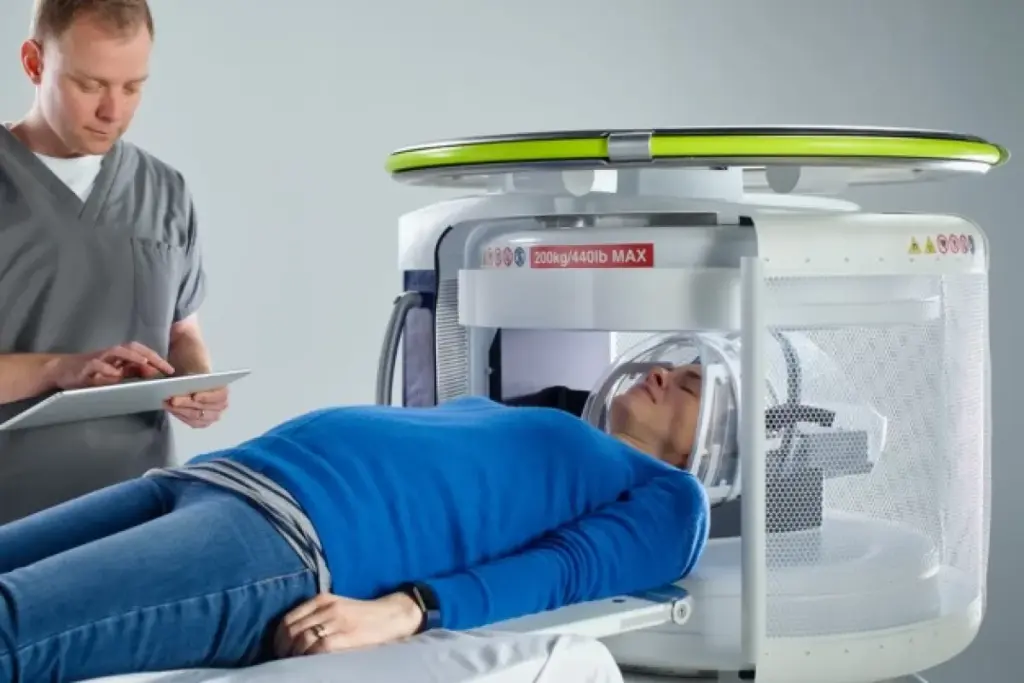
A positive PET scan shows abnormal activity, often linked to cancer recurrence or residual disease. This tool is key in finding and measuring disease in cancer patients.
Knowing what a positive PET scan means is vital. It helps doctors make better decisions and care for patients. It can spot disease coming back or growing before symptoms show up, leading to quicker action.
Key Takeaways
- A positive PET scan indicates abnormal metabolic activity.
- It is often associated with cancer recurrence or residual disease.
- PET scans play a critical role in cancer diagnosis.
- Understanding PET scan results is essential for informed decision-making.
- Timely interventions can be planned based on PET scan results.
Understanding PET Scan Technology
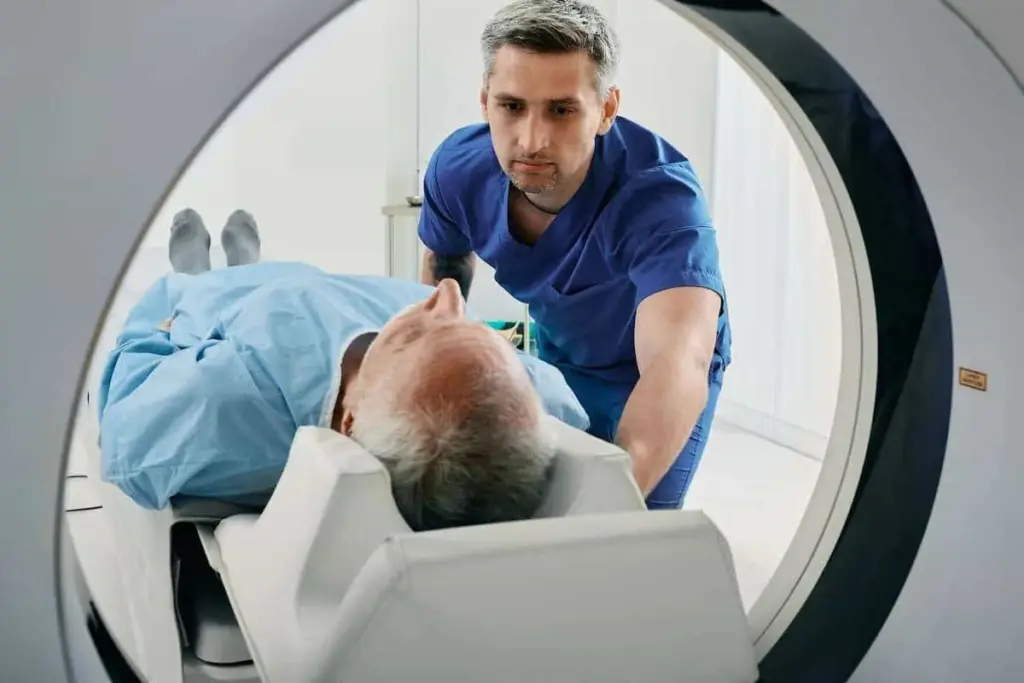
It’s important to know how PET scan technology works for accurate diagnosis. PET stands for Positron Emission Tomography. It’s a complex medical imaging method that shows how the body’s cells work.
How Positron Emission Tomography Works
PET scan technology uses a radioactive tracer to see where the body’s cells are most active. The tracer is usually Fluorodeoxyglucose (FDG), a special sugar that glows. When it decays, it sends out signals that the PET scanner picks up.
This creates detailed pictures of what’s happening inside the body. These images help doctors understand how the body is working.
Difference Between PET and Other Imaging Methods
PET scans are different from CT scans or MRI. CT scans and MRI show the body’s structure. But PET scans show how the body’s cells are working.
This makes PET scans very useful for finding cancer and checking how well treatments are working. They can also spot cancer coming back.
|
Imaging Method |
Primary Use |
Information Provided |
|---|---|---|
|
PET Scan |
Cancer diagnosis, treatment monitoring |
Metabolic activity |
|
CT Scan |
Anatomical imaging, injury assessment |
Anatomical details |
|
MRI |
Soft tissue imaging, neurological disorders |
Detailed soft tissue images |
PET scan technology is a key tool in medicine today. It’s very helpful in fighting cancer and other diseases that affect how the body works.
What Exactly Is a PET Scan and How Is It Performed?
A PET scan is a detailed medical imaging method that shows how active the body’s cells are. It’s often used to find and track diseases, like cancer. Knowing how a PET scan works can make patients feel more at ease and ready for the test.
The Science Behind Radioactive Tracers
PET scans use special substances called radioactive tracers. These tracers give off positrons. When positrons meet electrons, they create gamma rays that the scanner picks up.
The most common tracer is Fluorodeoxyglucose (FDG). It’s a sugar molecule with a radioactive tag. Cancer cells, which use more energy, take up more FDG. This makes them show up clearly on the scan.
Step-by-Step Procedure Overview
The PET scan process starts with a tracer injection. Then, the patient waits for about an hour for the tracer to spread. They must stay very quiet and calm during this time.
The actual scan takes about 30 to 60 minutes. The patient lies on a table that moves into the scanner. They need to stay very quiet and not move.
Duration and Patient Experience
The whole PET scan, from start to finish, takes a few hours. Patients should arrive early to get ready. They might feel a bit trapped by the scanner, but most people find it okay.
After the scan, patients can go back to their usual activities. Knowing what to expect can help patients feel less nervous and more prepared.
What Defines a Positive PET Scan Result
A PET scan is positive when it shows abnormal activity, often linked to cancer. It uses both numbers and images to make this judgment.
Standardized Uptake Values (SUV)
The SUV is a key part of PET scan results. It shows how much a tracer is taken up in a certain area compared to the whole body. A high SUV means more activity, which might mean cancer.
To find the SUV, you use the formula: SUV = (tissue activity concentration)/(injected dose/body weight). This helps doctors see how serious the disease is and if treatment is working.
Visual Assessment Criteria
Looking at images is also important for PET scan results. Doctors check for spots where more tracer is taken up. These spots could be tumors or other issues.
They also compare these images with CT or MRI scans. This gives a clearer picture of the disease.
Reporting Standards in Oncology
For PET scans to be reliable, there are set reporting rules. The PERCIST criteria are one example. They help doctors see how well treatments are working and if the disease is getting worse.
|
Reporting Criteria |
Description |
Clinical Significance |
|---|---|---|
|
PERCIST Criteria |
Standardized criteria for assessing treatment response using PET scans |
Helps in evaluating the effectiveness of cancer treatment |
|
SUVmax |
Maximum SUV value within a region of interest |
Used to assess disease severity and monitor treatment response |
|
Visual Assessment |
Qualitative evaluation of PET scan images |
Provides information on disease extent and location |
By using SUV values, looking at images, and following reporting guidelines, doctors can accurately say if a PET scan is positive. This helps them make better decisions for their patients.
Common Reasons for Positive PET Scan Results
Understanding why a PET scan shows a positive result is key. It helps figure out what to do next. There are many reasons, like cancer, other health issues, and sometimes mistakes.
Cancer-Related Causes
When a PET scan shows a positive result, cancer is often the main worry. Malignant tumors use a lot of energy, which shows up on PET scans. This includes cancers like lung, lymphoma, and colorectal.
The amount of tracer used can tell us how aggressive the cancer is.
Non-Cancer Related Causes
Not every positive PET scan is about cancer. Inflammatory conditions and infections can also show up. Even non-cancerous issues like inflammatory bowel disease or rheumatoid arthritis can cause false positives.
Doctors must think about these when they look at PET scan results.
False Positives and Their Frequency
False positives happen when a scan says there’s cancer when there isn’t. How often this happens depends on the situation and who’s being scanned. Things like infection, inflammation, and some benign tumors can cause false positives.
Knowing about false positives helps avoid unnecessary worry. It also makes sure people get the right care after a scan.
In short, a positive PET scan needs careful checking to find out why. Looking at all possible reasons helps doctors plan the best next steps for treatment.
The Significance of a Positive PET Scan in Cancer Diagnosis
Understanding a positive PET scan is key for patients and doctors. It greatly affects how cancer is diagnosed, staged, and treated.
Initial Cancer Detection
A positive PET scan is key in finding cancer first. It spots the main tumor and any spread early. This info is vital for knowing the cancer’s stage and treatment.
Recurrence Identification
For those who’ve had treatment, a positive PET scan shows if cancer comes back. It’s great for watching over patients who’ve had cancer before, catching it early.
Metastatic Disease Assessment
A positive PET scan is also key in seeing how far cancer has spread. It shows where cancer is active, helping doctors plan the best treatment.
|
Application |
Description |
Benefit |
|---|---|---|
|
Initial Cancer Detection |
Identifies primary tumor and any spread |
Right treatment plan |
|
Recurrence Identification |
Finds cancer coming back after treatment |
Quick action for new cancer |
|
Metastatic Disease Assessment |
Sees how far cancer has spread |
Better treatment choices |
In short, a positive PET scan is a powerful tool in cancer care. It gives important info on cancer’s presence, return, and spread. Its role is huge, shaping treatment plans and patient results.
Survival Statistics After a Positive PET Scan
Survival rates after a positive PET scan vary a lot. This depends on the type and stage of cancer. A positive PET scan means there’s high activity, which might be cancer. Knowing these stats helps patients and doctors make better treatment plans.
Median Survival Rates Comparison
Studies show PET-positive patients live shorter lives than those with negative scans. For example, a study found PET-positive patients live about 24 months. In contrast, PET-negative patients live around 60 months. This shows how important PET scans are in managing cancer.
Five-Year Survival Rate Differences
The five-year survival rate also varies a lot. A study on PMC found PET-positive patients have a 30% five-year survival rate. This is compared to 70% for PET-negative patients. This big difference shows how PET scan results affect long-term survival.
Cancer-Specific Survival Statistics
Survival rates after a positive PET scan also depend on the cancer type. For instance, lung cancer patients with a positive PET scan have a worse prognosis. Below is a table showing survival rates for different cancers based on PET scan results.
|
Cancer Type |
Median Survival (PET Positive) |
Median Survival (PET Negative) |
Five-Year Survival Rate (PET Positive) |
Five-Year Survival Rate (PET Negative) |
|---|---|---|---|---|
|
Lung Cancer |
18 months |
48 months |
20% |
60% |
|
Colorectal Cancer |
22 months |
55 months |
25% |
65% |
|
Lymphoma |
30 months |
60 months |
35% |
70% |
In summary, survival rates after a positive PET scan depend on many factors, like cancer type and stage. It’s key for patients and doctors to understand these stats. This helps in making informed decisions about cancer treatment and care.
Immediate Next Steps After a Positive PET Scan
When a PET scan shows a positive result, it starts a series of important steps. These steps help figure out what to do next. A positive scan means there’s something to look into more closely.
Consultation with Specialists
The first thing to do after a positive PET scan is to talk to specialists. They can give more detailed information about the scan. This might be oncologists if they think it’s cancer, or other experts depending on the issue.
During these talks, patients will learn about what the scan means. They’ll hear about possible diagnoses and the need for more tests to confirm things.
Additional Diagnostic Tests
After a positive PET scan, more tests are usually needed. These tests help get more information. They can include:
- Biopsies to look at tissue samples closely.
- Imaging tests like MRI or CT scans for detailed images.
- Blood tests to check for markers or other signs related to the suspected issue.
These tests help confirm a diagnosis and plan the right treatment.
Emotional Support Resources
A positive PET scan can be tough for patients and their families. It’s key to find emotional support resources during this time. This can include:
- Counseling or therapy sessions.
- Support groups where people can share their stories.
- Online resources and forums.
These resources offer comfort, guidance, and a sense of community during a hard time.
In summary, a positive PET scan is a big moment that needs a thorough response. This includes talking to specialists, doing more tests, and getting emotional support. By knowing these steps, patients can better understand their care journey.
How Positive PET Scans Influence Treatment Planning
A positive PET scan can change how cancer treatment is planned. It helps doctors create treatment plans that fit the patient’s needs.
When a PET scan shows cancer, it tells doctors how far it has spread. This info is key for choosing the best treatment.
Surgery Considerations
A positive PET scan helps surgeons know where to find cancer. This lets them plan the best surgery.
- Identifying tumors that are resectable
- Determining the extent of cancer spread
- Planning surgical margins
Radiation Therapy Adjustments
Positive PET scans can change radiation therapy plans. They help doctors target tumors more accurately.
- Defining the target volume for radiation
- Adjusting radiation doses based on tumor activity
- Minimizing exposure to surrounding healthy tissues
Chemotherapy Protocol Changes
Positive PET scans can lead to changes in chemotherapy. This might mean trying a new treatment or adjusting doses.
- Assessing the effectiveness of current chemotherapy
- Identifying resistance to certain chemotherapy agents
- Exploring alternative chemotherapy options
Immunotherapy Decisions
Positive PET scans help decide on immunotherapy. Doctors can see if it’s a good option based on how far the cancer has spread.
Immunotherapy is considered for certain cancers that respond well to it.
In summary, a positive PET scan is key in planning cancer treatment. It gives doctors the details they need to choose the best treatment for each patient.
Positive PET Scans in Different Cancer Types
A positive PET scan means different things for different cancers. It can show if cancer is present, how it’s growing, or if treatment is working. Knowing how PET scans work for various cancers is key for both patients and doctors.
Lung Cancer
In lung cancer, a positive PET scan spots cancer in the lungs. It shows if cancer has spread to other parts of the body. This info helps doctors choose the best treatment, like surgery or chemo.
Colorectal Cancer
PET scans are great for finding cancer in colorectal cancer. They show where cancer is active. This is helpful when other tests don’t show anything. It helps doctors decide if more surgery or special treatments are needed.
Lymphoma
PET scans are very important in lymphoma. They help figure out how far cancer has spread. They also check if treatment is working. This helps doctors adjust treatment plans as needed.
Other Common Cancers
PET scans are also used for other cancers like breast, melanoma, and head and neck cancers. They help find tumors, check lymph nodes, and spot cancer in other parts of the body. This info helps doctors stage cancer more accurately and plan better treatments.
In short, a positive PET scan has different meanings for different cancers. Understanding this helps doctors make better choices. This leads to better care for patients.
Follow-up Protocols After a Positive PET Scan
A positive PET scan is just the start. It’s key to know the follow-up steps for managing the disease well. After a positive result, patients must follow a set plan to keep track of their health. They also need to adjust treatments as needed.
Monitoring Frequency
The timing of follow-ups after a positive PET scan varies. It depends on the cancer type, its stage, and the treatment plan. Usually, appointments are set every few months to check how the treatment is working. Regular checks help spot any changes early, allowing for quick treatment changes.
Types of Follow-up Tests
After a positive PET scan, follow-up tests may include imaging and other diagnostic tests. Common tests are CT scans, MRI scans, and more PET scans. The test choice depends on the patient’s specific needs and what the doctors need to know about the disease.
When Additional PET Scans Are Recommended
More PET scans are suggested in specific situations. This includes when a closer look at treatment response or recurrence monitoring is needed. The choice to do more PET scans depends on the patient’s needs and doctor’s judgment. These scans offer important insights for treatment decisions.
In summary, follow-up plans after a positive PET scan are made for each patient. They involve regular check-ups and various tests to manage the disease effectively.
Understanding False Positives in PET Scanning
False positive PET scan results can cause a lot of worry and extra tests. A false positive happens when a PET scan shows disease, like cancer, when there isn’t any. This can be due to many reasons.
Common Causes of False Positives
Several things can lead to false positive PET scan results. These include:
- Infection or inflammation, as the body’s response to these conditions can mimic cancer on a PET scan.
- Recent surgery or trauma, which can cause changes in metabolism that are misinterpreted as cancer.
- Certain types of benign tumors that can take up the radioactive tracer.
How Doctors Differentiate True from False Positives
Doctors use a mix of clinical judgment, patient history, and more tests to tell true from false positives. For example, a patient’s medical history and symptoms can help figure out if a PET scan result is a false positive.
Additional diagnostic tools such as CT scans, MRI, or biopsy may be used to confirm or rule out disease.
Psychological Impact of False Positives
The emotional effect of false positive PET scan results is big. Patients may feel a lot of anxiety and distress, which can really hurt their life quality. It’s key for healthcare providers to offer support and clear talk to lessen this effect.
In summary, knowing about false positives in PET scanning is important for both doctors and patients. By understanding the common reasons and using a detailed approach to diagnosis, healthcare providers can lower the number and effect of false positives.
Advanced PET Scan Technologies and Their Accuracy
Advanced PET scan technologies are changing oncology with better accuracy. They work with other imaging tools to improve diagnosis.
PET/CT Combination Scans
PET/CT scans are a strong tool. They mix PET’s function info with CT’s body details. This mix helps spot and stage cancers better.
- Enhanced tumor localization
- Improved assessment of cancer spread
- Better planning for treatment
PET/MRI Fusion Imaging
PET/MRI imaging is another big step. It gives both metabolic and body details. It’s great for cancers like brain and prostate.
Key benefits include:
- Superior soft tissue contrast
- Reduced radiation exposure compared to PET/CT
- Enhanced diagnostic accuracy
New Tracers Beyond FDG
New tracers are being made to go beyond FDG. They target cancer cells or metabolic processes. This makes diagnosis more specific.
In conclusion, new PET scan techs like PET/CT, PET/MRI, and new tracers are making PET scans better. They help in cancer diagnosis and treatment planning.
International Standards and Approaches to Positive PET Scans
Managing positive PET scans is complex. It involves many international standards and approaches. As cancer care evolves, places around the world are using detailed strategies to deal with positive PET scan results.
Liv Hospital’s Multidisciplinary Approach
Liv Hospital shows how a multidisciplinary approach works. They have oncologists, radiologists, surgeons, and more. These experts work together to create treatment plans for each patient.
This method has many benefits:
- Comprehensive care from a team of experts
- More accurate diagnosis and treatment planning
- Better patient outcomes thanks to coordinated care
Academic Protocols in Leading Institutions
Top academic places have standardized protocols for positive PET scans. These protocols follow the latest research and guidelines. This ensures patients get the best care possible.
Some key parts of these protocols are:
- Regular review of PET scan results by a team
- Using advanced imaging for accurate diagnosis
- Creating treatment plans that fit each patient’s needs
Patient-Centered Care Models
Patient-centered care is key in managing positive PET scans. It focuses on the patient’s needs, preferences, and values. This way, care is given in a caring and supportive way.
Places that use patient-centered care see happier patients and better results.
By using international standards, teamwork, and patient-centered care, places can offer top-notch care for patients with positive PET scans.
Conclusion
A positive PET scan is very important for finding and treating cancer. It shows the need for a team effort in patient care.
Knowing how PET scans work is key for doctors and patients. A positive scan can mean different things, like cancer. It’s important to look at all the details.
When a PET scan shows cancer, it helps doctors know how far it has spread. This information helps plan the best treatment. A team of experts works together to make a care plan that fits each patient.
Places like Liv Hospital use advanced PET scans to help patients. They focus on giving top-notch care to those with complex cancer cases.
FAQ
What is a PET scan, and how does it work?
A PET (Positron Emission Tomography) scan is a test that uses a radioactive tracer. It shows how active the body’s cells are. A small amount of radioactive material is injected into the body. The PET scanner then picks up signals from this material, creating detailed images of the body’s internal structures.
What does a positive PET scan result mean?
A positive PET scan result means there’s more activity in a certain body area. This could mean cancer or another condition. A doctor will look at this result along with the patient’s medical history and other tests.
How is a PET scan different from a CT scan or MRI?
A PET scan looks at how active the body’s cells are, not just its structure. CT scans and MRI show the body’s structures in detail. But, PET scans find areas with abnormal activity, which can show cancer or diseases.
What is the role of PET scans in cancer diagnosis?
PET scans are key in finding cancer, seeing if it comes back, and how far it has spread. They also help check how well treatments are working and if cancer might come back.
How long does a PET scan procedure take?
A PET scan can take 30 minutes to several hours. This depends on the scan type and the body area being looked at. Getting ready and the injection can add to the time.
What are the risks associated with PET scans?
PET scans use a small amount of radiation, which is mostly safe. But, there’s a small chance of allergic reactions to the tracer and feeling claustrophobic during the scan.
How do doctors differentiate between true and false positives in PET scans?
Doctors use several ways to tell true positives from false ones. They look at the patient’s medical history, symptoms, lab results, and other scans. This helps confirm the diagnosis.
What are the latest advancements in PET scan technology?
New PET scan tech includes PET/CT scans, PET/MRI fusion, and new tracers. These advancements make PET scans more accurate and useful in cancer care.
How do positive PET scans influence treatment planning?
Positive PET scans give doctors important info on the disease extent and how it’s responding to treatment. This helps tailor treatments like surgery, radiation, or chemotherapy to each patient.
What are the follow-up protocols after a positive PET scan?
After a positive PET scan, patients usually need regular check-ups. This might include more PET scans, CT scans, or other tests. The type and how often these tests are needed depend on the patient’s situation and treatment plan.
References
- PMC (NCBI). [Article in PMC]. Retrieved from https://pmc.ncbi.nlm.nih.gov/articles/PMC4324379/