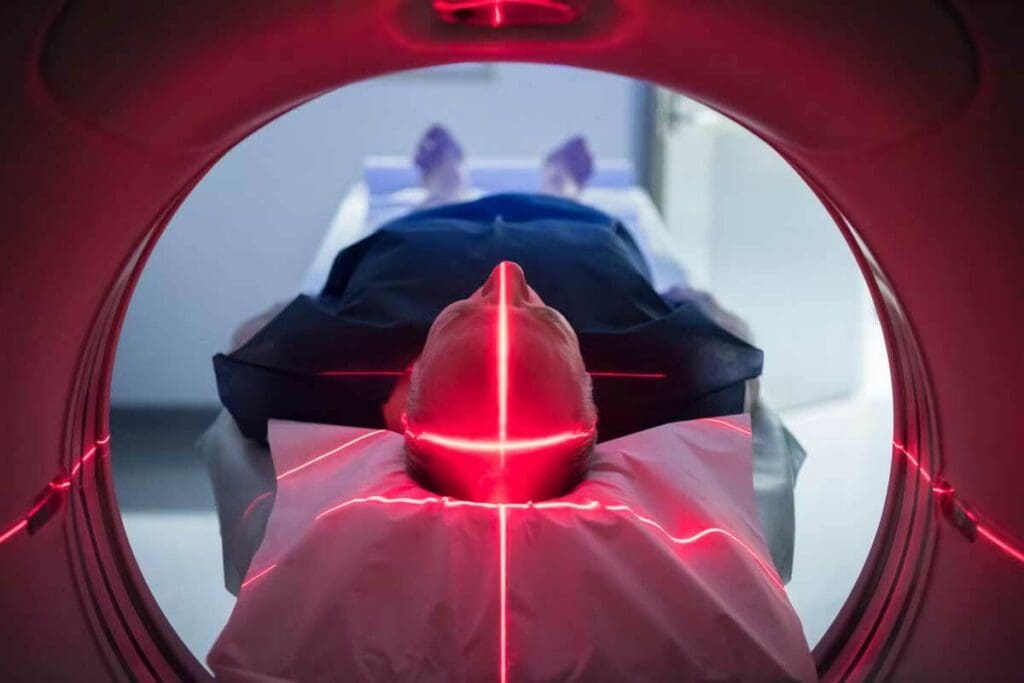
Medical imaging can be confusing. An FDG PET scan is a key tool for doctors. It helps find and track diseases, like cancer, by showing how active cells are in the body.
FDG means fluorodeoxyglucose. It’s a special dye used in PET scans. When we give a patient a small dose of FDG, we can see images. These images show where cells are working right and where they’re not.
This helps doctors spot and understand diseases like cancer, heart issues, and brain problems. For more on what your FDG PET scan results mean, check out DocPanel’s guide on FDG PET scans.
Key Takeaways
- FDG PET scans help diagnose and monitor diseases by highlighting metabolic activity.
- FDG stands for fluorodeoxyglucose, a radioactive tracer used in PET scans.
- The scan produces color-coded images showing normal and abnormal tissue activity.
- FDG PET scans are very useful for finding and tracking cancer.
- Understanding FDG PET scan results needs careful review by doctors.
The Fundamentals of FDG PET Scanning

FDG PET scanning is key in today’s medical world. We’ll look at its history, what FDG means in medical terms, its structure, and how it differs from natural glucose.
Historical Development of PET Technology
PET technology started in the early 1970s with the first scanners. Over time, PET has improved a lot. This includes better materials, new algorithms, and systems like PET/CT. Adding PET to CT has made it even better, giving doctors both function and anatomy in one scan.
FDG Medical Abbreviation Explained
FDG is short for Fluorodeoxyglucose, a glucose-like substance with a radioactive tag. It’s used in scans to see how the body uses energy. The term “FDG PET scan” shows where energy use is high, like in tumors.
Chemical Structure and Properties of Fluorodeoxyglucose
Fluorodeoxyglucose is a glucose-like molecule with a special tag. This tag lets it enter cells but not be used up. This makes it great for studying how cells use energy.
How FDG Mimics and Differs from Natural Glucose
FDG acts like glucose in that it gets into cells based on their energy use. But, unlike glucose, it doesn’t get broken down. This lets doctors see how much energy cells are using. This is very helpful in finding tumors because they use a lot of energy.
| Characteristics | FDG | Glucose |
| Cellular Uptake | Via glucose transporters | Via glucose transporters |
| Metabolism | Trapped after phosphorylation | Fully metabolized |
| Use in PET Scans | Used as a tracer | Not used as a tracer |
How PET Scanner FDG Technology Works

PET scanner FDG technology tracks how the body uses energy. It’s key for spotting diseases like cancer and brain disorders.
Radioactive Tracer Principles
PET scanner FDG uses radioactive tracers to see how the body works. These tracers glow and the scanner picks up this glow. The main tracer is Fluorodeoxyglucose (FDG), which cells take up based on their energy use.
Radioactive tracers let us peek into the body’s energy use. By adding these tracers, we can see how different body parts work.
The Role of Fluorine-18 in FDG
Fluorine-18 is key for FDG PET scans. It makes FDG glow, so we can see where it goes in the body. It’s chosen because it’s safe and works well for scans.
Fluorine-18 in FDG helps spot areas that use a lot of energy. This is helpful in finding cancer, as cancer cells use more energy than normal cells.
Detection Mechanisms in Modern PET Scanners
Modern PET scanners use advanced tech to find the glow from tracers. They have many detectors around the patient to catch the glow.
These scanners use special software to make images of where the tracer is. This helps doctors see how the body is working and plan treatments.
New tech in PET scanners makes images clearer and more detailed. Using PET with other scans, like CT, helps doctors even more in finding diseases.
The Metabolic Basis of FDG-PET Imaging
FDG-PET imaging uses the way cells use glucose to spot active areas, like tumors. This makes it a key tool in finding and tracking cancer and other diseases.
Cellular Uptake and Glucose Metabolism
Cells absorb FDG like they do glucose. But, once FDG is changed into FDG-6-phosphate, it can’t move out of the cell. This metabolic trapping lets FDG build up in cells that need a lot of glucose.
Cancer cells, which use more glucose than normal cells, take up more FDG. This is why FDG-PET scans are good at finding and watching cancer.
The Metabolic Trapping Principle
The metabolic trapping principle is key to how FDG-PET works. After cells take in FDG, it gets changed into FDG-6-phosphate. Unlike regular glucose-6-phosphate, FDG-6-phosphate can’t be turned into fructose-6-phosphate. So, it stays trapped in the cell.
This trapping is what makes FDG-PET scans so good. It lets us see cells that are really active. How much FDG a cell takes in shows how active it is, helping us spot problems.
Interpreting Areas of High FDG Uptake
High FDG uptake on PET scans usually means tissues or lesions are very active. In cancer, this often means it’s a tumor. But, other things like inflammation or infection can also show up as high uptake.
| Condition | FDG Uptake Level | Interpretation |
| Malignant Tumor | High | Indicative of cancerous cells with high metabolic rate |
| Inflammation | Moderate to High | May indicate inflammatory processes |
| Infection | Moderate | Can be associated with infectious processes |
| Normal Tissue | Low | Typical of normal cellular metabolism |
To understand FDG-PET scans, you need to know about FDG uptake and the situation of the scan. This helps doctors make better diagnoses and plans for treatment.
Clinical Applications in Oncology
In oncology, FDG PET/CT is key for cancer detection, staging tumors, and checking treatment results. It gives us vital info to help decide on treatments.
Cancer Detection and Initial Diagnosis
FDG PET/CT is a top tool for finding cancers. It helps spot the main tumor and any spread. This info is key for making a good treatment plan. For more on cancer diagnosis with FDG PET/CT, check out our FDG PET scan page.
Tumor Staging and Metastasis Identification
Knowing how far cancer has spread is critical for treatment planning. FDG PET/CT finds active tumor sites, even if regular scans miss them.
Treatment Response Monitoring
It’s important to see how treatments work. FDG PET/CT shows how tumors change, helping us know if treatments are working.
Recurrence Detection
Finding cancer early is key for effective treatment. FDG PET/CT spots changes in tumors early, helping us catch recurrence when it’s easier to treat.
FDG PET Applications Beyond Cancer
FDG PET scanning is not just for cancer. It helps in many other diseases too. It gives functional data that goes with CT or MRI images. This is useful for diseases other than cancer.
Neurological Applications
FDG PET scans help with brain disorders like Alzheimer’s and seizures. They show where brain metabolism changes. This is key for diagnosing and treating brain conditions.
It’s used to check brain activity in Alzheimer’s patients. It helps tell Alzheimer’s apart from other dementias. It also finds abnormal brain activity in seizure disorders.
Cardiac Applications
In heart health, FDG PET checks if heart muscle is alive. It finds areas with less blood flow. This is vital for treating heart disease or after a heart attack.
It spots heart muscle that’s alive but not working well. This helps doctors decide on treatments. It’s about choosing surgery or just medicine.
Inflammatory and Infectious Disease Evaluation
FDG PET is also good for inflammatory and infectious diseases. It finds infections or inflammation that other tests miss.
It’s great for unknown fevers or suspected infections in hard-to-reach places. It helps see how far disease has spread in conditions like sarcoidosis or large vessel vasculitis.
| Application Area | Specific Uses | Benefits |
| Neurology | Alzheimer’s disease diagnosis, seizure disorder assessment | Identifies altered brain metabolism, aids in diagnosis and management |
| Cardiology | Myocardial viability assessment, coronary artery disease evaluation | Determines viable but hibernating myocardium, guides revascularization decisions |
| Infectious/Inflammatory Disease | Fever of unknown origin, sarcoidosis, large vessel vasculitis | Identifies areas of infection/inflammation, guides further management |
The FDG PET CT Scan: Combined Modality Imaging
FDG PET CT scans are a big step forward in medical imaging. They mix the details from PET scans with the body’s layout from CT scans.
Integration of Functional and Anatomical Data
PET and CT together give a deeper look at diseases. They combine metabolic activity from FDG PET with CT’s precise body maps. This helps doctors make better diagnoses.
This method gives a clearer view of the body’s inside workings. It’s key in cancer care, helping spot tumors, see how active they are, and plan treatments.
Advantages of Hybrid Imaging
FDG PET CT scans have big benefits over PET or CT alone. These include:
- Improved diagnostic accuracy
- Enhanced tumor localization
- Better assessment of treatment response
- More precise staging of cancer
This hybrid imaging gives both functional and anatomical info in one scan. It makes diagnosing faster and more accurate.
Clinical Impact of PET/CT Fusion
PET/CT fusion has a big impact, mainly in cancer care. It lets doctors:
| Clinical Application | Benefit of PET/CT Fusion |
| Cancer Staging | More accurate assessment of tumor extent and metastasis |
| Treatment Planning | Precise localization of tumors for targeted therapy |
| Treatment Monitoring | Early assessment of response to therapy |
FDG PET CT scans have changed oncology a lot. They help doctors make better choices for patients. By combining imaging types, we get better at diagnosing and treating cancer.
Patient Experience: Preparing for and Undergoing an FDG PET Scan
At Liv Hospital, we help our patients through every step of the FDG PET scanning process. We make sure it’s smooth and comfortable for you. Our goal is to offer top-notch diagnostic services with full support and guidance.
Pre-Scan Preparation Requirements
To get accurate results from your FDG PET scan, follow our pre-scan guidelines. Don’t do strenuous exercise for a couple of days before and stop eating four hours before the scan. We might give you special instructions on hydration and medication. Wear comfy, loose clothes and avoid metal objects.
FDG Administration Process
The FDG administration process is key in the PET scanning procedure. Our skilled nuclear medicine technologists will give you the FDG tracer through an IV in a quiet, dim room. The injection is quick and might feel a bit uncomfortable.
The Scanning Experience
During the FDG PET scan, you’ll lie on a comfy table that slides into the PET scanner. The scan is painless and takes about 30 minutes to an hour. It’s important to stay very quiet and not move to get clear images. Our team will support you and answer any questions.
Post-Scan Procedures and Precautions
After the scan, you can go back to your usual activities unless your doctor says not to. Drink lots of water to get rid of the radioactive tracer. Also, avoid being close to pregnant women and young kids for a bit because of the radiation.
At Liv Hospital, we meet international standards in FDG PET/CT diagnostic services. We’re committed to excellent patient care and accurate results. Our team aims to give you the best experience and outcomes.
Safety Considerations and Radiation Exposure
It’s important to know about the radiation from FDG PET scans for patient safety. We use this tool to get accurate diagnoses. But, we must also think about the risks.
Radiation Dose from FDG PET Procedures
The radiation dose from FDG PET scans is about 7.5 mSv. This is similar to other nuclear medicine tests. The dose from a PET-CT scan also depends on the CT part.
Several things affect the radiation dose. These include how much FDG is given, the patient’s size, and the PET-CT scanner used.
Risk-Benefit Analysis
When we talk about FDG PET scan safety, we look at both sides. The scans help a lot in managing diseases, like cancer.
- Benefits include accurate diagnosis and staging of diseases.
- Risks involve exposure to ionizing radiation.
We make sure the good parts of the scan are worth the risks for each patient.
Special Considerations for Specific Patient Groups
Some groups need extra care with FDG PET scans. These include pregnant or breastfeeding women, children, and people with certain health issues.
Pregnant women need to know about the risks to their baby. Sometimes, other tests are better.
For children, the FDG dose is based on their weight. The scan is used only when it’s really needed.
By knowing these safety tips and taking steps, we can make FDG PET scans safer and more effective.
Interpreting FDG PET Scan Results
Understanding FDG PET scans is complex. It involves measuring Standard Uptake Values (SUV) and spotting normal versus abnormal patterns.
Standard Uptake Values (SUV) Measurement
Standard Uptake Values (SUV) are key in FDG PET imaging. They show how much FDG is taken up by tissues compared to the dose and body weight. SUV measurements help tell if a process is benign or malignant and track treatment effects.
We find SUV by checking the activity in a certain area of the PET image. This is adjusted for the dose and weight. An SUV of 2.5 is often used to tell apart benign and malignant lesions. But, this can change based on the situation and technology used.
| SUV Value | Interpretation |
| < 2.5 | Typically benign or low metabolic activity |
| 2.5 – 4.0 | Indeterminate; may require further evaluation |
| > 4.0 | High metabolic activity, potentially malignant |
Normal vs. Abnormal FDG Distribution Patterns
Knowing normal FDG distribution is key to spotting abnormalities. Normally, FDG is seen in the brain, heart, and to some extent, in the liver and kidneys. Variations from these normal patterns can indicate pathology. For example, increased FDG uptake in lymph nodes, bones, or soft tissues may suggest inflammation, infection, or malignancy.
Common Findings in Various Disease States
FDG PET scans are great in oncology for finding and staging cancer, and checking treatment response. High FDG uptake is often seen in aggressive tumors. In neurology, it helps diagnose and manage neurodegenerative diseases by showing glucose hypometabolism patterns. In cardiology, it assesses myocardial viability.
Potential False Positives and Negatives
While FDG PET is a powerful tool, it has its limits. False positives can happen due to inflammation, infection, or post-surgical changes, leading to unnecessary worry and more tests. False negatives can occur in tumors with low activity or if the tumor is too small for the PET scanner, potentially missing early disease.
We must consider these factors when looking at FDG PET scan results. We should combine them with clinical info and other diagnostic findings for a full assessment.
Comparing FDG-PET with Alternative Diagnostic Imaging
FDG-PET is special because it shows how tissues work, not just what they look like. This is different from CT or MRI, which show the body’s structure. It’s a big help in many medical situations.
FDG-PET vs. Conventional CT and MRI
FDG-PET is not like CT or MRI scans. CT and MRI show body parts in detail. But FDG-PET shows how active tissues are. For example, it can spot tumors that CT or MRI might miss.
Using FDG-PET with CT or MRI gives a clearer picture of a patient’s health. For more info on PET scans, check out healthdirect.gov.au.
FDG-PET vs. Other Nuclear Medicine Techniques
In nuclear medicine, there are many tools, each good for different things. FDG-PET is great for checking how tissues use glucose. This makes it excellent for finding and tracking cancer. Other methods, like bone scans, are better for other uses.
When to Choose FDG-PET Over Alternatives
Choosing FDG-PET depends on what doctors need to know. For example, in cancer staging or treatment response, FDG-PET’s metabolic insights are key. We’ll talk about when FDG-PET is the best choice.
Excellence in FDG PET/CT Services at Liv Hospital
At Liv Hospital, we’re proud of our FDG PET/CT services. Our top-notch equipment and skilled team give patients accurate results. We combine functional and anatomical imaging for better care.
Conclusion: The Evolving Role of FDG PET Scanning in Modern Medicine
Medical technology keeps getting better, and so does our understanding of diseases. FDG PET scanning is playing a bigger role in medicine. It helps doctors in oncology, neurology, and cardiology make better treatment plans.
By combining FDG PET with CT and MRI, doctors can get even more accurate results. This helps in finding and understanding diseases better. It’s all about making medicine more personal, and FDG PET is key in this effort.
New research is opening up more ways to use FDG PET scanning. As we learn more about how diseases work, FDG PET will help find new treatments. The future of FDG PET in medicine looks very promising, with new discoveries on the horizon.
FAQ
What does FDG stand for in medical imaging?
FDG stands for Fluorodeoxyglucose. It’s a glucose molecule used as a tracer in PET scans.
How does an FDG PET scan work?
An FDG PET scan injects a small amount of FDG into the body. Cells absorb it. The PET scanner then detects the radiation, creating images of how the body functions.
What is the role of Fluorine-18 in FDG?
Fluorine-18 is a radioactive isotope attached to FDG. It lets the PET scanner detect it.
What are the clinical applications of FDG PET/CT in oncology?
In oncology, FDG PET/CT helps detect cancer, stage tumors, monitor treatment, and find recurrence.
Can FDG PET scans be used for conditions other than cancer?
Yes, they can also evaluate neurological and cardiac conditions, as well as inflammatory and infectious diseases.
What is the benefit of combined FDG PET CT scans?
Combined scans provide both functional and anatomical information. This leads to more accurate diagnoses and treatment plans.
How should I prepare for an FDG PET scan?
To prepare, fast for several hours, avoid strenuous exercise, and follow dietary instructions.
What are the safety considerations for FDG PET scans?
The main concern is radiation exposure, but the dose is generally safe. Pregnant or breastfeeding women may need special care.
How are FDG PET scan results interpreted?
Results are analyzed by looking at Standard Uptake Values (SUV) and patterns of FDG distribution.
How does FDG-PET compare to other diagnostic imaging modalities?
FDG-PET offers unique functional information. It complements anatomical information from CT and MRI.
What is the radiation dose from an FDG PET scan?
The dose varies by procedure and patient size. It’s usually between 7-14 mSv.
Are there any potentially false positives or negatives with FDG PET scans?
Yes, false positives can happen due to inflammation or infection. False negatives can occur if tumors are small or have low activity.
References
- Anand, S. S., & Minarik, D. (2011). Clinical applications of PET and PET/CT: Oncology, neurology, and cardiology. The Indian Journal of Radiology & Imaging, 21(3), 160-168. Retrieved from https://pmc.ncbi.nlm.nih.gov/articles/PMC4921358/