Getting ready for a pulmonary function test can feel scary if you don’t know what to expect. At our place, we aim to make you feel at ease and supported.
A pulmonology test, also known as a pulmonary function test or spirometry, checks how well your lungs work. It usually takes between 15 to 45 minutes.
How long it takes can change based on a few things. These include the test type, how well you do during the test, and how complex it is. Our team works hard to make sure the test is done right and that you’re comfortable.
Key Takeaways
- A pulmonology test typically lasts between 15 to 45 minutes.
- The test duration can vary depending on the type of test and patient cooperation.
- Our team ensures that the test is conducted efficiently and comfortably.
- A pulmonary function test assesses how well your lungs are functioning.
- Our institution provides a supportive environment for patients undergoing pulmonology tests.
What Are Pulmonary Function Tests (PFTs) and Why They’re Important
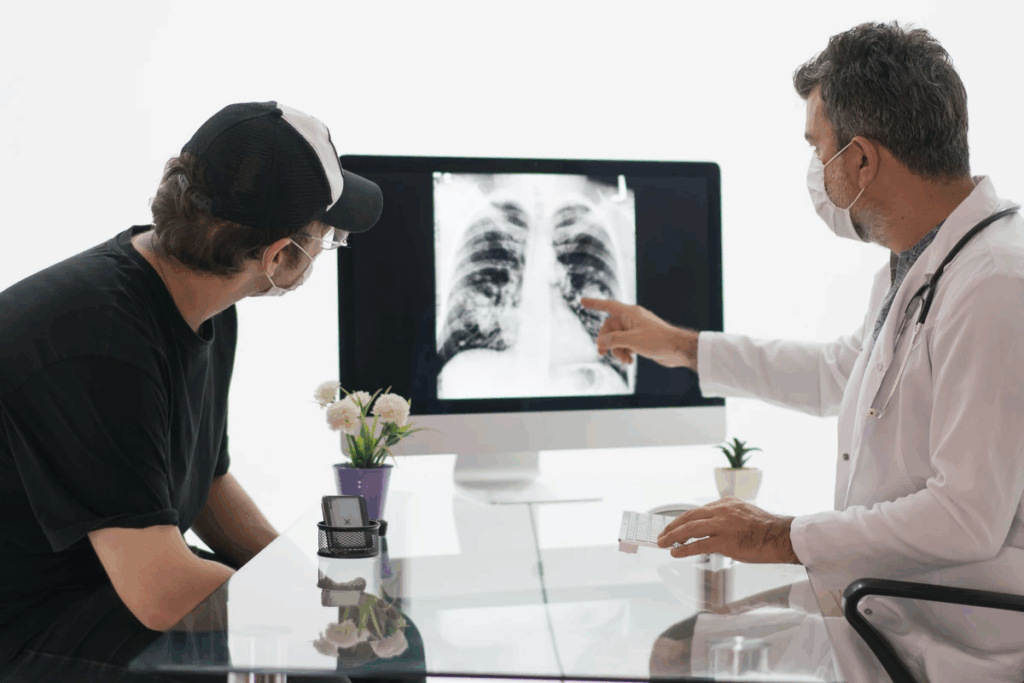
Pulmonary Function Tests (PFTs) are key for diagnosing and managing lung issues. They measure how well your lungs work. These tests help spot lung problems early.
Definition and Purpose of Pulmonary Testing
PFTs check lung function like airflow and gas exchange. They help find and track lung diseases like asthma, COPD, and others. This lets doctors plan the best treatment.
These tests see how well your lungs breathe and move oxygen. You breathe into a machine that checks lung function. The results show lung health and any problems.
Common Conditions Diagnosed Through PFTs
PFTs help find many lung diseases. Some include:
- Asthma: A long-term condition that narrows airways.
- COPD: A disease that makes breathing hard.
- Restrictive Lung Diseases: Make lungs stiff, hard to expand.
How Test Results Establish Baseline Lung Function
PFT results give a lung function baseline. This is key for tracking lung disease changes. It helps doctors adjust treatments as needed.
These results consider your age, sex, height, and weight. This makes care plans fit your needs perfectly.
The Standard Duration of PFT Tests: What to Expect
When you’re getting ready for a pulmonary function test (PFT), knowing how long it takes can help you relax. We know your time is important. So, we aim to make the test quick and accurate.
The Typical 15-45 Minute Timeframe
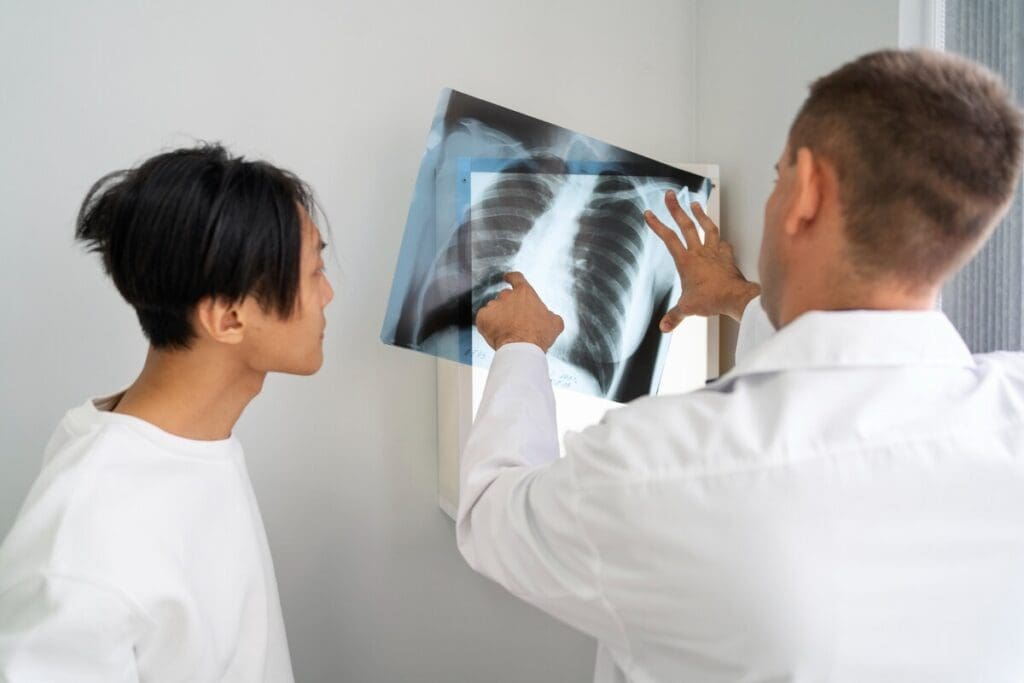
A PFT usually takes 15 to 45 minutes. The actual test time is short. But, we need time for getting ready and any extra tests.
Factors That Influence Total Appointment Length
Several things can change how long your PFT takes. These include:
- The specific tests being conducted
- The complexity of the tests
- The need for repeated measurements to ensure accuracy
- Patient preparation and cooperation
Spirometry, a common test, is quick. But, we might need to do it again to get the right results. This can make the test longer.
How Test Complexity Affects Duration
How complex the test is also matters. Tests like plethysmography or diffusion capacity testing take longer. They need special equipment and more steps.
Our team works hard to make the test smooth and quick. We want to get accurate results for you. Knowing what affects the test time helps you prepare better.
5 Common Types of PFTs and Their Specific Timeframes
Pulmonary Function Tests (PFTs) are key for diagnosing and managing lung issues. Knowing how long they take is important for patient prep. Each PFT tests a different lung function aspect. The test time varies by type and patient condition.
Spirometry: The 6-Second Expiration Standard
Spirometry is a common PFT. Patients blow into a machine as hard and fast as they can for 6 seconds. It measures air volume and speed inhaled and exhaled. It’s a simple test that usually takes a few minutes.
But, it’s vital for patients to blow as hard as they can. This ensures accurate results.
Plethysmography (Body Box) Testing Duration
Plethysmography, or body box test, requires sitting in a sealed box for a few minutes. Patients breathe in and out through a mouthpiece while measurements are taken. It takes about 5 to 10 minutes to finish, depending on the test and patient’s cooperation.
Diffusion Capacity Testing Length
Diffusion capacity testing checks how well lungs transfer gas into the bloodstream. It involves breathing in a test gas and holding the breath for a few seconds. The whole process usually takes 2 to 4 minutes.
This test is quick but needs precise patient cooperation for accurate results.
Exercise Stress Tests for Lung Function
Exercise stress tests for lung function involve exercising on a treadmill or stationary bike. They monitor heart rate, blood pressure, and oxygen levels. These tests can last from 10 to 30 minutes, based on the patient’s fitness and the test protocol.
While these tests have standard times, actual duration can vary. Up to 29.3% of patients may have incomplete tests due to breathing issues. Our team works hard to make the process smooth and comfortable for all.
“The key to successful PFTs lies not just in the technology or the test itself, but in the preparation and guidance provided to the patient.”
— Expert
Why Your PFT Might Take Longer Than Expected
Many things can affect how long a PFT takes. We aim to finish these tests quickly. But, different factors can make it take longer.
Incomplete Test Rate and Its Causes
The rate of incomplete PFTs can be up to 29.3%. This is often because of trouble with breathing out fully. Issues like patient cooperation and technical problems add to the challenge. When patients struggle with the needed breathing actions, tests might not finish.
Patient Factors That Extend Testing Time
How long a PFT takes can also depend on the patient. Things like age, body mass, and health can affect the test’s length. For example, older patients or those with health issues might need more time.
Technical Considerations and Equipment Calibration
Technical aspects, like making sure the equipment is right, are key for good results. If the equipment isn’t set up correctly, it can give wrong readings. This might mean we have to adjust it, which can make the test longer.
Need for Repeated Measurements for Accuracy
We might need to do the test more than once for it to be accurate. This is to make sure we get reliable data. If the first results are unsure or if the patient’s health makes it hard to breathe right, we’ll do it again.
Our team is patient and understanding. We work with you to finish the test quickly and accurately. We care about your health and want to make sure you get the best care.
How to Prepare for Your PFT to Ensure Efficient Testing
To make sure your PFT goes smoothly, follow these easy steps. Getting ready right is key to getting accurate results and getting the most out of your visit.
Pre-appointment Instructions to Follow
Before you go, there are a few things you can do to prepare. Avoid heavy meals and caffeine for 4-6 hours before your test. These can mess with your breathing and change the test results. Also, don’t smoke or do heavy exercise on the day of your test. This helps keep your lung function at its best.
Medications to Avoid Before Testing
Some medicines can mess with your PFT results. It’s a good idea to talk to your doctor about which ones to skip before your test. Usually, you’ll need to stop taking bronchodilators and other breathing medicines for a while before the test.
What to Wear and Bring to Your Appointment
Wear loose, comfy clothes that won’t get in the way of your breathing or movement. It’s also smart to bring any important medical records, a list of your current medicines, and a friend or family member for support if you need it.
Mental Preparation for Optimal Test Performance
Getting mentally ready is just as important as getting physically ready. We suggest you ask questions and share any worries you have about the test. Our team is here to help you, making sure you’re comfortable and ready for the test. Knowing what to expect can help calm your nerves and help you do your best during the PFT.
Conclusion: Understanding the Value of Comprehensive Pulmonary Testing
At LivHospital, we aim to give top-notch healthcare with our comprehensive pulmonary testing. We follow the latest academic protocols to compete internationally. Pulmonary Function Tests (PFTs) are key in checking lung health and managing lung diseases.
Our skilled team uses the newest technology for precise test results. By knowing the pft meaning and importance of these tests, patients can understand their lung health better. This helps them work with our team to create a good treatment plan.
We put our patients first, explaining test results and answering their questions. This way, we help our patients manage their lung health and overall well-being.
FAQ
What is a Pulmonary Function Test (PFT)?
A Pulmonary Function Test (PFT) checks how well your lungs work. It looks at airflow, volume, and gas exchange.
How long does a PFT test typically take?
A PFT test usually takes 15 to 45 minutes. The exact time depends on the test type, how well you cooperate, and the test’s complexity.
What are the different types of PFTs?
There are many PFT types, like spirometry and diffusion capacity testing. Each tests different lung functions and takes varying times.
What is spirometry, and how long does it take?
Spirometry is a common PFT. You blow into a machine as hard and fast as you can for at least 6 seconds. The test itself is quick, but we might need to do it again for accuracy.
How can I prepare for my PFT to ensure efficient testing?
To make your PFT go smoothly, avoid certain meds and wear loose clothes. Don’t eat heavy meals or drink caffeine beforehand. Also, skip smoking and intense exercise before the test.
What factors can influence the duration of a PFT?
Things like your age, body mass, and health can affect the test time. So can the equipment used. We might need to repeat tests for accuracy, which can add to the time.
What is plethysmography, and how long does it take?
Plethysmography, or the body box test, involves sitting in a sealed box for a few minutes. We measure your lung volume during this time.
Why is it essential to establish a baseline of lung function through PFTs?
Having a lung function baseline helps us track changes over time. This is key for managing lung diseases and improving lung health.
What is the role of a pulmonologist in interpreting PFT results?
A pulmonologist is a specialist who reads PFT results. They create a treatment plan that fits your needs.
What does PFT stand for in medical terminology?
PFT stands for Pulmonary Function Test. It’s a tool used to check lung function.
What does the appt abbreviation mean?
Appt is short for appointment. In the context of PFTs, it means a scheduled visit for testing.
References
- Johnson, J. D., & Theurer, W. M. (2021). A stepwise approach to the interpretation of pulmonary function tests. American Family Physician, *103*(2), 87-96. https://pubmed.ncbi.nlm.nih.gov/33448766/