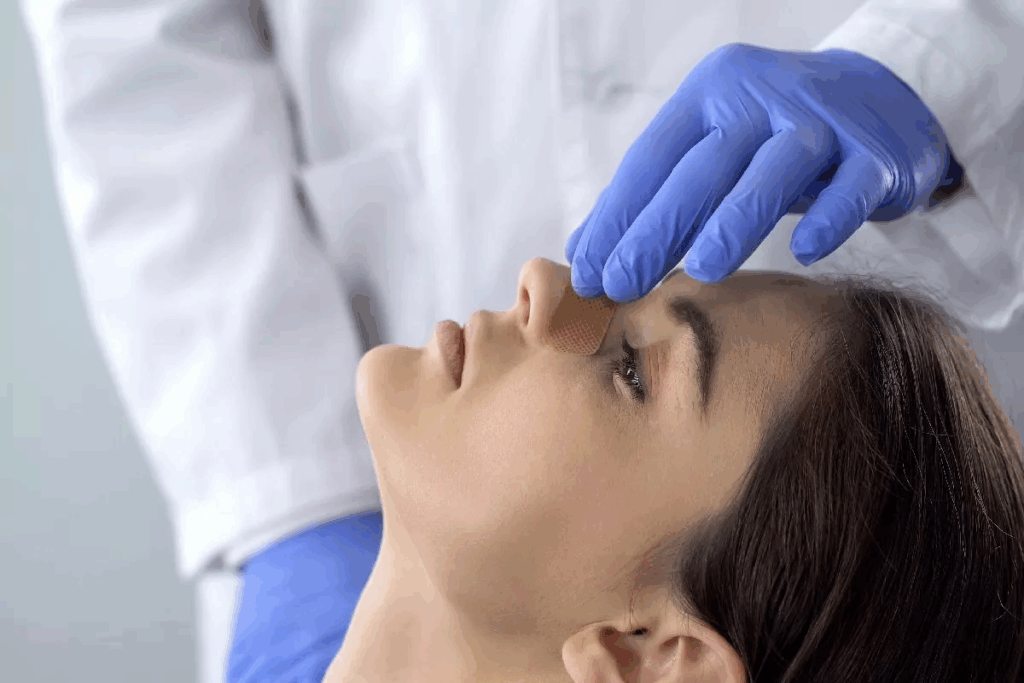
View pictures deviated septum to see how the nasal wall can be shifted, causing obstruction and breathing problems.
It’s important to know about nasal anatomy to diagnose and treat problems. A deviated nasal septum is common, affecting about 80% of people. This condition happens when the thin wall between the nasal passages is off-center.
Deviated septum images are key for doctors and patients to see the issue. These nasal septum pictures help us understand the different levels of deviation.
Looking at pictures of deviated septum helps us see how it affects people. It can range from mild, with no symptoms, to severe, making it hard to breathe.
Key Takeaways
- Approximately 80% of people have some degree of nasal septum displacement.
- Visual documentation helps clinicians and patients understand the condition.
- Nasal septum pictures provide a detailed guide to the condition’s variations.
- Pictures of deviated septum aid in diagnosing and treating nasal issues.
- Understanding the nasal septum is key for addressing related health concerns.
Understanding the Nasal Septum Anatomy
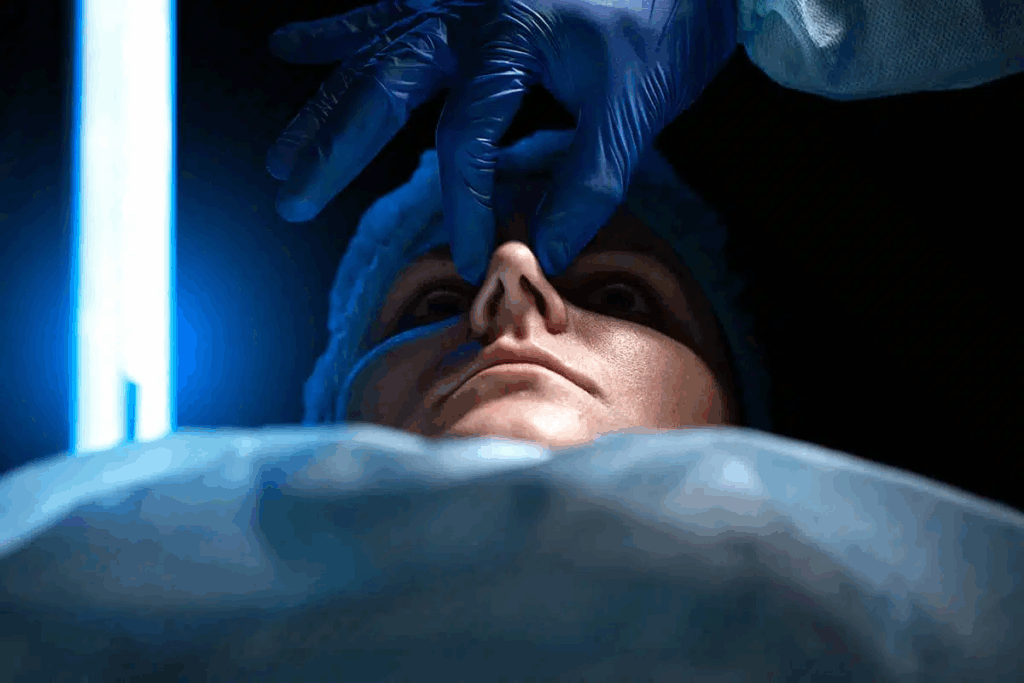
The nasal septum is a key part of our breathing system. It’s made of bone and cartilage, splitting the nasal cavity into two parts. Knowing how it works helps us find and fix nasal problems.
Normal Septum Structure and Function
A healthy nasal septum lets air flow freely through our nostrils. It’s usually thin and straight, keeping both sides of the nasal passages even. This structure helps support the nose and guides air correctly.
Key functions of the nasal septum include:
- Dividing the nasal cavity into two passages
- Supporting the nasal tip
- Directing airflow through the nostrils
What Constitutes a “Normal” vs. “Deviated” Septum
A deviated septum happens when the thin wall between the nostrils shifts. This makes one passage smaller than the other. It can make breathing hard and raise the chance of sinus infections. Small deviations might not cause big problems, but big ones can lead to serious health issues.
Factors that determine if a septum is deviated include:
- The degree of deviation
- The impact on nasal airflow
- Associated symptoms such as nasal congestion or sinusitis
Prevalence of Deviated Septums in the Population
Deviated septums are quite common, affecting many people. Research shows up to 80% of people have some degree of septal deviation. But not all cases cause symptoms.
“Deviated septums are a common condition, and while many people have minor deviations without significant issues, pronounced deviations can lead to substantial health problems.”
— ENT Specialist
Knowing how common and impactful deviated septums are is key. It helps both patients and doctors make better treatment choices.
What Do Pictures of Deviated Septum Reveal?
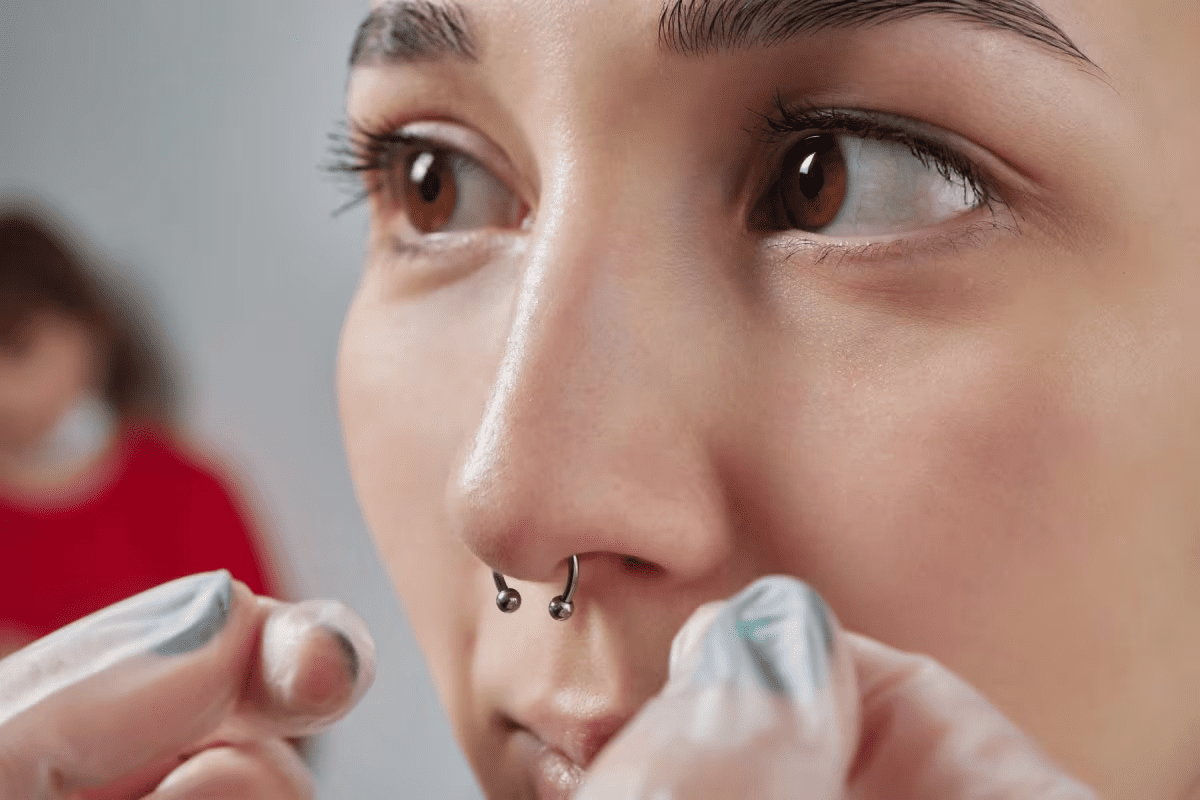
Pictures of deviated septum give us a peek into nasal anatomy. They help both patients and doctors see the condition. This ranges from small issues to big breathing problems.
External vs. Internal Visual Indicators
Photos of deviated septum show both outside and inside signs. On the outside, a crooked nose or uneven nostrils might be seen. Inside, the deviation can block breathing, though it’s not always visible.
Outside signs include a crooked nose or uneven nostrils. Inside, signs like big turbinate bones or narrow passages are harder to see but important for diagnosis.
How Medical Professionals Use Visual Documentation
Doctors use pictures of deviated septum to get a clear view. These images help them decide the best treatment, whether surgery or not.
Visuals are used in many ways:
- To see how bad the deviation is
- To plan surgeries like septoplasty
- To check how treatment is going
- To teach patients about their condition
The Importance of Visual Assessment in Diagnosis
Looking at pictures is key in diagnosing deviated septum. Doctors can see how big the deviation is and how it affects a patient’s life.
Diagnostic Criterion | Visual Indicator | Clinical Significance |
Nasal Asymmetry | Visible crookedness or unevenness | Indicates possible deviation |
Nasal Obstruction | Less airflow seen in images | Impacts breathing and life quality |
Turbinate Bone Enlargement | Big bones seen in images | Causes breathing blockage |
Doctors use these signs to create a treatment plan that fits the patient’s needs.
Types of Septal Deviations Shown in Images
Deviated septums come in different forms, each with its own look. Knowing these looks helps doctors diagnose and plan treatment. It’s key for managing nasal septum deviations well.
C-Shaped Deviations: Visual Characteristics
C-Shaped deviations curve smoothly to one side. Visual inspection shows an unevenness in the nasal passages. Images show a clear, even curve, often covering a big part of the septum.
The main features are:
- A smooth, consistent curve
- Curves to one side of the nasal cavity
- Can affect both cartilage and bone parts of the septum
S-Shaped Deviations: Visual Characteristics
S-Shaped deviations have a complex curve. The septum bends to one side in one spot and the other in another. Visual documentation is key to spotting these bends and seeing how they affect breathing.
The main features are:
- More than one bend
- Bends in opposite directions
- Can cause more complex breathing problems
Spurs and Ridges: Visual Identification
Spurs and ridges are small but can block airflow. Spurs are sharp, and ridges are longer. Seeing these through images is important for diagnosis.
- Sharp or pointed for spurs
- Longer for ridges
- Directly affects the nasal passage
Severity Classification Through Visual Assessment
Doctors can tell how severe septal deviations are by looking. Visual assessment looks at how much the septum is off, how it affects breathing, and any other changes.
They consider:
- How far off the septum is
- How it blocks breathing
- Any other problems like sinusitis or polyps
Common Causes of Deviated Septum Visible in Pictures
A deviated septum can come from many things, like being born with it or getting hurt. Knowing why it happens helps doctors figure out how to fix it.
Congenital Deviations: Birth-Related Causes
Congenital deviations happen when the nasal septum shifts during fetal growth or birth. They can show up in babies or young kids. Doctors use pictures to see how bad it is.
Some people are born with a deviated septum because of their genes or pregnancy issues. In these cases, the problem might be there from the start or grow as they get older.
Traumatic Deviations: Injury-Related Visual Changes
Getting hurt in the nose can also cause a deviated septum. This can happen at any age, often from accidents or sports injuries. Doctors use pictures and scans to check how serious it is.
After a nose injury, the septum might move, making it hard to breathe. Doctors look at pictures to see how much damage there is.
Developmental Factors Affecting Septum Appearance
As we grow, our nasal septum can change, leading to deviations. This can be because of uneven growth or other body issues. Doctors check these changes during exams.
Developmental factors can make a deviated septum worse over time. Regular visits and pictures help doctors keep track and suggest treatments.
Clinical Photography of Deviated Septums
Clinical photography is key in managing deviated septum. It helps create a visual record of the condition. This is vital for diagnosis and treatment planning. Detailed images of the nasal septum help healthcare professionals understand the severity of the deviation.
Standard Photographic Views Used in Documentation
For a full view of deviated septum, standard photos are used. These include frontal, lateral, and basal views of the nose. Frontal views show the outside symmetry of the nose. Lateral views give insights into the nasal profile. Basal views are great for looking at the nasal base and passages.
How ENT Specialists Capture Diagnostic Images
ENT specialists use special equipment for high-quality images. They use cameras with high-resolution lenses and the right lighting. Endoscopic cameras help see inside the nose, showing the septum and surrounding areas.
Getting these images right is important. Specialists need to know both photography and nasal anatomy well. This ensures the photos are clear and useful for diagnosis.
Before and After Treatment Comparison Photos
Before and after photos are key in deviated septum cases. They show how treatments, like septoplasty, work. Comparison photos help patients understand what to expect from surgery.
“The use of before and after photos in clinical practice not only enhances patient understanding but also aids in the continuous improvement of treatment protocols.”
– Expert in Otolaryngology
By using clinical photography, ENT specialists can improve patient care. They can also make treatments more effective and help advance how we manage nasal septal deviation.
Advanced Imaging Techniques for Deviated Septum
We use advanced imaging to understand deviated septum well. These tools help doctors see how bad the deviation is and plan treatment.
Nasal Endoscopy Images: What They Show
Nasal endoscopy gives a clear view of the nasal passages and sinuses. A flexible or rigid endoscope is used to see the nasal septum and other areas. Nasal endoscopy images show how severe the septal deviation is, any spurs or ridges, and other nasal problems.
These detailed images are key for diagnosing and treating deviated septum. They help ENT specialists see the nasal anatomy well. This is important for choosing the right treatment.
CT Scan Visualization of Septal Deviation
Computed Tomography (CT) scans give a detailed view of the nasal passages and sinuses. CT scan visualization is great for seeing how severe septal deviation is and its effects on nearby areas. It also spots bony spurs, turbinate bone issues, or sinus diseases linked to the deviated septum.
CT scans are very helpful before septal surgery. They show the nasal anatomy and any extra challenges. This helps surgeons plan the surgery well.
MRI Applications in Complex Nasal Assessment
Magnetic Resonance Imaging (MRI) is used for complex deviated septum cases. MRI shows soft tissue in the nasal cavity well. It’s good for finding nasal polyps or tumors.
While not as common as CT scans, MRI applications in nasal assessment offer extra info on soft tissues in the nasal passages.
3D Reconstruction Imaging of Nasal Structures
Three-dimensional (3D) reconstruction imaging is a new way to see nasal structures. It turns CT or MRI data into 3D models. This helps doctors understand the nasal anatomy and septal deviation better.
3D reconstruction imaging is great for surgery planning. It lets surgeons see the nasal structures from different angles and plan surgeries better. This can lead to better surgical results.
Recognizing Symptoms Through Visual Indicators
We can often spot a deviated septum by looking for certain signs. A deviated septum can lead to visible changes in the nose and face.
External Nasal Asymmetry as a Clue
One key sign is external nasal asymmetry. A deviated septum can make one nostril look bigger than the other. This can be a big clue in diagnosing a deviated septum.
Visible Nasal Airway Obstruction
Another sign is visible nasal airway obstruction. A deviated septum can block the nasal passage. This might cause mouth breathing or visible nasal discharge. Look for signs like flaring nostrils or trouble breathing through the nose.
Associated Facial Features in Chronic Cases
In long-term cases, a deviated septum can change the face. For example, long-term mouth breathing can make the face longer or the upper jaw more prominent. These changes might be small but are important signs of chronic nasal obstruction.
Visual Signs of Related Sinus Problems
A deviated septum can also cause sinus problems with visible signs. For instance, chronic sinusitis can make the eyes and nose swell or turn red. We should watch for these signs as they can show complications from a deviated septum.
Visual Indicator | Description | Possible Implication |
Nasal Asymmetry | One nostril larger than the other or crooked nose | Deviated septum |
Nasal Airway Obstruction | Difficulty breathing through the nose, flaring nostrils | Nasal passage obstruction |
Facial Structure Changes | Longer face, prominent upper jaw | Chronic mouth breathing |
Sinus Problem Signs | Swelling or redness around eyes and nose | Chronic sinusitis |
Complications of Deviated Septum Documented in Images
Visual documentation is key in understanding deviated septum complications. Medical images show the various issues that can occur. They help both doctors and patients see how serious these problems are.
Visual Evidence of Chronic Sinusitis
Chronic sinusitis often comes with a deviated septum. Medical images show the extent of sinus inflammation. They reveal thickened mucosa and possible sinus blockage. These images are vital for diagnosing and treating sinusitis.
Nasal Polyp Development: Visual Progression
Nasal polyps often grow with chronic sinusitis. Endoscopy or imaging studies track their growth. They show the size, number, and effect on nasal passages. This helps plan the right treatment.
Sleep Apnea Correlation in Severe Cases
In severe cases, a deviated septum can cause sleep apnea. Imaging studies reveal the anatomical issues that lead to sleep problems. This allows for focused treatment plans.
Epistaxis (Nosebleeds): Visual Documentation
Epistaxis, or nosebleeds, can also happen with a deviated septum. Visual documentation of nasal anatomy helps spot bleeding areas. This makes managing and preventing nosebleeds easier.
Looking at these complications through images helps us understand the complex issues of a deviated septum. We can then create detailed treatment plans.
Surgical Correction: Before and After Pictures
Surgical methods like septoplasty and rhinoplasty fix nasal septum deviations. These surgeries aim to improve breathing, reduce symptoms, and boost quality of life for those with a deviated septum.
Septoplasty Procedure: Visual Documentation
Septoplasty fixes the nasal septum’s deviations. Before and after pictures show the results. They help patients see what changes they might see.
The procedure removes or moves the deviated parts of the septum. Surgeons use special techniques to avoid harming the rest of the nose.
Rhinoplasty Combined with Septal Correction
Sometimes, rhinoplasty is done with septoplasty. This tackles both looks and function. It’s a more complete way to fix the nose.
Photos of those who had both surgeries show better breathing and looks.
Endoscopic Surgical Approaches: Visual Guide
Endoscopic septoplasty is a new, less invasive method. It uses an endoscope to see inside the nose during surgery. This method causes less damage and leads to quicker healing.
Guides and videos of this surgery show its precision and steps.
Expected Visual Changes Post-Surgery
After surgery, patients see many changes. These include better nose alignment, less blockage, and new looks in the nasal passages.
Visual Change | Description |
Nasal Symmetry | Improvement in the alignment of nasal structures |
Nasal Obstruction | Reduction in nasal blockage, improving airflow |
Nasal Passage Appearance | Changes in the appearance of the nasal passages, potentially improving overall nasal aesthetics |
Knowing these changes helps manage what patients expect. It makes them happier with the surgery results.
Self-Assessment: When to Seek Medical Evaluation
Visual signs are key in figuring out if a deviated septum needs a doctor’s visit. We’ll look at how self-checking helps know when to get medical help.
Visual Clues That Suggest Significant Deviation
Big differences in how the nose looks or feels can mean a deviated septum. Other signs include seeing the nose blockage and changes in the face over time.
Key Visual Indicators:
- Nasal asymmetry
- Visible nasal obstruction
- Associated facial changes
Differentiating Normal Variation from Pathological Deviation
It’s important to tell normal differences from serious ones. A deviated septum can cause big problems, but small ones might not need a doctor.
Characteristics | Normal Variation | Pathological Deviation |
Nasal Obstruction | Mild, intermittent | Significant, persistent |
Nasal Asymmetry | Minimal | Noticeable |
Associated Symptoms | Few or none | Multiple (e.g., sinusitis, nosebleeds) |
When Visual Changes Warrant Immediate Attention
Some visual signs or symptoms need quick doctor visits. These include bad nasal blockage, a lot of face pain, or lots of nosebleeds.
It’s essential to seek medical help if you experience:
- Severe difficulty breathing through the nose
- Persistent facial pain or pressure
- Recurrent or severe nosebleeds
Knowing these signs and when to see a doctor can help get the right treatment for a deviated septum.
Conclusion
Visual documentation is key in understanding and managing deviated septum. This common nasal issue affects our nasal health. Advanced imaging and clinical photography give us important insights. They help in making accurate diagnoses and effective treatments.
We’ve looked at many sides of deviated septum. This includes its anatomy, causes, complications, and treatment choices. Knowing how to document visually is vital for both doctors and patients. It helps in making informed decisions and getting the best care.
Visual documentation helps us see the full picture of deviated septum and its effects on our noses. This knowledge lets us offer better treatments and support. It improves patient outcomes and enhances their quality of life.
FAQ
What is a deviated septum?
A deviated septum is when the thin wall between the nasal passages is crooked. This makes one side smaller than the other.
What are the common symptoms of a deviated septum?
Common symptoms include nasal congestion and trouble breathing. You might also lose your sense of smell, get nosebleeds, or have sinus infections. Some people feel facial pain or headaches.
How is a deviated septum diagnosed?
A doctor will look inside your nose to check for a deviated septum. They might also use a CT scan or nasal endoscopy to confirm it.
What do pictures of deviated septum show?
Pictures show how crooked the septum is and any spurs or ridges. They help plan treatment and show changes before and after surgery.
What are the treatment options for a deviated septum?
Septoplasty is a surgery to fix the septum. Rhinoplasty can also be done to improve the nose’s look. Sometimes, less invasive treatments are suggested first.
Can a deviated septum be corrected without surgery?
Yes, some symptoms can be managed without surgery. Nasal strips, decongestants, or saline sprays can help. But surgery is usually needed for a full fix.
What is the difference between septoplasty and rhinoplasty?
Septoplasty fixes breathing problems by correcting the septum. Rhinoplasty changes the nose’s shape for looks. They can be done together.
How do I know if I have a deviated septum?
If you have trouble breathing or constant nasal congestion, see a doctor. An ENT specialist can check for a deviated septum.
What are the benefits of using advanced imaging techniques for diagnosing deviated septum?
Techniques like CT scans give detailed views of the nasal septum. They help doctors plan the best treatment.
Can pictures of deviated septum help in self-assessment?
Yes, pictures can help you recognize symptoms. This can prompt you to seek medical help when needed.
What are the complications associated with a deviated septum?
Complications include chronic sinusitis and nasal polyps. Sleep apnea and nosebleeds can also happen. Pictures help doctors diagnose and manage these issues.
Are there any visual clues that suggest a significant deviated septum?
Yes, look for nasal asymmetry and airway blockage. Facial features can also hint at a significant deviation.
How can I find a qualified specialist to diagnose and treat a deviated septum?
Start with your primary care doctor for a referral. Check professional organizations or online directories for specialists in your area.
References
National Center for Biotechnology Information. (2025). Pictures of Deviated Septum Visual Guide to Nasal. Retrieved from https://www.ncbi.nlm.nih.gov/pmc/articles/PMC9736816/



 Departments
 Related Videos
 Our Doctors
 News
News