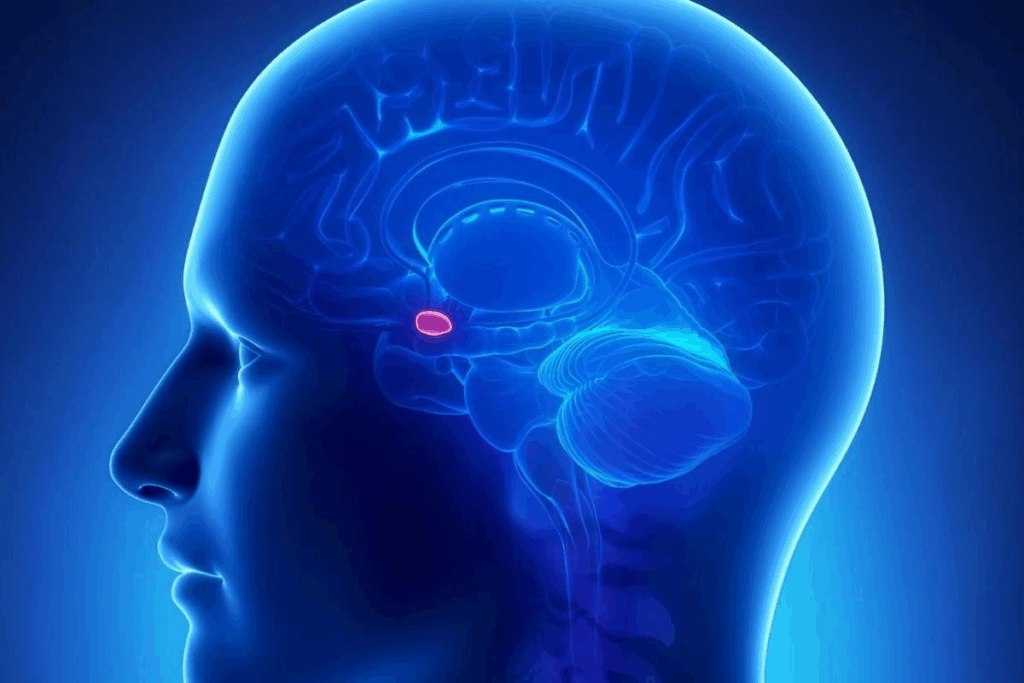
Learn the essential function differences between the pituitary gland anterior and posterior lobes. Understand their unique hormonal roles clearly. The pituitary gland is called the “master gland.” It’s a small endocrine organ at the brain’s base. Despite being small, it controls important body functions by releasing hormones.
We’ll look at how this tiny organ, also known as hypophysis cerebri, affects growth, metabolism, stress, reproduction, and water balance. The structure of the pituitary gland has two parts: the anterior and posterior lobes. Each part has its own role in keeping us healthy.
Key Takeaways
- The pituitary gland is a key part of the endocrine system.
- It controls many body functions by releasing hormones.
- The anterior and posterior lobes have different roles that work together.
- Knowing about the pituitary gland’s role is vital for our health.
- Liv Hospital offers detailed information on the pituitary gland’s functions.
The Master Gland: Overview and Importance

The pituitary gland is called the “master gland” because it controls other glands and keeps the body in balance. This small gland is key to many bodily functions. It sends out hormones that help or stop other glands from working.
Definition and Basic Functions
The pituitary gland, or hypophysis, is a small gland at the brain’s base. It sticks out from the hypothalamus and sits in a bone depression. Its main job is to make hormones that control growth, metabolism, and reproduction.
A simple definition of the pituitary gland is that it’s an endocrine gland that controls many others. It does this by sending out hormones that either help or stop other glands from working.
Hormone | Function | Target Gland/Organ |
Growth Hormone (GH) | Regulates growth and metabolism | Liver and other tissues |
Thyroid-Stimulating Hormone (TSH) | Stimulates thyroid hormone production | Thyroid gland |
Adrenocorticotropic Hormone (ACTH) | Stimulates cortisol production | Adrenal glands |
Evolutionary Significance
The pituitary gland has evolved to be a key part of the endocrine system. It helps control the body’s functions in a complex way. Its structure is similar in many species, showing its importance.
The pituitary gland’s role is to connect signals from the brain to control many body processes. This lets it adjust to changes inside and outside the body. It keeps the body balanced and healthy.
Role in Homeostasis
The pituitary gland is vital for keeping the body stable. It controls hormone secretion that affects many body processes. For example, it makes hormones that help the body deal with stress.
By managing hormone secretion, the pituitary gland keeps the body stable, even when things change outside. This is key for the body to function well and stay healthy.
Anatomical Location and Structure

The pituitary gland is key to our endocrine system. It sits at the brain’s base, on the hypophyseal fossa of the sphenoid bone. It’s in the middle cranial fossa.
Position in the Brain
The gland is in a safe spot, covered by dura mater. This fold is called the diaphragma sellae. Its location shows its importance and risk.
The Sella Turcica
The sella turcica, or Turkish saddle, is a depression in the sphenoid bone. It’s where the pituitary gland lives. This bony space keeps the gland safe.
Size and Physical Characteristics
The pituitary gland is small, like a pea. It has two lobes: the anterior and posterior. Each lobe does different things.
- The anterior lobe is bigger and makes important hormones.
- The posterior lobe releases hormones made by the hypothalamus.
Blood Supply
The gland gets blood from the superior and inferior hypophyseal arteries. The hypothalamic-pituitary portal system is key. It carries hormones from the hypothalamus to the anterior pituitary.
Knowing where and how the pituitary gland is set up helps us see its role in health.
Development of the Pituitary Gland
The pituitary gland starts to form early in a baby’s development. It’s a complex process that involves many steps. These steps help create a gland that controls many important body functions.
Embryonic Origins
The pituitary gland comes from two main parts. The front part, or anterior, forms from Rathke’s pouch. This pouch is an outgrowth of the roof of the pharynx. The back part, or posterior, develops from the diencephalon. This dual origin is key to understanding how the gland works.
Rathke’s pouch starts to form around the third week of pregnancy. It eventually becomes the front part of the pituitary gland. The back part, on the other hand, grows from the diencephalon. It stays connected to the hypothalamus.
Developmental Stages
The growth of the pituitary gland goes through several stages:
- The formation of Rathke’s pouch and its separation from the oral ectoderm.
- The cells in Rathke’s pouch grow and change to form the front lobe.
- The back lobe develops from the diencephalon and connects to the hypothalamus.
These stages are controlled by many factors. These include transcription factors and signaling molecules.
Congenital Abnormalities
Problems with the pituitary gland can happen during development. These issues can be mild or severe. They might cause hormonal problems or other endocrine disorders.
Congenital Abnormality | Description | Potential Impact |
Pituitary aplasia | Failure of the pituitary gland to develop | Severe hormonal deficiencies |
Pituitary hypoplasia | Underdevelopment of the pituitary gland | Hormonal deficiencies, growth issues |
Ectopic posterior pituitary | Abnormal location of the posterior pituitary | Variable impact on hormone regulation |
Knowing about these developmental steps and possible problems is key. It helps doctors diagnose and treat related issues.
“The development of the pituitary gland is a complex process that involves the precise coordination of multiple cellular and molecular events. Disruptions in this process can lead to congenital abnormalities with significant clinical implications.” Medical Expert, Endocrinologist
The Hypothalamic-Pituitary Axis
The hypothalamus and the pituitary gland work together as the hypothalamic-pituitary axis. This system is key for keeping the body balanced and controlling many functions.
Regulatory Mechanisms
The hypothalamus controls the pituitary gland’s hormone release through the hypothalamic-pituitary portal system. This system lets hypothalamic hormones reach the pituitary gland. It helps keep the endocrine system working right.
We’ll see how the hypothalamus makes hormones that either help or stop the pituitary gland’s hormone release. This controls the flow of hormones in the body.
Feedback Systems
Feedback systems are very important in the hypothalamic-pituitary axis. Negative feedback loops are key because they help keep the body balanced. They reduce the stimulus when hormone levels are good.
For example, when a hormone level gets too high, it can stop the release of the hormones from the hypothalamus and pituitary gland. This helps control its own production.
Neural Connections
The neural links between the hypothalamus and the pituitary gland are also vital. The posterior pituitary is directly connected to the hypothalamus. This lets hormones from the hypothalamus be released directly.
Understanding these neural connections helps us see how the hypothalamic-pituitary axis combines neural and endocrine signals. It keeps the body in balance.
Understanding the Pituitary Gland: Anterior and Posterior Divisions
The pituitary gland is split into two parts: the anterior and posterior pituitary. It’s called the “master gland” because it controls many body functions. It does this through a complex system of hormones.
Structural Differences
The anterior and posterior pituitary glands look and work differently. The anterior pituitary comes from ectodermal tissue and has glandular cells. The posterior pituitary, on the other hand, is a part of the neural tissue from the hypothalamus.
The anterior pituitary makes hormones like growth hormone and thyroid-stimulating hormone. The posterior pituitary stores and releases hormones made by the hypothalamus, like antidiuretic hormone and oxytocin.
Functional Distinctions
The anterior pituitary can make and send hormones directly into the blood. This lets it control growth, metabolism, and reproductive processes. The posterior pituitary, though, stores and releases hormones made by the hypothalamus.
This setup lets the hypothalamus control the release of hormones. These hormones are key for water balance and for helping with childbirth and lactation.
Cellular Composition
The cells in the anterior and posterior pituitary show their different jobs. The anterior pituitary has cells like somatotrophs and gonadotrophs, each making different hormones.
The posterior pituitary, mainly made of pituicytes, supports the storage and release of hormones. These hormones come from neurosecretory cells in the hypothalamus and are sent to the posterior pituitary.
Comparative Physiology
Looking at the anterior and posterior pituitary shows how the endocrine system works together. The anterior pituitary makes hormones, while the posterior pituitary stores and releases them. This shows how the hypothalamus and pituitary gland work together.
Knowing these differences helps us understand the pituitary gland’s role in keeping our body balanced. By studying the differences between the anterior and posterior pituitary, we learn more about how our endocrine system works.
Anterior Pituitary: Cell Types and Hormone Production
The anterior pituitary has special cells that make hormones. These hormones help with growth, metabolism, and reproduction. They are key for keeping our body balanced and healthy.
Somatotrophs and Growth Hormone
Somatotrophs in the anterior pituitary make growth hormone (GH). GH is important for growth and development. It helps cells grow and change. Problems with GH can cause issues like being too tall or too short.
Thyrotrophs and Thyroid-Stimulating Hormone
Thyrotrophs create thyroid-stimulating hormone (TSH). TSH helps the thyroid gland work right. It makes thyroid hormones, which are key for energy and metabolism. If TSH is off, it can cause thyroid problems.
Corticotrophs and Adrenocorticotropic Hormone
Corticotrophs make adrenocorticotropic hormone (ACTH). ACTH tells the adrenal glands to make cortisol and other important hormones. These hormones help us deal with stress and keep blood sugar and blood pressure in check. If ACTH is not right, it can cause health issues.
Gonadotrophs and Reproductive Hormones
Gonadotrophs create follicle-stimulating hormone (FSH) and luteinizing hormone (LH). These hormones help with reproduction in both men and women. They help make sex hormones, which are important for fertility and growing up.
The anterior pituitary gland is very important for our body’s functions. It makes different hormones to help us grow, stay healthy, and reproduce. Knowing how it works helps us understand its role in keeping us balanced.
Posterior Pituitary: Storage and Release Functions
We will explore how the posterior pituitary stores and releases hormones made by the hypothalamus. The posterior pituitary gland, also known as the neurohypophysis, is key in the endocrine system. It stores and releases two important hormones: antidiuretic hormone (ADH), also known as vasopressin, and oxytocin.
Antidiuretic Hormone (Vasopressin)
Antidiuretic hormone (ADH), or vasopressin, helps control water balance in the body. It is made by the hypothalamus but stored and released by the posterior pituitary. ADH helps control how much water the kidneys reabsorb, affecting urine concentration and volume.
When ADH is released, it helps the kidneys reabsorb more water. This reduces urine output and helps keep the body hydrated.
The key functions of ADH include:
- Regulating water balance
- Influencing blood pressure
- Maintaining proper hydration levels
Oxytocin
Oxytocin is another hormone stored and released by the posterior pituitary. It is vital for reproductive functions and social behaviors. Oxytocin is involved in:
- Stimulating uterine contractions during childbirth
- Promoting milk letdown during lactation
- Influencing social bonding and attachment behaviors
Oxytocin’s role goes beyond reproductive processes. It is also believed to influence various social and emotional behaviors. This makes it a hormone of great interest in both medical and psychological research.
The Hypothalamic-Pituitary Portal System
This special network carries hormones from the hypothalamus to the pituitary. It’s key for controlling growth, metabolism, and reproductive functions.
Anatomical Structure
The system links the hypothalamus to the anterior pituitary gland through blood vessels. It’s unique because it sends hormones directly to the pituitary, skipping the rest of the blood flow.
“The hypothalamic-pituitary portal system is a complex vascular network that enables the hypothalamus to control the anterior pituitary gland,” as noted by endocrinologists. This direct connection is essential for the precise regulation of hormone secretion.
Blood Flow Dynamics
The blood flow in this system is very specific. It’s designed to carry hypothalamic hormones to the anterior pituitary without losing them to the rest of the body.
- The primary capillaries in the hypothalamus receive signals from neurons.
- These signals are then transmitted through the portal vessels.
- The secondary capillaries in the anterior pituitary receive these signals, leading to the appropriate hormonal response.
Hormone Transport Mechanisms
The system is vital for moving hormones from the hypothalamus to the anterior pituitary. It starts with hypothalamic hormones being released into primary capillaries. Then, they travel through portal vessels to secondary capillaries in the anterior pituitary.
Key aspects of hormone transport include:
- The release of hypothalamic-releasing hormones, which stimulate the secretion of anterior pituitary hormones.
- The transport of these hormones through the portal vessels.
- The binding of these hormones to specific receptors on the surface of anterior pituitary cells.
Understanding the hypothalamic-pituitary portal system helps us grasp how our endocrine system works. This knowledge is vital for diagnosing and treating pituitary and hypothalamus disorders.
Clinical Significance: Disorders and Dysfunctions
Pituitary gland problems can affect your health a lot. It’s important to know how they work. The pituitary gland controls many body functions. When it’s not working right, it can cause many health problems.
Hypopituitarism
Hypopituitarism means the pituitary gland doesn’t make enough hormones. It can happen for many reasons, like tumors or radiation. Symptoms include feeling very tired, losing weight, and not feeling like having sex.
Doctors treat it by giving hormones to help balance things out.
Pituitary Tumors
Pituitary tumors are growths in the gland. They can be harmless or cancerous. They can mess with hormone levels, causing different symptoms.
For example, a tumor that affects growth hormone can cause a condition called acromegaly in adults.
Pituitary disorders, like hypopituitarism and tumors, are very important to understand. Getting the right diagnosis and treatment is key to managing them well. Here’s a table that summarizes some key points:
Disorder | Causes | Symptoms | Treatment |
Hypopituitarism | Tumors, radiation therapy, infections | Fatigue, weight loss, decreased libido | Hormone replacement therapy |
Pituitary Tumors | Unknown, possibly genetic factors | Varies depending on hormone affected | Surgery, medication, radiation therapy |
Healthcare providers need to understand these disorders well. This helps them give the best care. Knowing the causes, symptoms, and treatments helps patients get the help they need.
Diagnostic Approaches and Treatment Options
Diagnosing pituitary gland disorders involves many steps. These include tests and treatments. The pituitary gland controls many body functions by making hormones.
Healthcare teams use different ways to diagnose and treat pituitary issues. They check hormone levels, use imaging, give medicines, and sometimes operate. This helps find and fix problems.
Hormone Level Testing
Testing hormone levels is key to checking the pituitary gland. It helps find imbalances or shortages. These can show if there’s a problem with the gland.
- Basal hormone levels: First, they test the basic hormone levels. This includes TSH, ACTH, GH, prolactin, LH, and FSH.
- Dynamic testing: Sometimes, they do dynamic tests. These tests see how the gland reacts to different things. They help find specific issues, like growth hormone problems or Cushing’s syndrome.
Imaging Techniques
Imaging is important for finding problems in the pituitary gland. It helps spot tumors or cysts.
- Magnetic Resonance Imaging (MRI): MRI is best for seeing the gland. It shows detailed pictures of the gland and around it, helping find issues.
- Computed Tomography (CT) scans: CT scans are used when MRI can’t be used. They give useful info about the gland and bones nearby.
Medication Therapies
Medicines are used to treat pituitary gland problems. They help control hormone levels or ease symptoms.
- Hormone replacement therapy: For hormone shortages, hormone therapy helps get levels back to normal.
- Dopamine agonists: These medicines treat prolactinomas. They lower prolactin and shrink tumors.
- Somatostatin analogs: These drugs help with acromegaly. They reduce growth hormone levels.
Surgical Interventions
Surgery might be needed for some pituitary gland problems, like tumors.
- Transsphenoidal surgery: This surgery is used to remove tumors. It goes through the sphenoid sinus to reach the gland.
- Radiation therapy: Sometimes, radiation is used. It treats tumors that can’t be fully removed or left behind after surgery.
By using these methods, doctors can manage pituitary gland disorders well. Knowing these options helps make treatment plans that fit each patient’s needs.
Conclusion: The Pituitary Gland’s Central Role in Endocrine Function
The pituitary gland is key to the endocrine system. It controls many body functions by releasing hormones. This small gland is called the “master gland” because it affects other glands a lot.
Knowing about the pituitary gland’s parts and its link to the hypothalamus is important. It helps us understand its function. This gland is vital for growth, metabolism, and reproduction, showing its big role in health.
In summary, the pituitary gland’s work is essential for our health. By understanding its role, we see how it affects our body. Its role in psychology and medicine shows its complex job in our body’s responses. It’s a key part of our endocrine system.
FAQ
What is the pituitary gland and what are its main functions?
The pituitary gland is called the “master gland.” It controls many bodily functions by secreting hormones. It helps other glands like the thyroid and adrenal glands work right.
Where is the pituitary gland located?
The pituitary gland is at the brain’s base, in a bony space called the sella turcica. It’s close to the hypothalamus, connected by a stalk called the infundibulum.
What is the difference between the anterior and posterior pituitary?
The anterior pituitary makes hormones that control body functions. The posterior pituitary releases hormones from the hypothalamus, like antidiuretic hormone and oxytocin.
What is the hypothalamic-pituitary axis and how does it work?
The hypothalamic-pituitary axis is a system between the hypothalamus and pituitary gland. The hypothalamus sends hormones to the pituitary gland. These hormones help control other glands’ functions.
What are some common disorders associated with the pituitary gland?
Pituitary disorders include hypopituitarism (too little hormone) and hyperpituitarism (too much hormone). There are also benign and malignant tumors.
How are pituitary disorders diagnosed?
Doctors test hormone levels and use MRI or CT scans to diagnose pituitary disorders. They might also check vision with visual field tests.
What are the treatment options for pituitary disorders?
Treatment varies by condition. It can include medicines, surgery to remove tumors, or radiation therapy.
What is the role of the pituitary gland in growth and development?
The pituitary gland makes growth hormone. This hormone is key for growing up, mainly in kids and teens.
How does the pituitary gland regulate reproductive functions?
The pituitary gland makes gonadotropins (LH and FSH). These hormones help the gonads (ovaries and testes) work right. They affect puberty, menstruation, and fertility.
What is the significance of the hypothalamic-pituitary portal system?
The hypothalamic-pituitary portal system is a blood vessel network. It connects the hypothalamus to the anterior pituitary. It lets hypothalamic hormones control pituitary function.
Can pituitary gland problems affect other parts of the body?
Yes, problems with the pituitary gland can affect many areas of the body. This includes growth, metabolism, reproductive processes, and stress response.
References
National Center for Biotechnology Information. Pituitary Gland: Anterior and Posterior Hormonal Functions. Retrieved from https://www.ncbi.nlm.nih.gov/books/NBK279054/