Plastic surgery restores form and function through reconstructive procedures, cosmetic enhancements, and body contouring.
Send us all your questions or requests, and our expert team will assist you.
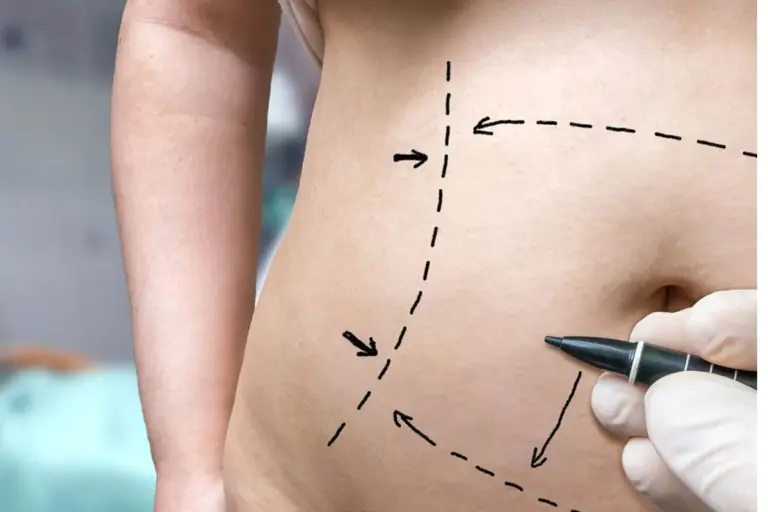
A critical distinction in body contouring is between a panniculectomy and an abdominoplasty (tummy tuck). A panniculectomy is a functional procedure designed to remove the hanging “apron” of skin and fat (the pannus) from the lower abdomen. It strictly addresses the tissue that hangs below the pubic bone, causing hygiene issues and mobility restrictions. It does not typically involve tightening the abdominal muscles or repositioning the belly button.
In contrast, an abdominoplasty is a more comprehensive cosmetic procedure. It removes the pannus but also tightens the rectus abdominis muscles (diastasis repair) to flatten the abdominal wall and contour the waistline. It usually involves repositioning the umbilicus to a natural position. For patients with massive weight loss, an abdominoplasty is often preferred for aesthetic restoration, while a panniculectomy is strictly for symptom relief.


The lower body lift, or belt lipectomy, is the workhorse of post-bariatric reconstruction. It extends the incision of a tummy tuck continuously around the entire circumference of the torso. This procedure addresses the abdomen, flanks, lower back, and buttocks in a single stage. It effectively lifts the lateral thighs and buttocks while flattening the stomach.
By removing a circumferential strip of excess tissue, the surgeon acts like a belt-tightener, suspending the lower body tissues. This is essential for patients with generalized laxity who have “deflated” in all 360 degrees. It provides a dramatic improvement in silhouette and stabilizes the lower body skin envelope.


Brachioplasty addresses the “bat wing” deformity common after weight loss, where loose skin hangs from the upper arms. The procedure involves an incision typically running from the axilla (armpit) to the elbow, along the inner or back of the arm. Excess skin and residual fat are excised to restore a cylindrical, toned arm contour.
In cases of massive weight loss, the incision may need to extend past the axilla onto the lateral chest wall to address continuity of the loose skin (extended brachioplasty). Surgeons carefully navigate superficial nerves and lymphatic vessels to minimize complications while maximizing the removal of redundant tissue.
The medial thigh lift targets the loose skin on the inner thighs, which can cause chafing and difficulty walking. The incision pattern varies based on the severity of the laxity. A horizontal incision in the groin crease is used for upper thigh laxity, while a vertical incision extending down toward the knee is necessary for significant circumferential excess.
The vertical medial thigh lift is often required in patients with massive weight loss to reduce the bulk of the thigh cone effectively. The procedure involves anchoring the skin to strong fascial structures to prevent downward migration (caudal migration) and to ensure a smooth, tight contour.

Breasts often suffer significant deflation and ptosis (sagging) after weight loss, leaving behind empty skin envelopes. A mastopexy, or breast lift, is performed to remove excess skin, reshape the breast tissue, and reposition the nipple-areola complex to a more youthful height.
Because volume loss is a primary issue, surgeons often employ auto augmentation techniques, using the patient’s own lateral chest tissue to fill the breast mound, or combine the lift with an implant. This restores both the breast’s position and volume, addressing the flattened appearance typical of post-bariatric patients.
For patients with significant skin rolls on the upper back (bra line) and lateral chest, an upper body lift may be indicated. This procedure involves an incision across the back, often hidden within the bra line, to excise transverse rolls of skin and fat.
It effectively smooths the upper back and can be connected to the breast surgery incisions to address the lateral chest wall. This completes the contouring of the upper torso, eliminating the folds visible through clothing and causing discomfort.
Massive weight loss can accelerate facial aging, leading to a deflated midface and loose neck skin (turkey gobbler deformity). A facelift and neck lift in the bariatric patient focuses on removing excess skin and suspending the underlying SMAS (Superficial Musculoaponeurotic System) tissues.
Volume restoration is also key; surgeons may use fat grafting to replenish the volume lost in the cheeks and temples. This combined approach of lifting and filling restores a youthful geometry to the face, aligning the facial appearance with the improved body contour.
In patients with extreme vertical and horizontal skin laxity, a standard tummy tuck may not be sufficient to narrow the waist. The Fleur de Lis abdominoplasty adds a vertical midline incision to the standard low horizontal incision. This allows the surgeon to pull skin from the sides toward the center, dramatically narrowing the waistline.
While this results in a visible vertical scar on the abdomen, it offers the most powerful contouring for patients with significant midsection bulk. The trade-off of a scar is often accepted for the superior improvement in shape and the removal of the midline skin roll.
The mons pubis (the area covering the pubic bone) often sags and becomes ptotic after weight loss. During an abdominoplasty or body lift, a mons pubis lift is routinely performed. This involves thinning the fatty pad and suspending the skin upward to the abdominal fascia.
This procedure rejuvenates the genital region, reducing the bulge and lifting the tissues to a normal anatomical position. It improves hygiene and comfort in clothing and is an integral part of restoring the aesthetic of the lower abdomen.
The spiral thigh lift is a complex procedure designed to lift the front, back, and inner thigh. The incision starts in the groin, wraps around the back of the thigh within the buttock crease, and can spiral down. It is used to shape the entire thigh and lift the buttocks simultaneously.
This advanced technique allows multi-vector lifting, addressing sagging on all sides of the thigh. It requires careful planning to ensure tension is distributed correctly and that the scars heal well in these high-motion areas.
Flat, deflated buttocks are a common complaint after weight loss. Instead of using implants, surgeons can perform autoaugmentation during a body lift. The tissue that would usually be discarded from the lower back is de-epithelialized (skin removed) and buried under the buttock skin.
This creates a living tissue implant using the patient’s own fat and dermis. It restores projection and volume to the buttocks safely, avoiding the risks associated with foreign bodies like silicone implants.
Given the extent of incisions in body contouring, scar management is a standard part of the process. Scar revision procedures may be performed under local anesthesia to improve the appearance of scars that have widened or healed poorly.
Techniques include excision and re-closure, laser therapy, or steroid injections. While scars are permanent, these refinements aim to make them as flat, pale, and inconspicuous as possible, completing the aesthetic result.

Send us all your questions or requests, and our expert team will assist you.
A panniculectomy is a functional procedure that removes only the overhanging apron of skin (pannus) below the belly button to relieve symptoms such as rashes. A tummy tuck (abdominoplasty) is a cosmetic procedure that removes excess skin and fat from the abdomen, tightens the abdominal muscles, contours the waist, and repositions the belly button.
Yes, a lower body lift includes an extended tummy tuck. The incision goes all the way around the body, so the front part of the surgery performs the functions of a tummy tuck (skin removal and muscle tightening), while the back part lifts the buttocks.
The skin on the upper arm is thin, and excess tissue must be removed along the length of the arm to reduce the circumference effectively. There are a few natural folds to hide a long incision, so the scar is placed on the inner or back of the arm, where it is least visible when the arms are down.
Thigh lifts are designed to remove loose skin and improve the contour of the leg. While stretching the skin can enhance the appearance of cellulite, it is not a cure for the structural dimpling. The primary goal is tightening, not smoothing surface texture defects.
Combining procedures is common to reduce overall recovery time and cost. However, safety is the priority. Surgeons limit the total operating time to avoid complications. Common combinations include a body lift with a breast lift, or an arm lift with a thigh lift, depending on the patient’s health.

 Bariatric Contouring
 Bariatric Contouring
 Bariatric Contouring
 Bariatric Contouring
Your Comparison List (you must select at least 2 packages)