pluripotent vs multipotent
Stem cells can turn into many different cell types. This makes them key to new treatments in regenerative medicine. Did you know that the potency of stem cells determines their ability to repair or replace damaged tissues? This is important for creating new therapies and treatments.
Stem cells have different levels of potency, like totipotent, pluripotent, and multipotent. Each type has its own uses and abilities. Knowing these differences helps us move forward in research and treatment.
Key Takeaways
- Stem cell potency refers to the ability of stem cells to differentiate into various cell types.
- Totipotent, pluripotent, and multipotent stem cells have different capabilities and applications.
- Understanding stem cell potency is key for advancing regenerative medicine.
- The potency of stem cells determines their ability to repair or replace damaged tissues.
- Research on stem cell potency is ongoing, with big implications for future therapies.
Understanding Stem Cell Potency
Cell potency is how well stem cells can turn into different cell types. This is key in stem cell science and treatment. Knowing about stem cell potency helps us see their role in healing and research.
What Is Cell Potency?
Cell potency shows how well stem cells can change into different cell types. The level of potency tells us how many types of cells a stem cell can become. This affects its use in treatments and studies.
Key aspects of cell potency include:
- The range of cell types a stem cell can differentiate into
- The mechanisms controlling cell differentiation
- The implications of potency for stem cell therapy and research
The Spectrum of Stem Cell Potency
Stem cell potency ranges from totipotency to multipotency. Totipotency is the highest, where one cell can become a whole organism. Pluripotency is next, where cells can turn into almost any cell type but not a complete organism. Multipotency is the ability to turn into several cell types within a certain group.
| Potency Level | Characteristics | Examples |
| Totipotent | Can develop into a complete organism | Zygote |
| Pluripotent | Can differentiate into almost any cell type | Embryonic stem cells |
| Multipotent | Can differentiate into multiple cell types within a lineage | Mesenchymal stem cells |
Why Potency Matters in Stem Cell Research
The potency of stem cells is vital for their use in therapy and research. Higher levels, like pluripotency, allow for more cell types to be made for treatments. Understanding and changing cell potency is essential for improving stem cell research and finding new treatments.
The importance of potency in stem cell research is wide-ranging. It shapes the direction of research and the possibilities for treatments.
Totipotent Stem Cells: The Ultimate Potential
Totipotent stem cells can turn into every cell type, including those outside the embryo. This makes them the most powerful cells in the body.
Definition and Characteristics of Totipotency
Totipotency means a single cell can grow into all cell types in an organism. This includes both the embryo and extra-embryonic tissues. It’s the highest level of power among stem cells, showing they can create a whole organism.
The defining characteristic of totipotent stem cells is their ability to become any cell type. This is key for early growth and development.
The totipotent state is seen right after fertilization. At this time, the cell can grow into a complete organism. This shows how important totipotency is in developmental biology.
Examples of Totipotent Cells
The zygote, formed by sperm and egg, is a perfect example of a totipotent cell. It’s the first cell that can grow into a whole organism, showing the power of totipotency.
Cells from the first few divisions of the zygote, called blastomeres, also have this ability. They can grow into any cell type, but their power decreases as development goes on.
Developmental Timeline of Totipotent Cells
The totipotent state is brief, lasting only the early stages of development. As the embryo grows, cells start to specialize and lose their totipotency. Knowing when this happens helps us understand early growth and how totipotent cells can help in medicine.
Studying totipotent stem cells helps us learn more about cell power and its uses in medicine. By looking at these cells’ traits and growth, scientists can uncover secrets of early life and find new ways to help people.
Pluripotent Stem Cells Explained
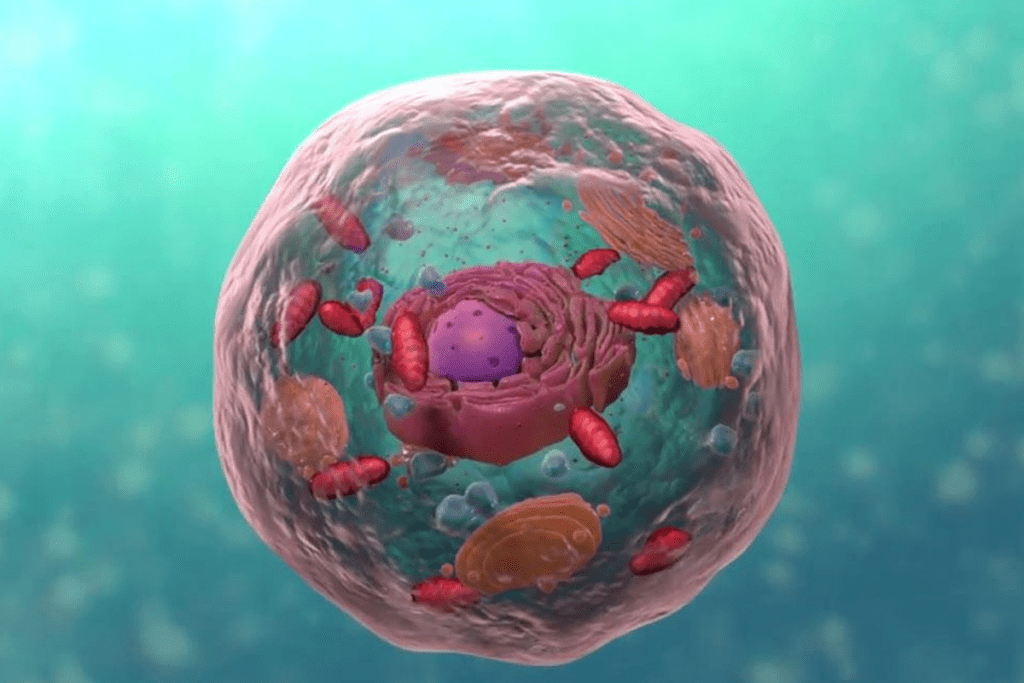
Pluripotent stem cells can turn into any cell in the human body, except for some special tissues. This makes them very useful for research and could help in making new treatments.
Definition and Meaning of Pluripotency
Pluripotency means a stem cell can become any cell in the body’s three main layers: ectoderm, endoderm, and mesoderm. This ability makes pluripotent stem cells great for fixing damaged tissues and growing new ones.
The term “pluripotency” is different from “totipotency.” Totipotency means a cell can become any cell, including extraembryonic tissues. Knowing the difference is key to using pluripotent stem cells for medical breakthroughs.
Sources of Pluripotent Stem Cells
There are two main types of pluripotent stem cells: embryonic stem cells and induced pluripotent stem cells.
- Embryonic Stem Cells (ESCs): These come from the early embryo and can turn into any cell in the embryo.
- Induced Pluripotent Stem Cells (iPSCs): These are made by changing adult cells back into a pluripotent state. They are versatile and can be made to match a patient’s cells.
Embryonic Stem Cells as Pluripotent Cells
Embryonic stem cells come from the early embryo. They can keep growing and turn into any cell type. Their ability to do this makes them key for studying human development and for regenerative medicine.
Induced Pluripotent Stem Cells (iPSCs)
Induced pluripotent stem cells are made by changing adult cells into a pluripotent state. This is done by adding genes that help them become pluripotent again.
iPSCs have big advantages. They can be made to match a patient’s cells, which could lead to better treatments. They are also good for studying diseases and finding new medicines.
| Characteristics | Embryonic Stem Cells | Induced Pluripotent Stem Cells |
| Source | Inner cell mass of blastocysts | Reprogrammed somatic cells |
| Pluripotency | Yes | Yes |
| Ethical Concerns | Yes | No |
Multipotent Stem Cells in Detail
multipotent stem cells
Multipotent stem cells can turn into many cell types within a certain group. They help keep tissues healthy and fix damaged ones.
Definition and Characteristics of Multipotency
Multipotency means a stem cell can become several cell types, but only in a specific group. Unlike pluripotent stem cells, they can’t turn into any cell type. This makes them key for fixing certain tissues.
Key characteristics of multipotent stem cells include:
- The ability to self-renew
- Differentiation into multiple cell types within a specific lineage
- Expression of specific surface markers
Types of Multipotent Stem Cells
There are many types of multipotent stem cells, each with its own abilities. Some well-known ones are:
- Hematopoietic stem cells (HSCs), which give rise to all blood cell types
- Mesenchymal stem cells (MSCs), which can differentiate into osteoblasts, chondrocytes, and adipocytes
- Neural stem cells, which can give rise to neurons and glial cells
Location and Function in the Body
Multipotent stem cells are found in different parts of the body. They help keep tissues healthy and fix them when needed. For example, HSCs are in the bone marrow, making all blood cells. MSCs are also in the bone marrow and other places like fat and muscle.
These stem cells work together in the bone marrow. They help make blood cells and keep bones strong.
Examples of Multipotent Stem Cells in Adults
In adults, these stem cells are vital for keeping tissues healthy and fixing them. Here are some examples:
| Type of Stem Cell | Location | Function |
| Hematopoietic Stem Cells | Bone Marrow | Production of all blood cell types |
| Mesenchymal Stem Cells | Bone Marrow, Fat, Muscle | Differentiation into osteoblasts, chondrocytes, and adipocytes |
| Neural Stem Cells | Brain and Spinal Cord | Production of neurons and glial cells |
In conclusion, multipotent stem cells are key for keeping tissues healthy and fixing them. Learning about them can help us understand how to fix damaged tissues and find new treatments.
Pluripotent vs Multipotent: Key Differences
It’s important to know the differences between pluripotent and multipotent stem cells. This knowledge helps us move forward in stem cell research and therapy. These cells have unique abilities and traits that affect their use in medicine.
Differentiation Ability Comparison
Pluripotent stem cells can turn into any cell type in the body. This makes them very useful for medical treatments. In contrast, multipotent stem cells can only turn into multiple cell types, but only within certain groups or tissues.
For example, pluripotent stem cells can become cells from all three germ layers: ectoderm, endoderm, and mesoderm. Multipotent stem cells, though, can only become cells within one germ layer or tissue type.
Developmental Stage Differences
Pluripotent stem cells are found early in embryonic development. Multipotent stem cells, on the other hand, are found in both early embryos and adults. The stage at which these cells are found affects their power and uses.
Pluripotent stem cells usually come from embryos. Multipotent stem cells can be found in adult tissues like bone marrow or fat.
Functional Capabilities
Pluripotent stem cells can repair or replace damaged tissues all over the body. This makes them very promising for treatments. Multipotent stem cells, while not as versatile, can also help repair specific tissues.
Accessibility and Ethical Considerations
Getting to pluripotent and multipotent stem cells is different, which affects their use in research and treatment. Pluripotent stem cells can be made from adult cells or come from embryos, which raises ethical questions about embryo use.
Multipotent stem cells, found in adult tissues, have fewer ethical issues than embryonic stem cells. But, their limited ability to change into different cells limits their use in treatments.
In summary, knowing the differences between pluripotent and multipotent stem cells is key to understanding their roles in stem cell therapy and research.
Totipotent vs Pluripotent vs Multipotent: A Comparative Look
Stem cell potency is divided into totipotent, pluripotent, and multipotent. Each type has different abilities to change into other cells. Knowing these differences is key for improving stem cell research and its uses in medicine.
Differentiation Hierarchy Explained
The hierarchy of stem cell differentiation is important. Totipotent stem cells can turn into any cell in the body, even a whole organism. Pluripotent stem cells can become almost any cell type, except for some special ones. Multipotent stem cells can only turn into a few types of cells within a specific group.
Totipotency is the highest level, where a single cell can grow into a complete organism. Pluripotency allows cells to become most cell types, but not all. Multipotency is more limited, with cells turning into several types within a specific group.
Developmental Timeline Comparison
The timeline for these stem cells’ development is different. Totipotent cells are present early in embryonic development, right after fertilization. Pluripotent stem cells are in the inner cell mass of the blastocyst, a bit later. Multipotent stem cells appear later and stay into adulthood, helping with tissue repair and upkeep.
Functional Differences in the Body
Totipotent cells mainly work in the earliest stages of embryonic development. Pluripotent stem cells help form the embryo, except for some special tissues. Multipotent stem cells are vital for keeping tissues healthy and repairing them throughout life, like in blood and bone marrow.
Visual Comparison of Cell Potency Types
A picture can help show the differences between totipotent, pluripotent, and multipotent stem cells. The image below shows the hierarchy and what each type can become.
Common Misconceptions About Stem Cell Potency
Many people get confused about stem cell types. This confusion comes from not fully understanding stem cell biology. It’s important to know the differences between pluripotent and multipotent stem cells.
Misconceptions About Pluripotent Cells
Some think pluripotent stem cells are the same as totipotent cells. But, pluripotent cells can only become every somatic cell type, not extraembryonic tissues like the placenta. This is key to their use in medicine.
Another mistake is thinking all pluripotent stem cells are the same. Actually, there are big differences between embryonic stem cells (ESCs) and induced pluripotent stem cells (iPSCs). These differences include how they are made and their uses.
Key differences between ESCs and iPSCs:
- Derivation method: ESCs come from embryos, while iPSCs are made from adult cells.
- Ethical considerations: ESCs raise ethical issues because they involve destroying embryos. iPSCs don’t have this problem.
- Potential applications: Both are useful in medicine, but iPSCs offer personalized treatments.
Myths About Multipotent Stem Cells
Many believe multipotent stem cells are less powerful than pluripotent cells. But, multipotent cells can turn into a variety of cell types. They are important for fixing and keeping tissues healthy.
Mesenchymal stem cells (MSCs) are a good example. They can become different types of cells, like bone and cartilage cells. This makes them useful for healing tissues.
| Stem Cell Type | Differentiation Potential | Examples |
| Pluripotent | Can form all somatic cell types | Embryonic Stem Cells (ESCs), Induced Pluripotent Stem Cells (iPSCs) |
| Multipotent | Can form multiple cell types within a lineage | Mesenchymal Stem Cells (MSCs), Hematopoietic Stem Cells (HSCs) |
Clarifying Confusion Between Potency Types
It’s important to know the difference between totipotency, pluripotency, and multipotency. Totipotency represents the highest level of cellular potential, where a single cell can develop into a complete organism.
“The distinction between totipotency, pluripotency, and multipotency lies in their developmental capacity and the cell types they can produce.” – Stem Cell Research Expert
Understanding these differences helps us move forward in stem cell research and treatments. By clearing up misconceptions, we can see the unique strengths and limits of each stem cell type.
Clinical Applications of Different Potency Stem Cells
pluripotent stem cells clinical applications
It’s key to know how pluripotent and multipotent stem cells work in treatments. These stem cells are being looked at for many health issues.
Medical Applications of Pluripotent Stem Cells
Pluripotent stem cells can turn into any cell type. This makes them very promising for fixing damaged tissues. They might help with heart problems, diabetes, and brain diseases.
Pluripotent stem cell-derived cardiomyocytes could fix heart issues. Pluripotent stem cell-derived insulin-producing cells might help with diabetes.
Therapeutic Uses of Multipotent Stem Cells
Multipotent stem cells are found in adult bodies. They can’t change into as many cell types as pluripotent ones. Yet, they’re useful for treatments.
They’re used in bone marrow transplantation for blood disorders. They also help in mesenchymal stem cell therapies for fixing tissues and controlling the immune system. This makes them good for treating osteoporosis and autoimmune diseases.
Current Treatments Using Specific Stem Cell Types
Some treatments already use specific stem cells. For example, hematopoietic stem cell transplantation is used for blood issues. Mesenchymal stem cells are being tested for osteoarthritis and cardiovascular diseases.
This shows how versatile and useful stem cells can be, based on their potency.
Emerging Therapies Based on Cell Potency
The field of stem cell therapy is growing fast. New treatments focus on the special traits of stem cells. Researchers are working on making these cells even better.
They’re looking into genetic modification and combination therapies. These efforts could lead to better treatments for many diseases. It shows how important it is to understand and use different potency stem cells.
Current Research and Future Perspectives
Stem cell research is making big strides, changing how we see cell potency. Scientists are diving deep into stem cells, finding new ways to improve the field.
Recent Breakthroughs in Stem Cell Potency
One major breakthrough is the creation of induced pluripotent stem cells (iPSCs). iPSCs can turn into many different cell types. This makes them key for regenerative medicine. A study in Nature says iPSCs could change regenerative medicine by helping fix and replace tissues.
“The ability to generate iPSCs from somatic cells has transformed the field of stem cell biology, enabling the creation of patient-specific cells for therapeutic applications.”
– Takahashi et al., 2006
Techniques for Manipulating Cell Potency
New methods are being developed to control stem cell behavior. These include small molecules and tools like CRISPR/Cas9. These tools help us better control how stem cells grow and change. For example, a study showed CRISPR/Cas9 can fix genetic problems in iPSCs, making them useful for treating genetic diseases.
Future Directions in Stem Cell Research
The future of stem cell research looks bright. It could lead to new treatments in regenerative medicine, tissue engineering, and gene therapy. As we learn more about cell potency, we’ll see more innovative treatments. Future studies will likely aim to make stem cell therapies safer and more effective.
Challenges in Stem Cell Potency Research
Despite progress, there are big hurdles in stem cell research. We need to make sure stem cell therapies are safe and work well. We also face ethical issues and need to understand cell potency better. Overcoming these challenges is key to unlocking stem cell technology’s full promise.
Conclusion
Understanding stem cell potency is key for advancing research and creating new treatments. The differences between totipotent, pluripotent, and multipotent stem cells are important. They help decide how these cells can be used in medicine.
Pluripotent vs multipotent stem cells show two levels of cell power. Pluripotent cells can turn into almost any cell type. Multipotent cells, on the other hand, can only become specific types of cells.
Stem cell potency is important for innovation in regenerative medicine. By understanding totipotency, pluripotency, and multipotency, researchers can find new ways to treat diseases and injuries.
In conclusion, more research on stem cell potency is needed. It will help us use stem cells fully in medicine. This will lead to better health for people.
FAQ
What is the difference between totipotent, pluripotent, and multipotent stem cells?
Totipotent stem cells can turn into any cell in the body, including placental cells. Pluripotent stem cells can turn into any cell type in the embryo. Multipotent stem cells can turn into several cell types but only in a specific tissue.
What does pluripotent mean?
Pluripotent means a stem cell can turn into any cell type in the embryo. This makes them very useful for research and treatments.
Are embryonic stem cells pluripotent?
Yes, embryonic stem cells are pluripotent. They can turn into any cell type in the embryo.
What are the sources of pluripotent stem cells?
Pluripotent stem cells come from embryonic stem cells and induced pluripotent stem cells (iPSCs). iPSCs are made by changing adult cells into a pluripotent state.
What is the difference between pluripotent and multipotent stem cells?
Pluripotent stem cells can turn into any cell type in the embryo. Multipotent stem cells can turn into several cell types but only in a specific tissue.
What are examples of multipotent stem cells?
Multipotent stem cells include hematopoietic stem cells and mesenchymal stem cells. Hematopoietic stem cells can turn into different blood cells. Mesenchymal stem cells can turn into cells like osteoblasts, chondrocytes, and adipocytes.
What is the significance of understanding stem cell potency?
Knowing about stem cell potency is key for improving regenerative medicine and new treatments. It helps find the right stem cell type for each use.
What are the clinical applications of pluripotent stem cells?
Pluripotent stem cells could be used in many ways, like in regenerative medicine and tissue repair. They could also help in disease modeling.
What are the challenges in stem cell potency research?
Research on stem cell potency faces challenges like understanding how to control cell potency. It also involves finding ways to change cell potency and dealing with ethical issues.
What is the developmental timeline of totipotent cells?
Totipotent cells are in the early stages of an embryo’s development. This is usually during the first few cell divisions after fertilization.
- Poliwoda, S., Noor, N., Downs, E., et al. (2022). Stem cells: A comprehensive review of origins and emerging clinical roles in medical practice. Orthopedic Reviews, 14(3), Article 37498. https://doi.org/10.52965/001c.37498
- [Author(s) Not Stated]. (2024). Multipotent/pluripotent stem cell populations in stromal tissues and peripheral blood: exploring diversity, potential, and therapeutic applications. Stem Cell Research & Therapy, 15, Article 139. https://doi.org/10.1186/s13287-024-03752-x
- Liao, S. Y., & Tse, H. F. (2013). Multipotent (adult) and pluripotent stem cells for heart regeneration: what are the pros and cons? Stem Cell Research & Therapy, 4, Article 151. https://doi.org/10.1186/scrt381
- “Pluripotent and Multipotent Stem Cells and Current Therapeutic Applications: Review. (2021). Journal/Source, PubMed.https://pubmed.ncbi.nlm.nih.gov/33880040/
- Cao, J., Ng, E. S., McNaughton, D., Stanley, E. G., Tobin, M. J., & Heraud, P. (2013). The characterisation of pluripotent and multipotent stem cells using Fourier transform infrared microspectroscopy. International Journal of Molecular Sciences, 14(9), 17453‘17476. https://doi.org/10.3390/ijms140917453