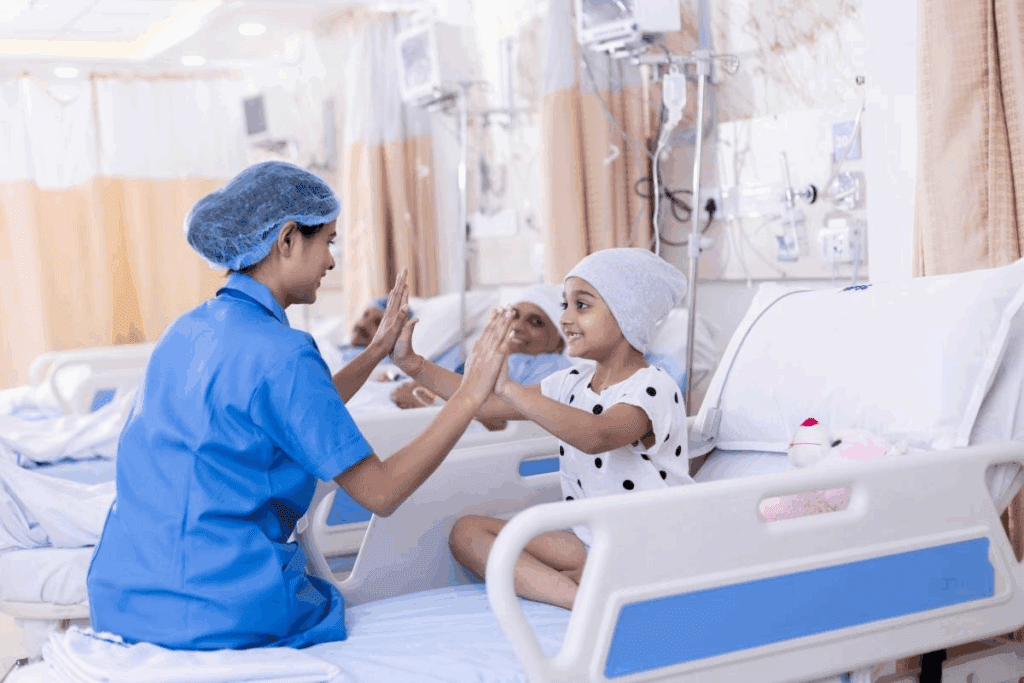
When a child is diagnosed with cancer, it changes the family’s life forever. Chemotherapy is a key treatment for many childhood cancers. The American Cancer Society says thousands of kids get cancer each year, and chemotherapy is often a big part of their treatment.Explaining the typical hospital procedures and offering advice for Preparing a child for chemotherapy.
As a parent, facing your child’s chemotherapy can be scary. But knowing what to expect can help a lot. We’ll show you how to prepare your child for chemotherapy. This way, you can support and care for them better.
Key Takeaways
- Understanding the chemotherapy process and its possible side effects.
- Learning how to talk to your child about their treatment.
- Discovering ways to help your child deal with chemotherapy’s emotional and physical challenges.
- Finding resources and support for your family during this tough time.
- Preparing your child for changes in their looks and daily life.
Understanding Pediatric Chemotherapy

It’s important for parents and caregivers to know how chemotherapy works in kids. Chemotherapy is key in treating many cancers in children. It needs a deep understanding of how it works and its effects.
What Is Chemotherapy and How Does It Work?
Chemotherapy uses drugs to kill cancer cells or stop them from growing. Chemotherapy drugs can be taken by mouth or given through an IV. The goal is to target cancer cells without harming healthy ones.
Chemotherapy works by stopping cancer cells from dividing and growing. Each drug has its own way of working, like damaging DNA or stopping cell division.
Differences Between Adult and Pediatric Chemotherapy

Chemotherapy is similar in adults and kids, but there are big differences. Pediatric chemotherapy is made for the cancers kids get, like leukemia and brain tumors.
| Aspect | Adult Chemotherapy | Pediatric Chemotherapy |
| Cancer Types | Carcinomas, such as breast, lung, and colon cancer | Leukemia, lymphoma, brain tumors, and sarcomas |
| Drug Dosage | Dosage is often based on body surface area | Dosage is carefully calculated based on the child’s weight and body surface area |
| Treatment Goals | Often focuses on controlling or curing the cancer | Aims at curing the cancer while minimizing long-term effects on development |
Knowing these differences helps parents understand their child’s treatment better. It helps them make informed decisions about their child’s care.
Preparing a Child for Chemotherapy: First Steps
Starting to prepare a child for chemotherapy means having the first talks after they find out they have cancer. It’s important to be honest and caring in these talks. This helps your child feel supported and in the loop.
Initial Conversations After Diagnosis
When a child finds out they have cancer, they feel many emotions and have lots of questions. It’s key to have open and honest talks about their diagnosis and treatment. These talks help your child understand and cope.
Here are some tips for these talks:
- Use clear and simple language your child can get.
- Be straight about the diagnosis and treatment.
- Tell your child they’re not alone and you’ll be there every step of the way.
Timing Your Discussions
When to talk about chemotherapy is very important. You need to figure out when your child is ready to hear about it. Some kids want to know right away, while others need time.
Here’s a table to help plan your talks:
| Age Group | Recommended Approach | Key Considerations |
| Preschoolers (3-5) | Simple explanations, focus on feelings | Use basic language, reassure about safety |
| School-age (6-12) | More detailed explanations, encourage questions | Be honest, provide reassurance about their control |
| Teenagers (13-18) | Detailed information, respect their autonomy | Discuss possible side effects, involve them in decisions |
Creating a Safe Space for Questions
It’s important to make a place where your child feels free to ask questions. Be open and ready to answer their questions. Let them know it’s okay to ask and you’ll try to give honest answers.
By taking these steps and thinking about your child’s needs, you can help them feel ready and supported during their chemotherapy.
Age-Appropriate Explanations of Cancer Treatment
Explaining cancer treatment in a way that fits a child’s age is very important. Each age group has its own needs and understanding level. It’s key to adjust our explanations to meet these needs.
For Preschoolers (Ages 3-5)
Preschoolers need simple and reassuring words. We should talk about treatment in basic terms. For example, “You need special medicine to get rid of bad cells, and it will make you feel better soon.”
Key points to emphasize with preschoolers include:
- Reassurance of their safety and love
- Simple explanations of treatment processes
- Preparation for what they might experience (e.g., “You might feel a little sick from the medicine, but that’s temporary”)
For School-Age Children (Ages 6-12)
School-age kids can handle more detailed info. We should explain their treatment clearly but avoid too much jargon. Using analogies, like comparing chemotherapy to “a strong medicine that fights the bad cells,” can help.
When explaining treatment to school-age children, consider:
- Using visual aids like diagrams or pictures to help them understand
- Discussing the treatment plan and what they can expect during sessions
- Encouraging them to ask questions and express their feelings
For Teenagers (Ages 13-18)
Teenagers can handle complex info about their treatment. We should be honest and open with them. It’s also important to respect their growing independence and involve them in decisions.
Key considerations for teenagers include:
- Detailed explanations of their treatment and possible side effects
- Discussion of how treatment might impact their daily life and activities
- Encouraging them to take an active role in their care and decision-making
Creating a Child-Friendly Explanation of Chemotherapy
Talking about chemotherapy with kids needs care and clear words to ease their worries. It’s key to explain medical ideas in ways kids can get. This means using methods that fit their age and level of understanding.
Using Books and Visual Aids
Books and visual tools are great for explaining chemotherapy to kids. There are many books for kids about cancer and treatment. Pictures and videos can also help kids see what’s happening, making it less scary.
For example, books with simple words and pictures can explain chemotherapy. They say it’s a treatment that fights bad cells. Good books include “The Cancer Book for Kids” and “What’s Wrong with You?: Understanding Your Cancer Diagnosis.”
Metaphors That Help Children Understand
Metaphors are also good for explaining chemotherapy to kids. Saying chemotherapy is like “special medicine” or “a strong warrior” can help. These metaphors make the idea clearer and less scary.
- Comparing chemotherapy to a treatment that makes the body “stronger” against bad cells.
- Using the metaphor of a “cleaning process” to remove bad cells from the body.
Recommended Resources for Different Ages
Each age group needs its own way of learning. For preschoolers, simple and clear words are best. For school-age children, more detailed info is okay, as long as it’s fun and educational. For teenagers, deeper talks about treatment and its effects are needed.
- For preschoolers (ages 3-5): Books with simple pictures and stories, like “Why Am I Going to the Hospital?”
- For school-age children (ages 6-12): Educational books and videos that explain chemotherapy in more detail.
- For teenagers (ages 13-18): More detailed resources, including online forums and support groups, that address their specific concerns and questions.
Addressing Your Child’s Fears and Questions
As a parent, it’s key to help your child deal with chemotherapy fears and questions. Kids often worry a lot when they face cancer treatment. It’s important to talk about these fears in a gentle and honest way.
Common Questions Children Ask
Children facing chemotherapy have many questions. They might ask, “Will I lose my hair?”, “Will I be in pain?”, or “Will I be able to go back to school?”. These questions are chances for parents to reassure and explain things clearly.
Honest Answers Without Overwhelming
It’s important to give honest answers without too much detail. We should give simple, clear answers that meet their immediate needs. For example, telling them hair loss from chemotherapy is temporary and their hair will grow back can ease their worries.
Using simple and reassuring language helps kids feel safer. It’s also good to say it’s okay to feel scared or sad.
When to Seek Professional Help for Anxiety
While family support is often enough, some kids might need extra help. If your child shows signs of persistent anxiety, refuses treatment, or changes a lot, they might need professional help.
Getting help from a child psychologist or counselor can be very helpful. They can teach your child strategies tailored to their needs to handle their anxiety during this tough time.
Emotional Preparation Strategies
As a parent, guiding your child through chemotherapy’s emotional challenges is a journey. It needs careful preparation. Emotional preparation helps children cope with treatment. It involves strategies tailored to your child’s needs.
Building Emotional Resilience
Building emotional resilience in children undergoing chemotherapy is key. It means helping them develop coping strategies and a positive outlook. We can encourage this by keeping open communication lines, letting them share their fears and concerns.
It’s also good to focus on their strengths and what they can control. This boosts their security and confidence.
Preparing them for what to expect during treatment is another strategy. Explain the process, side effects, and support they’ll get. This way, children feel more in control and less anxious about the unknown.
Managing Anxiety Before Treatment
Managing anxiety before chemotherapy is critical for a better experience. One way is to establish a calming pre-treatment routine. This could be reading, drawing, or listening to soothing music. It helps create a calm and normal atmosphere.
Involve your child in relaxation techniques like deep breathing, visualization, or meditation. These can help them relax and reduce anxiety. Being honest and open about their feelings also provides emotional relief and support.
By using these emotional preparation strategies, we can help children build resilience. This makes their journey through chemotherapy less daunting and more manageable.
Physical Preparation for Chemotherapy Sessions
Preparing physically is key when dealing with pediatric chemotherapy. It helps lower anxiety and discomfort. Being ready can greatly help children handle treatment better.
What to Expect During Treatment
Knowing what happens during treatment is important. Chemotherapy sessions can last different lengths and happen at different times. Kids might feel some discomfort or more serious side effects.
Talking about these feelings with your child is vital. Use words they can understand. Getting ready can really help lessen anxiety and make treatment easier.
| Aspect of Treatment | What to Expect | Preparation Tips |
| Duration of Session | Sessions can last from a few minutes to several hours. | Bring entertainment or comfort items. |
| Physical Sensations | May experience cold, nausea, or fatigue. | Dress in layers, have snacks ready. |
| Medication Administration | IV or port access may be used. | Understand the procedure, ask questions. |
Preparing for Port Placement or IV Access
Many kids get chemotherapy through a port or IV. Knowing about it can make them feel less scared. A port is a small device under the skin for easy medicine shots.
Talking about it in simple terms can make kids feel more at ease.
- Discuss the procedure with your child’s healthcare team.
- Use visual aids to explain the concept of a port or IV.
- Reassure your child that it’s a common procedure.
Hospital Tour and Familiarization
A hospital tour before the first treatment is very helpful. It lets families get used to the place, which can lower anxiety.
On the tour, you can meet staff, see treatment rooms, and learn the hospital’s layout. Knowing the place can make the first treatment less scary.
By getting your child ready for chemotherapy, you can make the process less scary. Knowing what to expect, preparing for medical stuff, and getting to know the hospital are all key steps.
Packing for Hospital Chemotherapy Sessions
Packing the right items for hospital chemotherapy sessions can make a big difference. It helps your child feel more comfortable and less stressed. As a parent, you want to make sure your child is as comfortable as possible during these tough times.
Essential Items Checklist
Having the right essentials is key to your child’s comfort during chemotherapy. Here are some must-have items to pack:
- Comfortable clothing
- Personal hygiene items (toothbrush, toothpaste, etc.)
- Medications and prescriptions
- Insurance cards and identification
- Snacks and water bottle
- Entertainment devices (tablet, books, etc.)
Keep these items in a dedicated bag or backpack. It makes it easier to find what you need during the session.
Comfort Items to Bring
Comfort items offer emotional support and reassurance. Consider bringing:
- A favorite toy or blanket
- Photos or mementos
- Cozy socks or slippers
- A soft pillow or cushion
These items help create a sense of familiarity and comfort in an unfamiliar place.
Entertainment and Distraction Tools
Entertainment and distraction tools are vital for making chemotherapy more bearable. Some ideas include:
| Item | Description | Age Suitability |
| Tablet or laptop | Loaded with favorite movies, games, or educational content | All ages |
| Coloring books and crayons | Creative outlet for expression | 3-12 years |
| Audiobooks or music | Soothing and engaging auditory content | All ages |
By being well-prepared with the right items, you can help make your child’s chemotherapy experience more comfortable and less intimidating.
Working With Your Child’s Medical Team
As a parent, working closely with your child’s medical team is key. It ensures they get the best care. This teamwork is vital in handling chemotherapy and any concerns that come up.
Building Relationships With Doctors and Nurses
Having a good relationship with your child’s healthcare providers is important. Here’s how to build it:
- Be open and honest about your child’s medical history and any concerns you may have.
- Ask questions and seek clarification on any information you don’t understand.
- Show appreciation for the care your child receives, as this can foster a positive and supportive environment.
Questions to Ask Before Starting Treatment
Understanding what to expect before chemotherapy starts is vital. Here are some important questions to ask:
- What are the possible side effects of the chemotherapy, and how can they be managed?
- How will we monitor your child’s response to treatment, and what adjustments might be made?
- Are there any specific care instructions or precautions we should take at home?
Advocating for Your Child’s Needs
As a parent, you are your child’s biggest advocate. Here are ways to ensure their needs are met:
- Communicate openly with the medical team about your child’s symptoms, concerns, and any changes in their condition.
- Keep a record of your child’s treatment, including medications, side effects, and any notable events.
- Seek support from the medical team, family, and friends when needed, as managing your child’s care can be challenging.
By working together with your child’s medical team, you can ensure they get the best care during chemotherapy.
Preparing Siblings and Family Members
When a family deals with pediatric chemotherapy, it’s key to prepare siblings and other family members. Chemotherapy can be tough for everyone, but siblings might feel left out or confused.
Explaining to Brothers and Sisters
It’s important to tell siblings the truth in a way they can understand. Using simple and clear language helps them grasp what’s happening. Let them be part of the process, so they can ask questions and share their feelings.
For the younger ones, visual aids like pictures or storybooks about cancer can be useful. Older siblings might need more detailed explanations and a chance to talk about their feelings and worries.
How Extended Family Can Help
Extended family members are a big help during this time. They can offer emotional support, help with daily tasks, and keep things stable and normal.
- Emotional support: Being there to listen and comfort.
- Practical help: Helping with chores, cooking, or taking care of other kids.
- Maintaining routines: Keeping family activities and schedules the same.
Maintaining Family Routines
Keeping family routines is important for feeling secure and normal. Regular activities, meal times, and bedtime routines help siblings feel more stable.
| Routine Activity | Benefits |
| Regular meal times | Provides a sense of normalcy and structure |
| Family game nights | Encourages bonding and distraction from treatment stress |
| Outdoor activities | Promotes physical health and mental well-being |
School Considerations During Treatment
When your child starts chemotherapy, keeping up with school and friends is key for their happiness. Chemotherapy is tough, but with the right steps, your child can keep learning and stay connected with friends.
Communicating with Teachers and Staff
Talking to your child’s teachers and school staff is very important. Set up a meeting with the school to talk about your child’s health, treatment, and any help they might need. This way, teachers can support your child better.
Key information to share includes:
- Your child’s treatment schedule and possible side effects
- Any medicines your child needs to take at school
- How to reach you in an emergency
- What special help your child might need, like more time for homework or a quiet spot
Maintaining Academic Progress
Staying on top of schoolwork can make your child feel normal and proud. Talk to teachers to make a plan that lets your child do homework and join in class when they can.
Strategies for keeping up with schoolwork include:
- Setting a flexible homework schedule
- Helping with homework at home
- Using online tools or tutoring
- Helping your child stay organized and on top of their work
Handling Peer Questions and Concerns
Children on chemotherapy might get asked questions by their friends. It’s good to get your child ready for these by practicing how to answer.
Tips for dealing with peer questions:
- Practice different situations to boost your child’s confidence
- Teach them to be honest and open about their treatment
- Remind them it’s okay to share what they want and not more
By thinking ahead about school, you can help your child deal with chemotherapy. They can keep learning and stay close to their friends.
Preparing for Possible Side Effects
When your child starts chemotherapy, it’s key to get ready for side effects. Chemotherapy fights cancer but can also harm healthy cells. This can lead to different side effects.
Hair Loss and Body Changes
Hair loss is a common side effect of chemotherapy. It can make kids feel bad about themselves. Talking to your child about this can help them deal with it better. Using wigs, hats, or scarves can make them feel more at ease.
Nausea and Appetite Changes
Nausea and changes in appetite are common too. There are medicines to help with nausea, and changing what your child eats can help keep them nourished. Some kids like eating small meals often, while others prefer simple foods.
Fatigue and Energy Levels
Fatigue is a big side effect, making it hard for your child to do everyday things. Planning breaks and adjusting what they do can help. It’s also good to keep them active, but not too much.
Immune System Considerations
Chemotherapy can make your child’s immune system weaker. This means they can get sick easier. It’s important to keep them away from crowded places, teach them good hygiene, and watch for signs of infection.
| Side Effect | Management Strategies |
| Hair Loss | Wigs, hats, scarves, cutting hair short |
| Nausea | Medications, small frequent meals, avoiding strong-smelling foods |
| Fatigue | Rest periods, adjusting activity levels, maintaining some physical activity |
| Immune System Changes | Avoiding crowded areas, good hygiene, monitoring for infection signs |
Nutrition Planning Before and During Chemotherapy
Good nutrition is key for a child’s health during chemotherapy. A balanced diet helps manage side effects, keeps energy up, and aids in recovery. We’ll look at how to plan nutrition to support your child’s needs during this time.
Foods That Help During Treatment
Some foods are great for kids going through chemotherapy. These include:
- Nutrient-rich foods: Fresh fruits, vegetables, whole grains, lean proteins, and healthy fats.
- High-calorie foods: Foods like nuts, dried fruits, avocados, and full-fat dairy help keep energy up.
- Protein-rich foods: Foods high in protein, such as lean meats, fish, eggs, beans, and lentils, are important for healing.
| Food Group | Examples | Benefits |
| Fruits and Vegetables | Apples, bananas, carrots, broccoli | Rich in vitamins, minerals, and antioxidants |
| Protein Sources | Chicken, fish, beans, eggs | Essential for healing and maintaining body strength |
| Whole Grains | Brown rice, quinoa, whole wheat bread | Provide fiber, vitamins, and minerals |
Managing Taste Changes and Appetite
Chemotherapy can change how a child tastes and feels like eating. To help:
- Offer a variety of foods: Sometimes, a different food can be more appealing.
- Make mealtime enjoyable: Create a pleasant atmosphere during meals.
- Choose mild flavors: If strong flavors are unappealing, opt for milder options.
Hydration Strategies
It’s important to stay hydrated during chemotherapy. Encourage your child to drink lots of water, clear broths, and electrolyte-rich drinks. Checking urine output can help ensure they’re drinking enough.
By focusing on nutrition planning, you can help your child better handle chemotherapy. A balanced diet and strategies for managing taste changes and staying hydrated can greatly impact their treatment journey.
Activities and Distractions During Treatment
Children often spend long hours in hospitals or treatment centers during chemotherapy. It’s important to keep them engaged. Activities not only distract but also make treatment easier for kids.
Entertainment Options for Hospital Stays
Hospital stays can be long and boring. To keep kids entertained, there are many options. These include:
- Tablets or Handheld Games: These devices have games and educational content that kids love.
- Books and Comics: Reading can take kids to new worlds, giving them a break.
- Movies and TV Shows: Streaming services or DVDs with their favorite shows make time more enjoyable.
Maintaining Normal Activities When Possible
Keeping some normalcy in daily routines is good for kids during treatment. This can include:
- Light Physical Activities: Simple exercises or playing in the hospital’s play area can be good.
- Schoolwork: Doing schoolwork, even for a short time each day, keeps kids feeling normal and accomplished.
- Social Interactions: Visits from friends and family boost their mood.
Creative Outlets for Expression
Creative activities help kids express their feelings during tough times. Some options include:
- Drawing or Painting: These activities are therapeutic and let kids share their thoughts.
- Writing Stories or Poetry: Older kids can write to process their experiences.
- Crafting: Doing crafts, like making jewelry or models, is fun and fulfilling.
By using these activities and distractions, kids can find comfort and strength during chemotherapy.
Building a Support Network
The journey through chemotherapy is not one that families have to undertake alone. A strong support network can make a big difference. It offers both emotional comfort and practical help as families face treatment challenges.
Professional Support Resources
Professional support is key for families dealing with chemotherapy. Oncology social workers, psychologists, and counselors help manage treatment’s emotional side. They also guide through the healthcare system, help with finances, and coordinate care.
Professional support offers many benefits, including:
- Emotional support and counseling
- Practical advice on managing treatment side effects
- Assistance with navigating healthcare and insurance systems
Connecting with Other Families
Meeting other families going through similar experiences is very helpful. Support groups, both in-person and online, are great for sharing and finding support. These connections make families feel less alone and more supported.
Ways to connect with other families include:
- Joining local support groups for families affected by cancer
- Participating in online forums and discussion groups
- Attending family events and activities organized by cancer support organizations
Online Communities and Support Groups
Online communities and support groups are vital for families with chemotherapy. They offer easy access to info, a chance to share experiences, and connect with others. Online forums and social media groups focused on cancer support provide a lot of help and support.
Online communities offer many benefits, such as:
- 24/7 access to support and information
- The ability to connect with a diverse range of people who have experienced similar challenges
- A platform for sharing personal stories and advice
Conclusion: Supporting Your Child Throughout the Journey
Preparing a child for chemotherapy is a big task. It needs to cover their physical, emotional, and mental health. By learning about pediatric chemotherapy and explaining it in a way they can understand, parents can help a lot.
It’s key to support your child during their chemotherapy. Parents should stay involved and offer help and advice. This makes your child feel safe and strong as they go through treatment.
Remember to be patient and flexible as your child’s needs change. Working with their medical team and using all the resources available will help a lot. Together, you can support your child on their path to getting better.
FAQ
How can I prepare my child emotionally for chemotherapy?
Start by talking openly with your child about the treatment. Use words they can understand. Teaching them to relax and finding support can help too.
What are some ways to explain chemotherapy to my child?
Use books and pictures to explain chemotherapy. Make sure the explanation fits their age. Young kids need simple words, while older kids can handle more details.
How can I help my child cope with the side effects of chemotherapy?
Talk to your child about what might happen, like hair loss or feeling tired. A healthy diet and staying hydrated help. Having friends and family nearby is also key.
What should I pack for my child’s hospital chemotherapy sessions?
Bring things that make your child feel safe and happy. Toys, books, and games are great. A tablet or laptop can also be a good distraction.
How can I support my child’s siblings during this time?
Explain things to them in a way they can understand. Keep family routines the same. Let them know they’re not alone and it’s okay to feel different.
What are some nutrition tips for children undergoing chemotherapy?
Choose foods that are full of nutrients and easy to eat. Make sure they drink plenty of water. Pick foods your child likes to help keep their energy up.
How can I manage my child’s anxiety before chemotherapy treatment?
Create a support network and teach relaxation techniques. Talk openly with your child. Sometimes, professional help is needed to offer extra support.
What are some activities that can help distract my child during chemotherapy?
Movies, games, and reading can be great distractions. Drawing or crafting can also be a fun way for your child to express themselves.
How can I work effectively with my child’s medical team?
Build a good relationship with doctors and nurses. Ask questions and speak up for your child. Being active and working together ensures your child gets the best care.
Are there any resources available for families going through pediatric chemotherapy?
Yes, there are many resources like support groups and online communities. Connecting with others who understand can offer emotional support and helpful advice.