
Hip flexor tendonitis is a painful condition that affects athletes and active individuals worldwide. It causes deep anterior pain that limits mobility and function. At Liv Hospital, we recognize the importance of accurate diagnosis and progressive therapeutic exercises in treating this condition. Recent research shows that exercise therapy provides long-term pain relief for those with hip flexor tendonitis.
Hip flexor tendonitis, also known as hip flexor tendinopathy, affects individuals who engage in repetitive movements. This includes cyclists, runners, and dancers. Our patient-centered approach combines cutting-edge academic protocols with personalized exercise and rehabilitation programs to alleviate symptoms and improve function. Guide to hip flexor tendonitis exercises and stretches used in physical therapy for safe recovery.
Key Takeaways
- Exercise therapy is effective in managing hip flexor tendonitis.
- Personalized rehabilitation programs improve treatment outcomes.
- Accurate diagnosis is key for effective treatment.
- Progressive therapeutic exercises alleviate symptoms.
- Repetitive movements contribute to the development of hip flexor tendonitis.
Understanding Hip Flexor Tendonitis

The hip flexors are key to our movement. Tendonitis in this area can really affect our daily lives. It’s a condition where the tendons get inflamed and painful. These tendons connect the hip flexor muscles to the bone.
What Are Hip Flexors and Their Function
Hip flexors help lift our knee towards our chest. The main muscles involved are the iliacus, psoas major, and rectus femoris. Together, they help us walk, run, and climb stairs.
These muscles are vital for good posture and hip stability. They enable us to move freely. But, tendonitis can cause pain and limit our movement.
Causes and Mechanisms of Tendonitis
Tendonitis happens from too much strain or sudden injury. It causes inflammation and pain in the tendons. Factors like repetitive use, sudden injuries, and bad training practices can lead to it.
“Repetitive strain on the hip flexor tendons can lead to inflammation and pain, making it essential to identify and address the underlying causes of tendonitis.”
Common reasons for tendonitis include overuse and not warming up or cooling down properly. Sudden changes in activity can also cause it. Knowing these reasons helps us prevent and treat tendonitis better.
Causes of Hip Flexor Tendonitis | Description |
Repetitive Use Injuries | Repeated strain on the hip flexor tendons due to activities like running or cycling. |
Acute Injuries | Sudden trauma or injury to the hip flexor muscles or tendons. |
Poor Training Practices | Inadequate warm-up, cool-down, or improper training techniques. |
Common Activities That Lead to Hip Flexor Tendonitis
Cycling, running, dancing, and gymnastics can increase tendonitis risk. These activities involve a lot of hip movement. This can strain the tendons.
Knowing the risks helps us take steps to prevent tendonitis. Proper training, the right equipment, and recovery are key.
Recognizing the Symptoms and Diagnosis
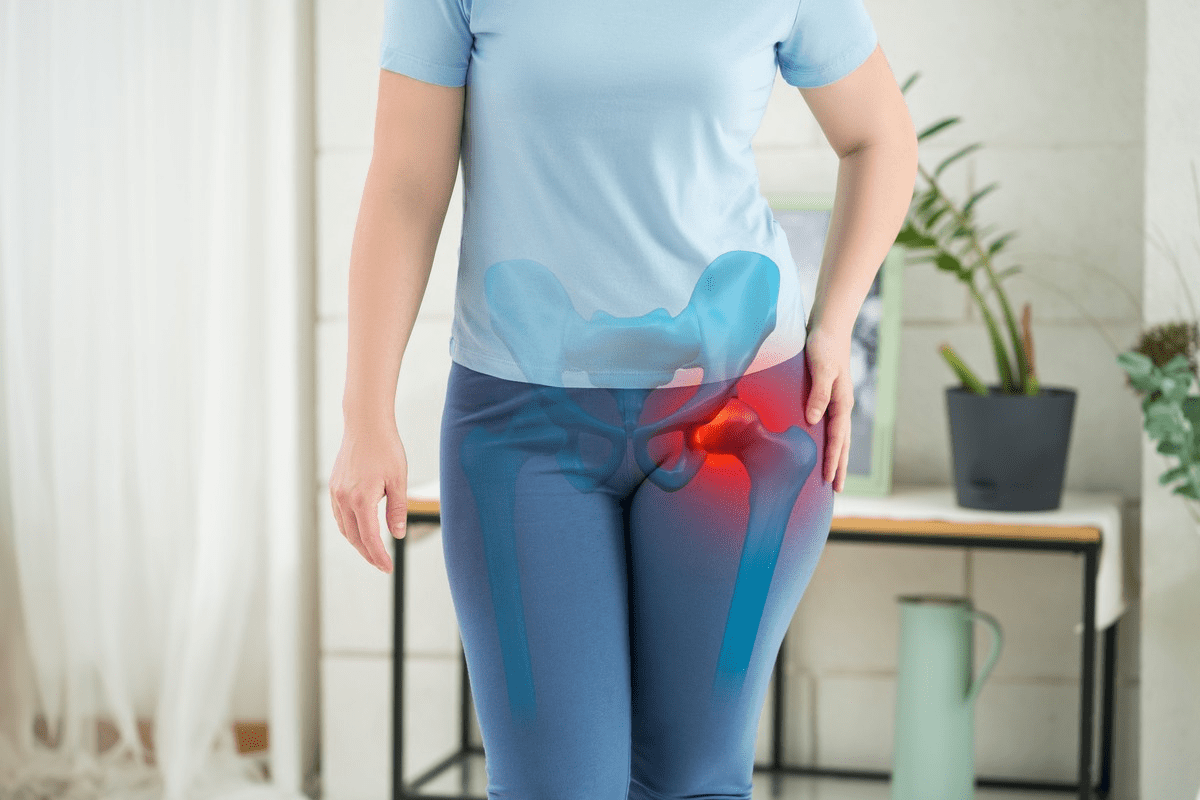
It’s important to know the signs of hip flexor tendonitis to get the right treatment. This condition shows specific symptoms that set it apart from other hip issues.
Common Signs and Symptoms
Hip flexor tendonitis often causes pain when you move your hip. You might also feel stiff after sitting or lying down for a while. The pain usually gets better when you move but gets worse after you’ve been active.
Other symptoms include:
- Pain or tenderness in the front of the hip or groin area
- Swelling or inflammation in the affected area
- A clicking or clunking sensation in the hip
- Weakness or instability in the hip or leg
Differentiating from Other Hip Conditions
It’s key to tell hip flexor tendonitis apart from other hip problems. Conditions like osteoarthritis, hip bursitis, and muscle strains can have similar symptoms. A detailed medical check-up is needed to find out the real cause of hip pain.
The table below shows how hip flexor tendonitis differs from other common hip issues:
Condition | Primary Symptoms | Common Causes |
Hip Flexor Tendonitis | Pain when moving hip, stiffness after inactivity | Overuse, repetitive strain, poor biomechanics |
Osteoarthritis | Chronic pain, stiffness, limited mobility | Aging, wear and tear, genetic predisposition |
Hip Bursitis | Pain on the outside of the hip, swelling | Repetitive motion, direct blow to the hip |
Medical Evaluation and Diagnostic Process
Diagnosing hip flexor tendonitis requires a thorough medical check-up. This includes talking about your symptoms, a physical exam, and sometimes imaging tests. Doctors might check your hip’s flexibility, strength, and pain spots during the exam.
They might also use X-rays or MRI to check for other conditions or tendon damage.
Knowing how doctors diagnose hip flexor tendonitis helps start the right treatment.
Initial Treatment Approaches
Starting treatment for hip flexor tendonitis involves a plan that focuses on pain and swelling. Our main goal is to lessen pain and help the tendon heal.
Rest, Ice, Compression, Elevation (R.I.C.E.) Method for Acute Pain
The R.I.C.E. method is a common way to handle acute pain from hip flexor tendonitis. It includes:
- Rest: Staying away from activities that make the pain worse.
- Ice: Using ice to cut down on swelling.
- Compression: Wearing bandages to help with swelling.
- Elevation: Keeping the leg higher than the heart to lessen swelling.
Pain Management Strategies
Managing pain well is key in the early stages of treating hip flexor tendonitis. We suggest:
- Using over-the-counter pain relievers to control pain.
- Anti-inflammatory drugs to lower swelling.
- Physical therapy to keep muscles flexible and strong.
The table below shows some common ways to manage pain:
Strategy | Description | Benefits |
Over-the-counter pain relievers | Medications like ibuprofen or acetaminophen | Reduces pain and inflammation |
Anti-inflammatory medications | Prescription drugs for serious swelling | Helps with severe swelling |
Physical therapy | Exercises to keep muscles flexible and strong | Helps with healing and keeps function |
Activity Modification Guidelines
Changing how we do activities is important to not make hip flexor tendonitis worse. We advise:
- Avoiding activities that put a lot of stress on the hip flexors.
- Changing daily tasks to reduce strain on the hip.
- Slowly going back to normal activities with professional help.
By following these tips, we can manage hip flexor tendonitis well and help it heal.
The Science Behind Exercise Therapy for Tendonitis
Recent studies highlight the role of exercise therapy in treating tendonitis. It improves tendon structure and function. Tailored exercise for hip flexor tendonitis shows great promise in recovery and pain reduction.
Promoting Tendon Healing Through Exercise
Exercise is key in tendon healing. It boosts blood flow, enhances tendon structure, and strengthens muscles. Eccentric exercises, which stretch the muscle-tendon unit under load, are very effective in repairing tendons.
Studies show that eccentric training improves tendon structure and function. It also reduces pain and boosts functional ability. This is because it stimulates growth factors needed for tendon repair.
Research-Backed Exercise Protocols
Several exercise protocols have been developed for tendonitis treatment. These include:
- Eccentric training programs tailored to the specific tendon affected
- Progressive resistance exercises to strengthen the surrounding muscles
- Isometric exercises for pain management and early strengthening
These protocols are designed to be progressive. They gradually increase in intensity and difficulty as the tendon heals and strengthens.
Setting Realistic Recovery Expectations
Recovery from tendonitis is a gradual process. It requires patience and sticking to a structured exercise program. It’s important for patients to understand that recovery times vary.
By setting realistic recovery expectations and sticking to a consistent exercise regimen, patients can improve their chances of success. Regular check-ins with healthcare professionals are also key. They help adjust the exercise protocol as needed and address any concerns or setbacks.
Hip Flexor Tendonitis Exercises for Strength Building
Managing hip flexor tendonitis well means doing strengthening exercises. These exercises help the tendon heal and the muscles get stronger. Strengthening the hip flexors is key to getting better, easing pain, and improving how you move.
Isometric Strengthening Exercises
Isometric exercises are great for the early stages of tendonitis recovery. They work the muscle without moving the joint. This helps build muscle strength without stressing the tendon too much.
- Supine Hip Flexion: Lie on your back with one leg bent and the other straight. Contract the hip flexor of the straight leg without moving it.
- Standing Hip Flexor Contraction: Stand with your feet hip-width apart. Contract the hip flexor muscles without lifting your leg.
Eccentric Training Protocols
Eccentric training is slow and controlled, which is good for tendinopathies. It helps the tendon heal and get stronger.
- Eccentric Hip Flexion: Stand on a step or curb with your heel hanging off the edge. Slowly lower your heel down, taking 3-5 seconds to do so.
- Lunge with Eccentric Phase: Perform a lunge and focus on the slow, controlled descent into the lunge position.
Progressive Resistance Techniques
Progressive resistance techniques make the exercises harder over time. This keeps challenging the muscle-tendon unit, helping it get stronger. You can use resistance bands, weights, or bodyweight exercises.
- Resistance Band Hip Flexion: Secure a resistance band around your ankle and a stable object. Lift your leg against the resistance.
- Weighted Hip Flexion: Use ankle weights or a cable machine to perform hip flexion exercises with added resistance.
Adding these strengthening exercises to your rehab plan can help manage hip flexor tendonitis. It promotes long-term recovery and gets you back to full strength.
Essential Stretches for Hip Flexor Recovery
Stretching is key for hip flexor recovery. It boosts flexibility and eases muscle tension. A good stretching plan can help with hip flexor tendonitis and keep your hips healthy.
Static Stretching Techniques
Static stretches involve holding a stretch for 15-30 seconds. This lengthens the muscle and tendon. For hip flexor tendonitis, try these static stretches:
- Kneeling Hip Flexor Stretch: Kneel on one knee with the other foot in front. Keep your back straight and push your hips forward.
- Lying Hip Flexor Stretch: Lie on your back, bring one knee towards your chest, and hold onto your knee with your hand.
- Standing Hip Flexor Stretch: Stand with your feet shoulder-width apart. Take a large step forward with one foot and lower your body until your back knee almost touches the ground.
Do these stretches gently and within a comfortable range to avoid making the condition worse.
Dynamic Stretching Methods
Dynamic stretches move through a range of motion to get the muscle-tendon unit ready for activity. For hip flexor recovery, try these dynamic stretches:
- Leg Swings: Stand with your feet hip-width apart and swing one leg forward and backward, then switch to the other leg.
- Hip Circles: Stand with your feet together and your hands on your hips. Move your hips in a large circle, first clockwise and then counterclockwise.
- Walking Lunges: Perform walking lunges, keeping your front knee behind your toes and pushing your hips forward.
Do dynamic stretches in a controlled way to avoid putting too much strain on the hip flexors.
Proper Stretching Form and Duration
Getting the form and duration right is important for safe and effective stretching. Here are some tips:
- Hold static stretches for 15-30 seconds and repeat 2-3 times.
- Perform dynamic stretches in a controlled manner, avoiding bouncing or jerking movements.
- Breathe naturally and smoothly while stretching to help relax the muscles.
Adding these stretching techniques to your routine can help with hip flexor recovery and lessen tendonitis symptoms.
Lumbo-Pelvic Stability Work for Hip Health
Strengthening the lumbo-pelvic area is key for hip health. It gives a stable base for movement and lessens hip flexor strain. The lower back and pelvic areas are vital for good movement and injury prevention.
Core Strengthening Exercises
Core exercises are essential for pelvis stability and less hip flexor strain. Effective core exercises include planks, bridges, and pelvic tilts. These exercises boost lumbo-pelvic stability, leading to better movement and injury prevention.
To do a plank, start in a push-up position with hands shoulder-width apart. Engage your core and hold for 30-60 seconds. Bridges are done lying on your back with knees bent and feet flat, lifting hips towards the ceiling. Pelvic tilts involve lying on your back with knees bent, tilting your pelvis up and then back down.
Pelvic Alignment Techniques
Proper pelvic alignment is key for good biomechanics and injury prevention. Techniques include conscious awareness of posture, core engagement, and exercises targeting pelvic muscles.
Pelvic tilt exercises help loosen tight muscles and improve flexibility. Another method is standing with feet shoulder-width apart and hands on hips. Rotate your pelvis in both directions.
Functional Movement Patterns
Functional movement patterns train the body for safe and effective movement. Examples are squats, lunges, and step-ups. These improve strength, flexibility, and coordination.
To squat, stand with feet shoulder-width apart and lower down until thighs are parallel to the ground. Lunges involve stepping out with one foot and lowering down until back knee almost touches the ground. Step-ups are done by stepping up onto a platform or step with one foot, then bringing the other foot up to meet it.
Developing a Complete Rehabilitation Program
Creating a detailed rehabilitation program is key for recovering from hip flexor tendonitis. We’ll show you how to make a balanced exercise plan. You’ll learn about progression and regression, and how to track your progress.
Creating a Balanced Exercise Schedule
A good plan for hip flexor tendonitis should mix strengthening, stretching, and exercises for stability.
Start by setting aside specific days for each type of exercise. For example, do strengthening on Monday, Wednesday, and Friday. Use Tuesday and Thursday for stretching.
Here’s a sample plan:
Day | Exercise Type | Examples |
Monday | Strengthening | Isometric hip flexor strengthening, glute bridges |
Tuesday | Stretching | Hip flexor stretch, hamstring stretch |
Wednesday | Strengthening | Eccentric training for hip flexors, core strengthening |
Thursday | Stretching & Lumbo-Pelvic Stability | Dynamic stretching, pelvic tilts |
Friday | Strengthening | Progressive resistance exercises for hip flexors |
Progression and Regression Principles
Knowing when to increase or decrease your exercises is critical for a good rehab program.
Progression means making your exercises harder. You can do this by adding weight, doing more reps, or cutting down rest time.
For instance, you can make isometric hip flexor exercises harder by holding the contraction longer or using more resistance bands.
Regression means making your exercises easier. This is needed if you feel pain or discomfort. It helps avoid further injury.
Tracking Recovery and Adjusting Your Program
It’s important to keep track of your recovery to make changes to your program as needed.
Log your exercises, including how hard they were, how many reps you did, and any pain you felt.
Check your log often to spot patterns or concerns. If you see ongoing pain or no progress, talk to a healthcare expert to tweak your program.
Conclusion
We’ve looked into hip flexor tendonitis, from what causes it to how to treat it. A big point is that exercises help heal tendons and lessen pain. This includes strengthening and stretching.
Adding exercises for hip tendonitis to your day can boost strength and flexibility. This helps in getting better. We talked about the need for a mix of treatments, like first steps, exercises, and rehab.
To really tackle managing hip pain, you need to fix the problem, not just the symptoms. A good rehab plan includes exercises that make your hips stable and stronger. This way, you can beat hip flexor tendonitis and keep your hips healthy.
We suggest making a plan based on what we’ve shared. This will help you recover and keep your hips in good shape for the long run.
FAQ
What is hip flexor tendonitis?
Hip flexor tendonitis is a condition that happens when you do the same hip movement over and over. It causes inflammation and pain in the tendons of the hip flexors.
What are the common signs and symptoms of hip flexor tendonitis?
You might feel pain or discomfort when you move your hip. You could also feel stiff after resting or have pain that changes with how active you are.
How is hip flexor tendonitis diagnosed?
Doctors diagnose hip flexor tendonitis by checking your medical history, doing a physical exam, and sometimes using X-rays or MRI.
What is the R.I.C.E. method, and how is it used to treat hip flexor tendonitis?
The R.I.C.E. method is a first step for treating pain. It means resting, using ice, compressing, and elevating to lessen inflammation and pain.
What types of exercises are effective in managing hip flexor tendonitis?
Exercises like eccentric, isometric strengthening, and progressive resistance help heal the tendon. They also improve strength and reduce pain.
How do I perform isometric strengthening exercises for hip flexor tendonitis?
Isometric exercises are when you contract the muscle without moving the joint. You can do this by tightening your hip flexor muscles without moving your hip.
What is the importance of lumbo-pelvic stability in managing hip flexor tendonitis?
Keeping the lumbo-pelvic area stable is key. It reduces strain on the hip flexors and improves how your body moves. You can achieve this through core exercises and pelvic alignment.
How often should I stretch to help manage hip flexor tendonitis?
Stretching regularly is important. Aim to stretch 2-3 times a day. Focus on static and dynamic stretches to improve flexibility and reduce muscle tension.
How do I develop a complete rehabilitation program for hip flexor tendonitis?
A good program includes exercises for strengthening, stretching, and improving lumbo-pelvic stability. It should be balanced and adjusted based on how you respond to the exercises.
What are some common activities that can exacerbate hip flexor tendonitis?
Activities like cycling, running, and dancing can make hip flexor tendonitis worse. This is because they involve repetitive hip flexion movements.
How can I modify my activities to aid recovery from hip flexor tendonitis?
To help recover, avoid activities that make the condition worse. Instead, do gentle movements that support healing. Choose exercises that don’t strain the hip flexors too much.
What is the role of pain management in treating hip flexor tendonitis?
Pain management is key. It includes using over-the-counter pain relievers and anti-inflammatory drugs. These help reduce pain and inflammation, making it easier to do rehabilitation exercises.
How long does it take to recover from hip flexor tendonitis?
Recovery time varies. It depends on how severe the condition is and how well you respond to treatment. With a good rehabilitation program, most people see big improvements in a few weeks to months.
References
https://www.healthline.com/health/fitness-exercise/hip-flexor-exercises