Assessing children in early childhood is a complex task. It involves understanding their growth through different methods. We use a mix of observation, standardized tools, and family involvement to get a full picture of a child’s development. Our program for kids aged 3-5 informally incorporates these approaches to create a supportive and effective assessment process.
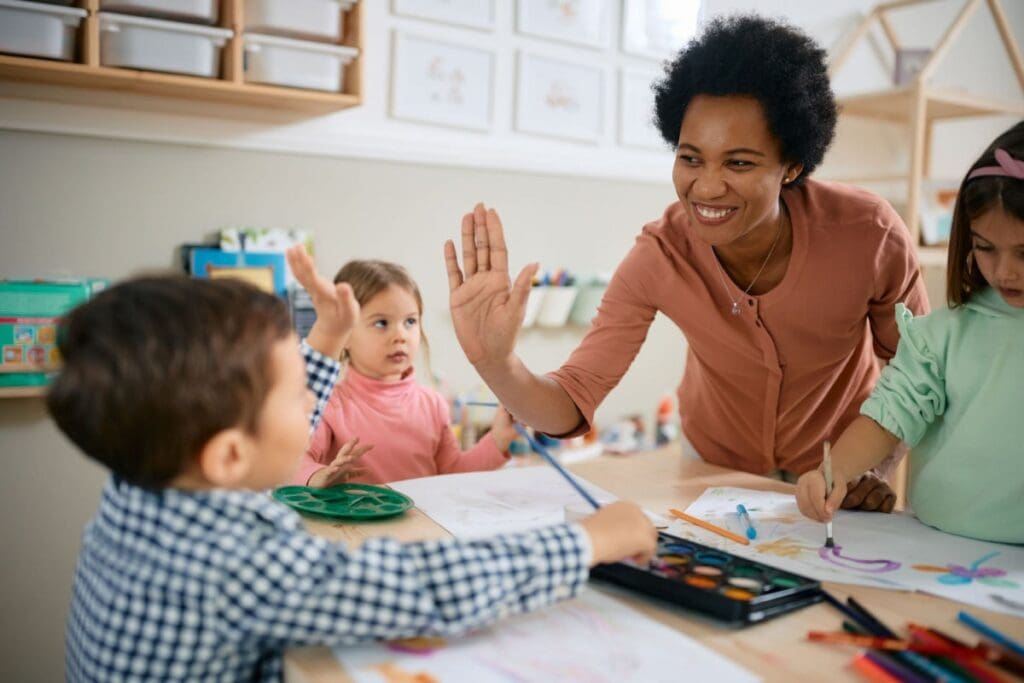
Observation-driven assessment methods offer deeper insights than tests alone. They help support a child’s growth and development. It’s key for educators to observe and document each child’s progress. This helps them plan the right curriculum and instruction for each child.
Key Takeaways
- Early childhood assessment involves a combination of observation, standardized tools, and family engagement.
- Observation-driven assessment methods provide valuable insights into a child’s developmental progress.
- Assessing children’s development is key for planning effective curriculum and individualized instruction.
- Family engagement is a vital part of early childhood assessment.
- Standardized tools are used with observation to assess a child’s development.
Understanding the Foundations of Early Childhood Assessment
It’s key for teachers to grasp the basics of early childhood assessment. This knowledge helps them support young students well. Assessment is not just one event but a continuous process. It tracks kids’ growth in different areas.
Assessment uses both formal and informal methods. These tools help us see how kids are doing and help them grow. By mixing these methods, we get a full picture of each child’s progress.
The Purpose and Goals of Developmental Assessment
The main goal of developmental assessment is to spot where kids might need extra help. It guides how we teach. We use the data to see where each child stands and adjust our teaching plans.
The main goals of developmental assessment are:
- Identifying children’s strengths and weaknesses
- Informing instruction and curriculum development
- Monitoring children’s progress over time
- Supporting children’s overall development and well-being
Key Developmental Domains to Monitor
We keep an eye on several key areas in early childhood assessment. These include:
| Domain | Description | Examples of Skills |
| Cognitive | Problem-solving, memory, and thinking | Sorting objects, counting, and identifying shapes |
| Physical/Motor | Gross and fine motor skills | Running, jumping, and using scissors |
| Language | Receptive and expressive language | Understanding instructions, communicating needs |
| Social-Emotional | Emotional regulation, social skills | Sharing, cooperating, and managing emotions |
| Approaches to Learning | Attitudes and behaviors that support learning | Persisting in tasks, showing curiosity |
About 71% of U.S. states use the Child Outcomes Summary Process. This team-based method rates child functioning on a 7-point scale. It shows the value of working together to understand kids’ growth.
5 Observation-Based Assessment Strategies
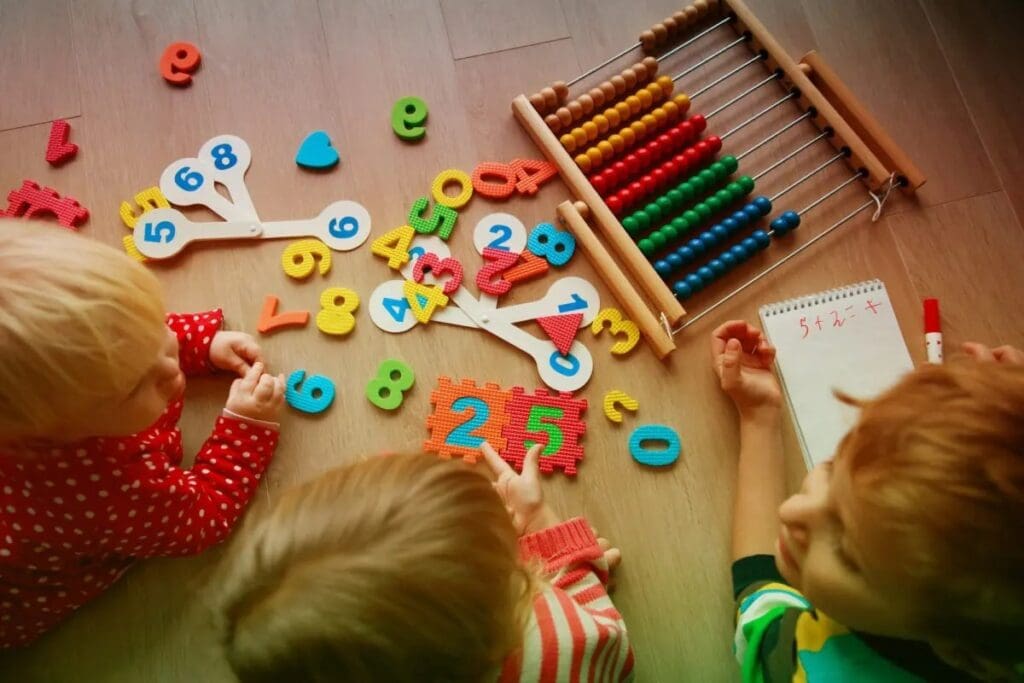
We use observation-based assessment to understand children’s growth better. This method is key in early childhood education. It helps us see how children learn and develop.
Play-based and observation-driven methods are becoming more popular. They show 70% more about children’s development than tests alone. These methods let educators see children in real-life settings, giving a true view of their abilities.
Learning Stories and Documentation Panels
Learning stories and documentation panels are great tools for assessment. Learning stories tell about children’s experiences and achievements. Documentation panels show children’s work and learning steps.
These tools help track children’s progress, find their strengths and weaknesses, and guide teaching. They help create a detailed picture of each child’s growth.
Checklists and Rating Scales
Checklists and rating scales are tools for specific development assessments. Checklists track if skills or behaviors are present or not. Rating scales measure the quality or level of performance.
| Assessment Tool | Description | Example |
| Checklists | Track presence/absence of skills | Social-emotional development checklist |
| Rating Scales | Evaluate quality/level of performance | Language development rating scale |
Work Samples and Portfolios
Work samples and portfolios show children’s learning and growth over time. Work samples are single pieces, like drawings or writings. Portfolios are collections of these samples.
These methods give a clear record of children’s progress. They help educators see how children have grown and what they need to work on. By looking at work samples and portfolios, educators can understand children’s learning better.
Video Documentation Techniques
Video documentation records children’s activities and behaviors. Video documentation captures complex interactions and behaviors that are hard to see in real-time.
This method lets educators review and analyze children’s behavior. It gives a detailed look at their developmental progress. Video documentation helps educators understand children’s learning and development more deeply.
Implementing Programs for Kids Aged 3-5 Informally
Creating programs for kids aged 3-5 needs careful thought. We aim to make learning fun and effective. We believe in assessing children in their everyday settings, where they feel most comfortable.
Creating Developmentally Appropriate Practice (DAP) Environments
Developmentally Appropriate Practice (DAP) environments support children’s natural learning. We design these spaces with the child’s age, needs, and culture in mind. DAP environments foster a love of learning and support overall development.
To build a DAP environment, we focus on several key elements:
- Creating a safe and welcoming space for exploration
- Using play-based learning activities that are both fun and challenging
- Choosing materials and resources that match the child’s life and interests
Technology Tools for Informal Assessment
Technology helps us collect data, making assessment easier and more family-friendly. It boosts academic success by 30%. We use technology to make assessment informal and involve families.
Some tools we use include:
- Digital portfolios to track children’s progress and showcase their work
- Mobile apps for recording observations and sharing with families
- Online platforms for communication between teachers, families, and children
By combining DAP environments with technology, we create a supportive learning space. This space promotes children’s overall development.
Family Engagement and Collaborative Assessment Methods
We know that family involvement is key in early childhood assessment. It helps us understand each child’s needs better. By working with families, we get a full picture of a child’s growth, both at school and at home.
Parent Interviews and Questionnaires
We use parent interviews and questionnaires to engage families. These tools give us insights into a child’s behavior, interests, and milestones. They come from the child’s primary caregivers.
Parent interviews let us have deep conversations. They help us see the details of a child’s growth and find out if they need extra help.
Home-School Communication Systems
Good communication between home and school is essential. We use different systems to keep families updated and involved in assessments.
These systems help share information and let families share their views. This makes our understanding of the child richer.
The Child Outcomes Summary Process
The Child Outcomes Summary (COS) process is a key part of our assessment. It looks at three areas: social-emotional skills, knowledge and skills use, and goal achievement.
By involving families in COS, we get a fuller view of a child’s growth. We can see where they might need extra support.
Addressing Cultural and Linguistic Diversity in Assessment
We make sure our assessments are fair for all families. We’re sensitive to cultural and language differences. This makes our assessments inclusive and accurate.
This way, we ensure our assessments are fair and show a child’s true abilities and needs.
Conclusion: Overcoming Challenges in Early Childhood Assessment
Assessing kids is key to knowing what young children need to grow. Despite the hurdles in early childhood assessment, we’re dedicated to top-notch assessment and support.
By watching children in different places and using many assessment methods, we get a full picture of their growth. This includes preschool assessments. We also involve families in the assessment to help children grow and develop well.
Understanding children’s complex development and learning is tough. Yet, our aim for world-class healthcare and support for families pushes us to keep improving our assessment methods. This is backed by research on child development (https://www.ncbi.nlm.nih.gov/books/NBK310550/).
FAQ
What is the purpose of assessing children in early childhood?
Assessing children in early childhood helps us understand their growth. It shows where they might need extra help. It also guides how we teach them.
What are the key developmental domains to monitor in early childhood assessment?
We watch how children grow in five main areas. These are thinking, moving, speaking, feeling, and learning. This gives us a full picture of their development.
What is Developmentally Appropriate Practice (DAP) and how is it implemented?
DAP means creating learning spaces that match how kids naturally learn. It uses everyday life and experiences. We use observations and technology to make it work.
How do you use observation-based assessment strategies in early childhood education?
We use many ways to observe kids, like learning stories and checklists. We also look at their work and use videos. This helps us see how they’re growing.
What role does family engagement play in early childhood assessment?
Family involvement is key in assessing kids. It helps us understand their growth better. We talk to parents and use systems to keep everyone informed.
How do you address cultural and linguistic diversity in assessment?
We make sure our assessment methods work for all families. We use the Child Outcomes Summary Process to do this. It helps us understand kids from different backgrounds.
What is the Child Outcomes Summary Process?
The Child Outcomes Summary Process is a team effort. It gathers data from many sources. This gives us a clear view of a child’s growth.
How do you use technology tools in informal assessment for kids aged 3-5?
We use technology to make informal assessments easier. It helps us collect data and get families involved. This makes assessing kids more effective.
References
- Council on Children with Disabilities, Section on Developmental and Behavioural Pediatrics, & Bright Futures Steering Committee. (2020). Identifying infants and young children with developmental disorders in the medical home: An algorithm for developmental surveillance and screening. Pediatrics, 145(5), e20200259.https://doi.org/10.1542/peds.2020-0259
- Early Childhood Technical Assistance Center. (2023). Key topics: Developmental screening.https://ectacenter.org/topics/dscreening/
- Squires, J., Twombly, E., Bricker, D., & Potter, L. (2020). The ASQ-3 user’s guide: A parent-completed, ages and stages questionnaire (3rd ed.). Paul H. Brookes Publishing.https://products.brookespublishing.com/The-ASQ-3-User-s-Guide-P1139.aspx
- The Royal College of Pediatrics and Child Health. (2022). A guide to developmental milestones.https://www.rcpch.ac.uk/resources/developmental-milestones-a-guide-for-parents-and-carers
- U.S. Department of Health and Human Services. (2023). A guide to quality in early childhood settings.https://www.acf.hhs.gov/sites/default/files/occ/a_guide_to_quality_in_early_childhood_settings.pdf