
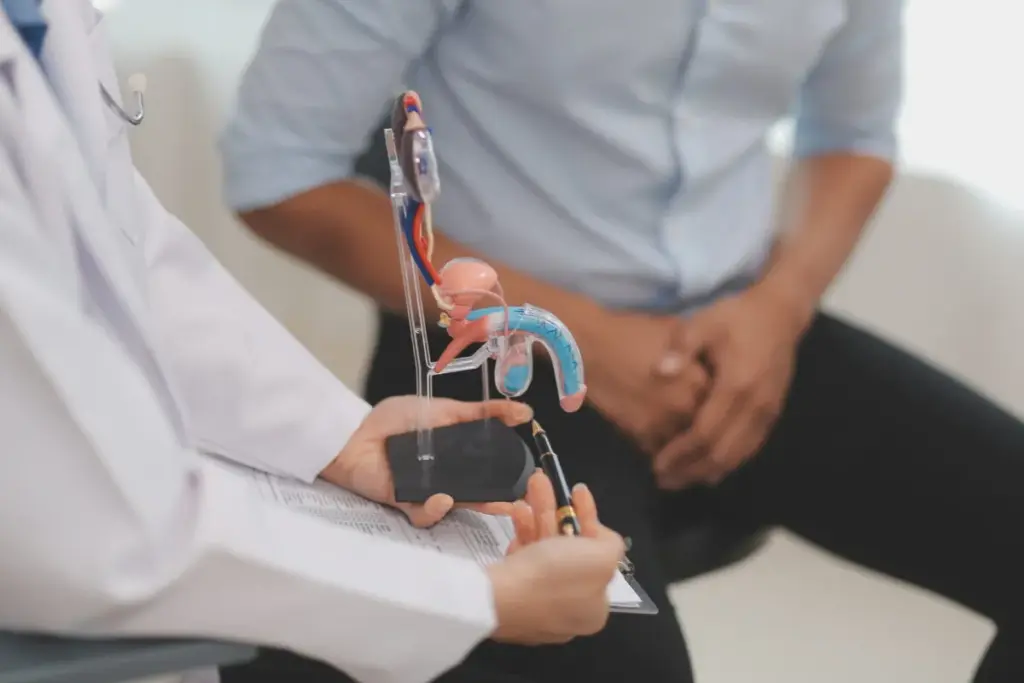
Nearly 1 in 8 men will get prostate cancer in their lifetime. This makes prostate biopsies very important. But, a biopsy is not risk-free.
Seeking options? If you cannot have a prostate biopsy, we discuss alternative screening methods like mpMRI and genetic testing.
Knowing how a biopsy is done helps patients get ready for possible problems. We’ll look at the procedure, its dangers, and what to expect. This will give you a full picture of this important test.
Key Takeaways
- The procedure involves obtaining tissue samples from the prostate gland.
- Potential complications include infection, bleeding, and temporary urinary issues.
- Understanding the risks can help patients make informed decisions.
- The diagnostic procedure is critical for finding cancer.
- Patients should talk about their risks with their doctor.
Understanding Prostate Biopsy
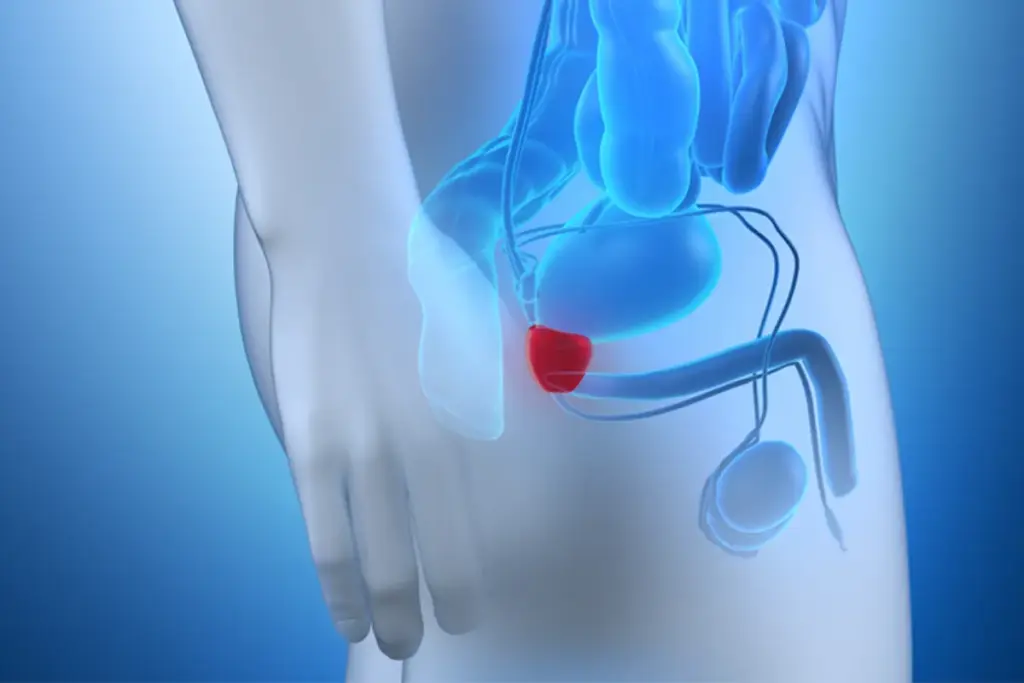
Healthcare providers often suggest a prostate biopsy to check for prostate cancer or other issues. This test takes tissue samples from the prostate gland. These samples are then looked at for any signs of problems.
What is a prostate biopsy?
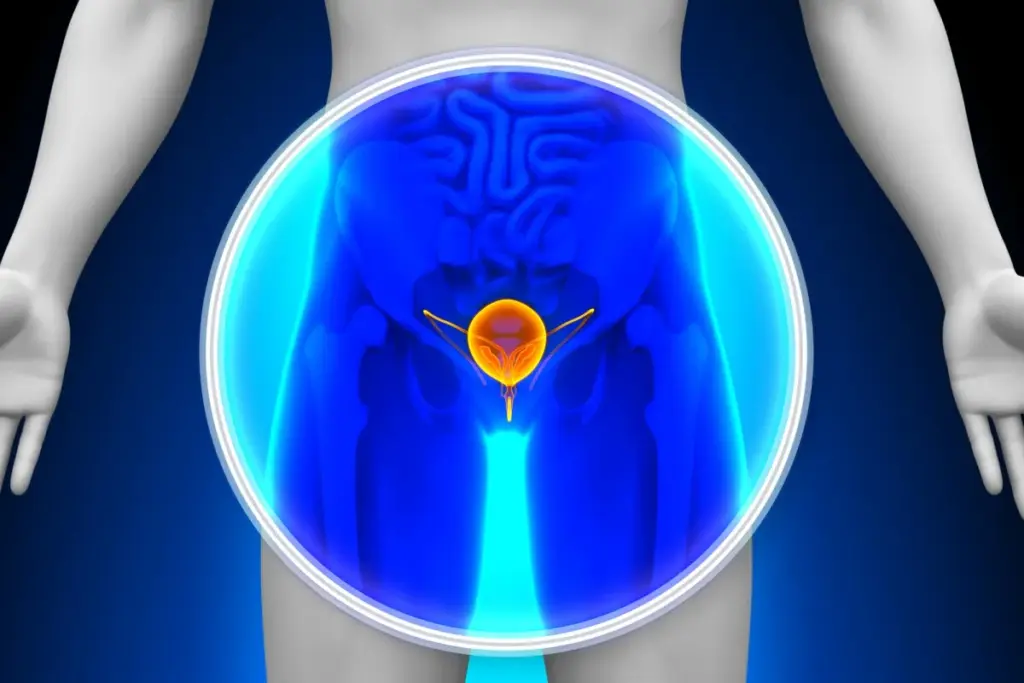
A prostate biopsy is a procedure where a urologist takes small tissue samples from the prostate gland. The prostate gland is a walnut-sized gland below the bladder in men. It surrounds the urethra.
The biopsy uses a rectal tube or probe for precise guidance. This tool is inserted through the rectum, guided by ultrasound. It helps get tissue samples.
Some patients might feel uncomfortable during the procedure. But, it’s usually not too bad. There might be some bleeding or “gun blood” afterward. This is usually minor and short-lived.
Why is it performed?
A prostate biopsy is mainly done to find prostate cancer. It’s suggested when:
- Prostate-specific antigen (PSA) levels are high.
- Abnormalities are found during a digital rectal examination (DRE).
- Imaging tests, like MRI or ultrasound, show suspicious areas.
The biopsy results help doctors understand if there’s cancer and how serious it is. This guides treatment choices.
Types of prostate biopsies
There are several types of prostate biopsies, including:
|
Type of Biopsy |
Description |
|---|---|
|
Transrectal Ultrasound-Guided Biopsy |
The most common method, where the biopsy needle is guided through the rectum using ultrasound. |
|
Transperineal Biopsy |
A less common approach where the needle is inserted through the perineum, the area between the scrotum and anus. |
|
Fusion Biopsy |
A technique that combines MRI and ultrasound imaging to target specific areas of the prostate. |
Each method has its own benefits. The choice depends on the patient’s needs and the doctor’s advice.
Benefits of a Prostate Biopsy
A prostate biopsy offers many benefits, like finding prostate cancer early and helping choose treatments. It’s a test where tissue from the prostate gland is taken. This test is key to knowing if cancer is present and how serious it is.
Early Detection of Prostate Cancer
One big plus of a prostate biopsy is catching cancer early. Catching it early means treatment can start sooner. Early treatment can lead to better results and lower cancer risk.
- Enables early treatment planning
- Improves chances of successful treatment
- Reduces risk of cancer spreading
Informing Treatment Options
A biopsy does more than just find cancer. It also helps decide how to treat it. The biopsy shows how aggressive the cancer is. This helps doctors pick the best treatment for each patient. This way, patients get care that fits their needs.
- Helps determine the aggressiveness of the cancer
- Guides treatment decisions, such as surgery, radiation, or active surveillance
- Supports personalized medicine approaches
Monitoring Prostate Health
A biopsy also helps keep an eye on prostate health. It’s useful for people with high PSA levels. Knowing why PSA levels are high is important for prostate care.
By using biopsies and other tests, doctors can take care of prostate issues early. This can prevent serious problems later on.
Common Risks and Side Effects
It’s important to know the risks and side effects of prostate biopsy. This knowledge helps you make better choices. Even though prostate biopsy is a key tool for diagnosis, it’s vital to understand the possible problems it can cause.
Pain and Discomfort
Pain and discomfort are common for those getting a prostate biopsy. How much pain you feel can depend on your own pain threshold and the biopsy method. Local anesthesia has greatly lessened the pain during the procedure, doctors say.
Infection Risks
Infection is a risk with prostate biopsy. But, using antibiotics can lower this risk. It’s key to follow your doctor’s advice after the biopsy to avoid infection.
Bleeding Complications
Bleeding issues, like gun blood or hematuria, can happen after a biopsy. These problems are usually not serious but can worry you. If you have bleeding issues, talk to your doctor before the biopsy.
Knowing about these risks helps you make smart choices about your health. Always talk to your doctor about any worries or questions you have.
Psychological Impact of a Prostate Biopsy
Thinking about a prostate biopsy can make people feel scared and worried. The not knowing what the results will be can really affect their mental health.
Getting a biopsy is more than just a medical test. It’s a big emotional event. The wait to find out the results can be very stressful.
Anxiety and Stress Around Diagnosis
Getting a biopsy can make people very anxious. They might worry about getting cancer and how it will change their life.
Waiting for the biopsy results can be very stressful. People are scared because they don’t know what will happen. They worry about the biopsy itself.
Common concerns include:
- Fear of cancer diagnosis
- Anxiety about the biopsy procedure
- Concerns about treatment options
- Impact on family and loved ones
Coping Strategies for Emotional Well-being
Even though a prostate biopsy can be tough on the mind, there are ways to handle the stress. Here are some tips:
- Seek Support: Talking to loved ones or joining a support group can help. It makes you feel less alone.
- Stay Informed: Knowing what to expect can make you feel better. Ask your doctor any questions you have.
- Practice Relaxation Techniques: Deep breathing, meditation, or yoga can help you relax and manage stress.
Talking to your doctor about your fears can also help. Sometimes, just sharing your worries can make you feel better.
“The emotional support I received from my family and the medical team made a significant difference in my ability to cope with the anxiety surrounding my prostate biopsy.” – John D.
If you’re thinking about not getting a prostate biopsy, think about the pros and cons. We’re here to help you make a decision that’s right for you.
|
Coping Strategy |
Description |
Benefits |
|---|---|---|
|
Seek Support |
Talking to family, friends, or support groups |
Emotional comfort, reduced feelings of loneliness |
|
Stay Informed |
Understanding the biopsy process |
Reduced anxiety, better preparedness |
|
Relaxation Techniques |
Deep breathing, meditation, yoga |
Stress management, promotes relaxation |
Recovery and Aftercare
The time after a prostate biopsy is key for healing. It needs careful aftercare to avoid complications and ensure a smooth recovery.
What to Expect Post-Biopsy
Patients might feel pain, swelling, or bruising in the rectal or perineal area after a biopsy. These symptoms are usually temporary. Some might see blood in their semen, urine, or stool, but this usually goes away in a few days.
Tips for a Smooth Recovery
To help recover smoothly, consider these tips:
- Rest well and avoid hard activities for a few days after the biopsy.
- Use warm compresses or sitz baths to ease discomfort or pain.
- Follow any specific instructions from your healthcare provider about medication, diet, or follow-up appointments.
- Keep good hygiene to prevent infection.
When to Contact Your Doctor
Most men recover well, but sometimes medical help is needed. Contact your healthcare provider if you experience:
- Severe pain or trouble urinating.
- Heavy bleeding or clots.
- Fever or chills, which could mean an infection.
- A lump or swelling in the perineum that doesn’t go away or gets bigger.
It’s also important to keep your scheduled follow-up appointments. This is to discuss biopsy results and any next steps.
Alternatives to Prostate Biopsy
Prostate biopsy is key for diagnosing cancer, but new methods are being looked into. These alternatives aim to lower biopsy risks while keeping accuracy high.
Imaging Techniques
Advanced imaging is becoming a big deal as a biopsy alternative. Multiparametric MRI (mpMRI) gives detailed prostate images. It spots cancer areas without needing a biopsy.
Contrast-Enhanced Ultrasound (CEUS) and Prostate-specific Membrane Antigen (PSMA) PET scans also help. They improve cancer detection and severity assessment, cutting down on biopsies.
Blood Tests and Markers
Blood tests and biomarkers are getting a lot of attention. The Prostate-Specific Antigen (PSA) test is well-known but has its limits. New biomarkers like the 4Kscore test and Prostate Health Index (phi) aim to spot aggressive cancer better.
These tests offer insights into prostate cancer risk. They might reduce biopsy needs. Used with other tools, they help make treatment plans.
Active Surveillance
Active surveillance is for low-risk cancer patients. It means watching the cancer closely without immediate treatment. Regular tests and scans keep an eye on it.
This approach is great for low-grade tumors. It helps avoid treatment side effects. It’s a conservative way to manage cancer.
In some cases, semen pills or other treatments might be considered. But, always talk to a doctor to see what’s best for you.
Factors Influencing Biopsy Decisions
Deciding on a prostate biopsy is a big step. It’s influenced by many important factors. Doctors look at these factors to make sure the biopsy is right for the patient.
Patient Age and Overall Health
A patient’s age and health are key in deciding on a biopsy. Older or sicker patients might get biopsied more often because of cancer risk. Younger or healthier patients might first get tested with PSA and DRE before a biopsy.
Age as a risk factor: Cancer risk goes up with age. Men under 40 are less likely to get cancer. But, men over 65 face a higher risk. This age factor is a big part of deciding on a biopsy.
Severity of Symptoms
Symptoms like trouble urinating or pain can also affect biopsy decisions. If symptoms are bad, a biopsy might be suggested to find the cause.
Symptom assessment: Doctors check symptom severity through history and tests. This helps decide if a biopsy is urgent or needed.
Family History of Prostate Cancer
A family history of prostate cancer is also important. Men with a relative with prostate cancer are at higher risk. They might get screened and biopsied earlier.
Genetic predisposition: A big family history means a possible genetic link to cancer. This calls for closer monitoring and possibly earlier action.
Urologists also look at other health aspects during the exam. They consider how conditions or symptoms, like those related to ejaculation, might be evaluated. Understanding these factors helps make a well-informed decision about a biopsy.
Prostate Biopsy and Cancer Staging
Prostate biopsy results are key in figuring out cancer staging. This affects treatment choices. A biopsy shows if cancer cells are present and how aggressive they are.
Understanding Cancer Staging
Cancer staging shows how far cancer has spread in the body. For prostate cancer, it looks at the tumor size, if it’s spread to nearby tissues or lymph nodes, and if it’s gone to other parts.
Accurate staging is vital for picking the right treatment. It also helps predict how well a patient will do.
How Biopsies Impact Staging Decisions
Prostate biopsy results are key in figuring out cancer stage. The biopsy report includes the Gleason score, which shows how much cancer cells look like normal cells.
A higher Gleason score means more aggressive cancer. This can change the stage and treatment choices. For example, a high score might mean surgery or radiation instead of watching and waiting.
|
Cancer Stage |
Description |
Typical Treatment Approaches |
|---|---|---|
|
Stage I |
Cancer is localized within the prostate and is not aggressive. |
Active surveillance, surgery, or radiation therapy. |
|
Stage II |
Cancer is localized but may be more aggressive. |
Surgery, radiation therapy, or a combination of both. |
|
Stage III |
Cancer has spread beyond the prostate to nearby tissues. |
Radiation therapy, hormone therapy, or a combination. |
|
Stage IV |
Cancer has metastasized to distant parts of the body. |
Hormone therapy, chemotherapy, or palliative care. |
Knowing the stage of prostate cancer and how biopsy results affect it is key. It helps both patients and doctors make the best treatment choices.
The Cost Factor
Prostate biopsy costs can vary a lot. This depends on where you are and your insurance. Knowing these costs helps patients make better health choices.
Typical Costs Associated with Prostate Biopsy
The cost of a prostate biopsy includes several parts. These are:
- Doctor’s fees for performing the biopsy
- Facility costs, which can vary depending on whether the procedure is done in a hospital or an outpatient setting
- Pathology fees for examining the biopsy samples
- Any additional costs for imaging guidance, such as ultrasound or MRI
On average, a prostate biopsy can cost between $1,000 and $3,000. This depends on the procedure’s complexity and your location.
Insurance Coverage Considerations
Insurance coverage is key in figuring out what you’ll pay for a prostate biopsy. Most plans, including Medicare, cover it if it’s needed.
But, you might face costs like:
- Deductibles
- Copays or coinsurance
- Any services not covered by your plan
It’s important to check your insurance before getting a prostate biopsy. This way, you’ll know what you’ll have to pay.
|
Cost Component |
Average Cost |
Range |
|---|---|---|
|
Doctor’s Fees |
$500 |
$200 – $1,000 |
|
Facility Costs |
$1,000 |
$500 – $2,000 |
|
Pathology Fees |
$300 |
$100 – $500 |
|
Total Cost |
$1,800 |
$1,000 – $3,500 |
While the cost of a prostate biopsy matters, talking to your doctor is also key. Some studies suggest that not ejaculating for long periods might affect your health. But, this isn’t directly tied to biopsy costs.
Patient Education and Consent
Informed consent is more than a formality; it’s key to patient care. It makes sure people know what a prostate biopsy is all about. Teaching patients is vital for them to make smart health choices.
Importance of Informed Consent
Informed consent means doctors tell patients about the good and bad of a procedure. For a prostate biopsy, it’s about the details, risks, and recovery. It’s important to remember, informed consent is an ongoing process, not just once.
- Understanding the purpose and risks of the biopsy
- Knowing what the procedure involves, including the use of a rectal tube for ultrasound-guided biopsies
- Being aware of possible side effects and complications
- Discussing other diagnostic options with your doctor
Discussing Risks with Your Healthcare Provider
Talking about biopsy risks with your doctor is key to informed consent. Patients should ask about infection, bleeding, and other risks. Talking openly with your doctor can lower anxiety and improve results.
- Make a list of questions for your doctor
- Learn about the biopsy steps
- Talk about any worries or fears you have
By making sure patients are well-informed and comfortable with a biopsy, doctors help them make the best health choices. We think patient education and informed consent are the foundation of top-notch care.
Looking Ahead: Advances in Biopsy Techniques
The field of prostate biopsy is on the verge of a big change. This change comes from new imaging and biopsy methods. It’s key to know about these new developments in prostate cancer diagnosis.
Innovations in Imaging-Guided Biopsies
Imaging-guided biopsies are now a key part of finding prostate cancer. New imaging tech like MRI and ultrasound have made biopsies more accurate. These advancements let doctors focus on specific parts of the prostate, cutting down on mistakes and improving results.
The use of artificial intelligence (AI) and machine learning in biopsies is also exciting. AI helps analyze images better and faster, spotting areas that might need a biopsy.
Future Trends in Prostate Biopsy
As tech keeps getting better, so will prostate biopsy methods. One new trend is fusion biopsy techniques. They mix different imaging types for a clearer prostate view. This can find important cancers better and avoid finding harmless ones.
Another area being explored is liquid biopsies. They check blood for cancer DNA or biomarkers. Though new, it could mean fewer painful biopsies in the future.
We’re moving towards more tailored and accurate prostate cancer diagnosis. As these advancements grow, patients will get better diagnoses and treatments that fit their needs.
Conclusion: Weighing the Risks and Benefits
Understanding the risks and benefits of prostate biopsy is key. We’ve looked at how it helps in early detection and treatment. We’ve also talked about the possible risks and complications.
Key Considerations for Patients
Patients need to think about the good and bad sides of a prostate biopsy. This helps them make choices that fit their health needs and what they prefer. It’s important to be well-informed before deciding on a biopsy.
Empowering Informed Decision-Making
Deciding on a prostate biopsy should be a careful choice after talking to doctors. Knowing the facts about prostate biopsy helps patients make confident decisions. Our aim is to help patients make choices that are best for their health.
FAQ
What is a prostate biopsy?
A prostate biopsy is a procedure where tissue from the prostate gland is taken. It’s done to check for cancer cells under a microscope.
Why is a prostate biopsy performed?
A prostate biopsy is done to find prostate cancer. It’s usually after a PSA test or a digital rectal exam shows something abnormal.
What are the risks associated with a prostate biopsy?
Risks include pain, infection, and bleeding. There’s also a chance of a lump forming in the perineum.
How is a prostate biopsy done?
The procedure uses a rectal tube and a needle to get tissue samples. Imaging helps guide the needle to the right spot.
What are the benefits of undergoing a prostate biopsy?
Benefits include finding prostate cancer early. This can lead to better treatment outcomes. It also helps decide the best treatment plan.
How does a urologist examine ejaculation?
A urologist might check ejaculation to assess prostate health. They look at semen quality and quantity.
What is anal intraepithelial neoplasia?
Anal intraepithelial neoplasia is abnormal cell growth in the anal canal. It can lead to cancer and is a concern for prostate health.
Are there alternatives to prostate biopsy?
Yes, there are alternatives. These include advanced imaging, blood tests like PSA, and active surveillance. They help monitor prostate health without a biopsy.
What are the benefits of not ejaculating for 30 days?
Some studies suggest not ejaculating for 30 days can affect semen quality. But the benefits and clinical significance are being researched.
How is PSA located?
PSA is a protein made by the prostate gland. Its levels in the blood can show how healthy the prostate is.
What should I expect after a prostate biopsy?
After a biopsy, you might feel some discomfort. Follow the recovery guidelines to avoid infection or bleeding.
Can semen pills affect prostate health?
Certain supplements or medications, like semen pills, can affect prostate health. Always talk to a healthcare provider before using them.
How do biopsy results impact cancer staging?
Biopsy results are key for finding out if you have prostate cancer and how aggressive it is. This information helps decide the treatment.
References
National Center for Biotechnology Information. Evidence-Based Medical Insight. Retrieved from https://pmc.ncbi.nlm.nih.gov/articles/PMC3921797/