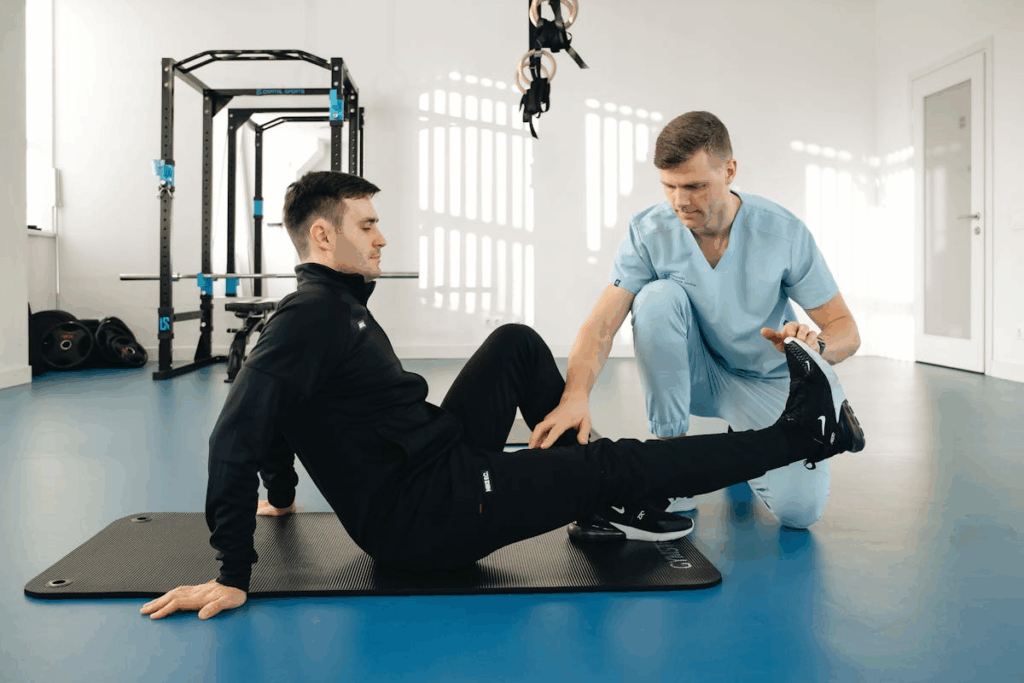
Becoming a physical therapist is a rewarding journey. It requires academic dedication and hands-on clinical experience. To practice in the United States, you need a Doctor of Physical Therapy (DPT) from an accredited program. This program teaches you to help people move better, manage pain, and live better lives.
To become a licensed physical therapist, you must finish a DPT program approved by the Commission on Accreditation in Physical Therapy Education. You also need to pass the National Physical Therapy Examination (NPTE) and meet state-specific requirements. Places like Liv Hospital are key in this educational journey, focusing on patient care.
Key Takeaways
- Earn a Doctor of Physical Therapy (DPT) from an accredited program.
- Complete a Commission on Accreditation in Physical Therapy Education-accredited DPT program.
- Pass the National Physical Therapy Examination (NPTE).
- Fulfill state-specific licensure requirements.
- Gain hands-on clinical experience through internships and residencies.
What is Physical Therapy? Understanding the Profession

Physical therapy is a key part of healthcare. It helps people keep, get back, and better their physical skills. Physical therapists work with patients of all ages and backgrounds, helping with many health issues.
The Role and Responsibilities of Physical Therapists
The American Physical Therapy Association says a physical therapist is a doctor who helps patients live better lives. They assess patients, make treatment plans, and use different therapies to help patients reach their health goals.
The Impact and Importance of Physical Therapy in Healthcare
Physical therapy greatly impacts healthcare by using non-invasive and non-medical treatments. It helps reduce the need for surgery and drugs, making patients’ lives better.
Work Settings and Patient Populations
Physical therapists work in many places, like offices, hospitals, homes, and nursing homes. They help a wide range of people, from kids to the elderly, with various health issues.
Work Setting | Patient Population | Common Conditions Treated |
Hospitals | Critically ill patients, post-operative patients | Stroke, spinal cord injuries, post-surgical rehabilitation |
Outpatient Clinics | Individuals with musculoskeletal injuries, chronic conditions | Sports injuries, back pain, arthritis |
Home Healthcare | Patients with mobility issues, elderly | Post-operative rehabilitation, managing chronic conditions |
Educational Pathway to Becoming a Physical Therapist

To become a physical therapist, you need to go through a tough educational journey. This journey includes both undergraduate and graduate studies. It’s designed to give you the knowledge, skills, and experience needed to succeed in this field.
Overview of the Required Education Journey
The journey starts with a bachelor’s degree in a science field like exercise science or biology. Most DPT programs require specific courses like anatomy and biomechanics during your undergraduate studies.
Timeline from Undergraduate to Licensed Professional
Becoming a licensed physical therapist takes about 7 years. First, you get a 4-year bachelor’s degree. Then, you get a Doctor of Physical Therapy (DPT) degree in 3 years. The DPT program mixes classroom learning with clinical training, preparing you for the National Physical Therapy Examination (NPTE).
The Investment: Time, Effort, and Financial Considerations
Choosing a career in physical therapy means a big investment of time, effort, and money. The DPT program is a postgraduate degree that requires hard work and commitment. Also, the cost of tuition, living expenses, and other fees can be high. But, for those who love helping others, the rewards of a physical therapy career are worth it.
Undergraduate Preparation for PT Programs
Starting your journey to become a physical therapist means choosing the right undergraduate path. A well-chosen bachelor’s degree can boost your chances of getting into a DPT program. It’s all about aligning your education with the program’s needs.
Recommended Bachelor’s Degrees and Majors
There’s no single major needed for PT programs. But, majors like exercise science, biology, kinesiology, and psychology are popular. They give you a strong base in science and help you understand human movement and behavior.
Essential Prerequisite Courses
DPT programs ask for specific courses. You’ll need to take anatomy, physiology, biomechanics, and statistics. Make sure these are part of your undergraduate studies to stand out.
Prerequisite Course | Description |
Anatomy | A deep dive into the human body’s structure |
Physiology | Learning how the human body works |
Biomechanics | Studying the mechanics of human movement |
Statistics | Getting started with stats and data analysis |
Building a Competitive Application Profile
Getting experience in physical therapy is key. Volunteering or working in these settings is a must. It helps you meet program requirements and gives you a real look at the field.
Choosing the right major, taking the right courses, and gaining experience can make your application shine. This way, you’ll have a better shot at getting into a DPT program.
PT Degree Programs: Types and Accreditation
To become a licensed physical therapist in the United States, you need to finish a Doctor of Physical Therapy (DPT) program. This program must be approved by the Commission on Accreditation in Physical Therapy Education (CAPTE). The DPT shows that physical therapists are well-trained for their job.
The Doctor of Physical Therapy (DPT) Standard
The DPT program mixes classroom learning with hands-on experience. The curriculum covers many topics, like anatomy and how to manage patients.
Commission on Accreditation in Physical Therapy Education (CAPTE)
CAPTE checks if physical therapy programs meet high standards. Getting CAPTE approval is key for a program’s trustworthiness. It also lets students take the National Physical Therapy Examination (NPTE).
Traditional vs. Hybrid Program Models
DPT programs come in different styles. Traditional ones focus on classroom learning. Hybrid programs mix online and on-campus classes, giving students more flexibility.
Program Model | Description | Benefits |
Traditional | Classroom-based instruction | Face-to-face interaction, hands-on learning |
Hybrid | Combines on-campus and online instruction | Flexibility, balances classroom and online learning |
Evaluating and Selecting the Right Program
When picking a DPT program, look at several things. Check if it’s accredited, what it teaches, and if it offers good clinical experiences. It’s important to research well to find a program that fits your career dreams.
Applying to DPT Programs: Admission Requirements
Applying to DPT programs is a detailed process. It needs careful preparation and a focus on specific requirements. Knowing what makes a strong application is key.
Academic Prerequisites and GPA Expectations
Meeting academic prerequisites is a big part of getting in. You’ll need to have taken courses in biology, chemistry, anatomy, and physiology. A good GPA, mainly in these subjects, is very important.
Most programs look for a minimum GPA. But, the best applicants usually have a GPA of 3.5 or higher.
Essential Prerequisite Courses:
- Biology
- Chemistry
- Anatomy and Physiology
- Physics
- Statistics
GRE Requirements and Preparation Strategies
Many DPT programs ask for GRE scores. To prepare for the GRE, it’s important to know its format and scoring. Effective preparation strategies include practicing with sample tests, attending prep courses, and reviewing study materials.
Clinical Observation Hours Documentation
Getting clinical observation hours is also important. You need to observe or work with licensed physical therapists. The Physical Therapist Centralized Application Service (PTCAS) makes it easier to document these hours across different programs.
Application Materials and Interview Process
Your application package will include a personal statement, letters of recommendation, and transcripts. Your personal statement should show your motivation, experience, and qualifications. The interview, whether in-person or online, is a chance for programs to see if you’re a good fit and for you to learn more about the program.
Key Application Materials:
- Personal Statement
- Letters of Recommendation
- Transcripts
- GRE Scores (if required)
- Documentation of Clinical Observation Hours
By preparing each part of your application well and knowing the requirements, you can improve your chances of getting into a DPT program.
Inside the DPT Program: Curriculum and Experience
Becoming a physical therapist starts with a detailed DPT program. It mixes theory with hands-on experience. We’ll look at what the program covers, from basic knowledge to real-world skills.
First Year: Foundational Sciences and Basic Clinical Skills
The first year focuses on foundational sciences like anatomy and biomechanics. Students learn basic patient care skills. This lays the groundwork for understanding physical therapy.
Second Year: Advanced Techniques and Specialized Training
The second year dives into advanced techniques. Students get specialized training in areas like orthopedics and neurology. This prepares them for different patient needs.
Third Year: Clinical Rotations and Professional Integration
The third year is all about clinical rotations. Students practice in real settings. This is key for applying what they’ve learned. They work with experienced therapists.
Balancing Academic Rigor with Clinical Practice
Students must balance academic rigor with practical skills. The program tests their knowledge while teaching them to care for patients. This balance is vital for success in physical therapy.
Key parts of the DPT program include:
- Integration of clinical experiences throughout the curriculum
- Comprehensive coverage of foundational sciences and clinical skills
- Opportunities for specialized training in various physical therapy specialties
- Emphasis on clinical decision-making and patient care
By the end, students are ready for the National Physical Therapy Examination (NPTE). They’re set for a fulfilling career in physical therapy.
Licensing Requirements After Completing Your PT Degree
After finishing your Doctor of Physical Therapy (DPT) degree, you need to pass the National Physical Therapy Examination (NPTE). This test is given by the Federation of State Boards of Physical Therapy (FSBPT). It checks if you know and can do physical therapy well.
National Physical Therapy Examination (NPTE) Preparation
Getting ready for the NPTE takes planning. Candidates should focus on reviewing the content outline provided by the FSBPT. This outline covers many parts of physical therapy, like patient care and safety. Using NPTE preparation courses and study materials can also help you get ready for the exam.
State Licensure Processes and Requirements
The NPTE is a national test, but licensure requirements differ by state. After passing the NPTE, you must apply for a license in the state where you want to work. You might need to take more tests, do background checks, or meet other state rules. Always check with your state’s physical therapy licensing board for what you need.
Continuing Education and Maintaining Licensure
To keep your license, you must do continuing education (CE). CE courses keep physical therapists up-to-date with new practices and discoveries. States often ask for a certain number of CE hours in areas like pain management or working with kids.
Specialty Certifications and Advanced Credentials
Getting specialty certifications can make your career better and show you’re an expert in a certain field. The American Board of Physical Therapy Specialties (ABPTS) offers certifications in many areas, like orthopedics and sports physical therapy. To get these, you must pass a tough exam and keep up with CE requirements.
Career Opportunities and Growth with a DPT
Having a Doctor of Physical Therapy (DPT) opens up many career paths. Physical therapists are key in healthcare, helping patients get better from injuries and manage long-term conditions.
Practice Settings and Specialization Options
Physical therapists work in hospitals, clinics, schools, and sports facilities. They can also specialize in areas like orthopedics, neurology, and pediatrics. This lets PTs choose what they enjoy most.
Salary Expectations Across Different Settings
Salaries for physical therapists vary by location, experience, and where they work. The U.S. Bureau of Labor Statistics says the median salary was $95,620 in May 2021.
Work Setting | Median Salary |
Hospitals | $98,000 |
Private Practices | $92,000 |
Sports Facilities | $85,000 |
Job Outlook and Industry Trends
The need for physical therapists is growing. This is because more people are getting older and need rehabilitation. So, there will be more job openings in different places.
Advancement Opportunities: Clinical Ladder and Leadership
With more experience, physical therapists can move up to leadership roles or become specialists. This boosts their career and helps the field grow.
Conclusion: Embarking on Your Physical Therapy Career Journey
Becoming a licensed physical therapist is a big step. It takes a lot of time, effort, and dedication. We’ve shown you the key steps, from starting your education to getting your license.
The path to becoming a physical therapist is tough. It includes learning in class and gaining practical experience. This hard work prepares you for a career that makes a real difference in people’s lives.
Now that you’re almost there, look into the many career paths open to you. With your DPT degree and license, you can work in hospitals, clinics, private practices, or even with sports teams. This is a chance to make a positive impact every day.
FAQ
What is the typical educational pathway to becoming a physical therapist?
First, you need a bachelor’s degree in a science field. Then, you get a Doctor of Physical Therapy (DPT) degree from an accredited program. This usually takes three years.
How long does it take to become a licensed physical therapist?
It takes about 7 years. You spend 4 years getting a bachelor’s degree and 3 years for the DPT program. After that, you pass the National Physical Therapy Examination (NPTE) and meet state requirements.
What are the prerequisites for DPT programs?
You need science and math courses. These vary by program but often include anatomy, physiology, and biomechanics.
Do physical therapists need a doctorate degree?
Yes, in the United States, a Doctor of Physical Therapy (DPT) degree is the standard for physical therapists.
What is the importance of accreditation in DPT programs?
Accreditation by CAPTE ensures DPT programs meet quality standards. This is key for licensure and professional practice.
What kind of career opportunities are available with a DPT degree?
With a DPT degree, you can work in hospitals, clinics, private practices, and sports facilities. You can also specialize in areas like orthopedics, neurology, or pediatrics.
How do I prepare for the National Physical Therapy Examination (NPTE)?
Prepare by completing a DPT program that prepares you for the NPTE. You may also use study materials and review courses to get ready for the exam.
What are the continuing education requirements for physical therapists?
Continuing education requirements vary by state. They are essential for keeping your license and staying current with physical therapy practices.
Can I specialize in a particular area of physical therapy?
Yes, you can get specialty certifications and advanced credentials. This allows for career growth and specialization in areas like orthopedics, neurology, or pediatrics.
What are the salary expectations for physical therapists?
Salaries vary based on location, setting, and experience. But, physical therapists generally have good salaries with opportunities for growth.
References
Government Health Resource. Evidence-Based Medical Guidance. Retrieved from https://www.apta.org/your-career/careers-in-physical-therapy/becoming-a-pt