A pulled lower back muscle, also known as lumbar strain, happens when muscle fibers get stretched or torn. This usually happens from sudden movements or too much use.
More than 90% of patients get better from lumbar muscle strain in just one month, says the American Association of Neurological Surgeons. We know it’s tough, but with the right help, you can get through it.
At Liv Hospital, we combine international expertise with care focused on you. We aim to help you move better and live better.
Key Takeaways
- Most patients recover from lumbar muscle strain within one month.
- Proper care and management are key for a good recovery.
- Liv Hospital offers full support for international patients.
- Knowing the causes and symptoms is vital for treatment.
- Recovery often means rest, physical therapy, and managing pain.
Pulled Back Muscle and Lower Back Strain Treatment: The Basics

Knowing how to treat lower back strain is key to getting better. This common issue affects many people, causing pain and discomfort. It happens when muscles or tendons in the lower back get injured.
What Is a Lumbar Strain?
A lumbar strain is when muscles or tendons in the lower back get hurt. It leads to pain and stiffness. Symptoms include sharp pain, muscle spasms, and stiffness.
Many things can cause lumbar strain. It can happen from too much physical activity, sudden movements, or lifting heavy things. Emotional stress, bad posture, being overweight, or a sedentary lifestyle can also play a role.
The Prevalence and Impact of Lower Back Muscle Injuries
Lower back muscle injuries are alarmingly common. They affect people of all ages and jobs. This condition can greatly reduce quality of life and productivity.
It’s not just physical pain. Lower back strain can also hurt your mental health. So, it’s important to know how to prevent and treat it to help with recovery.
Identifying Symptoms of a Lower Back Muscle Strain

Knowing the signs of a pulled lower back muscle is key to finding the right treatment. The lower back is at risk because it carries a lot of our body’s weight. It’s also involved in bending, twisting, and lifting.
Common Signs You’ve Pulled a Lower Back Muscle
Pulled lower back muscles show symptoms like sharp pain and muscle spasms. You might also feel stiffness and have trouble moving. Pain can spread to your buttocks and legs, often in the back of your thigh.
When Your Symptoms Require Medical Attention
While many lower back strains can be treated at home, some need medical help right away. Severe pain, numbness, or trouble controlling your bladder are signs to see a doctor fast. It’s important to know these signs to get help when you need it.
Key symptoms that need medical evaluation include:
- Severe pain that doesn’t get better with rest
- Numbness or tingling in the legs
- Loss of bladder or bowel control
- Weakness in the legs
Watching for these symptoms can help avoid more problems and make recovery easier.
Common Causes of Lumbar Strain
Knowing what causes lumbar strain is key to preventing and treating it. This condition can really affect your daily life. We’ll look at the different things that can lead to it, helping you spot risks and take action.
Everyday Movements That Lead to Injury
Doing everyday tasks the wrong way can hurt your back. Lifting heavy objects wrong is a big cause, as it stresses your lower back muscles too much. Also, sudden or awkward movements during exercise can strain your back.
Other daily actions that might hurt your back include:
- Bending or twisting a lot
- Lifting things with bad posture
- Making sudden or unexpected moves
Anatomical Risk Factors
Some body features make you more likely to hurt your back. Weak core muscles don’t support your lower back well. Also, tight hamstrings can change how you move, putting more strain on your back.
Anatomical Factor | Description | Impact on Lower Back |
Weak Core Muscles | Lack of enough strength in your abdominal and back muscles | More strain on your lower back because of lack of support |
Tight Hamstrings | Less flexibility in your hamstring muscles | Changes in how you move, leading to more back strain |
Poor Posture | Spine not aligned right | Stress not spread evenly, causing strain |
Lifestyle and Occupational Contributors
How you live and work also affects your back health. Jobs that make you bend, lift, or twist a lot are risky. So are activities that need sudden or strong movements.
Being sedentary can also hurt your back by weakening muscles and reducing flexibility. Carrying extra weight, like around your belly, adds stress to your lower back.
Knowing these causes helps you take steps to avoid and manage back strain. Use proper lifting techniques, stay at a healthy weight, and exercise regularly. This strengthens your core and improves flexibility.
First Aid for Acute Lower Back Strain
First aid for acute lower back strain includes rest, cold therapy, and pain management. When we get a pulled muscle in the lower back, how we react first can really help our recovery.
The R.I.C.E. Protocol for the First 48 Hours
The R.I.C.E. method is key for acute injuries like lower back strains. It stands for Rest, Ice, Compression, and Elevation. Here’s how to use it:
- Rest: Stay away from activities that make the pain worse. Resting the area helps avoid more injury.
- Ice: Use ice packs on the area for 15-20 minutes, a few times a day. It cuts down pain and swelling.
- Compression: A compression bandage can reduce swelling. But don’t wrap too tight, as it might cut off blood flow.
- Elevation: Keep the area higher than your heart to lessen swelling and improve blood flow.
Over-the-Counter Pain Relief Options
Along with R.I.C.E., over-the-counter (OTC) pain relievers can help with pain and swelling from lower back strain. Some common ones are:
Medication | Dosage | Benefits |
Ibuprofen | 400-800 mg every 8 hours | Reduces pain and inflammation |
Acetaminophen | 650-1000 mg every 4-6 hours | Relieves pain |
Always follow the dosage and talk to a doctor before taking any medication. This is important, even more so if you have health issues or are on other meds.
“The key to effective first aid for acute lower back strain is prompt action and proper care. By following the R.I.C.E. protocol and using OTC pain relievers as directed, individuals can significantly improve their recovery outcomes.”
By using these methods, we can manage the first symptoms of a pulled lower back muscle. This helps us recover better.
Treating Pulled Muscle in Lower Left Side of Back
Understanding the causes of a pulled muscle in the lower left side of the back is key. It’s important to treat it with a plan that works. This way, we can help you get back to your daily life.
Specific Approaches for Left-Sided Strains
For a pulled muscle in the lower left side, we suggest a mix of quick fixes and long-term plans. First, using the R.I.C.E. method (Rest, Ice, Compression, Elevation) can help. It reduces pain and swelling.
Treatment Options:
- Heat or cold therapy to reduce pain and inflammation
- Gentle stretching exercises to improve flexibility
- Strengthening exercises to support the lower back
- Manual therapy or massage to promote healing
Most people feel better in 1-2 weeks. It takes 4-6 weeks to fully heal. But, healing time can change based on how bad the strain is and personal factors.
Addressing Referred Pain Patterns
A pulled muscle in the lower left side can cause pain in other places. This includes the buttock, hip, or leg. We use different therapies to help both the main injury and the areas with referred pain.
Treatment Approach | Description | Benefits |
Heat Therapy | Applying heat to the affected area | Relaxes muscles, increases blood flow |
Cold Therapy | Applying cold packs to reduce inflammation | Reduces pain, swelling |
Gentle Stretching | Performing gentle stretches to improve flexibility | Enhances range of motion, reduces stiffness |
By knowing the cause and using the right treatments, we can help with pulled muscles in the lower left side. This way, you can get back to your usual activities.
Medical Assessment and Diagnosis
Diagnosing lower back muscle strain needs a detailed medical check to rule out other pain causes. A thorough check is key to find the right treatment and speed up recovery.
What to Expect During a Clinical Examination
A healthcare pro will look at your medical history and do a physical check during a lower back strain exam. They’ll check your movement, muscle strength, and find tender spots.
Key parts of the exam include:
- Looking at your medical history for any past health issues
- Checking your muscle strength and flexibility
- Examining your posture and how you move
When Imaging and Additional Tests Are Necessary
Sometimes, X-rays or MRI scans are needed to check for other back pain causes like fractures or herniated discs. The American Association of Neurological Surgeons says over 90% of people with lumbar muscle strain get better in a month. But, tests help make sure you get the right diagnosis.
Test Type | Purpose | When Recommended |
X-ray | To check for bone fractures or misalignments | After a traumatic injury or when fracture is suspected |
MRI | To visualize soft tissue injuries, such as muscle strains or herniated discs | When symptoms persist or indicate nerve involvement |
Knowing what to expect in a medical check can ease worries and help your recovery. By following the right steps, you’re on the right track to healing from lower back muscle strain.
Professional Treatment Approaches
Effective treatment for lower back strain needs a mix of professional help. It’s important to find care that helps with both immediate pain and long-term healing.
We suggest a treatment plan that includes different professional methods. These methods aim to strengthen back muscles, improve flexibility, and lessen pain.
Physical Therapy Interventions
Physical therapy is key in treating lower back strain. It focuses on exercises that make back muscles stronger and more flexible. A physical therapist can create a custom exercise plan to help patients recover and avoid future injuries.
Some common physical therapy methods for lower back strain include:
- Gentle stretching exercises to improve flexibility
- Strengthening exercises to support the lower back
- Posture correction techniques to reduce strain on the back
Massage and Manual Therapy Options
Massage therapy and manual therapy are also helpful for lower back strain. These methods use hands-on techniques to relax tight muscles, boost blood flow, and aid in healing.
Benefits of massage and manual therapy for lower back strain include:
- Reduced muscle tension and pain
- Improved range of motion and flexibility
- Enhanced relaxation and reduced stress
Medical Treatments for Severe Cases
In severe cases of lower back strain, medical treatments may be needed to manage pain and swelling. These treatments can include steroid injections or, in extreme cases, surgery.
Medical treatments are usually for cases where other treatments haven’t worked well. Our healthcare team will help decide the best treatment based on how severe the condition is.
By using these professional treatment methods, people with lower back strain can see big improvements in their symptoms and life quality.
Effective Home Remedies and Self-Care
Managing lower back strain at home can be very effective. It’s important to use both medical treatment and self-care. This helps your body heal faster.
Heat and Cold Therapy Techniques
Heat and cold therapy are great for lower back pain. Heat therapy relaxes muscles and boosts blood flow. Cold therapy reduces swelling and numbs pain. Try both to see what works best for you.
- Use a warm bath, heating pad, or warm compress for 15-20 minutes.
- Apply cold therapy with an ice pack or cold compress for 10-15 minutes.
- Don’t put heat or cold directly on your skin.
Supportive Devices for Comfort and Healing
Supportive devices can greatly improve comfort and healing. A back brace or support belt helps stabilize your lower back. Always talk to a healthcare professional before using one.
- Look for a back brace that’s comfy and adjustable.
- Wear it during activities that make the pain worse.
- Use it with other self-care methods for the best results.
Sleep Positions to Reduce Pain and Promote Recovery
The right sleep position can help a lot with lower back pain. Sleeping on your back with a pillow under your knees is good. Or, sleep on your side with a pillow between your knees to keep your spine aligned.
“Sleeping on your back with a pillow under your knees can help take pressure off your spine and reduce pain.”
By using these home remedies and self-care tips, you can manage lower back strain well. They help support your recovery.
Recovery Exercises and Rehabilitation
Getting better from a pulled lower back muscle needs a good plan. This plan should include gentle stretches and strengthening exercises. It’s key to adjust our methods as we heal, focusing on flexibility, strength, and back health.
Gentle Stretches for the Initial Recovery Phase
In the early healing stage, gentle stretches are very important. They help improve flexibility and reduce stiffness. Start with simple stretches that don’t make the pain worse.
Knee to Chest Stretch: Lie on your back, bring one knee towards your chest, and hold for 10 seconds. Do the same on the other side.
Pelvic Tilt: Lie on your back with knees bent, tilt your pelvis upwards, and then back down. Do this for 10 repetitions.
Progressive Strengthening Exercises
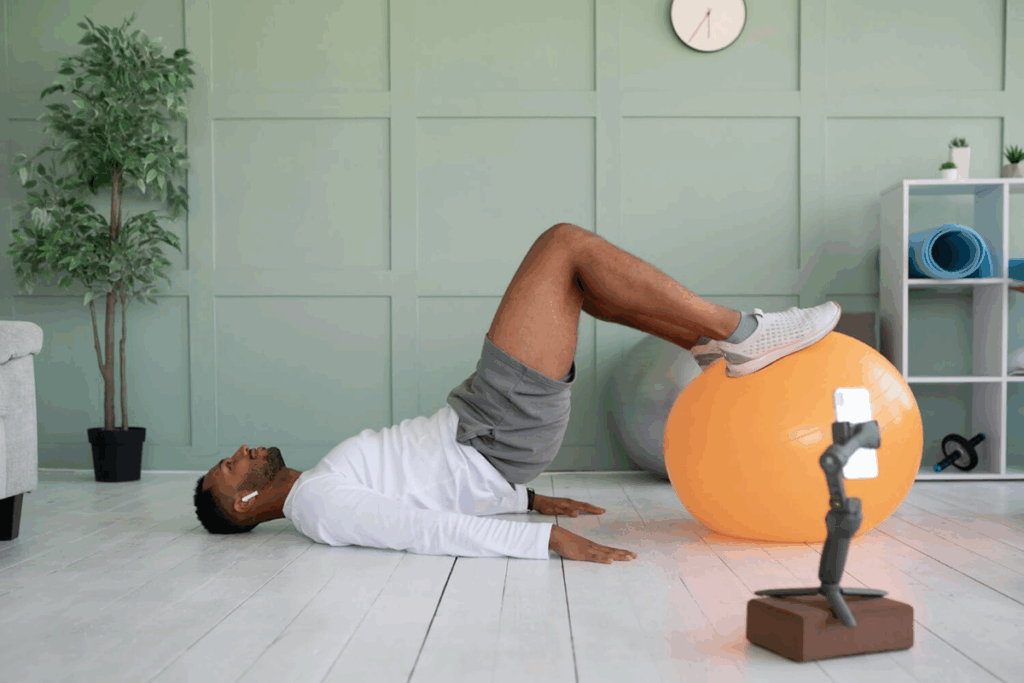
When the pain starts to go away, we can move to strengthening exercises. It’s important to start with low-intensity exercises and slowly get harder. Bridge and plank exercises are great for the core and lower back.
- Bridge Exercise: Lie on your back with knees bent, lift your hips towards the ceiling, and hold for a few seconds.
- Plank Exercise: Start in a push-up position, engage your core, and hold steady for 10-30 seconds.
Core Stability Training for Long-Term Health
Core stability training is key for long-term back health. It strengthens the muscles that support the spine. Exercises like bird dog and Russian twists help a lot.
Bird Dog Exercise: Start on your hands and knees, lift your right arm and left leg at the same time, and hold for a few seconds. Do the same on the other side.
Russian Twist: Sit on the floor with knees bent, lean back slightly, and twist your torso from side to side, touching your hands to the ground each time.
Returning to Normal Activities After a Back Strain
Getting back to normal after a lower back injury takes time and careful planning. It’s important to know that how long it takes to get back to daily activities depends on the injury’s severity.
Timeline for Resuming Daily Activities
Most people can get back to their usual activities in a few weeks. This is if they follow a slow and guided approach. The recovery process has several stages:
- Initial Recovery (0-3 days): Rest and avoid hard activities.
- Gradual Return (3-7 days): Start with easy activities and slowly get harder.
- Progressive Strengthening (1-2 weeks): Add exercises to make your back stronger.
- Full Recovery (2-6 weeks): You can do all activities again, including sports and heavy lifting.
It’s important to listen to your body and not rush. As Medical Expert, a renowned spine researcher, says, “The key to successful recovery is gradual progression and avoiding activities that exacerbate the pain.”
Guidelines for Returning to Exercise and Sports
When you start exercising and sports again, follow a structured plan to avoid injury. Here are some guidelines to keep in mind:
- Start with low-impact activities like walking or swimming.
- Slowly add harder exercises, watching how your body reacts.
- Do exercises that strengthen your core to help your lower back.
- Make sure to warm up and cool down to prevent muscle strain.
Activity Level | Examples | Timeline |
Low Impact | Walking, Swimming | 1-2 weeks |
Moderate Impact | Cycling, Light Jogging | 2-4 weeks |
High Impact | Running, Contact Sports | 4-6 weeks |
Preventing Re-injury During the Transition
It’s important to avoid injury when getting back to normal activities. Here are some tips to help you stay safe:
- Keep up with a regular exercise routine to support your back.
- Use good posture and lifting techniques to avoid straining your lower back.
- Listen to your body and take breaks to avoid getting too tired.
Remember, patience and a slow approach are key to a successful recovery. By following these guidelines and listening to your body, you can avoid injury and keep your back healthy.
Conclusion: Maintaining Lower Back Health Beyond Recovery
Keeping your lower back healthy is key to avoiding future pain and keeping your spine in top shape. We stress the need for long-term care plans to lower the chance of back strain.
Long-term care means regular exercise, staying at a healthy weight, and good posture. Adding these habits to your daily routine can greatly lower back strain risk and boost spinal health.
To prevent back strain, you need a mix of awareness in daily actions, avoiding repetitive tasks, and staying active. We suggest a full plan to handle and stop back strain, promoting a healthy, active life.
By using our recovery guide, you can manage and keep your lower back healthy long after recovery. This proactive method helps you live a healthier, more active life, without back pain holding you back.
FAQ
What is a pulled lower back muscle?
A pulled lower back muscle, also known as a lumbar strain, happens when the muscle fibers in the lower back get stretched or torn. This often occurs due to sudden movements, overuse, or improper lifting techniques.
What are the common symptoms of a lower back muscle strain?
Signs include sharp pain, muscle spasms, stiffness, and a limited range of motion. Severe cases might show numbness, tingling, or loss of bladder control, which need immediate medical help.
How long does it take to recover from a pulled lower back muscle?
Most people get better in a few weeks with the right care. This includes rest, physical therapy, and self-care strategies.
What is the R.I.C.E. protocol for treating acute lower back strain?
The R.I.C.E. protocol is key in the first 48 hours. It stands for Rest, Ice, Compression, and Elevation. It helps reduce pain, swelling, and promotes recovery.
What are some effective home remedies for managing lower back strain?
Home remedies include heat and cold therapy, using supportive devices, and comfortable sleep positions. These can ease pain, reduce inflammation, and aid in recovery.
How can I prevent future episodes of lower back strain?
To prevent future episodes, adopt long-term care strategies. This includes regular exercise, maintaining a healthy weight, improving posture, and core stability training.
When should I seek medical attention for lower back strain?
Seek medical help if you have severe pain, numbness, tingling, loss of bladder control, or if symptoms worsen. A doctor can assess the strain and guide treatment.
What are some common causes of lumbar strain?
Causes include lifting heavy objects or bending, weak core muscles, and poor posture. Lifestyle and job factors like a sedentary job or repetitive bending also play a role.
How can physical therapy help in recovering from lower back strain?
Physical therapy strengthens back muscles, improves flexibility, and promotes relaxation. A physical therapist can create a personalized exercise program for recovery and injury prevention.
What is the role of core stability training in maintaining lower back health?
Core stability training is vital for long-term health. It strengthens muscles that support the spine, preventing future injuries. Adding core exercises to your routine can reduce the risk of lower back strain and promote spinal health.
References
World Health Organization. Evidence-Based Medical Guidance. Retrieved from https://www.who.int/news-room/fact-sheets/detail/low-back-pain