
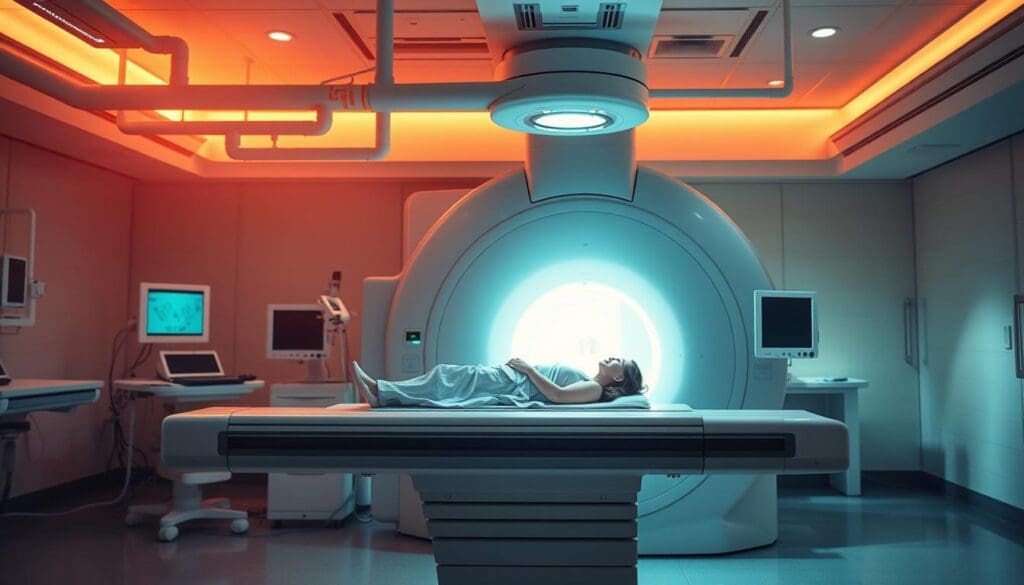
External beam radiation therapy is a common treatment for many cancers. It uses advanced radiation oncology machines to target tumors. This helps avoid harming healthy tissues.
Globally, about 50 percent of cancer patients get some radiation therapy. External beam is the most common type. It focuses on a specific area, like the chest for lung cancer, without treating the whole body.
Today’s radiation therapy is very precise. It aims to hit the tumor exactly, reducing harm to nearby tissues. Liv Hospital’s cutting-edge technology and global standards help achieve the best cancer treatment results.
Key Takeaways
- External beam radiation therapy is a local treatment targeting specific areas of the body.
- Around 50 percent of cancer patients globally receive some form of radiation therapy.
- Modern radiation oncology machines ensure precise delivery of radiation to tumors.
- Liv Hospital uses state-of-the-art technology for effective cancer treatment.
- External beam radiation therapy minimizes damage to healthy tissues surrounding tumors.
Understanding External Beam Radiation Therapy
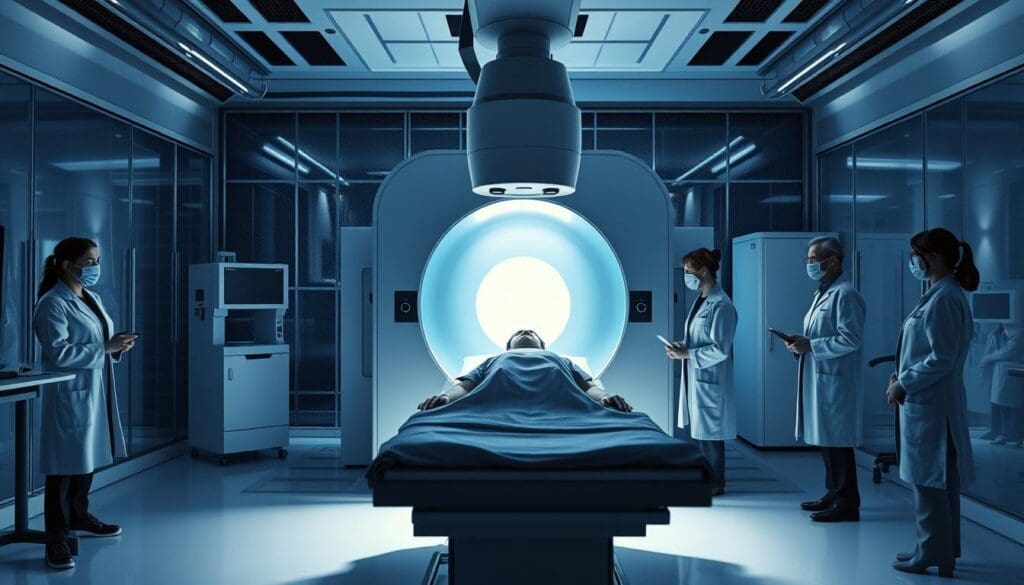
External beam radiation therapy is a key part of cancer treatment. It uses beams from outside the body to kill cancer cells. This method is non-invasive, making it a popular choice for many.
Definition and Basic Principles
External beam radiation therapy uses beams from outside to target tumors. It aims to give the tumor a high dose of radiation while protecting healthy tissues. This is done with advanced technology and careful planning.
TheNational Cancer Institute says it’s the most common radiation therapy for cancer. Each treatment plan is made just for the patient, based on tests like CT scans.
How It Differs from Other Radiation Treatments
External beam radiation therapy is different from internal radiation therapy (brachytherapy). In brachytherapy, the radiation source is inside the body. External beam radiation is given from outside, making it better for tumors that are hard to reach inside.
The table below shows the main differences between external beam radiation therapy and brachytherapy:
| Characteristics | External Beam Radiation Therapy | Brachytherapy |
| Radiation Source Location | Outside the body | Inside the body |
| Tumor Accessibility | Suitable for most tumor locations | Limited to accessible tumor sites |
| Treatment Duration | Typically several weeks | Can be permanent or temporary |
The Role in Modern Cancer Care
External beam radiation therapy is a key part of modern cancer care. It’s precise and helps protect healthy tissues. The Liv Hospital uses the latest technology to make sure patients get the best treatment.
Key benefits of external beam radiation therapy include:
- Precision targeting of tumors
- Minimized damage to surrounding healthy tissues
- Non-invasive treatment approach
- Effective for a wide range of cancer types
Fact 1: How Radiation Oncology Machines Target Cancer Cells
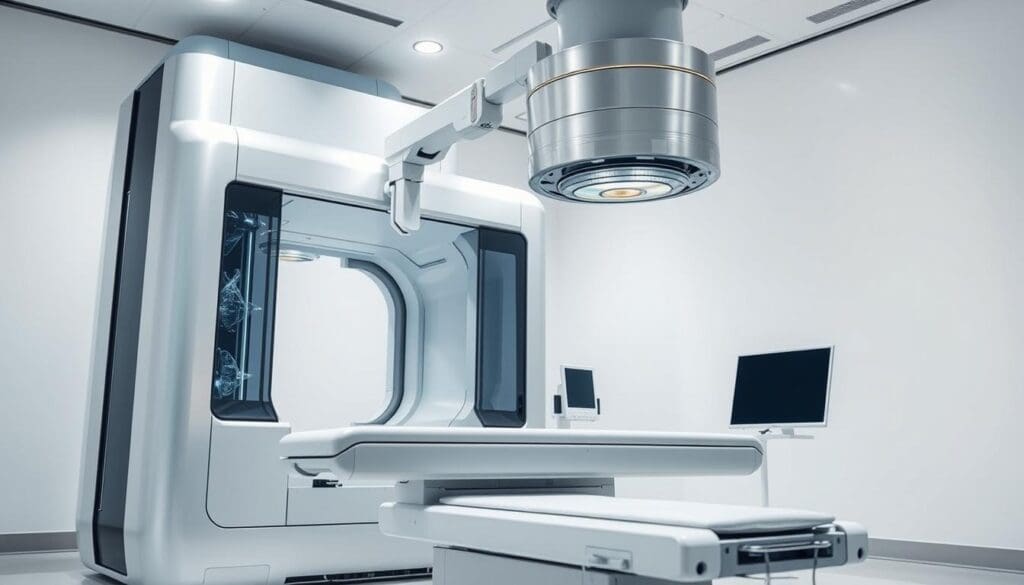
Modern radiation oncology machines are very precise. They target cancer cells well while keeping healthy tissue safe. This is thanks to advanced technologies that have improved a lot over time.
Precision Targeting Technology
Radiation oncology machines use precision targeting technology. This ensures radiation beams hit the tumor right on. They have smart computer systems and algorithms for planning and treatment.
Advanced imaging techniques help see the tumor and tissues around it better. This makes targeting more accurate.
Sparing Healthy Tissue
Modern machines are great at sparing healthy tissue. They target the tumor precisely, reducing radiation to healthy areas. This lowers the chance of side effects.
Image-Guided Radiation Therapy
Image-guided radiation therapy (IGRT) is key in today’s radiation oncology. IGRT uses imaging during treatment to ensure beams hit the tumor right. It’s very useful when tumors are near important structures or move a lot.
| Technology | Description | Benefits |
| Precision Targeting | Accurate direction of radiation beams at the tumor | Effective tumor control, reduced side effects |
| Image-Guided Radiation Therapy | Real-time imaging during treatment | Improved accuracy, adaptability to tumor movement |
Modern radiotherapy technologies like IMRT and proton therapy are very accurate. Radiation beams in external therapy come from photons, protons, and electrons. Photons are used most and can reach deep tumors. Protons, being positively charged, also reach deep tumors without scattering.
Fact 2: Types of Radiation Beams Used in Treatment
External beam radiation therapy uses different types of radiation beams to target tumors. The choice depends on the tumor’s location, size, and depth, and the patient’s health.
Photon Beam Therapy
Photon beam therapy is the most common type of radiation therapy. It uses high-energy photons to kill or slow cancer cells. Photon beams can go deep into the body, making them good for treating tumors in many places.
Photon beam therapy is versatile and can treat many cancers. It’s used for tumors in the brain, breast, lung, and prostate. New technologies like Intensity-Modulated Radiation Therapy (IMRT) have made it even more precise.
Electron Beam Applications
Electron beam therapy uses electrons to treat cancer. It’s best for tumors near the body’s surface because electrons don’t go as far. This helps protect deeper tissues.
Electron beam therapy is often used for skin cancers and tumors in the head and neck. It’s effective because it delivers a strong dose to the surface while sparing deeper tissues.
Proton Therapy Advantages
Proton therapy uses protons instead of photons or electrons. Protons have a unique property called the Bragg peak. This allows them to stop at a specific depth in the body, reducing damage to tissues beyond the tumor.
This makes proton therapy great for treating tumors near important structures. It’s also good for pediatric patients. Proton therapy can offer effective treatment with fewer long-term side effects.
| Radiation Beam Type | Characteristics | Common Applications |
| Photon Beam | High-energy photons, deep penetration | Brain, breast, lung, prostate cancers |
| Electron Beam | Limited range, surface-level treatment | Skin cancers, head and neck tumors |
| Proton Beam | Precise stopping point (Bragg peak) | Tumors near critical structures, pediatric cases |
Fact 3: Advanced External Beam Technologies Revolutionizing Treatment
Advanced external beam technologies are changing cancer treatment. They offer more precise therapies to patients. These new technologies have made radiation therapy better, with fewer side effects and better results.
Intensity-Modulated Radiation Therapy (IMRT)
IMRT is a new way to send radiation. It changes the intensity of the beam. This lets doctors give more radiation to the tumor and less to healthy tissues. A study onPMC shows IMRT is promising for complex tumors.
3D Conformal Radiation Therapy
3D Conformal Radiation Therapy uses new imaging to see tumors in 3D. This helps doctors target the tumor better, protecting healthy tissues. It’s a precise way to treat many cancers.
Stereotactic Body Radiation Therapy (SBRT)
SBRT gives precise radiation to small tumors in a few sessions. It’s great for tumors that are hard to hit with regular radiation. SBRT works well for some lung, liver, and prostate cancers.
| Therapy Type | Description | Benefits |
| IMRT | Modulates beam intensity for precise tumor targeting | Higher doses to tumor, sparing healthy tissues |
| 3D Conformal Radiation Therapy | Uses 3D imaging for precise tumor targeting | Minimizes exposure to healthy tissues |
| SBRT | Delivers precise radiation in few fractions | Effective for small, difficult-to-target tumors |
Fact 4: Treatment Planning and Delivery Process
The path to successful radiation therapy includes key steps in planning and delivery. External beam radiation therapy is a detailed process. It needs careful planning for effective treatment.
Initial Consultation and Imaging
The journey starts with an initial consultation. The radiation oncologist checks the patient’s condition and talks about treatment options. They use CT scans, MRI, or PET scans to find the tumor’s exact location and size.
Treatment Simulation
Next, a treatment simulation is done to mimic the real treatment. This step is vital for figuring out the best radiation dose and how to deliver it. The patient is placed on a table, and the oncologist uses the imaging data to plan the treatment fields.
Daily Treatment Sessions
Daily treatment sessions last for weeks. Each session is planned and done with care to give the patient the right dose of radiation. The machines used are key in both curing and managing symptoms.
The accuracy of external beam radiation therapy makes treatment effective with few side effects. Knowing about the planning and delivery process helps patients understand the care and complexity of their treatment.
Fact 5: Effectiveness and Global Usage Statistics
External beam radiation therapy is a key treatment for cancer. It helps improve patient outcomes. Around 50 percent of cancer patients worldwide get radiation therapy, showing its vital role in cancer care.
Success Rates for Different Cancer Types
This therapy treats many cancers with varying success rates. It works well for early-stage cancers like prostate and breast cancer. Its ability to target cancer cells while protecting healthy tissue makes it effective.
Global Adoption of External Beam Radiation
Its global use shows its effectiveness and the medical community’s trust in it. New technologies like IMRT and SBRT have made it even more precise. This has led to its widespread use in healthcare systems around the world.
Comparative Effectiveness Studies
Studies compare different treatments to find the best ones for cancer. They look at surgery, chemotherapy, and radiation therapy. These studies help make treatment plans better and improve patient results.
Key findings from comparative effectiveness studies include:
- The benefits of combining external beam radiation therapy with other treatments.
- The impact of new radiation technologies on treatment success.
- The role of radiation therapy in improving cancer patients’ quality of life.
The Evolution of Radiation Oncology Machines
Radiation oncology machines have changed a lot over time. They’ve moved from simple devices to advanced machines. This change has greatly helped in treating cancer.
Historical Development
The first radiation oncology machines came out in the early 1900s. They were basic and caused many side effects. But, as technology got better, so did the machines.
- Early linear accelerators were a big step forward in radiation therapy.
- CT scans were introduced, making treatment planning better.
- Computer technology improved, allowing for more precise radiation delivery.
Current State-of-the-Art Equipment
Now, radiation oncology machines can deliver very precise radiation therapy. Intensity-Modulated Radiation Therapy (IMRT) and proton therapy are used more often.
- They can target tumors more accurately.
- They cause fewer side effects by protecting healthy tissue.
- They help patients get better results from treatment.
Future Innovations on the Horizon
Research in beam radiotherapy is always looking for new ways to improve. Future advancements will likely make treatments even better.
Some new things we might see include:
- Artificial intelligence helping with treatment plans.
- Improvements in proton therapy technology.
- New ways to deliver radiation.
These new ideas could make cancer treatment even safer and more effective. They could help reduce side effects and improve patient outcomes.
Managing Side Effects of External Beam Radiation
Managing side effects from external beam radiation therapy is key to patient care. This therapy is good for treating cancer but can cause side effects. These effects can affect a patient’s quality of life.
Common Short-Term Side Effects
Short-term side effects of external beam radiation therapy depend on the treated area. Common side effects include:
- Fatigue
- Skin reactions such as redness or irritation
- Hair loss in the treated area
- Nausea or diarrhea, depending on the treatment site
Table: Common Short-Term Side Effects by Treatment Site
| Treatment Site | Common Side Effects |
| Head and Neck | Mucositis, dry mouth |
| Chest | Esophagitis, cough |
| Abdomen | Nausea, diarrhea |
| Pelvis | Diarrhea, urinary frequency |
Potential Long-Term Considerations
Some side effects may last long after treatment. These can include:
- Fibrosis or scarring in the treated area
- Secondary cancers, though rare
- Hormonal changes, depending on the treatment site
It’s vital for patients to talk to their healthcare provider about long-term side effects. This helps understand the risks and benefits of treatment.
Strategies for Side Effect Management
Managing side effects well is important for a patient’s quality of life. Strategies include:
- Supportive care like pain management and nutritional counseling
- Adjusting the treatment plan if needed
- Follow-up care to watch for and manage long-term effects
Understanding side effects and managing them helps healthcare providers support patients better during treatment.
Curative vs. Palliative Applications of Radiotherapy
It’s important to know the difference between curative and palliative radiotherapy for cancer care. Radiotherapy is key in treating cancer. It can cure cancer or help manage its symptoms.
Curative Treatment Goals and Approaches
Curative radiotherapy aims to get rid of cancer by targeting the tumor with precise radiation. This method is used when cancer is in its early stages and can be cured. The goal is to kill cancer cells without harming healthy tissue. IMRT and SBRT are used because they are precise and effective.
Experts say, “The success of radiotherapy depends on the cancer type, stage, and the patient’s health.” This shows how important a personalized plan is for a cure.
Palliative Care Applications
Palliative radiotherapy aims to ease symptoms and improve life quality for those with advanced cancer. It helps manage pain, shrink tumors, and reduce other symptoms. The main goal is to make patients more comfortable and functional. It’s used when cancer is too far gone or can’t be removed.
Determining the Appropriate Treatment Approach
Choosing between curative or palliative radiotherapy depends on many factors. These include the cancer type, stage, patient health, and personal wishes. A team of healthcare experts decides the best treatment plan. This decision is key to meeting the patient’s needs and goals.
In summary, radiotherapy is essential in both curing and managing cancer. Understanding its different uses helps healthcare providers tailor treatments. This improves patient outcomes and quality of life.
Ongoing Research and Improvements in Beam Radiotherapy
Beam radiotherapy is changing fast thanks to new research. This research aims to make cancer treatment better. It focuses on lessening side effects, improving accuracy, and finding new ways to treat cancer.
Reducing Treatment Side Effects
One big goal is to cut down on side effects. Advances in technology and better planning are helping. For example, image-guided radiation therapy targets tumors more precisely, protecting healthy tissues.
New methods like proton therapy could also reduce side effects. Researchers are looking into the best doses to be effective yet safe.
Enhancing Precision and Effectiveness
Improving the accuracy and success of beam radiotherapy is another focus. Intensity-Modulated Radiation Therapy (IMRT) and Stereotactic Body Radiation Therapy (SBRT) are being developed. These methods aim to deliver radiation more precisely, boosting treatment success.
Also, better imaging technologies help see tumors clearly during treatment. This lets doctors make adjustments on the fly. It’s a big step towards more precise treatment.
Combining Radiation with Other Therapies
Research is also exploring combining beam radiotherapy with other treatments. This includes immunotherapy, chemotherapy, and targeted therapy. These combinations could make treatments more effective and improve patient results.
Studies are looking into the best order for these treatments. The aim is to create personalized plans for each patient’s cancer.
Conclusion: The Future of External Beam Radiation Therapy
The future of external beam radiation therapy is looking bright. This is thanks to ongoing research and new technologies in cancer treatment. We can expect treatments to become more effective and safer, helping more cancer patients.
New technologies and treatment methods will make external beam radiation therapy even better. We’re on the verge of seeing more precise, safe, and effective treatments. This is great news for cancer care’s future.
External beam radiation therapy will keep getting better thanks to advances in radiation oncology. New technologies and strategies will play a big role in improving patient outcomes. This will shape the future of cancer treatment.
FAQ
What is external beam radiation therapy?
External beam radiation therapy is a way to treat cancer. It uses high-energy beams from outside the body to kill cancer cells.
How does external beam radiation therapy differ from internal radiation therapy?
External beam therapy beams radiation from outside the body. Internal radiation therapy places the source inside the body.
What types of radiation beams are used in external beam radiation therapy?
The type of beam used depends on the tumor’s nature and location. Photon, electron, and proton beams are common.
What is image-guided radiation therapy (IGRT)?
IGRT uses real-time imaging during treatment. It helps adjust the beams to keep them focused on the tumor.
What are the benefits of advanced external beam radiation therapies like IMRT and SBRT?
IMRT and SBRT offer better precision and tailored treatments. They improve outcomes and reduce side effects.
How is the treatment planning and delivery process for external beam radiation therapy carried out?
The process starts with a consultation and imaging. It includes simulation and daily sessions to create a personalized plan.
What are the common side effects of external beam radiation therapy?
Side effects depend on the radiation’s location and dose. Managing them includes supportive care and treatment plan adjustments.
What is the role of external beam radiation therapy in cancer care?
It’s used to cure or relieve symptoms, improving the quality of life. It’s a key part of cancer care.
How effective is external beam radiation therapy in treating cancer?
It’s very effective for many cancers. Success rates vary based on the cancer type and stage.
What is the future of external beam radiation therapy?
Its future looks bright. Advances in technology will make it even more effective in cancer care.
What is proton therapy, and when is it used?
Proton therapy uses proton beams to treat cancer. It’s great for certain cancers because it spares healthy tissue.
How does external beam radiation therapy compare to other cancer treatments?
Studies are ongoing to understand its role. It’s often used with other treatments.
References
- National Cancer Institute. (2018). External Beam Radiation Therapy for Cancer.https://www.cancer.gov/about-cancer/treatment/types/radiation-therapy/external-beam



 Departments
 Related Videos
 Our Doctors
 News
News