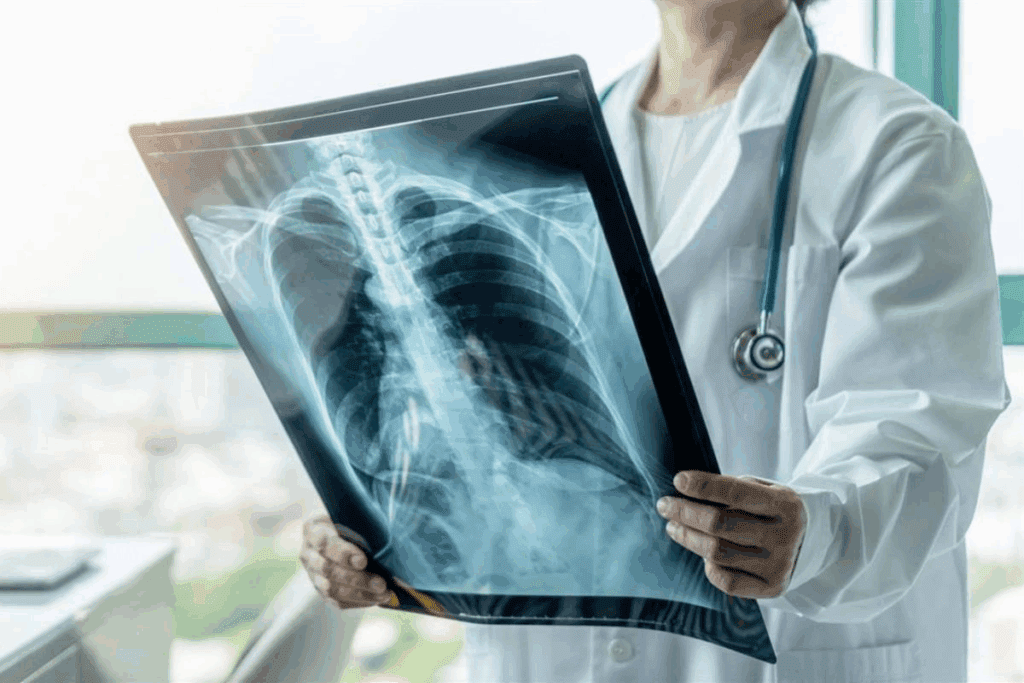
We use radiology imaging exams to see inside the body without surgery. These tests are key in modern medicine. They help doctors find and fix many health problems.
Radiology, or imaging, includes tests like X-ray and MRI. Each test has its own way of helping doctors. Knowing about radiology exams helps patients understand their health better.
Key Takeaways
- Radiology imaging exams are non-invasive diagnostic tests.
- They provide critical insights into internal body structures.
- Various imaging technologies are used, including X-ray and MRI.
- These exams guide treatment decisions and improve patient outcomes.
- Understanding radiology exams empowers patients in their healthcare journey.
Understanding Radiology Imaging Exams
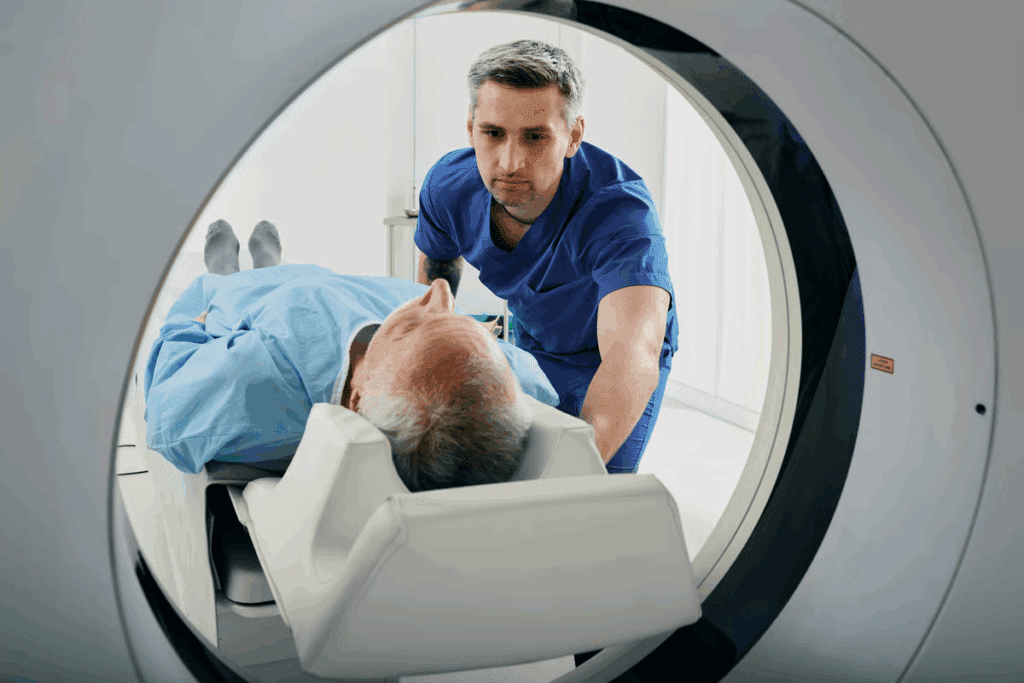
Radiology imaging exams are key in today’s healthcare. They help doctors diagnose and treat many health issues. These exams give vital info about a patient’s health, helping doctors make better treatment plans.
Definition and Basic Concepts
Radiology is a medical field that uses imaging to find and treat diseases. It includes X-rays, CT scans, MRI, and ultrasound. These tools help doctors see inside the body, spotting problems and diagnosing diseases.
Key Concepts in Radiology:
- Imaging modalities: Various technologies used to create images of the body’s internal structures.
- Image interpretation: The process of analyzing images to diagnose conditions.
- Diagnostic accuracy: The ability of imaging tests to correctly identify diseases or conditions.
The Role of Radiology in Modern Medicine
Radiology is very important in today’s medicine. It helps find and treat many health problems. It’s used in surgery, oncology, and emergency medicine to help doctors.
| Medical Specialty | Role of Radiology |
| Oncology | Diagnosing and monitoring cancer, guiding biopsies and treatments. |
| Emergency Medicine | Rapidly assessing injuries and conditions, such as fractures and internal bleeding. |
| Surgery | Guiding preoperative planning and postoperative assessment. |
Radiology gives doctors detailed images of the body. This helps them make better decisions, improving patient care. As technology gets better, radiology’s role in medicine will grow, leading to more advances in diagnosis and treatment.
The Evolution of Radiology: From X-Ray Discovery to Modern Imaging
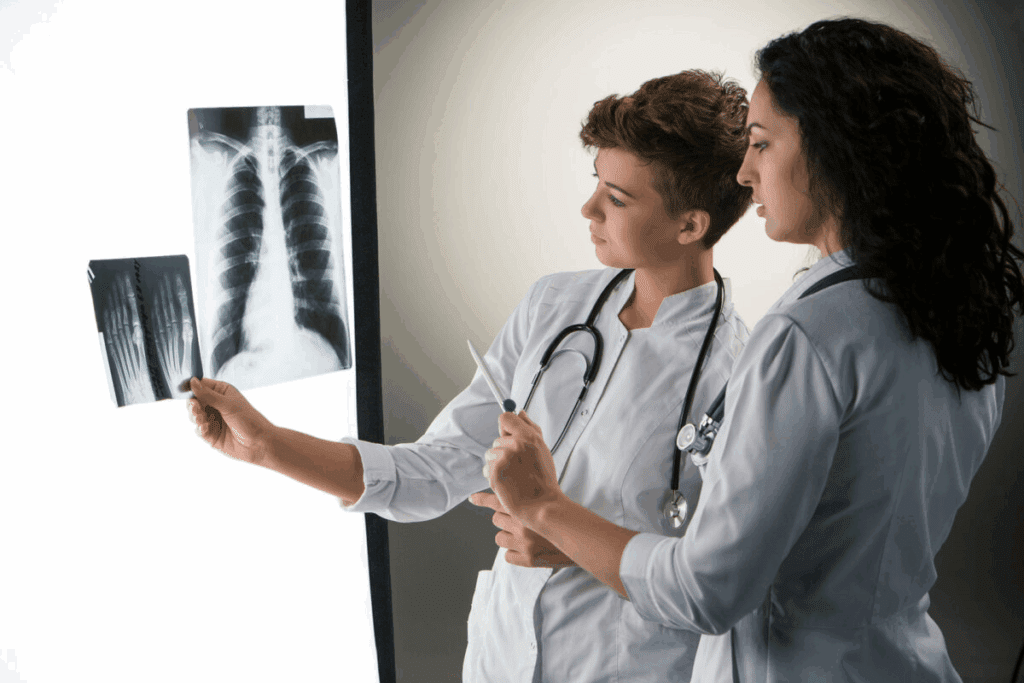
Wilhelm Conrad Röntgen’s discovery in 1895 marked the start of radiology’s journey. It has grown from basic X-ray imaging to advanced diagnostic tools. These tools are now key in modern medicine.
Historical Development of Radiology
Röntgen’s X-ray discovery let us see inside the body without surgery. This breakthrough led to many improvements in medical imaging. In the early 1900s, contrast agents helped see specific organs better.
Fluoroscopy allowed us to watch moving parts and organs in real-time. This was a big step forward.
In the second half of the 20th century, CT scans gave us detailed body cross-sections. MRI came later, showing soft tissues clearly without harmful radiation.
Technological Advancements in the 21st Century
The 21st century has seen huge leaps in radiology. New imaging tech offers clearer, more detailed pictures. Technological innovations have made diagnoses more accurate and thorough.
AI has become a big help in radiology. It helps doctors spot problems faster and more accurately. New imaging like PET/CT and PET/MRI also help diagnose and track diseases better.
Portable ultrasound devices have made imaging easier, even in urgent situations. MRI tech has also improved, making scans faster and clearer. This makes MRI exams more comfortable for patients.
Types of Radiology Imaging Exam Technologies
We use different radiology imaging technologies to get accurate diagnoses and treatment plans. These technologies let doctors pick the best method for each patient’s needs.
X-Ray Imaging
X-Ray imaging is very old but very common. It uses X-Rays to show the inside of the body, mainly bones. It’s key for finding bone fractures, infections, and other bone issues.
Key applications: Finding bone fractures, detecting foreign objects, and checking some lung problems.
Computed Tomography (CT) Scans
CT scans combine many X-Ray measurements from different angles. This makes detailed images of the body’s inside parts. It’s great for seeing internal organs, bones, soft tissues, and blood vessels.
CT scans are vital for: Checking injuries, finding cancers, and looking at vascular diseases.
Magnetic Resonance Imaging (MRI)
MRI uses strong magnetic fields and radio waves to show the body’s inside parts without X-Rays. It’s best for soft tissues like organs and tendons.
“MRI has revolutionized the field of diagnostic medicine by providing unparalleled detail of soft tissue structures.”
MRI is often used for brain, spine, and joint issues.
Ultrasound Technology
Ultrasound uses sound waves to create images of the body’s inside. It’s safe and non-invasive. It’s great for looking at the fetus during pregnancy, checking blood flow, and guiding some procedures.
- Monitoring fetal development during pregnancy
- Assessing liver and gallbladder conditions
- Guiding needle biopsies
Each technology has its own benefits and uses. They all help a lot in diagnosing and treating different health issues.
Advanced Imaging Modalities
Advanced imaging has changed how we diagnose diseases. It gives us detailed views of the body’s systems. This helps doctors to better understand and treat complex health issues.
Nuclear Medicine Imaging
Nuclear medicine uses tiny amounts of radioactive materials. It helps diagnose and treat diseases. It’s great for checking on cancer, brain disorders, and heart problems.
This method shows how tissues work. It’s key for seeing how diseases spread and if treatments work. It adds to what other imaging methods show, giving a full picture of a patient’s health.
Positron Emission Tomography (PET) Scans
PET scans are a special kind of nuclear medicine. They use a radioactive tracer to see how the body works. They’re excellent for finding and checking cancer, brain issues, and heart problems.
PET scans can spot small changes in the body. This helps catch diseases early. They give detailed info on how the body works, helping doctors make better treatment plans.
Mammography
Mammography is used to find and diagnose breast cancer early. It gives clear pictures of the breast. This helps doctors spot problems and treat them when they’re easier to handle.
We suggest regular mammograms for breast health. They help find cancer early, lower death rates, and track breast changes.
Angiography
Angiography shows the blood vessels and helps find vascular problems. It gives clear images of the blood vessel system. This helps doctors find blockages and other issues.
We use angiography to plan and do treatments like angioplasty and stenting. It’s key for making sure these treatments work well.
How Diagnostic Radiology Works
Digital radiology helps us see inside the body. It uses special imaging to find problems. Doctors then look at these images to figure out what’s wrong and how to fix it.
The Science Behind Different Imaging Techniques
Imaging in radiology works on different science rules. X-rays show bones because they absorb X-rays differently. MRI makes soft tissues clear by using magnetic fields.
Imaging Techniques and Their Applications:
| Imaging Technique | Scientific Principle | Primary Application |
| X-Ray | Differential absorption of X-rays | Bone fractures, lung conditions |
| MRI | Nuclear magnetic resonance | Soft tissue injuries, neurological conditions |
| CT Scan | Computer-processed X-rays | Internal injuries, cancers, vascular diseases |
Image Interpretation and Analysis
Looking at images is key in radiology. It needs skill and focus. Doctors check for problems and decide on treatments.
They look at images carefully. They think about how clear the image is and what they see. New tools like AI help doctors too.
Key Factors in Image Interpretation:
- Image quality and resolution
- Anatomical knowledge and variations
- Pathological features and patterns
- Clinical correlation and patient history
Doctors use their knowledge and skills to help patients. They give important info for treatment plans.
Common Applications of Radiology Imaging in Diagnosis
Radiology in diagnosis is very important and works well. It helps doctors find many health problems. This makes it a key part of modern medicine.
Detecting Fractures and Bone Abnormalities
We use radiology to find bone problems. X-rays are great for showing bone details. Computed Tomography (CT) scans are used for more detailed views.
CT scans are key in trauma cases. They help spot complex fractures and guide treatment. They also check how bones heal over time.
Identifying Cancers and Tumors
Radiology is key in finding cancers and tumors. Magnetic Resonance Imaging (MRI) and Positron Emission Tomography (PET) scans are very helpful. MRI shows soft tissue details, while PET scans check tumor activity.
| Cancer Type | Common Imaging Modalities | Diagnostic Benefits |
| Breast Cancer | Mammography, Ultrasound | Early detection, tumor characterization |
| Lung Cancer | CT scans, PET scans | Staging, assessing metastasis |
| Brain Tumors | MRI, CT scans | Detailed tumor localization, monitoring |
Diagnosing Cardiovascular Conditions
Radiology helps find heart and blood vessel problems. Angiography and Cardiac MRI are key. They help see the heart and blood vessels.
Angiography shows artery blockages. Cardiac MRI gives detailed heart images. This helps diagnose heart disease and check heart function.
Assessing Internal Organ Function
Radiology also checks how internal organs work. Ultrasound and CT scans are used. Ultrasound checks the liver and kidneys. CT scans look at the pancreas and other organs.
These radiology tools help us make accurate diagnoses. This leads to better treatment plans for many health issues.
The Patient Experience During Radiology Imaging Exams
We’ll help you understand what happens during a radiology imaging exam. Knowing what to expect can make you feel more at ease.
Preparation Requirements
Preparation for a radiology exam depends on the type. For X-rays, you might not need to do much. But for CT scans or MRI, you might need to avoid eating or drinking beforehand. You might also need to remove metal objects like jewelry.
It’s important to follow the instructions from your healthcare provider or the radiology department. This could mean arriving early to fill out paperwork or bringing previous imaging results. Sometimes, you might need someone to accompany you.
What to Expect During Different Procedures
You’ll lie on a table that slides into the imaging machine. The exam can last anywhere from a few minutes to over an hour. For MRI, you’ll need to stay very quiet and might get earplugs or headphones.
Our team is here to make sure you’re comfortable and safe. They’ll guide you through the process and let you know when to hold your breath or move.
Managing Anxiety and Claustrophobia
Being in a small space can be scary for some. We offer open MRI machines and can provide relaxation techniques or sedation if needed.
Talking to our team is important. If you’re feeling anxious, let us know. We’ll do our best to help. Knowing what to expect can really help reduce your anxiety.
Post-Exam Process and Results
After the exam, you might be able to go back to your normal activities right away. The images will be reviewed by a radiologist, and the results will be sent to your healthcare provider.
How long it takes to get your results can vary. Your healthcare provider will talk to you about the findings and any next steps.
We’re here to support you from start to finish. If you have any questions or concerns, please don’t hesitate to reach out.
Radiology in Specialized Medical Fields
Radiology is key in many medical fields. It helps doctors make accurate diagnoses and plan treatments. We use advanced imaging to get vital information for patient care in many areas.
Radiology in Oncology
In oncology, radiology is essential for finding and checking cancer. It helps doctors see how well treatments are working. We use PET/CT scans to understand tumor activity and make treatment plans.
Neurological Applications
Neurological radiology uses imaging to find problems in the brain and nervous system. MRI and CT scans help spot strokes, tumors, and diseases. Our department has the latest technology for neurological care.
Pediatric Radiology
Pediatric radiology needs special skills and tools to image kids safely. We use low-dose scans and sedation when needed. This helps us diagnose conditions in children without harming them.
Obstetric and Gynecological Imaging
In obstetrics and gynecology, radiology helps track fetal growth and find pregnancy issues. Ultrasound is the main tool, but MRI is used sometimes for more details. We focus on keeping our patients safe and comfortable during these tests.
Interventional Radiology: Beyond Diagnosis
Interventional radiology has changed how we treat patients. It uses imaging to guide treatments for many health issues. This way, it offers a new option instead of traditional surgery.
Minimally Invasive Procedures
Interventional radiology does procedures that are less invasive than surgery. This means fewer complications and quicker healing. Here are some examples:
- Angioplasty and Stenting: Widens narrowed or blocked arteries.
- Embolization: Stops blood flow to a specific area, used for tumors or bleeding.
- Biopsy: Takes a sample of tissue for diagnosis.
These procedures use local anesthesia. This reduces the risks of general anesthesia and open surgery.
Image-Guided Treatments
Image-guided treatments are key in interventional radiology. We use real-time imaging like X-ray, ultrasound, or MRI. This lets us:
- Accurate Diagnosis: Get precise diagnoses through sampling and visualization.
- Effective Treatment: Treat the area directly, improving results.
- Reduced Recovery Time: Less trauma means faster healing.
Dr. John Smith, a top interventional radiologist, said, “Imaging and intervention have changed patient care. They offer safer, more effective treatments.”
“Interventional radiology is a vital tool in medicine. It provides new solutions for complex problems.”
Dr. Jane Doe, Interventional Radiologist
We keep pushing the limits of interventional radiology. We’re always looking for new ways to improve patient care and results.
The Radiology Department: Structure and Function
Radiology departments are key in diagnostic medicine. They use advanced technology to help diagnose patients. These departments give us the accurate info needed for treatment plans.
Key Personnel and Their Roles
The team in radiology includes radiologists, technologists, and support staff. Radiologists are doctors who use imaging to diagnose and treat. They read images and share important info with other doctors.
Radiologic technologists run the imaging machines and do procedures. They work with radiologists to get the best images. The support staff, like clerks and maintenance, keep the department running smoothly.
| Personnel | Role |
| Radiologists | Interpret images, diagnose conditions |
| Radiologic Technologists | Operate imaging equipment, perform procedures |
| Support Staff | Clerical duties, equipment maintenance |
Equipment and Facilities
Radiology has many imaging tools like X-ray, CT, MRI, and ultrasound. These help doctors see inside the body. The facilities are set up for these machines and to keep patients safe and comfortable.
Integration with Other Hospital Departments
The radiology department works with other hospital areas for full patient care. We team up with emergency, surgery, and oncology to make sure imaging fits into treatment plans. This teamwork helps get diagnoses right and fast, which improves patient care.
Together, we make sure patients get the best care from start to finish.
Safety Considerations in Radiology Imaging
When we use radiology imaging to find and treat health issues, safety is key. This field uses different technologies, some of which might expose patients to radiation or contrast agents. It’s important to use these technologies safely to reduce risks and improve diagnosis.
Radiation Exposure and Protection
Keeping patients safe from radiation is a big deal in radiology imaging. We stick to strict rules to lower radiation exposure while getting clear images. This means using the least amount of radiation needed and using new tech to cut down on exposure.
Here are some ways to lower radiation exposure:
- Choosing imaging methods that don’t use radiation, like ultrasound or MRI, when it’s safe to do so.
- Adjusting imaging settings to use less radiation for each test.
- Using systems to track and monitor radiation doses to keep them as low as possible.
Contrast Agents: Benefits and Risks
Contrast agents help make body structures clearer in medical images. But, they can cause problems in some people.
Common contrast agents include:
- Iodine-based agents for CT scans and some X-rays.
- Gadolinium-based agents for MRI.
We weigh the good and bad of contrast agents for each patient. We look at kidney health and allergy history.
Patient Preparation Guidelines
Getting patients ready for radiology exams is vital. We give them clear instructions on what to do before the exam, like fasting or removing jewelry.
Preparation steps include:
- Following fasting or diet rules before some exams.
- Removing jewelry, glasses, or other items that might get in the way.
- Telling healthcare providers about any health issues, allergies, or past reactions to contrast agents.
Special Considerations for Pregnant Patients
Pregnant women need special care with radiology imaging. We aim to protect both mom and baby.
Important steps include:
- Checking if the imaging is really needed and if there are safer options.
- Using the least amount of radiation if an exam is needed.
- Shielding the belly with a lead apron when it’s safe to do so.
By following these safety steps, we make sure radiology imaging is safe and effective for everyone.
The Future of Radiology Imaging Exams
Radiology is on the verge of a big change, thanks to new technologies and ideas. These changes will make radiology imaging exams more important in healthcare. They will help doctors make better diagnoses and care for patients better.
Artificial Intelligence in Radiology
Artificial intelligence (AI) is changing radiology by making image analysis better. AI can spot problems like tumors and fractures quickly and accurately. This helps doctors work faster and more accurately, improving patient care.
AI can look through lots of images fast, finding things humans might miss. This is really helpful in hard cases, where AI helps doctors make better choices.
Emerging Technologies and Techniques
New technologies and methods are coming to radiology, making imaging even better. Advanced MRI techniques give deeper insights into body tissues. Also, contrast-enhanced ultrasound is making ultrasound imaging more useful.
These new tools are making diagnoses more accurate and safer. They help avoid invasive tests and reduce radiation exposure.
Personalized Medicine Applications
Radiology is key in personalized medicine, tailoring treatments to each patient. Imaging gives detailed info about a patient’s health. This helps doctors create treatments that work better and have fewer side effects.
In cancer, imaging helps find out what a tumor is like. This helps choose the right treatment, improving results for patients.
Teleradiology and Remote Diagnostics
Teleradiology is changing how radiology services are given, making remote diagnostics possible. Imaging exams can be sent to experts anywhere, leading to quicker and more accurate diagnoses.
This is great for areas with less access to radiology services. It helps improve care for patients in these places.
Conclusion
Radiology is key in today’s medicine, helping doctors find and treat many health issues. It has changed how we diagnose and manage diseases. This is why radiology is so important.
The future of radiology looks bright. New technologies like artificial intelligence and personalized medicine are coming. These will make treatments more precise and effective for patients.
From the first X-rays in 1895, radiology has grown a lot. Now, we have CT scans, MRI, and ultrasound. It’s also vital in fields like oncology, neurology, and pediatrics.
In short, radiology is a vital part of modern medicine. Its growth will be key in the future of healthcare. We must value radiology for its role in improving patient care.
FAQ
What is radiology?
Radiology is a medical field that uses imaging like X-rays and MRI to find and treat diseases.
What is a radiology exam?
A radiology exam uses imaging to see inside the body. It helps doctors diagnose and track health issues.
What are radiology tests used for?
Radiology tests help find and track many health problems. They show detailed images of the body’s inside parts.
How do I prepare for a radiology exam?
Preparing for a radiology exam depends on the type. You might need to remove jewelry or follow a diet. We give detailed guides to help you prepare.
Are radiology exams safe?
Radiology exams are mostly safe. But, some involve radiation. We follow strict safety rules and choose safer options when we can.
What is the difference between CT scans, MRI, and X-rays?
CT scans use X-rays for detailed images. MRI shows soft tissues with magnetic fields. X-rays use radiation for internal views. Each has its own use and benefits.
Can I undergo a radiology exam if I’m pregnant?
Pregnant women need special care with radiology exams. We aim to reduce radiation and use safer options to protect both mom and baby.
How long does it take to get the results of a radiology exam?
Getting radiology exam results varies. It depends on the exam’s complexity and how urgent the diagnosis is. We work hard to give quick and accurate results.
What is interventional radiology?
Interventional radiology uses imaging to guide small procedures. It helps diagnose and treat diseases with less invasive methods.
How is artificial intelligence used in radiology?
Artificial intelligence helps in radiology by analyzing images and improving accuracy. AI can spot problems, track disease, and support radiologists’ decisions.
References
- MedlinePlus Medical Encyclopedia. (2023). Imaging and radiology. U.S. National Library of Medicine. https://medlineplus.gov/ency/article/007451.htm