
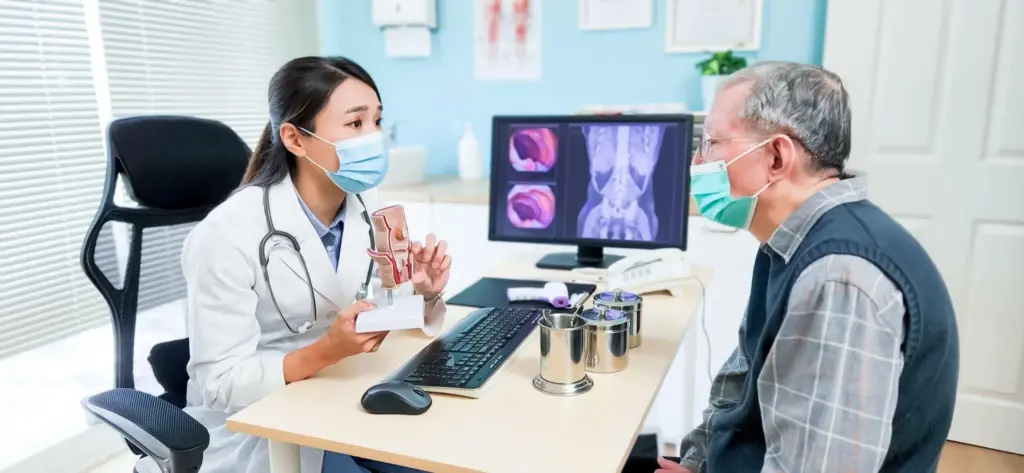
Worried about rectal cancer? Discover amazing ways to rule out scary signs and find powerful, vital tests for your essential protection.
It’s important to check for rectal cancer early. We use colorectal cancer (CRC) screening to find problems before they get worse.
But, not enough people are getting screened. Only 61.4% of adults between 45-75 are up to date. The goal is to reach 72.8% by 2030. Colonoscopy is the best way to find and prevent cancer.
There are different tests for screening, like colonoscopy, FIT, and gFOBT. Knowing about these tests is key for those at risk.
Key Takeaways
- CRC screening is vital for early detection and treatment.
- Colonoscopy is the gold standard for detecting malignancy and precancerous lesions.
- Other screening tests include FIT and gFOBT.
- Early detection significantly improves treatment outcomes.
- Individuals at risk should understand available screening methods.
Understanding Rectal Cancer and Its Impact
Rectal cancer is a type of colorectal cancer that starts in the rectum. Knowing about it is important for managing the disease. We will look into what it is, how common it is, and the differences between rectal and colon cancer.
Definition and Anatomical Location
Rectal cancer happens when bad cells grow in the rectum, the last part of the large intestine. The rectum holds feces until they are passed out. Knowing the rectum’s anatomy is key for diagnosing and treating cancer.
Prevalence and Statistics in the United States
Rectal cancer is a big health issue in the United States. It’s the third most common cancer in both men and women. We will look at how common it is and its trends to understand its impact.
|
Year |
Estimated New Cases |
Estimated Deaths |
|---|---|---|
|
2020 |
43,340 |
13,750 |
|
2021 |
45,230 |
13,440 |
|
2022 |
46,050 |
13,160 |
Difference Between Rectal and Colon Cancer
Rectal and colon cancer are both types of colorectal cancer but in different parts of the large intestine. Colon cancer is in the colon, the longer part. Rectal cancer is in the rectum. Knowing the difference is important for treatment and understanding the disease.
It’s crucial for patients and doctors to understand the differences between rectal and colon cancer. This helps in diagnosing, treating, and caring for patients better.
Common Symptoms That May Indicate Rectal Cancer
Recognizing the symptoms of rectal cancer is crucial in combating the disease. This disease often shows symptoms early. This means doctors can act fast.
Early Warning Signs
Finding rectal cancer early is vital. Look out for these signs:
- Rectal Bleeding: Seeing blood in your stool or bleeding from the rectum is common.
- Changes in Bowel Habits: If you have diarrhea or constipation that won’t go away, or if you feel like your bowel isn’t emptying right.
- Narrowing of the Stool: If your stools are thinner than usual.
Advanced Symptoms
As rectal cancer gets worse, more symptoms appear. These include:
- Abdominal Pain or Cramping: Feeling pain or cramps in your belly that won’t stop.
- Weakness or Fatigue: Feeling very tired or weak because of anemia or cancer.
- Loss of Appetite: Not wanting to eat, which can cause you to lose weight.
Remember, these symptoms can also mean other things. But if they keep happening, see a doctor.
When to Seek Medical Attention
If you notice any of these, get help right away:
- Persistent rectal bleeding.
- Significant changes in bowel habits.
- Unexplained weight loss or loss of appetite.
|
Symptom |
Description |
|---|---|
|
Rectal Bleeding |
Blood in the stool or rectal bleeding. |
|
Changes in Bowel Habits |
Persistent diarrhea or constipation. |
|
Narrowing of the Stool |
Stools that are narrower than usual. |
|
Abdominal Pain or Cramping |
Persistent pain or cramping in the abdomen. |
Risk Factors for Developing Rectal Cancer
Rectal cancer risk comes from genetics, lifestyle, and environment. Knowing these factors helps spot who needs screening sooner.
Age and Family History
Age is a big risk factor, with most cases in people over 50. A family history of colorectal cancer raises the risk too. If you have a family history, talk to your doctor about screening.
Lifestyle and Environmental Factors
Lifestyle greatly affects rectal cancer risk. Key factors include:
- Diet: Eating too much red and processed meat and not enough fruits, veggies, and whole grains.
- Physical Activity: Being too sedentary.
- Obesity: Being overweight or obese.
- Smoking: Using tobacco.
- Alcohol Consumption: Drinking too much.
Changing these habits can lower your risk of rectal cancer.
Medical Conditions That Increase Risk
Some medical conditions raise the risk of rectal cancer. These include:
|
Condition |
Description |
Impact on Risk |
|---|---|---|
|
Inflammatory Bowel Disease (IBD) |
Conditions like Crohn’s disease and ulcerative colitis that cause chronic inflammation. |
Increases risk due to chronic inflammation. |
|
Familial Adenomatous Polyposis (FAP) |
A genetic condition characterized by numerous polyps in the colon and rectum. |
Significantly increases risk if left untreated. |
|
Lynch Syndrome |
A genetic disorder that increases the risk of colorectal and other cancers. |
Significantly increases risk. |
People with these conditions need a special screening plan from their doctor.
Recommended Screening Guidelines for Rectal Cancer
Knowing the screening guidelines for rectal cancer is key for early detection. Early intervention is crucial, making screening essential in healthcare.
Current Age-Based Recommendations
Guidelines suggest starting screening for colorectal cancer, including rectal cancer, at 45. This age is chosen because starting early can lower cancer rates and deaths.
Age-Based Screening Recommendations:
|
Age |
Screening Recommendation |
|---|---|
|
45-75 years |
Regular screening is recommended |
|
76-85 years |
Screening decision should be based on individual health status and preferences |
|
>85 years |
Screening is generally not recommended |
Risk-Based Screening Timelines
Those with a family history of colorectal cancer or other risk factors might need to start screening earlier. For example, if a first-degree relative was diagnosed before 60, start screening at 40 or 10 years before that diagnosis, whichever is sooner.
National Screening Rates and Healthy People 2030 Targets
National screening rates for colorectal cancer are not where they should be. The Healthy People 2030 aims for 74.4% of adults aged 45-75 to be screened. We need to work together to raise awareness and make screening more accessible.
Following these guidelines can greatly improve rectal cancer detection and prevention. This will lead to better outcomes for patients.
Colonoscopy: The Gold Standard for Ruling Out Rectal Cancer
Colonoscopy is the top choice for checking for rectal cancer. It lets doctors look inside the colon and rectum for any issues.
How Colonoscopy Works
A colonoscopy uses a long, flexible tube with a camera and light. This lets doctors see the colon and rectum on a screen. They can also remove polyps and take samples for tests.
Preparation Process
Getting ready for a colonoscopy is key. You’ll eat only clear liquids the day before and clean your colon. You might also stop some medicines that could get in the way.
What to Expect During the Procedure
You’ll get sedation to relax during the colonoscopy. The tube is inserted through your rectum and moved through your colon. The whole thing takes 30-60 minutes, and then you’ll rest for a bit before going home.
For more info on diagnosing bowel cancer, check out .
Effectiveness in Detecting and Preventing Rectal Cancer
Colonoscopy is great at finding rectal cancer early, when it’s easier to treat. It can also stop cancer by removing polyps. This makes it a strong ally in the battle against colorectal cancer.
Talk to your doctor about your risk and what screening is best for you.
Stool-Based Tests for Rectal Cancer Screening
Stool-based tests are key for finding rectal cancer early. They look for hidden blood or genetic signs in stool. These signs can mean colorectal cancer is present.
Fecal Immunochemical Test (FIT)
The Fecal Immunochemical Test (FIT) finds tiny amounts of blood in stool. It’s better than older tests because it only looks for human blood. You don’t need to change your diet before the test.
“FIT is a top choice for screening because it’s very good at finding cancer,” say health experts.
Guaiac-Based Fecal Occult Blood Test (gFOBT)
The Guaiac-Based Fecal Occult Blood Test (gFOBT) also finds blood in stool. It’s not as good as FIT but still useful in some cases. You might need to change your diet before the test.
For more info on gFOBT and other tests, check out on colorectal cancer.
Stool DNA Testing
Stool DNA testing is a newer method. It looks for cancer cell DNA in stool. This test can find specific DNA markers for colorectal cancer.
It’s great for spotting cancers and big polyps.
Recommended Follow-Up for Positive Results
If a stool test shows something, you need more tests. Usually, a colonoscopy is next to check for cancer or polyps. “A positive test means you need more tests, not a cancer diagnosis,” say doctors.
Knowing what to do next is important for both patients and doctors.
Using stool tests can help prevent serious colorectal cancer. Talk to your doctor about the best screening plan for you.
Alternative Screening Methods for Rectal Cancer
We look at other ways to screen for rectal cancer, besides colonoscopy. These methods have their own good points and downsides. They can be useful for people who can’t or don’t want to have a colonoscopy.
Flexible Sigmoidoscopy
Flexible sigmoidoscopy checks the lower colon and rectum with a camera tube. It’s less invasive than colonoscopy and doesn’t need a full bowel prep. This makes it easier for some patients to get.
Benefits of Flexible Sigmoidoscopy:
- Less prep needed than colonoscopy
- Can be done without sedation
- Procedure is shorter
But, it only looks at the lower colon. It might miss cancers or polyps in the upper colon.
CT Colonography (Virtual Colonoscopy)
CT colonography, or virtual colonoscopy, uses CT scans to see the colon and rectum. It needs bowel prep like colonoscopy but is less invasive.
Advantages of CT Colonography:
- It’s non-invasive and doesn’t need sedation
- Can find other health issues besides colon problems
- Procedure is quick
But, if it finds polyps, you’ll need a colonoscopy to remove them. It also uses radiation.
Comparing Effectiveness and Accessibility of Different Methods
When we compare screening methods, we look at how well they work, how comfortable they are, and how easy they are to get. Colonoscopy is the most sensitive for finding rectal cancer. But, flexible sigmoidoscopy and CT colonography are good options for those who can’t or don’t want colonoscopy.
|
Screening Method |
Effectiveness |
Accessibility |
|---|---|---|
|
Flexible Sigmoidoscopy |
Moderate (limited to lower colon) |
High (less prep, no sedation needed) |
|
CT Colonography |
High (similar to colonoscopy) |
Moderate (needs prep, uses radiation) |
The right screening method depends on the patient’s risk, health history, and what they prefer. Talking to a healthcare provider is key to picking the best screening plan.
The Diagnostic Process: From Screening to Diagnosis

Diagnosing rectal cancer starts with important steps. It begins with screening and ends with a clear diagnosis. We’ll explain each step and why they’re crucial.
Initial Consultation and Physical Examination
The first step is a detailed medical history during an initial consultation. This helps spot risk factors and symptoms that might point to rectal cancer. A physical exam is also done to look for signs of cancer.
Digital Rectal Examination
A digital rectal examination (DRE) is key in diagnosing rectal cancer. A healthcare provider uses a gloved finger to feel for abnormalities in the rectum. This simple test can reveal important information about cancer presence.
Diagnostic Testing Sequence
After the initial steps, a series of tests follows. These include:
- Colonoscopy: A way to see the entire colon and rectum.
- Biopsy: Removing tissue or cells for microscopic examination.
- Imaging tests: Like CT scans, MRI, or PET scans to check how far the disease has spread.
Interpreting Test Results
Understanding test results is vital in diagnosing rectal cancer. Our team will analyze the findings. We’ll discuss the diagnosis with you and plan your next steps.
|
Diagnostic Test |
Purpose |
|---|---|
|
Colonoscopy |
Visual examination of the colon and rectum |
|
Biopsy |
Examination of tissue or cells for cancer |
|
Imaging Tests (CT, MRI, PET) |
Assessing the extent of the disease |
Knowing how rectal cancer is diagnosed is key for early detection and treatment. This structured approach helps ensure patients get the right diagnosis and care.
Biopsy and Pathology: Confirming or Ruling Out Rectal Cancer
Biopsy and pathology are key steps in figuring out if you have rectal cancer. If a test like a colonoscopy finds something odd, a biopsy is done. This lets doctors look at the tissue more closely.
Types of Biopsy Procedures
There are different ways to do a biopsy for rectal cancer. The most common is an endoscopic biopsy. This is done during a colonoscopy with special tools.
Other biopsies include:
- Needle biopsy: This is less common but uses a needle to get tissue or cells.
- Surgical biopsy: Sometimes, a surgery is needed to get a tissue sample.
Understanding Pathology Reports
After a biopsy, the tissue goes to a lab for a pathologist to examine. They look at it under a microscope for cancer cells.
The report will tell you:
- If cancer cells are there
- The type of cancer (if there is one)
- The cancer’s grade (how abnormal the cells are)
Timeframe for Results and Next Steps
It usually takes 7 to 10 business days to get biopsy results. When you get them, your doctor will talk about what they mean and what to do next.
If the biopsy shows cancer, more tests might be needed to find out how far it has spread. If it doesn’t show cancer, your doctor will tell you when to have more tests.
We know waiting for results can be hard. Our team is here to support you with care and understanding during this time.
Advanced Imaging Studies in Rectal Cancer Diagnosis
Advanced imaging studies have changed how we diagnose rectal cancer. These new methods give us vital details about the disease. They help doctors make better treatment plans and improve patient care.
MRI for Rectal Cancer Evaluation
Magnetic Resonance Imaging (MRI) is key in checking rectal cancer. It shows clear pictures of the rectum and nearby areas. This helps doctors see how big the tumor is and if it’s spreading.
CT Scans and Their Role
Computed Tomography (CT) scans are important in diagnosing and staging rectal cancer. They give detailed views of the abdomen and pelvis. This helps doctors find the main tumor, check for cancer in lymph nodes, and spot cancer that has spread.
Endorectal Ultrasound
Endorectal ultrasound is a special imaging method. It uses an ultrasound probe in the rectum to get clear images. It’s great for seeing how deep the tumor is and checking nearby lymph nodes.
PET Scans for Metastatic Disease
Positron Emission Tomography (PET) scans are used with CT scans (PET-CT) to find cancer spread in rectal cancer patients. PET scans show how active the tumors are. This helps find cancerous areas.
|
Imaging Modality |
Primary Use in Rectal Cancer |
Key Benefits |
|---|---|---|
|
MRI |
Local staging, assessing tumor extent |
High-resolution images, accurate tumor staging |
|
CT Scans |
Detecting distant metastases, assessing lymph nodes |
Detailed cross-sectional images, quick scanning time |
|
Endorectal Ultrasound |
Assessing depth of tumor invasion, local lymph nodes |
High-resolution images of rectal wall and nearby tissues |
|
PET Scans |
Detecting metastatic disease, assessing treatment response |
Functional information on tumor metabolic activity |
Understanding Rectal Cancer Staging and Survival Rates
Rectal cancer staging is key to knowing how well a patient will do and what treatment to choose. Getting the stage right helps doctors know how far the cancer has spread. This helps pick the best treatment.
TNM Classification System
The TNM system is the main way to stage rectal cancer. It looks at three main parts: the tumor size (T), nearby lymph nodes (N), and if it has spread (M). Each part gets a number, and these numbers tell the cancer’s stage.
For example, the T category is divided into:
- T1: Tumor invades the submucosa
- T2: Tumor invades the muscularis propria
- T3: Tumor invades through the muscularis propria into pericolorectal tissues
- T4: Tumor invades other organs or structures
Stage Groupings and Their Meaning
The TNM numbers are used to make stage groups, from Stage I to Stage IV. Stage I means the cancer is early and local. Stage IV means it’s advanced and has spread far.
Stage Groupings:
- Stage I: T1-T2, N0, M0
- Stage II: T3-T4, N0, M0
- Stage III: Any T, N1-N2, M0
- Stage IV: Any T, Any N, M1
Survival Rates by Stage
Survival rates for rectal cancer depend a lot on the stage at diagnosis. The earlier the stage, the better the survival rate. The American Cancer Society says the 5-year survival rate for rectal cancer is:
|
Stage |
5-Year Survival Rate |
|---|---|
|
Stage I |
90% |
|
Stage II |
70-80% |
|
Stage III |
40-60% |
|
Stage IV |
10-20% |
Factors Affecting Prognosis
Staging is very important, but other things matter too. These include the patient’s health, any other health issues, and how well the cancer responds to treatment. New treatments are also helping patients at all stages.
Knowing about rectal cancer staging and survival rates is key for patients and doctors. Accurate staging helps tailor treatments to each patient. This can improve outcomes for everyone.
Multidisciplinary Approach to Rectal Cancer Care
Dealing with rectal cancer needs a team effort. A team of experts works together to create a treatment plan that fits each patient. This approach ensures the best care possible.
The Role of Different Specialists
Our team has surgeons, medical oncologists, radiation oncologists, radiologists, and pathologists. Each one brings their special skills to help the patient. This way, every part of the patient’s care is covered.
- Surgeons: They are experts in surgery, including less invasive methods.
- Medical Oncologists: They focus on chemotherapy and other treatments.
- Radiation Oncologists: They use radiation therapy, like IMRT.
- Radiologists: They interpret images to help diagnose and stage the cancer.
Tumor Board Conferences
Tumor board meetings are key to our team’s work. Here, specialists discuss patient cases, look at test results, and plan treatments together.
At these meetings, we:
- Look at the patient’s history and test results.
- Talk about treatment options, using the latest research.
- Make a treatment plan that fits the patient’s needs.
Patient-Centered Treatment Planning
Our care focuses on the patient. We make sure patients are part of the decision-making. We respect their wishes and needs.
Our patient-focused planning includes:
- Telling patients about their diagnosis and treatment options clearly.
- Thinking about the patient’s health, lifestyle, and goals.
- Working together across different areas of care.
Liv Hospital’s Approach to Multidisciplinary Care
Liv Hospital is dedicated to team care for rectal cancer. Our specialists work together to give patients the best care.
Our methods include:
- Regular tumor board meetings to talk about patient cases.
- Creating treatment plans that meet each patient’s needs.
- Using the latest technology and facilities for diagnosis and treatment.
Prevention Strategies Beyond Screening
Prevention is more than just screening to fight rectal cancer. By adding different strategies to our daily lives, we can lower our risk. This approach is key to staying healthy.
Dietary Modifications
Eating right is crucial in preventing rectal cancer. Foods like fruits, vegetables, and whole grains are good. More fiber helps keep our digestive system in check.
It’s also wise to eat less red and processed meats. These foods increase cancer risk. Opt for lean proteins and colorful veggies for better health.
Physical Activity Recommendations
Staying active is another way to prevent rectal cancer. Try to do 150 minutes of moderate exercise or 75 minutes of vigorous exercise weekly. Activities like walking, cycling, or swimming are great.
Exercise keeps us healthy and helps fight cancer. Try to move more each day, like taking the stairs or going for a walk.
Chemoprevention Options
Chemoprevention uses medicines or supplements to prevent cancer. Aspirin and NSAIDs might help lower cancer risk. But, talk to your doctor first to weigh the benefits and risks.
Lifestyle Changes for High-Risk Individuals
If you’re at high risk, making lifestyle changes can help. Quit smoking and drink less alcohol. Both are linked to cancer risk.
|
Lifestyle Change |
Benefit |
|---|---|
|
Dietary Modifications |
Reduces risk through healthy nutrition |
|
Regular Physical Activity |
Lowers risk and improves overall health |
|
Chemoprevention |
May reduce cancer risk with medication |
|
Avoiding Risk Factors |
Minimizes exposure to harmful substances |
By using these prevention strategies, we can fight rectal cancer. Always talk to your doctor to find the best plan for you.
Conclusion: The Importance of Early Detection in Rectal Cancer

Early detection is key to beating rectal cancer. It boosts survival rates. We talked about different ways to screen for it, like colonoscopies and stool tests. Knowing the risks and symptoms helps people take care of their health.
Seeing a doctor quickly when symptoms show up is vital. Following screening guidelines can catch cancer early. This leads to better treatment results. We suggest talking to doctors to find the right screening plan for you.
By focusing on early detection, we can save more lives. Regular screenings are a big part of staying healthy. Let’s make sure to highlight their role in fighting rectal cancer.
FAQ
What is rectal cancer and how does it differ from colon cancer?
Rectal cancer happens in the rectum, the last part of the large intestine. It’s different from colon cancer because of its location. Treating rectal cancer is harder because it’s close to the anus and other important areas.
What are the common symptoms of rectal cancer?
Symptoms include bleeding, changes in bowel habits, and pain. You might also lose weight without trying. Later signs are fatigue, loss of appetite, and bowel blockage.
What are the risk factors for developing rectal cancer?
Risk factors include age and family history. Lifestyle choices like eating too much red meat and not enough fiber also play a part. Being overweight, smoking, and drinking too much alcohol increase risk.
What is the recommended screening method for rectal cancer?
Colonoscopy is the best way to screen for rectal cancer. It lets doctors see the whole colon and rectum. This helps find and remove polyps before they turn into cancer.
What are the alternative screening methods for rectal cancer?
Other options include FIT, gFOBT, stool DNA testing, flexible sigmoidoscopy, and CT colonography. These tests help find cancer early too.
How is rectal cancer staged, and what does it mean for treatment?
Doctors use the TNM system to stage rectal cancer. This looks at the tumor, lymph nodes, and if cancer has spread. Knowing the stage helps choose the right treatment.
What is the role of advanced imaging studies in rectal cancer diagnosis?
Studies like MRI, CT scans, and PET scans are key in diagnosing and staging rectal cancer. They help doctors understand how far the cancer has spread and plan treatment.
What are the benefits of a multidisciplinary approach to rectal cancer care?
Working with a team of specialists ensures the best care for rectal cancer patients. This team includes surgeons, oncologists, and radiologists. They work together for the best results.
Can lifestyle changes help prevent rectal cancer?
Yes, making healthy choices can lower your risk. Eat well, stay active, don’t smoke, and drink less alcohol. These habits help prevent rectal cancer.
What is the survival rate for rectal cancer, and how does it vary by stage?
Survival rates for rectal cancer depend on the stage. Early stages have much better survival rates than later stages.
How quickly does colon cancer grow, and can it be detected early?
Colon cancer grows slowly over years. Regular screenings can catch it early. This makes treatment more effective.
What is the cure rate for colon cancer, and what factors influence it?
Cure rates for colon cancer depend on the stage and overall health. Early stages have a higher cure rate.
Reference:
CDC (Centers for Disease Control and Prevention) – Journal Article: https://www.cdc.gov/pcd/issues/2025/25_0175.htm