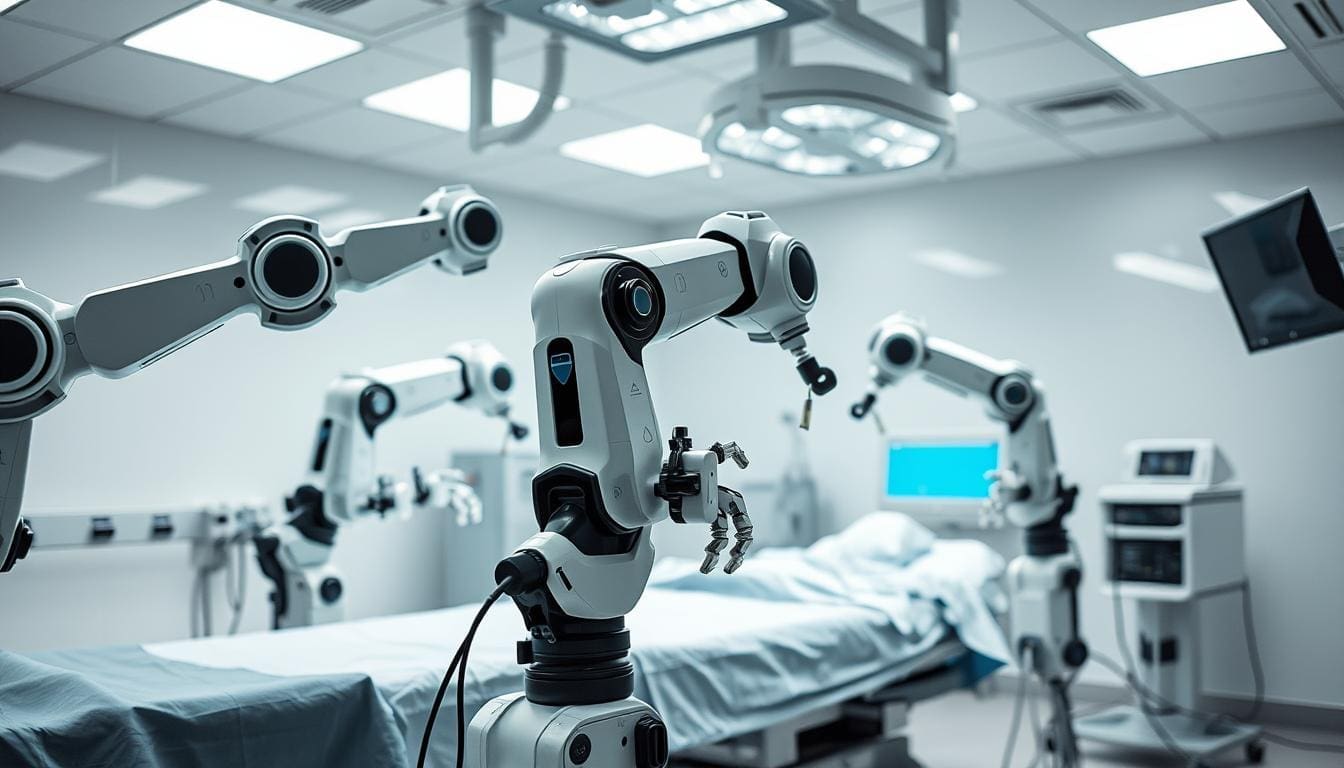
The medical field is changing fast with healthcare robotics. Robots are now used in many medical tasks. They help make care better and make things run smoother.
Robots help in surgeries, care for patients, and in rehab. They are changing how we give healthcare.
The value of healthcare monitoring robots is set to hit 5.56 billion USD by 2032. This shows a big jump in robot health care use. Companies like VSee Health are leading this change.
They make tools for remote care. VSee Health has done over 1.5 million video visits a month. This is all detailed in their latest financial report.
Key Takeaways
- Robotics are enhancing the precision and efficiency of medical procedures.
- The integration of healthcare robotics is improving patient outcomes and experiences.
- Telepresence solutions are enabling remote patient care, expanding access to healthcare services.
- The market for healthcare monitoring robots is expected to grow significantly by 2032.
- Innovative companies are driving the adoption of robot health care technologies.
The Current State of Robot Health Care
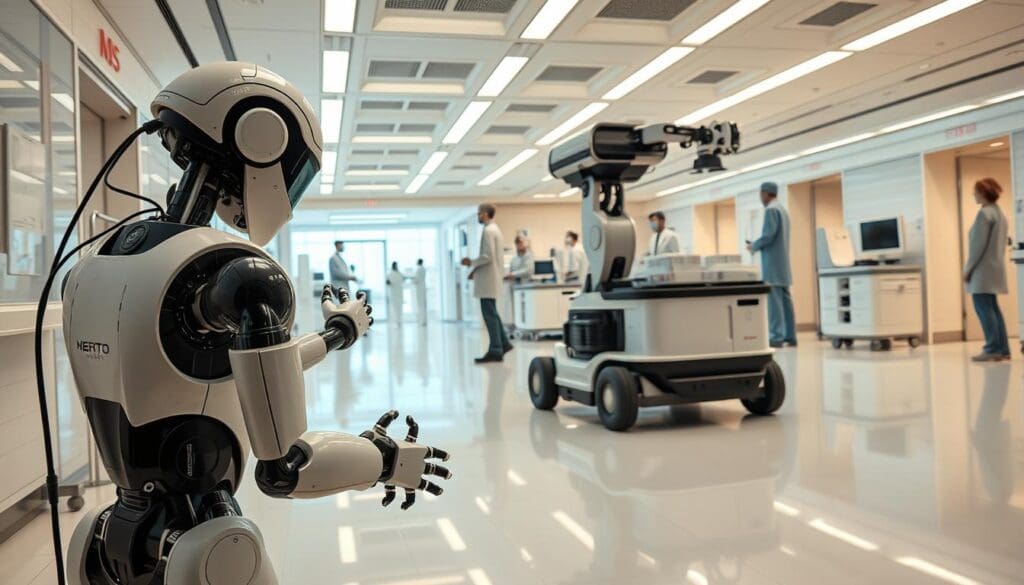
Robotics in healthcare is changing the medical world in big ways. The healthcare robotics market is growing fast. This is thanks to new tech and a need for better healthcare.
Now, robots are being used a lot in surgery, diagnosis, and treatment. This field is growing fast. New tech is helping make patient care better.
Market Value Expected to Reach 5.56 Billion USD by 2032
The market for healthcare monitoring robots is growing fast. It’s expected to hit 5.56 billion USD by 2032. This growth comes from more robots being used in healthcare. They help with monitoring, surgery, and rehab.
27% of Global Robotics Market by 2025
Healthcare robotics will be a big part of the global robotics market. It’s expected to make up 27% of the global robotics market by 2025. This shows how important robots will be in healthcare’s future.
How Robotics Are Revolutionizing Patient Care
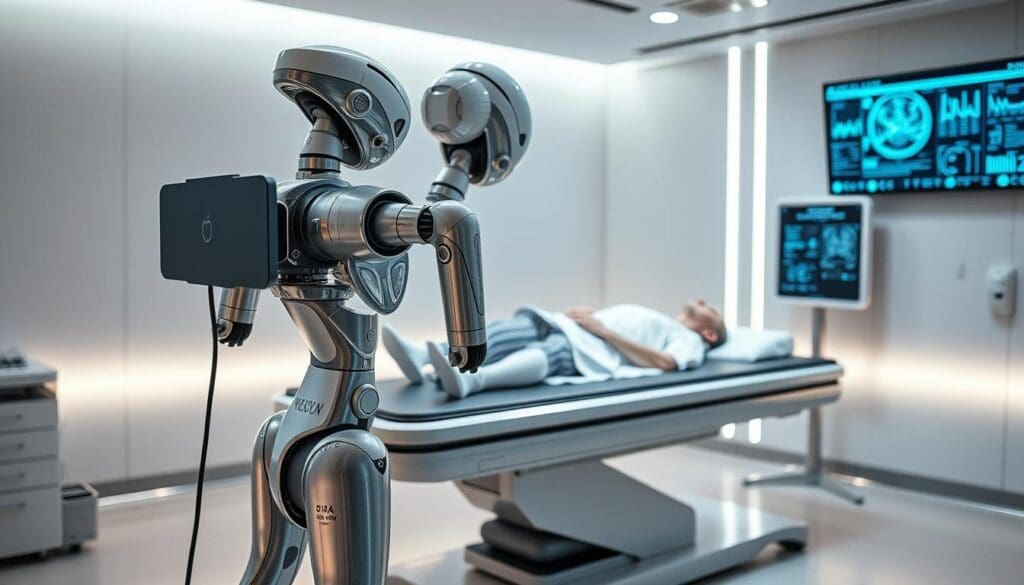
Robotics are changing patient care by making it more efficient and safe. They are used in many healthcare areas, like surgery and rehabilitation. Robots are now doing tasks that need precision and accuracy.
Enhanced Efficiency in Healthcare Delivery
Robotics help by enabling real-time patient monitoring and cutting down on caregiver work. Robots do tasks with great precision, freeing up healthcare workers for more complex tasks. For example, they can watch over patients’ vital signs and alert staff to any issues.
Robot-assisted rehabilitation is also a big area where robotics is making a difference. Robots offer personalized therapy to patients, helping them get back their strength and mobility. This not only helps patients but also makes rehabilitation programs more efficient.
Improved Safety Outcomes for Patients and Staff
Robotics also make healthcare safer for patients and staff. They take over tasks that are risky or need high precision, lowering the chance of mistakes and accidents. For instance, robots can handle medication management, making sure the right medicine goes to the right patient at the right time.
Also, robotics in nursing are improving patient care by helping with daily tasks and keeping an eye on patients’ health. This boosts patient happiness and lessens the load on nursing staff, letting them focus on more important care tasks.
As we keep adding robotics to healthcare, we’ll see big improvements in patient care and results. The future of healthcare looks bright with robotics leading the way, promising more efficient, safe, and effective care.
Key Transformation #1: Robotic Surgery and Minimally Invasive Procedures
Robotic-assisted surgery is changing how we do surgery in healthcare. It lets surgeons do complex tasks with more precision and accuracy.
Robotic surgery cuts down on surgery time and complications. Surgeons can now do delicate, minimally invasive surgeries faster and with fewer problems.
25% Shorter Operative Times with Robotic Assistance
Robotic technology has made surgery faster. It helps surgeons work better, saving time and reducing risks.
Studies show robotic surgery leads to better patient results. It causes less damage and helps patients heal faster.
30% Reduction in Surgical Complications
Robotic surgery also lowers the chance of surgery problems. The technology gives surgeons better control and vision, making them more precise.
| Benefits of Robotic Surgery | Traditional Surgery | Robotic-Assisted Surgery |
|---|---|---|
| Operative Time | Longer | 25% Shorter |
| Surgical Complications | Higher Risk | 30% Reduction |
| Recovery Time | Longer | Shorter |
Robotic technology is getting better, promising more progress in surgery. We can look forward to better patient care, faster recovery, and more precise surgery.
Key Transformation #2: Real-Time Patient Monitoring Systems
Robotics in healthcare is bringing big changes with real-time patient monitoring systems. These systems help doctors keep an eye on patients’ health all the time. This is key to better patient care and less work for caregivers.
AI-Powered Continuous Health Assessment
We’re seeing a big change in how we care for patients with AI-powered health checks. These systems use smart algorithms to look at patient data as it happens. This helps catch health problems early, leading to better care and fewer complications.
AI is changing how we watch over patient health. AI systems can look at lots of data fast and right, giving doctors important info. This leads to care that’s more tailored and effective, making healthcare better for everyone.
Reducing Caregiver Workload Through Automation
Real-time monitoring systems also help by making caregivers’ jobs easier. They automate simple tasks, so caregivers can focus on more important work. This makes healthcare more efficient and improves the care patients get.
Healthcare staff also have less paperwork thanks to these systems. This means they can spend more time with patients, making their experience better. Robotics in healthcare are making care better and helping the system last longer.
Key Transformation #3: Robot-Assisted Rehabilitation
Robot-assisted rehabilitation is changing how we help patients get better. It offers a more precise and personal way to heal. Robotics are key in making rehabilitation better for patients.
Precision Movement Therapy with Robotic Exoskeletons
Robotic exoskeletons are used for precise movement therapy. They help patients do important, repetitive movements for recovery. This therapy is hard to get with just manual help.
Benefits of Robotic Exoskeletons:
- Enhanced precision in movement therapy
- Increased intensity and frequency of therapy sessions
- Improved patient engagement and motivation
Robotic exoskeletons can be set to help with specific exercises. This helps patients recover faster and regain their independence.
Personalized Recovery Programs and Progress Tracking
Robot-assisted rehab lets us make recovery plans just for each patient. We use data and AI to track how they’re doing. This way, we can change the therapy if needed.
| Feature | Benefit |
|---|---|
| Customizable Therapy Plans | Tailored to individual patient needs |
| Real-Time Progress Tracking | Enables timely adjustments to therapy |
| Data-Driven Insights | Improves treatment efficacy and patient outcomes |
Using robotics in rehab makes recovery better and more effective. The table shows how these features help patients get better faster.
As robotics get better, so will rehab tech. We’re excited to use these new tools to give our patients the best care.
Key Transformation #4: Automation of Routine Healthcare Tasks
Robotics are changing healthcare by automating simple tasks. This lets doctors and nurses focus on more complex care. It’s making healthcare services more efficient and accurate.
Automation in healthcare does more than just cut down on work. It also improves patient care. With robotics, healthcare places can lower mistakes and use resources better.
Medication Management and Distribution Systems
Medication management is a key area where automation shines. Robotic systems help dispense drugs, cutting down on mistakes. They also keep track of stock, making sure drugs are ready when needed.
For example, robotic systems can:
- Give out medication correctly based on prescriptions
- Keep an eye on and report on drug stock levels
- Notify staff about possible drug interactions
| Feature | Benefit |
|---|---|
| Automated Dispensing | Reduces human error in medication administration |
| Inventory Management | Ensures timely replenishment of medication stock |
| Interaction Alerts | Enhances patient safety by warning of potential drug interactions |
Laboratory and Administrative Process Automation
Robotics are also making laboratory and administrative processes smoother. Automated lab systems can handle samples faster and more accurately than manual methods. This means quicker diagnoses and treatments.
“The use of robotics in laboratories has significantly reduced our turnaround time for test results, allowing us to provide quicker care to our patients.”
Even routine tasks like scheduling and record-keeping are being automated. This eases the workload on healthcare staff. It also makes patient experiences better by cutting down wait times and improving data accuracy.
As we keep adding robotics to healthcare, we’ll see even more improvements. The automation of routine tasks is key to achieving these goals.
Key Transformation #5: Infection Control and UV Disinfection Robots
UV disinfection robots are changing how we fight infections in healthcare. They make places safer for everyone. These robots use special UV light to clean surfaces and tools, cutting down on infections.
Using UV disinfection robots is a big leap in fighting hospital infections. They clean better than humans can, reaching spots that are hard to get to. This makes disinfection faster and more complete.
Hospital-Acquired Infection Prevention Technology
Hospital infections are a big worry everywhere. UV disinfection robots are here to help. They can clean rooms and tools, lowering the chance of infections spreading.
The tech in UV disinfection robots keeps getting better. New UV light emission and navigation systems make disinfection more effective. This tech makes patients safer and care better.
Implementation in Healthcare Facilities Worldwide
More and more places are using UV disinfection robots. They’re in hospitals and clinics, helping keep patients safe. This is a big step in fighting infections.
As we keep using UV disinfection robots, we’ll see big changes in fighting infections. This tech is key to making healthcare safer and better for everyone.
Key Transformation #6: Telemedicine and Remote Care Robotics
Medical technology is advancing fast, and telemedicine robots are key in improving remote patient care. These innovations make healthcare services more accessible. They also ensure patients get the right treatment on time.
Telemedicine and remote care robotics are changing healthcare. They let doctors help patients in far-off places. This is vital in closing the healthcare gap in areas with little access to specialists.
Extending Specialist Care to Remote Locations
Telemedicine robots help patients in remote or underserved areas see specialists without traveling far. This boosts patient care and cuts down healthcare costs related to travel.
Telepresence robots are used more often for remote consultations. They have high-definition cameras and microphones for clear communication between patients and doctors.
Telepresence Robots for Patient-Doctor Interactions
Telepresence robots let patients talk to doctors from afar, improving care and patient happiness. They’re great for patients who can’t easily visit a healthcare facility.
“The integration of robotics in telemedicine is a game-changer for healthcare. It not only improves access to care but also enhances the overall patient experience.” – Healthcare Expert
As we add more robotics to healthcare, we’ll see big improvements in remote care. The future of telemedicine is bright, with chances to help in many healthcare areas, like managing chronic diseases and supporting mental health.
By using AI and robotics, we’re making healthcare safer for everyone. The growth and use of telemedicine robots will be key in shaping healthcare’s future.
Challenges and Ethical Considerations in Medical Robotics
Robotics is changing healthcare, but we face challenges and ethical issues. Integrating robots in healthcare is complex. It requires new technology and thinking about moral and societal impacts.
One big worry is patient data privacy and security. With more robots, more patient data is collected, stored, and shared. Keeping this data safe is very important.
Privacy, Security, and Data Management
Robotics in healthcare raises big questions about data management. Robots use complex algorithms and AI, needing lots of data. This data must protect patient privacy while improving robots.
To tackle these issues, healthcare and robotics must work together. They need to ensure data security through:
- Encrypting patient data both in transit and at rest
- Implementing secure authentication and authorization protocols
- Regularly updating and patching software to prevent vulnerabilities
| Data Security Measure | Description | Benefit |
|---|---|---|
| Data Encryption | Protects patient data from unauthorized access | Ensures confidentiality and compliance with regulations |
| Secure Authentication | Verifies the identity of users and systems | Prevents unauthorized access to sensitive data |
| Regular Software Updates | Fixes vulnerabilities and improves system security | Reduces the risk of data breaches and cyber attacks |
Cost Barriers and Healthcare Accessibility
Implementing and keeping robots in healthcare is expensive. This can make it hard for many providers to afford. It could also widen healthcare gaps.
To overcome these costs, we need new ways to fund and make robots more accessible. Ideas include:
- Public-private partnerships to fund robotic healthcare initiatives
- Grants and subsidies for healthcare providers to adopt robotic technologies
- Pay-per-use or leasing models for robotic equipment
By tackling these challenges and ethical issues, we can make robotics in healthcare work for everyone. It’s important to keep talking between healthcare, robotics, and policy makers. This way, we can have innovative and fair robotic healthcare.
Conclusion: The Future of Robotics in Healthcare
We’ve seen how robotics is changing healthcare. It’s making patient care better and medical procedures more efficient. As robotics gets better, we’ll see more progress in surgery, rehab, and telemedicine.
The use of healthcare robotics and medical robots will keep growing. This will lead to better care for patients and more effective healthcare. By using these technologies, we can make healthcare better for everyone.
As we look ahead, we must remember the importance of human touch in healthcare. We need to make sure technology doesn’t replace empathy and connection. This way, healthcare will be both advanced and caring for patients.
FAQ
What is the current state of robotics in healthcare?
Robotics is changing the medical field a lot. It’s making patient care better and making medical procedures more efficient and accurate.
How is robotic surgery transforming healthcare?
Robotic surgery lets surgeons do complex tasks with more precision. This means patients have shorter surgeries, less risk of problems, and heal faster.
What are the benefits of real-time patient monitoring systems?
These systems keep an eye on patients all the time. They help caregivers do less work and catch problems early. This makes patients do better.
How is robot-assisted rehabilitation improving patient care?
Robot-assisted therapy helps patients move better. Doctors can see how patients are doing and change their plans. This helps patients recover faster and more effectively.
What role are UV disinfection robots playing in infection control?
UV disinfection robots clean surfaces and equipment. They help keep patients safe by reducing infections and spreading germs.
How is telemedicine and remote care robotics transforming healthcare delivery?
Telemedicine and remote care robots bring specialist care to far-off places. Patients can talk to doctors from home. This makes getting care easier and improves health outcomes.
What are the challenges associated with integrating robotics in healthcare?
We face issues like keeping patient data safe and making sure everyone can afford these technologies. We also need to make sure everyone can get to these services.
What is the future of robotics in healthcare?
Robotics will keep changing healthcare for the better. We’ll see big steps forward in surgery, therapy, and remote care.
FAQ
What is the current state of robotics in healthcare?
Robotics is changing the medical field a lot. It’s making patient care better and making medical procedures more efficient and accurate.
How is robotic surgery transforming healthcare?
Robotic surgery lets surgeons do complex tasks with more precision. This means patients have shorter surgeries, less risk of problems, and heal faster.
What are the benefits of real-time patient monitoring systems?
These systems keep an eye on patients all the time. They help caregivers do less work and catch problems early. This makes patients do better.
How is robot-assisted rehabilitation improving patient care?
Robot-assisted therapy helps patients move better. Doctors can see how patients are doing and change their plans. This helps patients recover faster and more effectively.
What role are UV disinfection robots playing in infection control?
UV disinfection robots clean surfaces and equipment. They help keep patients safe by reducing infections and spreading germs.
How is telemedicine and remote care robotics transforming healthcare delivery?
Telemedicine and remote care robots bring specialist care to far-off places. Patients can talk to doctors from home. This makes getting care easier and improves health outcomes.
What are the challenges associated with integrating robotics in healthcare?
We face issues like keeping patient data safe and making sure everyone can afford these technologies. We also need to make sure everyone can get to these services.
What is the future of robotics in healthcare?
Robotics will keep changing healthcare for the better. We’ll see big steps forward in surgery, therapy, and remote care.
References
Intel Market Research: Healthcare Monitoring Robots Market
Open & Affordable: AI in Healthcare Statistics and Trends
Standard Bots Blog: 10 Ways Robotics Are Being Used in Healthcare Today
World Economic Forum (WEF): Robots, Medical Industry, Healthcare
The medical field is changing fast with healthcare robotics. Robots are now used in many medical tasks. They help make care better and make things run smoother.
Robots help in surgeries, care for patients, and in rehab. They are changing how we give healthcare.
The value of healthcare monitoring robots is set to hit 5.56 billion USD by 2032. This shows a big jump in robot health care use. Companies like VSee Health are leading this change.
They make tools for remote care. VSee Health has done over 1.5 million video visits a month. This is all detailed in their latest financial report.
Key Takeaways
- Robotics are enhancing the precision and efficiency of medical procedures.
- The integration of healthcare robotics is improving patient outcomes and experiences.
- Telepresence solutions are enabling remote patient care, expanding access to healthcare services.
- The market for healthcare monitoring robots is expected to grow significantly by 2032.
- Innovative companies are driving the adoption of robot health care technologies.
The Current State of Robot Health Care
Robotics in healthcare is changing the medical world in big ways. The healthcare robotics market is growing fast. This is thanks to new tech and a need for better healthcare.
Now, robots are being used a lot in surgery, diagnosis, and treatment. This field is growing fast. New tech is helping make patient care better.
Market Value Expected to Reach 5.56 Billion USD by 2032
The market for healthcare monitoring robots is growing fast. It’s expected to hit 5.56 billion USD by 2032. This growth comes from more robots being used in healthcare. They help with monitoring, surgery, and rehab.
27% of Global Robotics Market by 2025
Healthcare robotics will be a big part of the global robotics market. It’s expected to make up 27% of the global robotics market by 2025. This shows how important robots will be in healthcare’s future.
How Robotics Are Revolutionizing Patient Care
Robotics are changing patient care by making it more efficient and safe. They are used in many healthcare areas, like surgery and rehabilitation. Robots are now doing tasks that need precision and accuracy.
Enhanced Efficiency in Healthcare Delivery
Robotics help by enabling real-time patient monitoring and cutting down on caregiver work. Robots do tasks with great precision, freeing up healthcare workers for more complex tasks. For example, they can watch over patients’ vital signs and alert staff to any issues.
Robot-assisted rehabilitation is also a big area where robotics is making a difference. Robots offer personalized therapy to patients, helping them get back their strength and mobility. This not only helps patients but also makes rehabilitation programs more efficient.
Improved Safety Outcomes for Patients and Staff
Robotics also make healthcare safer for patients and staff. They take over tasks that are risky or need high precision, lowering the chance of mistakes and accidents. For instance, robots can handle medication management, making sure the right medicine goes to the right patient at the right time.
Also, robotics in nursing are improving patient care by helping with daily tasks and keeping an eye on patients’ health. This boosts patient happiness and lessens the load on nursing staff, letting them focus on more important care tasks.
As we keep adding robotics to healthcare, we’ll see big improvements in patient care and results. The future of healthcare looks bright with robotics leading the way, promising more efficient, safe, and effective care.
Key Transformation #1: Robotic Surgery and Minimally Invasive Procedures
Robotic-assisted surgery is changing how we do surgery in healthcare. It lets surgeons do complex tasks with more precision and accuracy.
Robotic surgery cuts down on surgery time and complications. Surgeons can now do delicate, minimally invasive surgeries faster and with fewer problems.
25% Shorter Operative Times with Robotic Assistance
Robotic technology has made surgery faster. It helps surgeons work better, saving time and reducing risks.
Studies show robotic surgery leads to better patient results. It causes less damage and helps patients heal faster.
30% Reduction in Surgical Complications
Robotic surgery also lowers the chance of surgery problems. The technology gives surgeons better control and vision, making them more precise.
| Benefits of Robotic Surgery | Traditional Surgery | Robotic-Assisted Surgery |
|---|---|---|
| Operative Time | Longer | 25% Shorter |
| Surgical Complications | Higher Risk | 30% Reduction |
| Recovery Time | Longer | Shorter |
Robotic technology is getting better, promising more progress in surgery. We can look forward to better patient care, faster recovery, and more precise surgery.
Key Transformation #2: Real-Time Patient Monitoring Systems
Robotics in healthcare is bringing big changes with real-time patient monitoring systems. These systems help doctors keep an eye on patients’ health all the time. This is key to better patient care and less work for caregivers.
AI-Powered Continuous Health Assessment
We’re seeing a big change in how we care for patients with AI-powered health checks. These systems use smart algorithms to look at patient data as it happens. This helps catch health problems early, leading to better care and fewer complications.
AI is changing how we watch over patient health. AI systems can look at lots of data fast and right, giving doctors important info. This leads to care that’s more tailored and effective, making healthcare better for everyone.
Reducing Caregiver Workload Through Automation
Real-time monitoring systems also help by making caregivers’ jobs easier. They automate simple tasks, so caregivers can focus on more important work. This makes healthcare more efficient and improves the care patients get.
Healthcare staff also have less paperwork thanks to these systems. This means they can spend more time with patients, making their experience better. Robotics in healthcare are making care better and helping the system last longer.
Key Transformation #3: Robot-Assisted Rehabilitation
Robot-assisted rehabilitation is changing how we help patients get better. It offers a more precise and personal way to heal. Robotics are key in making rehabilitation better for patients.
Precision Movement Therapy with Robotic Exoskeletons
Robotic exoskeletons are used for precise movement therapy. They help patients do important, repetitive movements for recovery. This therapy is hard to get with just manual help.
Benefits of Robotic Exoskeletons:
- Enhanced precision in movement therapy
- Increased intensity and frequency of therapy sessions
- Improved patient engagement and motivation
Robotic exoskeletons can be set to help with specific exercises. This helps patients recover faster and regain their independence.
Personalized Recovery Programs and Progress Tracking
Robot-assisted rehab lets us make recovery plans just for each patient. We use data and AI to track how they’re doing. This way, we can change the therapy if needed.
| Feature | Benefit |
|---|---|
| Customizable Therapy Plans | Tailored to individual patient needs |
| Real-Time Progress Tracking | Enables timely adjustments to therapy |
| Data-Driven Insights | Improves treatment efficacy and patient outcomes |
Using robotics in rehab makes recovery better and more effective. The table shows how these features help patients get better faster.
As robotics get better, so will rehab tech. We’re excited to use these new tools to give our patients the best care.
Key Transformation #4: Automation of Routine Healthcare Tasks
Robotics are changing healthcare by automating simple tasks. This lets doctors and nurses focus on more complex care. It’s making healthcare services more efficient and accurate.
Automation in healthcare does more than just cut down on work. It also improves patient care. With robotics, healthcare places can lower mistakes and use resources better.
Medication Management and Distribution Systems
Medication management is a key area where automation shines. Robotic systems help dispense drugs, cutting down on mistakes. They also keep track of stock, making sure drugs are ready when needed.
For example, robotic systems can:
- Give out medication correctly based on prescriptions
- Keep an eye on and report on drug stock levels
- Notify staff about possible drug interactions
| Feature | Benefit |
|---|---|
| Automated Dispensing | Reduces human error in medication administration |
| Inventory Management | Ensures timely replenishment of medication stock |
| Interaction Alerts | Enhances patient safety by warning of potential drug interactions |
Laboratory and Administrative Process Automation
Robotics are also making laboratory and administrative processes smoother. Automated lab systems can handle samples faster and more accurately than manual methods. This means quicker diagnoses and treatments.
“The use of robotics in laboratories has significantly reduced our turnaround time for test results, allowing us to provide quicker care to our patients.”
Even routine tasks like scheduling and record-keeping are being automated. This eases the workload on healthcare staff. It also makes patient experiences better by cutting down wait times and improving data accuracy.
As we keep adding robotics to healthcare, we’ll see even more improvements. The automation of routine tasks is key to achieving these goals.
Key Transformation #5: Infection Control and UV Disinfection Robots
UV disinfection robots are changing how we fight infections in healthcare. They make places safer for everyone. These robots use special UV light to clean surfaces and tools, cutting down on infections.
Using UV disinfection robots is a big leap in fighting hospital infections. They clean better than humans can, reaching spots that are hard to get to. This makes disinfection faster and more complete.
Hospital-Acquired Infection Prevention Technology
Hospital infections are a big worry everywhere. UV disinfection robots are here to help. They can clean rooms and tools, lowering the chance of infections spreading.
The tech in UV disinfection robots keeps getting better. New UV light emission and navigation systems make disinfection more effective. This tech makes patients safer and care better.
Implementation in Healthcare Facilities Worldwide
More and more places are using UV disinfection robots. They’re in hospitals and clinics, helping keep patients safe. This is a big step in fighting infections.
As we keep using UV disinfection robots, we’ll see big changes in fighting infections. This tech is key to making healthcare safer and better for everyone.
Key Transformation #6: Telemedicine and Remote Care Robotics
Medical technology is advancing fast, and telemedicine robots are key in improving remote patient care. These innovations make healthcare services more accessible. They also ensure patients get the right treatment on time.
Telemedicine and remote care robotics are changing healthcare. They let doctors help patients in far-off places. This is vital in closing the healthcare gap in areas with little access to specialists.
Extending Specialist Care to Remote Locations
Telemedicine robots help patients in remote or underserved areas see specialists without traveling far. This boosts patient care and cuts down healthcare costs related to travel.
Telepresence robots are used more often for remote consultations. They have high-definition cameras and microphones for clear communication between patients and doctors.
Telepresence Robots for Patient-Doctor Interactions
Telepresence robots let patients talk to doctors from afar, improving care and patient happiness. They’re great for patients who can’t easily visit a healthcare facility.
“The integration of robotics in telemedicine is a game-changer for healthcare. It not only improves access to care but also enhances the overall patient experience.” – Healthcare Expert
As we add more robotics to healthcare, we’ll see big improvements in remote care. The future of telemedicine is bright, with chances to help in many healthcare areas, like managing chronic diseases and supporting mental health.
By using AI and robotics, we’re making healthcare safer for everyone. The growth and use of telemedicine robots will be key in shaping healthcare’s future.
Challenges and Ethical Considerations in Medical Robotics
Robotics is changing healthcare, but we face challenges and ethical issues. Integrating robots in healthcare is complex. It requires new technology and thinking about moral and societal impacts.
One big worry is patient data privacy and security. With more robots, more patient data is collected, stored, and shared. Keeping this data safe is very important.
Privacy, Security, and Data Management
Robotics in healthcare raises big questions about data management. Robots use complex algorithms and AI, needing lots of data. This data must protect patient privacy while improving robots.
To tackle these issues, healthcare and robotics must work together. They need to ensure data security through:
- Encrypting patient data both in transit and at rest
- Implementing secure authentication and authorization protocols
- Regularly updating and patching software to prevent vulnerabilities
| Data Security Measure | Description | Benefit |
|---|---|---|
| Data Encryption | Protects patient data from unauthorized access | Ensures confidentiality and compliance with regulations |
| Secure Authentication | Verifies the identity of users and systems | Prevents unauthorized access to sensitive data |
| Regular Software Updates | Fixes vulnerabilities and improves system security | Reduces the risk of data breaches and cyber attacks |
Cost Barriers and Healthcare Accessibility
Implementing and keeping robots in healthcare is expensive. This can make it hard for many providers to afford. It could also widen healthcare gaps.
To overcome these costs, we need new ways to fund and make robots more accessible. Ideas include:
- Public-private partnerships to fund robotic healthcare initiatives
- Grants and subsidies for healthcare providers to adopt robotic technologies
- Pay-per-use or leasing models for robotic equipment
By tackling these challenges and ethical issues, we can make robotics in healthcare work for everyone. It’s important to keep talking between healthcare, robotics, and policy makers. This way, we can have innovative and fair robotic healthcare.
Conclusion: The Future of Robotics in Healthcare
We’ve seen how robotics is changing healthcare. It’s making patient care better and medical procedures more efficient. As robotics gets better, we’ll see more progress in surgery, rehab, and telemedicine.
The use of healthcare robotics and medical robots will keep growing. This will lead to better care for patients and more effective healthcare. By using these technologies, we can make healthcare better for everyone.
As we look ahead, we must remember the importance of human touch in healthcare. We need to make sure technology doesn’t replace empathy and connection. This way, healthcare will be both advanced and caring for patients.
FAQ
What is the current state of robotics in healthcare?
Robotics is changing the medical field a lot. It’s making patient care better and making medical procedures more efficient and accurate.
How is robotic surgery transforming healthcare?
Robotic surgery lets surgeons do complex tasks with more precision. This means patients have shorter surgeries, less risk of problems, and heal faster.
What are the benefits of real-time patient monitoring systems?
These systems keep an eye on patients all the time. They help caregivers do less work and catch problems early. This makes patients do better.
How is robot-assisted rehabilitation improving patient care?
Robot-assisted therapy helps patients move better. Doctors can see how patients are doing and change their plans. This helps patients recover faster and more effectively.
What role are UV disinfection robots playing in infection control?
UV disinfection robots clean surfaces and equipment. They help keep patients safe by reducing infections and spreading germs.
How is telemedicine and remote care robotics transforming healthcare delivery?
Telemedicine and remote care robots bring specialist care to far-off places. Patients can talk to doctors from home. This makes getting care easier and improves health outcomes.
What are the challenges associated with integrating robotics in healthcare?
We face issues like keeping patient data safe and making sure everyone can afford these technologies. We also need to make sure everyone can get to these services.
What is the future of robotics in healthcare?
Robotics will keep changing healthcare for the better. We’ll see big steps forward in surgery, therapy, and remote care.
FAQ
What is the current state of robotics in healthcare?
Robotics is changing the medical field a lot. It’s making patient care better and making medical procedures more efficient and accurate.
How is robotic surgery transforming healthcare?
Robotic surgery lets surgeons do complex tasks with more precision. This means patients have shorter surgeries, less risk of problems, and heal faster.
What are the benefits of real-time patient monitoring systems?
These systems keep an eye on patients all the time. They help caregivers do less work and catch problems early. This makes patients do better.
How is robot-assisted rehabilitation improving patient care?
Robot-assisted therapy helps patients move better. Doctors can see how patients are doing and change their plans. This helps patients recover faster and more effectively.
What role are UV disinfection robots playing in infection control?
UV disinfection robots clean surfaces and equipment. They help keep patients safe by reducing infections and spreading germs.
How is telemedicine and remote care robotics transforming healthcare delivery?
Telemedicine and remote care robots bring specialist care to far-off places. Patients can talk to doctors from home. This makes getting care easier and improves health outcomes.
What are the challenges associated with integrating robotics in healthcare?
We face issues like keeping patient data safe and making sure everyone can afford these technologies. We also need to make sure everyone can get to these services.
What is the future of robotics in healthcare?
Robotics will keep changing healthcare for the better. We’ll see big steps forward in surgery, therapy, and remote care.
References
Intel Market Research: Healthcare Monitoring Robots Market
Open & Affordable: AI in Healthcare Statistics and Trends
Standard Bots Blog: 10 Ways Robotics Are Being Used in Healthcare Today
World Economic Forum (WEF): Robots, Medical Industry, Healthcare