
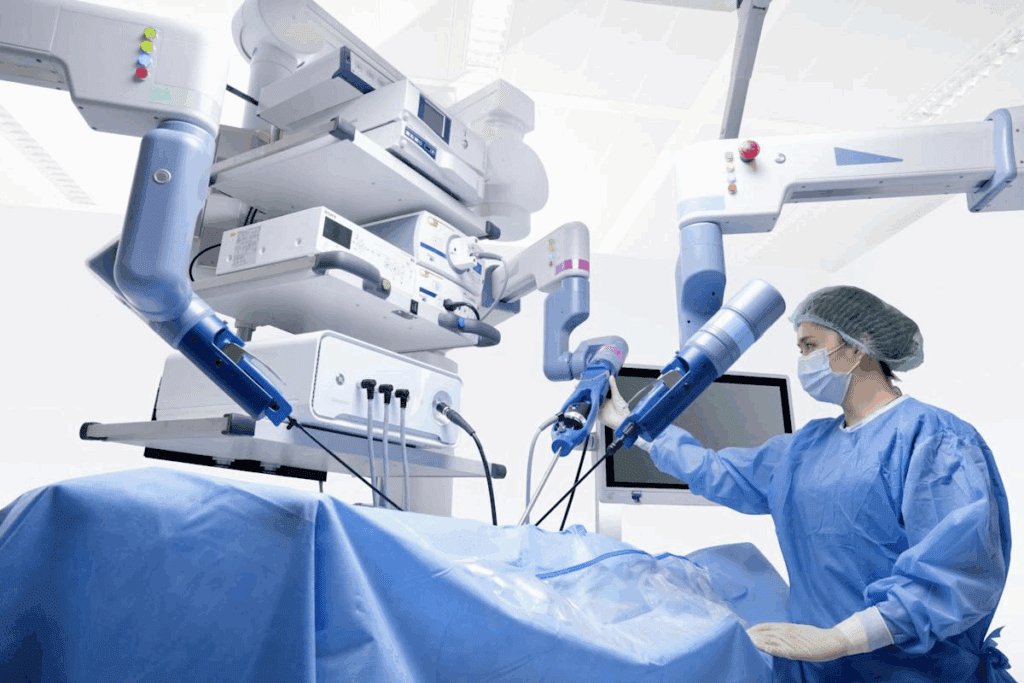
Robotic-assisted surgery, also known as robotic surgery, has transformed the medical world. It provides patients with better outcomes and minimally invasive procedures. The da Vinci Surgical System is a leading example of this technology and is widely used across multiple medical fields.
The da Vinci system enables surgeons to see more clearly, work with greater precision, and control their instruments more effectively. As a cornerstone of modern robotic surgery, it is employed in urology, gynecology, cardiothoracic surgery, and general surgery, fundamentally changing how surgical procedures are performed today.
Key Takeaways
- Robotic-assisted surgery offers improved patient outcomes.
- The da Vinci Surgical System is a leading example of robotic surgical technology.
- Robotic surgery is applied in various medical specialties.
- Enhanced visualization and precision are key benefits of robotic-assisted surgery.
- Minimally invasive procedures reduce recovery time for patients.
The Evolution of Robotic Surgery in Modern Medicine
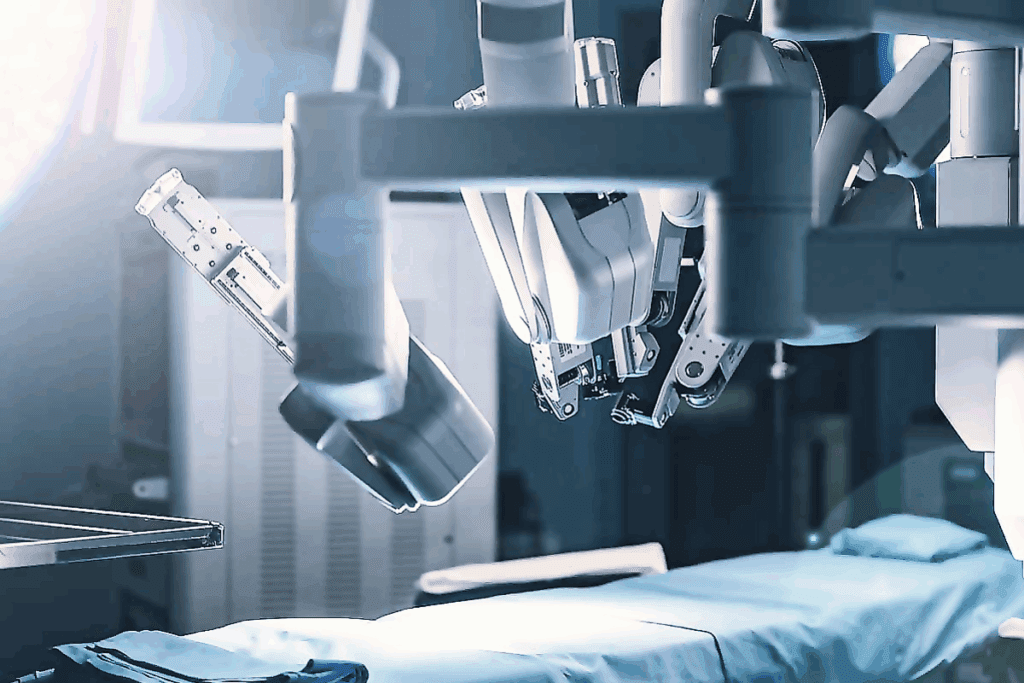
Robotic surgery is a big step forward in surgery. It lets surgeons see and control better. This change has made surgery more precise and less invasive.
The use of robots in surgery has grown slowly but surely. Robotic-assisted surgery is now common. It offers many benefits over old ways of surgery.
Definition and Core Concepts
Robotic surgery, or robotic-assisted surgery, uses robots to help with operations. It makes surgery better by giving surgeons more control and clear views.
- Enhanced visualization through high-definition 3D imaging
- Increased precision due to the robotic system’s ability to scale down the surgeon’s movements
- Improved dexterity allowing for complex maneuvers in confined spaces
The system has a surgeon’s console, a cart with robotic arms, and a vision system. The surgeon’s console lets the surgeon control the arms with great precision.
Historical Development of Surgical Robotics
The history of surgical robotics started in the late 20th century. The first systems came out in the 1990s. The first robotic surgery was done in 1997.
- The first robotic surgical system, ROBODOC, was introduced for orthopedic procedures.
- The da Vinci Surgical System, approved by the FDA in 2000, changed robotic surgery.
- Later, more advanced systems were made.
These improvements have made robotic surgery popular in many fields. This includes urology, gynecology, and cardiothoracic surgery.
The Da Vinci Surgical System: Pioneering Robotic Surgery Technology
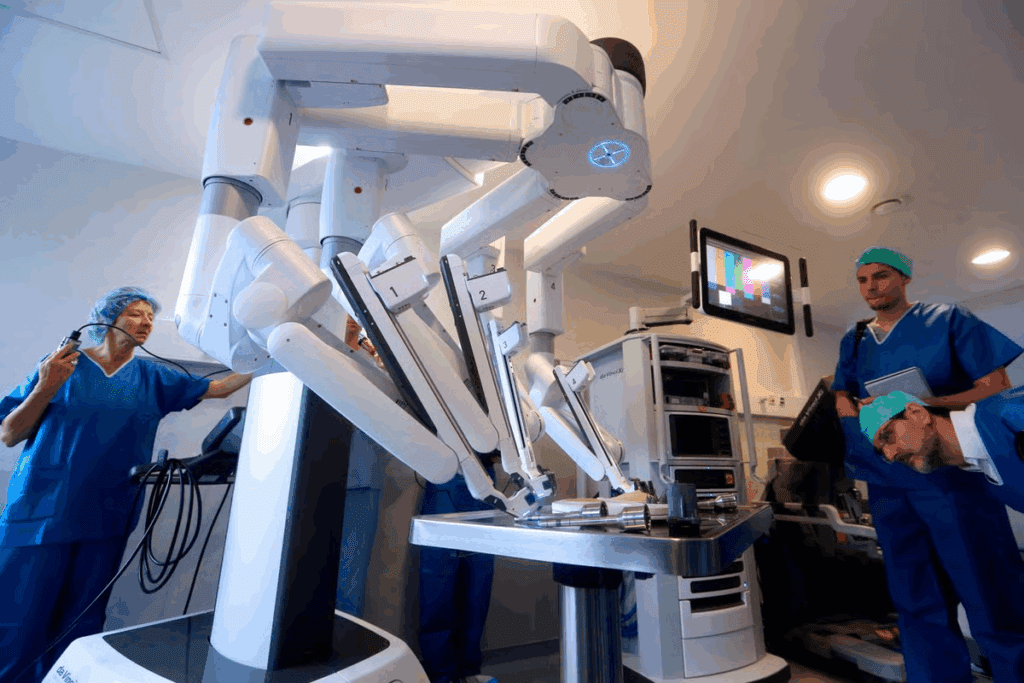
The Da Vinci Surgical System is a big step forward in robotic surgery. It brings unmatched precision and control. This system has changed surgery by letting surgeons do complex tasks with more ease and accuracy.
Components and Operational Features
The Da Vinci Surgical System has several key parts. These parts work together for robotic surgery. They include:
- A surgeon’s console where the surgeon controls the robotic arms
- A patient-side cart with robotic arms that hold surgical instruments
- A high-definition 3D vision system that provides a clear view of the surgical site
The system’s features include precise motion scaling and tremor filtration. These features allow for detailed work and stable instruments.
Generations of the Da Vinci System
The Da Vinci Surgical System has evolved over the years. Each new generation has brought big improvements:
- The original Da Vinci System, introduced in 1999, was the first to market.
- The Da Vinci S System, launched later, offered better vision and tools.
- The Da Vinci Si System improved with advanced tools and better ergonomics for surgeons.
- The latest Da Vinci Xi System offers more flexibility and precision, with easier setup and better visuals.
Surgical Capabilities and Limitations
The Da Vinci Surgical System has made many surgeries better. It’s used in urology, gynecology, and cardiothoracic surgery. Its benefits include:
- Enhanced dexterity and precision
- Improved visualization through 3D imaging
- Reduced blood loss and trauma
But, the system also has some downsides. These include high costs, the need for special training, and possible technical problems during surgery.
How Robotic Surgery Procedures Are Performed
Robotic surgery combines advanced technology and surgical skills. It helps patients recover faster and get better results. This method uses several key parts to make operations precise and less invasive.
The Surgeon’s Console and Control Interface
The surgeon’s console is a vital part of robotic surgery. It gives the surgeon a clear, 3D view of the area being operated on. The console has controls that let the surgeon move the robotic arms with great precision.
Advanced ergonomics at the console help surgeons stay focused and perform well, even during long surgeries. The design of the console makes it easy for surgeons to use. It helps them use their skills better and get more from the robotic technology.
“The ergonomic design of the surgeon’s console is key for reducing fatigue and improving performance during complex robotic surgeries.” –
A Robotic Surgeon
Robotic Arms and Specialized Instruments
Robotic arms are a key feature of robotic surgery. They can move in ways humans can’t. These arms have specialized instruments for tasks like cutting, sewing, and handling tissues.
- Robotic arms offer better dexterity and precision.
- Specialized instruments are made for specific tasks.
- The combination of robotic arms and instruments makes complex procedures more accurate.
3D Visualization and Motion Scaling
Robotic surgery’s 3D visualization is a big advantage. It gives surgeons a clear view of the area being operated on. This, along with motion scaling, lets surgeons make precise movements. These movements are smaller than the surgeon’s hand movements, reducing shaking and improving accuracy.
The mix of 3D visualization and motion scaling lets surgeons do delicate work with high precision. This is hard to do with traditional surgery methods.
Robotic Prostatectomy: The Most Common Robotic Surgery
Robotic prostatectomy is a big step forward in urological surgery. It brings many benefits to patients. This method is now a top choice for treating prostate cancer. It’s precise, less invasive, and patients recover faster than with old methods.
Step-by-Step Procedure Overview
The robotic prostatectomy process has several key steps. It uses a robotic system that lets the surgeon work with great precision. The surgeon controls robotic arms from a console.
- The patient is prepared and positioned for surgery, with ports inserted for the robotic arms.
- The robotic system is docked, and the surgeon begins the procedure from the console.
- The prostate gland is carefully dissected and removed, with preservation of surrounding nerves when possible.
- The bladder is reconnected to the urethra, completing the procedure.
Advantages Over Open and Laparoscopic Approaches
Robotic prostatectomy has many benefits over traditional surgery. These include:
- Reduced Blood Loss: The robotic system’s precision and advanced cautery tools minimize bleeding during surgery.
- Less Post-Operative Pain: Smaller incisions result in less tissue trauma and reduced post-operative pain.
- Faster Recovery: Patients typically experience shorter hospital stays and quicker return to normal activities.
- Improved Precision: The robotic system enhances the surgeon’s capabilities, allowing for more precise dissection and nerve preservation.
Patient Outcomes and Recovery Timeline
Patient outcomes after robotic prostatectomy are usually good. Many see big improvements. Recovery times vary, but most can get back to normal in a few weeks.
| Recovery Milestone | Typical Timeline |
| Hospital Discharge | 1-2 days post-surgery |
| Return to Light Activities | 1-2 weeks post-surgery |
| Full Recovery | 4-6 weeks post-surgery |
In summary, robotic prostatectomy has changed how we treat prostate cancer. It’s a highly effective, minimally invasive method with better patient outcomes.
Robotic Hysterectomy: Precision in Gynecological Surgery
Robotic hysterectomy is a big step forward in surgery. It helps patients with gynecological problems a lot. This method uses robots to make the surgeon’s work more precise and skilled.
Robotic surgery in gynecology is getting more popular. It leads to less blood loss, less pain after surgery, and shorter hospital stays. It’s used for many issues like uterine cancer, fibroids, and endometriosis.
Types of Robotic Hysterectomy Procedures
There are different robotic hysterectomy procedures. Each one is chosen based on the patient’s needs. Here are a few:
- Total robotic hysterectomy, where the whole uterus is removed robotically.
- Robotic-assisted laparoscopic hysterectomy, which mixes robotic surgery with traditional laparoscopic methods.
- Robotic radical hysterectomy, often for cancer, removing the uterus, cervix, and part of the vagina.
Surgical Technique and Approach
The robotic hysterectomy surgery has several steps. It uses advanced robotic systems. The Da Vinci Surgical System is often used for this.
The surgeon uses a console with a 3D view of the area being operated on. This allows for very precise work. The robotic arms have special tools that make complex tasks easier.
Clinical Outcomes and Patient Benefits
Robotic hysterectomy has many benefits for patients. Some of these include:
| Clinical Outcome | Robotic Hysterectomy | Traditional Open Hysterectomy |
| Blood Loss | Minimal | Significant |
| Postoperative Pain | Less | More |
| Hospital Stay | Shorter (1-2 days) | Longer (3-5 days) |
| Recovery Time | Faster | Slower |
In summary, robotic hysterectomy is a precise and effective treatment. It offers many benefits for patients, like quicker recovery and fewer complications.
Robotic Cardiac Surgery Applications
Robotic cardiac surgery has changed how we treat heart problems. It’s a new way to fix hearts without the big cuts of old surgeries. This method uses robots to make surgeries more precise and less invasive, helping patients heal faster.
Robotic Cardiac Bypass Procedures
Robotic cardiac bypass surgery is a new take on traditional heart surgery. It uses a robot to help the surgeon. This makes the surgery more precise and allows for smaller cuts.
Benefits of robotic cardiac bypass include:
- Reduced trauma and scarring
- Less post-operative pain
- Shorter hospital stays
- Faster recovery times
Mitral Valve Repair and Replacement
Robotic mitral valve surgery is another big step forward. It lets surgeons do complex repairs or replacements with better accuracy. This approach is less risky and helps patients get better faster.
“The use of robotic systems in mitral valve surgery has significantly improved our ability to perform complex repairs with minimal invasion, leading to better patient outcomes.” – A Cardiac Surgeon
Technical Challenges in Robotic Heart Surgery
Robotic cardiac surgery has its hurdles. Surgeons need special training, and the robots are expensive. There can also be technical problems during surgery. Solving these issues is key to making robotic surgery better.
The future of robotic heart surgery is bright. New tech is coming to make surgeries even safer and more precise. We’ll see more advanced robots helping doctors fix hearts better than ever.
Robotic Gastrointestinal Surgeries
Robotic systems are changing gastrointestinal surgery. They give surgeons better vision, precision, and control. This has made robotic-assisted surgeries more common for many conditions.
Gallbladder Removal (Cholecystectomy)
Robotic gallbladder removal, or cholecystectomy, is a new, less invasive method. It uses enhanced dexterity and 3D visualization. This makes complex surgeries easier and more accurate for surgeons.
The benefits of robotic cholecystectomy include:
- Reduced risk of complications
- Less postoperative pain
- Shorter hospital stays
- Quicker recovery times
Colorectal Surgery for Cancer and IBD
Robotic colorectal surgery is key in treating colorectal cancer and IBD. It allows for precise procedures like low anterior resections and proctocolectomies. This leads to better results.
| Procedure | Benefits | Outcomes |
| Robotic Low Anterior Resection | Preservation of sphincter function, reduced risk of complications | Improved quality of life, fewer recurrences |
| Robotic Proctocolectomy | Minimally invasive, less postoperative pain | Shorter recovery times, reduced morbidity |
Hernia Repair Techniques
Robotic hernia repair is a new way to treat hernias. It uses precise dissection and mesh placement. This lowers the chance of complications and recurrence.
The benefits of robotic hernia repair include less pain, shorter recovery, and fewer complications. As robotic technology improves, it will help more in gastrointestinal surgery. This will open up new options for patients and surgeons.
Robotic Kidney and Urological Procedures
Robotic-assisted surgeries are becoming more common for kidney and urological issues. They offer better dexterity and clearer views. This change has made urological surgery better, giving patients less invasive treatments with better results.
Partial and Radical Nephrectomy
Robotic surgery is now the top choice for both partial and radical nephrectomy. Partial nephrectomy removes the cancer part of the kidney, keeping the rest. It’s great for early-stage kidney cancer. Radical nephrectomy removes the whole kidney, used for more serious cases.
The robotic method has many benefits:
- Smaller cuts mean less damage and trauma
- Better views and precision during surgery
- Less blood loss and fewer problems
- Patients recover faster than with open surgery
Robotic-Assisted Kidney Transplantation
Robotic-assisted kidney transplant is a new, innovative method. It uses small cuts for the robotic tools, allowing for detailed work.
This method has several advantages:
- Less pain after surgery due to smaller cuts
- Lower risk of issues like infections or bleeding
- Patients can go home and get back to life sooner
Urological Reconstructive Procedures
Robotic urological procedures include many reconstructive surgeries. These fix or change the urinary tract. They can fix ureteral strictures, pyeloplasty, and bladder repairs.
The robotic method for these surgeries offers enhanced precision and improved outcomes. It’s a good choice for complex urinary tract repairs.
Comparing Traditional, Laparoscopic, and Robotic Surgery Approaches
There are three main ways to do surgery: traditional open surgery, laparoscopic surgery, and robotic surgery. Each has its own good points and downsides. The choice depends on the surgery type, the patient’s health, and the surgeon’s skill.
Invasiveness and Incision Requirements
Traditional open surgery needs a big cut to get to the surgical area. Laparoscopic surgery, or minimally invasive surgery, uses small cuts for a camera and tools.
Robotic surgery goes further by using a robotic system. It offers better views and control, which can lower the risk of problems.
Precision and Visualization Differences
The precision and view of these surgeries differ a lot. Traditional surgery gives a clear view but is limited by the incision size. Laparoscopic surgery shows a magnified view on a screen but has stiff tools.
Robotic surgery improves laparoscopic surgery by giving a 3D view and flexible tools. This leads to enhanced surgical precision and easier complex procedures.
Recovery Time and Post-Operative Pain
Minimally invasive surgery, like laparoscopic and robotic, cuts down on recovery time and pain. Smaller cuts mean less damage and quicker healing.
Robotic surgery might have extra benefits like less blood loss and fewer problems. This could mean a shorter hospital stay and faster recovery.
Long-Term Outcome Comparisons
Looking at long-term results, several things matter, like complication rates and survival rates for cancer patients.
Research shows robotic surgery can match or beat traditional and laparoscopic surgery for some complex surgeries. Its better precision and view might help improve results.
Key Benefits of Robotic Surgery for Patients and Surgeons
Robotic-assisted surgery has changed modern medicine a lot. It brings better precision and shorter recovery times. This makes it a top choice for many surgeries for both patients and surgeons.
Enhanced Surgical Precision and Dexterity
Systems like the Da Vinci Surgical System give surgeons better control. The robotic arms can make very precise movements. This is great for detailed surgeries where being exact is key.
Key features contributing to enhanced precision include:
- High-definition 3D visualization
- Motion scaling to filter out hand tremors
- Flexible robotic arms for improved maneuverability
Reduced Blood Loss and Tissue Trauma
Robotic surgery means less blood loss and tissue damage than traditional surgery. Because it’s minimally invasive, it has smaller cuts. This leads to less damage and fewer complications.
A study comparing robotic and open surgery outcomes noted:
“Robotic surgery was associated with significantly less blood loss and shorter hospital stays compared to open surgery.”
Shorter Hospital Stays and Recovery Periods
Patients who have robotic surgery usually stay in the hospital less and recover faster. The small cuts and less risk of complications mean they can get back to their lives sooner.
| Surgery Type | Average Hospital Stay | Average Recovery Time |
| Robotic Surgery | 1-2 days | 2-4 weeks |
| Traditional Open Surgery | 3-5 days | 6-8 weeks |
Ergonomic Advantages for Surgical Teams
Robotic surgery also helps surgical teams. The surgeon’s console is made for comfort, reducing fatigue during long surgeries. This design can make the team work better.
Robotic surgery keeps getting better, showing more benefits for patients and surgeons. It offers better precision, less blood loss, and quicker recovery. It’s setting a new standard in surgery.
Potential Risks and Limitations of Robotic Surgery
Robotic surgery has its own set of risks that need to be understood. It offers many benefits, like better precision and shorter recovery times. But, there are things that surgeons and patients should think about.
Possible Complications and Side Effects
Robotic surgery can lead to complications like infections, bleeding, and damage to nearby tissues. The use of complex robotic systems can also bring unique risks, like mechanical failures during surgery.
Common complications include:
- Infection at the surgical site
- Bleeding or hematoma
- Nerve damage or numbness
- Adhesions or internal scarring
Technical Challenges and System Failures
The use of technology in robotic surgery can lead to technical issues. Surgeons must be ready to switch to other methods if needed.
Key technical challenges include:
- System malfunctions or software glitches
- Instrument failure
- Need for emergency conversion to open surgery
Learning Curve and Surgeon Experience Factors
The success of robotic surgery depends a lot on the surgeon’s experience and training. Knowing the system’s strengths and weaknesses is key for good results.
| Surgeon Experience Level | Impact on Outcomes |
| Low | Increased risk of complications |
| Moderate | Variable outcomes, room for improvement |
| High | Best results, lower risk of problems |
Patient Selection Considerations
Not every patient is a good fit for robotic surgery. The patient’s health, the type of condition being treated, and past surgeries are important to consider.
Patient selection criteria include:
- Medical history and current health status
- Nature and complexity of the condition
- Previous surgeries or treatments
Emerging Innovations in Robotic Surgery Technology
The future of surgery is being shaped by cutting-edge robotic systems and intelligent technologies. We are seeing big changes that promise to make surgery more precise, safe, and effective.
Next-Generation Surgical Robotic Systems
The newest surgical robotic systems are better than the old ones. They offer more dexterity, clearer views, and easier control. This means surgeons can do complex tasks with more skill and precision.
Key Features of Next-Generation Systems:
- Enhanced robotic arms with increased degrees of freedom
- Advanced 3D visualization systems
- Improved ergonomic design for surgeons
Artificial Intelligence and Machine Learning Integration
Artificial intelligence (AI) and machine learning (ML) are changing robotic surgery. AI can look at lots of data to give insights. ML can make surgical tasks more accurate over time.
Potential Applications of AI and ML:
- Predictive analytics for patient outcomes
- Real-time decision support for surgeons
- Automated surgical task assistance
Remote Surgery and Telemedicine Applications
Robotic surgery is also leading to remote surgery and telemedicine. This lets surgeons operate on patients from far away. It could make specialized care more accessible.
Benefits of Remote Surgery:
- Increased access to specialized care
- Reduced need for patient travel
- Potential for emergency surgery in remote locations
Conclusion: The Future Landscape of Robotic Surgery
The future of robotic surgery looks bright. Technology will keep getting better, leading to more advanced robotic surgery. This will make surgical robots even more capable.
Artificial intelligence and machine learning will be key in robotic surgery’s future. They will help make surgeries more precise and quick. This will lead to better results for patients.
Robotic surgery is changing medicine for the better. It offers patients less invasive options, leading to faster recoveries. As these systems get smarter, they will be used in more surgeries.
The growth of surgical robotics will make surgeons more precise and skilled. This will lead to better care for patients. The medical field is excited about the future of robotic surgery.
FAQ
What is robotic surgery?
Robotic surgery, also known as robot-assisted surgery, uses a robotic system. This system, like the da Vinci Surgical System, helps with the surgery.
What are the benefits of robotic surgery?
Robotic surgery offers many benefits. It improves precision, reduces blood loss, and shortens hospital stays. These advantages make it popular among patients and surgeons.
What types of surgeries can be performed using robotic surgery?
Robotic surgery is used in many areas. This includes urology, gynecology, cardiothoracic surgery, and general surgery. Procedures like robotic prostatectomy, robotic hysterectomy, and robotic cardiac surgery are common.
How does the da Vinci Surgical System work?
The da Vinci Surgical System enhances visualization and control during surgery. It uses advanced technologies. These include the surgeon’s console, robotic arms, and 3D visualization.
What are the advantages of robotic prostatectomy?
Robotic prostatectomy is a top choice for prostate cancer treatment. It offers better outcomes and quicker recovery times than other methods.
What are the risks and limitations of robotic surgery?
Like any surgery, robotic surgery has risks and limitations. These include complications and the need for surgeon training.
How does robotic surgery compare to traditional open surgery and laparoscopic surgery?
Robotic surgery has many advantages. It is less invasive, offers better precision, and has shorter recovery times. These benefits make it a preferred choice.
What is the future of robotic surgery?
Robotic surgery’s future looks bright. Advances in technology, like next-generation systems and artificial intelligence, will improve outcomes. They will also allow for more procedures.
Are there any specific patient selection considerations for robotic surgery?
Yes, choosing the right patients for robotic surgery is key. Factors like overall health and procedure complexity are important.
How does robotic surgery impact surgeon training and experience?
Surgeons need special training for robotic surgery. The technology and techniques are different from traditional methods.
References
- Khan, S., et al. (2024). Da Vinci robotic surgical system: Early experience from Pakistan’s largest urological center. Journal of the College of Physicians and Surgeons Pakistan, 34(3), 245-251. https://jcpsp.pk/article-detail/pda-vinci-robotic-surgical-system-early-experience-from-pakistanorp