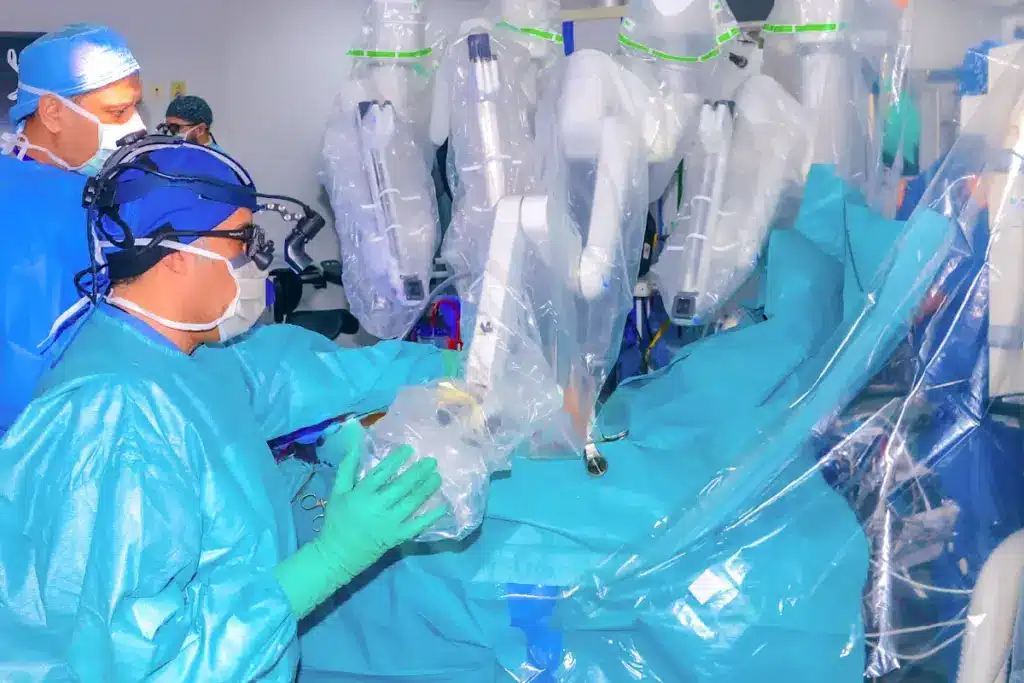
Robotic-assisted surgical procedures have changed the medical world. They bring better precision and less invasion. In 2020, over 1.2 million robot-assisted surgeries were done globally. This shows how popular this technology is becoming.
As surgical robotics get better, people wonder: do robotic surgeries take longer? The answer is not simple. It depends on the surgery type, the surgeon’s skill, and how complex the case is.
Key Takeaways
- Robotic-assisted surgeries offer enhanced precision and minimal invasiveness.
- The duration of robotic surgeries varies depending on the procedure and surgeon’s experience.
- Surgical robotics technology is rapidly advancing, improving outcomes and reducing recovery times.
- Robotic surgeries are becoming increasingly common, with over 1.2 million procedures performed worldwide in 2020.
- The benefits of robotic-assisted surgeries include reduced blood loss and less post-operative pain.
The Evolution of Robotic Surgery
Robotic surgery has changed a lot over the years, making a big impact on medicine. It has made surgeries more precise, cut down on recovery times, and improved how well patients do.
Historical Development of Surgical Robotics
The idea of robotic surgery started in the 1980s. The first robotic surgeries happened in the 1990s. The da Vinci Surgical System, approved by the FDA in 2000, was a big step forward.
Over time, robotic surgery has gotten better thanks to new technology. This includes better robotic arms, clearer views, and easier controls for users.
- Early robotic systems were big and not very good.
- New tech in robotics and computers has led to big improvements.
- Now, robotic systems offer clear 3D views and very precise tools.
Current State of Robotic-Assisted Procedures
Now, robotic surgery is used in many areas like urology, gynecology, and more. The da Vinci Surgical System is very popular, but other systems are also being used.
Today, robotic surgery keeps getting better. This is thanks to new things like artificial intelligence and machine learning. These help make surgeries even more precise and successful.
How Robotic Surgery Works
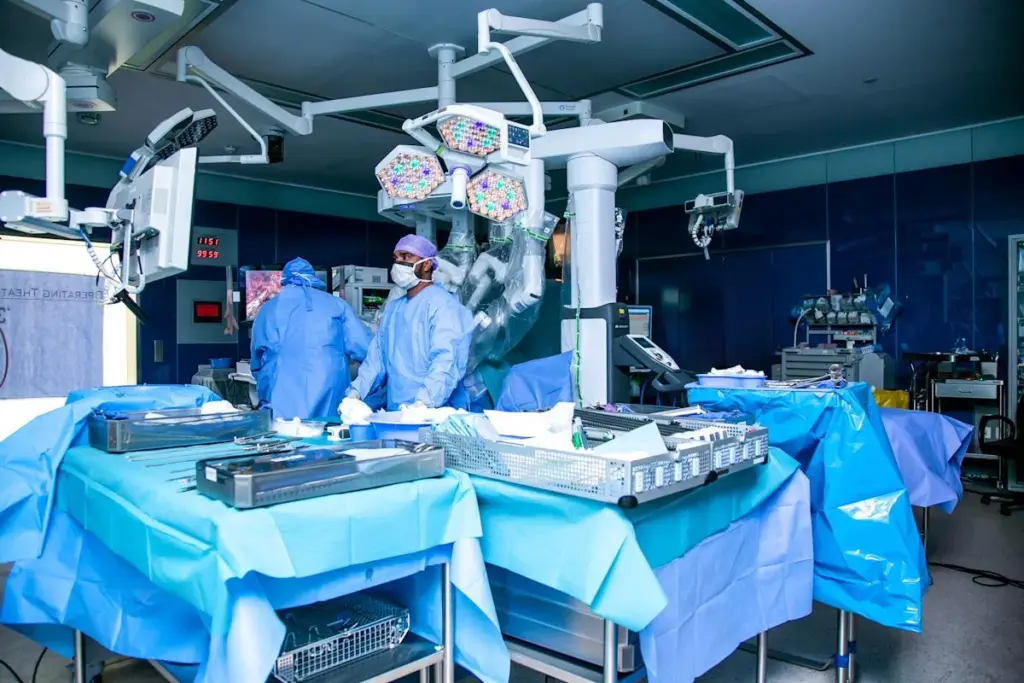
Robotic surgery uses complex systems. These systems give surgeons better control. This allows for precise movements and fine control during detailed procedures.
Components and Setup of Robotic Systems
Robotic surgical systems have several key parts. There’s a console for the surgeon, a cart with robotic arms for the patient, and a 3D vision system. Setting up these systems needs careful preparation for the best results.
Proper docking and positioning of the robotic arms are key for a successful procedure.
Surgeon Control and Interface
The surgeon’s console has an easy-to-use interface. This lets the surgeon control the robotic arms precisely. The high-definition 3D vision system gives a clear view of the area. This helps the surgeon do complex tasks easily.
“Robotic surgery has changed how we do complex operations. It offers unmatched precision and control.”
As robotic surgery grows, new tech will make these systems even better. This could mean shorter surgeries and faster recovery times for patients.
The Da Vinci Surgical System and Other Platforms
The Da Vinci Surgical System has changed the game in robotic surgery. It’s known for its advanced tech and precision. It’s one of the top robotic surgery platforms, setting a high standard in healthcare.
The Da Vinci System: Features and Capabilities
The Da Vinci Surgical System, made by Intuitive Surgical, is famous for its high-definition 3D visualization and precise robotic arms. These features let surgeons do complex surgeries with better accuracy and less invasion.
- Enhanced Dexterity: The system’s robotic arms mimic the human wrist, allowing for greater flexibility and precision.
- Improved Visualization: High-definition 3D imaging provides a clear view of the surgical site.
- Reduced Trauma: Minimally invasive procedures result in less tissue damage and trauma.
Alternative Robotic Surgical Platforms
While the Da Vinci System leads the way, other platforms are coming up. These include:
- The Medtronic Hugo system, which offers modularity and flexibility.
- The CMR Surgical Versius system, known for its modular design and ease of use.
- The Johnson & Johnson Ottava system, representing a significant advancement in robotic surgery technology.
These new platforms are pushing innovation and competition. They might bring more choices for surgeons and patients.
The Learning Curve in Robotic-Assisted Procedures

Robotic-assisted procedures have brought a new level of complexity to surgery. This is mainly because of the steep learning curve these advanced systems present. As surgeons and hospitals get used to robotic surgery, it’s key to understand the training needs and adaptation periods.
Surgeon Training Requirements
Surgeons must get thorough training to master robotic-assisted procedures. This training covers both theory and practice. It includes:
- Structured educational programs
- Hands-on training with robotic systems
- Observation and assistance during robotic surgeries
- Certification programs for robotic surgery
Good surgeon training is vital. It helps reduce the learning curve and ensures robotic technology is used safely and efficiently.
Institutional Adaptation Periods
Hospitals also need time to adapt to robotic-assisted surgery. This involves several steps:
- Acquiring and setting up robotic systems
- Developing protocols for robotic surgery
- Training support staff
- Integrating robotic procedures into existing surgical practices
The time it takes for a hospital to adapt can vary. It depends on the complexity of the procedures and the hospital’s setup.
Proficiency Milestones
To track progress in robotic-assisted procedures, several proficiency milestones are set. These include:
- Completing a certain number of robotic procedures
- Achieving specific performance metrics, such as reduced operative time
- Demonstrating improved patient outcomes
Reaching these milestones shows a surgeon’s or hospital’s growing skill in robotic surgery.
Comparing Operative Times: Robotic vs. Traditional Surgery
The time it takes for surgery is key when comparing robotic and traditional methods. As technology improves, knowing how long each takes is vital for doctors, hospitals, and patients.
Research Findings on Procedure Duration
Studies on the time it takes for robotic and traditional surgeries show mixed results. Some say robotic surgeries take longer because of setting up the robotic system. For example, a study in the Journal of Robotic Surgery found robotic surgeries took longer than traditional laparoscopic ones.
But, other studies found robotic surgeries can be just as quick or even faster in certain cases. For instance, robotic prostate surgeries have been shown to be quicker as doctors get more practice.
Meta-analyses and Systematic Reviews
Meta-analyses and systematic reviews give a broad view of the research on surgery times. A review in Surgical Endoscopy looked at many studies. It found robotic surgeries often took longer, but the difference wasn’t always big.
Another meta-analysis compared robotic and laparoscopic surgeries. It said robotic surgeries took longer in some cases but noted that experience matters. As doctors get better with robotic systems, times get shorter.
This shows that comparing surgery times is complex. Results depend on the surgery, the doctor’s skill, and the robotic system used.
Factors Affecting Robotic Surgery Duration
It’s important to know what affects robotic surgery duration to improve results. The time needed for robotic surgeries depends on several things. These include the surgeon’s skill and the robotic equipment’s features.
Surgeon Experience and Expertise
The surgeon’s experience greatly affects how long a robotic surgery takes. Surgeons who have done more robotic surgeries work faster and have fewer problems. a top robotic surgeon, says, “Experience is key in robotic surgery; it directly impacts the efficiency and safety of the procedure.”
“Experience is key in robotic surgery; it directly impacts the efficiency and safety of the procedure.” –
Patient-Specific Factors
Things specific to the patient also play a role in surgery time. This includes the patient’s anatomy, the condition’s complexity, and their overall health. For example, patients with a higher BMI or those who have had surgery before might need longer times.
Technical and Equipment Considerations
Technical aspects and the robotic equipment’s condition also matter. Setting up and calibrating the robotic system, and any technical issues during surgery, can make it longer. Keeping the equipment up to date and well-maintained is key to avoiding delays.
In summary, the time of a robotic surgery depends on several things. These include the surgeon’s experience, the patient’s specific needs, and the technical setup. By understanding and addressing these, healthcare providers can aim to make robotic surgeries shorter and better for patients.
Setup and Docking Time in Robotic Procedures
Setting up and docking for robotic surgeries is key to success. It involves several important steps. These steps make sure the robotic system is ready for the surgery.
Pre-operative Preparation Requirements
Getting ready before surgery is very important. It affects how fast and well the setup and docking go. This includes:
- Reviewing patient data and surgical plans
- Ensuring all necessary equipment is available and functional
- Conducting thorough checks of the robotic system
A study in the Journal of Robotic Surgery found that good pre-operative prep can cut setup time by up to 30%.
“Pre-operative preparation is key to a smooth and efficient robotic surgery,” said a renowned robotic surgeon.
Strategies to Optimize Setup Efficiency
To make setup more efficient, several strategies can be used. These include:
|
Strategy |
Description |
Benefits |
|---|---|---|
|
Standardized Setup Protocols |
Developing and adhering to standardized setup protocols |
Reduces variability and improves efficiency |
|
Team Training |
Regular training for surgical teams on robotic systems |
Enhances team coordination and reduces errors |
|
Equipment Maintenance |
Regular maintenance of robotic equipment |
Minimizes downtime due to equipment failure |
By using these strategies, hospitals can cut down setup and docking time. This makes robotic surgeries more efficient overall.
Robotic Surgery in Different Specialties: Duration Variations
Robotic surgery is used in many medical fields. Each field has its own time needs for robotic surgery. This technology has made surgeries more precise and complex.
Urologic Procedures
In urology, robotic surgery has changed the game. It’s used for surgeries like prostatectomies and nephrectomies. The da Vinci Surgical System helps with better vision and control.
At first, robotic surgeries might take longer than old methods. But they often have less blood loss and quicker recovery times. This makes them worth it.
Gynecologic Applications
Gynecologic oncology has seen big improvements with robotic surgery. It’s used for surgeries like hysterectomies and lymph node dissections. The precision helps with complex surgeries and fewer complications.
How long a surgery takes depends on its complexity and the surgeon’s skill.
General Surgery Implementations
In general surgery, robotic-assisted surgeries are becoming more common. They’re used for surgeries like cholecystectomies and hernia repairs. These surgeries might take as long as or a bit longer than laparoscopic ones.
But, surgeons find it easier and there’s a chance of fewer open surgeries. This is a big plus.
Cardiothoracic and Other Specialties
Cardiothoracic surgery is also using robotic technology. Surgeries like mitral valve repairs and coronary artery bypass grafting are done robotically. These surgeries are tricky because of the small space and delicate work.
But, they could lead to less damage and quicker healing. Other areas like orthopedic and neurosurgery are also looking into robotic surgery. Each has its own challenges and benefits.
The time needed for surgeries varies. It depends on the surgeon’s experience, the patient’s body, and the robotic system used. As technology gets better, surgeries will likely get shorter and better for patients.
The Efficiency-Precision Tradeoff
Robotic surgery has changed the medical world with its precise work. But, it raises questions about how it affects surgery time. Finding the right balance between speed and precision is key for doctors and hospitals.
Benefits of Enhanced Precision
The precision of robotic surgery makes dissections and suturing more accurate. This can lead to better results for patients. It’s very helpful in complex surgeries where small details matter a lot.
This precision reduces the chance of complications and speeds up recovery. It’s a big plus in today’s surgery.
Patient Outcomes vs. Operative Time
Robotic surgery’s precision is great, but it can make surgeries longer. Longer times can raise the risk of problems and use more hospital resources.
Even though robotic surgery might take longer, the benefits to patients often outweigh the extra time. The goal is to balance precision with speed.
Economic Implications of Extended Operative Times
Robotic-assisted procedures are becoming more common. It’s important for healthcare providers and patients to understand their economic impact. The longer times needed for robotic surgery have big economic effects that need to be looked at closely.
Cost Analysis of Robotic vs. Traditional Approaches
Robotic surgery systems are pricey, leading to higher medical bills. When comparing costs, robotic surgery starts with a big investment. But, it also means less time in the hospital and quicker recovery, which can help lower costs in the long run.
|
Cost Component |
Robotic Surgery |
Traditional Surgery |
|---|---|---|
|
Initial Equipment Cost |
$1.5 million – $2.5 million |
$0 (existing infrastructure) |
|
Maintenance Cost (Annual) |
$100,000 – $200,000 |
$0 (minimal) |
|
Operative Time Cost (per hour) |
$1,500 – $2,500 |
$1,000 – $2,000 |
|
Hospital Stay Cost (average per day) |
$2,000 – $3,000 |
$2,500 – $4,000 |
Resource Utilization and Operating Room Efficiency
Robotic surgery’s longer times can affect how well the operating room works. It’s key to manage resources well to lessen economic effects. Ways to do this include better training for the surgical team, improving how the room is set up, and better scheduling.
Understanding the economic side of robotic surgery helps healthcare providers make smart choices. While robotic surgery has many benefits, its cost must be weighed carefully. This ensures it’s a good and affordable choice for patients.
Minimally Invasive Approaches: Robotic vs. Laparoscopic Duration
Surgical techniques are getting better, and knowing the difference between robotic and laparoscopic surgeries is key. Both have changed surgery, giving patients less invasive options than old-school open surgery.
Comparative Studies by Procedure Type
Many studies have looked at how long robotic and laparoscopic surgeries take for different procedures. For example, in urology and gynecology, robotic surgery might take a bit longer than laparoscopic.
But, a big review of these studies shows that how long it takes can depend on the surgeon’s skill and the surgery’s complexity.
Advantages Despite Possible Time Differences
Even with possible time differences, robotic surgery has big pluses. It brings better precision, more control, and clearer views.
These perks can mean less blood loss, less pain after surgery, and quicker healing. This makes robotic surgery a good choice for many surgeries.
Technological Advancements Reducing Operative Time
Robotic surgery is getting better, making operations faster and more efficient. These improvements cover many areas. They include better software, new hardware, and training tools.
Software and Interface Improvements
Software updates are key to making robotic surgery smoother. Today’s systems have easy-to-use interfaces. This makes it quicker for surgeons to work with the equipment.
Tools like better visualization and real-time data help surgeons make fast, smart choices. This speeds up the whole process.
Hardware and Instrument Innovations
New instruments are making operations faster. These tools are more precise and flexible. They allow for quicker and more precise work.
Design changes in robotic systems also help. They make it faster to set up and start surgeries.
Training Simulators and Their Impact
Training simulators are vital for learning robotic surgery. They provide a safe space for surgeons to practice. This reduces the time it takes to learn complex procedures.
With these simulators, surgeons can get better faster. This means they can do operations more efficiently. And that makes surgeries shorter.
|
Technological Advancement |
Description |
Impact on Operative Time |
|---|---|---|
|
Software Improvements |
Enhanced visualization and analytics |
Reduced decision-making time |
|
Hardware Innovations |
More precise and versatile instruments |
Faster dissection and suturing |
|
Training Simulators |
Risk-free skill development |
Reduced learning curve |
Patient Recovery: Impact of Robotic Surgery Duration
The time it takes for robotic surgery is very important for how well patients recover. This type of surgery is known for being precise and less invasive. It’s used in many different types of surgeries.
Robotic surgery can help patients heal faster. This is because it causes less damage to tissues during surgery. This can lead to quicker recovery times.
Postoperative Outcomes and Complications
Research shows that robotic surgery patients often face fewer complications than those who have traditional surgery. This is because robotic systems offer better vision and control during surgery.
A comparison of postoperative outcomes between robotic and traditional surgical methods is presented in the following table:
|
Surgical Method |
Complication Rate |
Recovery Time |
|---|---|---|
|
Robotic Surgery |
5% |
2-3 weeks |
|
Traditional Surgery |
10% |
4-6 weeks |
Length of Hospital Stay Comparisons
Robotic surgery also means patients can leave the hospital sooner. This is because it causes less pain and helps patients recover faster.
Studies show that patients who have robotic surgery stay in the hospital for less time. This not only helps patients but also saves on healthcare costs and resources.
Case Studies: When Robotic Surgery Saves Time
Robotic surgery is changing the game in many medical fields, like complex reconstructive procedures. It makes surgeries more precise and flexible. This lets surgeons do detailed operations with less effort and faster.
Complex Reconstructive Procedures
In complex surgeries, robotic help cuts down on time needed for operations. For example, in robotic-assisted ureteral reconstruction, the precision of robotic systems helps surgeons work faster than before. Studies have shown that robotic systems make these surgeries quicker and better for patients.
Specific Patient Populations
Some patients, like those who are obese or have had previous surgeries, really benefit from robotic surgery. The better view and control robotic systems offer make surgeries . This leads to shorter recovery times and fewer problems for these patients.
The Future of Robotic Surgery and Time Efficiency
New technologies are changing robotic surgery, making it more precise and faster. As we move forward, we’ll see big improvements in many areas.
Emerging Technologies and Platforms
The next wave of robotic surgery systems will use the latest tech. This will make surgeries more efficient and successful. Some key technologies include:
- Advanced Sensor Systems: These improve touch and accuracy.
- Improved Imaging Techniques: They give clearer and more detailed views.
- Modular and Versatile Platforms: These platforms are flexible for different surgeries.
Artificial Intelligence and Automation Integration
Artificial intelligence (AI) and automation will change robotic surgery a lot. They will:
- Predictive Analytics: AI will predict problems and suggest the best surgery plans.
- Automated Assistance: Robots will help with precise tasks, reducing surgeon fatigue and improving results.
- Real-time Data Analysis: AI will analyze data during surgery, helping make better decisions.
These changes will make robotic surgery better, faster, and more available. This will help both patients and healthcare workers.
Conclusion
Robotic surgery has changed the medical world. It brings better precision and can help patients recover faster. The Da Vinci Surgical System is a key example of this technology.
How long robotic surgeries last is a big question. Setup and docking times can be long. But, the precision and control of robotic systems can lead to better results for patients.
As surgical robotics get better, we’ll see even more progress. This includes shorter surgery times and more uses in different areas of medicine.
The future of robotic surgery is bright. New technologies and platforms are coming. Robotic surgery will likely play a big role in modern medicine, changing how surgeries are done and how patients heal.
FAQ
What is robotic surgery?
Robotic surgery is a new way to do surgery. It uses a robot to help the surgeon. This makes the surgery more precise and controlled.
How does robotic surgery work?
In robotic surgery, a surgeon uses a robot to do the surgery. The robot has arms with tools and a camera. This lets the surgeon see clearly and move precisely.
What are the benefits of robotic surgery?
Robotic surgery is better because it’s more precise. It also means less blood loss and pain. Patients usually stay in the hospital less and look better because of smaller cuts.
Do robotic surgeries take longer than traditional surgeries?
Sometimes, robotic surgeries take longer. But it really depends on the surgery, the surgeon, and the patient.
What is the Da Vinci Surgical System?
The Da Vinci System is a robot used for surgery. It gives the surgeon a clear 3D view and precise control. This helps with complex surgeries.
How do surgeons train for robotic-assisted procedures?
Surgeons learn by taking courses and practicing on simulators. They also get help from experienced surgeons. This helps them get good at robotic surgery.
What factors affect the duration of robotic surgeries?
Several things can change how long a robotic surgery takes. These include the surgeon’s skill, the patient’s health, and how complex the surgery is.
Can robotic surgery be used in various medical specialties?
Yes, robotic surgery is used in many areas. This includes urology, gynecology, and general surgery. Each area has its own time and results.
How does robotic surgery compare to laparoscopic surgery in terms of duration?
Robotic and laparoscopic surgeries can take about the same time for some procedures. But robotic surgery might be better because it’s more precise and has fewer complications.
What are the future prospects for robotic surgery?
Robotic surgery is getting even better. New technologies and artificial intelligence will make it faster and more precise. This will help patients even more.
What is the impact of robotic surgery duration on patient recovery?
The length of robotic surgery can affect how well a patient recovers. Longer surgeries might lead to more complications. But they can also mean better results because of the precision.
Are there any case studies illustrating when robotic surgery can save time?
Yes, studies show robotic surgery can be faster for some complex surgeries. It’s good for patients who need precise work done.
Reference
National Center for Biotechnology Information. Evidence-Based Medical Insight. Retrieved from https://pubmed.ncbi.nlm.nih.gov/29943067/



 Departments
 Related Videos
 Our Doctors
 News
News