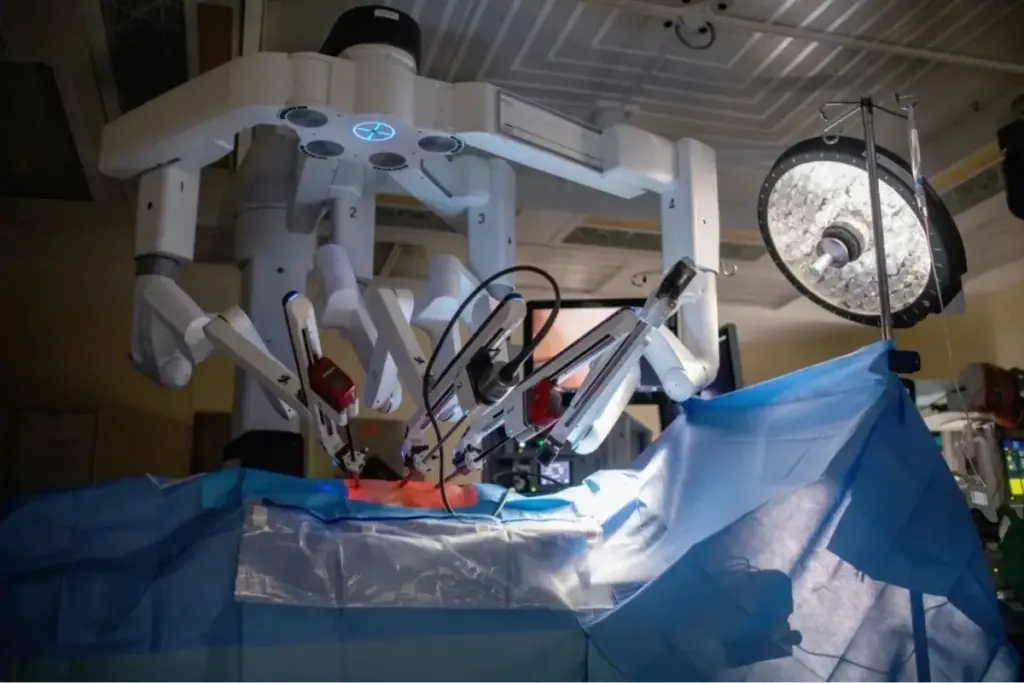
Robotic surgery has changed the medical world, bringing unparalleled precision and control. A study showed robotic surgery’s benefits, like less blood loss and shorter hospital stays. This is compared to traditional laparoscopic surgeries.
There’s been a big leap in surgical tech, with robot-assisted surgery leading the way. It’s changed how we do complex surgeries. The accuracy of surgical robots lets surgeons do detailed work better than before.
Key Takeaways
- Robotic surgery offers enhanced precision and control.
- Reduced blood loss is a significant benefit of robotic surgery.
- Shorter postoperative hospital stays are associated with robotic surgeries.
- Robotic surgery is transforming complex surgical procedures.
- Surgical robots enable delicate operations with enhanced accuracy.
The Evolution of Surgical Robots
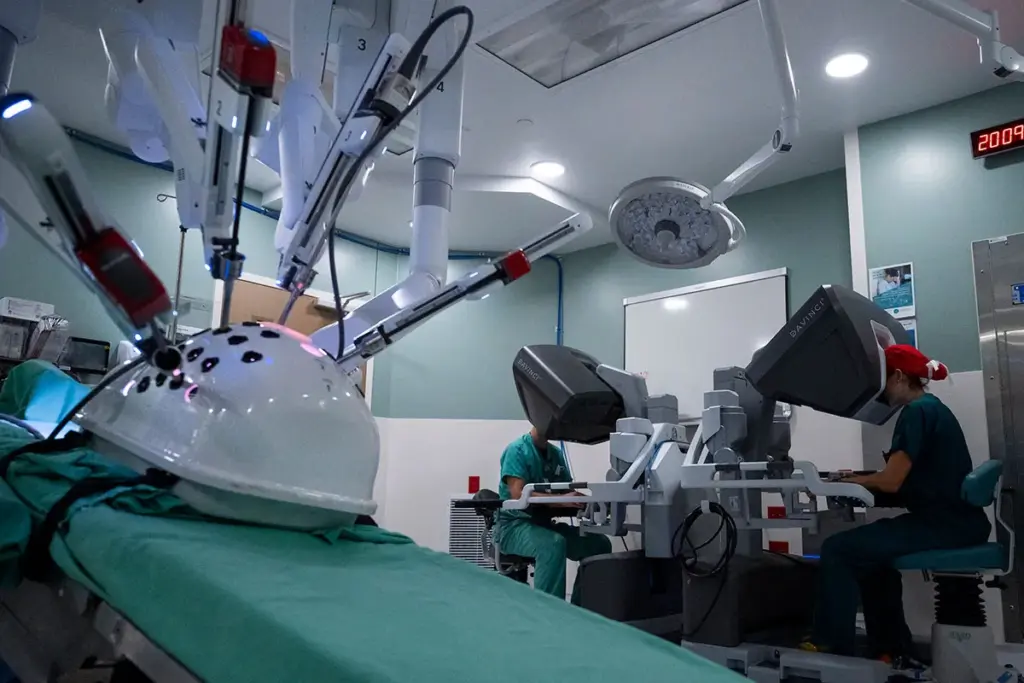
Surgical robots are changing the game in the operating room. From their start to today, their journey is fascinating. Let’s dive into how they’ve evolved.
Early Development of Surgical Robotics
In the beginning, robots were just starting to help in surgeries. They began with simple tasks but soon took on more complex ones. The first systems were made in the late 20th century to improve surgeon skills.
The Robodoc was one of the first, introduced in the 1990s for orthopedic surgeries. It wasn’t a huge hit but set the stage for better robots.
Milestone Advancements in Robotic Surgery
Robotic surgery has seen big leaps forward. The Da Vinci Surgical System came out in the late 1990s. It brought better views, precision, and control to surgeries. It’s become a key player in robotic surgery.
New systems have come for specific surgeries, like urology and gynecology. These are made to tackle those areas’ unique challenges. They help surgeons do tough procedures more easily and accurately.
|
Year |
Milestone |
Description |
|---|---|---|
|
1990s |
Introduction of Robodoc |
First robotic system for orthopedic procedures |
|
Late 1990s |
Da Vinci Surgical System |
Enhanced visualization and precision in surgery |
|
2000s |
Advancements in Specialty Robotics |
Development of robotic systems for urology and gynecology |
The growth of surgical robots shows our drive to better healthcare. With new tech, we’ll see even better robots. They’ll make surgeries more precise and effective.
Understanding How Surgical Robots Work
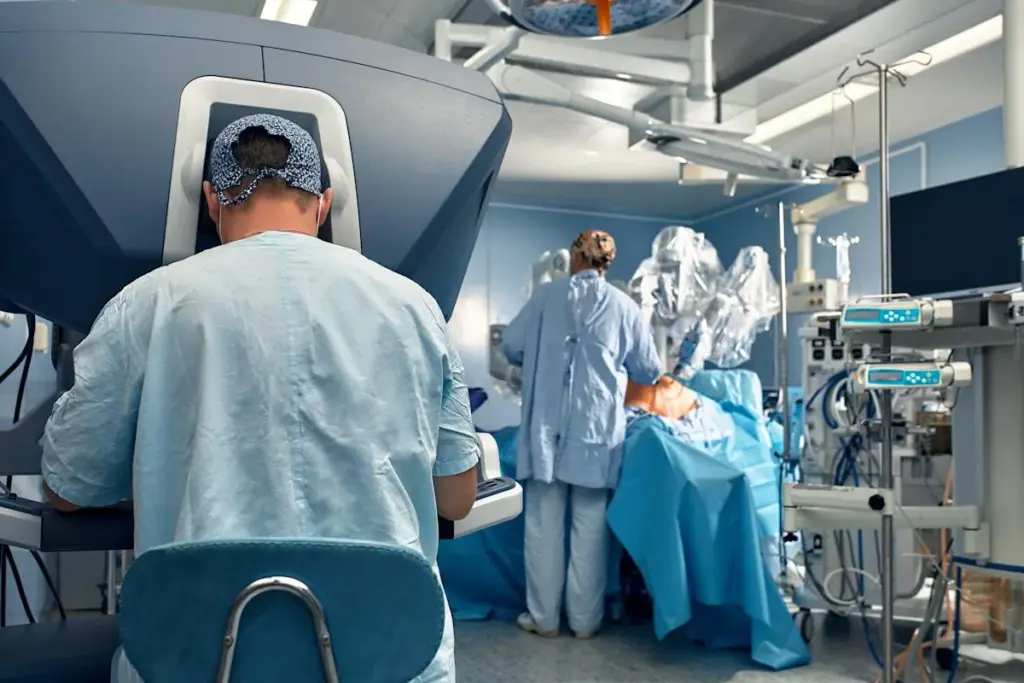
The use of robotic technology in surgery has changed the game. Now, surgeries are more precise and less invasive. Systems like the Da Vinci Si or Xi Surgical System help doctors perform complex tasks with great accuracy.
Core Components of Surgical Robot Systems
Surgical robot systems have key parts that work together for precise surgery. These include:
- A high-definition 3D vision system for a clear view of the surgery area.
- Robotic arms with surgical tools for precise control.
- A console for the surgeon to control the arms, improving dexterity.
These parts work together to help surgeons do complex surgeries with better accuracy and less invasion.
Human-Robot Interaction in the Operating Room
How humans and robots work together in surgery is very important. It affects how well the surgery goes. The design of surgical robots lets surgeons control the arms easily from a console. This makes the surgery more precise.
“The intuitive design of modern surgical robots allows surgeons to focus on the procedure, improving their ability to do complex tasks with precision.”
The smooth interaction between the surgeon and the robotic system is key for the best surgical results. Using robotic technology, surgeons can lower the chance of problems and help patients recover faster.
The Da Vinci Surgical System: Leading the Field
The Da Vinci Surgical System is a top choice in modern surgery. It brings many benefits to both surgeons and patients. It’s a big step up from old surgical methods.
Technical Capabilities and Features
The Da Vinci System has many advanced features. These help surgeons work more precisely and control their movements better. Some key features include:
- High-Definition 3D Visualization: It gives a clear, detailed view of the surgery area. This makes dissection and suturing more accurate.
- EndoWrist Instruments: These instruments can move like a human wrist. They allow for complex tasks during surgery.
- Tremor Filtration: It removes hand tremors. This ensures smooth and precise movements during surgery.
- Motion Scaling: It lets surgeons make very small movements. This is not possible with traditional surgery.
Surgical Applications and Specialties
The Da Vinci System is used in many surgical areas. It’s used in:
- Urology: It helps with precise prostate surgeries. This makes the surgery less invasive.
- Gynecology: It’s used for surgeries like hysterectomy. It improves outcomes and recovery times.
- Cardiac Surgery: It’s used for some heart surgeries. It could lead to faster recovery times.
- General Surgery: It’s used for many general surgeries. It offers precision and flexibility.
The Da Vinci System combines advanced robotics with surgical skills. It’s a leading technology in operating rooms around the world. Its features and wide use make it a valuable tool for surgeons and a good option for patients.
Measuring Precision in Surgery: Metrics and Standards
Precision in surgery is complex, involving many metrics and standards. As we explore new surgical possibilities, it’s key to measure precision well.
Quantitative Measures of Surgical Precision
Several key metrics measure surgical precision:
- Accuracy of incisions: How close incisions are to the planned sites.
- Tissue trauma: The damage to tissues around the surgery area.
- Bleeding control: The blood loss during and after surgery.
- Margin status: In cancer surgeries, it checks if all diseased tissue is removed.
These metrics give a full picture of a surgeon’s or robotic system’s precision. Research shows robotic surgery often leads to less blood loss and shorter hospital stays. This suggests higher precision in some areas.
Comparing Human vs. Robotic Precision Parameters
Human surgeons and robotic systems differ in precision. Robotic systems are known for:
|
Precision Parameter |
Human Surgeon |
Robotic System |
|---|---|---|
|
Tremor Filtration |
Limited by human hand tremors |
Capable of filtering tremors for steadier movements |
|
Motion Scaling |
Restricted by the scale of human hand movements |
Can scale down large movements for micro-precision |
|
Visualization |
Dependent on the surgeon’s visual acuity and experience |
Enhanced with high-definition 3D visualization |
The table highlights robotic systems’ precision benefits. It shows robotic surgery can be more precise in some tasks.
Understanding these precision parameters helps us see how surgical robotics improve. This knowledge aids in better patient care.
Evidence-Based Analysis: Are Robots More Precise?
Robotic technology has changed surgery for the better. Recent studies show robots make surgeries more precise. Let’s look at the evidence that supports using robots for better surgery.
Clinical Studies on Robotic Precision
Many studies have compared robotic surgery to traditional methods. A study in the Journal of Robotic Surgery found robots lead to fewer problems and better results in tricky surgeries. Robots give surgeons better control and vision, making surgeries more precise.
Another study in the Journal of Surgical Endoscopy showed robots cut down on mistakes and improve results in complex surgeries. These findings highlight robots’ role in making surgery more precise.
Statistical Outcomes in Precision Measurements
Studies have looked at how precise robotic surgery is. A meta-analysis in the British Journal of Surgery compared robots and laparoscopes. It found robots had lower rates of needing to switch to open surgery and fewer complications after surgery.
Statistics also show robots are better at tasks needing fine motor skills, like sewing in tight spots. This data backs up the idea that robots can improve precision in many surgeries.
Looking at the studies and statistics, we see robots make surgery more precise. As technology advances, we can expect even more precise surgeries in the future.
Minimally Invasive Benefits of Robotic Surgery
Robotic surgery is changing how we do operations. It uses precise movements to make surgeries less invasive. This is a big change in how we perform complex surgeries.
Reduced Incision Size and Tissue Trauma
Robotic surgery makes cuts smaller, which means less damage to tissues. This leads to quicker healing times. It also cuts down on blood loss and pain after surgery, making patients do better.
In treating endometrial cancer, robotic surgery is faster. Patients stay in the hospital less and recover quicker than with traditional surgery.
Enhanced Visualization and Magnification
Robotic systems offer high-definition 3D visualization. This lets surgeons work more accurately. They can see tiny details that help in complex surgeries.
|
Benefits |
Robotic Surgery |
Traditional Surgery |
|---|---|---|
|
Incision Size |
Smaller |
Larger |
|
Tissue Trauma |
Reduced |
More extensive |
|
Visualization |
High-definition 3D |
2D or limited 3D |
These advancements help improve surgery results and patient care. Robotic surgery’s benefits, like smaller cuts and better vision, are great for both patients and doctors.
Tremor Filtration and Motion Scaling Advantages
Advanced robotic systems bring unmatched precision to surgery. Thanks to technologies like tremor filtration and motion scaling, surgeons can now perform more complex tasks with better accuracy.
Eliminating Human Hand Tremors
Robotic surgery is great because it gets rid of human hand tremors. Surgeons, like everyone, have natural tremors. These can get worse with fatigue, stress, or complex procedures. Robotic systems use tremor filtration technology to remove these tremors.
This tech is key for precise surgeries. It makes sure instruments move smoothly and steadily. This reduces the chance of human error, making surgeries safer and more successful for patients.
Motion Scaling Technology for Micro-Movements
Motion scaling technology is another big plus for robotic surgery. It lets surgeons make big movements that get scaled down to tiny, precise actions inside the body. This is vital for doing very fine surgical tasks that humans can’t do on their own.
Motion scaling boosts precision and makes complex surgeries easier. It leads to less damage to tissues and quicker recovery times for patients.
In summary, the mix of tremor filtration and motion scaling in robotic surgery is a big leap forward. These technologies improve precision, patient results, and open up new possibilities for complex surgeries.
How Robots Are Changing Modern Surgery
Modern surgery is changing fast with the help of robots. Robots are simplifying the use of advanced surgical techniques. This change is making surgeries better and safer for everyone.
Integration with Traditional Surgical Approaches
Robots are now working with traditional surgery to make it better. They add precision and skill to what surgeons do. This mix is making surgeries more successful, even for the toughest cases.
Robotic surgery is not replacing old ways but adding to them. Surgeons use robots for better views and control. This teamwork is leading to new and better ways to treat patients.
Expanding Access to Advanced Surgical Techniques
Robotic surgery is making advanced techniques available to more places. Hospitals that couldn’t do complex surgeries before can now. This means patients don’t have to travel as far for care.
Training surgeons on robots is also helping. It’s making surgery better everywhere. As more surgeons learn, care will get even better for everyone.
Robots are changing surgery for the better. They’re making procedures more precise and accessible. This change will keep improving surgery, helping patients all over the world.
Surgical Specialties Benefiting Most from Robotic Precision
Surgical robotics is changing modern medicine, mainly in areas needing high precision. Robotic systems have brought big improvements to many medical fields.
Urology and Prostatectomy Procedures
Robotic precision has greatly improved urological surgeries, like prostatectomies. The Da Vinci Surgical System is often used, making surgeries more accurate and recovery times shorter. Research shows robotic-assisted prostatectomies cause less blood loss and fewer problems than old methods.
|
Procedure |
Robotic Assistance Benefits |
Outcomes |
|---|---|---|
|
Prostatectomy |
Enhanced precision, reduced blood loss |
Fewer complications, quicker recovery |
|
Nephrectomy |
Minimally invasive, less tissue trauma |
Reduced scarring, faster healing |
Gynecological Applications
In gynecology, robotic surgery has changed procedures like hysterectomies and endometriosis treatments. Robotic systems allow for more precise dissections and lower risks of problems. Patients enjoy shorter hospital stays and less pain after surgery.
Cardiac and General Surgery Applications
Robotic precision is also changing cardiac and general surgery. Surgeries like coronary artery bypass grafting (CABG) and some gastrointestinal surgeries are done with better accuracy and less invasiveness. Robotic systems in these areas lead to better patient results and shorter recovery times.
As robotic technology gets better, we’ll see more new uses in surgery. This will improve the care and precision for patients even more.
Limitations and Challenges of Robotic Surgery Precision
Robotic surgery has changed the medical field, but it’s not perfect. We need to know its limits to make it better.
Tactile Feedback Limitations
Robotic surgery lacks tactile feedback. Surgeons can’t feel tissues like they do in traditional surgery. This can cause problems, like tissue damage.
Current robotic systems are getting better with new sensors. These sensors try to give surgeons a sense of touch. Studies show this can make surgeons more precise.
“The lack of tactile feedback in robotic surgery is a significant challenge. But, research on haptic feedback is promising.”
Learning Curve for Surgeons
Surgeons face a big learning curve with robotic surgery. It takes a lot of training to use these systems well. They need to know the surgery and how to use the robot.
- Training programs are being developed to help surgeons overcome this hurdle.
- Simulation-based training is becoming increasingly popular for its ability to mimic real-world scenarios.
- Mentorship programs, where experienced surgeons guide those new to robotic surgery, are also proving beneficial.
|
Training Method |
Description |
Benefits |
|---|---|---|
|
Simulation-based Training |
Mimics real-world surgical scenarios |
Enhances skill acquisition, reduces risk |
|
Mentorship Programs |
Guidance from experienced surgeons |
Personalized feedback, improved confidence |
Technical Malfunctions and System Failures
Robotic surgery can face technical problems. These issues are rare but serious. They might mean switching to open surgery or harming the patient.
Regular maintenance and upgrades help avoid these problems. Having backup plans, like switching to traditional surgery, is key for safety.
By tackling these challenges, we can make robotic surgery safer and more precise. This will help patients get better care.
Patient Perspectives on Robotic Surgery
Robotic surgery is getting more attention, and we need to look at what patients think. They share their experiences and how they feel about it. This helps us see how it’s changing healthcare today.
Patient-Reported Outcomes and Satisfaction
Many patients are happy with robotic surgery. They like the quick recovery and smaller cuts. They say they feel less pain and have fewer problems after surgery.
Robotic surgery also means less blood loss and quicker healing. These benefits make patients very happy. They can get back to their lives faster.
The technology behind robotic surgery helps surgeons do their jobs better. This means better results for patients. They face fewer risks and heal faster.
Misconceptions and Expectations
But, some people have the wrong idea about robotic surgery. They think it’s fully automated or only for certain surgeries. It’s not true. Skilled surgeons control the robots during the surgery.
Telling patients the truth about robotic surgery helps. It sets the right expectations. When they know what to expect, they’re more likely to be happy with their care.
In short, most patients like robotic surgery. They see the benefits of less invasive procedures and the precision of the technology. By clearing up misunderstandings, we can keep making patients happier with robotic surgery.
Regulatory Framework and Safety Standards
Robotic surgery is growing fast, and so are the rules and safety standards around it. These rules help make sure robotic surgery systems are safe and work well. They also make sure these systems follow international standards.
FDA Oversight of Surgical Robotics
In the U.S., the FDA is key in checking robotic surgery systems. They look at clinical data to see if these systems are safe and work well. Manufacturers have to give the FDA lots of data on their systems, like how they were made and tested.
The FDA also watches these systems after they’re used. They look at reports of problems and check if makers follow safety rules. This helps find and fix any risks with robotic surgery.
International Regulatory Variations
Other countries have their own rules for robotic surgery systems. For example, the European Union uses the CE marking to show they follow EU rules. Canada has its own rules, too, overseen by Health Canada. This makes it hard for makers to sell their systems worldwide, as they must follow each country’s rules.
But, there’s a push to make these rules more alike around the world. Groups like the International Medical Device Regulators Forum (IMDRF) help make rules more consistent. This makes it easier to develop and sell medical devices, like robotic surgery systems, globally.
We know a strong set of rules is key for innovation and safety. As robotic surgery gets better, it’s important for rules to keep up. They need to handle new challenges as they come.
Cost-Benefit Analysis of Robotic Surgical Systems
Robotic surgical systems are a big deal for hospitals, but they’re expensive. We need to look at the costs and benefits. This helps us understand the upfront costs and the long-term savings.
Initial Investment and Maintenance Costs
Buying a robotic system is a big expense. It includes the system’s price, training costs, and upkeep. For example, the da Vinci Surgical System costs between $1 million and $2.5 million. Also, yearly maintenance can cost tens of thousands of dollars.
Here’s a look at the costs:
|
Cost Component |
Estimated Cost |
|---|---|
|
Purchase Price of Robotic System |
$1,000,000 – $2,500,000 |
|
Training and Implementation |
$50,000 – $100,000 |
|
Annual Maintenance and Consumables |
$50,000 – $100,000 |
Long-term Economic Benefits and Considerations
Robotic systems are worth the money in the long run. They help patients recover faster and have fewer complications. A study showed robotic surgery can cut hospital stays by 1.4 days.
Robotic systems also lead to better patient results.said, “Robotic surgery improves our ability to do complex surgeries. It also helps patients recover better and be happier.”
“The economic benefits of robotic surgery are multifaceted, including reduced recovery times and lower rates of complications, which can significantly impact the overall cost of care.”
Looking at the big picture, robotic systems are a good investment. They may cost a lot upfront, but they save money in the long run. This makes them a smart choice for many hospitals.
Future Innovations in Surgical Robotics
Looking ahead, surgical robotics is set to get even better. New technologies will make surgeries more precise and better for patients. Many exciting changes are coming.
Advancements in AI and Machine Learning
AI and machine learning will make surgical robots smarter. They will learn from data and adapt quickly. This means better decisions during surgery.
Key Applications of AI in Surgical Robotics:
- Predictive analytics for preoperative planning
- Real-time decision support during surgery
- Automated analysis of surgical outcomes
Next-Generation Robotic Systems
New robotic systems are being made. They will have better dexterity, clearer vision, and easier controls. This will make surgeries more precise and easier for doctors.
|
Feature |
Current Systems |
Next-Generation Systems |
|---|---|---|
|
Dexterity |
Limited by current mechanical designs |
Enhanced with advanced articulations |
|
Visualization |
High-definition 3D vision |
Advanced 3D vision with augmented reality |
|
Controls |
Complex console operations |
More intuitive and user-friendly |
Autonomous Surgical Capabilities on the Horizon
Autonomous surgical robots are an exciting new idea. They could do some tasks on their own. This could make surgeries more precise and help doctors work less.
The future of surgical robotics is very promising. It could change how surgeries are done and make them better for patients.
Conclusion: The Precision Promise of Robotic Surgery
Robotic surgery has changed the medical world. It brings precision and less invasive methods. This has helped many areas, like urology, gynecology, and heart surgery.
The Da Vinci Surgical System is a key example. It offers better views, smooth movements, and precise control. These features lead to less damage, less pain, and faster healing for patients.
In short, robotic surgery is making healthcare better. It offers more effective and quicker surgeries. As technology grows, we’ll see even more ways to help patients.
FAQ
What is robotic surgery?
Robotic surgery, also known as robot-assisted surgery, is a new way to do operations. It uses a robotic system to help surgeons. This makes the surgery more precise and helps patients recover faster.
How do surgical robots work?
Surgical robots have robotic arms, a 3D camera, and special tools. Surgeons use a console to control the robots. This lets them make very precise movements and see the surgery clearly.
What are the benefits of robotic surgery?
Robotic surgery has many benefits. It uses smaller cuts, causes less damage, and results in less blood loss. Patients also recover faster. Plus, it offers better views and precision during the surgery.
What is the Da Vinci Surgical System?
The Da Vinci Surgical System is a top robotic surgery platform. It’s used in many areas like urology, gynecology, and heart surgery. It’s known for its advanced technology and precision.
Are robotic surgeries more precise than traditional surgeries?
Yes, robotic surgeries can be more precise. The robotic system helps by removing hand tremors and giving clear 3D views. But, the surgeon’s skill also plays a big role.
What are the limitations of robotic surgery?
Robotic surgery has some limits. It lacks the feel of real tissues, can be hard to learn, and might have technical issues.
Is robotic surgery safe?
Robotic surgery is safe when done by skilled surgeons. The systems have many safety features. Also, the FDA checks them before they’re used.
How much does robotic surgery cost?
The cost of robotic surgery varies. It depends on the procedure, location, and hospital. Even though it’s expensive at first, it can save money in the long run because patients recover faster.
What is the future of robotic surgery?
Robotic surgery’s future looks bright. New tech like AI and machine learning will make it even better. These advancements will improve precision, cut costs, and make surgery more accessible.
Will robotic surgery replace human surgeons?
No, robotic surgery is meant to help human surgeons, not replace them. Robots can make operations more precise and assist during surgery. But, the skill and judgment of human surgeons are key to success.
References
National Center for Biotechnology Information. Evidence-Based Medical Insight. Retrieved from https://pmc.ncbi.nlm.nih.gov/articles/PMC11992838/