
Rolled ankle sprains are common among athletes and active people. About 628,000 sprains happen each year. A multiphase rehabilitation approach is key for full recovery. It helps restore normal movement, strengthen weak ligaments, and boost balance and coordination. Step-by-step instructions forrolled ankle recovery exercises to begin after the initial swelling subsides.
We’ll show you how to recover from a sprained ankle with the right exercises and rehab methods. Using structured exercises and proven techniques helps speed up healing. It also stops long-term instability issues.
Key Takeaways
- Rolled ankle sprains are a common injury needing the right care.
- A multiphase rehab plan is vital for full recovery.
- It’s important to restore movement and strengthen ligaments.
- Boosting balance and coordination helps avoid long-term problems.
- Using the right exercises and methods speeds up healing.
Understanding Rolled Ankle Injuries

It’s important to know about rolled ankle injuries to heal well and avoid them in the future. These injuries, also called ankle sprains, happen when the ligaments around the ankle get stretched or torn. They are common in athletes and anyone who is active.
Types of Ankle Sprains
Ankle sprains are divided based on the ligaments hurt and how bad the injury is. The most common is the lateral ankle sprain, where the ankle rolls inward and hurts the ligaments on the outside. There are also medial sprains, which affect the inside ligaments, and high ankle sprains, which hurt the ligaments between the tibia and fibula bones.
Recent studies show ankle sprains make up about 40 percent of all ankle injuries. They affect 20 to 50 percent of athletes and active people every year. This shows why getting the right treatment is key to avoiding long-term problems.
Common Causes of Rolled Ankles
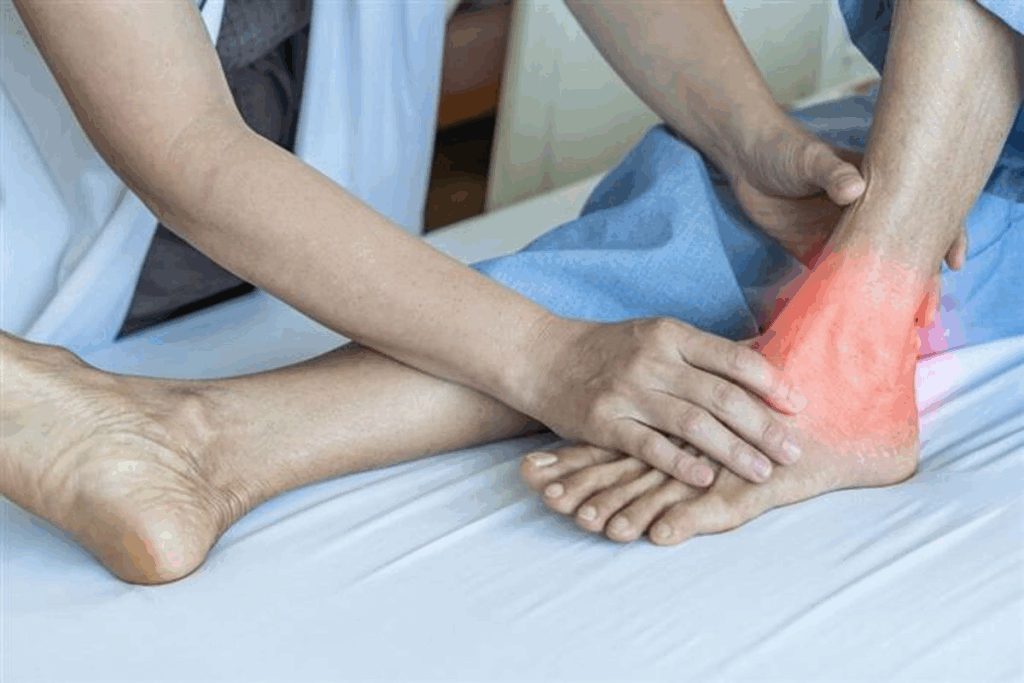
Rolled ankles can happen from sports injuries, uneven ground, or bad shoes. Running, jumping, or quick turns increase the risk. People who have had ankle injuries before or have weak ankles are more likely to get them.
Recognizing Severity Levels
Ankle sprains are split into three levels: mild, moderate, and severe. Mild sprains have little damage, while moderate ones have partial tears. Severe sprains have complete tears and need more treatment and rehab.
Severity Level | Ligament Damage | Symptoms |
Mild | Minimal stretching or micro-tears | Mild pain, slight swelling |
Moderate | Partial ligament tear | Moderate pain, noticeable swelling, some bruising |
Severe | Complete ligament tear | Severe pain, significant swelling, bruising, instability |
Knowing how bad an ankle sprain is helps decide the right treatment and rehab. Understanding ankle sprains is the first step to effective ankle sprain rehab and avoiding future injuries.
Immediate Treatment for Rolled Ankles
When you get a rolled ankle, acting fast is key to a quick recovery. The first hours and days are very important. They help figure out how bad the injury is and how long it will take to heal. We’ll show you the important steps to take right away.
The RICE Protocol
The RICE method is a top choice for treating ankle sprains right after they happen. RICE means Rest, Ice, Compression, and Elevation.
- Rest: Stop what you’re doing and rest your ankle. Try not to put weight on it.
- Ice: Put ice on the hurt area for 15-20 minutes every 2-3 hours. It helps with pain and swelling.
- Compression: Use an elastic bandage to wrap your ankle. It helps stop swelling.
- Elevation: Keep your ankle higher than your heart. This helps with swelling and blood flow.
When to See a Doctor
Not all ankle sprains need a doctor, but some do. You should get medical help if:
- You hear a popping sound when it happens.
- Your ankle is very swollen or bruised.
- You have a lot of pain or can’t walk on it.
- Your ankle feels unstable or keeps wobbling.
Initial Pain Management
Handling pain right away is important for a rolled ankle. You can use over-the-counter pain meds like ibuprofen or acetaminophen. They help with pain and swelling. Also, ice from the RICE method can really help with pain and swelling.
Keep an eye on your pain and change your treatment if needed. If your pain gets worse or doesn’t get better, see a doctor for advice.
By taking these steps right away, you can manage your ankle sprain well. Next, we’ll talk about the recovery phases and exercises to help you get better.
The Phases of Ankle Sprain Rehabilitation
Ankle sprain rehab has several key phases. Studies show that using functional treatments helps patients get back to normal faster. A multi-phase approach is needed for full recovery.
Phase 1: Protection and Pain Reduction
The first step is to protect the ankle and reduce pain. This includes the RICE protocol (Rest, Ice, Compression, Elevation) and sometimes using crutches or an ankle brace. Pain management is key to doing exercises.
Phase 2: Restoring Range of Motion
After pain goes down, focus on moving the ankle again. Use ankle sprain stretches and ankle physiotherapy exercises like ankle circles and alphabet exercises. These gentle moves help avoid stiffness and aid healing.
Phase 3: Strengthening
Building muscle strength around the ankle is important to prevent future sprains. Exercises for ankle sprain include resistance band exercises, heel raises, and toe lifts. These exercises help regain strength.
Phase 4: Return to Activity
The last phase is about getting back to normal activities and sports. This includes balance and proprioception training to handle different stresses. Gradually introduce functional activities and sport-specific drills.
Understanding the different phases of rehab is essential. Following these phases helps patients fully recover and lowers the chance of future sprains.
Phase | Objective | Key Exercises |
Phase 1 | Protection and Pain Reduction | RICE protocol, Pain management |
Phase 2 | Restoring Range of Motion | Ankle circles, Alphabet exercises |
Phase 3 | Strengthening | Resistance band exercises, Heel raises, Toe lifts |
Phase 4 | Return to Activity | Balance training, Proprioception exercises, Sport-specific drills |
Essential Equipment for Ankle Recovery
Having the right equipment is key for ankle recovery and preventing injuries. The right tools can greatly help in the healing process after a rolled ankle sprain.
Support Devices
Support devices are essential for ankle stability and protection during recovery. Ankle braces and wraps provide the needed support and compression to aid healing.
- Ankle Braces: Provide support and stability to the ankle.
- Ankle Wraps: Offer compression and protection, helping to reduce swelling.
Exercise Tools
Exercise tools are important for strengthening and balancing the ankle. Tools like resistance bands and balance boards help strengthen ankle muscles and improve balance.
- Resistance Bands: Strengthen ankle muscles through various exercises.
- Balance Boards: Improve balance and proprioception, reducing future ankle sprain risk.
Pain Relief Aids
Pain relief aids are vital for managing pain and swelling during recovery. Items like ice packs and compression sleeves help reduce pain and inflammation.
- Ice Packs: Reduce swelling and pain with cold therapy.
- Compression Sleeves: Provide compression and support, aiding in swelling reduction.
Here’s a summary of the essential equipment for ankle recovery:
Equipment Type | Examples | Benefits |
Support Devices | Ankle Braces, Ankle Wraps | Stability, Protection |
Exercise Tools | Resistance Bands, Balance Boards | Strength, Balance |
Pain Relief Aids | Ice Packs, Compression Sleeves | Pain Management, Reduced Swelling |
Effective Rolled Ankle Recovery Exercises
Getting better from a rolled ankle needs a good exercise plan. This plan helps you get your strength and movement back. We’ll show you how to do it right, focusing on timing, setting goals, and tracking your progress.
When to Begin Exercising
It’s important to start exercising when the pain and swelling go down. Starting too soon can make things worse. But waiting too long can slow down your healing. Always talk to a doctor to know when to start strength exercises for sprained ankle.
Wait until you can walk on the ankle without too much pain. This means the first healing steps are done, and you can move on to more exercises.
Setting Realistic Recovery Goals
Having clear recovery goals is key to getting better. These goals should be specific, measurable, achievable, relevant, and time-bound (SMART). For instance, you might aim to move your ankle fully in two weeks or walk a certain distance without pain in a month.
- Know what you can and can’t do now.
- Have short-term and long-term goals.
- Check and change your goals as you go.
Tracking Your Progress
Keeping track of how you’re doing is important. It keeps you motivated and makes sure you’re on the right track. Use a journal or app to log your workouts, pain, and other important details. This helps you see patterns and adjust your plan as needed.
- Write down your workouts and how hard they are.
- Notice any changes in pain or discomfort.
- Change your routine based on how you’re doing.
By following these tips and doing physical therapy exercises for sprained ankle, you’ll be on your way to full recovery. Remember, being patient and consistent is important to get your ankle strong and mobile again.
Phase 1: Early Mobility Exercises
In the first stage of ankle sprain recovery, it’s key to do exercises that boost mobility safely. These early steps are vital to avoid stiffness and aid in healing. They keep your ankle flexible and lower the chance of long-term stiffness, making recovery smoother.
Ankle Pumps
Ankle pumps are a basic yet powerful move for better blood flow and less stiffness. To do ankle pumps, move your ankle up and down slowly. Do this slowly and carefully to prevent making the injury worse.
Gentle Ankle Circles
Gentle ankle circles involve moving your ankle in both directions. This keeps your ankle flexible and encourages gentle movement. Begin with small circles and slowly make them bigger as your ankle gets more comfortable.
Isometric Contractions
Isometric contractions are when you tense the muscles around your ankle without moving it. This strengthens the muscles and boosts stability. For instance, try pushing against something steady while resisting your ankle’s movement.
Pain-Free Movement Techniques
Using pain-free movement techniques is vital in the early rehab stages. It’s important to move your ankle within a safe range to prevent injury.
“The key to successful rehabilitation is to progress gradually, allowing the ankle to heal at its own pace.”
Techniques like gentle stretching and mobilization help bring back normal ankle function.
Adding these early mobility exercises to your rehab plan can speed up recovery. Always talk to a healthcare expert before starting any new exercise, even after an injury.
Phase 2: Range of Motion Restoration
Restoring range of motion is key in Phase 2 for ankle sprain recovery. We focus on exercises that improve ankle mobility without injury.
Ankle Alphabet Exercise
The ankle alphabet exercise is simple yet effective. Tracing the alphabet with your toes helps restore motion and reduce stiffness. Do it slowly to avoid discomfort.
Towel and Band Stretches
Towel and band stretches boost flexibility and strength in the ankle. Use a towel or band to stretch your ankle in different ways, helping it move normally again.
Calf and Achilles Flexibility
Improving calf and Achilles flexibility is essential for ankle mobility. Calf raises and Achilles tendon stretches can reduce stiffness and enhance ankle function.
Seated and Standing Rotations
Seated and standing rotations involve rotating your ankle in circles while seated or standing. These exercises improve ankle mobility and can be done with or without support.
Including these exercises in your routine helps restore ankle motion. This is a big step towards a successful recovery.
Phase 3: Strengthening Weak Ankle Ligaments
In Phase 3, we focus on exercises that make the ankle ligaments stronger. This is key to avoiding injuries. It helps improve how stable and functional the ankle is.
Resistance Band Exercises
Resistance band exercises are great for making the ankle muscles stronger. They help keep the ankle stable. You can do these exercises in different ways, like moving your foot up and down.
To do a resistance band exercise, tie the band to something stable. Then, wrap the other end around your foot. Push your foot against the band, holding for a few seconds before letting go.
Heel Raises and Toe Lifts
Heel raises and toe lifts are easy but effective exercises. They strengthen the muscles that support the ankle. To do a heel raise, stand on a step with your heels hanging off. Slowly lift up onto your tiptoes and then lower back down.
For toe lifts, stand on a flat surface. Lift your toes up, keeping your heels on the ground.
Eversion and Inversion Strengthening
Eversion and inversion exercises target the muscles on the outside and inside of the ankle. They help improve ankle stability. Use a resistance band or manual resistance for these exercises.
For eversion, move your foot outward against the resistance. For inversion, move your foot inward.
Progressive Weight-Bearing Activities
Progressive weight-bearing activities are important for strengthening the ankle ligaments. Start with partial weight-bearing exercises and move to full weight-bearing ones. Examples include single-leg squats and single-leg balance.
As you get stronger, you can do more dynamic movements like jumping and landing.
Phase 4: Balance and Proprioception Training
In Phase 4 of ankle sprain rehab, balance and proprioception training are key. We do advanced exercises to help the ankle adapt to various surfaces and movements. This improves stability and function.
Single-Leg Balance Progressions
Single-leg balance exercises are vital in Phase 4. We start with standing on one leg and make it harder by closing eyes or using unstable surfaces. These exercises challenge the ankle’s proprioception, helping it stabilize and support the body.
Balance Board and BOSU Exercises
Balance boards and BOSU balls add instability, making the ankle stronger. They help the ankle adapt to different terrains and movements. We start with simple standing and move to squats or lunges.
Dynamic Stability Challenges
Dynamic stability challenges include complex movements like figure-eight running drills. These exercises boost ankle stability and improve lower limb function. They prepare you for sports or daily activities.
Functional Movement Patterns
Functional movement patterns are added to the program. We practice walking, running, jumping, and quick changes of direction. This prepares the ankle for real-life demands.
By Phase 4’s end, balance and proprioception improve, lowering re-injury risk. It’s important to keep up with these exercises to maintain progress.
Common Mistakes to Avoid During Recovery
The journey to heal from a sprained ankle can be tough. It’s filled with challenges and setbacks. Knowing the common mistakes can help you avoid them.
Rushing the Rehabilitation Process
Many people rush through their recovery. But, it’s important to let your ankle heal at its own pace. Rushing can cause more harm. Sprained ankle exercises should be done slowly and carefully.
Don’t ignore your body’s signals and push through pain. This can lead to serious problems. Set realistic goals and track your progress to stay on track.
Ignoring Pain Signals
Pain is a sign that your body is healing. Ignoring it can cause more damage. Listen to your body and adjust your ankle exercises after sprain as needed. If pain persists, see a doctor to check your plan.
“Pain is the body’s way of saying something is wrong. Ignoring it can lead to more severe injuries.”
Skipping Crucial Exercise Phases
Each part of the recovery process is important. Skipping any can weaken your recovery. Make sure to do all the rolled ankle exercises to fully recover.
- Phase 1: Protection and Pain Reduction
- Phase 2: Restoring Range of Motion
- Phase 3: Strengthening
- Phase 4: Return to Activity
Neglecting Maintenance Exercises
After you’ve finished the main recovery phases, keep up the good work. Neglecting exercises can lead to injury again. Keep doing exercises that strengthen and stabilize your ankle.
By avoiding these mistakes and sticking to a good plan, you can recover well from a sprained ankle. Remember, patience and regular effort are key to getting your ankle back to normal.
Conclusion
A good rehab plan is key to fully recovering from a rolled ankle sprain. Knowing the rehab phases and avoiding common errors helps a lot. Our guide shows the exercises and strategies for each phase, helping you get back to normal.
Using the right rolled ankle recovery exercises and ankle sprain rehab is vital. A detailed ankle recovery exercises plan can get you back to your activities faster. We stress the need for a thorough rehab to avoid future injuries and keep your ankle healthy.
By using our guide, you can confidently go through the recovery process. This way, you can avoid complications and get back to your activities quickly. A complete rehab program is essential for a full recovery and keeping your ankle healthy.
FAQ
What is the best way to treat a rolled ankle sprain?
The RICE method is a top choice. It means resting the ankle, using ice to lessen pain and swelling, and compressing it to avoid more harm. Elevating the ankle also helps reduce swelling.
How long does it take to recover from a rolled ankle sprain?
Recovery time varies based on the injury’s severity. It can take a few weeks to several months to fully heal.
What are the best exercises for strengthening weak ankle ligaments?
To strengthen the ankle, try resistance band exercises, heel raises, and toe lifts. Eversion and inversion exercises also help stabilize the ankle.
When should I start exercising after a rolled ankle sprain?
Start exercising carefully to avoid injury. Begin with simple ankle movements like pumps and circles. Then, move to isometric exercises during the early stages of rehab.
How can I improve balance and proprioception after a rolled ankle sprain?
Use single-leg balance exercises, balance boards, and BOSU training to boost balance and proprioception. Dynamic stability exercises and functional movements also help prevent future injuries.
What are the common mistakes to avoid during ankle sprain recovery?
Avoid rushing the recovery, ignoring pain, skipping important exercises, and neglecting maintenance routines. These can lead to re-injury or prolonged healing.
What equipment do I need for ankle recovery?
Use ankle braces and wraps for support and protection. Resistance bands and balance boards help with strength and balance. Ice packs and compression sleeves manage pain and swelling.
How can I track my progress during ankle sprain rehabilitation?
Set achievable goals and track your progress to stay motivated. Regularly check your ankle’s strength, range of motion, and balance to see what needs work.
Can I return to my normal activities after a rolled ankle sprain?
Yes, with a thorough rehab program, you can regain strength and stability. This allows you to safely return to your usual activities.
What are the benefits of physical therapy for sprained ankle rehabilitation?
Physical therapy boosts ankle strength, range of motion, and balance. It reduces re-injury risk and aids in a successful recovery.
References
Government Health Resource. Evidence-Based Medical Guidance. Retrieved from https://orthoinfo.aaos.org/en/diseases–conditions/ankle-sprain/
World Health Organization. Evidence-Based Medical Guidance. Retrieved from https://www.who.int/publications/i/item/9789240055555