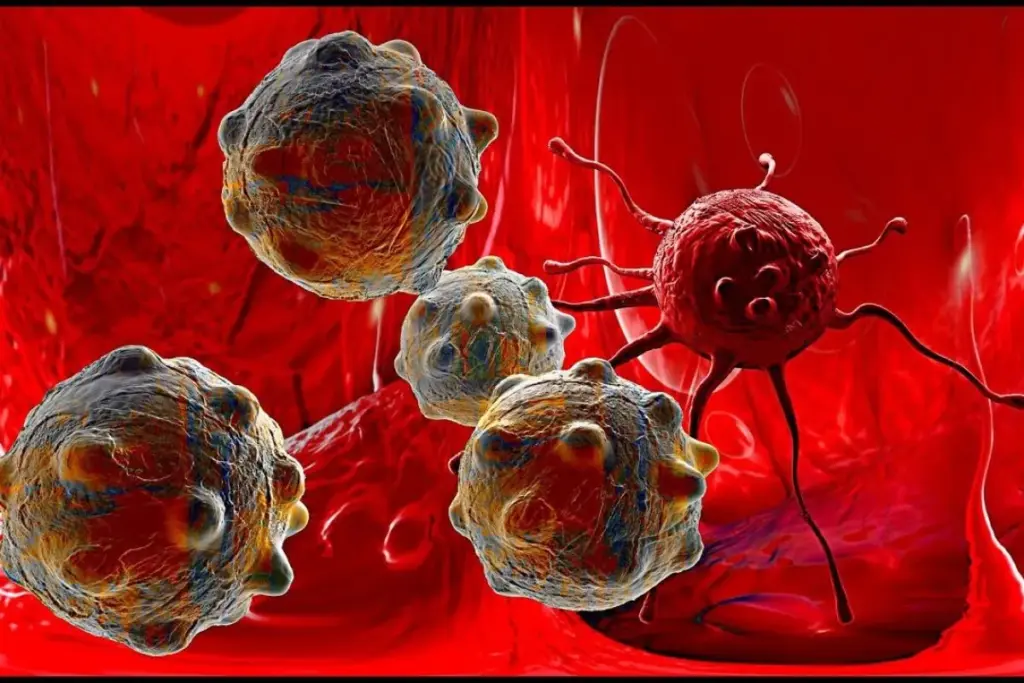
Recent studies show that some plants can kill cancer cells. We look at the latest on plants like Catharantha, known as the cancer flower. Plants like Artemisia herba-alba and cowpea mosaic virus (CPMV) have compounds that target cancer cells.Discover how the rosy periwinkle plant effectively kills cancer cells and why this botanical wonder is a breakthrough in modern medicine.
For example, Artemisia herba-alba is very effective against colorectal cancer cells. Compounds like curcumin and piperine in turmeric and black pepper also fight cancer. We explore how these discoveries could help in treating cancer.
Key Takeaways
- Certain plants contain bioactive compounds that can kill cancer cells.
- Catharantha and Artemisia herba-alba are among the plants showing anti-tumor activity.
- Compounds like curcumin and piperine have significant anti-tumor effects.
- The cowpea mosaic virus (CPMV) can activate the immune system against tumors.
- These findings open new avenues in cancer therapy and treatment.
The Science Behind Plant-Based Cancer Treatments

Research into plant-based cancer treatments has shown how they work against cancer cells. We find out how different plant compounds target and kill cancer cells. This offers new hope for treatments.
How Plant Compounds Target Cancer Cells
Plant compounds, like those in Kalanchoe pinnata and rosemary, affect cancer cells in important ways. They control cell growth and death. The molecular mechanisms behind this involve complex pathways that kill cancer cells.
Molecular Mechanisms of Action
Studies show that some plant compounds can make cancer cells die by starting specific pathways. For example, vinca alkaloids from Catharanthus roseus (also known as c. roseus) have been used in cancer treatment for years.
Selective Toxicity to Cancer Cells
Plant-based cancer treatments have the advantage of being less harmful to healthy cells. Research shows that compounds like curcumin can stop cancer cells from growing.
|
Plant Compound |
Mechanism of Action |
Effect on Cancer Cells |
|---|---|---|
|
Vinca Alkaloids |
Inhibits microtubule formation |
Induces apoptosis |
|
Curcumin |
Inhibits NF-κB signaling |
Suppresses proliferation |
|
Kalanchoe pinnata extracts |
Regulates apoptosis pathways |
Induces cell death |
The Rosy Periwinkle: Nature’s Cancer-Fighting Powerhouse

The rosy periwinkle, known as Catharanthaus roseus, is key in fighting cancer. It comes from Madagascar and gives us vinca alkaloids. These are vital in cancer treatment.
Catharanthaus Roseus: Origin and Properties
Catharanthaus roseus is more than a pretty plant. It’s a treasure trove of bioactive compounds. Its vinca alkaloids, like vincristine and vinblastine, help fight many cancers.
Vinca Alkaloids and Their Anti-Cancer Mechanisms
Vinca alkaloids stop cancer cells from dividing by messing with their microtubules. This is key to stopping cancer cells from growing.
Vincristine and Leukemia Treatment
Vincristine is great for treating leukemia. It works by messing with microtubule formation. This makes it a strong cancer fighter.
Vinblastine and Lymphoma Therapy
Vinblastine is used for lymphoma treatment. It works like vincristine, stopping cell division. This slows down cancer growth.
We see how important these plant compounds are in fighting cancer. The rosy periwinkle shows us the power of nature in medicine.
Artemisia Herba-Alba: Promising Research Against Colorectal Cancer
Recent studies have shown that Artemisia herba-alba might help fight colorectal cancer. This plant is known for its healing powers. The University of Sharjah has led groundbreaking research on it.
University of Sharjah’s Breakthrough Findings
The University of Sharjah has made big steps in studying Artemisia herba-alba and colorectal cancer. Their work shows that the plant’s extracts can kill cancer cells. This makes it a strong candidate for more research.
Exploring natural compounds for cancer treatment is a new area. The University’s discoveries highlight the need for more research into plant medicines.
|
Research Focus |
Key Findings |
|---|---|
|
Cytotoxic Effects |
Artemisia herba-alba extracts showed significant cytotoxic activity against colorectal cancer cells. |
|
Apoptosis Induction |
The plant extracts induced apoptosis in cancer cells, disrupting their growth pathways. |
Cytotoxic Effects and Apoptosis Induction
Artemisia herba-alba kills colorectal cancer cells by causing them to die. This stops tumors from growing.
Disruption of Cancer Growth Pathways
The extracts from Artemisia herba-alba block key paths that help cancer cells grow. This could be a way to control cancer.
Selective Action on Cancer Cells
Artemisia herba-alba targets cancer cells but not healthy ones. This is a big plus compared to many cancer treatments.
As we learn more about Artemisia herba-alba in cancer treatment, it looks very promising. More research is needed to unlock its full benefits and use it in medicine.
Cowpea Mosaic Virus: Harnessing Plant Viruses to Fight Cancer
A groundbreaking study at UC San Diego has shown the cowpea mosaic virus’s power against cancer. Researchers are looking into using plant viruses for cancer treatment. They aim to use the immune system to attack and destroy tumors.
UC San Diego’s Groundbreaking Research
Scientists at UC San Diego have made big steps in using the cowpea mosaic virus (CPMV) against cancer. Their study found that CPMV can turn on the immune system to fight tumors well. A recent study by UC San Diego engineers explored how a plant virus prepares the immune system to fight cancer.
Immune System Activation Against Tumors
The cowpea mosaic virus can start an immune response to fight cancer. By putting CPMV into tumors, researchers saw a big drop in tumor size. This is because the immune system worked harder against cancer cells.
Early trials have shown good results, with CPMV boosting the immune system against tumors. These results suggest CPMV could be a key part in new cancer treatments.
Potential Applications in Immunotherapy
The uses of CPMV in immunotherapy are huge. Scientists are creating new ways to fight cancer by using plant viruses. This could lead to more effective and focused cancer treatments.
Curcumin and Piperine: Spice-Derived Compounds with Anti-Cancer Properties
Spices in our daily lives might hold the key to fighting cancer. We look into curcumin from turmeric and piperine from black pepper. Both have shown promise in battling cancer.
Turmeric’s Active Component in Cancer Treatment
Curcumin, found in turmeric, has been studied a lot. It’s known for its anti-inflammatory and anti-proliferative effects on cancer cells.
Anti-inflammatory and Anti-proliferative Effects
Studies show curcumin can stop cancer cells from growing and dying. Its anti-inflammatory properties also help in preventing cancer.
Bioavailability Challenges
But, curcumin’s bioavailability is a big problem. Improving its absorption is key to making it effective in cancer treatment.
Black Pepper’s Synergistic Effects
Piperine in black pepper boosts curcumin’s bioavailability and anti-cancer effects. Together, they offer a promising area for research.
|
Compound |
Source |
Anti-Cancer Effect |
|---|---|---|
|
Curcumin |
Turmeric |
Anti-inflammatory, Anti-proliferative |
|
Piperine |
Black Pepper |
Enhances Bioavailability, Synergistic Effects |
We’ve talked about how curcumin and piperine could help in cancer treatment. We’ve highlighted their benefits and the hurdles in using them.
Ginsenosides and Thymol: Traditional Medicine Meets Modern Oncology
We’re looking into how plants can help fight cancer. Ginsenosides and thymol, from ginseng and thyme, show great promise. They can slow down cancer cell growth.
Ginseng Compounds and Cancer Cell Proliferation
Ginsenosides, found in ginseng, are being studied for their cancer-fighting abilities. They can stop cancer cells from growing, including those in the colon and breast. Ginsenosides work by making cancer cells die and stopping them from dividing.
- Ginsenosides can make cancer cells die.
- They stop cancer cells from dividing, which slows their growth.
- Some research says ginsenosides might make other cancer treatments work better.
Thyme-Derived Compounds in Cancer Research
Thymol, from thyme, is also being looked at for cancer treatment. It can kill cancer cells and stop tumors from growing. Thymol works by changing how cells live and grow.
Key findings include:
- Thymol’s ability to kill cancer cells.
- It makes cancer cells die off.
- It might work even better when used with other cancer treatments.
Research on ginsenosides and thymol is exciting. But, it’s part of a bigger effort to find plant-based cancer treatments. Plants like Catharantha roseus (the cancer flower) have already helped with cancer treatments, like vinblastine and vincristine.
Do Plants Get Cancer? Understanding Plant Disease vs. Human Cancer
Plants can grow in ways that look like tumors, but it’s not the same as human cancer. We must look at how plant diseases differ from human cancer to understand this.
Plant Tumors and Growth Abnormalities
Plants can get tumors and growth issues from genetic changes, stress, or infections. For example, crown gall disease, caused by Agrobacterium tumefaciens, creates tumors. But these plant tumors don’t grow out of control like human cancers do.
- Genetic mutations and environmental factors can cause plant tumors.
- Pathogens like bacteria and viruses can induce tumor formation in plants.
- Unlike human cancers, plant tumors typically do not metastasize.
Fundamental Differences Between Plant and Animal Cancers
Plants and animals are built differently, affecting how cancer shows up. Plants keep growing because of special cells, unlike most animals. Also, plants have cell walls that help keep tumors from spreading.
Key differences include:
- Cellular structure: Plants have cell walls that may restrict tumor cell invasion.
- Regeneration capabilities: Plants can regenerate tissues, potentially repairing damaged areas.
- Immune response: Plants have a different immune system than animals, with mechanisms like systemic acquired resistance to fight off pathogens.
It’s important to understand these differences. While plants can have tumors, it’s not the same as human or animal cancer.
The Future of Plant-Based Cancer Therapies
Plant-based cancer therapies are becoming a key area in cancer research. Plants like Catharanthus roseus are showing great promise. They could help fight cancer, with several compounds being tested in clinical trials.
Emerging Research and Clinical Trials
Studies have shown that Catharanthuus roseus can help in cancer treatment. It’s a source of vinca alkaloids, used in chemotherapy. Researchers are now looking for more plant compounds with anti-cancer effects.
Clinical trials are underway to see how these compounds work. A recent study in a top journal showed promising results. It showed how plant-based compounds can be effective in cancer therapy.
“The future of cancer treatment lies in the integration of traditional knowledge with modern science, particularly in harnessing the power of plants to combat this disease.”
Challenges in Development and Implementation
There are big challenges ahead. One is turning lab findings into real treatments. It’s not just about finding safe compounds. It’s also about making them on a large scale and keeping quality high.
From Laboratory to Clinical Application
Getting from lab to clinic is tough. It needs lots of testing for safety and how well it works. Getting approval from regulators is also a must before it can be used on people.
Combining Plant Compounds with Conventional Treatments
Another area of research is mixing plant compounds with traditional treatments. This could lead to better cancer therapy. It might make treatments more effective.
|
Plant Compound |
Cancer Type |
Research Status |
|---|---|---|
|
Vinca Alkaloids |
Various |
In Clinical Use |
|
Curcumin |
Colorectal, Breast |
Clinical Trials |
|
Ginsenosides |
Lung, Liver |
Preclinical Studies |
Conclusion: Nature’s Pharmacy in the Fight Against Cancer
We’ve looked into how plants and their parts can fight cancer. From the rosy periwinkle to curcumin and piperine, nature has many anti-cancer compounds. Studies show some plants can kill cancer cells, opening new ways to treat cancer.
The cowpea mosaic virus has shown strong anti-tumor effects in early studies. It helps the body’s immune system fight cancer cells.
Even though plants don’t get cancer like humans do, studying their cancers can help us. The future of using plants to fight cancer is bright. With ongoing research and trials, we’re finding new ways to use natural substances to treat cancer.
FAQ
What plant is known for killing cancer cells?
The rosy periwinkle (Catharanthanus roseus) is famous for its role in cancer treatment. It’s used to make vinca alkaloids, key in chemotherapy. These help fight leukemia and lymphoma.
Can plants have cancer like humans do?
No, plants don’t get cancer like animals and humans do. They can grow tumors, but it’s different from cancer in animals and humans.
What is the significance of Artemisia herba-alba in cancer research?
Artemisia herba-alba is being studied for its strong effects on colorectal cancer cells. It can cause cancer cells to die and stop growing, showing promise for cancer treatment.
How do plant-derived compounds like curcumin and piperine work against cancer?
Curcumin from turmeric and piperine from black pepper fight cancer. Curcumin stops cancer cells from growing, and piperine makes it work better. Together, they have strong anti-cancer effects.
What is the cowpea mosaic virus’s role in cancer treatment?
The cowpea mosaic virus (CPMV) boosts the immune system to fight tumors. Early studies at UC San Diego show it could be useful in cancer treatment.
Are ginsenosides and thymol effective against cancer?
Ginsenosides from ginseng and thymol from thyme might fight cancer. Ginsenosides slow down cancer cell growth, and thymol shows promise. More research is needed to fully understand their effects.
What is the future of plant-based cancer therapies?
Plant-based cancer treatments are promising, with ongoing research and trials. But, there are challenges like turning lab results into real treatments and combining them with current cancer therapies.
How do vinca alkaloids from the rosy periwinkle work against cancer?
Vinca alkaloids, like vincristine and vinblastine, stop cancer cells from dividing. They do this by messing with the cell’s microtubules, which is key for cancer cell growth.
Can Kalanchoe pinnata help in cancer treatment?
Kalanchoe pinnata might help fight cancer by controlling cell growth and death. It shows promise as a natural cancer treatment, but more research is needed.
References
National Center for Biotechnology Information. Evidence-Based Medical Insight. Retrieved from https://pmc.ncbi.nlm.nih.gov/articles/PMC11982050/