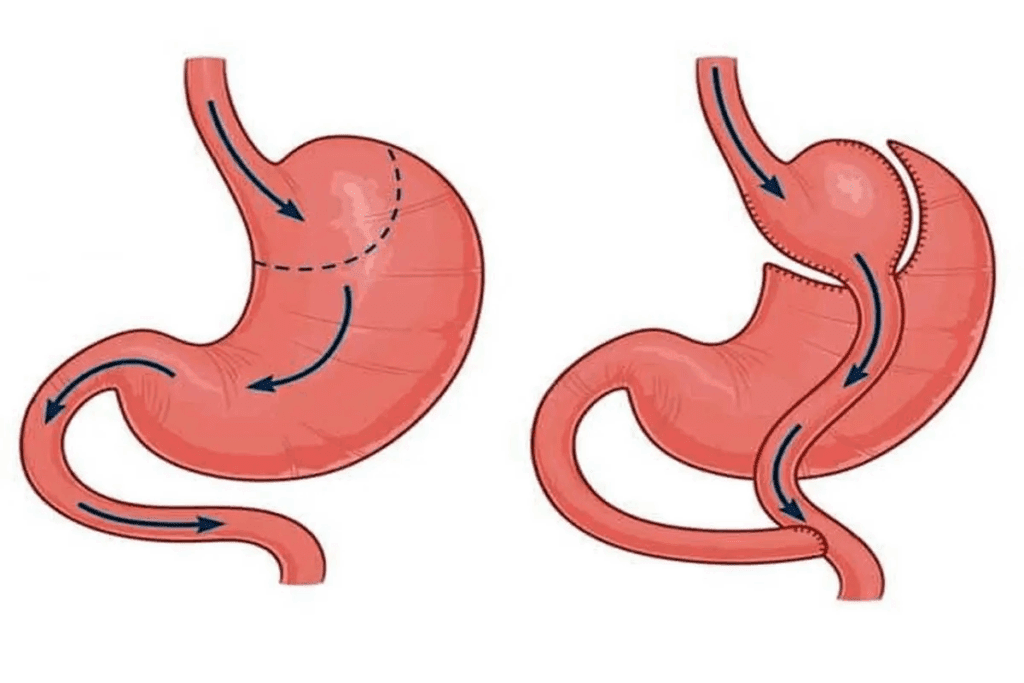
Choosing between Roux en Y gastric bypass and sleeve gastrectomy is a big decision. These surgeries are for people with severe obesity. Recent studies have shown how these surgeries compare in weight loss and health benefits.
Detailed comparison of roux en y vs sleeve gastrectomy for long-term health and weight goals.
Both procedures have shown to change lives. But they are different in how they are done and the risks involved. At Liv Hospital, we focus on you. We make sure you get a detailed check-up and advice that fits you.
Knowing the differences between Roux en Y gastric bypass and sleeve gastrectomy helps you choose the right surgery for you.
Key Takeaways
- Recent clinical trials have compared Roux en Y gastric bypass and sleeve gastrectomy.
- Roux en Y achieves greater total body weight loss at 5 years.
- Both procedures restrict food intake and reduce hunger hormone production.
- Gastric bypass surgery is more complicated and involves rerouting the small intestine.
- A patient-centered approach is essential for determining the best surgical option.
The Obesity Epidemic and Surgical Solutions

Obesity rates have skyrocketed worldwide, making bariatric surgery a key treatment. The need for effective weight loss solutions, including surgery, has grown.
The Growing Need for Bariatric Interventions
The obesity epidemic affects millions worldwide. Bariatric surgery is a top treatment for severe obesity. It leads to significant weight loss and health improvements.
With obesity rates rising, more people are looking for surgical solutions. They seek help for their weight-related health problems.
Overview of Surgical Options for Weight Loss
Several weight loss surgeries are available. The gastric sleeve and gastric bypass are among the most common. These surgeries help with weight loss and improve health conditions like diabetes and high blood pressure.
- Gastric Sleeve: A procedure that involves removing a large portion of the stomach, leaving a narrow sleeve-like stomach.
- Gastric Bypass: A surgery that involves creating a small pouch from the stomach and connecting it directly to the small intestine.
How Bariatric Surgery Changes Lives
Bariatric surgery can change a person’s life for the better. It leads to significant weight loss and health improvements.
Patients often see better mobility, less joint pain, and improved mental health. Bariatric surgery can also help with sleep apnea and high blood pressure.
We provide full care and support to help our patients on their weight loss journey. This way, they can live a healthier, more fulfilling life.
What is Roux en Y Gastric Bypass?
[Add image here]
The Roux en Y gastric bypass is a complex surgery. It helps people with obesity lose a lot of weight.
The Surgical Procedure Explained
This surgery makes a small stomach pouch and changes the small intestine’s path. It’s usually done through small cuts and a camera.
The surgeon divides the stomach and connects the small intestine to the top part. This makes the stomach smaller and changes how food moves. It leads to weight loss.
Historical Development and Evolution
The Roux en Y gastric bypass started in the 1960s. Over time, it has become safer and more effective. It used to be an open surgery but now is mostly done laparoscopically. This cuts down on recovery time and scarring.
Who Typically Qualifies for Roux en Y
People with a BMI of 40 or more, or 35 with health problems, might qualify. They go through a detailed check to see if they’re right for the surgery.
Candidate Profile | Characteristics |
BMI | 40 or higher, or 35 with comorbidities |
Previous Weight Loss Attempts | Failed attempts at diet and exercise |
Health Conditions | Presence of obesity-related health issues |
Knowing about Roux en Y gastric bypass is key for those thinking about it. Looking into the surgery, its history, and who can get it helps people make smart choices about losing weight.
What is Sleeve Gastrectomy?
For those battling obesity, sleeve gastrectomy is a surgical option. It has fewer risks than other bariatric surgeries. The surgery makes the stomach much smaller, like a tube.
The Surgical Procedure Explained
The sleeve gastrectomy procedure is done laparoscopically. This means small incisions are made for instruments and a camera. A big part of the stomach is removed, leaving a narrow “sleeve.”
This smaller stomach limits how much food you can eat. This leads to weight loss. Unlike some surgeries, it doesn’t involve moving the intestines. This might lower the risk of some complications.
Historical Development and Rising Popularity
Sleeve gastrectomy has changed a lot over time. It was first used for high-risk patients before more complex surgeries. Now, it’s a popular choice on its own because it’s simple and works well.
Its appeal comes from being less invasive and having fewer risks. So, sleeve gastrectomy is a top pick for many looking to lose weight surgically.
Who Typically Qualifies for Sleeve Gastrectomy
To get sleeve gastrectomy, you need to meet certain criteria. You must have a Body Mass Index (BMI) of 40 or more. Or, a BMI of 35 or more with obesity-related health issues. Even those with lower BMIs might qualify if they have serious weight-related health problems.
Before surgery, you’ll go through a detailed evaluation. This includes looking at your medical history, physical exam, and mental health check. It helps decide if you’re right for the surgery.
Roux en Y vs Sleeve: A Detailed Look
Roux en Y gastric bypass and sleeve gastrectomy are two common weight loss surgeries. They have key differences that patients should know before choosing.
Surgical Technique Differences
The way these surgeries are done is quite different. Roux en Y creates a small stomach pouch and changes the small intestine’s path. Sleeve gastrectomy, on the other hand, removes a big part of the stomach.
Roux en Y Gastric Bypass: This method makes a small pouch at the stomach’s top and connects it to the small intestine. It makes the stomach smaller and changes how food moves through the body.
Sleeve Gastrectomy: This surgery removes a lot of the stomach, leaving a narrow tube. It makes the stomach smaller and limits how much food you can eat.
Digestive System Alterations
The changes to the digestive system are different for each surgery. Roux en Y changes the small intestine’s path, while sleeve gastrectomy just makes the stomach smaller.
“The Roux en Y gastric bypass is a more complex procedure that not only reduces stomach size but also alters the intestinal anatomy, which can lead to significant weight loss and metabolic improvements.” – Medical Expert, Bariatric Surgeon
Reversibility Considerations
Reversibility is a big factor for patients. Both surgeries are hard to reverse, but Roux en Y is more complex because of the big changes to the digestive system.
Hospital Stay and Recovery Timeline
The time you spend in the hospital and how long it takes to recover can vary. Both surgeries usually mean a hospital stay of 1-3 days.
Procedure | Typical Hospital Stay | Recovery Time |
Roux en Y Gastric Bypass | 2-3 days | 4-6 weeks |
Sleeve Gastrectomy | 1-2 days | 2-4 weeks |
It’s important to understand the differences between Roux en Y gastric bypass and sleeve gastrectomy. By looking at the surgery, digestive changes, reversibility, and recovery, you can pick the best option for you.
Clinical Evidence: Weight Loss Outcomes
Studies show how Roux en Y and sleeve gastrectomy compare for weight loss. Recent trials found Roux en Y gastric bypass leads to more weight loss at 5 years than sleeve gastrectomy.
Short-Term Results (1-2 Years)
Both procedures work well in the short term. Roux en Y gastric bypass and sleeve gastrectomy lead to big weight losses in the first two years. But, Roux en Y might have a slight advantage in total weight loss.
Long-Term Results (5+ Years)
Long-term studies show Roux en Y gastric bypass keeps more weight off over five years or more than sleeve gastrectomy. This means Roux en Y could offer better long-term weight loss benefits.
Weight Regain Statistics and Factors
Weight regain is a worry for both methods. Things that affect weight regain include how the surgery is done, how well the patient follows instructions, and their health before surgery. Studies suggest Roux en Y patients might regain less weight than those who had sleeve gastrectomy.
Key Findings from Recent Clinical Trials
Recent trials have given us important insights. A major finding is that Roux en Y gastric bypass leads to more weight loss at 5 years after surgery. These trials also stress the role of post-surgery care and lifestyle changes in keeping weight off.
Metabolic and Health Benefits
Patients who get Roux en Y or sleeve gastrectomy see big changes in their health. These surgeries help with many obesity-related problems. This makes life better for those who struggle with obesity.
Impact on Type 2 Diabetes
These surgeries are great for people with type 2 diabetes. Studies show they can make diabetes go away for many patients. This is a big win for those dealing with this condition.
Improvements in blood sugar control happen fast after surgery. This is before much weight loss. It shows the surgery itself helps improve how the body handles sugar.
Effects on Blood Pressure and Hypertension
Roux en Y and sleeve gastrectomy also help with blood pressure. By losing weight and improving health, these surgeries can lower blood pressure. This might mean patients can stop or take less medicine for high blood pressure.
Cholesterol and Cardiovascular Improvements
These surgeries also improve cholesterol levels and heart health. Patients often see better LDL and triglyceride levels. HDL cholesterol goes up, which is good for the heart.
Resolution of Sleep Apnea and Joint Pain
Both surgeries also help with sleep apnea and joint pain. Losing weight helps reduce sleep apnea and eases joint pain. This is because there’s less stress on the joints.
Health Condition | Roux en Y Gastric Bypass | Sleeve Gastrectomy |
Type 2 Diabetes Remission | 60-80% | 50-70% |
Hypertension Improvement | 70-90% | 60-80% |
Cholesterol Profile Improvement | 80-90% | 70-85% |
Sleep Apnea Resolution | 80-95% | 70-90% |
Joint Pain Improvement | 85-95% | 80-90% |
The table shows both surgeries have big benefits for many health issues. Roux en Y gastric bypass might have a slight edge in some areas.
Potential Risks and Complications
Roux en Y and sleeve gastrectomy are safe but come with risks. Knowing these risks is key for making informed choices. Both surgeries, like any major surgery, have risks that patients should understand before deciding.
Short-Term Surgical Risks
Short-term risks include bleeding, infection, and reactions to anesthesia. More serious issues like leakage or bowel obstruction can also happen. It’s important for patients to be closely watched after surgery.
This close monitoring helps catch and manage any problems quickly. Knowing these risks helps patients prepare for extra medical care or longer hospital stays.
Long-Term Complications of Roux en Y
Roux en Y gastric bypass can lead to long-term issues like nutritional deficiencies. Patients often need to take supplements for life to avoid vitamin and mineral deficiencies.
Other long-term risks include dumping syndrome and the chance of bowel obstruction or internal hernias. Regular check-ups with healthcare providers are key to managing these issues.
Long-Term Complications of Sleeve Gastrectomy
Sleeve gastrectomy has fewer long-term risks than Roux en Y but is not risk-free. Leaks at the staple line and narrowing of the stomach sleeve are concerns. These can cause serious problems like infections and swallowing difficulties.
Nutritional deficiencies can also occur, though less often than with Roux en Y. Patients must stick to a lifelong diet and take vitamins to avoid these issues.
Personalized Decision Making: Which Surgery Is Right for You?
Choosing the right bariatric surgery depends on many personal and medical factors. The choice between Roux en Y and sleeve gastrectomy is not the same for everyone. It needs a personalized approach based on your health, weight loss goals, and lifestyle.
Medical Considerations for Procedure Selection
Medical factors are key in picking the best surgery. Things like existing health conditions, past surgeries, and conditions like type 2 diabetes matter. Doctors look at these to suggest the best surgery for you.
Lifestyle Factors in Decision Making
Your lifestyle, including diet, exercise, and following post-surgery rules, affects your choice. A detailed look at these factors helps pick the surgery that fits your health goals.
When Roux en Y May Be the Better Choice
Roux en Y gastric bypass is often chosen for those needing a lot of weight loss or dealing with certain health issues. It’s effective in managing obesity-related problems like type 2 diabetes and high blood pressure.
When Sleeve Gastrectomy May Be Preferred
Sleeve gastrectomy is better for some due to lower risk of complications or specific health needs. It’s also seen as a simpler option with fewer long-term diet issues.
In summary, choosing between Roux en Y and sleeve gastrectomy requires careful thought of medical and lifestyle factors. A personalized approach helps patients pick the surgery that meets their unique needs and health goals.
Conclusion: Taking the Next Step in Your Weight Loss Journey
As we wrap up our look at Roux en Y gastric bypass and sleeve gastrectomy, it’s clear each has its own pluses and minuses. Knowing the differences helps people choose the best weight loss surgery for them.
We’ve talked about how these surgeries work, the risks, and their benefits for your metabolism. Now, think about what’s best for you and your health. Talking to doctors is key to figuring out your next move.
Choosing the right surgery can lead to big weight loss and better health. We urge you to talk to a healthcare expert. They can help decide if Roux en Y or sleeve gastrectomy is best for you.
FAQ
What is the main difference between Roux en Y gastric bypass and sleeve gastrectomy?
Roux en Y gastric bypass makes a small stomach pouch and changes the small intestine’s path. Sleeve gastrectomy removes a big part of the stomach, leaving a narrow stomach.
Which surgery is more effective for weight loss: Roux en Y or sleeve gastrectomy?
Both surgeries help with weight loss. But, Roux en Y gastric bypass might lead to more weight loss in some studies. Yet, results can vary for each person.
Are there any differences in the risks associated with Roux en Y gastric bypass and sleeve gastrectomy?
Yes, each surgery has its own risks. Roux en Y gastric bypass might cause nutrient malabsorption. Sleeve gastrectomy has a lower risk of some complications but can cause stomach stenosis.
Can I choose between Roux en Y gastric bypass and sleeve gastrectomy based on my personal preferences?
Personal preferences matter, but the choice is often based on health. Your health, BMI, and past surgeries are key factors.
How do Roux en Y gastric bypass and sleeve gastrectomy impact type 2 diabetes?
Both surgeries can help type 2 diabetes. But, Roux en Y gastric bypass might have a bigger effect. This is because of its impact on gut hormones and nutrient absorption.
What are the long-term complications of Roux en Y gastric bypass versus sleeve gastrectomy?
Roux en Y gastric bypass can cause long-term issues like vitamin deficiencies and internal hernias. Sleeve gastrectomy might lead to stomach leak or stricture.
Is one surgery more reversible than the other?
Roux en Y gastric bypass is harder to reverse than sleeve gastrectomy. But, both surgeries are usually seen as permanent.
How do lifestyle factors influence the choice between Roux en Y gastric bypass and sleeve gastrectomy?
Lifestyle, like diet and following post-op guidelines, affects both surgeries’ success. These factors might influence your choice.
What is the typical recovery time for Roux en Y gastric bypass compared to sleeve gastrectomy?
Recovery times vary, but both usually take a few days to a week. You’ll spend a similar amount of time in the hospital and at home.
How do I decide between Roux en Y gastric bypass and sleeve gastrectomy?
Choose with a healthcare professional’s help. Consider your health, medical history, and personal situation.
References
National Center for Biotechnology Information. Evidence-Based Medical Guidance. Retrieved from https://pubmed.ncbi.nlm.nih.gov/38313139/