
Scoliosis is a complex spinal condition that affects millions globally. The decision to undergo surgery is typically made when the curvature is severe or is likely to progress.
We will explore the factors that determine the best time for surgical intervention and how they may relate to scoliosis life expectancy. We’ll look into the most appropriate age for a scoliosis operation. The severity of the curvature, the patient’s overall health, and their skeletal maturity are key factors in this decision.
Key Takeaways
- The severity of the spinal curvature plays a significant role in determining the need for surgery.
- Skeletal maturity is a critical factor in deciding the optimal age for scoliosis surgery.
- The patient’s overall health is also considered when evaluating the best age for scoliosis operation.
- Scoliosis surgery is typically recommended when the curvature is severe or likely to progress.
- A thorough evaluation is necessary to determine the best course of treatment.
Understanding Scoliosis and Surgical Intervention
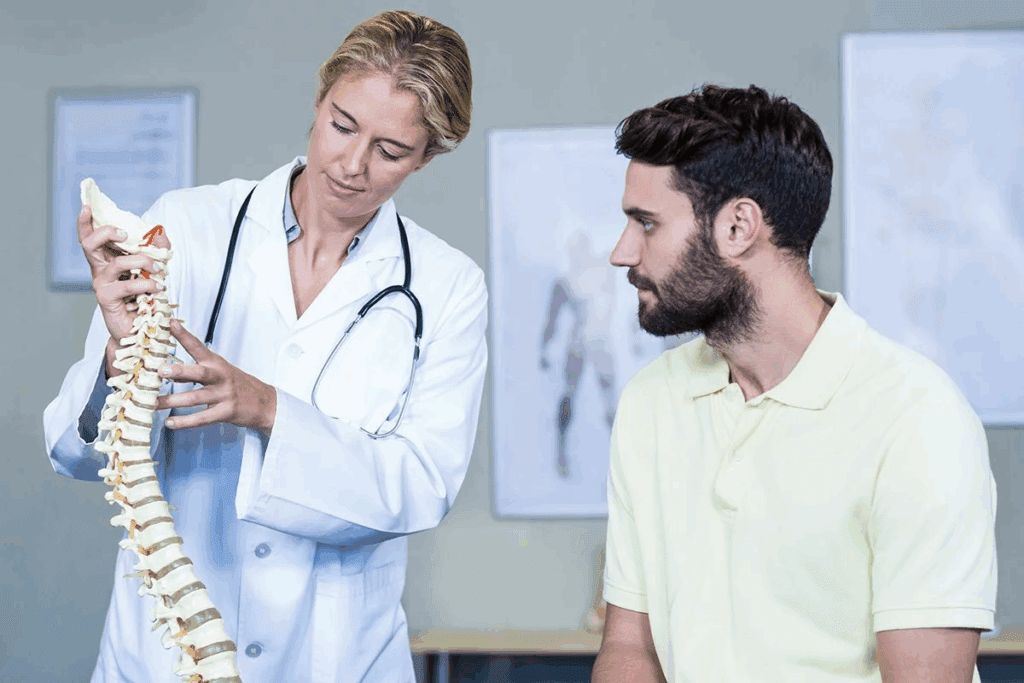
Scoliosis is a condition where the spine curves abnormally. It comes in different types, each with its own way of getting worse. Knowing these differences helps doctors choose the best treatment, which might include surgery.
Types of Scoliosis and Their Progression
Scoliosis can be divided into types based on its cause and when it starts. The most common is adolescent idiopathic scoliosis, which shows up during puberty. There are also congenital, neuromuscular, and degenerative scoliosis, each with its own traits and how it can get worse.
| Type of Scoliosis | Typical Age of Onset | Progression Potentia |
| Adolescent Idiopathic Scoliosis | 10-18 years | Moderate to High |
| Congenital Scoliosis | Birth | High |
| Neuromuscular Scoliosis | Varies | High |
| Degenerative Scoliosis | Adulthood | Variable |
Scoliosis is not just one condition. It’s a term for different spinal curvatures, each with its own traits and effects. Knowing these differences helps find the best treatment and predict life expectancy.
Idiopathic Scoliosis
Idiopathic scoliosis is the most common, making up about 80% of cases. “Idiopathic” means we don’t know the cause. It often shows up in late childhood or early teens and can get worse during growth spurts. Early detection is critical to manage it well and stop severe curvatures.
Idiopathic scoliosis is a diagnosis of exclusion, meaning that other causes of scoliosis must be ruled out before it can be diagnosed.
Research shows genetics might play a big role in idiopathic scoliosis. Certain genetic markers are more common in families with a history of it.
Congenital Scoliosis
Congenital scoliosis happens when the spine doesn’t form right in the womb. This leads to an abnormal curve. It’s present at birth and can come with other birth defects. The severity can vary a lot, and sometimes the curve might not show up until later in childhood.
A study in the Journal of Pediatric Orthopedics found that congenital scoliosis often comes with other birth defects. A full check-up is needed. Early surgery might be needed to stop the curve from getting worse and to avoid problems.
Neuromuscular Scoliosis
Neuromuscular scoliosis comes from conditions like cerebral palsy, muscular dystrophy, or spinal muscular atrophy. The curve can be severe and get worse fast, during growth spurts.
| Type of Scoliosis | Cause | Typical Age of Diagnosis | Characteristics |
| Idiopathic Scoliosis | Unknown | Late childhood/early adolescence | Most common type, genetic factors may play a role |
| Congenital Scoliosis | Spinal formation issues in the womb | At birth or early childhood | Associated with other congenital anomalies |
| Neuromuscular Scoliosis | Underlying neurological/muscular conditions | Varies depending on the underlying condition | Can be severe, rapid progression possible |
A leading orthopedic specialist says, “Knowing the type of scoliosis is key to finding the right treatment. This improves life quality and life expectancy for those with scoliosis.”
When Surgery Becomes Necessary
Surgery is considered when the curve is big or likely to get bigger. Doctors look at many things, like how big the curve is, the patient’s age, and if there’s pain or other symptoms.
Key factors influencing the decision for surgery include:
- Curve magnitude: Larger curves are more likely to require surgical intervention.
- Skeletal maturity: Patients with significant growth remaining are at higher risk for curve progression.
- Symptoms: Presence of pain, neurological symptoms, or significant deformity.
Doctors can decide if surgery is needed by understanding the scoliosis type and how it might get worse. This helps them plan the best time for surgery.
Scoliosis Life Expectancy: The General Outlook
When we talk about scoliosis life expectancy, it’s important to know the difference between mild and severe cases. This difference greatly affects how well someone can live. Scoliosis is a condition where the spine curves abnormally, and its impact varies a lot.
Mild vs. Severe Cases
The severity of scoliosis is key in understanding life expectancy. Mild scoliosis, with a curve less than 20 degrees, usually doesn’t affect life expectancy much. On the other hand, severe scoliosis, with curves over 50 degrees, can lead to serious health problems and might shorten life.
People with mild scoliosis often live normal lives with little risk of serious problems. But those with severe scoliosis might face breathing and heart issues. This is because the spine’s curve can press on and limit internal organs.
Statistical Overview and Survival Rates
Research on scoliosis life expectancy has given us important insights into survival rates. A study in a top medical journal showed that scoliosis survival rates vary with the condition’s severity.
| Scoliosis Severity | Curvature Degree | Life Expectancy Impact |
| Mild | Less than 20 degrees | Negligible |
| Moderate | 20-50 degrees | Minimal to Moderate |
| Severe | Greater than 50 degrees | Significant |
This table shows how scoliosis severity affects life expectancy. It stresses the importance of early diagnosis and proper treatment.
Common Misconceptions
There are many myths about scoliosis and life expectancy. One myth is that scoliosis always shortens life. But, most people with scoliosis can live a normal life, mainly if it’s mild and well-managed.
Another myth is that scoliosis only affects kids. While it’s true that many cases are diagnosed in teens, it can also happen or get worse in adults. This means adults need to keep getting checked and cared for too.
Factors Determining the Optimal Age for Scoliosis Surgery

Determining the optimal age for scoliosis surgery is a complex process that requires consideration of several important factors. Each patient’s situation is unique, needing a detailed evaluation.
Several key factors are considered when deciding on surgery timing. These include the curve’s severity, how fast it’s growing, the patient’s bone maturity, and their overall health.
Curve Severity and Progression Rate
The curve’s severity is a big factor in deciding if surgery is needed. Doctors use the Cobb angle to measure this. A higher angle means a more severe curve. If the curve is over 45-50 degrees, it’s considered significant.
The rate at which the curve is growing is also important. If it’s growing fast, surgery might be needed sooner. This helps prevent the curve from getting worse.
Curve severity is checked with X-rays and doctor’s exams. If the curve is getting worse, surgery might be an option. It helps fix the curve and keep the spine stable.
Skeletal Maturity Assessment
Skeletal maturity is how much a patient’s bones have grown. Knowing this is key to timing surgery right. Doctors use the Risser sign to check how mature the bones are.
The Risser sign shows how much bone growth is left. It helps doctors plan when to do surgery. This ensures the surgery is done at the best time for the patient.
Patient’s Overall Health Status
The patient’s health is also a big factor in deciding when to do surgery. Patients with health issues need extra care before surgery. This helps lower the risks of surgery.
Doctors look at the patient’s health history and current condition. They also consider any risks. This helps plan a successful surgery for each patient.
By looking at these factors, we can find the best age for surgery for each patient. This ensures the best results for our patients.
The Role of Skeletal Maturity in Surgical Timing
Checking skeletal maturity is key in planning scoliosis surgery. It helps ensure the best results. Skeletal maturity means when bones are fully grown. For scoliosis, knowing this helps doctors predict how much the spine might curve and when to operate.
Understanding the Risser Sign
The Risser sign is a way to check skeletal maturity. It looks at how much the pelvis bones have fused. The sign ranges from 0 to 5, with 5 meaning bones are fully fused.
The Risser sign is important because it shows how much a child or teen will grow. Doctors use it to decide if surgery is needed now or later. If a patient has a low Risser score, doctors might choose a surgery that lets the spine grow more.
Growth Remaining and Surgical Outcomes
How much a patient will grow is a big factor in surgery success. Those with more growth left are more likely to see their curve get worse after surgery. So, doctors look at the Risser sign and other signs of growth to plan the best surgery.
By checking skeletal maturity, doctors can make scoliosis surgery better for the long run. This helps them pick the right surgery, like traditional fusion or newer growth-friendly options. This way, they can help patients have the best chance of a good outcome.
Scoliosis Surgery in Early Childhood (2-9 years)
Scoliosis surgery in early childhood, for kids aged 2 to 9, comes with its own set of challenges. Scoliosis in young kids can be very aggressive. This makes it important to act quickly and choose the right treatment.
Indications for Early Intervention
Young children with severe scoliosis or fast-growing curvatures often need early treatment. Deciding on surgery at a young age is a big decision. It involves weighing the possible benefits against the risks.
Key factors influencing the decision for early surgery include:
- The severity of the curvature
- The rate of progression
- The child’s overall health status
Growing Rod Techniques
Growing rod techniques are a surgery option for young kids with scoliosis. This method uses rods that grow with the child. They are adjusted as the child grows.
Risks and Benefits of Early Surgery
Early surgery for scoliosis in kids has both good and bad sides. The good is that it can fix or greatly improve the curvature. This can prevent future problems. The bad includes possible surgery complications, the need for more surgeries, and effects on spinal growth and development.
Parents should talk about these points with their doctor to make a well-informed choice.
Scoliosis Surgery in Pre-Adolescents (10-12 years)
Scoliosis surgery for pre-adolescents is a delicate matter. It must balance correcting the curve with the child’s growth and development. At this age, kids grow fast, which can make scoliosis worse.
Managing Curve Progression During Growth Spurts
Pre-adolescence is a time of fast spine growth, which can worsen scoliosis. We use several methods to control this:
- Bracing: To slow down curve growth and maybe avoid surgery.
- Physical Therapy: Exercises to boost spinal flexibility and strength.
- Regular Monitoring: We check often to see how the curve is changing and adjust treatment as needed.
Surgical Approaches for This Age Group
If surgery is needed, we think about the child’s growth and the curve’s severity. Our surgical options include:
- Growing Rod Technique: Corrects the spine while letting the child grow.
- Spinal Fusion: A more lasting fix, but it stops growth in the fused area.
- Hybrid Constructs: Mixes different methods for the best correction and growth.
Long-term Outcomes and Considerations
Our goal is to fix the spine and keep it healthy for the long run. We look at:
- Curve Correction: Getting the best correction of the scoliotic curve.
- Spinal Balance: Making sure the spine stays balanced to avoid future problems.
- Quality of Life: Improving the child’s life and ability to do things they enjoy.
By managing scoliosis in pre-adolescents and picking the right surgery, we can greatly improve their long-term health.
Adolescent Scoliosis Surgery Timing (13-17 years)
Scoliosis surgery in teens needs careful timing. Curvature can grow fast, so it’s key to control it without stopping growth.
The “Sweet Spot” for Adolescent Idiopathic Scoliosis
The best time for scoliosis surgery is often between 13 and 17 years old. This is the “sweet spot” because surgery can stop the curve before it gets worse. It also considers how much more the patient will grow.
Key Considerations:
- Curve magnitude and progression rate
- Skeletal maturity
- Patient’s overall health and physical condition
Balancing Growth Completion and Curve Progression
Timing surgery right is a big challenge in teen scoliosis. It’s about stopping the curve without stopping growth. Doctors use the Risser sign and bone age to check growth.
| Risser Sign Stage | Description | Implication for Surgery |
| 0 | No ossification | High risk of progression; close monitoring |
| 1-3 | Partial ossification | Consider surgery if curve is significant |
| 4-5 | Almost complete or complete ossification | Surgery can be considered based on curve severity |
Psychological Considerations for Teenagers
Adolescence is a tough time emotionally. Surgery can affect a teen’s mental health a lot. It’s important to support them during treatment.
Support strategies may include:
- Counseling for the teenager and their family
- Education about the surgical process and recovery
- Encouragement of peer support groups
Healthcare providers can make scoliosis surgery better for teens by thinking about these things. This improves outcomes and quality of life.
Optimal Age for Scoliosis Surgery in Young Adults (18-25 years)
Scoliosis surgery in the 18-25 age group is key when the spine is fully grown. This makes planning and results easier. Young adults with scoliosis have a fully grown spine, making surgery simpler.
Benefits of Completed Skeletal Growth
One big plus of scoliosis surgery in young adulthood is that the spine is fully grown. This means surgeons can plan better because the spine is fully formed. Completed skeletal growth makes it easier to predict and plan the surgery, leading to better results.
Surgical Techniques for Young Adults
Surgical methods for scoliosis in young adults aim for the best results. Spinal fusion and instrumentation are often used to fix the curve and stabilize the spine. The choice of method depends on the scoliosis’s severity, the patient’s health, and other factors.
Modern surgery uses advanced tech, like computer-assisted navigation, for better precision and faster recovery. These methods help young adults get back to normal life sooner and with better long-term results.
Recovery Expectations
Recovery from scoliosis surgery in young adults usually goes as planned. Immediate post-operative care focuses on watching for problems and managing pain. Physical therapy is key for getting strength and mobility back. Young adults tend to recover well, leading to favorable long-term outcomes.
It’s vital for patients to stick to post-operative instructions and keep up with follow-up appointments. Most young adults can get back to their usual activities within a few months.
Scoliosis Surgery in Mature Adults (26-50 years)
Surgery for scoliosis in adults aged 26 to 50 tackles both the spinal curve and wear and tear. As people get older, their scoliosis can get more complicated. This makes planning surgery harder.
Addressing Degenerative Scoliosis
Degenerative scoliosis is common in older adults. It’s a spine curve that gets worse with age. Surgical intervention aims to fix the curve and deal with age-related spine issues like disc wear and joint arthritis.
When planning surgery, we look at several things. These include:
- The severity of the curvature
- The extent of degenerative changes
- The patient’s overall health status
- The presence of any neurological symptoms
Pain Management Considerations
Pain management is key in scoliosis surgery for older adults. Effective pain management helps patients feel better and recover faster. We use a variety of methods, including:
- Preoperative counseling to set realistic expectations
- Intraoperative techniques such as spinal anesthesia
- Postoperative pain management protocols, including medication and physical therapy
Functional Outcomes in This Age Group
Scoliosis surgery can greatly improve the lives of older adults. It corrects the spine and reduces pain. This lets patients do more and feel better.
- Improved spinal balance and posture
- Reduced pain and discomfort
- Enhanced mobility and function
Overall, scoliosis surgery for older adults needs a detailed plan. This approach helps achieve the best results and improves patients’ lives.
Scoliosis Surgery in Older Adults (Over 50 years)
Deciding on scoliosis surgery after 50 is a big choice. It depends on how severe the curve is, the person’s health, and the surgery’s risks. As we get older, our spines naturally change, making surgery more complicated.
Risk-Benefit Analysis for Senior Patients
Older adults need to think carefully about scoliosis surgery. We must compare the surgery’s benefits, like better quality of life and less pain, to its risks. Health issues like heart problems, bone strength, and other diseases are important to consider.
Key considerations include:
- The severity of scoliosis and its impact on daily life
- The presence of comorbidities and their management
- The patient’s overall physical and mental health
- The patient’s chance for a better quality of life
Modified Surgical Approaches
For older adults, doctors use special surgical methods to lower risks and improve results. These might include less invasive surgeries or new fusion techniques that help patients recover faster. The right surgery depends on the patient’s health and the surgeon’s skills.
Some of the modified approaches include:
- Minimally invasive surgery to reduce tissue damage and promote faster healing
- Shorter fusion lengths to preserve spinal mobility
- Use of bone graft substitutes to enhance fusion rates
Recovery Challenges and Expectations
Recovering from scoliosis surgery can be tough for older adults. It’s because they might heal slower and have more health issues. We help patients understand what to expect and create a care plan that meets their needs.
Recovery strategies include:
- Early mobilization to prevent complications
- Physical therapy tailored to the patient’s condition
- Close monitoring for possible complications
Comparing Surgical Outcomes by Age Group
The success of scoliosis surgery changes a lot with age. It’s important to see how age affects the outcome of the surgery.
Correction Possible at Different Ages
How well the spine can be straightened is a big factor in surgery success. Younger patients often do better because their spines are more flexible and can grow more.
Older patients might see less improvement because their spines are less flexible. But, new surgical methods have helped improve results for everyone.
Complication Rates Across Age Groups
Complications from scoliosis surgery differ by age. Younger people usually face fewer problems than older adults. Older adults might have more health issues that raise surgery risks.
“The complication rate for scoliosis surgery is significantly higher in older adults due to the presence of comorbidities and decreased physiological reserve.”
Knowing these risks helps in deciding when to have scoliosis surgery.
Quality of Life Improvements
Scoliosis surgery can greatly improve life for many ages. Patients often feel less pain and move better after surgery.
- Younger patients might have better posture and lower risk of spinal issues later.
- Older adults could have better function and less pain.
Looking at how surgery works for different ages helps us understand its benefits and risks at different life stages.
Minimally Invasive Scoliosis Surgery and Age Considerations
Medical technology is getting better, making minimally invasive scoliosis surgery (MIS) a good choice for many ages. This method is known for helping patients heal faster and with less harm to tissues. We’ll look at how MIS helps different age groups and how it speeds up recovery.
Applications of MIS Across Different Age Groups
Minimally invasive scoliosis surgery isn’t for everyone. It works differently for kids and adults. For young people, MIS can slow down scoliosis growth. For older folks, it helps with pain and makes the spine more stable.
Doctors pick the right MIS method based on the patient’s age and scoliosis level. For kids, growing rods might be used. Adults might get more stable implants. The choice depends on the scoliosis’s severity, the patient’s health, and how much growing they have left.
Recovery Advantages for Different Age Groups
One big plus of MIS is it can make recovery faster. Patients of all ages often feel less pain and stay in the hospital less than with traditional surgery. Younger patients can get back to their lives sooner.
Older adults also benefit from MIS’s quick recovery and less invasive approach. They face fewer risks from big surgeries. MIS is safer for them because it causes less damage and lowers infection chances.
Key Recovery Advantages of MIS:
- Reduced postoperative pain
- Shorter hospital stays
- Less tissue damage
- Lower risk of infection
- Quicker return to normal activities
As spinal surgery keeps improving, MIS will likely play an even bigger role. It will help more patients of all ages.
Impact of Delayed Surgery on Long-term Outcomes
Scoliosis surgery delayed can deeply affect a patient’s health long-term. It’s important to decide on surgery quickly to avoid problems that come from waiting too long.
Pulmonary and Cardiac Function
Waiting too long for scoliosis surgery can harm lung and heart function. As the spine curves more, it can squeeze the chest. This makes it harder for lungs to work well.
Also, severe scoliosis can make it tough for the heart to pump blood. This is because the heart has less room to work. Studies have shown that not treating scoliosis can lead to serious lung and heart problems later on.
Curve Progression in Untreated Cases
If scoliosis surgery is delayed, the spine can curve more. This can cause a lot of pain and discomfort. It can also make a person’s spine look very different, affecting their self-esteem.
Curve progression is a big worry for young people, as their spines are growing. Those with big curves or who are not fully grown are at higher risk. Regular check-ups and scans are key to knowing when to have surgery.
Quality of Life Implications
Delaying scoliosis surgery can really hurt a person’s quality of life. Untreated scoliosis can cause chronic pain and make it hard to move around. This can make it hard to do everyday things, work, and socialize.
But, surgical correction of scoliosis can greatly improve life. It can reduce pain, straighten the spine, and improve how well you can move. Getting surgery on time can help avoid long-term problems and improve overall well-being.
Making the Decision: A Collaborative Approach
Choosing to have scoliosis surgery is a team effort. Healthcare professionals, the patient, and their family all play a part. This way, everyone’s health and happiness are looked at carefully.
The Surgical Team’s Perspective
The surgical team is key in making this choice. They use their knowledge and experience to decide the best treatment. They think about how severe the scoliosis is, the patient’s health, and the surgery’s risks and benefits.
- They check how severe the scoliosis curve is.
- They look at the patient’s overall health.
- They talk about the surgery’s risks and benefits with the patient and family.
Patient and Family Considerations
The patient and their family’s views are just as important. They share how scoliosis affects their life, their pain, and any worries they have. It’s vital for the surgical team to listen and answer their questions fully.
- They understand how scoliosis impacts daily life.
- They check the patient’s pain and discomfort levels.
- They address any concerns or questions the patient and family have.
Balancing Medical Necessity and Timing Preferences
Deciding when to have surgery is another big part of the choice. It’s about weighing the need for surgery now against waiting. We work with the patient and their family to find the best time for surgery.
By working together, we make sure the decision to have scoliosis surgery is well thought out. This teamwork helps us get the best results for the patient.
Conclusion: Finding the Right Time for Scoliosis Surgery
Finding the best time for scoliosis surgery is complex. It depends on the patient’s age, how much their bones have grown, and their health.
We’ve looked at how different ages affect when surgery is needed. From young kids to older adults, each age has its own challenges. The right time for surgery is finding a balance between stopping the curve and letting bones grow.
Understanding these points and working with a healthcare team helps patients and families make good choices. The best time for surgery is not the same for everyone. It depends on each person’s needs and situation.
In the end, choosing the right time for scoliosis surgery needs a thorough check-up and teamwork. This ensures the best results for those going through this important surgery.
FAQ
What is the optimal age for scoliosis surgery?
The best time for scoliosis surgery depends on several things. These include how severe the curve is, the patient’s health, and how much they have grown. Usually, surgery happens during the teen years. But, the exact right time can vary for each person.
How does skeletal maturity affect scoliosis surgery timing?
Skeletal maturity is very important for deciding when to have scoliosis surgery. Doctors use the Risser sign to check how much more growing a person can do. This helps them decide when to operate.
What are the different types of scoliosis and how do they influence surgical decisions?
There are three main types of scoliosis: adolescent idiopathic, congenital, and degenerative. Each type acts differently and can grow worse. This affects whether or not surgery is needed.
What is the “sweet spot” for adolescent idiopathic scoliosis surgery?
For adolescent idiopathic scoliosis, the best time for surgery is usually late in the teen years. This is when the curve is big enough to fix, but the person is almost fully grown. This way, the surgery works best without stopping growth too much.
How does curve severity and progression rate impact the decision for scoliosis surgery?
How severe the curve is and how fast it’s getting worse are key. If the curve is big or getting worse fast, surgery is often needed.
What are the benefits of scoliosis surgery in young adults?
Surgery in young adults has many benefits. It happens when they are fully grown, leading to better and more stable results. It also can improve their quality of life in the long run.
How does age affect the outcomes of scoliosis surgery?
Age plays a big role in how well scoliosis surgery works. Things like how well the spine can be corrected, the risk of complications, and how much life improves vary with age.
What are the advantages of minimally invasive scoliosis surgery for different age groups?
Minimally invasive surgery has many benefits. It means less recovery time and less damage to tissues. This makes it a good choice for people of all ages.
What are the possible consequences of delaying scoliosis surgery?
Waiting too long for surgery can cause serious problems. The curve can get worse, affecting breathing and heart health. It can also lower quality of life.
How is the decision to undergo scoliosis surgery made?
Deciding on surgery is a team effort. The doctor, the patient, and their family all have a say. They consider if surgery is needed, when it should happen, and what’s best for the person.
What is the role of the Risser sign in assessing skeletal maturity for scoliosis surgery?
The Risser sign is a tool doctors use to check growth. It looks at the iliac apophysis to predict how much more growing a person can do. This helps decide when to have surgery.
How do growing rod techniques work for early onset scoliosis?
Growing rod techniques use rods that can grow with the spine. They help correct and stabilize the spine in young children. This lets the spine grow while controlling the curve.
What are the recovery expectations for scoliosis surgery in different age groups?
Recovery times vary with age. Younger patients usually heal faster. Older adults might need more time and face more challenges because of other health issues.
How does scoliosis surgery impact quality of life across different age groups?
Surgery can greatly improve life by reducing pain and improving spinal alignment. The extent of improvement depends on age, how bad the condition was before surgery, and the type of surgery.
References
- Johnston, C. E., Richards, B. S., & Kwon, B. K. (2004). Surgical outcomes in adolescent idiopathic scoliosis: Considerations based on age and curve pattern. The Spine Journal, 4(6), 574–581. https://pubmed.ncbi.nlm.nih.gov/15582236