
Digital devices are now a big part of our lives. This raises worries about how much screen time affects kids’ health and growth. Research finds that kids aged 8-12 in the U.S. spend over 5 hours a day on screen use for fun. Teens even use screens for more than 8 hours. This can cause many health and growth problems. It’s important to know how screen time affects kids’ development. This knowledge helps families, teachers, and doctors find a healthy balance between tech use and other parts of life.
Key Takeaways
- Too much screen time can cause health and growth issues in kids.
- Kids aged 8-12 in the U.S. usually spend over 5 hours a day on screens.
- Teens use screens for more than 8 hours, which can worsen growth problems.
- Finding a balance between tech use and other activities is key to kids’ health.
- Families, teachers, and doctors need to work together to tackle these issues.
The Alarming Rise of Screen Time Among American Children

Digital technology is everywhere, and American kids are spending more time on screens. This trend could have big effects on them. Kids under 8 often have their own tablets and spend a lot of time on digital screens.
Nearly half of all children under 8 have their own tablet. They spend about 2.25 hours a day on digital screens. As kids get older, they spend even more time on screens. The Centers for Disease Control and Prevention says kids aged 8-18 spend over 7 hours a day on screens.
Current Statistics: 5+ Hours Daily for Kids, 8+ Hours for Teens
Screen time for kids is very high. Kids aged 2-5 spend more than 5 hours a day on screens. Teenagers can spend over 8 hours a day on screens. This is not just a choice but is also influenced by many factors.
How Digital Habits Have Changed in the Last Decade
Digital habits for kids have changed a lot in the last decade. Smartphones and tablets make it easy for kids to find digital content. This has led to a big increase in screen time for many kids.
“The way children interact with digital media has changed dramatically,” notes a report by Common Sense Media. “With the rise of mobile devices, children are now able to access a vast array of content anywhere, anytime.”
Age-Specific Screen Consumption Patterns
Screen time varies by age. Young kids watch educational content, while older kids and teens use screens for social media and fun. Knowing these patterns helps us manage screen time better.
For kids under 2, no screen time is best, except for video chatting, says the American Academy of Pediatrics. As kids get older, it’s important to set limits on screen time. This helps them stay active, sleep well, and develop healthily.
Physical Health Consequences of Excessive Screen Exposure
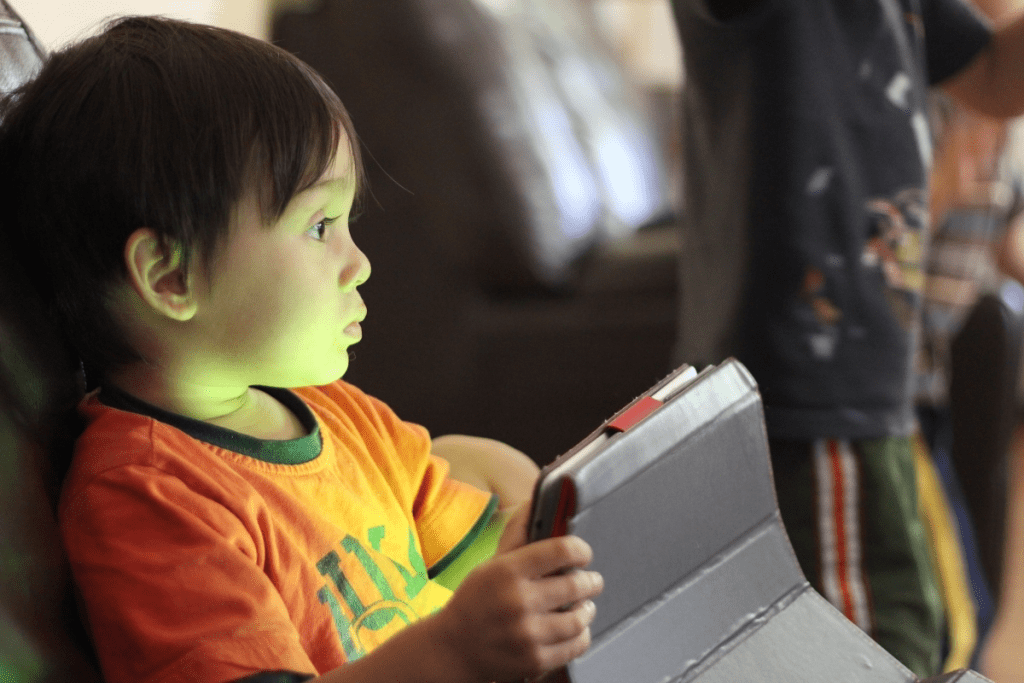
Screen time is rising fast among kids. It’s key to look at the health risks of too much screen time. The issue isn’t just how long they’re on screens. It’s also how it affects their physical health.
Vision Problems and the Increased Risk of Myopia
Too much screen time can lead to vision issues, like myopia (nearsightedness). A study showed a 37% higher risk of myopia by age 12 with too much screen time. This is because screens make kids do near-work for long periods. This can cause myopia to start or get worse.
Genetics and environment play a part in this. But cutting down screen time or taking breaks can help. Parents can teach kids the 20-20-20 rule. This means looking away from screens every 20 minutes to focus on something 20 feet away for 20 seconds.
Sedentary Behaviour and Its Link to Childhood Obesity
Too much screen time makes kids less active. This can lead to obesity. Being too sedentary can also raise the risk of diabetes and heart disease.
- Encourage kids to be active with outdoor play or sports
- Limit screen time to 1-2 hours a day for kids over 2
- Find fun ways to stay active, like dancing or yoga
Musculoskeletal Issues from Poor Posture During Device Use
Excessive screen time can also cause musculoskeletal problems. Kids often use devices in ways that strain their necks, backs, and shoulders. This can lead to discomfort or even long-term damage.
Teaching kids about good posture is key. Simple changes, like holding devices at eye level or using a stand, can help. Teaching about posture and using ergonomic practices can lower the risk of these problems.
- Make sure the device is at a comfortable distance and height
- Teach kids to sit up straight or stand
- Encourage breaks to stretch and move around
How Screen Time Impacts Cognitive and Language Development
Screen time among kids is on the rise, and experts are studying its effects. They find that too much screen time can harm young minds.
The 49% Increased Risk of Speech Delays in Young Children
Research shows that an extra 30 minutes of screen time daily raises speech delay risk by 49% in young kids. This is a big worry for parents, as speech delays can affect how well kids communicate.
Key factors contributing to speech delays include:
- Limited interaction with caregivers and peers
- Reduced exposure to diverse linguistic environments
- Increased reliance on screens for entertainment and education
Attention Span Reduction and Academic Performance
Too much screen time also cuts down on kids’ attention spans. This can hurt their schoolwork, as they might find it hard to focus and learn.
The consequences of reduced attention span include:
- Difficulty completing homework and assignments
- Lower grades due to lack of focus
- Increased frustration and stress levels
Critical Thinking and Creativity Concerns
Critical thinking and creativity are key to kids’ brain growth. But too much screen time can block these skills by reducing play and problem-solving chances.
To lessen these risks, parents and caregivers should set screen time recommendations by age. This helps kids balance screen time with other activities that boost brain and language skills.
The Emotional and Social Effects of Too Much Screen Time
Screen time is going up, and it’s important to know how it affects kids. Too much screen time can lead to anxiety and depression.
Anxiety and Depression: A Negative Feedback Loop
Research shows that too much screen time can cause anxiety and depression. This creates a cycle. Kids who watch screens a lot often feel more anxious. They might then watch more screens to feel better.
This cycle can harm a child’s emotional health. It’s key to limit screen time to help them feel better.
Social Skill Development and Real-World Interactions
Too much screen time can hurt social skills in kids. They miss out on chances to learn important social skills. Skills like talking, feeling empathy, and solving problems.
Real-life interactions are key for kids to learn about social situations. They help kids understand body language and build strong relationships.
Digital Relationships vs. In-Person Connections
Digital communication is growing, leading to more digital relationships. While online connections are good, they can’t replace real-life ones.
Real-life connections give kids a sense of belonging and support. Parents should encourage kids to do things that help them meet people face-to-face. This could be sports, clubs, or just hanging out with family and friends.
Behavioural Changes and Sleep Disruption in Children
Screen time is affecting kids’ behaviour and sleep. Parents and doctors are worried. Kids spend a lot of time in front of screens, changing how they act and sleep.
Blue Light Exposure and Sleep Quality
Screen time in the evening shortens sleep in kids. Smartphones, tablets, and computers give off blue light. This light stops melatonin, the sleep hormone, from working properly
This can cause poor sleep quality and duration. It affects kids’ health and happiness.
To fight blue light, parents can limit screen time before bed. They can also use blue light filtering glasses or apps. Creating a sleep-friendly environment is also key.
The Connection Between Screen Time and Attention Deficits
Too much screen time can cause attention deficits in kids. Screens keep them distracted all the time. It’s hard for them to focus on important tasks.
Studies show kids with more screen time might have ADHD symptoms. Parents can help by setting screen time limits. They should also encourage physical activities and tasks that need focus.
Addictive Behaviours and Digital Dependence
Digital media can make kids addicted. They get used to screens’ instant rewards. This can make them rely too much on technology.
To stop digital addiction, parents need to set screen use rules. They should balance screen time with other activities. It’s also important for parents to show good digital habits.
Conclusion: Establishing Healthy Digital Boundaries
As the digital world keeps changing, it’s key for kids to have healthy digital limits. Studies show that too much screen time can harm their eyes, make them less active, and even lead to anxiety and depression. Parents and caregivers need to watch how much screen time kids have and find other fun activities for them.
Creating good digital limits means setting screen time limits, getting kids to move more, and encouraging them to interact with the real world. For example, parents can get kids to play outside instead of watching TV or videos of girls playing on beds. This helps reduce the dangers of too much screen time.
Also, lawmakers need to fix loopholes in screen time laws to keep kids safe. Working together, we can make the digital world a safer place for kids to grow and succeed.
FAQ’s:
How much screen time is considered excessive for children?
The American Academy of Pediatrics says kids aged 2-18 should watch screens for 1-2 hours a day. This should be educational content. Watching more than this is too much.
What are the recommended screen time limits by age?
Kids under 2 should not watch screens except for video calls. Kids 2-5 can watch 1 hour of educational shows a day. Kids 6 and up should have limits on screen time. It should not get in the way of physical activity, sleep, or other activities.
What are the negative effects of excessive screen time on child development?
Too much screen time can harm kids. It can cause eye problems, obesity, and speech delays. It also reduces attention span and creativity.
How does screen time impact cognitive development in children?
Too much screen time can slow down kids’ brain growth. It can hurt their language skills, attention, and thinking. It can also lower their school grades.
Can excessive screen time lead to anxiety and depression in children?
Yes, too much screen time can make kids anxious and depressed. Being on screens all the time can make these problems worse.
How can parents limit screen time and encourage alternative activities?
Parents can set screen-free zones and times. They can encourage outdoor play, reading, and creative activities. It’s also important for parents to use screens wisely.
What are some strategies for monitoring screen time in children?
Parents can use software to control screen time. They can also track screen time on devices. Regularly checking how much time kids spend on screens helps.
How does blue light exposure from screens affect sleep in children?
Blue light from screens can make it hard for kids to fall asleep. It can also make their sleep poor. This can harm their health in the long run.
What are the long-term consequences of excessive screen time on children’s emotional and social well-being?
Too much screen time can harm kids’ mental health. It can make them more anxious and depressed. It can also hurt their ability to connect with others and form friendships.
References
- Horner, D., et al. (2025, August 6). Excessive screen time among youth may pose heart health risks. American Heart Association Newsroom. Retrieved fromhttps://newsroom.heart.org/news/excessive-screen-time-among-youth-may-pose-heart-health-risks



 Departments
 Related Videos
 Our Doctors
 News
News